

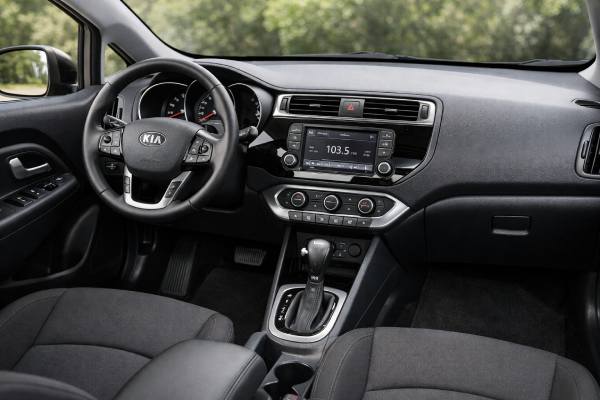
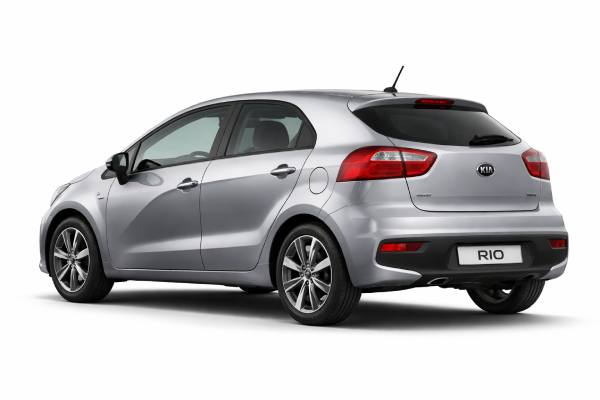
The facelifted Kia Rio (UB) with the 1.1 CRDi diesel is a rare but very rational version of this supermini. It pairs a small, torque-focused engine with a light body and simple front-wheel-drive hardware, aiming for low running costs rather than speed. In daily use, the 75 hp output matters less than the diesel’s low-rpm pull, which makes urban driving and relaxed cruising easier than the numbers suggest—especially with two adults on board and a full tank.
This variant is most appealing if you drive a lot of steady miles and want predictable fuel use, long service life, and low tax/insurance in many European markets. The trade-off is that it needs “diesel-friendly” usage (proper warm-ups and regular longer drives) to keep the emissions hardware healthy.
Owner Snapshot
- Strong low-rpm torque for its size, so it feels flexible in city traffic and on gentle grades.
- Typically very low fuel use on mixed commuting when the engine reaches full temperature.
- Straightforward chassis and FWD layout keep parts costs reasonable and repairs familiar to most shops.
- Short-trip use can accelerate EGR/DPF soot loading and turbo actuator sticking on older diesels.
- Plan engine oil and filter service every 15,000 km or 12 months (whichever comes first) if you want long turbo and timing-life.
What’s inside
- Kia Rio UB 1.1 CRDi at a glance
- Kia Rio UB 1.1 CRDi spec tables
- Kia Rio UB trims and safety tech
- Reliability hot spots and fixes
- Maintenance schedule and buyer checks
- Driving feel and real economy
- How it stacks up to rivals
Kia Rio UB 1.1 CRDi at a glance
Think of this facelift Rio diesel as a “steady efficiency” car. The body is compact, visibility is good, and the mechanical layout stays simple: transverse engine, front-wheel drive, and a small turbo-diesel tuned for everyday torque rather than top-end power. In practice, that means fewer downshifts in normal traffic than you might expect from a 75 hp badge—because the engine makes its useful work below 2,500 rpm.
The 2015–2017 facelift brought cosmetic updates and, in many markets, small improvements in infotainment and cabin materials. Underneath, it remains a conventional supermini with a torsion-beam rear axle. That setup keeps weight down and luggage space usable, and it helps explain why the Rio can feel stable on the motorway despite its footprint. The flip side is that it won’t ride like a larger hatchback over sharp urban impacts, especially on lower-profile tyres.
This engine family is often known by codes such as D3FA (market-dependent). It uses common-rail direct injection and a turbocharger; some versions use a variable-geometry turbo (VGT) while others use a wastegated unit, again depending on emissions level and supplier. Either way, the key ownership point is that it rewards correct oil, clean air supply, and proper warm-up/cool-down habits. Small diesels can be extremely durable, but they are less forgiving of neglected servicing than an old non-turbo petrol engine.
Who is it for?
- High-mileage commuters who drive steady A/B-road and motorway routes.
- Cost-focused owners who prioritize fuel use, tyres, and simple suspension parts over acceleration.
- Drivers in hilly areas who like low-rpm pull.
Who should think twice?
- Mostly-short-trip users (frequent cold starts, 2–5 km drives).
- Drivers who want quick overtakes without planning—this is not the fastest Rio.
If you buy one well (service history, no warning lights, clean idle, strong boost), it can be a calm, low-drama daily driver with a long useful life.
Kia Rio UB 1.1 CRDi spec tables
Specs can vary slightly by market, body style (3-door/5-door), wheel size, and emissions certification. Use the tables below as a practical baseline for the facelift UB diesel.
Powertrain and efficiency
| Item | Specification |
|---|---|
| Code | Commonly D3FA (market dependent) |
| Engine layout and cylinders | I-3, turbo-diesel; DOHC; typically 4 valves/cyl |
| Displacement | 1.1 L (1,120 cc) |
| Induction | Turbocharged (some markets VGT) |
| Fuel system | Common-rail direct injection (CRDi) |
| Compression ratio (ICE) | Typically ~16.0–17.5:1 (varies by emission spec) |
| Max power | 75 hp (55 kW) @ ~4,000 rpm |
| Max torque | Typically 170 Nm (125 lb-ft) @ ~1,750–2,500 rpm |
| Timing drive | Often chain-driven on this family (verify by VIN/engine code) |
| Rated efficiency | Typically ~3.2–3.8 L/100 km (≈ 74–62 mpg US / 88–74 mpg UK) |
| Real-world highway @ 120 km/h | Commonly ~4.5–5.5 L/100 km (≈ 52–43 mpg US / 63–51 mpg UK) |
Transmission and driveline
| Item | Specification |
|---|---|
| Transmission | Typically 5-speed manual (market dependent) |
| Drive type | FWD |
| Differential | Open |
Chassis and dimensions
| Item | Specification (typical for UB hatch) |
|---|---|
| Suspension (front/rear) | MacPherson strut / torsion beam |
| Steering | Electric power steering (EPS) |
| Brakes | Front discs / rear drums (some trims rear discs) |
| Wheels and tyres (common sizes) | 185/65 R15 or 195/55 R16 (varies by trim) |
| Ground clearance | Typically ~140 mm (5.5 in) |
| Length / Width / Height | ~4,050 mm (159.4 in) / 1,720 mm (67.7 in) / 1,455 mm (57.3 in) |
| Wheelbase | ~2,570 mm (101.2 in) |
| Turning circle (kerb-to-kerb) | Typically ~10.2 m (33.5 ft) |
| Kerb (curb) weight | Commonly ~1,120–1,200 kg (2,469–2,646 lb) |
| Fuel tank (ICE) | Typically 43 L (11.4 US gal / 9.5 UK gal) |
| Cargo volume | Typically ~288 L (10.2 ft³) seats up (method varies) |
Performance and capability
| Item | Typical figure |
|---|---|
| 0–100 km/h (0–62 mph) | ~14.5–16.5 s (gear ratios and tyre size matter) |
| Top speed | ~160–170 km/h (99–106 mph) |
| Braking distance 100–0 km/h | Commonly ~38–42 m on good tyres (test dependent) |
| Towing capacity | Often not rated or modest; check local type approval |
| Payload | Typically ~400–450 kg (varies by trim and GVWR) |
Fluids and service capacities (practical ownership values)
These are common working values for this diesel family; always verify for your VIN and service manual.
| Fluid | Specification (typical) | Capacity (approx.) |
|---|---|---|
| Engine oil | ACEA C2/C3 (market) with 5W-30 common; use the exact approved grade | ~5.0–5.3 L (5.3–5.6 US qt) incl. filter |
| Coolant | Ethylene glycol long-life, typically 50/50 mix | ~5.5–6.5 L (5.8–6.9 US qt) |
| Manual transmission | GL-4 gear oil (often 75W-85) | ~1.7–2.0 L (1.8–2.1 US qt) |
| A/C refrigerant | Typically R-134a | ~450–550 g (16–19 oz) (system dependent) |
Key torque specs (common “decision-making” values)
| Fastener | Torque (typical) |
|---|---|
| Wheel nuts | ~88–98 Nm (65–72 lb-ft) |
| Engine oil drain plug | ~30–40 Nm (22–30 lb-ft) |
| Front caliper bracket bolts | Often ~80–100 Nm (59–74 lb-ft) (brake variant dependent) |
Safety and driver assistance (baseline expectation)
| Category | Typical equipment (market dependent) |
|---|---|
| Crash ratings | Euro NCAP for the UB generation scored 5 stars in its test era (see safety section for breakdown) |
| Airbags | Usually front + side + curtain on higher trims; base trims may have fewer |
| Stability systems | ESC/ESP and traction control commonly fitted |
| ADAS | Generally limited on UB facelift; most cars do not have modern AEB/LKA |
Kia Rio UB trims and safety tech
Because the 1.1 CRDi was typically sold as an economy-focused option, trims vary widely by country. Some markets paired it with entry trims for low purchase price and tax; others positioned it as a “fleet efficiency” choice with surprisingly decent equipment. When shopping, focus less on the trim name and more on what you can verify in the car.
Trims and options: what usually changes
Common equipment splits you’ll see between basic and better-equipped cars:
- Wheels and tyres: 15-inch wheels with taller sidewalls tend to ride better and cost less. 16-inch wheels look sharper but can make potholes feel harsher.
- Brakes: many Rios use rear drums, which are fine for normal use and cheap to service. Some higher trims switch to rear discs.
- Cabin comfort: manual A/C versus automatic climate; heated seats and heated steering wheel show up in colder markets.
- Infotainment: base units may lack Bluetooth streaming or USB integration; higher trims often add steering wheel controls and better audio.
- Lighting: projector headlights and LED running lights appear on some facelift packages, but do not assume.
Quick identifiers that help you decode spec in a parking lot:
- ESC button and cluster lights: confirms stability control presence.
- Curtain airbag tags on the A-pillars or headliner.
- Rear brake look-through behind the wheel spokes (disc vs drum).
- VIN build plate: compare build month/year with claimed facelift equipment.
Safety ratings: what they mean for this model
The UB generation Rio was tested under the earlier Euro NCAP scoring system. The headline result was strong for its class at the time:
- Adult occupant: 92%
- Child occupant: 84%
- Pedestrian: 46%
- Safety assist: 86%
Those numbers reflect the test era and equipment expectations of that time. Pedestrian protection was the weak point (typical for early-2010s superminis), while occupant protection and stability/control systems scored well.
Safety systems and ADAS reality check
Most Rio UB facelift diesels do not offer today’s mainstream driver aids like autonomous emergency braking (AEB) or lane-keeping assist (LKA). Expect the safety “core” instead:
- Multiple airbags (count varies by trim).
- ESC/ESP with traction control.
- ABS with electronic brake-force distribution (EBD).
- ISOFIX/LATCH child seat anchors (usually outer rear seats).
If you do find a car with radar/camera features, treat it as a trim-specific bonus and confirm that windscreen replacements and sensor calibrations were performed correctly. On a used car, a misaligned camera can cause warning lights, false alerts, or disabled systems after glass work.
Bottom line: the Rio’s structure and conventional safety systems are solid for its generation, but it is not a modern ADAS-heavy car. Buy it for dependable basics, not for high-tech safety automation.
Reliability hot spots and fixes
The 1.1 CRDi Rio can be long-lived, but the diesel systems demand correct servicing and “diesel-appropriate” use. Below are the issues owners and shops most often run into, grouped by prevalence and by typical cost impact.
Common issues (higher prevalence)
- EGR valve and intake soot buildup (medium cost)
- Symptoms: hesitant acceleration, uneven idle, occasional limp mode, higher fuel use.
- Likely cause: short trips and low exhaust temperature promote soot deposits; EGR flow becomes restricted or sticks.
- Remedy: diagnostic scan first; cleaning or replacing EGR components; address driving pattern and oil quality.
- DPF loading (medium to high cost depending on severity)
- Symptoms: DPF warning light, rising oil level (fuel dilution), frequent fan operation, reduced power.
- Likely cause: repeated interrupted regenerations from short journeys; failing sensors can also trigger it.
- Remedy: confirm soot/ash load with scan data; forced regen if appropriate; replace failed sensors; in severe ash cases, DPF removal for professional cleaning or replacement.
- Boost control issues: vacuum lines/actuator (low to medium cost)
- Symptoms: weak pull, overboost/underboost codes, “flat” midrange, inconsistent power.
- Likely cause: aging vacuum hoses, sticky VGT mechanism (if equipped), tired boost solenoid.
- Remedy: smoke/vacuum testing, hose replacement, actuator and turbo control diagnostics.
Occasional issues (moderate prevalence)
- Injector sealing and fuel leak-back (medium cost)
- Symptoms: hard starting, rough idle cold, diesel smell, excessive return flow.
- Likely cause: injector wear or poor sealing at the seat.
- Remedy: leak-back test; reseal or replace injectors as needed; always use new seals and correct torque.
- Glow plug and controller faults (low to medium cost)
- Symptoms: difficult cold starts, smoke on start, glow plug light behavior.
- Remedy: test resistance and current draw; replace as a matched set if multiple are weak; verify controller output.
- Cooling system small leaks (low to medium cost)
- Symptoms: slow coolant loss, sweet smell, damp hoses, occasional overheating in traffic.
- Remedy: pressure test; replace hoses/thermostat housing as needed; use correct coolant and bleed properly.
Rare but expensive (watchlist)
- Turbocharger wear (high cost)
- Symptoms: whining, oil consumption, blue smoke, persistent underboost, intercooler oil pooling.
- Root cause: extended oil intervals, wrong oil spec, repeated hot shutdowns, or ingestion of debris via poor air filtration.
- Remedy: confirm shaft play and boost behavior; replace turbo and flush oil feed/return lines as required.
- Timing-related noise or correlation faults (high cost if ignored)
- Symptoms: rattling at start-up, timing correlation codes, poor running.
- Remedy: do not guess—inspect according to the engine family’s timing design; address tensioner/chain components before damage spreads.
Recalls, service actions, and “software fixes”
Across the industry, many drivability complaints are solved by updates: ECU calibration changes, sensor logic refinements, or idle control adjustments. On a used Rio diesel, it is worth asking for proof of:
- Recall completion (airbag-related campaigns exist across many brands and years).
- ECU updates related to emissions controls or cold-start behavior.
- Injector coding and adaptations after replacement.
The best reliability upgrade is still basic: correct oil at sensible intervals, clean air filtration, and driving that lets the engine reach full temperature regularly.
Maintenance schedule and buyer checks
A small turbo-diesel is happiest when you treat maintenance as “preventive,” not reactive. The schedule below is a practical ownership plan that fits the Rio 1.1 CRDi’s needs, especially as these cars age.
Practical maintenance schedule (distance/time)
Every 15,000 km or 12 months
- Engine oil and filter (use the exact approved spec; this is turbo life insurance).
- Full visual inspection: oil leaks, coolant level, intake hoses, vacuum lines.
- Brake inspection (pad/shoe thickness, rotor condition, parking brake operation).
Every 30,000 km or 24 months
- Engine air filter (more often in dusty areas).
- Cabin filter (often annually if you drive in cities).
- Tyre rotation and alignment check (prevents noisy tyres and steering pull).
Every 60,000 km
- Fuel filter (if serviceable separately in your market).
- Manual gearbox oil check; replace if shifting feels notchy or history is unknown.
- Cooling system inspection: hoses, thermostat behavior, radiator fins.
Every 2 years (regardless of mileage)
- Brake fluid replacement (reduces internal corrosion and keeps pedal feel consistent).
- Coolant condition check; replace per your official schedule (many long-life coolants run 5 years, but age and contamination matter).
Around 120,000–180,000 km (condition-based)
- Glow plugs (if cold starts degrade).
- Engine mounts (if vibration increases).
- Suspension wear items: front drop links, lower arm bushings, rear beam bushes.
Fluids, specs, and “don’t-cheap-out” items
- Engine oil: the correct low-ash diesel oil matters for DPF health and turbo bearings. If you do mostly city use, shorten intervals.
- Air filtration: replace on time and make sure the airbox seals; turbo compressors do not forgive dust ingestion.
- Coolant: use the right type and correct mix ratio; improper coolant can attack seals and aluminum surfaces over time.
Buyer’s guide: inspection checklist (used Rio diesel)
Bring a simple scanner and do a thorough cold-start check.
- Cold start behavior: should fire cleanly without extended cranking. Excessive smoke or uneven idle suggests glow/injection issues.
- DPF and EGR status: check for stored codes and look for signs of frequent regenerations (fan running often, higher idle).
- Boost delivery: in 3rd gear from ~1,500 rpm, the car should build torque smoothly without sudden surging or flat spots.
- Cooling system: check for dried coolant residue at hose joints and around the thermostat housing.
- Service history: oil changes at sensible intervals are more important than almost any other line item.
- Clutch feel and gearbox: listen for release bearing noise; ensure no crunching into gears.
- Rust and water ingress: check rear hatch seals, under spare wheel well, and rocker seams (market/climate dependent).
Best years and trims to seek (and why)
Within 2015–2017, prioritize:
- Cars with documented servicing, not just low mileage.
- 15-inch wheel setups if you value ride comfort and lower tyre costs.
- Higher safety equipment (curtain airbags, ESC) if you have family passengers.
Long-term durability outlook: good, provided the car is driven in a way that suits a diesel and is serviced with correct oil. The worst buys are low-mileage “city-only” cars with long oil intervals and unresolved emissions warning lights.
Driving feel and real economy
The Rio UB’s driving character is honest and easy to live with. Steering is light at parking speeds, the car places neatly in traffic, and the chassis feels stable for a supermini when crosswinds pick up. What changes the experience most is tyre choice: taller-sidewall tyres (often on 15-inch wheels) calm the ride and reduce road noise, while wider 16-inch setups sharpen turn-in but can add harshness over broken pavement.
Powertrain character (what it feels like)
The 1.1 CRDi is all about low-rpm work. Below ~1,500 rpm it can feel sleepy, then it leans into its torque band and pulls cleanly through typical city speeds. If your car has VGT, boost comes in more progressively; if it’s wastegated, you may notice a clearer “step” as boost builds. Either way, the best habit is to upshift early once warm, but avoid lugging (full throttle at very low rpm in a high gear). That lugging loads the turbo and can create soot.
With a 5-speed manual, you may find yourself choosing between keeping revs low for economy and dropping a gear for overtakes. Plan passing moves rather than expecting instant shove at motorway speeds. For relaxed driving, it’s fine; for aggressive overtakes, it’s not the right engine.
NVH (noise, vibration, harshness)
Small diesels can sound “busy” when cold. Once warm, the Rio settles down, but you will still hear diesel clatter under acceleration. Cabin noise at a steady cruise is more about tyres and wind than the engine, and worn door seals or cheap tyres can make the car feel older than it is.
Real-world efficiency
Your results depend heavily on trip length and temperature:
- City (short trips): fuel use can rise sharply if the engine never warms up; DPF regens can also add fuel.
- Highway 100–120 km/h: the Rio often returns excellent numbers for its age, but expect a noticeable jump at 120 km/h versus 100 km/h due to aero drag.
- Mixed commuting: where this car shines, especially if you do at least a few longer runs each week.
Cold weather usually costs more than you expect: longer warm-up time, thicker fluids, and more frequent regeneration behavior can move consumption up by 10–25% in winter.
Braking and control
Brake feel is predictable and easy to modulate. If your car has rear drums, pedal feel can remain good, but you should service the rear brakes properly so they do not seize or go out of adjustment. Stability control (when fitted) is tuned conservatively, which is ideal for wet or snowy roads on budget tyres.
Overall: the Rio 1.1 CRDi is not a “fun fast” car. It is a calm, efficient tool that rewards smooth driving and sensible maintenance.
How it stacks up to rivals
The Rio UB 1.1 CRDi sits in a competitive space: small European-market diesels from the mid-2010s that promise low fuel use and affordable ownership. Here’s how it generally compares.
Versus Ford Fiesta 1.5/1.6 TDCi (or 1.5 TDCi)
- Fiesta strengths: sharper steering and body control; more engaging on a back road.
- Rio strengths: often simpler running costs and a more straightforward “set-and-forget” feel when maintained.
- Decision point: choose Fiesta for driving feel; choose Rio for calm commuting and value.
Versus Volkswagen Polo 1.4 TDI (or 1.2 TDI)
- Polo strengths: more solid cabin feel, often better sound insulation, and strong resale in many markets.
- Rio strengths: typically lower purchase price for similar mileage; simple suspension can mean cheaper refresh.
- Decision point: Polo can feel more “grown up,” but costs more to buy; Rio is the value play.
Versus Opel/Vauxhall Corsa 1.3 CDTi
- Corsa strengths: common platform and wide parts availability in some regions; decent motorway manners.
- Rio strengths: lighter feel and often fewer “electrical niggles” depending on year and condition.
- Decision point: both can be good—history matters more than the badge.
Versus Renault Clio 1.5 dCi
- Clio strengths: excellent efficiency reputation and broad market support.
- Rio strengths: simpler ownership in some trims and a more conservative tuning approach.
- Decision point: a great Clio is excellent; a neglected one can be painful. The same is true for any small diesel, but the Rio tends to feel less fragile when maintained well.
The Rio’s best-case scenario
If you find a facelift Rio 1.1 CRDi with documented oil services, a clean emissions system (no warning lights, no chronic regeneration issues), and a tidy suspension, it competes very well on total cost of ownership. It may not win any acceleration contests, but it can win the “quietly cheap to run” contest—especially for longer commutes.
The Rio’s worst-case scenario
A low-mileage, city-driven diesel with unknown oil history and a partially blocked DPF is where costs climb fast. In that case, a simple petrol Rio or a rival petrol supermini may be the smarter buy.
References
- Kia Rio 2011 (Safety Rating)
- Kia Rio – Crash Test 2011 2011 (Safety Rating)
- OWNER’S MANUAL QUICK REFERENCE GUIDE 2015 (Owner’s Manual)
- Car Safety Recalls | What They Are & What To Do | Kia UK 2026 (Recall Database)
- Check for Recalls: Vehicle, Car Seat, Tire, Equipment 2026 (Recall Database)
Disclaimer
This article is for informational purposes only and is not a substitute for professional diagnosis, inspection, or repair. Specifications, torque values, fluid capacities, service intervals, and procedures can vary by VIN, market, model year, and equipment. Always confirm details using official owner information and the correct service documentation for your exact vehicle.
If this guide helped you, please consider sharing it on Facebook, X (Twitter), or your favorite forum to support our work.