

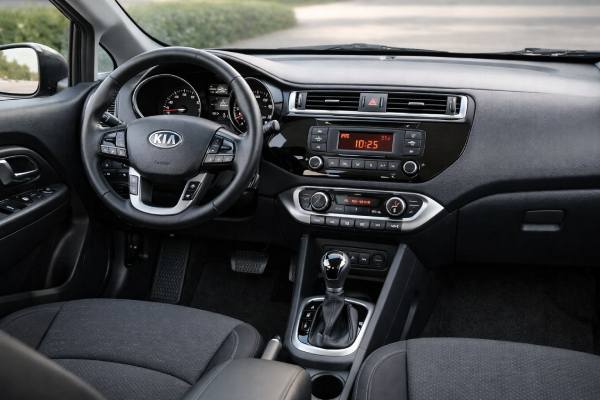
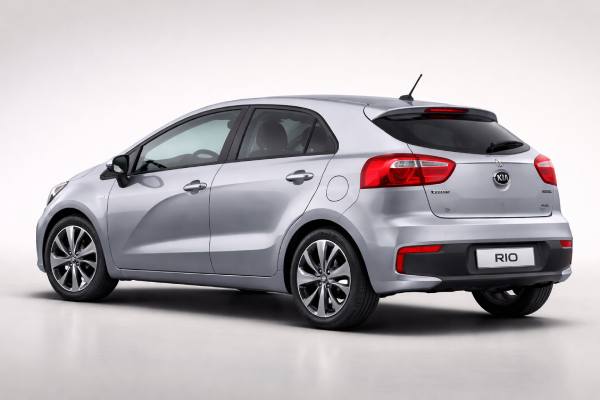
The facelifted 2015–2017 Rio (UB) with the 1.4 CRDi 90 hp diesel is the “small car that does the grown-up miles.” It’s compact enough for dense city use, yet its turbo-diesel torque makes it relaxed on motorways and surprisingly capable when loaded. This version also benefits from the mid-cycle update: small refinements to noise control, trim, and equipment that matter in daily ownership.
From an engineering standpoint, the appeal is simple: an efficient common-rail diesel, straightforward front-drive layout, and a chassis tuned for stability rather than sharp-edged sportiness. As a used buy, it rewards owners who match the car to its ideal use case—regular longer drives that keep the diesel emissions system healthy—while staying disciplined with fluids, filters, and cooling-system upkeep.
Quick Specs and Notes
- Strong low-rpm pull for a small hatch, especially in higher gears on hills and motorways.
- Fuel economy can be excellent on long trips, but short-stop city use may trigger DPF trouble.
- Parts and routine servicing are usually affordable compared with many European diesel rivals.
- Plan on oil and filter service every 15,000 km (9,000 mi) or 12 months (sooner in severe use).
- Budget for a clutch/dual-mass flywheel decision point on higher-mileage cars (often 160,000–220,000 km).
Jump to sections
- Kia Rio UB 1.4 CRDi ownership focus
- Kia Rio UB 1.4 CRDi technical specs
- Kia Rio UB equipment and safety
- Common faults and service actions
- Service plan and buying tips
- Road manners and fuel use
- Rio 1.4 CRDi vs competitors
Kia Rio UB 1.4 CRDi ownership focus
Think of this Rio as a practical commuter that happens to be happiest when you drive it like a commuter—steady speed, warmed through, and used often enough to avoid long idle periods. The 1.4 CRDi’s main advantage is usable torque at everyday revs. You don’t need to chase rpm to merge or climb a grade; it pulls cleanly once the turbo is on boost, which typically arrives early in the rev range. That torque-forward character is why many owners prefer it to smaller petrol engines for mixed driving.
The facelift years also tend to feel more “finished” inside than early UB cars. You’ll usually notice slightly better cabin materials, improved infotainment availability on higher trims, and small NVH (noise, vibration, harshness) gains. The chassis is tuned for predictability: safe understeer at the limit, a stable rear end on rough roads, and a ride that prioritizes control over softness. On long motorway runs, it tracks straight and feels more settled than some lighter supermini rivals, especially with good tyres and a fresh alignment.
Where ownership can get expensive is the diesel emissions hardware if the car lives on short trips. A diesel particulate filter (DPF) needs heat and time to regenerate. If the car never reaches operating temperature or is switched off mid-regeneration, soot loading builds and the DPF, EGR (exhaust gas recirculation), and intake tract can become problem areas. This isn’t unique to this model—but the Rio’s typical buyer profile (city and short commutes) makes it a common mismatch.
If you use it for what it’s good at—regular mixed or highway driving—the drivetrain can be durable and cheap to run. The best examples are boring in the best way: consistent service history, correct low-ash oil, and owners who didn’t ignore early warning lights.
Kia Rio UB 1.4 CRDi technical specs
Below are typical specifications for the facelift UB Rio with the 1.4 CRDi 90 hp diesel. Exact figures vary by market, body style (3/5 door), wheel/tyre package, and emissions equipment (some markets used stop-start and different gearing).
Powertrain and efficiency
| Item | Specification |
|---|---|
| Engine code (common) | D4FC (market-dependent) |
| Layout | Transverse inline-4, turbo-diesel |
| Valvetrain | DOHC, 16 valves (4/cyl) |
| Displacement | 1.4 L (1,396 cc) |
| Bore × stroke | 75.0 × 79.0 mm (2.95 × 3.11 in) |
| Fuel system | Common-rail direct injection |
| Induction | Turbocharged, intercooled |
| Compression ratio | ~16.0–17.0:1 (varies by calibration) |
| Max power | 90 hp (66 kW) @ ~4,000 rpm |
| Max torque | ~220 Nm (162 lb-ft) @ ~1,500–2,750 rpm |
| Timing drive | Chain |
| Rated efficiency (typical) | ~3.3–4.2 L/100 km (56–43 mpg US / 68–54 mpg UK) |
| Real-world highway @ 120 km/h (75 mph) | ~4.8–5.8 L/100 km (49–41 mpg US / 59–49 mpg UK) |
Transmission and driveline
| Item | Specification |
|---|---|
| Drive type | FWD |
| Manual transmission | 6-speed (common) |
| Automatic | Market-limited for this diesel; verify by VIN/PR code |
| Differential | Open |
Chassis and dimensions
| Item | Specification |
|---|---|
| Suspension (front / rear) | MacPherson strut / torsion beam |
| Steering | Electric assist rack-and-pinion |
| Brakes (front / rear) | Vented discs / drums or discs (trim-dependent) |
| Typical brake diameters | Front ~256–280 mm (10.1–11.0 in); rear ~203 mm drum or ~262 mm disc |
| Most common tyre size | 185/65 R15 or 195/55 R16 (market-dependent) |
| Ground clearance | ~140–150 mm (5.5–5.9 in) |
| Length / width / height | ~4,050 × 1,720 × 1,455 mm (159.4 × 67.7 × 57.3 in) |
| Wheelbase | ~2,570 mm (101.2 in) |
| Turning circle (kerb-to-kerb) | ~10.2 m (33.5 ft) |
| Kerb (curb) weight | ~1,150–1,250 kg (2,535–2,756 lb) |
| Fuel tank | ~43 L (11.4 US gal / 9.5 UK gal) |
| Cargo volume (seats up / down) | ~288 L / ~923 L (VDA, typical hatch figures) |
Performance and capability (typical)
| Item | Specification |
|---|---|
| 0–100 km/h (0–62 mph) | ~13.8–15.0 s (gearbox/tyres matter) |
| Top speed | ~170–175 km/h (106–109 mph) |
| Braking 100–0 km/h | ~39–42 m (trim/tyres/road surface dependent) |
| Towing (braked / unbraked) | ~900–1,100 kg / ~450–500 kg (market-dependent) |
| Payload | ~430–520 kg (market-dependent) |
Fluids and service capacities (typical planning values)
| Item | Specification |
|---|---|
| Engine oil | ACEA C3 “low-SAPS” 5W-30 (common); capacity ~5.0–5.5 L (5.3–5.8 US qt) with filter |
| Coolant | Ethylene glycol long-life (verify spec); 50/50 mix; capacity ~5.0–6.0 L (5.3–6.3 US qt) |
| Manual gearbox oil | 75W-85 GL-4 (typical); capacity ~1.7–2.1 L (1.8–2.2 US qt) |
| A/C refrigerant | R134a; charge often ~420–520 g (14.8–18.3 oz) |
| Key torque specs (typical) | Wheel nuts ~90–110 Nm (66–81 lb-ft); oil drain plug ~30–40 Nm (22–30 lb-ft) |
Safety and driver assistance (market-dependent)
| Item | Specification |
|---|---|
| Crash ratings (Euro NCAP) | Earlier Rio assessment: 5-star era; later Rio test protocols show different sub-scores—always compare by year and protocol |
| Airbags | Typically front, front-side, and curtain (count varies by market/trim) |
| Stability control | ESC commonly fitted; verify on base trims in some markets |
| ADAS | Usually limited on UB facelift (lane and AEB features generally more common on later generations); confirm by trim and model year |
Kia Rio UB equipment and safety
Because the Rio (UB) was sold across many markets, “trim” means different things depending on where the car was first registered. Instead of assuming a single trim ladder, it’s more reliable to identify the car by a few quick checks: wheel size, steering wheel controls, infotainment screen type, presence of factory cruise control, and whether ESC and hill-start assist are fitted.
Trims and options: what actually changes
Common equipment groupings you’ll see on facelift cars:
- Base-focused trims: smaller wheels (often 15-inch), simpler radio unit, manual climate, and sometimes rear drum brakes.
- Comfort trims: upgraded audio with Bluetooth/USB, more steering wheel buttons, rear camera on some markets, and better seat fabric.
- Style / higher trims: 16-inch wheels, projector or upgraded headlamps (market-dependent), automatic climate in some regions, and more interior brightwork.
Mechanical differences are usually modest on this model, but they matter:
- Brakes and tyres change stopping feel more than you’d expect. A higher-trim tyre package can transform wet grip and emergency braking confidence.
- Gearing may differ by emissions package (stop-start “eco” versions sometimes use gearing aimed at lower CO₂). That can affect motorway rpm and real-world economy.
Safety ratings: read the fine print
Small cars are a moving target in crash testing because protocols change. If you see a “Kia Rio” Euro NCAP score online, confirm the test year and protocol before assuming it applies to your specific UB facelift. A 5-star result under an older protocol still indicates a fundamentally competent structure for its era, but it isn’t directly comparable to a newer test that includes modern driver assistance scoring.
Safety systems and what to verify
Most facelift Rio diesels you’ll encounter include:
- ESC/traction control (often standard, but confirm on the specific VIN)
- ABS with electronic brake-force distribution
- ISOFIX/LATCH rear outboard mounts (check for the ISOFIX logo tags on the seat bight)
- Front, side, and curtain airbags on many trims; confirm by “AIRBAG” labels on seats and A-pillars
ADAS (like AEB or lane keeping) is not a guaranteed feature on this generation. If you want those systems, check the windshield area for camera modules and the front grille for radar sensors—and then confirm functionality with a proper diagnostic scan after purchase. Even basic systems like ESC can be impacted by incorrect tyre sizes, weak 12 V battery voltage, or wheel-speed sensor faults.
Common faults and service actions
This drivetrain can be dependable, but it punishes the wrong use pattern. Below is a practical map of issues by prevalence and cost tier, with symptoms and the most likely fix.
Common (watch closely)
- DPF soot loading (medium–high cost if ignored)
Symptoms: DPF light, frequent fan running after shutdown, rising fuel use, sluggish response.
Root cause: repeated short trips, interrupted regenerations, faulty differential pressure sensor, or exhausted ash capacity at high mileage.
Remedy: confirm soot/ash load with diagnostics; fix any sensor/EGR issues first; forced regen only if safe; DPF removal and professional cleaning or replacement when ash is high. - EGR valve and intake contamination (medium cost)
Symptoms: uneven idle, hesitation, smoke under load, fault codes for EGR flow.
Root cause: soot and oil mist buildup, especially with short-trip use.
Remedy: EGR cleaning/replacement; inspect intake tract; verify correct oil spec to reduce ash. - Injector sealing or fuel system air leaks (medium cost)
Symptoms: hard start, diesel smell, tapping noise, black “tar” deposits around injectors (some engines).
Root cause: injector washer leakage or fuel line sealing issues.
Remedy: reseal injectors properly; torque to spec; confirm return/leak-off rates.
Occasional (depends on mileage and driving style)
- Turbo actuator or boost control faults (medium–high)
Symptoms: limp mode, underboost/overboost codes, weak acceleration.
Root cause: sticking actuator, vacuum supply leaks (if vacuum-controlled), or soot-related vane issues (if VGT equipped).
Remedy: smoke/vacuum test, actuator diagnosis, and correct root-cause repair—not just clearing codes. - Clutch and dual-mass flywheel wear (high)
Symptoms: rattling at idle with clutch out, vibration on take-up, slipping under load.
Root cause: torque + urban stop-start driving, heat cycling, aggressive launches.
Remedy: clutch kit; DMF replacement if out of spec—avoid “cheap” single-mass conversions unless you accept more vibration.
Rare but worth checking
- Cooling system weak points (medium)
Symptoms: slow coolant loss, overheating in traffic, weak cabin heat.
Root cause: thermostat sticking, radiator seepage, hose clamps, or water pump wear over time.
Remedy: pressure test; fix leaks early to protect head gasket and turbo cooling.
Software, calibrations, and service actions
Even when the hardware is fine, drivability issues can be calibration-related—especially around EGR/DPF strategy. During pre-purchase checks, ask the seller for proof of dealer servicing and confirm:
- any ECU updates related to emissions faults or sensor plausibility
- completion of any recalls or field actions
- correct battery charging behavior (a weak alternator/charging strategy can cause repeat sensor faults)
The most useful rule is simple: if the dash has persistent warning lights, don’t “assume it’s a sensor.” On modern diesels, sensors often fail because the underlying system is already unhealthy.
Service plan and buying tips
A diesel Rio stays cheap when you treat maintenance as prevention, not rescue. Use this schedule as a practical baseline, then shorten intervals for severe use (short trips, heavy city traffic, very cold climates).
Practical maintenance schedule
- Engine oil and filter: every 15,000 km (9,000 mi) or 12 months. If most trips are under 10 km (6 mi), consider 10,000 km intervals. Use low-SAPS oil suited to DPF-equipped diesels.
- Air filter: inspect every service; replace 30,000–45,000 km (dusty environments sooner).
- Cabin filter: 15,000–30,000 km or yearly for allergies.
- Fuel filter: 30,000–60,000 km (bad fuel regions: shorten). A restricted fuel filter can mimic injector problems.
- Brake fluid: every 2 years, regardless of mileage.
- Coolant: commonly long-life; plan an initial change around 8–10 years if not documented, then every 5 years (verify the exact spec for your market).
- Manual gearbox oil: not always listed as routine, but a preventive change around 100,000–140,000 km can improve shift quality and bearing life.
- Timing chain: no routine replacement interval, but inspect for noise, cold-start rattle, or timing correlation faults as mileage climbs.
- Tyres and alignment: rotate every 10,000–12,000 km and align if you see uneven wear—small cars are sensitive to toe settings.
Fluids and decision-making details
When you don’t have full service records, focus on the fluids most tied to expensive failures:
- Oil spec correctness matters for DPF life more than brand. Wrong oil can accelerate ash buildup.
- Coolant condition protects the turbo and head gasket. Brown, rusty, or low coolant is a red flag.
- Brake fluid moisture impacts pedal feel and ABS/ESC reliability over time.
Buyer’s guide: what to check before purchase
- DPF health: scan soot/ash data with a capable diagnostic tool; check for repeat regeneration history if available.
- Cold start behavior: listen for excessive rattle, misfire-like shake, or smoke.
- Clutch/DMF: test in a high gear at low rpm—if revs rise without speed increase, it’s slipping.
- Cooling system: pressure test, look for dried residue around hose joints and radiator seams.
- Suspension and steering: listen for front knocks over small bumps (links/bushes) and check for tyre feathering.
- Electrical basics: confirm all windows/locks work; small electrical repairs add up fast in “cheap car” ownership.
Best long-term bet: a car that has done mixed driving with documented servicing. A very low-mileage diesel used only in town is often the riskiest pick.
Road manners and fuel use
On the road, this Rio’s personality is calmer than sporty. The steering is light at parking speeds and becomes more stable as speed rises, though feedback through the wheel is limited compared with older hydraulic systems. The suspension setup (strut front, torsion beam rear) is simple but effective: it controls body motion well on sweeping roads and feels planted on the motorway. Sharp potholes can still thump through on larger wheels, so the “best” ride often comes from moderate tyre sizes with a taller sidewall.
Powertrain character
The 1.4 CRDi’s biggest advantage is how little effort it needs to make progress:
- Low-rpm torque: strong pull from roughly the mid-1,000s rpm means fewer downshifts in daily driving.
- Turbo lag: present if you demand full power below the boost threshold, but generally modest once the engine is warm.
- Gearbox behavior: the 6-speed manual (where fitted) typically offers a long-legged top gear for relaxed cruising. If you notice notchiness or reluctance into a gear, check for old gearbox oil, worn linkages, or clutch drag.
Real-world efficiency
In realistic ownership, expect economy to depend more on your route than your right foot:
- City (warm, flowing traffic): ~5.0–6.5 L/100 km (47–36 mpg US / 56–43 mpg UK)
- Highway 100–120 km/h (60–75 mph): ~4.8–5.8 L/100 km (49–41 mpg US / 59–49 mpg UK)
- Mixed driving: ~4.5–5.8 L/100 km (52–41 mpg US / 63–49 mpg UK)
Cold weather and short trips can add a meaningful penalty because the engine runs richer while warming up and regenerations become more frequent. If your driving is mostly short errands, a petrol Rio may be a better match.
Performance metrics that matter
Numbers are less important than how the car feels, but typical benchmarks help set expectations:
- 0–100 km/h: usually mid-14s seconds depending on gearing and tyres
- Passing ability: strong in-gear response from 60–100 km/h when already in the torque band
- Braking feel: consistent when maintained; sticky caliper sliders or cheap pads can make the pedal feel vague—service quality matters
Overall, it’s a good “steady speed” car: comfortable, stable, and efficient when used as intended.
Rio 1.4 CRDi vs competitors
In the small-diesel hatchback class, the Rio’s strengths are straightforward running costs, simple packaging, and an engine that feels stronger than its power figure suggests. Where it can fall behind is in modern driver assistance availability and the last layer of interior sophistication that some European rivals deliver.
How it compares in real ownership
- Versus Ford Ford Fiesta 1.5 TDCi: the Fiesta often feels sharper to drive and more communicative, but the Rio can be the easier long-term maintenance story in some markets thanks to parts availability and simpler option complexity.
- Versus Volkswagen Volkswagen Polo 1.4 TDI: the Polo typically wins on cabin solidity and refinement, but repair costs (especially for branded parts and certain electronics) can be higher.
- Versus Renault Renault Clio dCi 90: the Clio can be very efficient and comfortable, yet trim/electronics complexity varies widely; the Rio tends to be more “what you see is what you get.”
- Versus Peugeot Peugeot 208 BlueHDi: the 208 often offers a more modern cabin design and strong economy, but emissions hardware costs can be similar—condition and use pattern matter more than badge.
Choosing the right one
Pick the Rio 1.4 CRDi if you:
- drive enough longer trips to keep the DPF healthy
- want a compact car that feels stable at speed
- value predictable maintenance over the last 5% of driving excitement
Consider a rival (or a petrol Rio) if you:
- do frequent short trips with lots of cold starts
- want more ADAS availability on a used small car
- prioritize the most polished interior and infotainment ecosystem
The best used buy in this class is usually the one with the clearest maintenance evidence and the healthiest emissions system—regardless of brand.
References
- OWNER’S MANUAL QUICK REFERENCE GUIDE 2017 (Owner’s Manual) ([Kia][1])
- Kia Rio 2017 (Safety Rating) ([euroncap.blob.core.windows.net][2])
- New superminis gain five stars 2011 (Safety Rating) ([Euro NCAP Newsroom][3])
- Recalls 2025 (Recall Database) ([owners.kia.com][4])
Disclaimer
This article is for informational purposes only and is not a substitute for professional diagnosis, inspection, or repair. Specifications, torque values, service intervals, and procedures can vary by VIN, market, emissions equipment, and trim—always verify details against official Kia service documentation for your vehicle. If you found this guide useful, please consider sharing it on Facebook, X (Twitter), or your favorite forum to help support our work.