
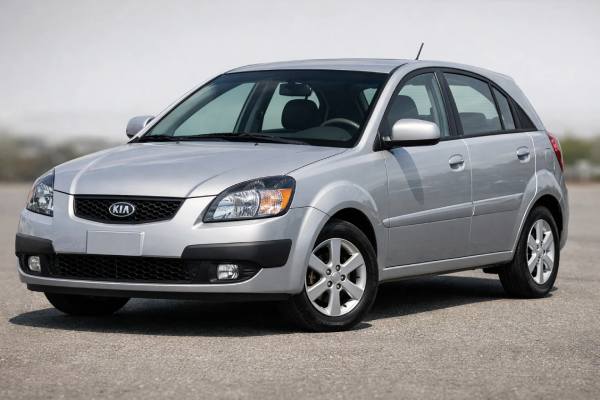
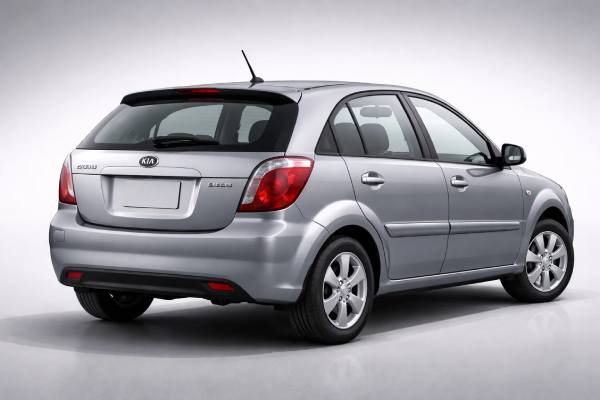
The 2005–2009 Kia Kia Rio (JB) with the 1.5 CRDi (109 hp) is one of those small diesels that can feel “bigger” than its size suggests. It leans on strong low-rpm torque, simple front-wheel-drive packaging, and a fairly robust common-rail layout that responds well to correct oil and fuel-filter discipline. In day-to-day use, the Rio’s strengths are easy to appreciate: it warms up quickly, cruises at motorway speeds without constant downshifts, and remains inexpensive to keep on the road compared with many European superminis of the same era.
The flip side is that age, short-trip driving, and neglected servicing can turn typical diesel wear items—EGR deposits, injector sealing, turbo control parts, and vacuum lines—into drivability headaches. Buy well, maintain on time, and the Rio JB diesel is usually a sensible, honest commuter.
Owner Snapshot
- Strong mid-range pull for a small car, especially from 1,700–2,800 rpm.
- Often low running costs when serviced on schedule and driven on longer trips.
- Cabin and suspension parts are usually affordable and widely available.
- Avoid neglected examples: EGR buildup and injector sealing issues can become time-consuming.
- Plan engine oil and filter every 10,000–12,000 km (6,000–7,500 mi) or 12 months, whichever comes first.
Guide contents
- Kia Rio JB diesel overview
- Kia Rio JB 1.5 CRDi specs
- Kia Rio JB trims and safety
- Reliability issues and recalls
- Maintenance plan and buying tips
- Road test and real efficiency
- Rio JB 1.5 CRDi vs competitors
Kia Rio JB diesel overview
This Rio generation sits in the “straightforward supermini” category: compact outside dimensions, simple suspension hardware, and a mechanical package designed to be easy to service. The 1.5 CRDi is the key differentiator. Unlike many small petrol engines from the same years, the diesel’s torque arrives early, so the car feels more relaxed in normal traffic and less dependent on revs. In practice, it is happiest as a commuter that sees regular 20–40 km runs rather than constant cold starts.
What owners typically like
- Torque-led driveability: The engine pulls cleanly from low rpm, so you can hold a gear through roundabouts and gentle hills without frantic shifting.
- Good motorway manners for the class: It is not a long-wheelbase car, but with correct tyres and alignment it tracks well at speed.
- Simple packaging: Access for routine items (filters, belts, coolant hoses) is usually decent compared with tighter engine bays in later cars.
Where expectations should be realistic
- Age-related NVH: Diesels of this era are not refined at idle. Expect clatter when cold and some vibration through mounts if they are tired.
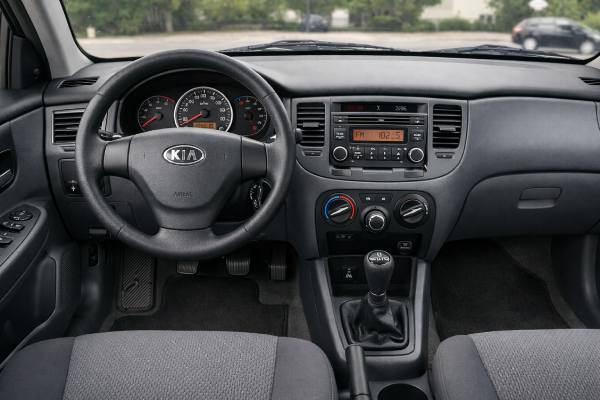
- Interior materials: The Rio is durable rather than plush. Switchgear and seat fabrics often wear better than soft-touch plastics, but you will see hard trim and occasional squeaks.
- Rust risk depends on climate: In salted-road regions, underbody protection and brake/fuel line condition matter more than mileage.
Best use case
If you do mostly mixed driving, want a small car that can handle occasional motorway work, and prefer a proven diesel without modern aftertreatment complexity, the 1.5 CRDi Rio can be a good fit. If your use is predominantly short, cold urban trips, you’ll do better with a petrol alternative or you’ll need to be very disciplined about oil changes and periodic longer drives to keep soot-related issues in check.
Ownership mindset
Think of this Rio as “maintenance-friendly but maintenance-sensitive.” The engineering is not exotic, yet it rewards basics: clean oil, clean fuel filtration, intact vacuum hoses, and prompt attention to warning lights.
Kia Rio JB 1.5 CRDi specs
Specifications for the 2005–2009 Rio JB 1.5 CRDi can vary by market, body style (hatch/sedan), and trim. The figures below reflect common configurations for the 109 hp version and are meant as a practical reference for owners and buyers.
Powertrain and efficiency (typical 109 hp tune)
| Item | Spec |
|---|---|
| Code | D4FA (common 1.5 CRDi family) |
| Engine layout and cylinders | Transverse I-4, DOHC, 4 valves/cyl (16V) |
| Displacement | 1.5 L (1,493 cc) |
| Bore × stroke | 75.0 × 84.5 mm (2.95 × 3.33 in) |
| Induction | Turbocharged (often VGT) with intercooler |
| Fuel system | Common-rail diesel injection |
| Compression ratio | ~17.8:1 (market dependent) |
| Max power | 109 hp (81 kW) @ ~4,000 rpm |
| Max torque | ~235 Nm (173 lb-ft) @ ~2,000 rpm |
| Timing drive | Chain-driven (inspect for noise/stretch with age) |
| Rated efficiency | Commonly ~4.5–5.2 L/100 km combined (52–45 mpg US / 63–54 mpg UK), cycle and gearing dependent |
| Real-world highway @ 120 km/h (75 mph) | Often ~5.0–5.8 L/100 km (47–41 mpg US / 56–49 mpg UK) with a healthy engine and correct tyres |
Transmission and driveline
| Item | Spec |
|---|---|
| Transmission | Typically 5-speed manual (market dependent) |
| Drive type | FWD |
| Differential | Open |
Chassis and dimensions (typical hatchback ranges)
| Item | Spec |
|---|---|
| Suspension (front/rear) | MacPherson strut / torsion beam |
| Steering | Electric or hydraulic assist depending on market; light, city-focused tuning |
| Brakes | Front discs; rear drums common (rear discs on some trims/markets) |
| Wheels and tyres (popular) | 185/65 R14 or 195/55 R15 (varies by trim) |
| Ground clearance | ~150–160 mm (~5.9–6.3 in), market dependent |
| Length / width / height | ~3,990–4,240 mm / ~1,695 mm / ~1,470 mm (157–167 in / 66.7 in / 57.9 in) |
| Wheelbase | ~2,500 mm (~98.4 in) |
| Turning circle (kerb-to-kerb) | ~10.2 m (~33.5 ft) |
| Kerb weight | Commonly ~1,150–1,250 kg (2,535–2,756 lb) depending on body and equipment |
| Fuel tank | ~45 L (11.9 US gal / 9.9 UK gal) |
| Cargo volume | Commonly ~270 L seats up / ~1,100+ L seats down (method varies) |
Performance and capability
| Item | Spec |
|---|---|
| 0–100 km/h (0–62 mph) | ~11.0–12.5 s (traction, tyres, and gearing matter) |
| Top speed | ~175–180 km/h (109–112 mph) |
| Towing capacity | Often not rated or modest; always check your VIN/market plate |
Fluids and service capacities (verify by VIN)
| Item | Typical guidance |
|---|---|
| Engine oil | Commonly 5W-30 meeting the required ACEA/API for your market; capacity often around ~5.0–5.3 L with filter |
| Coolant | Ethylene-glycol long-life coolant; often ~5.5–6.5 L total system capacity |
| Manual gearbox oil | Often 75W-85 or 75W-90 GL-4 (market dependent); typically ~1.8–2.2 L |
| Brake fluid | DOT 3/4 depending on market; change interval matters more than brand |
| Key torque specs (practical) | Wheel nuts commonly ~90–110 Nm (always confirm for your wheels); drain plug and filter torques should be taken from service documentation |
Safety and driver assistance (era-appropriate)
| Item | Notes |
|---|---|
| Crash ratings | Vary by test body, equipment, and year; some markets tested variants with more airbags |
| ADAS | No modern AEB/ACC/LKA on this generation; focus is on airbags, ABS, and structure |
| Stability control | Often not fitted on early/mid trims; confirm by VIN and dashboard indicators |
Kia Rio JB trims and safety
Trim structure differs widely by region, but the Rio JB range generally followed a familiar pattern: entry trims aimed at price and running costs, mid trims adding convenience and sometimes ABS, and higher trims bundling additional airbags, alloys, and comfort features. Because the 1.5 CRDi is a more “value” engine in many markets, you will find it across multiple trims rather than only at the top.
Trims and options: what changes in real life
Instead of trim names, focus on equipment markers that change ownership:
- Airbag count: You’ll see everything from dual front airbags to six-airbag cars (front + side + curtain). Six airbags are a meaningful safety upgrade and can also influence insurance.
- ABS and EBD: Some markets made ABS optional on lower trims in the mid-2000s. If your car does not have ABS, brake feel in emergency stops is far more tyre-dependent, especially in the wet.
- Rear brakes: Many cars have rear drums, which are fine when maintained, but they need periodic cleaning and correct adjustment. Some higher trims or later years may have rear discs.
- Wheel and tyre packages: Smaller wheels (14″) improve ride comfort and pothole tolerance. Larger wheels look better but can increase road noise and increase the chance of bent rims on rough roads.
- A/C type: Manual A/C is typical; automatic climate control is uncommon. Make sure the compressor cycles correctly and the condenser is not corroded.
Quick identifiers when viewing a used car
- Dashboard lights at key-on: ABS and airbag lamps should illuminate briefly and then go out. A missing lamp can mean a removed bulb rather than “no faults.”
- ISOFIX/LATCH presence: Many cars have ISOFIX points, but not all rear seating positions are equal. Look for the small seat tags and anchorage points.
- Seatbelt pretensioners: Most cars have front pretensioners; verify belts retract crisply and the buckles are firm.
- Brake hardware check: A simple look behind the rear wheel can confirm drum vs disc (disc caliper visible).
Safety ratings: how to interpret them for this Rio
This generation sits in a transitional era for small-car safety. Structural design improved compared with early-2000s superminis, but electronic stability control and advanced driver assistance were not yet common. Crash-test results for Rio models of this era often vary based on:
- Airbag configuration (side and curtain airbags change side-impact outcomes),
- Test protocol year (standards moved quickly),
- Market differences (equipment levels and sometimes structural details).
The practical takeaway: when shopping, prioritize six airbags, well-maintained seatbelts, good tyres, and a clean brake system. Those factors matter every day, regardless of what a historic star rating says.
Reliability issues and recalls
The 1.5 CRDi Rio JB is typically dependable when maintained, but it has a predictable set of diesel-era weak points. The goal is to separate common nuisances from expensive surprises, then match them to mileage and usage patterns.
Common (high prevalence, usually low–medium cost)
- EGR and intake soot buildup (often 120,000–200,000 km / 75k–125k mi, sooner with short trips)
- Symptoms: hesitant acceleration, flat spots, smoky exhaust, occasional limp mode.
- Likely cause: soot accumulation and sticky EGR valve, sometimes compounded by boost leaks.
- Remedy: diagnose with scan data, clean/replace EGR components as needed, fix vacuum/boost leaks, and restore correct boost control.
- Vacuum hoses and turbo control solenoids
- Symptoms: inconsistent boost, surging, poor top-end power.
- Cause: aged rubber lines, weak vacuum supply, sticky control valve.
- Remedy: renew hoses proactively and verify actuator movement and vacuum integrity.
- Glow plugs and glow control issues (more noticeable in cold climates)
- Symptoms: hard cold starts, rough first minute, glow warning light behavior.
- Remedy: test plugs and module, replace as a set if multiple are weak.
Occasional (medium prevalence, medium–high cost)
- Injector sealing (combustion leak at injector seat)
- Symptoms: “chuffing” sound, diesel smell, tar-like deposits around injector, rough idle.
- Cause: failed copper sealing washer or improper torque on hold-down hardware.
- Remedy: remove, clean seats properly, fit new seals, and torque correctly; do not delay or the injector can seize in place.
- Clutch and dual-mass flywheel wear (where fitted)
- Symptoms: vibration, rattle at idle, shudder on takeoff, slipping under torque.
- Cause: city driving and high torque at low rpm accelerate wear.
- Remedy: budget for a clutch job on higher-mile cars; replace related hydraulics if they feel tired.
Rare (lower prevalence, can be high cost)
- Turbocharger failure
- Symptoms: oil consumption, whine, persistent underboost/overboost faults, smoke under load.
- Cause: oil starvation from poor service intervals, contamination, or prolonged driving with boost leaks.
- Remedy: confirm root cause before fitting a turbo; always refresh oil supply and return lines if specified.
- Timing chain stretch/noise
- Symptoms: rattling on cold start, timing correlation codes, rough running.
- Cause: extended oil intervals, wrong oil spec, or chronic low oil level.
- Remedy: treat noise seriously; confirm with diagnostics and replace chain components if out of spec.
Recalls, service actions, and how to verify
Two practical checks matter for many markets:
- Airbag/occupant classification service work: Some regions had campaigns related to passenger-seat sensing and airbag logic. If the car shows any airbag warning history, insist on paperwork and a clean scan report.
- Rust prevention and underbody condition: If the car lived on salted roads, prioritize inspection of brake lines, fuel lines, subframe mounts, and floor seams.
Verification steps that actually work:
- Ask for dealer history printouts where available.
- Run an official VIN-based recall check for the market where the car was originally sold.
- Confirm warning lights behave correctly at key-on and that modules show no stored faults.
Maintenance plan and buying tips
A Rio JB diesel is easiest to live with when you adopt a conservative service rhythm. Many surviving cars are now old enough that time-based maintenance matters as much as mileage.
Practical maintenance schedule (owner-friendly)
Use the shorter interval if you do cold starts, short trips, heavy city traffic, or hot climates.
- Engine oil and filter: every 10,000–12,000 km (6,000–7,500 mi) or 12 months
- Tip: diesel engines are soot generators; fresh oil is cheap insurance for turbo and timing components.
- Air filter: inspect every 10,000–15,000 km; replace every 20,000–30,000 km (12k–18k mi)
- Cabin filter: every 15,000–20,000 km (9k–12k mi) or yearly if you have allergies
- Fuel filter: every 20,000–30,000 km (12k–18k mi), sooner if fuel quality is inconsistent
- Coolant: typically every 4–5 years (or per manual), and anytime components are replaced
- Brake fluid: every 2 years, regardless of mileage
- Manual gearbox oil: consider every 80,000–120,000 km (50k–75k mi) for smoother shifting and bearing life
- Accessory belt and tensioner: inspect every service; replace at the first sign of cracking, noise, or wobble
- Glow plugs: test around 100,000–160,000 km (60k–100k mi) or at the first cold-start symptoms
- Battery and charging test: test yearly; many batteries fade after 4–6 years
Buyer’s inspection checklist (15 minutes that can save you money)
- Cold start behavior: It should start promptly. Excessive cranking, heavy smoke, or loud rattles deserve investigation.
- Boost delivery: Drive in 3rd/4th from ~1,500 rpm—power should build smoothly, not surge.
- Injector area: Look for black deposits, ticking sounds, or diesel smell around the injectors.
- Cooling system: Check for stable temperature, no oil in coolant, and no crusted leaks at hoses and radiator end tanks.
- Clutch feel: Any shudder or rattling at idle with clutch engaged suggests future spend.
- Suspension knocks: Front drop links, control arm bushings, and rear beam bushings are common wear points.
- Rust and brake lines: Especially in road-salt regions—inspect metal lines and underbody seams.
Which examples to seek (and which to avoid)
- Seek: cars with evidence of frequent oil changes, fuel filter replacement, and recent suspension refreshes. A modestly higher-mile car with good service history often beats a low-mile car that lived on short trips.
- Avoid: persistent warning lights (airbag/ABS), heavy smoking under load, and “mapped” cars with unknown tuning—extra torque stresses clutch, turbo, and cooling.
Long-term durability is mostly a story of maintenance. Treated well, this engine can cover high mileage. Treated casually, it becomes a chain of small issues that add up.
Road test and real efficiency
On the road, the Rio JB 1.5 CRDi behaves like a practical small car with a diesel’s strengths: torque, relaxed cruising, and decent economy. It is not a hot hatch, but it is often more satisfying than its power figure suggests because the useful shove arrives early.
Ride, handling, and NVH
- Ride quality: With 14–15″ wheels and healthy dampers, it rides with a firm but reasonable feel. The rear torsion beam keeps the layout simple; over sharp bumps you may feel a single thump rather than a sophisticated “settle.”
- Handling balance: Safe and predictable. It prefers smooth inputs—turn in cleanly, let the front tyres bite, then feed torque. Lift-off behavior is mild, and stability is mostly tyre-limited rather than chassis-limited.
- Steering: Light at parking speeds and not especially chatty on-centre. Check for play and uneven assistance, which can indicate tired joints or alignment issues.
- Noise: Expect diesel clatter at idle and more wind noise than modern cars at motorway speeds. Worn engine mounts can make the cabin feel harsher than it should.
Powertrain character
- Low-rpm torque: The engine’s best trait. In daily driving, it reduces the need to rev hard and makes the car feel “effortless” at 50–90 km/h.
- Turbo behavior: Usually mild lag, then a steady push. If it feels peaky or inconsistent, suspect boost leaks, vacuum issues, or a sticky actuator rather than “normal diesel character.”
- Shifting: The 5-speed manual is typically pleasant when the oil is healthy. Notchy cold shifts can improve with correct fluid; persistent crunching points to synchro wear.
Real-world efficiency
Most owners see a clear split between short trips and steady cruising:
- City (stop-start, cold trips): commonly ~6.0–7.5 L/100 km (39–31 mpg US / 47–38 mpg UK)
- Highway 100–120 km/h: often ~5.0–5.8 L/100 km (47–41 mpg US / 56–49 mpg UK)
- Mixed driving: typically ~5.3–6.5 L/100 km (44–36 mpg US / 53–43 mpg UK)
Cold weather can add a noticeable penalty because warm-up takes longer and winter fuel blends can reduce efficiency. Tyres also matter: underinflation and aggressive tread patterns can easily cost 0.3–0.7 L/100 km.
Performance metrics that matter in daily use
A 0–100 km/h time around the low-12s is less important than in-gear response. The Rio’s usable passing performance is decent for its class when the turbo system is healthy and the clutch is not slipping. If the car feels slow, it is often not “because it’s old”—it is because something is wrong (boost control, EGR, intake leak, or fuel delivery).
Rio JB 1.5 CRDi vs competitors
Cross-shopping this Rio usually means comparing it with other mid-2000s diesel superminis. The most common alternatives include Ford Fiesta (TDCi), Volkswagen Polo (TDI), Toyota Yaris (D-4D), Renault Clio (dCi), and Peugeot 207 (HDi). Here’s how the Rio tends to stack up in real ownership.
Where the Rio often wins
- Value and parts pricing: Purchase prices are frequently lower than a comparable Polo or Fiesta diesel, and common service parts are typically affordable.
- Mechanical simplicity: Many rivals added more complex electronics and trim variations. The Rio’s simpler spec can mean fewer “mystery” electrical issues—though any 15–20-year-old car can have them.
- Torque-per-euro: In everyday driving, the 1.5 CRDi’s torque makes it feel strong enough without chasing higher-powered variants.
Where rivals can be stronger
- Cabin refinement and noise control: A Polo or some Clio trims can feel more insulated at speed, especially on coarse asphalt.
- Steering and chassis polish: A Fiesta of the era often feels sharper and more confidence-inspiring on a twisty road.
- Safety equipment availability: Depending on the exact year and market, some rivals offered stability control and broader airbag availability earlier. For the Rio, you must shop carefully to get six airbags and ABS together.
Reliability comparison (typical patterns)
- Rio vs Clio 1.5 dCi: Both can be economical and long-lived. The Clio ecosystem is larger, but it can bring more trim-dependent complexity. The Rio is often simpler, but it demands clean oil and attention to diesel intake/boost health.
- Rio vs Polo TDI: The Polo can feel more solid, but maintenance and parts costs can be higher. A well-kept Rio can be cheaper to run year-over-year.
- Rio vs Yaris D-4D: The Yaris often has a strong reliability reputation, but it may cost more upfront. The Rio can be the better buy when condition and history are excellent.
Best decision rule
Choose the Rio JB 1.5 CRDi when:
- you find a documented, well-serviced example,
- it drives smoothly with consistent boost,
- it has the safety equipment you want (ideally ABS and six airbags),
- and underbody condition matches your climate.
Choose a rival when:
- you prioritize refinement and driving feel (Fiesta),
- you want a more “premium” cabin and are willing to pay more (Polo),
- or you prefer a broader track record and easier resale in your market (Yaris/Clio).
In the end, condition beats badges in this age bracket. The Rio is at its best when bought carefully and maintained proactively.
References
- Kia Rio instruktionsböcker | Kia Sweden 2026 (Owner’s Manual Portal)
- JB swd-3.qxd 2006 (Owner’s Manual)
- Kia Rio | Safety Rating & Report | ANCAP 2007 (Safety Rating)
- Microsoft Word – SC097 – RIO OCS_ Final Owner Notification Ltr.DOCX 2012 (Recall Notice)
- Check for Recalls: Vehicle, Car Seat, Tire, Equipment | NHTSA 2026 (Recall Database)
Disclaimer
This article is for informational purposes only and is not a substitute for professional diagnosis, inspection, or repair. Specifications, torque values, service intervals, and procedures can vary by VIN, market, model year, and equipment. Always verify details using official owner and service documentation for your exact vehicle and consult a qualified technician when needed.
If you found this guide helpful, please consider sharing it on Facebook, X (Twitter), or your favorite forum to support our work.