
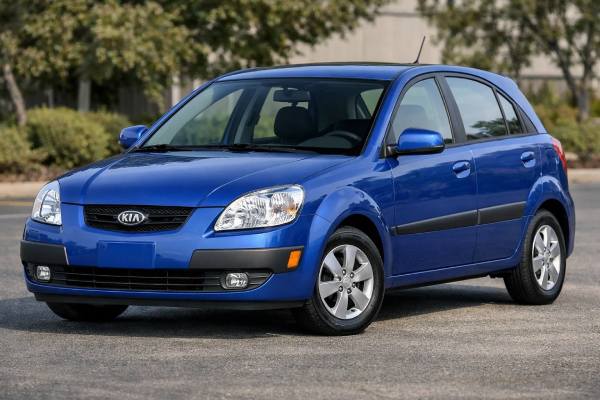
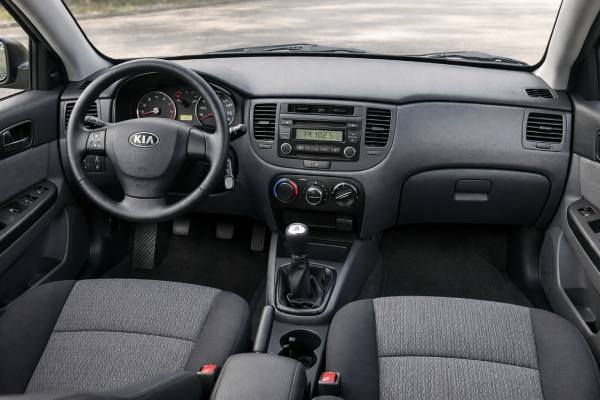
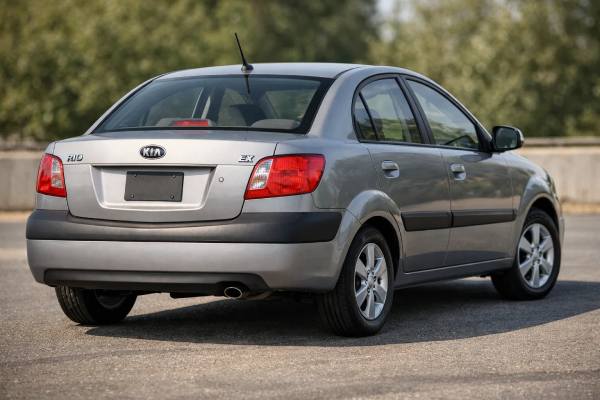
The 2005–2009 Kia Rio (JB) with the 1.4 i 16V 97 hp engine is a straightforward small car built around simple packaging, low running costs, and “easy to live with” mechanicals. It is not a hot hatch and it does not try to be premium. Instead, it focuses on predictable everyday transport: compact exterior size, usable cabin space for the class, and a naturally aspirated engine that rewards basic maintenance more than specialist knowledge.
For buyers today, the story is less about design and more about condition. At this age, service history, rust control, and cooling-system health matter more than a few thousand kilometers on the odometer. If you pick a well-kept example and stay ahead of timing-belt intervals, fluids, and suspension wear items, the Rio JB can still be a dependable, budget-friendly commuter.
Owner Snapshot
- Simple drivetrain and widely available parts make ownership cost predictable.
- Compact size and light controls suit city driving and new drivers.
- Interior materials wear faster than rivals; inspect seats, switches, and door seals closely.
- Plan timing-belt service every 60,000–90,000 km or 5 years (whichever comes first).
- Brake fluid replacement every 2 years reduces corrosion and soft-pedal issues.
Contents and shortcuts
- Kia Rio JB ownership overview
- Kia Rio JB specs and capacities
- Kia Rio JB trims and safety tech
- Common faults and recalls
- Maintenance plan and buying checks
- Real driving feel and economy
- Rival cars and value verdict
Kia Rio JB ownership overview
The JB-generation Rio arrived with a clear mission: deliver basic, honest transportation at a price that undercut the segment leaders. In this 1.4 i 16V 97 hp form, the engineering priorities are easy to see. The drivetrain is naturally aspirated, the chassis is conventional (front MacPherson struts and a rear torsion beam), and most service jobs remain “mechanic-friendly” because there is little complexity layered on top.
What the car does well starts with everyday usability. The Rio’s cabin generally feels roomy for a supermini, especially in front. Visibility is typically good, and the steering is light at parking speeds. The controls are simple, and many examples avoid costly systems that can age badly (advanced driver assistance features, complex dual-clutch gearboxes, active dampers). That simplicity is a real advantage today.
Where age shows up is in materials and the “small stuff.” Interior plastics can scratch, cloth upholstery can thin, and the rubber items (door seals, engine mounts, suspension bushings) become the determining factors in refinement. Expect more road noise than newer small cars and more vibration at idle if mounts are tired. The good news is that most of these issues are fixable without turning the car into a money pit—provided you buy the right base vehicle.
The 1.4 i 16V character is best described as willing rather than strong. It will keep up with traffic, but it prefers to be worked through the rev range, especially with passengers or on highways. In manual form, the gearbox ratios and clutch condition shape the driving experience: a crisp shifter and a healthy clutch make the car feel far more energetic than the power figure suggests.
Who it suits now:
- Commuters who value low purchase price, simple maintenance, and easy parking.
- New drivers who want predictable handling and manageable power.
- Owners who can do basic checks (oil level, coolant, tyre pressure) and respond early to small symptoms.
Who should think twice:
- Drivers expecting modern cabin quietness, strong overtaking power, or high-speed stability on rough highways.
- Buyers who cannot verify timing-belt history or who want a “set and forget” car without preventative maintenance.
If you approach the Rio JB as a practical tool—then inspect carefully and maintain proactively—it can still be a very sensible runabout.
Kia Rio JB specs and capacities
Below are practical, owner-focused specifications for the 2005–2009 Rio (JB) 1.4 i 16V 97 hp variant. Exact figures can vary by market (hatch vs sedan), emissions calibration, wheel size, and transmission choice, so treat them as a decision-making baseline and verify by VIN where possible.
Powertrain and efficiency
| Item | Specification |
|---|---|
| Code | 1.4 i 16V (market-dependent code) |
| Engine layout and cylinders | Inline-4, DOHC, 16 valves |
| Displacement | 1.4 L (≈ 1,399 cc) |
| Induction | Naturally aspirated |
| Fuel system | Multi-point fuel injection (typical for this class/era) |
| Compression ratio | Market-dependent (verify by VIN) |
| Max power | 97 hp (≈ 71 kW) @ ~6,000 rpm (typical) |
| Max torque | ~120–130 Nm @ ~4,000–4,800 rpm (typical) |
| Timing drive | Timing belt (verify service history) |
| Rated efficiency | ~6.2–7.0 L/100 km combined (varies by gearbox/body) |
| Real-world highway @ 120 km/h | ~6.5–7.8 L/100 km depending on load, tyres, and wind |
Transmission and driveline
| Item | Specification |
|---|---|
| Transmission | 5-speed manual (common); 4-speed automatic in some markets |
| Drive type | FWD |
| Differential | Open |
Chassis and dimensions
| Item | Typical specification (market-dependent) |
|---|---|
| Suspension (front/rear) | MacPherson strut / torsion beam |
| Steering | Rack-and-pinion, hydraulic assist (common) |
| Brakes | Front discs / rear drums (rear discs in some trims/markets) |
| Wheels and tyres (popular sizes) | 175/70 R14 or 185/60 R15 (varies) |
| Ground clearance | ~140–160 mm (varies) |
| Length / Width / Height | ~3,990–4,050 mm / ~1,695 mm / ~1,470 mm |
| Wheelbase | ~2,500 mm |
| Turning circle (kerb-to-kerb) | ~10.2–10.6 m (typical) |
| Kerb (curb) weight | ~1,050–1,150 kg (varies by body/gearbox) |
| Fuel tank | ~45 L |
| Cargo volume | Hatchbacks typically ~270 L seats up (varies by method/market) |
Performance and capability
| Item | Typical range |
|---|---|
| 0–100 km/h (0–62 mph) | ~11.5–13.0 s (manual vs automatic, body, tyres) |
| Top speed | ~170–180 km/h |
| Braking 100–0 km/h | ~40–44 m (tyres and brake condition dominate) |
| Towing capacity | Often limited; market-specific (check owner documentation) |
| Payload | Typically ~350–450 kg (market-specific) |
Fluids and service capacities
These are common “shop-floor” numbers used for planning and purchasing fluids. Always confirm for your engine code and transmission.
| Item | Typical specification |
|---|---|
| Engine oil | 5W-30 or 5W-40 (market/climate dependent); capacity ~3.0–3.5 L |
| Coolant | Ethylene glycol long-life; 50/50 mix typical; capacity ~5–6 L |
| Manual gearbox oil | 75W-85/75W-90 GL-4 (market-dependent); ~1.8–2.0 L |
| Automatic ATF | SP-III-type in many Kia/Hyundai era automatics (verify); capacity varies |
| A/C refrigerant | R134a; charge varies by body/market |
Key torque specs (critical fasteners only; verify by manual):
- Wheel nuts: 90–110 Nm
- Engine oil drain plug: 25–35 Nm
- Spark plugs: 18–25 Nm
Safety and driver assistance
This generation’s safety equipment varies widely by year and trim. Many cars were sold with basic systems; some markets offered upgrades.
| Item | Typical availability (market-dependent) |
|---|---|
| Airbags | Front airbags common; side/curtain airbags on higher trims |
| ABS | Optional or trim-dependent in some early markets |
| Stability control (ESC) | Rare on early/basic trims; market-dependent |
| ISOFIX/LATCH | Often present on rear outboard seats (verify) |
| Crash ratings | Often not directly comparable across markets/years; verify local test data |
If you are shopping with safety as a priority, prioritize a car with ABS and side/curtain airbags, and verify that warning lights (airbag/ABS) self-test correctly at startup.
Kia Rio JB trims and safety tech
Trims for the Rio JB differ by country, but the equipment pattern is consistent: base models focus on price, while higher trims add comfort and safety items that make a noticeable difference in daily use.
Typical trims and option patterns
You will often see trim names like LX/EX, Base/Comfort, or local equivalents. Instead of relying on the badge alone, use what the car physically has:
- Air conditioning vs manual ventilation: A/C is a major comfort upgrade and can affect resale value.
- Power windows and mirrors: Frequently absent on the cheapest versions.
- Wheel size and tyre package: 14-inch wheels ride more softly; 15-inch wheels can feel sharper but cost more in tyres.
- Audio and convenience: Basic radios are common; higher trims may add steering wheel buttons, better speakers, or trip computers.
Mechanical differences are usually limited, but there are a few things to watch:
- Some markets pair the 1.4 engine with automatic transmission only on specific trims.
- Brake setups can vary (rear drums are common; rear discs appear in some markets or higher trims).
- Suspension tuning is generally the same, but tyre choice changes grip and braking more than most owners expect.
Quick identifiers when viewing a car
Use these “tells” during an inspection:
- ABS presence: Look for an ABS light on the cluster at ignition-on (it should illuminate briefly), and check for an ABS pump/module under the hood.
- Side/curtain airbags: Check seat side tags (“SRS Airbag”) and headliner/roof rail markings if curtains are fitted.
- Factory immobilizer/alarm: Depends on market; verify keys and remote operation.
- ISOFIX: Look for the ISOFIX symbol on rear seat labels or the seat crease indicators.
Safety ratings and what they mean here
For many older small cars, safety scoring can be hard to compare because tests changed over time and not every body style or market received an official rating. Treat ratings as one input, not the whole decision. What matters most on the used market is the presence and functionality of core safety systems:
- Working airbags (no SRS light)
- Functioning ABS (no ABS light)
- Good tyres (matched set, adequate tread, no sidewall cracks)
- Straight structure (no poorly repaired crash damage)
Driver assistance and ADAS
Modern ADAS (automatic emergency braking, adaptive cruise, lane keeping) is generally not part of the Rio JB story. The safety “technology” you are most likely to encounter is:
- ABS
- Brake-force distribution (EBD) on some trims
- Basic traction control in limited markets/years
- Rear parking sensors as dealer-fit accessories
Because there is minimal ADAS, there are also fewer calibration concerns after windshield replacement or bumper repairs—one of the subtle ownership advantages of this generation.
If safety is your top priority, your best move is to buy the highest safety-equipped trim you can find, then budget immediately for fresh tyres, brake service, and a full suspension inspection.
Common faults and recalls
At 15–20 years old, reliability is less about “good model vs bad model” and more about maintenance quality, corrosion exposure, and previous repairs. The Rio JB can be dependable, but it has predictable weak points. The lists below focus on symptoms → likely cause → practical remedy, plus cost severity.
Common (likely on many cars)
- Front suspension clunks over bumps → worn drop links or bushings → replace links/bushings, then align.
Cost tier: low to medium. When: often after years of city potholes. - Steering feels vague or knocks on rough roads → inner/outer tie rods or rack bush wear → inspect joints, replace as needed, align.
Cost tier: medium. When: higher mileage, rough roads. - Brake pedal gets soft over time → old brake fluid and moisture absorption → flush brake fluid every 2 years.
Cost tier: low. When: age-driven, not mileage-driven. - Cooling system aging → thermostat sticking, radiator seep, weak hose clamps → pressure test, renew thermostat/hoses, correct coolant mix.
Cost tier: low to medium. When: 10+ years, especially if coolant changes were skipped.
Occasional (depends on use and service history)
- Rough idle or hesitation → dirty throttle body, vacuum leak, tired ignition components → clean throttle body, smoke-test intake, check coils/plugs.
Cost tier: low to medium. - Check-engine light (fuel trim/O2 codes) → aging oxygen sensor or small exhaust leak → diagnose before parts swapping.
Cost tier: medium. - Clutch slip or shudder (manual) → worn clutch disc/pressure plate or contaminated friction surface → replace clutch kit; inspect rear main seal.
Cost tier: medium. - A/C weak or intermittent → low refrigerant, aging compressor clutch, or condenser leak → leak test and repair properly, not just re-gas.
Cost tier: medium to high depending on parts.
Rare but costly (watch carefully)
- Timing-belt neglect → belt failure risk → replace belt, tensioner, and water pump on schedule.
Cost tier: medium if done preventatively; very high if it fails. - Overheating event history → head gasket risk → check for combustion gases in coolant, oil contamination, and persistent misfires.
Cost tier: high.
Corrosion hotspots (age and climate dependent)
Rust risk varies dramatically by country and storage. Inspect:
- Rear wheel arches and lower quarter panels
- Sills/rockers and jacking points
- Subframe mounting points
- Exhaust hangers and brake line routing
- Hatch seam (hatchback) and trunk lip (sedan)
If you see fresh underseal with no documentation, probe gently—poor rust cover-ups are common.
Recalls, service actions, and how to verify
Recalls are market-specific. The safest approach is procedural:
- Check the VIN in an official recall database for your country.
- Ask for paperwork showing recall completion (dealer invoices, stamped service book entries).
- Confirm warning lights (SRS/ABS) behave correctly at ignition-on.
Even if a recall exists, the real-world impact depends on whether the remedy was performed correctly. Your pre-purchase inspection should include an OBD scan and a test drive that warms the car fully.
Maintenance plan and buying checks
A Rio JB that feels “cheap” is usually just a Rio JB that is overdue on basics. The most reliable examples are the ones that follow a simple schedule and fix small issues before they cascade.
Practical maintenance schedule (distance/time)
Use the tighter interval if the car does short trips, heavy city driving, or extreme temperatures.
- Engine oil and filter: every 10,000–12,000 km or 12 months
If oil consumption exists, shorten to 7,500–10,000 km and monitor level monthly. - Engine air filter: inspect every 15,000 km; replace 30,000 km (sooner in dusty areas)
- Cabin filter: every 15,000–20,000 km or yearly for allergy climates
- Spark plugs: typically 40,000–60,000 km (depends on plug type)
Replace coils only if diagnosed—random “shotgunning” wastes money. - Coolant: every 4–5 years (or per coolant type)
Always bleed properly after service to avoid air pockets. - Brake fluid: every 2 years regardless of mileage
- Manual gearbox oil: often neglected; consider changing every 60,000–100,000 km for smoother shifting
- Timing belt, tensioner, and water pump: every 60,000–90,000 km or 5 years
If history is unknown, treat it as due immediately. - Serpentine/aux belt: inspect every oil change; replace at first cracking/noise
- Tyre rotation and alignment: rotate every 8,000–10,000 km; align annually or after suspension work
- 12 V battery: test annually after year 4; replace proactively around 5–6 years in cold climates
Fluid specs and decision-useful notes
- Choose oil viscosity based on climate and engine condition (a healthy engine can run thinner; a high-mileage engine may prefer slightly thicker oil within OEM guidance).
- Use the correct coolant type and mix ratio—mixing incompatible coolants can create sludge.
- For automatics, only use the specified ATF type; wrong fluid can cause shudder and premature wear.
Buyer’s guide: inspection checklist
Bring a flashlight, a cheap OBD scanner, and plan a drive long enough to reach operating temperature.
Body and rust
- Check wheel arches, sills, and underbody seams.
- Look for uneven panel gaps and overspray (signs of crash repair).
Engine and cooling
- Cold start: listen for rattles, belt squeal, or unstable idle.
- Warm idle: ensure cooling fans cycle and temperature stays stable.
- Check for coolant smell, wet hose joints, and crusty residue at the radiator.
Transmission and clutch
- Manual: test for clutch slip in a higher gear at low rpm; feel for crunchy synchros.
- Automatic: look for delayed engagement and harsh shifts after warming up.
Suspension and brakes
- Clunks over small bumps usually mean links/bushings.
- Pulsation under braking can be warped discs or uneven pad transfer.
Electrics
- Confirm all windows/locks operate.
- Ensure SRS and ABS lights illuminate at ignition-on and then go out.
Long-term durability outlook
A maintained Rio JB can deliver many additional years as a commuter. The durability ceiling is usually set by rust, cooling system neglect, and timing-belt history—not by exotic engine failures. Buy on condition, and budget for a “reset” service (fluids, belts, filters, tyres) to establish a known baseline.
Real driving feel and economy
The Rio JB’s driving experience is shaped by its simplicity: modest power, light weight for the class, and a suspension design aimed at everyday comfort rather than sharp performance.
Ride, handling, and NVH
Ride quality is generally compliant at city speeds, especially on smaller wheels with taller tyres. The rear torsion beam is robust and space-efficient, but it can transmit sharper impacts over potholes compared with more sophisticated multi-link designs. If the car feels harsh, the cause is often aged dampers or overinflated tyres, not the chassis itself.
Handling balance is safe and predictable: mild understeer when pushed, decent stability in normal driving, and steering that is light rather than talkative. At highway speeds, crosswinds and road surface quality matter more than in heavier cars—keep tyres matched and pressures correct to reduce tramlining.
Noise and vibration are the main “age complaints.” Expect:
- More tyre roar on coarse asphalt than newer rivals
- Wind noise around mirrors and door seals as rubber hardens
- Idle vibration if engine mounts are tired
These issues are rarely dangerous, but they change how “cheap” the car feels day to day.
Powertrain character
The 1.4 i 16V is at its best when you let it rev. Around town it feels adequate, but on hills or when merging you will use more throttle and more rpm than you might in a torquier engine. With a manual gearbox, good technique matters:
- Downshift early for overtakes rather than flooring it in a tall gear
- Keep the engine in the midrange when climbing grades
- Avoid lugging (low rpm, heavy throttle), which can increase knock risk and fuel use
Automatic versions (where offered) tend to feel slower and can raise fuel consumption, especially in stop-and-go traffic.
Real-world efficiency
Fuel economy depends heavily on speed and tyres. A well-maintained manual car typically lands in these real-world ranges:
- City: ~7.0–8.5 L/100 km (cold weather and short trips push higher)
- Highway (100–120 km/h): ~6.0–7.8 L/100 km
- Mixed: ~6.5–7.5 L/100 km
If you see significantly worse numbers, look for:
- Underinflated tyres or mismatched tyre types
- Sticking brake caliper (front) or dragging rear brakes
- Old spark plugs, intake leaks, or tired oxygen sensors
- Thermostat stuck open (engine runs too cool)
Key performance metrics that affect the verdict
For most buyers, the practical metrics are:
- Overtaking flexibility: this engine can overtake safely, but you must plan the gap and downshift.
- Braking confidence: strongly tyre-dependent; fresh tyres and good brake fluid transform the feel.
- Turning circle and visibility: both support stress-free city use, where this Rio does its best work.
If your driving is mostly fast motorway work with passengers, you may prefer a slightly larger car or a more powerful engine. But for mixed commuting and city errands, the Rio JB remains fit for purpose.
Rival cars and value verdict
The Rio JB competes with some very strong small cars from the same era. Its advantage is usually purchase price and parts availability, while its weaknesses tend to be refinement and interior longevity.
How it compares to key rivals
- Toyota Yaris (XP90-era): Often feels more solid inside and can be very durable, but pricing on the used market is commonly higher. Rust and maintenance history still matter, but the Yaris usually wins on “tightness” and long-term trim quality.
- Honda Jazz/Fit (GD/GE-era): Class-leading practicality and clever packaging. It typically offers more cabin flexibility than the Rio. It can cost more to buy, and neglected examples can have their own issues, but it is hard to beat as an all-rounder.
- Ford Fiesta (mid-2000s): Often more enjoyable to drive with better steering feel. Depending on engine, it can match or beat the Rio for economy. However, suspension wear and corrosion can also appear, and “fun to drive” does not always mean “cheapest to run.”
- Corsa/Clio/Polo-class rivals: Many feel more refined or more “European” in cabin finish. Some have more complex electrical systems and higher parts prices, depending on the exact model and engine.
Where the Rio wins
- Value-per-kilometer when bought right: low entry price, simple systems, and affordable consumables.
- Straightforward maintenance: timing belt, fluids, filters, suspension pieces—these are normal jobs that many independent shops handle easily.
- Good urban fit: compact footprint, light controls, and simple ergonomics.
Where it loses
- Refinement at speed: more noise and less “planted” feel than the best rivals.
- Interior wear: switches, fabrics, and plastics can age faster.
- Safety equipment variability: depending on market/trim, you may have fewer airbags and less electronic safety support than rivals.
Bottom-line buying advice
If you are choosing between a cheap Rio and a more expensive rival, make the comparison on condition and safety equipment, not badges. A Rio with documented belt service, clean cooling system, solid body, ABS, and good tyres is a better buy than a “premium” rival with rust, warning lights, and mystery maintenance. The Rio JB’s real advantage is that it can deliver dependable transport with manageable costs—if you start with a good example and keep it on a simple, disciplined maintenance routine.
References
- Vehicle Detail Search – 2008 KIA RIO 4 DR FWD 2008 (Recall Database)
- Find and Compare Cars 2007 (Official Fuel Economy Data)
- Owner’s Manuals and Documents 2026 (Owner’s Manual Portal)
Disclaimer
This article is for informational purposes only and is not a substitute for professional inspection, diagnosis, or repair. Specifications, torque values, service intervals, and procedures can vary by VIN, market, drivetrain, and equipment. Always verify details against official service documentation for your specific vehicle and follow qualified technician guidance where appropriate.
If this guide helped you, please consider sharing it on Facebook, X (Twitter), or your favorite forum to support our work.