

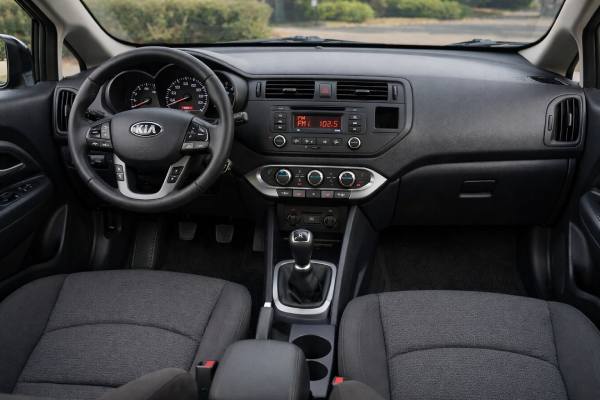
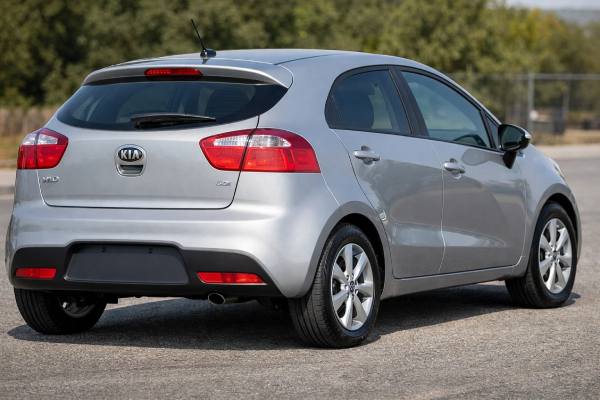
The Kia Rio (UB) with the 1.4 CVVT petrol engine is one of those small cars that wins on engineering balance rather than headline numbers. With 109 hp, it is quick enough for modern traffic, but the real story is how the drivetrain, weight, and gearing work together to keep daily driving relaxed and costs predictable. The naturally aspirated 1.4 is simpler than a small turbo and typically kinder to short-trip use, while the Rio’s straightforward chassis makes it easy to align, brake, and keep quiet over time.
For buyers, the sweet spot is finding a well-kept example with proof of routine oil services and cooling-system care. When those basics are done, this Rio can be a dependable city-and-commute car that stays easy to live with even as it ages.
What to Know
- Smooth, simple 1.4 CVVT powertrain that suits short trips better than many small turbos.
- Low running costs: common tyre sizes, straightforward brakes, and widely available parts.
- Stable motorway manners for the class, especially on good tyres and fresh dampers.
- Watch for age-related rubber wear (engine mounts, suspension bushes) and A/C performance.
- Change engine oil and filter every 10,000–15,000 km (6,000–9,000 mi) or 12 months in real-world use.
Guide contents
- Kia Rio UB 1.4 at a glance
- Kia Rio UB 1.4 technical tables
- Kia Rio UB equipment and safety
- Reliability patterns and fixes
- Service schedule and buyer checks
- On-road performance and fuel use
- 1.4 Rio vs key rivals
Kia Rio UB 1.4 at a glance
The 2011–2014 Kia Rio (UB) marks a shift from “basic small car” to “proper all-rounder.” The body is stiffer than earlier Rios, the cabin layout is more modern, and the car feels more settled at higher speeds. With the 1.4 CVVT petrol (109 hp), the Rio sits in the middle of the range: not the cheapest-spec engine, but not the top-output option either. That makes it a popular used buy, because it avoids the sluggish feel of the smallest engines while keeping maintenance simple.
In day-to-day use, expect a calm, linear power delivery. “CVVT” (continuously variable valve timing) helps broaden the torque curve, so the car feels less peaky than older small petrol engines. You still need revs for brisk overtakes, but the engine is usually smooth and predictable when you ask more of it. If you find a manual, it tends to be the better match for this engine’s character—lighter, more responsive, and generally cheaper to service. Automatic versions (where offered in your market) trade some performance and economy for convenience, and they are worth buying only if the transmission has been treated to regular fluid service or at least careful driving.
Where the Rio UB often surprises owners is chassis “honesty.” The suspension is tuned for everyday roads: firm enough to keep control, soft enough to avoid harshness on broken surfaces. Steering feel is not sporty, but it is consistent and easy to place in town. This is also a car that responds well to basics—good tyres, correct alignment, and fresh dampers make a noticeable difference.
Ownership-wise, the Rio’s strengths are predictable running costs and few complicated systems. The downside is that as these cars age, they can develop typical small-car wear issues: tired engine mounts, suspension bush play, and noisy wheel bearings if they have lived on poor roads. None of those are exotic problems, but they do matter when you want the car to feel tight and quiet.
Kia Rio UB 1.4 technical tables
Below are typical specifications for the Kia Rio (UB) 1.4 CVVT 109 hp (2011–2014). Exact figures can vary by market, body style (hatch/sedan), wheel size, and transmission, so treat these as a practical reference point.
Powertrain and efficiency
| Item | Specification |
|---|---|
| Code | Commonly Gamma 1.4 (varies by market documentation) |
| Engine layout and cylinders | Inline-4, DOHC, 16-valve, 4 cyl, 4 valves/cyl |
| Displacement | 1.4 L (≈ 1,396 cc) |
| Induction | Naturally aspirated (NA) |
| Fuel system | Multi-point injection (MPI) |
| Compression ratio | Typically around 10:1 (market-dependent) |
| Max power | 109 hp (≈ 80 kW) @ rpm varies by calibration |
| Max torque | Typically in the 130–140 Nm range @ mid rpm |
| Timing drive | Chain (inspect for noise rather than “scheduled” replacement) |
| Rated efficiency | Commonly ≈ 5.5–6.5 L/100 km combined (trim/transmission dependent) |
| Real-world highway @ 120 km/h | Often ≈ 6.5–7.5 L/100 km if tyres/alignment are correct |
Transmission and driveline
| Item | Specification |
|---|---|
| Transmission | 5-speed manual common; some markets offer automatic |
| Drive type | FWD |
| Differential | Open |
Chassis and dimensions
| Item | Typical figure (market-dependent) |
|---|---|
| Suspension (front/rear) | MacPherson strut / torsion beam |
| Steering | Electric power steering (EPS) |
| Brakes | Front discs; rear drums or discs depending on trim/market |
| Wheels and tyres (popular sizes) | Commonly 185/65 R15 or 195/55 R16 |
| Length / width / height | Approx. 4,045–4,365 mm / 1,720 mm / 1,455 mm |
| Wheelbase | Approx. 2,570 mm |
| Turning circle | Around 10.2–10.6 m (varies) |
| Kerb weight | Roughly 1,050–1,200 kg |
| Fuel tank | Often 43 L (market-dependent) |
| Cargo volume | Typically ~288 L seats up (hatch), varying by method/market |
Performance and capability
| Metric | Typical figure |
|---|---|
| 0–100 km/h (0–62 mph) | Around 11–13 s (trim/transmission dependent) |
| Top speed | Roughly 175–190 km/h |
| Braking distance 100–0 km/h | Strongly tyre- and brake-condition dependent (no single universal value) |
| Towing capacity | Market dependent; many small-car approvals are modest or “not rated” |
| Payload | Typically 400–500 kg range depending on GVWR |
Fluids and service capacities (common planning figures)
| Item | Typical guidance |
|---|---|
| Engine oil | 5W-30 or 5W-40 (spec by market); capacity often ~3.3–3.6 L |
| Coolant | Ethylene glycol long-life coolant, 50/50 mix typical |
| Manual gearbox oil | Spec varies by transmission; capacity varies |
| A/C refrigerant | R134a on many cars of this era; charge varies by system |
Safety and driver assistance (period-correct)
| Item | Notes |
|---|---|
| Airbags | Usually front + side; curtain airbags depend on trim/market |
| Stability control | ESC often standard or widely available in later years |
| ADAS | Generally minimal (this era is pre-AEB in most trims) |
If you are choosing between two cars, the most useful “spec” is often the one you can verify: tyre size on the door jamb, brake type visible through the wheel, and transmission type from the VIN/build sheet. Those details affect comfort, noise, brake cost, and even highway fuel use more than small differences in brochure figures.
Kia Rio UB equipment and safety
Trim structure varies a lot by country, but the Rio UB’s equipment strategy is consistent: a simple base car, a comfort-focused mid trim, and a higher trim that adds wheels, infotainment, and convenience features. For the 1.4 CVVT, mid-level trims are often the best value on the used market because they avoid expensive cosmetic packages while still giving you the features that improve daily life.
Trims and options that matter most
Look for these practical differentiators, because they change ownership more than “nice-to-haves”:
- Wheel size and tyre profile: 15-inch wheels typically ride quieter and cost less. 16-inch wheels look better but can be noisier and sharper over potholes.
- Rear brakes: some trims use rear drums, others rear discs. Drums can last a long time and are cheap, but discs can feel more consistent when driven hard or in mountains.
- Air conditioning type: manual A/C is common; automatic climate control appears on higher trims. Either can be reliable, but weak cooling is often a sign of neglect (leaks, tired condenser, or low charge).
- Infotainment generation: early systems can feel dated; check Bluetooth pairing stability and that steering wheel controls work.
Quick identifiers when viewing a car
- Badging is unreliable (owners swap trim badges), so use physical cues: wheel size, fog lights, steering wheel button layout, and the presence of curtain airbag tags on the B-pillars.
- VIN/build sticker clues: the tyre size and recommended pressures tell you what the car was built with, which helps you spot mismatched wheel setups.
Safety ratings and what they mean in practice
Formal crash-test ratings depend on the test protocol and the exact vehicle spec, but for owners the practical safety checklist is simpler:
- ESC/ESP present and working (no warning lights, stable braking on gravel during a test drive).
- Tyres matched and decent quality (tyres are the single biggest real-world safety variable on a small car).
- Brake feel consistent (no pulsing ABS at light pedal force; no long pedal travel).
- Airbag system lamp behavior correct (lamp should illuminate at start and then go out).
Driver assistance and service implications
Most 2011–2014 Rio UBs do not have modern ADAS like automatic emergency braking. Instead, the “active safety” you rely on is the base system quality: ABS, ESC, and predictable steering. That makes maintenance more important than on newer cars with electronic mitigation. After any suspension or steering work, insist on:
- A proper alignment (not just “tracking”).
- Steering angle calibration if your shop has the right scan tool and the car requires it.
- A test drive on a straight road to confirm the wheel is centered and the car does not pull.
A well-maintained Rio UB can feel stable and confidence-inspiring for its class, but a neglected one on cheap tyres can feel nervous. When you shop, prioritize condition and correct spec over trim hype.
Reliability patterns and fixes
The Rio UB 1.4 CVVT is generally a “simple car” in the best sense: few high-cost systems and a drivetrain that tolerates normal use well. Most reliability complaints on these cars are not catastrophic engine failures—they are comfort, noise, and wear issues that creep in when maintenance is stretched or when the car lives on rough roads.
Common issues (prevalence and cost)
Common / low to medium cost
- Front suspension wear: drop links, control arm bushes, and top mounts can clunk over bumps.
- Symptoms: knocking on small impacts, vague steering, uneven tyre wear.
- Fix: replace worn joints/bushes; align afterward.
- Engine mounts aging: especially if the car has seen lots of stop-start city use.
- Symptoms: vibration at idle, thump on take-up, more cabin noise.
- Fix: replace the worst mount first (often the torque mount), then reassess.
- A/C performance decline: leaks at seals or condenser damage from road debris.
- Symptoms: weak cooling, oily residue on condenser, frequent re-gassing.
- Fix: leak test, replace failed component, evacuate and recharge correctly.
Occasional / medium cost
- Wheel bearings: can get noisy with mileage and pothole impacts.
- Symptoms: humming that rises with speed, changes with gentle steering input.
- Fix: replace bearing/hub assembly (design varies).
- EPS (electric power steering) noises: some cars develop a light knock or click in the steering column area.
- Symptoms: clicking/knocking when rocking the wheel, more obvious at low speed.
- Fix: inspection for column couplings, joints, and correct torque; some cases require parts replacement.
Rare / higher cost
- Overheating from neglected cooling system: not a “design flaw,” but a risk when coolant is never changed and leaks are ignored.
- Symptoms: temperature spikes, heater performance changes, coolant smell.
- Fix: pressure test, repair leaks, flush/refill with correct coolant mix; investigate thermostat and fan operation.
Engine-specific notes (1.4 CVVT)
- Timing chain: chains are designed to last, but they are not magic. Poor oil quality and long intervals can increase wear on guides and tensioners. Listen for persistent rattles on cold start that don’t disappear quickly.
- Oil consumption: most healthy engines do not drink oil heavily, but any older engine can start using oil if neglected. Check level every few fuel fills until you learn the car’s behavior.
- Ignition coils and plugs: misfires are usually straightforward—plugs first, then coil diagnosis. Use correct plug type and gap.
Corrosion and age factors
Body corrosion risk depends more on climate and previous repairs than on the nameplate. Still, inspect:
- Rear arches and sill seams
- Underbody jacking points
- Front subframe and suspension mounting points
- Brake lines and fuel lines (especially where clips hold moisture)
How to verify recalls and service actions
Because these cars have been sold globally with different campaigns, treat the VIN as your truth source. Ask a dealer to check completion status and compare that with paperwork in the service history. If the seller cannot show evidence of basic servicing, assume you will be “resetting” the maintenance baseline right after purchase.
Service schedule and buyer checks
A Rio UB 1.4 lasts best when you follow a simple principle: shorten intervals when your driving is harsh (short trips, cold starts, heavy city traffic) and treat fluids as cheap insurance. Below is a practical schedule that fits real-world ownership and the way these engines age.
Practical maintenance schedule (distance/time)
- Engine oil and filter: every 10,000–15,000 km (6,000–9,000 mi) or 12 months. If the car does mostly short trips, stick to the shorter end.
- Air filter (engine): inspect every oil service; replace about every 20,000–30,000 km or sooner in dusty areas.
- Cabin filter: every 12 months (or when airflow drops / smells appear).
- Spark plugs: typically every 60,000–100,000 km depending on plug type and market spec. If you don’t know what’s fitted, replace them and reset the clock.
- Coolant: every 4–5 years as a safe planning interval unless your official documentation specifies otherwise.
- Brake fluid: every 2 years. This matters for pedal feel and corrosion inside ABS components.
- Manual gearbox oil: not always listed as routine, but a preventive change around 100,000 km can improve shift quality and longevity.
- Automatic transmission fluid (if equipped): plan changes around 60,000–90,000 km depending on usage; avoid “lifetime fluid” assumptions on older cars.
- Aux belt and pulleys: inspect at every service; replace when cracked/noisy or around 100,000–150,000 km as preventive maintenance.
- Tyre rotation and alignment: rotate every 10,000–12,000 km; align whenever tyres show uneven wear or after suspension work.
- 12 V battery: test yearly after year 4; typical replacement window is 4–6 years.
Fluids and specs (ownership-friendly guidance)
- Engine oil: use the viscosity and specification stated for your market; in many climates, 5W-30 is a safe default.
- Coolant: use the correct long-life coolant type; don’t mix unknown types.
- Brake fluid: DOT 3/4 as specified (verify cap/manual).
Buyer’s inspection checklist (fast but effective)
- Cold start: listen for timing-area rattles that persist, rough idle, or warning lights.
- Steering feel at parking speeds: check for clicks/knocks and confirm the wheel returns smoothly.
- Brake test: firm pedal, no vibration, straight stopping.
- Suspension noise: slow drive over small bumps with windows down.
- Cooling system: check coolant level and signs of dried residue around hoses/radiator.
- Underbody and sills: look for fresh underseal hiding rust repairs.
- Tyres: matched brand/model across an axle is a good sign of careful ownership.
Recommended configuration for most buyers
For a used Rio UB 1.4, a manual gearbox, 15-inch wheels, and working ESC (where fitted) is often the best all-around combination. Avoid cars with unclear service history, persistent warning lights, or multiple mismatched tyres—those are usually the “cheap today, expensive tomorrow” examples.
On-road performance and fuel use
The Rio UB 1.4 CVVT is not a hot hatch, but it delivers the kind of performance that feels “right” for a daily small car. Throttle response is usually clean and predictable, with enough low-end pull for town and a willingness to rev when you need to merge or overtake. Because it is naturally aspirated, it tends to feel more linear than small turbo engines that can surge early and run out of breath later. That linearity is also helpful in poor weather—less sudden torque means easier traction management on cold tyres.
Ride, handling, and NVH
- Ride: on 15-inch tyres, the Rio generally deals well with broken city surfaces. On larger wheels with lower-profile tyres, sharp impacts are more noticeable, and cabin noise can rise.
- Handling balance: safe and neutral. The rear torsion beam is simple and predictable, but it will feel less “planted” than multi-link rivals on rough, fast corners.
- Steering: light at low speeds, stable at higher speeds. Feedback is modest, but accuracy is usually good if alignment and tyre condition are correct.
- Noise: wind noise is acceptable for the class. The biggest variable is tyre roar—cheap tyres can make the Rio feel older than it is.
Powertrain character and transmission behavior
- Manual: typically the better driving experience. Expect to downshift for quick overtakes, especially with passengers. A healthy manual should shift cleanly without notchiness; a vague clutch bite can signal hydraulic wear or a tired clutch.
- Automatic (where fitted): smooth in town but usually slower to respond. If it hesitates or flares between gears, treat it as a warning sign and prioritize service history.
Real-world fuel economy (what owners tend to see)
Real-world numbers depend heavily on speed and tyres. As a planning guide:
- City: often around 7.0–8.5 L/100 km in dense traffic, especially in winter.
- Highway at 100–120 km/h: often around 6.0–7.5 L/100 km if the car is healthy and aligned.
- Mixed: commonly 6.0–7.0 L/100 km for many drivers.
If your Rio is using notably more fuel than expected, the usual culprits are simple: underinflated tyres, poor alignment, dragging rear brakes (especially after long periods of light use), old spark plugs, or a lazy oxygen sensor. None of these are unique to Kia, but they are common on older small cars.
Small-car performance metrics that actually matter
Instead of chasing brochure 0–100 times, focus on:
- Passing response from 80–120 km/h: the 1.4 can do it, but you will often want 4th gear in a manual.
- Brake consistency: fresh fluid and decent pads matter more than brand names.
- Stability at speed: good tyres and correct rear beam alignment keep the car calm on the motorway.
Driven with mechanical sympathy, the Rio UB 1.4 feels like a mature small car—less exciting than some rivals, but easy to trust day after day.
1.4 Rio vs key rivals
In the 2011–2014 used supermini market, the Rio UB 1.4 CVVT competes with some very capable cars. The best choice depends on what you value most: steering feel, cabin refinement, fuel economy, or long-term simplicity.
Versus Ford Fiesta (1.25/1.4 petrol)
- Fiesta advantage: sharper steering and more playful handling; often feels more “alive.”
- Rio advantage: typically simpler ownership experience and a calmer, more neutral ride on everyday roads.
- What decides it: if you want driving fun, Fiesta often wins. If you want relaxed commuting and predictable costs, the Rio is strong.
Versus Volkswagen Polo (1.2/1.4 petrol)
- Polo advantage: solid cabin feel and good motorway refinement in many trims.
- Rio advantage: often better value for money with similar equipment, and can be cheaper to put right after purchase.
- What decides it: condition and service history matter more than brand here. A neglected Polo can be expensive; a cared-for Rio can feel like a bargain.
Versus Opel/Vauxhall Corsa (D/E era small petrols)
- Corsa advantage: wide parts availability and many trim choices.
- Rio advantage: generally straightforward mechanical layout and strong “basic reliability” reputation when maintained.
- What decides it: find the car with the cleanest steering, tightest suspension, and best maintenance evidence—these models vary a lot by how they were used.
Versus Renault Clio (petrol)
- Clio advantage: often comfortable and efficient, with good packaging.
- Rio advantage: typically more “mechanically honest” and less sensitive to neglected basics like oil changes and cooling-system care.
- What decides it: if you do lots of short trips and want fewer surprises, the Rio’s simplicity is attractive.
Versus Hyundai i20 (similar era)
- i20 advantage: closely related engineering and similar ownership profile; sometimes different trim/value positioning.
- Rio advantage: depending on market, the Rio may offer better interior layout or equipment for the same money.
- What decides it: buy on condition, rust status, tyre quality, and service paperwork—these two are often “twins” in real ownership terms.
The Rio UB 1.4 verdict in one line
Choose the Rio UB 1.4 if you want a small car that feels modern enough, avoids complex powertrain tech, and rewards steady maintenance with predictable, low-drama ownership. It may not be the most exciting in the class, but it is often one of the easiest to live with over the long haul.
References
- Kia Rio – Manuals 2024 (Owner’s Manual)
- 2013 Warranty and Consumer Information Manual 2013 (Warranty Booklet)
- Euro NCAP 2024 (Safety Rating)
Disclaimer
This article is for informational purposes only and is not a substitute for professional diagnosis, inspection, or repair. Specifications, torque values, service intervals, and procedures vary by VIN, market, and equipment. Always verify details using the correct owner’s literature and official service documentation for your exact vehicle.
If you found this guide useful, please consider sharing it on Facebook, X (Twitter), or your favorite forum to help others find reliable ownership information.