
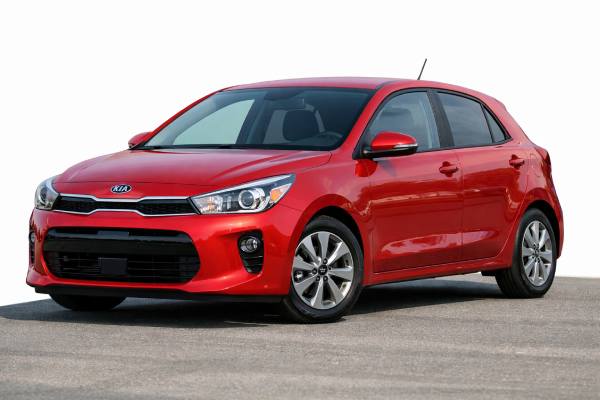


The 2017–2019 Kia Rio (YB) with the naturally aspirated 1.4 MPI (100 hp) is the “simple and sensible” choice in the supermini class—especially if you value predictable running costs over outright speed. The 1.4 MPI’s multi-point injection favors smooth, linear response and tends to be less fussy about short trips and fuel quality than many small turbo engines. In day-to-day driving, its strengths show up as easy throttle control in town, straightforward servicing, and generally durable basic hardware (engine, cooling, and driveline layouts are conventional).
Where owners should be realistic is performance and equipment variation: many Rios were sold in cost-focused trims, and safety tech depends heavily on market and option packs. If you shop carefully and maintain it on schedule, it can be an uncomplicated long-term daily.
What to Know
- A simple, non-turbo 1.4 MPI is easy to live with and typically tolerant of mixed driving and short trips.
- Straightforward maintenance access and common wear parts keep routine service predictable.
- Safety equipment varies widely by trim and option pack—verify what the car actually has.
- Plan engine oil service about every 16,000 km (10,000 miles) or 12 months for many markets.
- Expect relaxed—not quick—acceleration; it rewards smooth driving more than aggressive inputs.
Explore the sections
- Kia Rio YB ownership overview
- Kia Rio YB 1.4 MPI specs
- Kia Rio YB trims, safety and tech
- Reliability patterns and known fixes
- Maintenance plan and buying tips
- Road feel and real efficiency
- Rival comparison and best alternatives
Kia Rio YB ownership overview
In the 2017–2019 window, the Kia Rio (YB) sits in a sweet spot for buyers who want a modern small car without the complexity of downsized turbocharging or hybrid systems. The 1.4 MPI (100 hp) uses a conventional, naturally aspirated four-cylinder with multi-point injection, and that matters for ownership: you typically get stable drivability, consistent cold starts, and fewer “special cases” in maintenance. In practical terms, it’s the kind of engine that tolerates mixed-use commuting, errands, and occasional highway runs without demanding perfect operating conditions.
The Rio’s platform is tuned for everyday stability rather than sporty sharpness. Steering and suspension are set up to feel light at city speeds, with a chassis that’s predictable on broken pavement. The compact footprint makes parking easy, and the cabin packaging is efficient for its class—especially in the hatchback. Most examples are front-wheel drive with either a manual or a conventional automatic depending on market; neither requires exotic service methods.
Where the Rio YB can surprise new owners is how much the “same model” differs by country, trim grade, and optional safety packs. Some cars are very basic (smaller wheels, minimal driver aids), while others include useful features like autonomous emergency braking (AEB) in an option package. That variation affects everything from insurance costs to how the car behaves in emergency braking, so it’s worth decoding the exact equipment list before you buy.
From a cost-of-ownership view, the Rio generally rewards a simple approach: do fluids on time, fix small issues early (especially cooling and brake wear items), and keep tires aligned. If your priorities are low drama, reasonable fuel use, and predictable service needs—rather than hot-hatch performance—the 1.4 MPI Rio is a sensible “keep it for years” candidate.
Kia Rio YB 1.4 MPI specs
Below are technical specifications tailored to the 1.4 MPI (100 hp) Rio (YB). Specifications vary by VIN, market, and body style, so treat these as a baseline for the drivetrain described and confirm details against your local owner documentation.
Powertrain and efficiency
| Item | Specification |
|---|---|
| Engine family (market naming) | Kappa 1.4 MPI (YB application, market dependent) |
| Engine layout and cylinders | Inline-4, DOHC, variable valve timing (market dependent), 4 valves/cyl |
| Bore × stroke | 72 × 84 mm (2.83 × 3.31 in) |
| Displacement | 1.4 L (1,368 cc) |
| Induction | Naturally aspirated (NA) |
| Fuel system | MPI / multi-point injection |
| Compression ratio | Typically around 10–11:1 (calibration dependent) |
| Max power | 100 hp (73 kW) @ about 6,000 rpm (market dependent) |
| Max torque | About 133 Nm (98 lb-ft) @ about 4,000 rpm (market dependent) |
| Timing drive | Chain (service-by-condition is common on small-chain engines) |
| Rated efficiency | Market dependent; commonly ~5.0–6.5 L/100 km combined (37–47 mpg US) |
| Real-world highway @ 120 km/h (75 mph) | Often ~6.5–7.5 L/100 km (31–36 mpg US), depending on tires, load, wind, and temperature |
Transmission and driveline
| Item | Specification |
|---|---|
| Transmission | Market dependent 5/6-speed manual or 6-speed automatic |
| Drive type | FWD |
| Differential | Open |
Chassis and dimensions (typical 5-door hatch baseline)
| Item | Specification |
|---|---|
| Suspension (front/rear) | MacPherson strut / torsion beam (typical class layout) |
| Steering | Electric power steering |
| Brakes | Front ventilated disc; rear disc or rear drum (trim/market dependent) |
| Wheels/tyres (common) | 185/65 R15 or 195/55 R16 (trim/market dependent) |
| Ground clearance | Often ~140 mm (5.5 in), market dependent |
| Length / width / height | Often ~4,065 / 1,725 / 1,450 mm (160.0 / 67.9 / 57.1 in), body dependent |
| Wheelbase | Often ~2,580 mm (101.6 in) |
| Turning circle (kerb-to-kerb) | Often ~10.2 m (33.5 ft) |
| Kerb weight | Commonly ~1,040–1,180 kg (2,293–2,601 lb), equipment dependent |
| Fuel tank | Often ~45 L (11.9 US gal / 9.9 UK gal) |
| Cargo volume | Hatchbacks often around the low-300 L range seats up; seats-down varies by seat design and measurement method |
Performance and capability (typical)
| Item | Specification |
|---|---|
| 0–100 km/h (0–62 mph) | Often ~12.0–13.5 s (body/transmission dependent) |
| Top speed | Often ~170–180 km/h (106–112 mph), calibration dependent |
| Braking distance (100–0 km/h) | Strongly tire and brake-spec dependent; verify on the exact trim |
| Towing capacity | Often limited or not approved in some markets; verify by VIN plate and manual |
| Payload | Commonly ~400–500 kg (880–1,100 lb), trim dependent |
Fluids and service capacities (common baselines)
| Item | Specification |
|---|---|
| Engine oil | Frequently 0W-20 on newer calibrations; capacity often around 3.5 L (3.7 US qt), verify by VIN |
| Coolant | Long-life coolant; capacity commonly in the ~5 L range for this engine size, verify by VIN |
| Automatic transmission fluid | Depends on transmission code; verify the exact fluid specification before service |
| A/C refrigerant | Type and charge vary by year/market; check the under-hood label |
| Key torque specs | Use the official service manual for wheel nuts, drain plugs, and suspension fasteners; values vary by hardware and wheel package |
Safety and driver assistance (equipment dependent)
| Item | Specification |
|---|---|
| Crash ratings | Euro NCAP rating exists for this generation; scores depend on standard vs safety-pack equipment in the tested configuration |
| ADAS | Often depends on “safety pack” options: AEB and lane support may be optional rather than standard |
Kia Rio YB trims, safety and tech
Trim naming for the Rio YB varies by country, but the pattern is consistent: base trims focus on value (smaller wheels, simpler infotainment), while upper trims add comfort and, crucially, safety tech. When you’re shopping, it helps to think in “equipment buckets” rather than trim names alone.
Trims and options (what usually changes)
Most mechanical differences are modest—this is not a car where trims radically alter suspension geometry or drivetrain hardware. Instead, the big differences are:
- Wheel and tire packages: 15-inch wheels with taller sidewalls prioritize comfort and pothole resilience; 16-inch packages usually sharpen steering response but can increase road noise and replacement tire cost.
- Infotainment tiers: basic head unit vs touchscreen; higher tiers may add smartphone integration, a better camera, or steering-wheel controls.
- Climate and comfort: manual A/C vs automatic climate; heated seats and heated steering wheel appear in some cold-climate markets.
- Lighting: halogen vs upgraded reflector/projector variants; the “night-driving gap” between trims can be bigger than buyers expect.
- Transmission availability: the 1.4 MPI may be sold with different transmissions depending on market (manual and/or conventional automatic).
Quick identifiers you can use during a walkaround:
- Radar/camera hardware: cars with AEB or lane assistance usually have a camera module near the rear-view mirror and, in some systems, radar hidden behind the grille area.
- Steering wheel buttons: higher equipment often adds cruise and phone/audio controls; ADAS-enabled cars may have lane or distance-related buttons.
- Cluster icons at key-on: cars with advanced safety features often illuminate additional warning icons briefly during system checks.
Safety ratings (how to read them)
The Rio’s structure and restraint systems can perform well, but the “Safety Assist” picture is driven by what’s fitted as standard vs what’s optional. In plain terms: two Rios can look identical in photos, yet one has meaningful crash-avoidance tech and the other does not. That’s why verifying equipment matters more here than it might on a model where ADAS is standard across most trims.
Safety systems and ADAS (what to verify)
At minimum, most markets include multiple airbags, ABS, and stability control. Beyond that, verify:
- ISOFIX/LATCH points and top-tether locations (especially if you use child seats).
- AEB availability: some cars only include AEB with a package, and systems may be “city-speed” only on lower trims.
- Lane support: lane departure warning may exist without lane keeping assist; these behave very differently.
- Calibration implications: windshield replacement, bumper repairs, or alignment work may require camera/radar calibration if the car is ADAS-equipped—budget time and money if you choose a higher-tech example.
Reliability patterns and known fixes
The Rio YB 1.4 MPI’s reliability story is generally “low drama,” but most problems that do appear fall into predictable small-car categories: sensors, ignition components, wear items, and occasional electrical annoyances. The key is to separate common-but-cheap items from rare-but-expensive neglect scenarios.
Common issues (high prevalence, low-to-medium cost)
- Ignition coil or spark plug wear
Symptoms: rough idle, hesitation under load, flashing check engine light.
Likely cause: coil breakdown or plugs past their best.
Remedy: replace coils/plugs as needed; if one coil fails, consider testing the set and replacing in pairs. - Battery and charging health (12 V)
Symptoms: slow crank, random warning lights, infotainment resets.
Likely cause: aging battery, short-trip use, or poor terminal contact.
Remedy: load-test battery, clean terminals, confirm alternator output. - Brake wear and uneven pad deposits (especially in heavy city use)
Symptoms: vibration, squeal, reduced bite.
Likely cause: cheap pad compounds, lack of bedding, or sticky slide pins.
Remedy: service caliper hardware, replace pads/rotors if needed, and use quality friction materials.
Occasional issues (medium prevalence, medium cost)
- Cooling system seepage or thermostat behavior
Symptoms: slow warm-up, temperature swings, sweet smell, low coolant.
Likely cause: aging hoses/clamps, thermostat sticking, or minor radiator seepage.
Remedy: pressure-test cooling system, replace weak components early to avoid overheating. - Suspension bushings and top mounts
Symptoms: clunks over speed bumps, vague steering on-center.
Likely cause: bushing wear accelerated by rough roads or bigger wheels.
Remedy: replace worn links/bushings; align afterward.
Rare issues (low prevalence, higher cost if ignored)
- Timing chain noise or correlation faults
Symptoms: rattle on cold start, check engine light for cam/crank correlation.
Likely cause: chain stretch/tensioner wear over high mileage or poor oil service history.
Remedy: diagnose promptly; repairs are more involved, so prevention via correct oil and intervals matters.
Software and service actions (how to handle them)
For this generation, updates can target drivability, emissions-monitor logic, or infotainment bugs. The practical advice is simple: when you buy used, ask for dealer history printouts and confirm outstanding campaigns were completed via an official VIN recall check and dealer records. If the car has ADAS, also ask whether windshield or bumper work was followed by proper calibration.
Maintenance plan and buying tips
A good maintenance plan for the Rio YB 1.4 MPI is less about “special procedures” and more about discipline: correct fluids, sensible intervals, and inspections that catch cheap problems before they become expensive.
Practical maintenance schedule (owner-friendly)
Use distance or time—whichever comes first:
- Engine oil and filter: about 16,000 km (10,000 miles) or 12 months for many markets. If you do mostly short trips, consider shortening the interval.
- Engine air filter: inspect every service; replace roughly every 20,000–30,000 km (12,000–18,000 miles) or sooner in dusty areas.
- Cabin air filter: every 12 months is a practical cadence, especially if you use A/C heavily.
- Coolant: long-life coolant is common; many owners plan a 5-year/100,000 km change unless the official manual specifies otherwise.
- Spark plugs: commonly 60,000–100,000 km depending on plug type—confirm what’s fitted.
- Brake fluid: every 2 years is a conservative interval for moisture control.
- Transmission fluid:
- Automatic: consider a drain-and-fill around 60,000–100,000 km depending on usage (city heat cycles, towing, mountains).
- Manual: refresh gear oil if shifts feel notchy or at higher mileage.
- Tyres: rotate every 10,000–12,000 km; align annually or whenever you fit new tires.
- 12 V battery: many last 4–6 years; test annually after year three.
Fluid specifications (decision-making level)
Because specifications can vary by market and production date, use these as the “what to ask for” checklist:
- Engine oil: confirm the required viscosity (often 0W-20 on many later calibrations) and the approval standard (API/ACEA/ILSAC as listed in your manual).
- Coolant: use the correct long-life formulation and mix ratio specified for your market.
- ATF: do not guess—match the fluid to the transmission code and the manual’s fluid spec.
Buyer’s guide: what to check before purchase
Bring a flashlight and do these checks:
- Cold start behavior: listen for timing-chain rattle; a brief tick on cold start can happen, but persistent rattling needs diagnosis.
- Cooling system level and staining: check coolant level and dried residue near hose joints; confirm the fan cycles normally after a warm idle.
- Transmission feel: manuals should engage cleanly; automatics should shift smoothly without flare or harsh downshifts.
- Brake consistency: confirm straight stops and a firm pedal; check for uneven pad wear and sticky caliper hardware.
- Tire wear pattern: inner-edge wear can indicate alignment issues or worn bushings.
- ADAS verification (if equipped): check for warning lights, verify sensors are intact, and ask about calibration after windshield or bumper repairs.
Long-term durability outlook: a Rio with consistent oil changes, clean coolant, and correct tire pressures typically ages well. The “avoid” scenario is a neglected example with overdue fluids and dashboard warning lights the seller can’t explain—those cars can turn a cheap purchase into a constant catch-up project.
Road feel and real efficiency
The Rio YB 1.4 MPI is at its best when driven smoothly. Power delivery is linear and predictable: you won’t get a turbo surge, but you also won’t get the low-speed “wait…then go” feeling that some small turbo cars show with conservative boost and shift programming. In traffic, that predictability makes it easy to meter the throttle without jerky responses, and it pairs well with the car’s light steering.
Ride, handling, and NVH
- Ride: On 15-inch wheels, the Rio usually rounds off sharp edges better and copes with potholes more comfortably. Larger wheels can feel firmer and transmit more impact harshness on broken pavement.
- Handling: Expect safe understeer at the limit. The chassis is stable in quick lane changes, tuned for confidence rather than playfulness.
- Steering: Light and easy at parking speeds; feedback is limited, which is normal in this class with electric assist.
- Cabin noise: City speeds are generally calm; highway speeds bring more tire and wind noise than larger cars, especially on coarse asphalt and wider tires.
Powertrain character
- Low-rpm torque: Adequate for gentle driving, but you’ll downshift on hills and when passing. The engine prefers revs, so higher rpm during merges is normal.
- Transmission behavior: Manuals suit the engine because you can hold gears and keep it in the responsive midrange. Automatics are comfortable, but they may kick down more often on inclines.
Real-world efficiency (what owners commonly see)
Real-world results depend heavily on speed, temperature, and tire choice. As a practical guide:
- City-heavy use: often around 7.0–8.5 L/100 km (28–34 mpg US), especially with short trips and A/C.
- Highway 100–120 km/h: often around 6.0–7.5 L/100 km (31–39 mpg US).
- Mixed driving: commonly 6.5–7.5 L/100 km (31–36 mpg US).
Cold weather can push consumption up because the engine spends more time warming up and the cabin heater load rises. Compared with a small turbo rival, the Rio may lose on peak torque but often feels consistent: you’re not constantly dipping into boost to make progress.
Key performance metrics that affect the verdict: it’s not a fast car, but it’s controllable and easy to drive well. If you value calm, predictable behavior over sharp acceleration, it fits the brief.
Rival comparison and best alternatives
In the 2017–2019 small-car market, the Rio YB 1.4 MPI competes against a mix of comfort-focused superminis and sharper driver’s cars. Your best alternative depends on what you’re trying to optimize.
If you want the most “reliable appliance” experience
- Toyota Yaris (similar years): often leads on long-term reputation and resale value, but may cost more upfront.
- Hyundai i20 / Accent (depending on market): closely related engineering philosophies; some variants feel a touch more refined, but equipment and engine choices vary widely.
Rio advantage: simple MPI drivability and straightforward servicing.
Trade-off: rivals may offer stronger standard safety tech or better cabin noise control at speed.
If you care most about driving feel
- Ford Fiesta: frequently the handling benchmark; steering and chassis response are typically sharper.
- Volkswagen Polo / SEAT Ibiza / Škoda Fabia: often feel more planted at highway speeds and can offer stronger low-end torque with certain engines.
Rio advantage: lower complexity with the 1.4 MPI and typically lower “turbo-related” risk.
Trade-off: these rivals can feel quicker and more stable on fast roads.
If your priority is value and space
- Dacia Sandero: often wins on purchase price and cabin space per money.
- Used compact-class step-up (depending on local pricing): sometimes similar money used, with better highway comfort.
Rio advantage: compact size, easy parking, usually better fit-and-finish than ultra-budget options.
Trade-off: if you do lots of highway miles, a larger used compact can feel like an upgrade.
The smart way to choose
Pick the Rio YB 1.4 MPI if:
- You want a simple non-turbo engine and predictable maintenance.
- You mainly drive in town and on moderate-speed roads.
- You’re willing to verify equipment carefully and prioritize condition over badge.
Choose a rival if:
- You need faster passing power or do frequent high-speed highway trips.
- You strongly prefer advanced driver aids as standard (rather than optional).
- You want “fun” handling more than comfort and simplicity.
Done right, a well-maintained Rio is a durable, honest small car—especially for owners who prefer fewer mechanical variables and a straightforward service plan.
References
- Official Kia Rio safety rating 2017 (Safety Rating)
- Check for Recalls: Vehicle, Car Seat, Tire, Equipment | NHTSA 2026 (Recall Database)
- All-new Kia Rio raises the bar for design, space and dynamics 2017 (Press Release)
- Recommended lubricants and capacities 2025 (Owner’s Manual)
Disclaimer
This article is for informational purposes only and is not a substitute for professional inspection, diagnosis, or repair. Specifications, torque values, service intervals, and procedures can vary by VIN, market, model year, and equipment; always verify details using official Kia service documentation and the correct manuals for your exact vehicle.
If you found this guide useful, please consider sharing it on Facebook, X (Twitter), or your preferred community to support our work.