


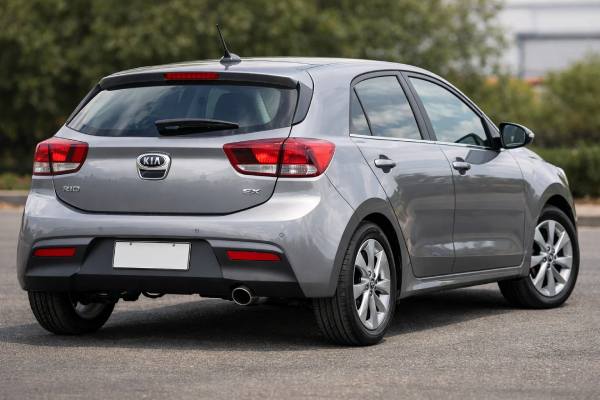
The 2017–2020 Kia Rio (YB) with the 1.0 T-GDi (turbocharged three-cylinder) is the “small engine, big effort” version of Kia’s supermini. In day-to-day driving it matters less that it’s a 1.0-liter and more that it makes strong mid-range torque, so it doesn’t feel strained in traffic or on gentle motorway grades. This powertrain can also be a smart ownership play: lower fuel use than larger engines, lighter nose weight for tidy handling, and generally straightforward packaging for service access.
That said, a modern small turbo engine asks for disciplined maintenance. Oil quality, correct spark plugs, and clean intake air matter more than they do on a naturally aspirated Rio. Get those basics right and this Rio becomes a practical, efficient commuter with enough punch to feel modern.
Owner Snapshot
- Strong mid-range pull for a small car, especially from 2,000–3,500 rpm
- Efficient on mixed driving when tyres and alignment are kept in check
- Compact size and tight turning make it easy in dense cities and small parking bays
- Turbo and direct injection reward shorter oil intervals if you do frequent cold starts or short trips
- Plan on engine oil and filter service every 12 months or 16,000 km (10,000 miles), sooner for heavy city use
Navigate this guide
- Kia Rio YB T-GDi ownership picture
- Kia Rio YB 1.0 T-GDi specs and measurements
- Kia Rio YB trims, options, and safety tech
- Common faults, recalls, and fixes
- Maintenance plan and buying checklist
- Real-world driving and efficiency
- Rio 1.0 turbo vs key rivals
Kia Rio YB T-GDi ownership picture
Kia’s Rio (YB) is built around a simple idea: keep weight, footprint, and running costs low, but make the car feel “grown up” on faster roads. The 1.0 T-GDi variant helps more than you might expect because it changes how you drive the car. Instead of chasing revs, you typically surf torque—short-shifting in town and using the turbo’s mid-range to merge cleanly. That tends to make the Rio feel calmer than a small naturally aspirated engine when you’re carrying passengers or using air conditioning.
From an engineering standpoint, the 1.0 T-GDi combines three features that shape ownership:
- Small displacement + turbocharging: good torque from low rpm, but more heat management and greater sensitivity to oil quality.
- Direct injection: strong response and efficiency potential, but intake valves can collect deposits over time (maintenance and driving pattern matter).
- Compact three-cylinder layout: efficient and light, though it can transmit a little more vibration at idle than a four-cylinder.
In the real world, this Rio is at its best as an urban/suburban commuter that still does motorway duty without drama. The body is easy to place, visibility is generally good, and tyre sizes are affordable. Cabin materials are built to a price, but wear tends to be predictable rather than mysterious—seat bolsters, steering wheel finish, and switchgear shine are common “age tells.”
The two ownership questions to ask are simple:
- Was it serviced on time with the correct oil spec? Turbo engines dislike neglected oil.
- Was it driven mostly on very short trips? Short trips increase condensation in the oil and can accelerate deposit formation.
If you buy well and maintain it thoughtfully, the 1.0 T-GDi Rio offers a satisfying “small car that doesn’t feel small” experience. If you buy a neglected example, you can spend money chasing misfires, boost leaks, or drivability issues that are usually preventable.
Kia Rio YB 1.0 T-GDi specs and measurements
Specs can vary by market, gearbox, and trim, so treat the tables as a practical baseline for the 2017–2020 Rio (YB) 1.0 T-GDi around the 100 hp output level. Always confirm with your VIN for exact tyres, brake hardware, and fluid capacities.
Powertrain and efficiency
| Item | Specification |
|---|---|
| Engine family | Kappa turbo (1.0 T-GDi) |
| Layout | Inline-3 (I-3), DOHC, 4 valves/cyl (12-valve) |
| Bore × stroke | ~71.0 × 84.0 mm |
| Displacement | 1.0 L (998 cc) |
| Induction | Turbocharged |
| Fuel system | Gasoline direct injection (GDi) |
| Compression ratio | ~10.0:1 (varies by calibration) |
| Max power | ~100 hp (≈74 kW) @ ~4,500–6,000 rpm (market dependent) |
| Max torque | ~172 Nm (≈127 lb-ft) @ ~1,500–4,000 rpm |
| Timing drive | Chain |
Rated efficiency (typical): expect official figures around the low-to-mid 5 L/100 km range depending on test cycle and wheels.
Real-world highway @ 120 km/h (75 mph): commonly ~6.0–7.0 L/100 km when tyres, alignment, and load are sensible.
Transmission and driveline
| Item | Specification |
|---|---|
| Drive type | FWD |
| Transmissions | Commonly 6-speed manual; some markets offer a dual-clutch automatic |
| Differential | Open |
Chassis and dimensions
| Item | Specification |
|---|---|
| Front suspension | MacPherson strut |
| Rear suspension | Torsion beam |
| Steering | Electric power steering (EPS) |
| Brakes (common) | Front discs; rear drums on many trims (rear discs on some higher trims/markets) |
| Popular tyre size | 195/55 R16 (varies: 15–17 in wheels common) |
| Ground clearance | ~140 mm (market dependent) |
| Length / width / height | ~4,065 / 1,725 / 1,450 mm |
| Wheelbase | ~2,580 mm |
| Turning circle | ~10.4 m (kerb-to-kerb) |
| Kerb (curb) weight | ~1,120–1,200 kg (gearbox and trim dependent) |
| Fuel tank | ~45 L |
| Cargo volume | ~325 L seats up; ~1,100 L seats down (method varies) |
Performance and capability (typical)
| Item | Typical result |
|---|---|
| 0–100 km/h (0–62 mph) | ~10.5–11.5 s (gearbox and wheels matter) |
| Top speed | ~180–190 km/h (112–118 mph) |
| Towing capacity | Often limited; many markets list low or “not recommended” braked towing for this class—check VIN plate and handbook |
| Payload | Typically ~400–500 kg (depends on GVWR and trim) |
Fluids and service capacities (decision-useful)
Because capacities can differ by gearbox and cooling package, use these as planning guidance and confirm for your exact VIN:
| Fluid | Specification (typical) | Capacity (typical) |
|---|---|---|
| Engine oil | ACEA C2 with 0W-30 commonly listed for this engine family | ~3.6 L (with filter) |
| Coolant | Long-life ethylene glycol mix (often 50/50) | ~5–6 L (varies) |
| Manual gearbox oil | MTF to Kia spec | ~1.7–2.0 L (varies) |
| A/C refrigerant | Often R-1234yf in many 2017+ EU applications | Charge varies by system label |
Key torque specs (critical fasteners, typical ranges):
- Wheel bolts: ~90–110 Nm
- Engine oil drain plug: commonly ~30–40 Nm
- Spark plugs (small turbo engines): follow the engine-specific spec; overtightening can damage the cylinder head
Kia Rio YB trims, options, and safety tech
Trims and options (what actually changes)
Trim names vary by country, but the pattern is consistent: a base model focused on cost, a mid-trim that adds comfort features, and a higher trim that brings the “nice to have” items—larger wheels, infotainment upgrades, camera/parking sensors, and sometimes driver assistance tech.
When you’re shopping specifically for the 1.0 T-GDi, pay attention to these practical differences:
- Wheel and tyre package: Larger wheels look better but can reduce ride comfort and slightly increase fuel use. If you do rough roads daily, the 15–16 inch setups are usually the sweet spot.
- Brakes: Some higher trims/markets offer rear discs; many are rear drums. Both can work well if maintained, but rear discs can be easier to inspect quickly.
- Infotainment and connectivity: Screen size and navigation vary. A simple head unit can be more reliable long-term; more features also mean more software updates and more “settings support” if something glitches.
- Climate control: Manual vs automatic. Automatic climate is convenient but adds actuators and sensors that can fail later (not common, but worth checking).
- Lighting: Headlight performance is a real safety feature. Some trims upgrade bulbs or housings that improve night driving more than people expect.
Quick identifiers when viewing cars:
- Higher trims often have cruise controls on the steering wheel, a reversing camera, rear parking sensors, and alloy wheels.
- Safety packs may add a windshield camera module behind the rear-view mirror and additional steering wheel buttons for assistance settings.
Safety ratings (how to interpret them)
The Rio (YB) achieved strong crash performance in many markets, but ratings can differ depending on whether the car was tested with optional safety equipment. That matters because the underlying structure can score well, while the “Safety Assist” score depends heavily on features like autonomous emergency braking (AEB) and lane support.
What to do with that information as a buyer:
- Treat the star rating as a starting point, then confirm whether your target car has the safety pack (if it was optional in your market).
- If you drive mostly in cities, AEB and pedestrian detection can be the features that change the real-world risk profile most.
Safety systems and ADAS (what you may see)
Common baseline safety equipment usually includes:
- Front, side, and curtain airbags (count and coverage vary by market)
- ABS and electronic stability control (ESC)
- Hill-start assist on many trims
- ISOFIX/LATCH child-seat anchor points
ADAS availability across 2017–2020 can include, depending on region and trim:
- AEB (car-to-car, sometimes pedestrian)
- Lane keeping assist or lane departure warning
- Driver attention warning
- Speed limit information (camera-based in some versions)
After windscreen replacement or front-end repairs, camera-based systems may need calibration. As a buyer, ask if the car has had glass replacement and whether the assistance features still behave normally on a test drive.
Common faults, recalls, and fixes
This section maps issues by prevalence and cost tier for the 2017–2020 Rio (YB) with the 1.0 T-GDi. Not every car will have these problems, but they’re the patterns worth understanding before you buy.
Common (low to medium cost)
- Ignition coil or spark plug wear (misfire under load)
Symptoms: hesitation, flashing check-engine light during hard acceleration, rough idle.
Likely cause: worn plugs, weak coil, incorrect plug spec or gap.
Remedy: fit the correct plugs (often iridium) at the right interval; replace coils as needed and inspect plug wells for oil contamination. - PCV/breather and vacuum leaks (idle quality issues)
Symptoms: unstable idle, lean codes, whistling, occasional stalling.
Likely cause: aging rubber hoses, breather valve issues, minor boost/vacuum leaks.
Remedy: smoke test intake tract; replace cracked hoses; confirm clamps and intercooler connections. - Turbo plumbing seepage
Symptoms: oily film around boost hoses, slight drop in response.
Likely cause: normal oil mist from crankcase ventilation collecting in charge pipes, plus aging seals.
Remedy: clean and monitor; replace soft hoses or clamps if they no longer seal under boost.
Occasional (medium cost, more annoying than catastrophic)
- Carbon deposits and drivability changes (direct-injection reality)
Symptoms: rough cold start, loss of smoothness, occasional misfire codes over time.
Likely cause: intake valve deposit build-up influenced by short trips and long oil intervals.
Remedy: correct oil and interval, quality fuel, regular long runs; if severe, professional intake cleaning (method depends on shop and region). - Wastegate rattle or boost control quirks
Symptoms: metallic rattle at certain rpm/load, inconsistent boost feel.
Likely cause: wastegate actuator wear or linkage tolerance; sometimes software calibration sensitivity.
Remedy: inspect actuator and linkage; check for software updates and verify boost control solenoid function.
Rare but higher cost (buying-screening items)
- Turbocharger failure from oil neglect
Symptoms: persistent smoke, loss of power, loud whine, oil consumption.
Likely cause: extended oil intervals, wrong oil spec, repeated hot shutdowns.
Remedy: turbo replacement or rebuild plus oil feed/return inspection; confirm catalytic converter health afterward. - Cooling system leaks or overheating events
Symptoms: coolant smell, low coolant, temperature warning history.
Likely cause: hose junction leaks, radiator damage, water pump seepage (varies).
Remedy: pressure test; fix leaks promptly; avoid “top-up and forget” ownership.
Recalls, TSBs, and software updates (how to handle responsibly)
Because campaigns depend on VIN, region, and production date, the best practice is process-based:
- Run an official VIN recall check for your country/region and confirm completion status.
- Ask for dealer printout or service history showing campaign closure.
- During a test drive, verify there are no warning lights and that infotainment, camera, and any ADAS features behave consistently.
Software updates can improve cold-start behavior, throttle mapping, and occasional sensor fault logic. If a car has intermittent warning lights but drives normally, ask whether updates were applied before buying parts.
Pre-purchase checks to request (high signal, low effort)
- Full service history with dates and mileage (oil intervals matter more than “it was serviced”)
- Evidence of correct spark plugs and air filter changes
- No coolant loss history, no overheating events
- Smooth boost delivery in 3rd/4th gear from 2,000 rpm upward (no surging or repeated hesitation)
- If equipped, confirm AEB/lane features aren’t disabled due to camera faults
Maintenance plan and buying checklist
A small turbo engine can be very durable, but it’s less forgiving of skipped basics. If you want the Rio 1.0 T-GDi to stay smooth and efficient, use a schedule that matches how the car is actually driven.
Practical maintenance schedule (distance/time)
Every 12 months or 16,000 km (10,000 miles)
- Engine oil and filter (use the correct spec for your market and engine calibration)
- General inspection: leaks, coolant level, boost hoses, exhaust joints
- Tyre pressure check and wear review (inner-edge wear suggests alignment issues)
Every 15,000–20,000 km (or yearly in dusty cities)
- Engine air filter (inspect more often if you drive in dust or heavy traffic)
- Cabin air filter (often worth doing annually for HVAC performance)
Every 30,000 km (20,000 miles)
- Brake inspection: pad thickness, rotor condition, slider pins and rear brake mechanism
- Wheel alignment check if you see uneven wear or steering pull
- Battery test (especially before winter)
Every 60,000–100,000 km (40,000–60,000 miles) depending on use
- Spark plugs (turbo engines often benefit from the earlier end of this range)
- Brake fluid (commonly every 2 years regardless of mileage)
- Manual gearbox oil (optional but beneficial for shift quality if you keep the car long-term)
Coolant
- Many long-life coolants are extended-interval, but age still matters. Treat coolant as a “known good” service item once the car is older, especially if you plan to keep it past 8–10 years.
Timing components
- The timing drive is typically a chain. Chains are not “lifetime” in the real world; they are “condition-based.”
Watch for: cold-start rattles, correlation fault codes, or persistent rough running that isn’t ignition-related.
Fluids, specs, and decision-useful notes
- Engine oil: use the exact viscosity and ACEA/API class listed for your VIN/market. For this engine family, low-viscosity oils are common, and the correct spec matters for turbo lubrication and emissions system compatibility.
- Fuel: use good-quality fuel; if knock control is working hard (poor fuel), you’ll feel it as reduced response.
- Tyres: maintain correct pressures; underinflation hurts fuel economy and stability in crosswinds more than most owners expect.
Buyer’s guide: inspection checklist (fast but meaningful)
Exterior and underside
- Uneven panel gaps or overspray (signs of collision repair)
- Underbody scrapes around the front subframe and exhaust
- Rust hotspots: rear beam mounts, brake lines, and exposed seams in harsh-winter regions
Engine bay
- Oil seepage around turbo plumbing and valve cover area
- Coolant staining around hose joints
- Cracked intake/boost hoses or loose clamps
Test drive
- Cold start: should settle quickly without heavy shaking
- Boost build: smooth pull from ~2,000 rpm; no fluttering or repeated hesitation
- Brakes: straight stops, no pulsing; handbrake holds firmly
- Steering: centered on a flat road; no clunks over small bumps
Recommended ownership profile
- Best for: commuters, mixed urban/motorway driving, buyers who will service on time
- Less ideal for: repeated cold short trips without occasional longer runs, or buyers who want to skip maintenance “until it breaks”
Long-term durability outlook is solid when the maintenance habits match the engine’s needs. Most expensive failures trace back to neglected oil, ignored misfires, or overheating that wasn’t addressed promptly.
Real-world driving and efficiency
Ride, handling, and NVH (noise, vibration, harshness)
The Rio (YB) sits in the “competent and predictable” end of the supermini class. The chassis is tuned for stability rather than razor-sharp turn-in, which is a good match for daily commuting. On 15–16 inch wheels the ride is usually more composed over broken pavement; 17-inch setups can feel sharper-edged on potholes.
A three-cylinder engine has a distinct character. At idle you may notice a mild thrum through the wheel or seat, especially with the air conditioning on. Once rolling, the engine smooths out and the cabin is typically quiet enough for hands-free calls at urban speeds. At motorway pace, tyre noise becomes the main sound source—so tyre brand and wear pattern can change perceived refinement more than you’d expect.
Powertrain feel: where the 1.0 T-GDi shines
The 1.0 T-GDi is best driven like a torque engine:
- In town, it prefers early upshifts and light throttle.
- For merging or passing, it responds well to a downshift and a clean pull through the mid-range.
Turbo lag is present but modest. The biggest difference versus a naturally aspirated small engine is that you don’t need to rev it hard to make progress. That reduces driver stress and can reduce fuel use when you’re not rushing.
Transmission behavior depends on the exact gearbox fitted. Manuals typically feel light and easy; if you test a dual-clutch version, focus on low-speed smoothness in stop-start traffic and listen for clutch chatter when creeping uphill. A healthy setup should behave consistently—jerky takeoffs and repeated shuddering are signs to investigate.
Real-world efficiency (what owners actually see)
Real-world consumption depends heavily on speed, trip length, and tyres:
- City-heavy commuting with frequent cold starts: often ~6.5–8.0 L/100 km
- Mixed driving (suburban + some motorway): often ~5.5–6.5 L/100 km
- Steady motorway at 120 km/h (75 mph): commonly ~6.0–7.0 L/100 km
Cold weather can raise consumption noticeably because the engine warms slowly on short trips and the cabin heater demand is high relative to engine size. If you mainly do short journeys, you’ll often get better results by combining errands into one longer run rather than several cold starts.
Selective metrics that matter
- 0–100 km/h: typically in the low-11-second range depending on gearbox and wheel size
- Passing response: best when you downshift to keep the engine in the mid-range rather than flooring it in too high a gear
- Braking confidence: generally consistent for the class, but brake feel and stopping performance depend strongly on tyre quality and brake maintenance
If you value a calm, easy commuter that still has enough response for modern traffic, the 1.0 T-GDi Rio usually delivers—provided it’s serviced correctly and not burdened with worn tyres and overdue plugs.
Rio 1.0 turbo vs key rivals
In the supermini class, rivals are close on paper, so your best choice often comes down to how the car delivers performance, how it holds up with age, and which features matter to you.
Versus Ford Fiesta 1.0 EcoBoost
- Fiesta advantage: typically sharper steering and more playful handling balance.
- Rio advantage: often feels simpler to live with—less “busy” and frequently a bit more straightforward in long-term maintenance access.
- Buyer tip: if you love driving feel, Fiesta often wins. If you want calm competence, Rio is very competitive.
Versus Volkswagen Polo 1.0 TSI / Seat Ibiza 1.0 TSI / Skoda Fabia 1.0 TSI
- VW-group advantage: strong engines and refined cabins in many trims; good high-speed stability.
- Rio advantage: ownership value can be strong, and equipment-for-money is often favorable depending on market.
- Buyer tip: compare real examples. A well-kept Rio can be a smarter buy than a higher-mileage Polo/Ibiza/Fabia with patchy service history.
Versus Hyundai i20 1.0 T-GDi
- Similarity: closely matched concept—small turbo, daily usability, modern features.
- Rio advantage: depending on year and trim, you may find simpler wheel packages and a “less fussy” ride.
- Buyer tip: choose on condition, history, and feature set. They’re often closer than the badges suggest.
Versus Renault Clio TCe and Peugeot 208 PureTech-era cars
- French advantage: strong interior design and comfort emphasis in many trims.
- Rio advantage: tends to reward conservative maintenance without surprises, and the driving controls feel familiar and simple.
- Buyer tip: if you prioritize easy servicing and predictable ownership, the Rio’s straightforward nature is a strength.
The practical verdict
Choose the Rio 1.0 T-GDi if you want:
- A compact car that feels confident in real traffic
- A drivetrain that’s efficient without being slow
- Ownership that stays affordable when you follow the correct service routine
Choose a rival if you want:
- Maximum handling sparkle (Fiesta)
- A more “premium” cabin feel (some Polo trims)
- A specific tech package that’s easier to find on another model in your market
References
- The Rio 2017 (Brochure)
- Oil Grades and Capacities 2025 (Service Maintenance)
- Official Kia Rio safety rating 2017 (Safety Rating)
- Kia Recalls | Kia Europe 2026 (Recall Database)
- Vehicle Detail Search – 2017 KIA RIO 2026 (Recall Database)
Disclaimer
This article is for informational purposes only and is not a substitute for professional diagnosis, inspection, or repair. Specifications, torque values, service intervals, and procedures can vary by VIN, market, model year, and installed equipment. Always confirm details using official owner’s literature and service documentation for your specific vehicle.
If you found this guide helpful, please consider sharing it on Facebook, X (Twitter), or your favorite forum to support our work.