
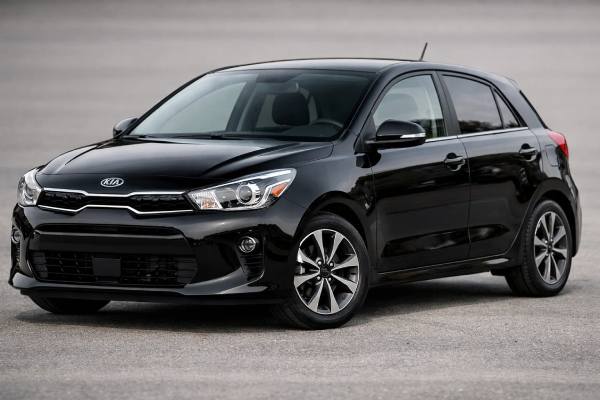
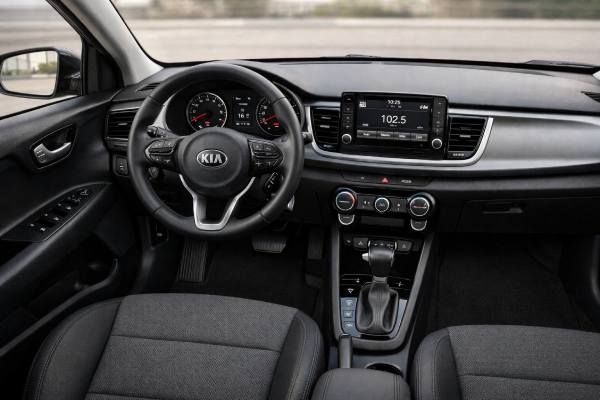
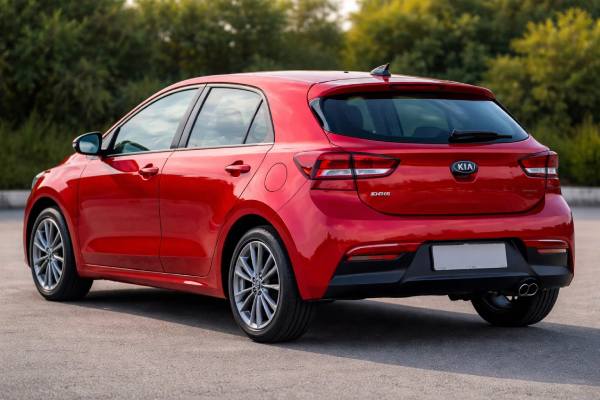
The 2018–2020 Kia Rio (YB) with the 1.0 T-GDI (120 hp) is a smart “small car, big-engineering” package: a light, rigid body, a compact turbo three-cylinder with strong mid-range torque, and running costs that can stay very reasonable if you keep up with oil quality and basic airflow maintenance. In everyday use, the drivetrain’s main strengths are flexibility and efficiency—this Rio doesn’t need high revs to feel lively. At the same time, it’s a modern turbo GDI (gasoline direct injection), so it rewards owners who avoid long oil intervals, warm the engine gently, and don’t ignore early symptoms like cold-start chain noise or low-speed clutch shudder on DCT cars. Safety equipment also varies widely by trim and market, so “same year” doesn’t always mean “same protection.”
Quick Specs and Notes
- Strong low-rpm pull for a small hatch, especially between 1,500–4,000 rpm.
- Simple, light chassis makes it easy to place in traffic and park.
- Generally low fuel use on mixed driving when tyres and alignment are kept in check.
- Avoid stretched oil intervals; turbo GDI engines are less forgiving of neglected oil quality.
- Plan on spark plug replacement around 70,000 km (43,500 mi) on many 1.0 T-GDI schedules (verify by VIN and market).
Navigate this guide
- Kia Rio YB 2018–2020 deep dive
- Kia Rio YB 1.0 T-GDI specs
- Kia Rio YB trims and safety tech
- Reliability issues and recalls
- Maintenance plan and buying tips
- Real-world driving and economy
- Rivals and value judgment
Kia Rio YB 2018–2020 deep dive
In the 2018–2020 window, the Rio (YB) sits in a sweet spot for used buyers: modern enough to feel refined and safe, but still mechanically straightforward compared with later mild-hybrid or heavier subcompact designs. The 1.0 T-GDI version is the one that changes the car’s personality most. Where the non-turbo engines lean on revs and gearbox work, the turbo three-cylinder gives the Rio a “bigger car” feel at normal speeds—merging, short overtakes, and climbing grades become easier without living near redline.
Under the skin, the key ownership story is balance. The Rio’s chassis is simple—front MacPherson struts and a torsion-beam rear axle in most markets—which keeps long-term maintenance predictable and cost-effective. The steering is light and consistent, and the wheelbase is long enough for stable tracking on highways. With sensible tyre choices (especially avoiding ultra-low-profile tyres on rough roads), it can be surprisingly comfortable for the class.
The 1.0 T-GDI engine itself is an efficient, compact unit built around direct injection and turbocharging. That brings two important realities:
- Oil quality matters more than on older naturally aspirated engines. Turbochargers run hot, and direct injection can increase soot and fuel dilution in certain usage patterns (lots of cold starts, short trips, idling).
- Airflow and combustion cleanliness matter. A clean air filter, healthy PCV (positive crankcase ventilation) flow, and good fuel are more than “nice to have” on a small boosted engine.
For many owners, the best version of this Rio is the one with the safety and comfort options that match their use. Some trims are very basic, while others add meaningful daily advantages: better headlights, more supportive seats, upgraded infotainment, heated features for winter, and a fuller driver-assistance suite. If your driving includes long commutes or frequent motorway use, prioritize the spec that reduces fatigue (seats, headlights, cruise capability) over cosmetic upgrades.
Finally, remember that “Rio” isn’t identical worldwide. Body style (hatch vs sedan), equipment, and even some mechanical details can vary by region. Treat the VIN, build sheet, and the car’s option list as the truth.
Kia Rio YB 1.0 T-GDI specs
Below are practical, buyer-relevant specifications for the Rio (YB) 1.0 T-GDI 120 hp. Values can vary by market, wheel/tyre package, gearbox (6-MT vs 7-DCT where offered), and emissions calibration. Use these as a working reference, then confirm against your VIN documentation.
Powertrain and efficiency
| Item | Specification |
|---|---|
| Engine family / code (common) | Kappa 1.0 T-GDI (often listed as G3LC in many markets) |
| Engine layout and cylinders | Transverse I-3, DOHC, 4 valves/cyl (12 valves total) |
| Displacement | 1.0 L (998 cc) |
| Bore × stroke | 71.0 × 84.0 mm (2.80 × 3.31 in) |
| Induction | Turbocharged |
| Fuel system | Gasoline direct injection (GDI) |
| Compression ratio | 10.0:1 (typical for this output level) |
| Max power | 120 hp (88 kW) @ ~6,000 rpm |
| Max torque | 172 Nm (127 lb-ft) @ ~1,500–4,000 rpm |
| Timing drive | Chain (no routine replacement interval; condition-based) |
| Rated efficiency (typical) | Often ~5.0–5.8 L/100 km depending on test cycle, wheels, and gearbox |
| Real-world highway @ 120 km/h | Commonly ~6.2–6.8 L/100 km at steady speed (wind/temperature sensitive) |
Transmission and driveline
| Item | Specification |
|---|---|
| Drive type | FWD |
| Manual gearbox (common) | 6-speed manual (market dependent) |
| Automatic option (where fitted) | 7-speed dual-clutch (DCT) in some markets; 6-AT in others |
| Differential | Open (traction control via braking) |
Chassis and dimensions (5-door hatchback baseline)
| Item | Specification |
|---|---|
| Suspension (front / rear) | MacPherson strut / torsion beam |
| Steering | Electric power steering (EPS); ratio varies by market |
| Brakes | Front ventilated discs; rear drums or rear discs depending on trim/market |
| Popular tyre size | 185/65 R15 (common), 195/55 R16 (common), 205/45 R17 (sport trims) |
| Ground clearance | Often around 135 mm (5.3 in) (varies by wheel/tyre) |
| Length / width / height | 4065 / 1725 / 1450 mm (160.0 / 67.9 / 57.1 in) |
| Wheelbase | 2580 mm (101.6 in) |
| Turning circle (kerb-to-kerb) | About 10.2 m (33.5 ft) |
| Kerb weight | Typically ~1120–1220 kg (2469–2689 lb) depending on gearbox and equipment |
| Fuel tank | Typically 45 L (11.9 US gal / 9.9 UK gal) |
| Cargo volume | Typically ~325 L (11.5 ft³) seats up; ~980–1100 L (34.6–38.9 ft³) seats down (method varies) |
Performance and capability (typical figures)
| Metric | Typical value (varies by gearbox and tyres) |
|---|---|
| 0–100 km/h (0–62 mph) | ~9.5–10.5 s |
| Top speed | ~185–195 km/h (115–121 mph) |
| 100–0 km/h braking | Highly tyre-dependent; generally competitive for class |
| Towing | Often limited or modest in many markets; verify local rating |
| Payload | Typically ~350–450 kg depending on GVWR and spec |
Fluids and service capacities (verify by VIN)
Because capacities and specifications vary by radiator size, gearbox type, and emissions equipment, treat the following as decision-level guidance—not a substitute for the exact service document for your car.
| Fluid / item | Typical specification guidance |
|---|---|
| Engine oil | Modern full-synthetic meeting required ACEA/API spec; common viscosity 0W-30 / 5W-30 (market dependent) |
| Engine oil capacity | Often around 3.5–4.0 L with filter (confirm) |
| Coolant | Long-life ethylene glycol coolant; mixture per manual |
| Gearbox oil / DCT fluid | Depends on transmission type; follow the exact Kia procedure |
| A/C refrigerant | Varies by year/market; label under hood is the reference |
| Key torque specs | Use service manual values for wheels, spark plugs, and drain plugs (avoid “generic” torque charts) |
Kia Rio YB trims and safety tech
For 2018–2020, trims are highly market-specific, but the same pattern shows up almost everywhere: a value-focused base model, one or two mid trims that add comfort and connectivity, and a sport-styled or “GT-Line” type trim that bundles appearance with a few functional upgrades (wheels, headlights, sometimes rear disc brakes). When shopping the 1.0 T-GDI 120 hp, focus on the equipment that changes daily ownership, not just the badge.
Trims and options that matter most
1) Lighting and visibility
- Better headlight units can be a bigger real-world upgrade than a larger screen. If your market offers upgraded headlights (and especially if they’re tied to a safety pack), prioritize them.
- Check for fog lights and automatic headlights if you drive in variable weather.
2) Safety packs and driver assistance
Many Rio (YB) cars meet crash standards well, but active safety features often depend on an optional pack. Depending on year and region, the following may be optional rather than standard:
- Autonomous emergency braking (AEB) for cars and pedestrians
- Lane keeping assist or lane departure warning
- Driver attention alerts
- Blind-spot detection and rear cross-traffic alert (less common on early cars)
If the car has AEB or lane systems, confirm the windshield camera and front radar area are intact and that the car has not had a poorly repaired front-end impact.
3) Infotainment and connectivity
- Basic systems can be perfectly fine, but higher trims may add better phone integration, navigation, or upgraded audio.
- If the car uses a connected services module, confirm it functions in your country and that the previous owner has properly removed their account.
4) Mechanical differences by trim
Most Rio 1.0 T-GDI models share the same core hardware, but trims can change:
- Wheel and tyre size (affects ride comfort, noise, and tyre cost)
- Brake setup (rear drums vs discs in some markets)
- Gearbox pairing (manual vs DCT availability)
- Cooling package (sometimes affected by options and climate packages)
Quick identifiers when viewing a used Rio
- Wheel size is a clue: 15-inch wheels usually signal comfort and lower running cost; 17-inch wheels often mean sport styling and a firmer ride.
- Camera/radar hardware: Look behind the windshield near the mirror for a camera module; check the front grille or bumper area for radar (if equipped).
- Interior clues: Heated seats/steering wheel buttons, climate control layout, and steering wheel switchgear often reveal the trim level faster than exterior badges.
Safety ratings context
In European testing, the Rio (YB) achieved strong crash performance, but the headline results depend on whether the car is evaluated with only standard safety equipment or with an optional safety pack. For buyers, the practical takeaway is simple: the underlying structure can be good, yet active safety capability may vary dramatically. Always match what you’re buying to your actual needs—urban commuting favors AEB and pedestrian protection, while motorway use favors lane support, stable lighting, and fatigue-reduction features.
Reliability issues and recalls
The Rio (YB) 1.0 T-GDI is generally a durable small car when serviced on time, but its risk profile looks like most modern turbo direct-injection engines: it’s not fragile, yet it’s less tolerant of neglected oil, poor fuel, and repeated cold short trips. Below is a practical map of what tends to matter most, organized by prevalence and severity.
Common (watch closely)
- Oil quality sensitivity (low to medium cost, high prevention value)
Symptoms: louder valve train on cold start, rough idle after repeated short trips, oil level drifting down.
Likely cause: extended intervals, wrong spec oil, fuel dilution from short-trip driving.
Remedy: shorten oil interval, use correct spec oil, check PCV system health, and keep oil at the proper level. - Spark plug and ignition wear (low to medium cost)
Symptoms: hesitation under boost, misfire under load, check-engine light, reduced economy.
Likely cause: plugs reaching end of life sooner on turbo engines; coil stress.
Remedy: replace plugs at the correct interval for 1.0 T-GDI; inspect coils and boots; avoid cheap mismatched plug types. - DCT low-speed behavior (medium cost if ignored)
Symptoms: judder in crawling traffic, shudder when pulling away, inconsistent engagement, occasional “gear hunting.”
Likely cause: dry-clutch DCT characteristics, clutch adaptation out of range, or software calibration needing update.
Remedy: ensure any calibration updates are done; check clutch adaptation values where possible; drive it cold and warm during a test drive.
Occasional (depends on use and climate)
- Carbon buildup tendencies (medium cost if severe)
Direct injection means fuel does not wash the intake valves like older port-injected engines.
Symptoms: rough idle, reduced response, higher fuel use over time.
Conditions that increase risk: lots of idling, short trips, low-quality fuel, weak PCV control.
Remedy: consistent high-quality oil and filters; periodic longer drives to full operating temperature; cleaning only if symptoms justify it. - Cooling system wear items (medium cost)
Symptoms: coolant smell, slow coolant loss, weak cabin heat, overheating in traffic (rare but important).
Likely cause: hose clamps, radiator end tanks, water pump seepage over time.
Remedy: pressure test if coolant level drops; replace worn parts early.
Rare but high-impact (don’t ignore symptoms)
- Timing chain stretch or tensioner issues (high cost if neglected)
Symptoms: rattle on cold start, persistent metallic noise, correlation fault codes, rough running.
Remedy: diagnose early; chain/tensioner service before it progresses. - Turbocharger control faults (medium to high cost)
Symptoms: inconsistent boost, limp mode, whistle changes, underboost codes.
Remedy: inspect charge pipes/intercooler hoses first; then wastegate control and turbo condition.
Recalls, service actions, and how to verify
Recalls are market- and VIN-specific. The correct process is:
- Run an official VIN recall check (manufacturer portal for your region).
- Confirm completion using dealer service history or official campaign documentation.
- If buying privately, treat “I think it was done” as “not proven” until verified.
Even when a recall does not exist, some fixes come through technical service bulletins (TSBs) or software updates (engine calibration, transmission logic, ADAS sensor calibration, infotainment stability). For a used Rio with DCT or ADAS features, it’s reasonable to ask the seller for proof of dealer visits that include software updates.
Maintenance plan and buying tips
A good maintenance plan for the Rio (YB) 1.0 T-GDI is less about exotic parts and more about consistency: correct fluids, sensible intervals, and a few inspections that prevent small problems from becoming expensive ones.
Practical maintenance schedule (normal use, adjust for severe use)
Use distance or time—whichever comes first. If the car does lots of short trips, stop-start traffic, dusty roads, or very cold operation, shorten intervals.
- Engine oil and filter: every 10,000–15,000 km (6,000–9,000 mi) or 12 months.
Severe use: consider 7,500–10,000 km. Keep oil at the correct level; turbo engines dislike running low. - Engine air filter: inspect every service; typically replace 20,000–30,000 km (sooner in dust).
A clean filter helps turbo response and protects the compressor wheel. - Cabin air filter: 15,000–30,000 km depending on pollen and city use.
- Spark plugs (1.0 T-GDI): commonly around 70,000 km (43,500 mi), sometimes earlier by market schedule.
If you tune the engine or drive hard often, expect shorter plug life. - Coolant: follow the exact coolant interval for your VIN and market. Many owners treat coolant as a long-life fluid, but some schedules specify an earlier first change and shorter repeats. If in doubt, prioritize correct coolant type and a clean system over stretching time.
- Brake fluid: every 2 years is a sensible baseline in most climates.
- Brake pads/rotors: inspect at every tyre rotation or service; city drivers will wear fronts faster.
- Manual gearbox oil: often “inspect,” but a proactive change around 80,000–120,000 km can improve shift quality and longevity (confirm spec).
- DCT service: depends on exact DCT type and market procedure. Even if a fluid change is not frequent, adaptation checks and software updates are important if engagement feels inconsistent.
- Tyre rotation and alignment: rotate every 8,000–12,000 km (or at seasonal tyre swaps). Check alignment if tyres show inner/outer edge wear—small cars are sensitive to toe settings.
- 12 V battery: test yearly after year 4; many batteries last 4–6 years depending on climate.
- Timing chain: no routine replacement interval; listen for cold-start rattle and investigate correlation faults early.
Buyer’s guide: what to check on a test drive
Before driving
- Check oil level and look for fresh oil around the timing cover and turbo oil lines.
- Look for coolant residue or staining around hose joints and the radiator.
- Inspect intercooler/charge hoses for oil misting and loose clamps (light misting can be normal; heavy wetness needs investigation).
Cold start
- Listen carefully: brief “normal” noise is one thing, persistent chain rattle is another.
- Watch idle stability and any warning lights.
Driving
- Ensure boost builds smoothly in the midrange without surging.
- If it’s a DCT: crawl in traffic speeds and do gentle pull-aways; repeated judder is a red flag.
- Brake firmly from speed—feel for steering shake or pedal pulsation.
After driving
- Recheck for new smells (hot oil, coolant) and look for fresh leaks.
Best ownership profile
This Rio is ideal for drivers who want a compact car that can handle motorway speeds without feeling strained. It’s also well-suited to city use if you commit to conservative oil intervals and regular longer drives that fully warm the engine.
Real-world driving and economy
On the road, the Rio (YB) 1.0 T-GDI feels like a carefully chosen “right-size” powertrain. The headline number—120 hp—doesn’t tell the full story. The real advantage is the wide torque band, which makes the car easier to drive smoothly and efficiently.
Ride, handling, and NVH
- Ride: With 15- or 16-inch wheels, the Rio generally rides with a mature, controlled feel for a torsion-beam rear axle. Sharp potholes still remind you it’s a light car, but it rarely feels flimsy.
- Handling: Neutral and predictable. The front end grips well for the class, and the rear follows cleanly unless you’re on very stiff, low-profile tyres.
- Steering: Light at parking speeds and stable on the motorway. Don’t expect sports-car feedback, but accuracy is good.
- Noise: The three-cylinder has a characteristic off-beat thrum under load. At steady cruise, wind and tyre noise usually dominate. Upsizing wheels (especially to 17s) tends to increase tyre roar.
Powertrain character
- Throttle response: Stronger than you’d expect at low rpm once the turbo is in its comfort zone.
- Turbo lag: Usually mild; you’ll feel more delay if you accelerate hard below ~1,500 rpm in a tall gear.
- Manual vs DCT:
- The manual can feel lively and engaging, and it often delivers the most consistent “connected” response.
- The DCT can be efficient and quick when moving, but low-speed smoothness depends on clutch condition and calibration. If the car has a history of heavy stop-start commuting, test it carefully.
Real-world efficiency
Your results depend most on speed, tyres, and temperature:
- City: Turbo engines can be efficient if driven smoothly, but repeated cold starts raise consumption noticeably.
- Highway (100–120 km/h): The Rio’s aerodynamics and gearing help, and it can stay economical—until strong headwinds or winter temperatures push usage upward.
- Mixed driving: Many owners see strong “per tank” economy if the car regularly reaches full operating temperature and stays there for at least 15–20 minutes.
Performance metrics that actually matter
Instead of chasing best-case 0–100 km/h times, focus on passing and merging behavior:
- In real traffic, the Rio’s midrange torque makes 50–100 km/h acceleration feel confident for the segment.
- Tyres influence braking and stability more than most buyers expect. A fresh set of quality tyres can change the car more than many bolt-on “upgrades.”
Tyres and setup advice
If comfort and low noise matter, choose a sensible tyre:
- 15-inch packages typically ride best and cost least.
- 17-inch packages can look great but often trade ride quality and tyre cost for style.
A good alignment (especially correct toe) is a quiet, underrated “mod” that improves tyre life and highway calmness.
Rivals and value judgment
The Rio’s closest rivals depend on your market, but in most places it competes with the usual subcompact leaders. The useful comparison isn’t “which is fastest,” but which one best fits your priorities: ride comfort, cabin tech, safety equipment, running costs, and drivetrain feel.
Versus Ford Fiesta 1.0 EcoBoost
- Fiesta strengths: sharper steering feel and a more playful chassis; often a benchmark for handling.
- Rio strengths: typically simpler ownership vibe and a more relaxed “everyday” feel, especially if you prioritize comfort wheels and conservative maintenance.
- Who should choose the Rio: drivers who want a calmer commuter and value predictable servicing over sporty dynamics.
Versus Volkswagen Polo 1.0 TSI
- Polo strengths: refined cabin feel, strong highway stability, and often a premium impression in materials and noise control.
- Rio strengths: often a better value proposition on the used market, with lower buy-in costs for similar real-world performance.
- Decision point: if you do lots of motorway travel and want a “bigger car” feel, Polo may edge it; if you want cost-to-feature efficiency, the Rio is usually compelling.
Versus Hyundai i20 1.0 T-GDI
- i20 strengths: very similar platform DNA in many respects; equipment packaging may differ by market.
- Rio strengths: depending on trim, you may find a better mix of comfort and features at a given price.
- Practical advice: buy the cleaner, better-maintained example—these two often come down to service history and trim content.
Versus SEAT Ibiza / Škoda Fabia (1.0 TSI)
- Ibiza/Fabia strengths: strong space efficiency, good driving manners, and broad parts support in many regions.
- Rio strengths: often strong warranty history (where transferable) and straightforward, durable feel when maintained well.
- Decision point: if you want the widest specialist support network, the VW Group cars can be attractive; if you want a simple “keep it serviced and drive it” experience, the Rio is an excellent alternative.
The Rio’s value proposition in one sentence
A well-kept Rio (YB) 1.0 T-GDI 120 hp is a high-value used buy if you choose the right trim (especially safety and headlights), verify recall status, and maintain it like a modern turbo engine—clean oil, clean air, and no ignored warning signs.
References
- Official Kia Rio safety rating 2017 (Safety Rating)
- Official Kia Rio (full safety package) … – Euro NCAP 2017 (Safety Rating)
- 2018 Kia Rio 2018 (Safety Rating)
- Kia Recalls | Kia Europe 2026 (Recall Database)
- Normal maintenance schedule 2026 (Owner’s Manual)
Disclaimer
This article is for informational purposes only and is not a substitute for professional inspection, diagnosis, or repair. Specifications, torque values, service intervals, fluids, and procedures can vary by VIN, market, model year, and equipment. Always verify details against your official Kia owner’s manual and service documentation for your exact vehicle.
If this guide helped you, please consider sharing it on Facebook, X (Twitter), or your favorite forum or group—it helps others find reliable, practical ownership information.