
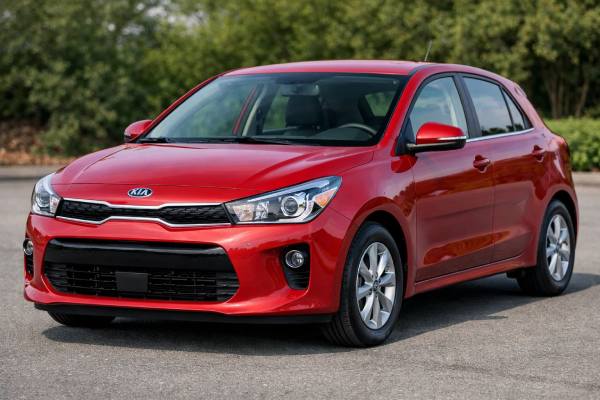
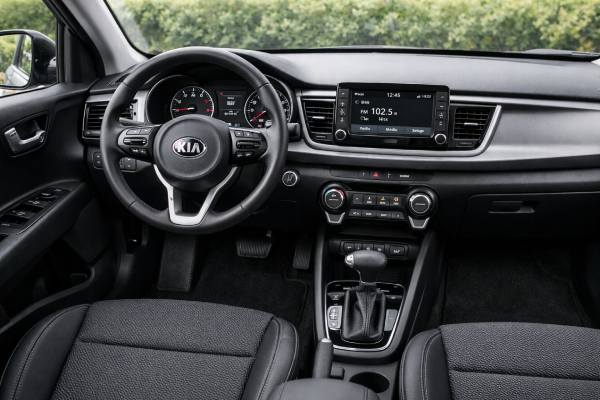
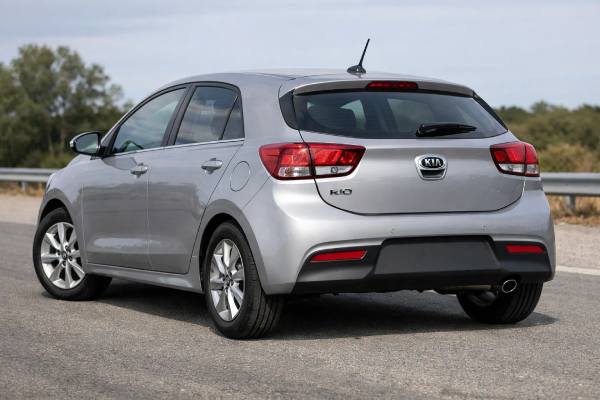
The 90 hp 1.4 CRDi version of the Kia Rio is the “long-distance” pick in the lineup: strong low-rpm torque, relaxed motorway manners, and excellent fuel economy when the car is healthy and used as intended. This engine’s strengths come with a few diesel-specific rules. It’s happiest when it regularly reaches full operating temperature, and it rewards owners who treat oil quality, service intervals, and air-intake sealing as priorities—not afterthoughts. The YB platform itself is straightforward: front struts, a torsion-beam rear axle, and simple front-drive packaging that keeps running costs predictable. If you’re shopping used, your best outcomes come from verifying recall completion, checking for clean boost behavior (no limp mode), and confirming the car has had proper motorway use rather than years of short trips.
What to Know
- Strong low-rpm pull makes it easy to drive in traffic and on hills without constant downshifts.
- Excellent long-run economy is realistic when the car sees regular motorway use and the tyres are matched correctly.
- Simple chassis (FWD, torsion beam rear) keeps suspension costs relatively contained.
- Avoid “short-trip only” cars; repeated cold starts increase soot load and EGR/DPF stress.
- Plan engine oil and filter at 20,000 miles (32,000 km) or 12 months (whichever comes first), then shorten if your driving is mostly city or cold-climate.
Contents and shortcuts
- Kia Rio YB diesel owner profile
- Kia Rio YB 90 hp specs
- Kia Rio YB trims and safety setup
- Diesel reliability and common faults
- Maintenance plan and buying tips
- Real driving and fuel economy
- Rivals and value comparison
Kia Rio YB diesel owner profile
This 1.4 CRDi “90 hp” configuration is built around usable torque rather than headline acceleration. Peak torque arrives low in the rev range, so the car feels confident from 1,500 rpm and doesn’t demand constant downshifts in everyday driving. That’s the key ownership trait: it’s an easy car to drive smoothly, and it tends to be most efficient when you keep it in its torque band and avoid revving it like a small petrol.
The other defining trait is duty cycle sensitivity. Modern small diesels rely on emissions systems (EGR and, depending on market, a DPF) that assume the engine will regularly get hot and stay hot long enough to manage soot. If your typical trip is 3–5 km in stop-start traffic, you can still own this car, but you should expect more frequent maintenance interventions: more intake soot, more sensor complaints, and a higher chance of regeneration issues. If you drive 15–30 km at speed several times a week, the same engine can be impressively low-drama.
Packaging and chassis are simple and predictable. The Rio’s compact footprint makes parking easy, and the steering is light and quick enough for city work without feeling nervous on the motorway. The rear torsion beam prioritizes durability and boot space over ultimate ride finesse, which is a reasonable trade in this class.
Who is this version for?
- High-mileage commuters who want low fuel bills and don’t need automatic transmission.
- Budget-conscious used buyers who prefer a simple drivetrain and can verify service history.
- Cold-climate drivers—with one condition: the car must regularly see longer runs to manage soot and moisture.
Who should think twice?
- Drivers who do mostly short trips, or who avoid motorways entirely.
- Buyers who want modern driver assistance as standard; equipment varies a lot by market and trim.
- Anyone expecting “hot hatch” response—this car is about steady torque and economy.
If you treat it like a long-run tool, it tends to pay you back with calm manners and strong efficiency. If you treat it like a city-only runabout, you’re more likely to spend that saved fuel money on troubleshooting.
Kia Rio YB 90 hp specs
Below are the core technical details for the 1.4 CRDi “high” output version (commonly listed around 90 hp) on the 2017–2020 Rio YB. Some figures vary slightly by market homologation, wheel size, and eco/low-rolling-resistance tyre packages.
Powertrain and efficiency
| Item | Specification |
|---|---|
| Engine type | Inline-4, turbocharged diesel |
| Displacement | 1.4 L (1,396 cc) |
| Fuel system | Common-rail direct injection |
| Compression ratio | 16.0:1 |
| Bore × stroke | 75.0 × 79.0 mm |
| Valvetrain | 16 valves (4 per cylinder) |
| Max power | 90 hp (66 kW) @ 4,000 rpm |
| Max torque | 240 Nm (177 lb-ft) @ 1,500–2,500 rpm |
| Emissions standard | Euro 6b (typical for this period) |
| Rated efficiency (combined) | 3.7–3.8 L/100 km (LRR tyres vs standard tyres) |
| Real-world highway @ 120 km/h (75 mph) | Typically ~4.5–5.2 L/100 km depending on wind, tyres, and load |
Transmission and driveline
| Item | Specification |
|---|---|
| Drive type | FWD |
| Transmission (common) | 6-speed manual |
| Differential | Open (front) |
Chassis and dimensions
| Item | Specification |
|---|---|
| Suspension (front / rear) | MacPherson struts / coupled torsion beam axle |
| Steering | Electric rack-and-pinion (MDPS) |
| Steering ratio | 14.1:1 |
| Turning circle (kerb-to-kerb) | 10.2 m |
| Brakes (typical) | Front ventilated discs 280 mm; rear drums 203 mm (rear discs 262 mm optional in some markets) |
| Popular tyre sizes | 185/65 R15; optional 195/55 R16; optional 205/45 R17 |
| Ground clearance | 135–140 mm (package-dependent) |
| Length / width / height | 4,065 / 1,725 / 1,450 mm |
| Wheelbase | 2,580 mm |
| Fuel tank | 45 L |
| Cargo volume | 325 L seats up / 980 L seats down (VDA) |
| Kerb weight | ~1,235 kg (varies by equipment) |
| GVWR | ~1,680 kg (varies by market) |
Performance and capability
| Metric | Figure |
|---|---|
| 0–100 km/h (0–62 mph) | ~12.0 s |
| Top speed | ~175 km/h (109 mph) |
| Towing / payload | Varies significantly by market approval and trim; verify VIN plate and local handbook |
Fluids and service capacities (decision-useful)
These are the most ownership-relevant items. Exact capacities can vary by market, oil cooler, and service procedure.
| Item | Typical specification |
|---|---|
| Engine oil | ACEA C2/C3; 5W-30 |
| Engine oil capacity | 5.3 L |
| Oil interval | 20,000 miles / 12 months (shorten for short-trip use) |
| Coolant | Ethylene glycol 50/50 mix (verify spec in handbook) |
| Brake fluid | DOT 4 (typical) |
| Manual gearbox oil | GL-4 class fluid (commonly 75W-85); capacity varies by gearbox and drain method |
Safety and driver assistance snapshot
| Item | Notes |
|---|---|
| Euro NCAP (2017, standard safety equipment) | 3 stars; Adult 85%, Child 84%, VRU 62%, Safety Assist 25% |
| Euro NCAP (2017, with safety pack) | 5 stars; Adult 93%, Child 84%, VRU 71%, Safety Assist 59% |
| IIHS | Not typically rated for this European configuration |
| ADAS availability | Often tied to optional “safety pack” (AEB, lane support, speed assist); confirm by trim and year |
If you only take one thing from the tables: tyres and equipment packages can change both fuel figures and safety results. Always match the car you’re reading about to the car you’re buying.
Kia Rio YB trims and safety setup
Trim structures vary by country, but the pattern is consistent: the mechanical package is broadly the same, while comfort equipment and safety technology step up in tiers. When shopping the 1.4 CRDi 90 hp, you want to identify three things early—because they affect daily satisfaction and long-term costs: (1) infotainment and camera/sensor fitment, (2) brake hardware (rear drum vs rear disc), and (3) whether the car has the optional driver-assistance bundle.
Trims and options that change the experience
Even in markets with different trim names, these features are the usual separators:
- Wheel and tyre package: 15-inch tyres ride softer and often return the best real-world economy. 17-inch wheels look sharper but can add road noise and make pothole damage more likely.
- Rear brakes: Many cars use rear drums; some trims add rear discs. Drums can last a long time with low maintenance, but discs can feel more consistent under repeated braking and are easier to visually inspect.
- Infotainment tier: Base units may lack navigation or smartphone integration. Higher trims typically add a larger screen and better camera support. Repairs are usually “replace not rebuild,” so better to buy the system you want up front.
- Climate control: Manual A/C is common; automatic climate (when available) is a comfort upgrade for high-mileage use.
Quick identifiers when viewing a used car
- Forward camera / radar window: Look near the top of the windscreen around the mirror area. A camera housing strongly suggests lane support or AEB capability.
- Steering wheel buttons: Lane assist and cruise-control button layouts often differ on ADAS-equipped cars.
- Instrument cluster icons: On ignition, cars with lane support and AEB typically show additional warning symbols during the bulb check.
- Rear brake glance: If you can see the rear wheels, a solid disc and caliper are obvious versus a drum.
Safety ratings: what the numbers actually mean for buyers
This Rio generation is a good example of how equipment changes ratings. With standard equipment, the 2017 Euro NCAP result lands at 3 stars, mainly because Safety Assist and pedestrian AEB capability were limited without the optional pack. With the safety pack fitted, the published result improves to 5 stars, driven by better active safety performance.
What you should do with that information:
- Don’t assume “all Rios are 5-star.” Confirm the car has the relevant pack.
- Treat ADAS as a system, not a checkbox. Windscreen replacement, alignment, and bumper repairs may require camera/radar calibration.
- Check for warning lights during a cold start and after a short drive. A car with persistent sensor faults can turn “safety tech” into a recurring cost.
Core safety hardware (typical)
Most markets include multiple airbags, stability control, ABS, and ISOFIX/LATCH-style child-seat anchors. The exact airbag count and the presence of a passenger airbag cut-off switch vary by trim and region, so verify against the car’s handbook or door-pillar labels.
For the used buyer, the practical takeaway is simple: pick the trim that has the safety pack if you value modern assistance features, and budget for calibration if the windscreen or front bumper has ever been replaced.
Diesel reliability and common faults
A small modern diesel can be extremely dependable, but it’s less forgiving of neglected maintenance and short-trip use than a basic petrol engine. Below are the problems that show up most often on this type of powertrain, grouped by prevalence and cost tier, with symptoms and typical fixes.
Common (low to medium cost)
- EGR soot buildup (common, medium cost)
Symptoms: hesitant acceleration, uneven idle, occasional warning lights, increased fuel consumption.
Likely cause: soot accumulation from short trips and low exhaust temperatures.
Remedy: inspection and cleaning/replacement of EGR components; address driving pattern (regular hot runs). - Boost leaks (common, low to medium cost)
Symptoms: whistle/hiss under load, reduced power, overboost/underboost codes, limp mode.
Likely cause: split intercooler hose, loose clamp, cracked plastic resonator, or worn seals.
Remedy: smoke test, replace hose/clamps, then clear codes and verify requested vs actual boost. - MAF/MAP sensor contamination (common, low cost)
Symptoms: flat throttle response, poor economy, intermittent fault codes.
Likely cause: oil mist and dust buildup, sometimes from poor air filter sealing.
Remedy: correct air filter fitment, clean/replace sensor as appropriate.
Occasional (medium cost)
- DPF regeneration stress (occasional, medium to high cost depending on outcome)
Symptoms: frequent fan running after shutdown, rising oil level, DPF light, limp mode.
Likely cause: repeated interrupted regens, excessive soot load, or sensor issues.
Remedy: forced regeneration (where appropriate), investigate root cause (driving cycle, sensors, EGR), and avoid ignoring warning lights. - Injector seal or leak-off issues (occasional, medium cost)
Symptoms: diesel smell, hard starts, rough idle, knocking, smoke.
Likely cause: seal degradation or injector wear.
Remedy: leak-off test; reseal or replace injector(s) with correct coding where required.
Rare (higher cost)
- Turbocharger wear (rare, high cost)
Symptoms: blue smoke, high oil consumption, loss of boost, siren-like noise.
Likely cause: oil starvation, contaminated oil, overspeed events, or long service neglect.
Remedy: diagnose oil supply/return first; replace turbo only after confirming the cause. - Cooling system faults (rare, medium to high cost)
Symptoms: temperature fluctuation, coolant loss, overheating.
Likely cause: hose leaks, radiator issues, thermostat or water pump wear.
Remedy: pressure test; repair leak; refill and bleed correctly.
Recalls, service actions, and how to verify completion
Because campaigns vary by country and VIN range, rely on official recall-check tools and dealer history rather than assumptions. Your process should be:
- Run the VIN through the official recall checker for your region.
- Ask the seller for dated invoices showing completion.
- If uncertain, have a dealer confirm outstanding campaigns by VIN.
Pre-purchase checks that matter on this diesel
- Cold start behavior: smooth idle within seconds, no excessive smoke.
- Full-load pull in 3rd/4th gear: boost should be consistent with no surging or limp mode.
- Check for oil level that is mysteriously high (possible fuel dilution).
- Scan for stored codes even if no warning lights are currently on.
- Inspect intake hoses and clamps; they’re cheap, but failures can hide bigger issues.
If you buy a healthy example and keep it on the right service rhythm, this powertrain can be a strong “quiet workhorse.” Most horror stories come from neglected cars with the wrong driving cycle.
Maintenance plan and buying tips
A good maintenance plan for the 1.4 CRDi is less about doing exotic work and more about consistency. The goal is to protect the turbo, keep soot under control, and prevent small air-leaks or sensor issues from becoming a chain of warning lights.
Practical service schedule (distance/time)
Use whichever comes first. If your use is mostly city, cold climate, or short trips, shorten intervals.
- Engine oil and filter: 20,000 miles (32,000 km) / 12 months (shorten to 10,000–12,000 miles if mostly short trips). Use the correct ACEA grade and viscosity.
- Air filter: inspect every service; replace typically every 20,000–30,000 miles (dusty climates sooner). Correct sealing matters on turbo engines.
- Cabin filter: every 12–24 months depending on dust/pollen.
- Fuel filter (diesel): commonly 30,000–40,000 miles; earlier if poor fuel quality is common in your area.
- Brake fluid: every 2 years regardless of mileage (moisture control).
- Coolant: commonly 5 years, then every 2–3 years (verify your market’s specification).
- Accessory belt and hoses: inspect annually; replace if cracked/noisy or during major service.
- Glow plugs: test if starting becomes sluggish; replacement is condition-based.
- Battery (12 V): test yearly after year 4; many last 4–6 years depending on climate.
Fluids: what “right spec” means here
Diesel emissions hardware is sensitive to oil formulation. Use an oil grade that matches the car’s specification (commonly ACEA C2/C3 for this engine family). Avoid “whatever was on sale” oils that can increase ash loading and stress aftertreatment components over time.
For manual transmission fluid and coolant, the safest approach is to follow the exact handbook spec for your VIN. If you don’t have the handbook, get it before you plan a fluid service.
Essential torque values (verify for your VIN)
Torque specs can vary by brake setup and wheel size, so treat these as typical ranges for planning, not a substitute for a workshop manual:
- Wheel nuts: ~90–110 Nm (66–81 lb-ft)
- Engine oil drain plug: ~25–35 Nm (18–26 lb-ft)
- Front brake caliper bracket bolts: commonly ~70–100 Nm (52–74 lb-ft)
Buyer’s guide: what to request and what to inspect
Ask for:
- A clear oil service record (dates matter as much as mileage).
- Evidence of correct oil spec usage (invoice line items help).
- Proof of recall checks and completion.
- Recent brake fluid change if the car is more than two years into ownership without records.
Inspect:
- Turbo and intercooler hoses for oil mist and splits.
- Coolant level stability and any dried residue around the radiator and expansion tank.
- Underbody and rear axle beam for corrosion in salted-road regions.
- All electronics: window regulators, central locking, infotainment, reverse camera (if equipped).
Best used-buy scenario: a car that’s done steady commuting, has calm owners, and shows consistent servicing.
Highest risk scenario: low-mileage “city-only” cars with patchy records and repeated warning lights that have been cleared right before sale.
Real driving and fuel economy
On the road, the 90 hp 1.4 CRDi Rio feels more “grown up” than its output suggests. The torque curve is the star: you can short-shift, keep revs modest, and still maintain traffic pace without drama. In urban driving it’s easy to drive smoothly, and on the motorway it settles into a relaxed cruise where wind and tyre noise become the main sounds rather than the engine.
Ride, handling, and NVH
- Ride quality: On 15-inch tyres the car generally rides with a rounded, slightly firm character—good control over body motion, but you’ll still feel sharp pothole edges. Larger wheels tend to add impact harshness.
- Handling balance: Safe and predictable. The rear torsion beam gives stable responses rather than playful rotation.
- Steering: Light in town, accurate enough at speed. It’s not a “feel” benchmark, but it doesn’t fight you.
- Braking feel: Usually consistent in normal use. Cars with rear drums can feel slightly less immediate than rear-disc versions under repeated braking, but both setups are serviceable and common in this class.
Powertrain character
Expect useful pull from around 1,500 rpm and a clear preference for mid-range driving rather than high revs. If you feel a sudden drop in power under load, treat it as diagnostic information—boost leaks and sensor issues often show up as a “wall” in acceleration rather than a gentle decline.
A well-running example should:
- Pull smoothly in 3rd/4th without surging,
- Transition cleanly from light throttle to moderate throttle,
- Avoid excessive smoke under full load once warm.
Real-world economy (what owners often see)
Your tyre choice and route profile dominate results:
- City (stop-start): often ~5.0–6.0 L/100 km (47–39 mpg US / 56–47 mpg UK)
- Highway 100–120 km/h (60–75 mph): often ~4.5–5.2 L/100 km (52–45 mpg US / 63–54 mpg UK)
- Mixed driving: often ~4.7–5.5 L/100 km (50–43 mpg US / 60–51 mpg UK)
Cold weather can push consumption up noticeably because the engine spends more time warming up, and because diesel aftertreatment systems may run additional strategies to control emissions.
One habit that helps this diesel last
If your weekly routine is mostly short trips, schedule a longer run: 20–30 minutes at steady speed after the engine is fully warm. That single habit can reduce soot accumulation and lower the frequency of “mystery warning light” ownership.
In short: it’s not fast, but it’s steady. And if you’re choosing a diesel in this class, steadiness and efficiency are exactly the point.
Rivals and value comparison
In the small-hatch market, the Rio competes less on “best-in-class dynamics” and more on straightforward ownership, usable space, and value. Here’s how this diesel Rio typically stacks up against common rivals when you care about long-run efficiency and maintenance predictability.
Against direct hatch rivals
- Volkswagen Polo: Often feels more premium inside and can offer a broader engine range, but used costs and parts pricing can be higher. If you prioritize cabin feel and refinement, it can win; if you prioritize simple value, the Rio is competitive.
- Ford Fiesta: Frequently sharper to drive, with better steering engagement. For high-mileage diesel ownership, condition matters more than brand—Fiestas can be excellent, but they may not feel as relaxed at motorway pace depending on spec and tyres.
- Renault Clio: Often strong on comfort and economy. As with any modern diesel, maintenance history is everything; electronics and trim durability can vary by age and prior care.
- Škoda Fabia: A practical, space-efficient option. Depending on engine choice, it may offer strong economy, but make sure you compare like-for-like equipment and service evidence.
- Hyundai i20: Closely related in philosophy (and sometimes components). Often a very fair comparison: choose based on condition, safety pack availability, and which car has the clearer service trail.
When the diesel Rio makes the most sense
Choose this Rio if:
- You drive enough miles per year to justify diesel (and you do longer trips regularly).
- You want a simple manual FWD hatch with predictable chassis costs.
- You find an example with the safety pack (if safety tech matters to you) and clean service records.
Skip it if:
- You mostly drive short city trips and never get the engine properly hot.
- You want the quietest cabin or most sophisticated ride; some rivals feel more refined depending on tyre and trim choices.
- You can’t verify maintenance or recall status.
Value tip for used buyers
In this segment, the “best car” is usually the one with:
- the best evidence of correct oil servicing,
- the cleanest boost behavior (no limp history), and
- the equipment you actually want (especially safety tech).
If you find a well-kept diesel Rio that matches those points, it can be a very rational buy—even if another rival wins on styling or badge appeal.
References
- All New Rio Reaches Irish Showrooms 2017 (Technical Data)
- Official Kia Rio safety rating 2017 (Safety Rating)
- Official Kia Rio (full safety package) safety rating 2017 (Safety Rating)
- Engine Oil Grades and Capacities 2023 (Service Information)
- Kia Recalls | Kia Europe 2025 (Recall Database)
Disclaimer
This article is for informational purposes only and is not a substitute for professional diagnosis, inspection, or repair. Specifications, torque values, service intervals, and procedures can vary by VIN, market, model year, and equipment. Always confirm details using official documentation for your vehicle and follow qualified workshop guidance for safety-critical work.
If this guide helped, please consider sharing it on Facebook, X (Twitter), or your favorite forum to support our work.