
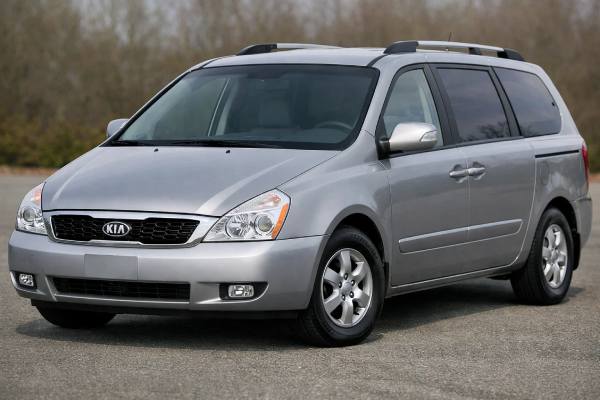
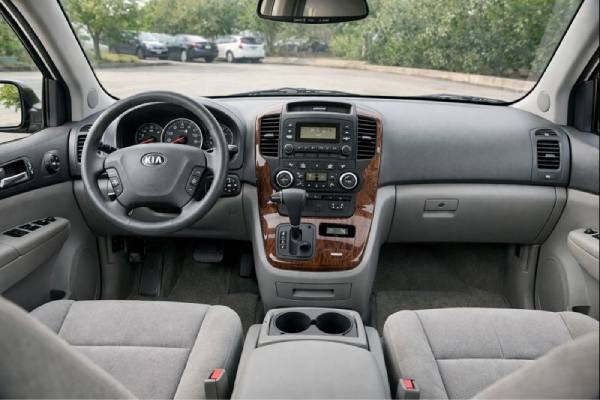
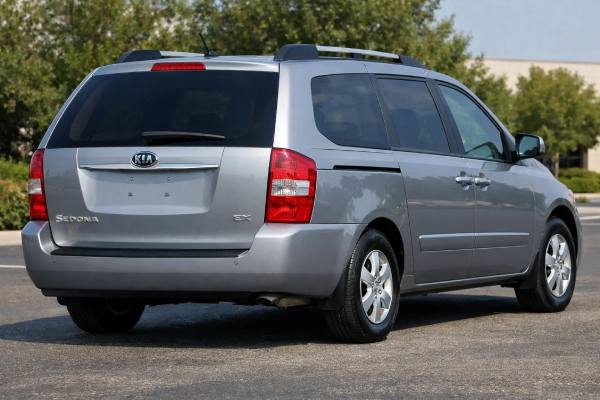
The 2006–2009 Kia Sedona (VQ) with the 2.9 CRDi J3 diesel is a rare mix in the MPV world: a heavy, family-sized people mover with genuine low-rpm pulling power and long-legged cruising manners. With 185 hp on tap and a strong midrange, it handles full cabins and luggage without feeling constantly strained. The trade-off is that this drivetrain asks for “diesel-smart” ownership—clean oil, good fuel habits, and attention to airflow and boost control as miles add up.
This guide focuses on the real ownership story: what the key specs mean day to day, which faults show up most often, what to inspect before buying, and how to maintain the J3 CRDi so it stays smooth and economical. If you want a practical seven-seat diesel with value pricing, this is the version worth understanding.
Owner Snapshot
- Strong low-rpm torque makes it relaxed with seven passengers and highway gradients.
- Spacious cabin and sliding doors suit family use, taxis, and shuttle duty.
- 5-speed automatic versions cruise quietly for the class, especially on stock tyre sizes.
- Budget for intake/EGR cleaning and boost-control checks as mileage climbs.
- Plan engine oil service about every 16,000 km (10,000 mi) or 12 months (whichever comes first).
Jump to sections
- Kia Sedona VQ diesel profile
- Kia Sedona VQ J3 key specs
- Kia Sedona VQ trims and safety
- Reliability and known weak spots
- Maintenance plan and buying checks
- Driving feel and real economy
- Sedona VQ versus main rivals
Kia Sedona VQ diesel profile
Kia’s Sedona VQ (often sold as Carnival in many markets) moved the model from “budget van with seats” toward a more refined MPV: a wider track, a calmer ride, and better noise control at speed. In diesel form, the 2.9 CRDi J3 is the heart of the package. It is a large-displacement four-cylinder turbo diesel tuned for torque and durability rather than high-rev response. In everyday driving, that means the Sedona doesn’t need constant throttle to keep pace; it builds speed with steady boost, and it tolerates full loads without feeling fragile.
The VQ platform suits long trips. The wheelbase and suspension tuning prioritize straight-line stability and comfort over sharp cornering. Even by today’s standards, the seating height and visibility feel “coach-like,” and the sliding rear doors are genuinely useful in tight parking bays. For owners, the big question is not whether it can carry people—it can—but whether it has been maintained like a diesel should be. The J3 can last a long time when oil quality and cooling health are kept consistent. It can also become expensive when neglected: soot load in the EGR (exhaust gas recirculation) system, sticky turbo control hardware, injector sealing issues, and aging rubber hoses are the typical “second-half-of-life” problems.
This model also rewards correct tyre sizing and alignment. Because it is heavy, mismatched tyres or worn suspension bushings show up as noise, steering shimmy, and uneven wear sooner than on lighter cars. If you approach it like a commercial vehicle—scheduled fluids, proactive inspection, and fixing small leaks early—the Sedona VQ diesel can be a cost-effective long-distance family hauler. If you treat it like a disposable runabout, it will eventually respond with smoke, warning lights, and drivability complaints that cost more to chase than the purchase price.
Kia Sedona VQ J3 key specs
Below are commonly listed specifications for the 2006–2009 Sedona (VQ) 2.9 CRDi 185 hp. Treat exact figures as market- and VIN-dependent (especially weights, brakes, and gearing).
Powertrain and efficiency
| Item | Specification |
|---|---|
| Code | J3 CRDi (2.9) |
| Engine layout and cylinders | Inline-4 turbo diesel, DOHC, 16-valve (4 valves/cyl) |
| Bore × stroke | ~97.1 × 100.0 mm (3.82 × 3.94 in) |
| Displacement | 2.9 L (2902 cc) |
| Induction | Turbocharged (VGT on many trims) |
| Fuel system | Common-rail direct injection |
| Compression ratio | ~17–18:1 (varies by calibration) |
| Max power | 185 hp (136 kW) @ ~3800 rpm* |
| Max torque | ~343 Nm (253 lb-ft) @ ~1750–2500 rpm* |
| Timing drive | Belt (service interval depends on market) |
| Rated efficiency | ~8.5–10.5 L/100 km (28–22 mpg US / 33–27 mpg UK), typical range |
| Real-world highway @ 120 km/h (75 mph) | ~9.0–10.5 L/100 km (26–22 mpg US / 31–27 mpg UK), load/tyres dependent |
*Published rpm points vary slightly by year and ECU calibration.
Transmission and driveline
| Item | Specification |
|---|---|
| Transmission | 5-speed manual (some markets) or 5-speed automatic |
| Transmission code (common listings) | A5HF1 / A5GF1 (5-speed automatic, market dependent) |
| Drive type | FWD |
| Differential | Open |
Chassis and dimensions
| Item | Specification |
|---|---|
| Suspension (front/rear) | MacPherson strut / multi-link (market dependent) |
| Steering | Hydraulic power steering (most), rack-and-pinion |
| Brakes | 4-wheel discs (some markets) |
| Brake diameters (common) | Front ~300 mm (11.8 in) vented; rear ~323–324 mm (12.7 in) solid (varies) |
| Wheels/tyres (common) | 225/70 R16 (16 in rim) |
| Ground clearance | ~150–165 mm (5.9–6.5 in), typical |
| Length / width / height | ~4810 / 1980 / 1820 mm (189.4 / 78.0 / 71.7 in) |
| Wheelbase | ~2890–2900 mm (113.8–114.2 in) |
| Turning circle (kerb-to-kerb) | ~11.6–12.0 m (38–39 ft), typical |
| Kerb (curb) weight | ~2050–2250 kg (4520–4960 lb), equipment dependent |
| Fuel tank | ~80 L (21.1 US gal / 17.6 UK gal), common |
Performance and capability
| Item | Typical figure |
|---|---|
| 0–100 km/h (0–62 mph) | ~12–14 s (auto slower than manual, load dependent) |
| Top speed | ~180–190 km/h (112–118 mph) |
| Braking distance (100–0 km/h) | ~40–45 m typical for class/tyres |
| Towing capacity | Market dependent; commonly up to ~2000 kg braked (verify VIN plate) |
| Payload | Often ~600–750 kg (verify VIN plate) |
Fluids and service capacities (common references)
| Item | Specification (typical) |
|---|---|
| Engine oil | ACEA diesel spec oil (market); viscosity often 5W-30 or 5W-40; capacity ~6.6 L (7.0 US qt) |
| Coolant | Ethylene glycol long-life; typical 50/50 mix; capacity varies |
| Transmission/ATF | OEM-approved ATF for 5-speed; capacity varies by drain vs dry fill |
| A/C refrigerant | R-134a; charge varies by system label |
Safety and driver assistance
| Item | Notes |
|---|---|
| Crash ratings | Rating availability depends on market body; see Safety section for tested results context |
| ADAS suite | Pre-AEB era: no factory AEB/ACC/LKA; focus is airbags, ABS, and stability control where fitted |
Kia Sedona VQ trims and safety
Trims vary widely by country, but most Sedona VQ diesels fall into a familiar structure: entry “family” grades focused on seating and value, mid grades with more comfort equipment, and upper trims that add convenience and cosmetic upgrades. The mechanical core—J3 CRDi, FWD, and either manual or 5-speed automatic—stays broadly similar. The differences that matter most for owners are transmission choice, wheel and brake packages, and whether stability control is fitted.
Trims and options that change ownership
- Automatic vs manual: The 5-speed automatic is popular for city and shuttle duty. It also adds heat load, so fluid condition and cooler health matter. Manuals can feel more responsive and may be cheaper to repair long-term.
- Wheel/tyre packages: Many markets use 16-inch wheels (often 225/70 R16). Larger wheels can sharpen steering slightly but can reduce ride comfort and increase tyre costs.
- Seating layouts: Most are 7-seat; some markets offer 8-seat configurations. Check second-row seat type (captain’s chairs vs bench) if child seats or walk-through access matters.
- Climate and electrical upgrades: Dual-zone HVAC, rear vents, and extra blower controls improve comfort but add failure points (actuators, resistors, fan motors). Test every fan speed and vent mode.
- Tow preparation: If it has factory wiring and a proper hitch structure, it usually indicates the owner intended towing. That is not automatically bad, but it raises the bar for transmission and cooling inspection.
Quick identifiers when shopping
- Automatic shifter gate and indicator cluster are obvious, but also check for a transmission cooler and signs of past overheating (dark ATF smell, varnish).
- ESP/ESC button or indicator (if equipped) helps identify stability control. Some markets list it as standard only on higher grades.
- Door function and track condition: Sliding doors should move smoothly, latch cleanly, and sit flush. Uneven closing often points to worn rollers or alignment issues.
Safety ratings and what they mean here
For the 2006-era Carnival/Sedona shape, published crash-test results exist in some regions, but you must interpret them as “period-correct.” Structures and restraint systems were designed before modern small-overlap tests and before today’s advanced driver assistance systems (ADAS) became common. Even a good score for its time does not equal a modern MPV.
Safety systems (typical equipment)
- Airbags: Front airbags are common; side and curtain airbags depend on trim and market. Confirm by looking for seat/roof airbag tags and warning lights that complete a normal self-check.
- Child-seat provisions: ISOFIX/LATCH availability varies by row and market. Physically inspect anchor points rather than trusting seller claims.
- Braking and stability: ABS is typical. Electronic stability control may be optional or trim-dependent; if present, verify it is not disabled by a lingering ABS sensor fault (common on older vehicles).
- Lighting: Upgraded headlamps exist on higher trims. Aim and lens clarity matter; cloudy lenses can reduce usable light more than owners expect.
Reliability and known weak spots
A well-kept J3 CRDi Sedona can be a dependable long-haul MPV, but the reliability story is strongly maintenance-shaped. Below are common issues grouped by prevalence and cost tier. Mileage bands are approximate; age, driving style, and service history often matter more than the odometer.
Common issues (plan for them)
- EGR and intake soot (low to medium cost):
Symptoms: hesitant acceleration, flat midrange, smoke under load, occasional fault lights.
Likely cause: soot accumulation in EGR valve, intake manifold, and sometimes boost control passages.
Remedy: clean EGR/intake, verify vacuum/actuator function, and correct driving habits (regular full warm-up runs). - Boost control and turbo actuator problems (medium cost):
Symptoms: limp mode, underboost/overboost codes, inconsistent power, whistle changes.
Likely cause: sticky VGT mechanism, failing vacuum solenoid, leaking hoses, or worn actuator.
Remedy: smoke/vacuum test, replace hoses/solenoids as needed, actuator calibration, and turbo service if sticking persists. - Injector sealing and diesel “chuff” (medium cost, can become high):
Symptoms: ticking/chuffing noise, diesel smell, black tar deposits (“black death”), hard starts.
Likely cause: injector copper washer leakage or clamp issues.
Remedy: reseal injectors correctly, clean seats, replace bolts if specified, and address early to prevent head damage.
Occasional issues (watch during inspection)
- Cooling system aging (medium cost): radiator end tanks, hoses, thermostat, and coolant condition matter on a heavy diesel MPV. Any history of overheating should be treated seriously.
- Automatic transmission shift quality (medium to high): delayed engagement, flare shifts, or shudder can point to aged ATF, solenoid wear, or overheating history. Dark/burnt fluid is a red flag.
- Suspension bushings and wheel bearings (medium): clunks over bumps, uneven tyre wear, and humming at speed are common “age and weight” outcomes.
Rare but expensive outcomes (avoid)
- Chronic overheating leading to head gasket or head issues (high): walk away if coolant pressurizes quickly, the heater goes cold under load, or there is persistent coolant loss with no clear leak.
- Severe turbo failure (high): excessive shaft play, heavy oil in intercooler pipes, or runaway risk from neglect is not worth the gamble.
Recalls, service actions, and how to verify
Because this model was sold across many regions, recall and service action coverage is market-specific. Do not rely on hearsay. Verify by:
- Checking the vehicle’s VIN against an official recall checker for the country of registration.
- Asking for invoices that show recall work completion (not just “dealer checked”).
- Confirming that warning lights (airbag/ABS/ESC) illuminate and then go out normally at startup—many issues are masked by removed bulbs or “creative” fixes on older MPVs.
Maintenance plan and buying checks
A simple rule keeps the Sedona VQ diesel affordable: treat it like a working vehicle, not a disposable one. The schedule below is conservative for mixed driving (city plus highway) and fits how soot-loading and heat affect the J3 CRDi.
Practical maintenance schedule (distance/time)
- Engine oil and filter: every 16,000 km (10,000 mi) or 12 months. If used for short trips or heavy loads, shorten to 10,000–12,000 km (6,000–7,500 mi).
- Air filter (engine): inspect every oil service; replace around 20,000–30,000 km depending on dust.
- Cabin filter: every 15,000–20,000 km or annually for HVAC performance.
- Fuel filter: every 30,000–40,000 km (or sooner if fuel quality is uncertain).
- Coolant: typically 5 years / 100,000 km (verify coolant type and label).
- Brake fluid: every 2 years regardless of mileage.
- ATF (automatic): drain-and-fill on a schedule (commonly 40,000–60,000 km) if you want long life; more often if towing.
- Timing belt system: replace at the manufacturer interval for your market; if history is unknown, treat it as urgent. Replace belt, tensioner, idlers, and inspect water pump while accessible.
- Serpentine belt and hoses: inspect every service; replace at first signs of cracking, glazing, or seepage.
- Glow plugs: test when cold starting becomes rough; replace as a set if multiple are weak.
- 12 V battery: test annually; many last 4–6 years in real use.
Fluid notes and decision-making specs
- Engine oil capacity: commonly listed around 6.6 L (7.0 US qt) with filter. Use a diesel-appropriate oil meeting your market’s ACEA/API requirements, and don’t stretch intervals—this engine rewards clean oil.
- Tyres: keep pressures correct and match tyre sizes across an axle. Heavy MPVs punish mismatches with vibration and wear.
- Brakes: because some versions have different rotor sizes, confirm parts by VIN before ordering.
Essential torque values (typical ranges)
These are practical “shop-floor” numbers that owners use for planning; verify for your exact brake and wheel setup:
- Wheel lug nuts: ~90–110 Nm (66–81 lb-ft)
- Front brake caliper bracket bolts: often ~90–120 Nm (66–89 lb-ft)
- Oil drain plug: commonly ~30–40 Nm (22–30 lb-ft) (do not overtighten)
Buyer’s guide: what to check before purchase
Bring a flashlight and allow enough time for a cold start.
- Cold start quality: it should start without excessive cranking and settle quickly. Rough idle and heavy smoke can indicate glow plug, injector, or compression issues.
- Cooling health: check for crusted coolant residue, swollen hoses, and a stable temperature on a long test drive. Heater output should remain hot at idle.
- Boost behavior: power should build smoothly. Sudden limp mode, fluttering acceleration, or loud whooshing can mean boost leaks or control problems.
- Transmission condition (auto): check engagement from Park to Drive/Reverse, and feel for flare shifts or shudder. Ask when ATF was last serviced.
- Suspension and tyres: look for inside-edge wear (alignment/bushings), clunks over bumps, and steering vibration around 90–110 km/h.
- Door mechanisms and electrics: sliding doors, HVAC modes, window regulators, and central locking should all work—electrical catch-up costs add up fast on MPVs.
Long-term outlook: if you buy one with documented belt service, clean ATF habits, and a healthy cooling system, the VQ diesel can be a steady, budget-friendly carrier. If those basics are missing, the “cheap MPV” quickly turns into a project.
Driving feel and real economy
Behind the wheel, the Sedona VQ 2.9 CRDi feels more like a small shuttle than a tall wagon. The seating position is upright, the bonnet line is easy to place, and the suspension is tuned to keep passengers comfortable over broken city surfaces. Body roll is present—this is a tall, heavy MPV—but the chassis is predictable if the suspension bushings and tyres are in good shape.
Ride, handling, and NVH
- Ride: generally soft-edged over sharp bumps, with a heavier “settle” after dips. Worn rear bushings can add a second bounce and make it feel loose at highway speed.
- Steering: typically light at parking speeds (hydraulic assist on many), building weight as speed rises. If it feels vague, check alignment, tyre condition, and front-end bushings before blaming the rack.
- Braking feel: strong enough for the class, but it relies on good pads and fluid. A spongy pedal often means old brake fluid, not just pads.
- Noise: diesel clatter at idle is normal, but once moving it should quiet down. Excess roar at highway speed is often tyres, not the engine.
Powertrain character
The J3 diesel is not a high-rev engine; it is a torque engine. It pulls best in the midrange where boost is stable. In an automatic, you’ll feel it upshift early and use torque rather than revs. If it hunts between gears on gentle hills, that can be a normal calibration trait—but it can also be a sign of low boost, restricted intake, or an aging mass-airflow/boost-control system.
Real-world efficiency
Expect fuel use to vary more with load and speed than many owners predict:
- City: often 10–12 L/100 km (24–20 mpg US / 28–24 mpg UK) in heavy traffic.
- Highway (100–120 km/h): often 9–10.5 L/100 km (26–22 mpg US / 31–27 mpg UK) when mechanically healthy.
- Mixed: often 9.5–11 L/100 km (25–21 mpg US / 30–26 mpg UK).
Cold weather and short trips increase consumption because diesels run richer during warm-up and because EGR/soot control becomes less stable. If you mostly drive short distances, schedule periodic longer runs to fully warm the engine and reduce moisture and soot accumulation.
Load and towing notes
With passengers and luggage, the Sedona stays composed if tyres are correct and the rear suspension is healthy. Under tow, pay attention to coolant temperature stability and transmission shift behavior. Even when towing is “rated,” heat is the real enemy on older MPVs; proactive fluid service is what keeps them dependable.
Sedona VQ versus main rivals
In the 2006–2009 used market, the Sedona VQ diesel competes less on prestige and more on space-per-money. Its closest rivals are other large MPVs and people carriers that offered diesel torque and family practicality.
Versus VW Sharan / Seat Alhambra / Ford Galaxy (diesels)
These models often feel more “car-like” to drive, with tighter steering response and a slightly more polished cabin layout in some trims. They can also have complex ownership costs of their own (DMF/clutch, EGR/DPF on some variants, electronics). The Sedona’s advantage is sheer cabin width and a more relaxed load-carrying feel. If you prioritize a lighter driving experience, the European trio may win; if you prioritize space and value, the Kia often makes more sense.
Versus Chrysler Voyager 2.8 CRD
The Voyager can offer strong torque and a very “big van” cruising feel. Depending on year, it can also bring higher parts costs and more complicated driveline and electrical troubleshooting. The Sedona is usually simpler to keep on the road, with fewer “surprise” modules and less specialized servicing in many markets.
Versus Renault Espace (diesels) and similar “premium MPVs”
These often deliver better interior design, seating flexibility, and sometimes better fuel economy. However, they can be more sensitive to neglected maintenance and can be less tolerant of high-mile commercial use. The Sedona is a pragmatic choice: less fancy, but often more forgiving when maintained consistently.
Who the Sedona VQ diesel suits best
- Best fit: families needing true seven-seat space, airport shuttle use, long highway trips, buyers who can follow a maintenance schedule.
- Not ideal for: mostly short-trip city driving with skipped services, buyers who want modern ADAS and the crash-test standards of newer vehicles, or anyone who cannot verify timing belt history.
Bottom-line advantage
The Sedona VQ 2.9 CRDi’s strongest competitive edge is its “working MPV” value: big cabin, strong torque, and comfortable cruising for a price that often undercuts better-known rivals. If you buy on condition rather than price and keep the diesel systems clean and serviced, it can be one of the more rational people movers of its era.
References
- Engine Oil Grades and Capacities 2024 (Service Data)
- Car Safety Recalls | What They Are & What To Do | Kia UK 2025 (Recall Checker)
- Vehicle Detail Search – 2006 KIA SEDONA | NHTSA 2026 (Recall Database)
- Kia Carnival | Safety Rating & Report | ANCAP 2006 (Safety Rating)
Disclaimer
This article is for informational purposes only and is not a substitute for professional diagnosis, inspection, or repair. Specifications, torque values, service intervals, and procedures can vary by VIN, market, model year, and equipment. Always verify details using the correct official service information and labels for your exact vehicle.
If this guide helped you, please consider sharing it on Facebook, X (Twitter), or your favorite forum—your support helps us keep producing practical ownership content.