

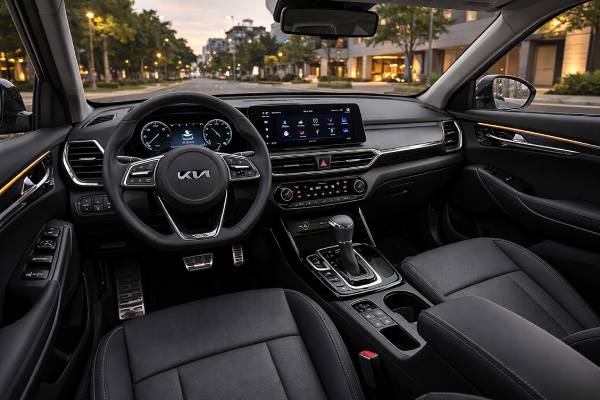
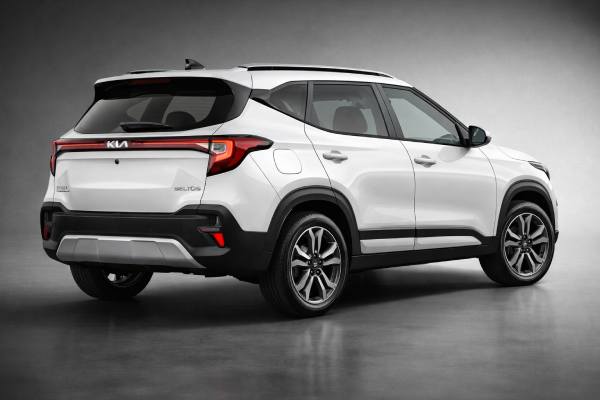
The facelifted Kia Seltos SP2 with the G4NH 2.0-liter engine and AWD aims at a practical sweet spot: simple naturally aspirated power, a smooth “step-less” IVT (CVT-style) transmission, and an on-demand rear axle that adds confidence in rain and light snow without turning the car into a heavy, fuel-hungry SUV. For most owners, the appeal is consistency. The 2.0 MPI setup avoids turbo complexity, the AWD system reacts quickly to front-wheel slip, and the facelift improves daily life with fresher infotainment and more available driver-assistance tech depending on trim and market.
The trade-off is that this is not a quick drivetrain. You buy it for predictable traction, reasonable operating costs, and compact-SUV practicality. If you keep up with fluids, tires, and software updates, this powertrain can be a low-drama long-term companion.
Owner Snapshot
- Stable all-weather traction with a light, automatic AWD system that suits commuting and weekend trips.
- Naturally aspirated 2.0 MPI favors predictable maintenance over peak performance.
- AWD models typically ride better over rough surfaces thanks to the rear suspension layout used with AWD in many markets.
- Plan on more frequent rear-coupler and driveline fluid attention if you do lots of short trips, snow, or steep grades.
- Tire rotation every 8,000–10,000 km (5,000–6,000 mi) helps AWD longevity and keeps road noise in check.
Guide contents
- Seltos SP2 AWD facelift essentials
- Seltos SP2 AWD technical specs
- Seltos SP2 AWD trims and safety tech
- Common faults and campaigns
- Service plan and ownership costs
- Road manners and real mpg
- Best rivals for this spec
Seltos SP2 AWD facelift essentials
This 2024–2025 facelift version of the Seltos SP2 pairs the G4NH 2.0-liter naturally aspirated four-cylinder with an IVT (a CVT-style automatic) and an electronically controlled AWD system. Think of it as a “front-drive first” layout that can feed torque to the rear when the front tires lose grip or when the control system predicts slip. In normal dry cruising, it behaves much like a FWD car, which keeps fuel use and noise down compared with full-time AWD systems.
Where this setup shines is repeatability. The 2.0 MPI engine is tuned for smooth midrange response rather than a hard top-end rush. Around town, it’s easy to meter in traffic and tolerant of variable fuel quality. The IVT keeps the engine in its efficient zone when you drive gently, and it can simulate stepped ratios under heavier throttle to reduce the “rubber band” feel some drivers dislike.
For owners in mixed climates, the AWD system adds confidence during wet highway merges, slushy intersections, and steep driveways. It also tends to reduce wheelspin-based tire wear on the front axle—if you keep all four tires closely matched in tread depth and pressure.
The facelift matters because it typically brings updated infotainment hardware, improved camera quality where equipped, and expanded availability of driver-assistance features depending on trim and region. The practical takeaway is that a well-optioned 2024–2025 AWD 2.0 can feel like a newer class of car in day-to-day use without changing the fundamentals underneath.
If you want to keep it happy long term, treat it like an AWD system with precision needs: rotate tires on schedule, avoid running mismatched tire sizes, and don’t ignore driveline noises (a rhythmic hum, chatter on tight turns, or vibration under load). Those are early warnings that are cheaper to address sooner than later.
Seltos SP2 AWD technical specs
Below is a specs-focused snapshot for the facelift-era AWD 2.0. Exact figures can vary by market, trim, wheels, and test method, so use this as a decision guide and confirm final numbers by VIN and local documentation.
Powertrain and efficiency
| Item | Spec |
|---|---|
| Code | G4NH |
| Engine layout and cylinders | Inline-4, MPI (port injection), DOHC (typical), 4 cylinders |
| Valvetrain | DOHC, 4 valves/cyl (market dependent) |
| Bore × stroke | 81.0 × 97.0 mm (3.19 × 3.82 in) |
| Displacement | 2.0 L (1,999 cc) |
| Induction | Naturally aspirated |
| Fuel system | MPI (port injection) |
| Compression ratio | 12.5:1 |
| Max power | 146 hp (109 kW) @ 6,200 rpm |
| Max torque | 179 Nm (132 lb-ft) @ 4,500 rpm |
| Timing drive | Chain (typical for this family) |
| Rated efficiency (typical AWD 2.0) | ~7.8–8.7 L/100 km (27–31 mpg US / 32–37 mpg UK) depending on cycle/market |
| Real-world highway @ 120 km/h (75 mph) | Often 7.5–8.8 L/100 km (27–31 mpg US / 32–37 mpg UK) with stock tires and mild wind |
Transmission and driveline
| Item | Spec |
|---|---|
| Transmission | IVT (CVT-type automatic) |
| Drive type | On-demand AWD |
| Differential | Open front; electronically controlled rear coupling (typical) |
Chassis and dimensions (typical for facelift SP2)
| Item | Spec |
|---|---|
| Suspension (front/rear) | MacPherson strut / rear layout varies by market; AWD commonly uses independent multi-link |
| Steering | Electric power steering (EPS) |
| Brakes (front/rear) | Disc / disc (sizes vary by trim) |
| Wheels and tires (common) | 215/60 R17 or 235/45 R18 depending on trim; match all four tires on AWD |
| Ground clearance | ~185 mm (7.3 in) (market and tire dependent) |
| Length / width / height | ~4,390–4,400 mm / 1,800 mm / 1,620–1,640 mm (approx.) |
| Wheelbase | ~2,630 mm (103.5 in) |
| Turning circle (kerb-to-kerb) | ~10.4–10.8 m (34–35 ft) |
| Kerb weight (curb) | ~1,410–1,450 kg (3,110–3,200 lb) depending on trim/equipment |
| GVWR | Market dependent (check door placard) |
| Fuel tank | ~50 L (13.2 US gal / 11.0 UK gal) |
Cargo volume (method varies)
| Item | Spec |
|---|---|
| Cargo volume | Typically around 750–800 L seats up (VDA-style) and 1,750–1,800 L seats down (VDA-style), or ~26–30 ft³ seats up and 60+ ft³ seats down in SAE-style markets |
Performance and capability (typical expectations)
| Item | Spec |
|---|---|
| 0–100 km/h (0–62 mph) | ~10.0–11.0 s (tire, altitude, load dependent) |
| Top speed | ~185–195 km/h (115–121 mph) (market dependent) |
| Braking distance | Depends heavily on tires; expect best results with higher-trim tires and proper bedding |
| Towing capacity | Often not rated or conservative in many markets; confirm local rating before towing |
| Payload | Check door placard; varies significantly by trim and country |
Fluids and service capacities (verify by VIN)
| Item | Typical spec guidance |
|---|---|
| Engine oil | API SP / ILSAC GF-6 (commonly), often 0W-20; capacity varies (commonly ~4.0–4.5 L) |
| Coolant | Long-life ethylene glycol; mix ratio commonly 50/50; capacity varies by climate pack |
| Transmission fluid | Manufacturer-specific IVT fluid; capacity varies (service-fill differs from dry fill) |
| Rear coupling / differential | Manufacturer-specified gear oil or coupling fluid (system dependent); confirm service procedure |
| A/C refrigerant | R-1234yf or R-134a depending on market; charge varies |
| Key torque specs | Wheel nuts commonly 90–110 Nm (66–81 lb-ft); verify other fasteners in service data |
Safety and driver assistance (availability varies)
| Item | Notes |
|---|---|
| Crash ratings | Ratings depend on market, year, and test protocol; see local agencies and trim-specific results |
| ADAS suite | AEB, lane support, blind-spot monitoring, rear cross-traffic alerts, and adaptive cruise may be standard or optional depending on trim/region |
Seltos SP2 AWD trims and safety tech
Trim structure for the Seltos SP2 changes by region, but the ownership logic is consistent: the AWD hardware usually clusters with mid-to-upper trims, and the best driver-assistance coverage often comes with an option package rather than the base AWD model. If your priority is long-distance comfort and winter confidence, choose the trim that gives you the lights, tires, and safety tech you actually want—because retrofitting those later is expensive and sometimes impossible.
Trims and options that matter on the AWD 2.0
Look for these practical differentiators:
- Rear suspension and ride tuning: In many markets, AWD models use an independent multi-link rear suspension. The benefit is not just grip; it can feel calmer over broken pavement and reduces the “hop” you sometimes get with a torsion-beam rear axle on sharp bumps.
- Wheel and tire package: Bigger wheels can sharpen steering response but increase impact harshness and tire cost. For mixed climates, a 17-inch setup often balances comfort, pothole resistance, and winter tire availability.
- Cooling and durability details: Some trims include extra underbody protection, different brake sizing, or upgraded engine cooling. If you do mountain driving or hot summers, these details matter more than cosmetic trim names.
- Infotainment tier: The facelift-era head unit may improve responsiveness and camera clarity. If you rely on navigation, voice control, and wireless phone integration, this can be a daily quality-of-life upgrade.
- Convenience tech: Heated seats, heated steering wheel, remote start, and better cabin air filtration can be more “worth it” than a premium audio badge, depending on your routine.
Safety ratings: how to interpret them
A key point with modern ratings is that results can hinge on trim-specific headlights, seat belt reminders, and advanced crash-prevention calibration. Two cars with the same nameplate can score differently if one has better headlights or a more capable AEB sensor suite. When shopping, match the rating description to the exact trim and headlight type—not just the model year.
Safety systems and ADAS details to verify
Most facelift Seltos configurations include the basics—ABS, stability control, traction control, and multiple airbags—but the “active” safety stack is where trims diverge:
- AEB (automatic emergency braking): Some versions support car-to-car and pedestrian detection; cyclist detection may depend on camera and radar capability. Keep the windshield camera area clean and avoid cheap replacement glass that distorts the camera’s view.
- Lane support: Lane keeping and lane centering can feel very different. Lane keeping nudges you back; lane centering actively holds the lane. If you do long highway trips, lane centering is the feature that reduces fatigue.
- Blind-spot and rear cross-traffic: These are high-value in city driving. They also increase repair complexity: bumper sensors, radar units, and calibration after minor impacts.
- Adaptive cruise control (ACC): Not universal on all trims/markets. If you want it, confirm with the VIN build sheet and test it in traffic before purchase.
After any windshield replacement, front bumper repair, wheel alignment, or suspension work, plan on ADAS calibration checks. Skipping calibrations can lead to false warnings, reduced AEB performance, or lane support that feels “nervous.”
Common faults and campaigns
Most complaints around the facelift-era Seltos AWD 2.0 are not about catastrophic engine failure; they tend to be “system” issues—electronics, sensors, driveline wear patterns, and maintenance sensitivity. The best way to think about reliability is to separate what’s likely to annoy you from what’s likely to cost real money.
Common (higher prevalence)
1) Tire-related AWD stress (low to medium cost, but preventable)
- Symptoms: Vibration at speed, driveline shudder, or a “binding” feel in tight parking-lot turns.
- Likely cause: Mismatched tire circumference (uneven tread depth, mixed brands/models, or uneven pressure). AWD couplings expect all four wheels to rotate similarly.
- Remedy: Keep pressures correct, rotate on schedule, and replace tires as a matched set when tread depth differences get large. If you must replace one tire, measure and match rolling circumference as closely as possible.
2) IVT behavior complaints (low to medium cost)
- Symptoms: “Flare” (engine revs rise without a matching speed increase), hesitation, or a droning sound under heavy throttle.
- Likely cause: Normal CVT-style logic, fluid condition, or software calibration that favors economy.
- Remedy: Ensure the latest drivetrain software is installed, confirm fluid condition at appropriate intervals, and test-drive after warm-up. Driving modes can also change the feel noticeably.
3) ADAS sensor sensitivity (low cost unless there’s physical damage)
- Symptoms: Random warnings, lane support dropouts, AEB unavailable messages.
- Likely cause: Dirty camera area, windshield haze, bumper sensor obstruction, or misalignment after minor curb hits.
- Remedy: Clean sensor areas, check alignment, and recalibrate after glass/suspension work.
Occasional (market and climate dependent)
4) Rear coupling or AWD engagement issues (medium to high cost)
- Symptoms: AWD warning light, reduced traction, burning smell after heavy snow slogging, or unusual rear driveline noise.
- Likely cause: Overheating or wear in the rear coupling unit, contaminated fluid, or an actuator/control fault.
- Remedy: Don’t ignore early warnings. If you frequently drive in deep snow or do steep low-speed climbs, ask about rear coupling service intervals and whether any software updates or service actions apply.
5) Brake noise and rotor corrosion (low to medium cost)
- Symptoms: Squeal after rain, grinding after long parking periods, vibration during braking.
- Likely cause: Surface corrosion, pad material transfer, or infrequent hard braking.
- Remedy: Periodic firm stops (when safe), quality pads, and brake service before corrosion becomes pitting.
Rare (but worth screening)
6) Engine oil consumption concerns (medium cost if ignored)
- Symptoms: Low oil level between services, smoke on startup (rare), or increased valve-train noise.
- Likely cause: Extended oil intervals, poor oil choice, or prior overheating/neglect.
- Remedy: Check oil level monthly, shorten intervals under severe use, and document consumption before warranty discussions.
Recalls, TSBs, and extended coverage: how to verify
Even when a concern sounds minor, you want documentation. For any used purchase, request:
- A dealer printout showing completed recalls and service campaigns.
- Evidence of software updates for powertrain and safety systems.
- Records of tire replacements showing all four tires were matched.
A practical rule: if the car has AWD and an IVT, your reliability odds go up when the previous owner was disciplined about tires and fluids. That discipline is visible in receipts.
Service plan and ownership costs
A simple maintenance approach works best here: treat the Seltos AWD as a system where small consumables protect expensive parts. Your two biggest levers are oil quality and tire management, followed closely by driveline fluid discipline if you live in harsh conditions.
Practical maintenance schedule (distance and time)
Use the shorter interval if you do frequent short trips, cold starts, mountainous driving, heavy traffic, or dusty roads.
- Engine oil and filter: every 8,000–10,000 km (5,000–6,000 mi) or 6–12 months.
- Severe use: closer to 8,000 km / 6 months.
- Engine air filter: inspect every oil service; replace around 20,000–30,000 km (12,000–18,000 mi) in dusty areas.
- Cabin air filter: every 12 months (more often in polluted cities).
- Spark plugs: commonly 100,000 km (60,000 mi) class for modern engines, but confirm by market and plug type.
- Coolant: typically 5 years / 100,000 km first change, then shorter—verify the coolant type used in your market.
- Brake fluid: every 2 years, regardless of mileage.
- Brake pads and rotors: inspect every 15,000–20,000 km; replace as needed.
- IVT (transmission) fluid: treat as serviceable, especially for long-term ownership. A conservative interval is 50,000–80,000 km (30,000–50,000 mi) depending on duty cycle and climate.
- AWD rear coupling / rear driveline fluid: if serviceable in your market, consider 50,000–80,000 km under severe use (snow, hills, heat).
- Tire rotation: every 8,000–10,000 km with pressure checks monthly.
- Alignment: check yearly or after pothole impacts; AWD cars benefit from keeping toe and camber in spec to prevent cupping.
Fluid specs and “good enough” purchasing guidance
- Oil: use the exact viscosity specified for your market (commonly 0W-20). Cheap oil that meets the minimum spec is less important than consistent changes and a quality filter.
- Transmission fluid: use the manufacturer-specified IVT fluid only; CVT-style transmissions are sensitive to friction characteristics.
- Coolant: stick to the correct long-life coolant standard for Hyundai-Kia applications used in your market.
Essential torque values (decision-useful)
These are common “owner-facing” values, but always verify for your exact wheels and hardware:
- Wheel nuts: typically 90–110 Nm (66–81 lb-ft).
- Battery terminals: snug, not over-tightened; avoid stripping small fasteners.
Buyer’s guide: what to inspect before purchase
- Tires: confirm all four match (brand, model, size) and check tread depth. Uneven wear suggests alignment issues or neglected rotations.
- Driveline behavior: do slow, tight circles in a parking lot. Binding, hopping, or clunks deserve investigation.
- IVT smoothness: drive at light throttle, then moderate throttle. Excessive flare or harsh engagement may indicate overdue service or calibration issues.
- ADAS function: confirm no warning lights, test cruise (if equipped), and check lane support behavior.
- Underbody: look for impacts on splash shields and signs of oil seepage.
Long-term durability outlook: if you treat tires and fluids as part of the drivetrain (not just routine chores), the AWD 2.0 setup is usually a steady, low-surprise ownership experience.
Road manners and real mpg
The Seltos AWD 2.0 is tuned to feel light on its feet for a compact SUV, but it prioritizes ease over excitement. The steering is typically light at parking speeds and stable enough on the highway, with the EPS doing most of the filtering. You won’t get sports-car feedback, but you should get predictable tracking—assuming the tires are good and alignment is correct.
Ride, handling, and NVH
- Ride: With AWD’s typical rear suspension layout, the car often feels more composed over rough patches than you might expect from a small SUV. Sharp-edged hits (potholes, expansion joints) still come through, especially on 18-inch wheels.
- Handling: The chassis prefers clean inputs. Turn-in is decent, body roll is controlled, and the car feels secure rather than playful. In wet conditions, AWD helps it put power down earlier when exiting a turn.
- Cabin noise: At city speeds it’s generally quiet. At highway speeds, tire choice makes a big difference—aggressive all-season tread can add a steady hum. Wind noise depends on roof rails, mirrors, and crosswinds.
Powertrain character: what it feels like
- Throttle response: The 2.0 MPI responds smoothly, especially off-idle and in midrange cruising. It lacks the surge of a turbo engine, so passing requires planning.
- IVT behavior: Under gentle throttle, it’s smooth and efficient. Under hard throttle, it may hold higher rpm to build speed. Many drivers adapt quickly once they stop expecting stepped “gear changes.”
- Drive modes: If your market offers modes (Normal, Sport, Snow), expect Sport to sharpen throttle mapping and change IVT strategy. Snow modes usually soften torque delivery and encourage AWD engagement.
Real-world efficiency you can expect
Your real number depends on speed, temperature, and tire type. As a general expectation for an AWD 2.0 compact SUV:
- City-heavy: often 8.5–10.0 L/100 km (23–28 mpg US / 28–34 mpg UK).
- Highway 100–120 km/h: often 7.5–8.8 L/100 km (27–31 mpg US / 32–37 mpg UK).
- Mixed driving: commonly lands around 8.0–9.2 L/100 km (26–29 mpg US / 31–35 mpg UK).
Cold weather matters. Short winter trips can raise fuel use dramatically because the engine spends more time warming up, and AWD systems may engage more often when roads are slick.
Traction and control in the real world
In normal driving, the AWD system is mostly invisible. You notice it when pulling away on wet paint lines, climbing steep icy streets, or accelerating onto a rainy highway. If you pair it with good tires—especially a proper winter tire set—it becomes a confidence feature rather than a “stuck recovery” tool. Ground clearance and tire choice still limit you in deep snow or mud.
Best rivals for this spec
The Seltos AWD 2.0 competes in a crowded space where small differences matter. To compare fairly, match these variables: naturally aspirated vs turbo, traditional automatic vs CVT/eCVT, and AWD system type (on-demand coupling vs more advanced torque-vectoring systems).
Rivals that make sense cross-shopping
Subaru compact AWD models
If your priority is winter confidence above all, Subaru’s brand identity is built around AWD. In many models, the AWD is a core feature rather than an add-on. The trade-off is that you may pay more in fuel and tires over time, and the driving feel can be more utilitarian depending on model.
Toyota hybrids and efficient crossovers
If you care most about fuel use and smoothness in traffic, Toyota’s hybrid offerings can beat a 2.0 AWD on running costs, especially in city driving. The compromise is that hybrid trims and availability vary by market, and some buyers prefer the simpler non-hybrid maintenance pattern of the Seltos.
Honda in the same size class
Honda’s small crossovers often win on predictable road manners and strong resale. Depending on the exact model and year, you may get a more refined ride and power delivery. You’ll want to compare AWD behavior and transmission feel carefully, because the “personality” differs.
Mazda for a more premium feel
If you want tighter steering, a quieter cabin, and a more upscale interior vibe, Mazda tends to deliver. The trade-off is that you may give up some rear seat/cargo packaging efficiency or pay more for similarly equipped trims.
Why choose the Seltos AWD 2.0 anyway?
Pick it when you want:
- A straightforward naturally aspirated engine with predictable maintenance.
- Compact size with real daily usability (parking, cargo, visibility).
- An AWD system that adds confidence without turning the vehicle into a heavy off-road machine.
- Strong value when equipped with the safety tech you actually use.
Pass on it if:
- You expect quick passing power without planning.
- You dislike CVT-style behavior under hard acceleration.
- You regularly tow heavy loads (you’ll want a vehicle with clear, higher tow ratings).
References
- 2025 Seltos Pricing 2024 (Manufacturer Information)
- 2025 Seltos Specifications 2024 (Manufacturer Specifications)
- 2025 Kia Seltos 2025 (Safety Rating)
Disclaimer
This article is for informational purposes only and is not a substitute for professional diagnosis, inspection, or repair. Specifications, torque values, fluid types, capacities, and maintenance intervals can vary by VIN, market, model year, drivetrain, and installed equipment. Always verify details using your official owner’s manual, service information, and the vehicle’s factory labels.
If this guide helped you, please consider sharing it on Facebook, X (Twitter), or your favorite forum to support our work.