


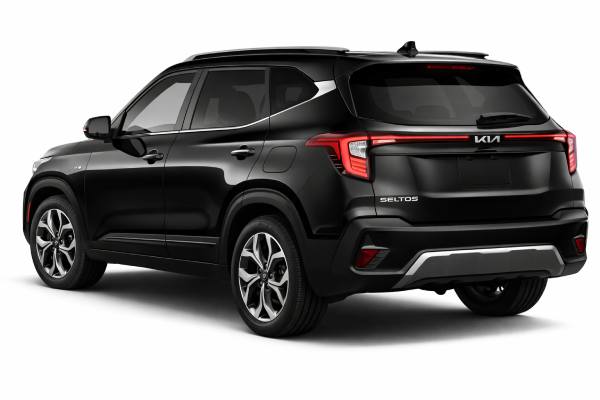
The facelift-era Kia Seltos SP2 with the 1.6-liter turbo and AWD is the “do-it-all” setup in the lineup: brisk enough to feel confident on short highway merges, refined enough for daily commuting, and grippy enough to make winter tires feel like a performance upgrade rather than a necessity. This version also matters because it pairs the turbo engine with a conventional automatic transmission in many markets, which tends to be easier to live with long-term than a dual-clutch in stop-and-go traffic.
If you’re shopping the 2025–present Seltos AWD specifically, focus on three ownership themes: the health of turbocharged direct injection (oil quality and warm-up habits), AWD system fluid servicing, and how much modern driver assistance you want (and how you’ll maintain its sensors). Nail those, and this spec can be a very balanced small SUV.
Top Highlights
- Strong mid-range pull for a small SUV, with AWD traction that makes wet roads and light snow less stressful.
- Practical packaging: generous cargo for the footprint and a tight turning circle for city parking.
- A conventional automatic (where fitted) is typically smoother in traffic than a dual-clutch setup.
- Caveat: turbo direct-injection engines reward shorter oil intervals and high-quality fuel, especially with frequent short trips.
- Typical interval: rotate tires every 8,000–12,000 km (5,000–7,500 mi) to keep AWD wear even.
Quick navigation
- Kia Seltos AWD SP2 facelift in depth
- Kia Seltos 1.6T AWD specs and dimensions
- Kia Seltos trims, options, and safety systems
- Reliability, common issues, and service actions
- Maintenance plan and buyer’s checklist
- Driving feel, real-world performance, and efficiency
- How the Seltos AWD compares to rivals
Kia Seltos AWD SP2 facelift in depth
The 2025–present facelift version of the Seltos SP2 keeps the same basic recipe—compact SUV footprint, upright seating, and a practical hatch—but it sharpens the drivetrain story for buyers who want more than “just adequate” power. The 1.6-liter turbocharged engine (often listed under the G4FP family in some markets) is the key differentiator: it delivers stronger passing response than the base naturally aspirated engine, and it tends to feel less strained at highway speeds, especially when the vehicle is loaded with passengers and cargo.
AWD on the Seltos is designed for real-world traction, not rock crawling. Think rain-soaked roundabouts, slushy intersections, and gravel driveways rather than deep ruts. Most configurations use an electronically controlled coupling that can send extra torque rearward when the front tires start to slip. That pairs well with brake-based traction control, which can “pinch” a spinning wheel to help torque flow to the tire that still has grip. The practical takeaway: in winter conditions, you get cleaner pull-away and better stability—provided your tires match the season.
The facelift-era Seltos also tends to be feature-forward. Many trims bundle large infotainment screens, multiple camera views, and an expanding set of driver-assistance systems. That’s great for daily convenience, but it also adds a modern ownership reality: sensors and cameras must remain clean, aligned, and properly calibrated after certain repairs (windshield replacement, bumper work, wheel alignment, and some suspension repairs).
If you’re deciding whether this is the “right” Seltos, ask yourself two questions:
- Do you regularly drive at higher speeds, carry passengers, or climb grades? If yes, the turbo’s extra torque is a meaningful upgrade.
- Do you keep cars for many years? If yes, plan to maintain it like a turbo direct-injection vehicle—clean oil, smart warm-up habits, and consistent service records.
In short, this Seltos variant is appealing because it combines compact practicality with a drivetrain that feels grown-up. Treat it like a modern turbo AWD vehicle (not an old-school basic crossover), and it generally rewards you with confident, easy daily driving.
Kia Seltos 1.6T AWD specs and dimensions
Below are market-typical specs for the facelift-era Seltos AWD with the 1.6-liter turbo. Exact details can vary by country, emissions certification, and trim, so use these as a high-confidence baseline and confirm against your VIN and local spec sheet.
Powertrain and efficiency (1.6T AWD)
| Item | Specification |
|---|---|
| Engine code (market-dependent) | G4FP family (Smartstream 1.6 T-GDI in many markets) |
| Layout | Inline-4, DOHC, 16-valve |
| Displacement | 1.6 L (1,591 cc) |
| Induction | Turbocharged |
| Fuel system | Gasoline direct injection (GDI) |
| Max power | 190 hp (142 kW) @ ~6,000 rpm (market dependent) |
| Max torque | ~265 Nm (195 lb-ft) @ ~1,600–4,500 rpm (market dependent) |
| Timing drive | Chain (typical for this family) |
| Rated fuel economy (example AWD turbo) | ~9.4 / 8.7 / 9.0 L/100 km (City/Hwy/Combined) (≈ 25 / 27 / 26 mpg US) |
| Real-world highway @ 120 km/h | Often ~8.5–9.8 L/100 km depending on tires, wind, temperature, and load |
Transmission and driveline
| Item | Specification |
|---|---|
| Transmission | 8-speed automatic (where fitted on turbo AWD) |
| Drive type | AWD (electronically controlled coupling) |
| Differentials | Typically open front and rear; traction via brake-based control |
Chassis, brakes, and tires
| Item | Specification |
|---|---|
| Front suspension | MacPherson strut (typical) |
| Rear suspension | Multi-link on many AWD versions (market/trim dependent) |
| Steering | Electric power steering |
| Brakes (front/rear) | Disc / disc |
| Brake rotor diameter | ~279 mm (11.0 in) front; ~262 mm (10.3 in) rear |
| Common tire size (popular) | 235/45 R18 |
Dimensions and capacities (approx.)
| Item | Metric | Imperial |
|---|---|---|
| Length | ~4,384 mm | 172.6 in |
| Width | ~1,801 mm | 70.9 in |
| Height | ~1,631 mm | 64.2 in |
| Wheelbase | ~2,630 mm | 103.5 in |
| Ground clearance | ~195 mm | 7.7 in |
| Turning circle (kerb-to-kerb) | ~10.6 m | 34.8 ft |
| Fuel tank | ~50 L | 13.2 US gal (≈ 11.0 UK gal) |
| Cargo volume (seats up / down) | ~753 L / ~1,779 L | 26.6 ft³ / 62.8 ft³ |
Performance and capability (typical turbo AWD)
| Item | Typical result |
|---|---|
| 0–100 km/h (0–62 mph) | ~8.4 s (varies by trim/tires/altitude) |
| Top speed | Often ~190–200 km/h (118–124 mph), sometimes electronically limited |
| Braking 100–0 km/h | Commonly ~36–40 m on good tires (varies widely) |
| Towing | Market-specific; often limited for small turbo AWD crossovers—verify local rating |
Fluids and service capacities (decision-useful)
| Fluid | Spec | Capacity (approx.) |
|---|---|---|
| Engine oil | API SP / ILSAC GF-6 (typical); viscosity per climate (often 5W-30) | ~4.8 L (5.0 US qt) |
| Transmission fluid | Manufacturer ATF spec (market-specific) | Not consistently published in public spec sheets |
| AWD/rear driveline oil | Gear oil per OEM spec | Not consistently published in public spec sheets |
| Coolant | OEM long-life coolant | Varies by cooling package; confirm by VIN |
| A/C refrigerant | Typically R-1234yf on newer models | Charge varies; confirm under-hood label |
Why these numbers matter: the Seltos is compact, but its cargo and turning circle are genuinely useful in daily life. The 1.6T’s torque band also means it feels stronger than the horsepower number suggests—especially at normal road speeds where you actually drive.
Kia Seltos trims, options, and safety systems
Trims and options differ by market, but the facelift-era Seltos lineup usually follows a familiar pattern: a value-focused base trim, a mid-grade with comfort and tech upgrades, and one or two “turbo” trims where the 1.6T and AWD are most common. When you’re specifically shopping for the 1.6T AWD, the most important task is verifying the powertrain pairing on the actual vehicle—not just the badge on the liftgate—because some regions mix-and-match drivetrains across trims depending on supply and emissions rules.
Quick trim identifiers (practical checks)
- Wheels/tires: Turbo AWD trims often wear larger wheels (commonly 18-inch) and wider tires than entry models.
- Drive mode and AWD pages: In the infotainment menus, look for AWD-related screens or traction settings.
- Under-hood labeling: Engine family and emissions labels often confirm the turbo engine and required fuel.
- VIN build sheet (dealer printout): The most reliable way to confirm drivetrain and option packages.
Mechanical differences that affect ownership
Even when the cabin looks similar, trims can differ in ways that change cost and feel:
- Tire package: Wider, lower-profile tires improve grip and steering response but can increase road noise and replacement cost.
- Rear suspension layout (market dependent): Some AWD configurations use a more sophisticated rear suspension than FWD versions, improving ride control over broken pavement.
- Brakes: Rotor sizes can vary with wheel package; bigger wheels often pair with larger brakes.
- Cooling and calibration: Turbo trims can have different cooling stacks and powertrain software.
Safety ratings (what to look for)
Safety ratings can change year to year as test protocols evolve. For the facelift-era Seltos, confirm results by model year and body style (4-door SUV). If you shop across multiple years, don’t assume a 2023 result equals a 2025 result—tests and acceptable performance thresholds move.
Driver assistance and ADAS (what’s standard vs optional)
Many Seltos trims include, or offer, a broad ADAS suite. Common features include:
- AEB (automatic emergency braking): Often detects cars and pedestrians; cyclist detection varies by market/year.
- Lane support: Lane keeping assist (LKA) and lane following/centering (sometimes marketed separately).
- Blind-spot and rear cross-traffic alerts: Valuable in urban traffic and parking lots.
- Adaptive cruise control (ACC): Not always standard; verify on the window sticker or settings menu.
- Traffic sign recognition: Availability varies; sometimes bundled with higher trims.
Service implication: ADAS sensors rely on clean camera lenses and correctly aligned radar (if equipped). After windshield replacement, front-end collision repairs, or certain suspension work, calibration may be required. Budget for it, and choose a shop that can document the calibration outcome.
Airbags and child-seat practicality
Most modern compact SUVs offer a comprehensive airbag set (front, side, and curtain airbags) and include LATCH/ISOFIX anchors. When evaluating a specific car, check:
- Whether the rear seat has easily accessible top-tether anchors
- Whether bulky child seats interfere with front seat comfort
- Whether rear door opening angle and sill height suit your daily routine
Bottom line: the “best” trim is the one that matches your driving environment. If you commute in traffic or drive long distances, prioritize ACC and strong headlights. If you deal with winter, prioritize the tire package and AWD configuration—and treat ADAS as a bonus that needs correct maintenance.
Reliability, common issues, and service actions
A facelift-era Seltos AWD with the 1.6T is generally straightforward to own, but it’s still a modern turbo direct-injection vehicle with a complex electronics stack. The smart approach is to separate issues into (1) what happens often, (2) what costs real money when it happens, and (3) what can be prevented with habits and maintenance.
Common (higher-frequency) concerns
- Oil dilution and short-trip stress (low to medium cost): Turbo GDI engines run richer during cold starts. Frequent short trips can leave more fuel and moisture in the oil.
- Symptoms: Oil level rising, fuel smell on dipstick, rough idle on cold mornings.
- Remedy: Shorter oil intervals, correct viscosity for climate, and occasional longer drives that fully warm the oil.
- Carbon buildup on intake valves (medium cost, long timeline): Direct injection sprays fuel into the combustion chamber, not onto the intake valves. Over time, oil vapors from the PCV system can leave deposits.
- Symptoms: Gradual loss of response, uneven idle, misfire codes at higher mileage.
- Remedy: Quality oil, healthy PCV system, and intake cleaning if symptoms appear.
- Tire wear sensitivity on AWD (low to medium cost): AWD systems dislike mismatched tire circumferences.
- Symptoms: Driveline vibration, binding, or AWD warning lights in severe cases.
- Remedy: Rotate tires regularly, replace tires as a matched set when wear differences are large, keep pressures correct.
Occasional (moderate frequency) issues
- Turbo plumbing and boost control quirks (medium cost): Hoses, clamps, and boost control components can age.
- Symptoms: Reduced power, whistle/hiss, underboost codes.
- Remedy: Pressure test intake tract, verify wastegate/actuator function, update software if applicable.
- Cooling system seepage (medium cost): Plastic tanks, hose junctions, and clamps can seep with age.
- Symptoms: Sweet smell, low coolant warnings, crusty residue near hose ends.
- Remedy: Replace affected hose/junction; pressure test rather than guessing.
- Infotainment and camera sensor faults (low to medium cost): Software updates often fix bugs; sometimes a camera or sensor needs replacement.
- Symptoms: Random reboots, camera dropouts, ADAS warnings.
- Remedy: Check for software updates first; inspect connectors and camera housings for water intrusion.
Rare but high-impact items
- AWD coupling or rear driveline wear (high cost, usually mileage-related): Neglected fluid service, frequent overheating, or mismatched tires can increase stress.
- Symptoms: Shudder, groan, binding on tight turns, persistent AWD faults.
- Remedy: Early fluid changes and correct tires; diagnose promptly if symptoms begin.
Recalls, TSBs, and verification habits
Even if your specific model year has no obvious issues, you should treat recall and service-campaign checks as routine:
- Run the VIN through the official recall portal for your region.
- Ask for dealer service history printouts when buying used.
- Confirm any ECU/TCU/ADAS updates were completed, especially if the car had earlier drivability complaints.
Pre-purchase checks worth requesting (1.6T AWD):
- Proof of oil changes (dates and mileage, not just “it was done”).
- Matching tire brand/model and similar tread depth on all four corners.
- A scan for stored (not just active) powertrain and AWD codes.
- A test drive that includes low-speed tight turns, highway cruise, and a brisk acceleration run to check for boost hesitation.
If you keep the oil clean, keep tires matched, and address warning lights quickly, this drivetrain is usually a stable long-term bet.
Maintenance plan and buyer’s checklist
A practical maintenance plan for the Seltos 1.6T AWD has one goal: keep heat, contamination, and wear from “stacking up” in the systems that work hardest—engine oil, ignition, cooling, transmission, AWD coupling, and brakes. The schedule below balances real-world ownership with the reality that many drivers do short trips.
Core maintenance schedule (distance or time, whichever comes first)
- Engine oil and filter: every 8,000–10,000 km (5,000–6,000 mi) or 6–12 months
- If you do frequent short trips, cold weather, or heavy traffic: lean toward the shorter end.
- Tire rotation: every 8,000–12,000 km (5,000–7,500 mi)
- Engine air filter: inspect every oil change; replace typically 24,000–40,000 km (15,000–25,000 mi) depending on dust
- Cabin air filter: 12 months (or sooner if you drive in cities/dusty areas)
- Brake fluid: every 2–3 years regardless of mileage
- Coolant: often long-life; commonly 5–10 years initial, then shorter intervals—verify your exact spec
- Spark plugs (turbo engines): often 60,000–80,000 km (40,000–50,000 mi); verify plug type and interval for your market
- Transmission fluid: inspect regularly; consider a preventative change around 60,000–100,000 km (40,000–60,000 mi) if you tow, drive mountains, or do heavy city use
- AWD coupling and rear driveline fluids: consider every 48,000–80,000 km (30,000–50,000 mi) depending on severity and climate
- Alignment check: annually, and immediately after any curb impacts or unusual tire wear
Fluids and specifications (decision-friendly)
- Engine oil: use an oil that meets the required API/ACEA standard for your market; many owners do well with API SP / ILSAC GF-6 quality oil.
- Viscosity: choose based on climate; 5W-30 is common for turbocharged applications, but always match the cap/manual.
- Capacity: approximately 4.8 L (5.0 US qt) for oil and filter service on typical 1.6T configurations.
Essential torque values (verify for your VIN)
Use these as planning values only; confirm in your service documentation:
- Wheel lug nuts: ~108 Nm (80 lb-ft)
- Oil drain plug: often ~30–40 Nm (22–30 lb-ft)
- Spark plugs (if servicing): often ~18–25 Nm (13–18 lb-ft), depending on plug seat design
Buyer’s guide: what to inspect on a used facelift Seltos AWD
Exterior and chassis
- Uneven tire wear (inside edges suggest alignment issues; cupping suggests worn shocks or imbalance)
- Evidence of bumper removal or front-end repairs (can affect ADAS calibration)
- Underbody scrapes near the engine undertray and rear driveline
Engine bay
- Oil level and condition (avoid any car with unclear oil history on a turbo engine)
- Coolant level stability and dried residue around hoses
- Listen for hissing under acceleration (boost leak hint)
Test drive checklist (10 minutes that matters)
- Cold start: stable idle within a minute; no persistent misfire.
- Low-speed tight turns: no binding or groaning from the driveline.
- Highway cruise: stable tracking; no steering vibration.
- Medium throttle: smooth boost build; no surging.
- Brakes: straight stop, no pulsing, no squeal.
Long-term durability outlook
With consistent oil service, matched tires, and periodic driveline fluid attention, the Seltos 1.6T AWD can age well. Neglect tends to show up first as drivability complaints (hesitation, roughness) or AWD-related warnings—both of which are much cheaper to address early than late.
Driving feel, real-world performance, and efficiency
The turbo AWD Seltos is at its best when you drive it like a modern torque-forward crossover—smooth throttle, steady inputs, and predictable braking—rather than trying to wring it out like a hot hatch. In everyday use, it feels more confident than base-engine variants because the turbo engine produces useful torque at low-to-mid rpm. That matters more than peak horsepower in real traffic.
Ride, handling, and NVH (noise and refinement)
- Ride quality: Generally composed over broken pavement for the class, though 18-inch wheels can transmit sharper impacts on potholes. If your roads are rough, the “sporty” tire package may cost you more comfort than it gives back in cornering.
- Steering: Light at parking speeds and stable on the highway. It’s not designed for deep feedback, but it’s easy to place in the lane and doesn’t feel nervous in crosswinds.
- Cabin noise: Expect typical small-SUV wind noise at highway speeds. Tire choice has a big effect—aggressive all-seasons or worn tires can raise noise noticeably.
Powertrain character (1.6T AWD)
- Throttle response: Stronger and more immediate once rolling than many naturally aspirated rivals. From a stop, turbo calibration often prioritizes smoothness; you may feel a brief moment of “building” rather than a hard hit.
- Transmission behavior: A conventional automatic (where fitted) usually feels predictable and smooth in traffic. In hilly terrain, it may downshift readily to keep the turbo in its torque band.
- Drive modes: If your model has selectable modes, use “Normal” for most driving and reserve “Sport” for merging and passing. In slippery conditions, smoothness beats aggression.
Key performance metrics that shape expectations
- 0–100 km/h: around 8.4 seconds is quick enough to feel relaxed on highways and when overtaking slower traffic.
- Passing response: The real win is typically 80–120 km/h (50–75 mph) acceleration, where turbo torque reduces the need for dramatic downshifts.
Real-world efficiency
Your actual consumption depends heavily on speed and temperature:
- City: often 9.5–11.0 L/100 km (21–25 mpg US) if traffic and short trips dominate
- Highway (100–120 km/h): often 8.5–9.8 L/100 km (24–28 mpg US)
- Mixed: many owners land near 9.0–10.0 L/100 km (23–26 mpg US)
Cold weather can raise fuel use meaningfully because warm-up enrichment lasts longer, and winter tires add rolling resistance. If you want the best efficiency without driving slowly, aim for steady throttle and avoid repeated short-trip cold starts when possible.
Traction and control (AWD in real conditions)
AWD helps most in these situations:
- Pulling away on wet paint lines, slush, or gravel
- Climbing short snowy inclines
- Maintaining composure when one side of the car hits a slick patch
What AWD does not change: braking distances on ice and snow. Good tires still matter more than drivetrain. If your climate is winter-heavy, dedicate budget to a proper winter tire set—your stopping distance and steering control will improve dramatically.
How the Seltos AWD compares to rivals
In the small SUV space, most rivals are competent—but they don’t all feel the same day to day. The Seltos 1.6T AWD competes on a mix of torque, packaging, and technology. Here’s how it typically stacks up against common alternatives.
Versus Subaru Crosstrek AWD
- Seltos advantages: stronger on-road punch in passing situations; often more infotainment and camera tech for the money; more “SUV-like” cargo flexibility.
- Crosstrek advantages: reputation for AWD calibration and ground-clearance approach; often a sturdier feel on rough surfaces.
- Choose Seltos if: your driving is mostly paved with occasional winter weather and you want stronger acceleration.
Versus Mazda CX-30 (and turbo versions)
- Seltos advantages: more upright space usage, often easier rear-seat access, and typically a more family-friendly cargo area.
- CX-30 advantages: premium cabin feel, sharp steering control, and strong turbo options in some markets.
- Choose Seltos if: you prioritize practicality and visibility over “sporty-premium” vibes.
Versus Hyundai Kona AWD (similar powertrain family)
- Seltos advantages: often roomier rear seat and cargo, with a more traditional small-SUV shape.
- Kona advantages: can feel smaller and more nimble; sometimes offers different tech packaging.
- Choose Seltos if: you carry adults in the back seat or need cargo space without moving up a class.
Versus Toyota Corolla Cross AWD
- Seltos advantages: more responsive torque feel (especially turbo variants), and often richer tech at similar pricing.
- Corolla Cross advantages: fuel economy focus and a conservative, simple ownership vibe.
- Choose Seltos if: you want stronger performance and don’t mind staying on top of turbo-style maintenance.
Versus Volkswagen Taos (AWD trims)
- Seltos advantages: typically stronger standard safety-tech availability and a feature-rich cabin at many price points.
- Taos advantages: roomy cabin packaging and a European driving character many like.
- Choose Seltos if: you want the balance of torque and tech with a broad dealer network.
The Seltos AWD “best fit” profile
This variant makes the most sense for drivers who:
- Regularly drive highways or hilly routes and want confident passing power
- Live in mixed weather and benefit from AWD traction
- Want a compact SUV with modern driver assistance and camera tech
- Are willing to maintain a turbo GDI engine thoughtfully (oil, warm-up, records)
If you want maximum simplicity, a naturally aspirated engine and FWD may feel “easier.” If you want a compact SUV that feels more relaxed under load and more secure in bad weather, the 1.6T AWD Seltos is often the sweet spot.
References
- 2025 Kia Seltos – Specifications 2025 (Specifications)
- 2025 Kia Seltos – Overview 2025 (Manufacturer Overview)
- 2025 Kia Seltos 4-door SUV 2025 (Safety Rating)
- Kia Recalls | Kia Ireland 2026 (Recall Information)
Disclaimer
This article is for informational purposes only and is not a substitute for professional diagnosis, repair, or vehicle inspection. Specifications, torque values, service intervals, fluids, and procedures can vary by VIN, market, engine calibration, and equipment. Always verify details using your official owner’s literature and service documentation for your exact vehicle.
If this guide helped, please consider sharing it on Facebook, X/Twitter, or your favorite forum to support our work.