

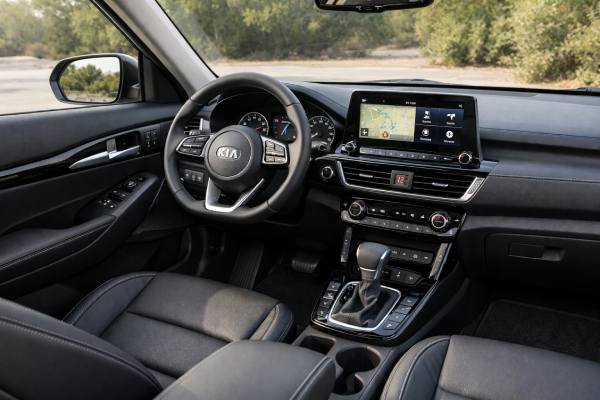

The 2020–2023 Kia Seltos FWD (SP2) with the 2.0-liter naturally aspirated engine is the “keep it simple” choice in the lineup. With 146 hp and an Atkinson-cycle tune, it prioritizes smooth everyday response and fuel efficiency over quick acceleration. The front-wheel-drive layout keeps curb weight down and reduces drivetrain complexity compared with AWD, which can help long-term running costs if your use is mostly paved roads and moderate winters.
Owners usually like the upright seating, practical cargo shape, and strong feature value, especially on trims that include modern driver-assistance systems. The smart approach with this model is routine: stay consistent with oil services, do not ignore early warning signs (oil pressure light, new engine noise, or increased consumption), and verify recall completion by VIN. With those basics covered, this Seltos configuration tends to be an easy, predictable compact crossover to live with.
Quick Specs and Notes
- FWD layout keeps weight and complexity lower than AWD, which can help fuel economy and tire wear costs.
- 2.0 MPI Atkinson engine is tuned for steady daily driving, not hard launches—expect smoothness more than punch.
- Practical packaging: tall seating, boxy cargo space, and compact exterior footprint for city parking.
- Verify recall eligibility and completion by VIN on certain production windows before purchase.
- Plan engine oil and filter service about every 12 months or 12,000 km (7,500 miles) in normal use (short trips justify earlier).
Navigate this guide
- Kia Seltos FWD SP2 ownership fit
- Kia Seltos FWD SP2 specs and measurements
- Kia Seltos FWD SP2 trims and safety systems
- Reliability, recalls, and known issues
- Maintenance plan and buyer’s checklist
- Driving feel and real-world economy
- Rivals and value comparison
Kia Seltos FWD SP2 ownership fit
This Seltos configuration is best understood as a practical engineering package: a naturally aspirated 2.0-liter engine, a CVT-style Intelligent Variable Transmission (IVT), and front-wheel drive. That combination is not aimed at performance bragging rights. Instead, it is meant to be easy to service, efficient in normal driving, and predictable for daily commuting.
Why the FWD version matters. On compact crossovers, AWD often adds real-world benefits only in a few scenarios: steep icy driveways, frequent snow starts, muddy work sites, or rough unpaved access roads. If that is not your life, FWD usually wins on simplicity. You typically get lower curb weight, fewer rotating parts, and fewer fluid services. Even small things add up over years: fewer driveline seals to age, fewer components that can develop noise, and fewer “mystery vibrations” caused by mismatched tire wear across axles. With the Seltos, FWD also tends to feel a bit more responsive at low speeds because it has less drivetrain drag.
What the 2.0-liter feels like. The Atkinson-cycle tuning favors efficiency. In practice, that means the engine is happiest when you drive with a steady foot and give it a little time to build speed. It will do highway merges and passing, but it prefers planning over sudden bursts. The IVT complements this by holding rpm low in gentle cruising and raising rpm quickly when you demand more power. If you are new to CVT behavior, your test drive should include a few hard merges and a long hill, because that is where you learn whether the sound and feel suit you.
Chassis personality and everyday comfort. The Seltos rides like many compact crossovers: stable, slightly firm, and sensitive to wheel and tire choices. If you are choosing between trims, consider that bigger wheels can look great but often ride harsher and cost more in tires. For buyers who value comfort and lower running costs, a mid-size wheel package (often 17 inches) tends to be the sweet spot.
The “good owner” checklist. This model rewards routine more than heroics:
- Keep oil services consistent and do not run low on oil.
- Take warning lights seriously, especially oil pressure or misfire symptoms.
- Confirm recalls and updates by VIN, not by trim name or seller claims.
Kia Seltos FWD SP2 specs and measurements
The tables below focus on the Seltos SP2 with the 2.0-liter 146 hp engine and FWD. Some specifications vary by market and trim, so treat these as the most common baseline and verify against your VIN-specific documentation.
Powertrain and efficiency
| Item | Specification (typical for 2.0 FWD) |
|---|---|
| Engine code (commonly referenced) | G4NH / 2.0 Nu MPI (Atkinson-cycle tune in many markets) |
| Engine layout | Inline-4 (I-4), DOHC, 16 valves, hydraulic lash adjustment |
| Displacement | 2.0 L (1,999 cc) |
| Bore × stroke | 81 × 97 mm (3.19 × 3.82 in) |
| Induction | Naturally aspirated |
| Fuel system | Multi-port injection (MPI) |
| Compression ratio | 12.5:1 |
| Max power | 146 hp (109 kW) @ 6,200 rpm |
| Max torque | 179 Nm (132 lb-ft) @ 4,500 rpm |
| Timing drive | Chain (typical for this engine family) |
| Rated efficiency (EPA, 2.0 FWD example) | 7.6 L/100 km combined (31 mpg US) |
| City / highway (EPA, 2.0 FWD example) | 8.1 / 6.7 L/100 km (29 / 35 mpg US) |
| Real-world highway @ 120 km/h | Often ~7.0–8.0 L/100 km (34–29 mpg US), depending on wind, tires, load, and temperature |
Transmission and driveline
| Item | Specification |
|---|---|
| Transmission | Intelligent Variable Transmission (IVT, CVT-type) |
| Drive type | FWD |
| Differential | Open (traction assisted via brake-based stability system) |
Chassis and dimensions
| Item | Typical value (varies by trim/market) |
|---|---|
| Suspension (front / rear) | MacPherson strut / torsion beam on many 2.0 FWD builds (market-dependent) |
| Steering | Electric power steering (EPS) |
| Brakes | 4-wheel discs on many trims (verify by trim); ABS, ESC, traction control |
| Common tire sizes | 215/60 R17 or 235/45 R18 depending on trim |
| Ground clearance | 185 mm (7.3 in) |
| Length / width | 4,369 / 1,801 mm (172.0 / 70.9 in) |
| Height | ~1,615–1,631 mm (63.6–64.2 in), often depends on roof rails |
| Wheelbase | 2,629 mm (103.5 in) |
| Turning circle (kerb-to-kerb) | ~10.6–11.0 m (34.8–36.1 ft), tire and wheel dependent |
| Curb weight (FWD typical) | Often ~1,330–1,400 kg (2,930–3,085 lb), trim dependent |
| Fuel tank | 50 L (13.2 US gal / 11.0 UK gal) |
| Cargo volume (SAE method, common reference) | 753 L (26.6 ft³) seats up; 1,778 L (62.8 ft³) seats down |
Performance and capability
| Metric | Typical expectation (2.0 FWD) |
|---|---|
| 0–100 km/h (0–62 mph) | ~9.5–10.5 seconds, depending on tires and conditions |
| Passing power | Better with planning than snap; strongest at moderate speeds with steady throttle |
| Top speed | Often ~180–190 km/h (112–118 mph), market-dependent |
| Towing | Many markets rate modestly or not at all; follow your manual for limits |
| Payload | Check door-jamb label; varies significantly by market and trim |
Fluids and service capacities
| Item | Practical guidance |
|---|---|
| Engine oil | Often SAE 0W-20 in many markets; capacity commonly ~4.0 L (about 4.2 US qt) with filter |
| Coolant | Long-life coolant; exact system capacity varies—confirm by service manual for your VIN |
| IVT fluid | Use only the specified IVT/CVT fluid; service method and fill level checks are procedure-sensitive |
| A/C refrigerant | Type and charge vary by market—check the under-hood label |
| Essential torque values | Wheel lug nuts are commonly in the ~108–127 Nm (80–94 lb-ft) range; drain plug torque varies by engine and plug type—verify before tightening |
Safety and driver assistance
| Item | Notes for 2020–2023 coverage |
|---|---|
| Euro NCAP | Not commonly listed for this model in many markets; treat as “not rated / not applicable” unless your local database shows otherwise |
| IIHS (US) | Ratings and headlight scores can vary by trim and equipment; check the exact model year page |
| NHTSA (US) | Star ratings shown by configuration; use the exact FWD listing for your year |
| Typical ADAS availability | AEB and lane support often widely available; ACC and blind-spot features vary by trim and year |
Kia Seltos FWD SP2 trims and safety systems
Because trim names change by region, the best way to shop a Seltos FWD 2.0 is to treat trim as a bundle of functional outcomes: wheel size, headlights, driver-assist hardware, and interior comfort features. Even if two trims share the same engine, they can drive and cost differently over time.
Trims and options that change ownership
When you compare listings, prioritize these items:
- Wheel and tire package: Bigger wheels can sharpen steering response but often increase tire cost and reduce ride comfort. If your roads are rough, the smaller-wheel option is usually easier to live with.
- Headlights: Headlight type is not just a convenience feature; it affects nighttime confidence and can influence safety-test results. If your trim has LED headlights, verify beam pattern and aim during inspection.
- ADAS hardware level: Some trims rely on a simpler camera-only setup, while others add radar for more capable AEB and adaptive cruise control. If you care about highway assistance, confirm you are buying the trim that actually includes it.
- Seat and climate equipment: Heated seats and steering wheel can matter more than you expect in winter climates. These features also tend to be reliable, but switches and seat heaters should be tested.
- Infotainment tier: Larger screens often come with additional features, but check that the system is responsive and that backup camera image quality is acceptable.
Year-to-year changes to watch
Across 2020–2023, what usually shifts (by market) is not the core powertrain, but how widely certain safety and convenience systems are offered. Your goal is to match features to your needs:
- If you want adaptive cruise control, verify it by driving the car and confirming the steering wheel controls and the presence of the correct front sensor hardware.
- If you want blind-spot monitoring and rear cross-traffic alert, verify mirror indicators and ensure the system is not disabled by a warning light.
- If you want maximum night visibility, do not assume a higher trim automatically means better beams—confirm headlight type and condition.
Safety ratings: how to interpret them correctly
Safety ratings are useful, but only if you match the configuration:
- Match the year. Testing protocols and equipment packages can change even within a generation.
- Match the equipment. Headlight performance and crash-prevention scores often depend on whether the trim has optional or standard AEB and better headlights.
- Separate crash protection from crash avoidance. Strong structure helps in a crash; strong ADAS helps avoid one. Both matter.
Safety systems and service implications
The Seltos can include multiple cameras and sensors for AEB, lane keeping assist, lane following support, and driver attention monitoring. Two practical ownership points:
- Calibration after repairs: Windshield replacement, front bumper work, and suspension alignment can require camera and radar calibration. Skipping calibration can cause warning lights or degraded AEB and lane behavior.
- Battery health affects electronics: A weak 12 V battery can create confusing symptoms—random warnings, intermittent sensor faults, and infotainment resets. If a used Seltos shows “electrical weirdness,” start with a battery test before chasing expensive modules.
Reliability, recalls, and known issues
The Seltos 2.0 FWD is generally a straightforward ownership proposition: no turbocharger, no high-pressure direct injection pump, and a power output level that does not stress the drivetrain in normal use. Most complaints in daily life fall into two buckets—software/infotainment quirks and transmission feel preferences—but there is one category that deserves more attention: engine-related recall eligibility on certain production windows.
Issue map by prevalence and cost tier
Common (low to medium cost)
- Infotainment glitches: occasional slow boot, Bluetooth dropouts, or camera lag. Often improved with updates, resets, or (less commonly) warranty parts replacement.
- Brake noise or light vibration: frequently tied to pad material, surface corrosion from short trips, or uneven bedding. Usually resolved with cleaning, pad replacement, or rotor resurfacing depending on severity.
- Interior rattles: more noticeable on rough roads; rarely a safety issue but can be annoying.
Occasional (medium cost)
- IVT behavior complaints: hesitation on tip-in, “rev flare,” or a shudder sensation under load. Some of this is normal CVT character; persistent shudder deserves diagnosis for fluid condition, mounts, and software calibration.
- Front suspension clunks: stabilizer links and bushings can wear on pothole-heavy routes.
- 12 V battery weakness: can mimic sensor faults and cause sporadic warnings.
Rare but high impact (high cost)
- Engine internal damage associated with piston oil ring defects (recall-related on certain vehicles): this is the “must verify” topic for 2021–2023 production windows referenced in recall documentation. The risk pattern often involves increased oil consumption, abnormal engine noise, and possible engine damage/seizure if ignored.
Symptoms → likely cause → recommended response
- Oil pressure light, knocking, or sudden loud ticking/hammering → possible lubrication issue or internal wear → stop driving, check oil level immediately, and tow for diagnosis if the warning persists.
- Oil level dropping faster than expected between services → could be severe-use driving, but also can indicate abnormal consumption → document top-ups (distance and quantity) and request inspection; check for applicable recalls and updates.
- Loss of power with warning lights → could be engine protection logic or misfire detection → scan for codes and confirm whether the vehicle has outstanding recall remedies.
- IVT shudder under moderate acceleration → could be fluid condition, belt/pulley behavior, mounts, or calibration → request a road test with a technician and avoid repeated “no fault found” visits without documentation.
Recalls, TSBs, and how to verify completion
For the safest buying decision, assume nothing and verify everything by VIN:
- Use an official recall database lookup and confirm “no open recalls.”
- Ask the seller for repair invoices or dealer printouts showing completion.
- During a pre-purchase inspection, request a scan for stored codes and confirm whether relevant software updates have been applied.
If you are shopping a vehicle built within recall-listed production windows, treat proof of remedy completion as non-negotiable.
Maintenance plan and buyer’s checklist
A Seltos 2.0 FWD is not a high-maintenance vehicle, but it is a modern one. That means the basics—oil quality, correct fluid specifications, and consistent inspections—matter more than “old-school” improvisation. Your goal is to keep engine lubrication healthy, keep the cooling system stable, and avoid transmission service shortcuts.
Practical maintenance schedule (distance and time)
Use this as an owner-friendly baseline. If your official schedule differs, follow the VIN-specific schedule for your market.
| Item | Normal use interval | Severe use guidance (short trips, heavy city, dusty roads, extreme temps) |
|---|---|---|
| Engine oil and filter | 12 months or 12,000 km (7,500 miles) | 6 months or ~8,000 km (5,000 miles) is sensible |
| Tire rotation | 10,000–12,000 km (6,000–7,500 miles) | Same, plus more frequent alignment checks |
| Cabin air filter | 12 months or 15,000–20,000 km | 6–12 months depending on dust/pollen |
| Engine air filter | Inspect every service; replace ~30,000–45,000 km | Replace sooner in dust |
| Brake fluid | Every 2–3 years | Every 2 years if humidity is high or braking is frequent |
| Coolant | Often 5–10 years (by coolant type) | Shorten if operating conditions are harsh |
| Spark plugs | Often long-life (check spec for your market) | Earlier if misfire/roughness appears |
| IVT fluid | Follow official guidance; consider condition checks by 60,000–100,000 km | Earlier checks if heavy stop-and-go or mountainous use |
| 12 V battery test | Annually after year 3 | Replace proactively if weak before winter |
Fluid specs and service habits that prevent expensive problems
- Use the specified oil viscosity and quality standard. Modern engines rely on correct viscosity for timing and efficiency systems. A “close enough” oil choice can increase noise and consumption over time.
- Do not use generic “transmission flush” upsells. IVT service should follow the correct fill method, temperature checks, and specified fluid. If a shop cannot describe the procedure confidently, choose another shop.
- Keep tires matched and rotated. Even on FWD, uneven tire wear can cause noise, vibration, and stability system interventions. Consistent rotations reduce surprises.
Buyer’s checklist for used examples
Paperwork
- Confirm routine oil service records with reasonable spacing.
- Verify recall completion by VIN and keep proof.
- Look for repeated visits for the same complaint (engine noise, oil consumption, transmission shudder).
Physical inspection
- Check oil level and smell (burnt odor is a red flag).
- Inspect coolant level and look for dried residue around hose connections.
- Scan for warning lights and confirm all driver-assist systems initialize correctly.
Test drive (10 minutes, high value)
- Moderate acceleration from 40–90 km/h: check for shudder, hesitation, or unusual flare.
- Light braking from 80–40 km/h: feel for pulsation or steering shake.
- Tight parking-lot turns: listen for clicks or clunks from the front end.
Long-term durability outlook
This configuration can be a dependable long-term commuter when maintained consistently and when recall eligibility is handled correctly. The biggest “wins” come from small habits: keeping oil level correct, addressing early warning signs immediately, and using correct fluids and procedures—especially for the IVT.
Driving feel and real-world economy
The Seltos 2.0 FWD is at its best when you drive it the way it was tuned: steady throttle, smooth merges, and a calm cruise. It is not slow in a dangerous way, but it is not eager in a sporty way either. If your driving style leans aggressive, you may find the engine note and IVT behavior less satisfying—especially during hard accelerations.
Ride and handling in daily use
- City ride: Generally controlled, sometimes firm over sharp bumps. Tire sidewall height makes a noticeable difference.
- Highway stability: Solid for the class; wind and tire noise dominate more than engine noise once cruising.
- Steering feel: Light to moderate effort with predictable response; feedback is limited but consistent.
- Braking: Usually progressive and easy to modulate; if the pedal feels inconsistent, check tires and brake condition before assuming a deeper fault.
Powertrain character and “CVT feel” explained
The IVT is designed to keep the engine in an efficient rpm band. That can feel excellent in relaxed driving: the vehicle moves smoothly and rpm stays low at steady speeds. Under heavier throttle, the IVT may raise rpm quickly and hold it—this is normal behavior, but not everyone enjoys the sound and sensation.
Two habits that improve the experience:
- Roll into the throttle earlier for merges instead of waiting and then demanding full power at the last moment.
- Use drive modes (if equipped) to reduce hunting on hills and improve engine braking on descents.
Real-world efficiency expectations
If your driving is mostly mixed city and suburban use, you can often land near the official combined figure. Short trips, winter warm-up time, and heavy stop-and-go raise consumption.
A practical expectation range for many owners:
- City-heavy: ~8.5–10.0 L/100 km (28–24 mpg US)
- Highway cruise: ~6.7–7.6 L/100 km (35–31 mpg US)
- Mixed: ~7.6–8.5 L/100 km (31–28 mpg US)
Cold weather can increase fuel use because the engine spends more time warming up and because cabin heating depends on engine heat. Tire choice also matters: aggressive tread patterns can cost you noticeable efficiency on the highway.
What FWD means for traction
For most owners, tires matter more than the number of driven wheels:
- Good all-season tires are fine for mild climates.
- In real winter conditions, dedicated winter tires transform traction and braking more than AWD alone.
- If you regularly face steep icy hills, AWD can help starts, but it does not shorten stopping distances—tires do.
Rivals and value comparison
The Seltos 2.0 FWD competes in a crowded class where most vehicles are “good enough” and the differences show up in refinement, safety-tech packaging, and long-term running costs. Your best comparison is not a spec-sheet drag race. It is a question of what matters day to day: cabin space, ride comfort, noise levels, safety features you will actually use, and how much you want to pay for tires, brakes, and service over time.
Closest cross-shops
- Hyundai Kona (non-turbo trims): Often feels more nimble; interior and cargo practicality can be tighter. Compare ride quality and noise on your typical road surface.
- Honda HR-V: Usually strong on easy daily behavior and resale. Performance can feel modest, but refinement is often a selling point.
- Toyota Corolla Cross: A steady, ownership-friendly alternative with strong efficiency logic. Feature availability can vary by trim, so compare safety-tech carefully.
- Mazda CX-30: Typically the most “premium-feeling” in materials and driving response, but rear space can be tighter and ride can be firmer depending on wheels.
- Subaru Crosstrek: If winter traction is a priority, it is a benchmark (often AWD-focused), though the value equation depends on your climate and budget.
Where the Seltos 2.0 FWD stands out
- Value-per-space: Practical cabin and cargo shape for the footprint, making it feel “bigger” than it looks in a parking lot.
- Lower complexity: FWD plus a naturally aspirated engine reduces hardware compared with turbo and AWD alternatives.
- Feature sweet spots: When you find the right trim, you can get a strong mix of driver assistance and comfort without stepping into the most expensive versions.
Where a rival may fit better
- If you dislike CVT-style behavior, consider rivals with conventional automatics (or test drive carefully and decide).
- If you want a quieter cabin and more composed ride, some competitors may feel more refined at highway speeds.
- If you need serious snow capability, an AWD-focused competitor paired with winter tires may better match your use.
References
- 2023 Kia Seltos Specifications 2023 (Specifications)
- Gas Mileage of 2023 Kia Seltos 2023 (Fuel Economy)
- 2023 Kia Seltos 2023 (Safety Rating)
- Vehicle Detail Search – 2023 KIA SELTOS SUV FWD | NHTSA 2023 (Safety Rating and Recall Database)
- Part 573 Safety Recall Report 25V-099 2025 (Recall Database)
Disclaimer
This article is for informational purposes only and is not a substitute for professional diagnosis, inspection, or repair. Specifications, torque values, fluid capacities, service intervals, and procedures can vary by VIN, market, model year, and equipment. Always verify details using the official owner’s literature and service documentation for your specific vehicle.
If you found this guide useful, please consider sharing it on Facebook, X/Twitter, or your favorite forum to support our work.