
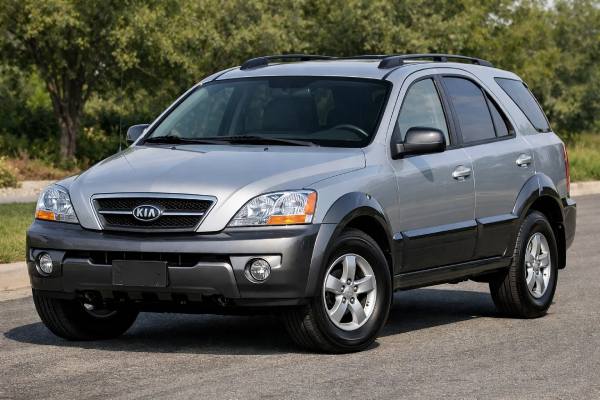
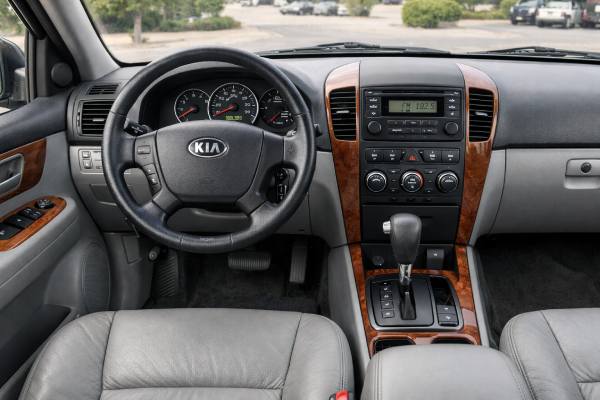
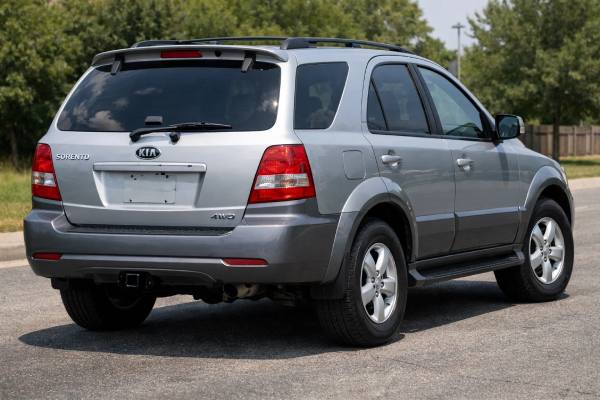
The first-generation Sorento (BL) with the 2.5 CRDi diesel (engine code D4CB) sits in a useful middle ground: it’s a traditional body-on-frame SUV with low-range capability in many markets, but it also drives and packages like a family vehicle rather than a work truck. The 140 hp tune is not fast, yet the diesel’s low-rpm torque makes the Sorento easy to live with in traffic, steady on the motorway, and genuinely capable when towing or climbing long grades.
Ownership success with this model is less about chasing horsepower and more about staying ahead of age-related service: clean fuel delivery, healthy cooling, and correct 4WD/transfer-case lubrication matter just as much as oil changes. If you buy well and maintain it methodically, a Sorento BL diesel can deliver rugged practicality at a reasonable running cost—especially where parts support remains strong.
What to Know
- Strong low-rpm pull and relaxed cruising; well suited to towing and hilly routes.
- Body-on-frame chassis and (often) low range make it more capable off-road than many crossovers.
- Parts availability is generally good, and most repairs are straightforward for an independent shop.
- Diesel fuel system care is non-negotiable; poor fuel or neglected filtration can become expensive.
- Plan on engine oil and filter service every 10,000 miles (16,000 km) or 12 months, whichever comes first.
Section overview
- Sorento BL AWD diesel at a glance
- Sorento BL 2.5 CRDi specs and measurements
- Sorento BL AWD trims, options, and safety
- Reliability, common faults, and service actions
- Maintenance plan and smart buying
- Real-world driving, economy, and towing
- How this Sorento compares to rivals
Sorento BL AWD diesel at a glance
Think of the 2002–2006 Sorento BL as an “old-school SUV” done with a more modern daily-driver mindset. Underneath is a ladder frame, with independent front suspension and a solid rear axle—an architecture chosen for durability and towing stability. The diesel models commonly use a turbocharged 2.5-liter common-rail engine (D4CB). Even in the 140 hp tune, it delivers the kind of usable shove that matters day to day: pulling away without drama, cresting hills without constant downshifts, and staying calm when loaded.
The “AWD” label can be misleading because many Sorentos in this era use a 4WD system with selectable modes, and some markets offer a low-range transfer case. In practical terms, that means you can treat it like a rear-driven SUV on dry roads, then add front traction when conditions demand it (snow, wet grass, muddy tracks, boat ramps). The chassis’ biggest advantage is composure under load: it tends to feel planted with a trailer compared with lighter unibody crossovers, provided the suspension and brakes are in good shape.
Where this Sorento shows its age is refinement and corrosion protection. Expect more noise and vibration than a modern crossover, and pay close attention to underbody rust in salted climates. Also remember that a diesel’s reliability story is heavily shaped by previous owners. A Sorento that had regular oil services, clean fuel filtration, and correct coolant can feel surprisingly tight. One that was run on long intervals or cheap fluids can become a string of expensive catch-up jobs.
Who it suits best:
- Drivers who value towing, traction, and ruggedness over outright speed.
- Owners comfortable with preventative maintenance and periodic suspension refreshes.
- Buyers who want a practical SUV with real off-pavement capability, not just “crossover” styling.
Sorento BL 2.5 CRDi specs and measurements
Specs for early Sorento BL diesels vary by market, gearbox, and axle ratio. The tables below focus on the common 2.5 CRDi D4CB 140 hp configuration and typical AWD/4WD hardware. Treat performance figures as realistic ranges rather than a single promise.
Powertrain and efficiency
| Item | Typical spec (D4CB 2.5 CRDi 140 hp) |
|---|---|
| Code | D4CB |
| Engine layout and cylinders | Inline-4, turbo diesel; DOHC; 4 valves/cyl |
| Bore × stroke | ~91.0 × 96.0 mm (3.58 × 3.78 in) |
| Displacement | 2.5 L (2,497 cc) |
| Induction | Turbocharged, usually with intercooler |
| Fuel system | Common-rail direct injection |
| Compression ratio | ~17.5–18.5:1 (market dependent) |
| Max power | 140 hp (103 kW) @ ~3,800 rpm |
| Max torque | ~300–320 Nm (221–236 lb-ft) @ ~1,800–2,000 rpm |
| Timing drive | Chain |
| Rated efficiency | Commonly ~9.0–10.5 L/100 km (26–21 mpg US / 31–27 mpg UK), depending on gearing and tires |
| Real-world highway @ 120 km/h | Often ~9.5–11.5 L/100 km (25–20 mpg US / 30–25 mpg UK) |
Transmission and driveline
| Item | Typical spec |
|---|---|
| Transmission | 5-speed manual or 5-speed automatic (varies by market) |
| Drive type | Marketed as AWD; commonly a selectable 4WD system |
| Transfer case | Often includes high/low range (check equipment) |
| Differential | Rear open or LSD (optional/market dependent) |
Chassis, dimensions, and capacities
| Item | Typical spec (approximate) |
|---|---|
| Suspension (front/rear) | Independent front (double wishbone); solid rear axle with coils |
| Steering | Hydraulic power steering |
| Brakes | 4-wheel discs (sizes vary by trim) |
| Wheels/tyres (popular) | 245/70 R16 or 235/70 R16 (common baseline sizes) |
| Ground clearance | ~200–210 mm (7.9–8.3 in) |
| Length / width / height | ~4,565–4,575 / 1,860–1,865 / 1,720–1,740 mm (179.7–180.1 / 73.2–73.4 / 67.7–68.5 in) |
| Wheelbase | ~2,710 mm (106.7 in) |
| Turning circle | ~11.0 m (36.1 ft) |
| Kerb weight | ~1,950–2,150 kg (4,300–4,740 lb) |
| Fuel tank | Often ~80 L (21.1 US gal / 17.6 UK gal) |
| Cargo volume | Typically ~400–450 L seats up; ~1,700–1,900 L seats down (method varies) |
Performance and capability
| Item | Typical range |
|---|---|
| 0–100 km/h (0–62 mph) | ~13.0–15.5 s (gearbox and weight dependent) |
| Top speed | ~165–175 km/h (103–109 mph) |
| Braking 100–0 km/h | ~41–46 m (tire and brake condition dependent) |
| Towing capacity | Commonly ~2,500–2,800 kg braked (5,500–6,170 lb); verify by VIN/market |
| Payload | Often ~500–650 kg (1,100–1,430 lb) |
Fluids and service capacities (typical)
These are decision-making figures; always confirm exact specs for your VIN and climate.
| System | Specification (typical) | Capacity (typical) |
|---|---|---|
| Engine oil | Diesel-rated ACEA/API equivalent; viscosity commonly 5W-30/5W-40 (climate dependent) | 8.2 L (8.7 US qt) incl. filter is a common listing for this model family |
| Coolant | Long-life ethylene glycol; 50/50 mix | ~9–11 L (9.5–11.6 US qt) |
| Automatic transmission | ATF per Kia spec (market dependent) | ~8–10 L (8.5–10.6 US qt) for service/fill varies |
| Manual transmission | GL-4/GL-5 per spec | ~2–3 L (2.1–3.2 US qt) |
| Transfer case | Gear oil per spec | ~1–2 L (1.1–2.1 US qt) |
| Differentials | Gear oil per spec | ~1–1.5 L each (1.1–1.6 US qt) |
| A/C refrigerant | R-134a | charge varies by build |
Key torque specs (common reference values):
- Wheel nuts: typically 90–110 Nm (66–81 lb-ft) depending on wheel type
- Front caliper bracket bolts: commonly ~90–110 Nm (varies by caliper)
(Confirm exact torques for your brake package before tightening.)
Sorento BL AWD trims, options, and safety
Trim names vary widely by country, but the mechanical “bones” are consistent: the D4CB diesel, a 5-speed manual or automatic, and a driveline marketed as AWD that often behaves like selectable 4WD. The best way to identify what you’re actually looking at is to focus on functional equipment, not badges.
Trims and options that change ownership
Key items to verify on a used Sorento BL diesel:
- Transfer case and low range: Some versions include low range; others are high-range only. A low-range selector or switch, plus a transfer case tag, is more meaningful than “AWD” on the tailgate.
- Rear differential type: A limited-slip differential (LSD) improves traction in mud and snow, and can reduce single-wheel spin when towing on slippery ramps.
- Cooling package: Heavier-duty radiators and transmission coolers (where fitted) help if you tow often or drive in hot climates.
- Wheel and tire package: Larger wheels can sharpen steering but may reduce ride comfort and increase running costs. For longevity and off-road use, taller sidewalls usually suit this chassis.
- Interior and convenience: Leather, heated seats, sunroof, and premium audio are common “nice-to-haves,” but they also add electrical complexity in an older vehicle.
Year-to-year changes on 2002–2006 are usually incremental: minor interior updates, equipment reshuffles, and market-specific emissions tweaks. What matters most is whether the vehicle had consistent maintenance, not whether it is an early or late badge variant.
Safety ratings and what they mean today
For this generation, crash-test information is best treated as “period-correct performance.” It can still help you compare the Sorento to same-era rivals, but it won’t match modern standards with advanced crash structures and driver assistance.
Typical safety hardware for the era includes:
- Front airbags (driver and passenger), often with side airbags depending on trim/market
- ABS (anti-lock braking system) and, on many versions, traction and stability control (availability varies)
- ISOFIX/LATCH child-seat anchors are common but should be physically checked for completeness and condition
If safety is a priority, inspect the seat belt system closely: belts should retract crisply, lock properly under a sharp pull, and show no fraying. A vehicle can “pass” a dashboard warning-light check yet still have weakened belt pretensioners or damaged sensors after a past incident.
ADAS reality check
Do not expect modern driver assistance such as automatic emergency braking (AEB), lane centering, or adaptive cruise control on 2002–2006 Sorentos. Your safety upgrades are mostly “maintenance upgrades”:
- High-quality tires with correct load rating
- Fresh brake fluid and healthy calipers
- Correct headlamp aim and clear lenses
- Suspension bushings and shocks that keep the vehicle stable in emergency maneuvers
For many owners, the practical safety play is buying the best-conditioned example, then bringing braking, tires, and suspension to top condition immediately.
Reliability, common faults, and service actions
A Sorento BL diesel can be dependable, but it is not forgiving of neglected fluids or fuel contamination. The smartest way to think about reliability is by prevalence and cost tier, then matching that to the vehicle’s mileage and history.
Common (expect to encounter)
- Fuel filtration and injector wear (medium to high cost)
Symptoms: hard starting, rough idle, smoky acceleration, uneven power.
Likely causes: clogged fuel filter, water contamination, worn injectors, weak rail pressure control.
Remedy: replace fuel filter first, confirm no water in the system, then diagnose rail pressure and injector balance. Avoid “parts darts”—diagnostics save money here. - EGR and intake soot buildup (low to medium cost)
Symptoms: sluggish response, hesitation, sometimes fault codes.
Likely causes: exhaust gas recirculation deposits and oily soot in the intake.
Remedy: clean EGR/intake where serviceable and confirm vacuum/actuator control integrity. - Cooling system aging (medium cost, high risk if ignored)
Symptoms: creeping temps under load, coolant loss, heater performance changes.
Likely causes: tired radiator, thermostat drift, old hoses, weak cap, neglected coolant.
Remedy: pressure test, refresh hoses/clamps as needed, keep coolant chemistry correct.
Occasional (depends on use and environment)
- 4WD engagement issues (medium cost)
Symptoms: blinking 4WD indicators, delayed engagement, binding, unusual noises.
Likely causes: actuator problems, vacuum solenoids (if equipped), worn transfer-case components, or mismatched tire sizes causing drivetrain wind-up.
Remedy: verify identical tire sizes and tread depth across the axle set; then diagnose actuators and transfer-case operation. - Front suspension wear (low to medium cost)
Symptoms: clunks over bumps, vague steering, uneven tire wear.
Likely causes: ball joints, control arm bushings, anti-roll bar links, tired shocks.
Remedy: replace in pairs, align afterward, and don’t ignore tire wear (it’s a health report).
Rare but expensive (confirm early)
- Severe injector or high-pressure pump damage (high cost)
Often driven by contaminated fuel or long filter intervals. If the vehicle has a history of poor starting and “fixed” problems without documentation, proceed cautiously. - Overheating-related engine damage (high cost)
A diesel can hide early overheating signs until it doesn’t. Any history of temperature spikes deserves a deep inspection.
Recalls, TSBs, and verifying completion
Because recall actions differ by market, treat the official record as your starting point:
- Run the vehicle through an official recall database (by VIN where possible).
- Ask for dealer printouts or service receipts showing recall completion.
- If documentation is missing, budget time for a dealer verification.
A good Sorento BL diesel is usually “reliable” because someone maintained it well. Your job as the next owner is to confirm that history and avoid inheriting deferred fuel or cooling system problems.
Maintenance plan and smart buying
A simple, consistent maintenance rhythm is what keeps the 2.5 CRDi Sorento from becoming a project. The schedule below is practical for real owners; treat it as a baseline and tighten it if you tow often, drive short trips, or operate in dusty or very cold conditions.
Practical maintenance schedule (distance/time)
- Engine oil and filter: every 10,000 miles (16,000 km) or 12 months (sooner if heavy towing or frequent short trips).
- Fuel filter: every 20,000–30,000 miles (32,000–48,000 km) or annually if fuel quality is uncertain.
- Engine air filter: inspect every oil service; replace every 15,000–30,000 miles depending on dust.
- Cabin filter: every 12 months or 15,000 miles.
- Coolant: every 4–5 years (or per coolant type); never mix incompatible chemistries.
- Brake fluid: every 2 years, regardless of mileage.
- Transmission fluid:
- Automatic: service every 30,000–45,000 miles if towing or heat exposure is common.
- Manual: every 45,000–60,000 miles, especially if shifting feels notchy.
- Transfer case and differential oils: every 30,000–45,000 miles if used off-road/towing; otherwise every 60,000 miles is a reasonable cap.
- Serpentine/aux belt and hoses: inspect every oil service; replace at first cracking or glazing.
- Glow plugs (diesel starting system): test by symptom; replace as a matched set when needed.
- 12 V battery: test annually; many batteries last 4–6 years depending on climate and use.
- Tires and alignment: rotate every 6,000–8,000 miles (10,000–13,000 km); align if any uneven wear appears.
Fluids and specs that matter most
- Use diesel-appropriate oil with the correct viscosity for your climate.
- Keep the cooling system healthy: correct coolant mix, no leaks, and a thermostat that regulates properly.
- In the driveline, prioritize correct gear oil specs over “close enough.” Transfer cases and differentials are sensitive to the wrong friction modifiers.
Buyer’s guide: what to inspect before purchase
Bring a flashlight, scan tool (if available), and a willingness to walk away.
Body and chassis
- Check frame rails, rear axle mounts, fuel tank area, brake lines, and body seams for rust.
- Look for uneven panel gaps or overspray that suggests collision repairs.
Engine and fuel system
- Cold-start behavior: it should fire without excessive cranking.
- Listen for abnormal knocking or “chuffing” under load.
- Check for diesel smell, wetness around injectors, and any signs of fuel dilution in oil.
Driveline
- Confirm 4WD operation on a loose surface (never force binding on dry pavement).
- Check for vibrations at speed—often tires, propshaft joints, or worn suspension.
Reconditioning items to budget
- Fluids all around (engine, trans, transfer, diffs, brake fluid, coolant)
- Tires (correct load rating matters)
- Front suspension wear parts and alignment
Long-term durability is good when you buy a clean example and keep to a disciplined service plan—especially for fuel filtration and cooling.
Real-world driving, economy, and towing
On the road, the Sorento BL diesel feels like what it is: a ladder-frame SUV that leans toward stability and strength rather than sporty finesse. The ride is usually firm but controlled when the suspension is healthy, and it can feel busy over broken city pavement if shocks and bushings are tired. At motorway speeds, the chassis tracks straight and resists crosswinds better than many lighter crossovers, though wind noise and diesel clatter are more noticeable than in newer designs.
Powertrain character
The D4CB’s best trait is its low-rpm torque. Around town, it pulls cleanly from low revs, making it easy to short-shift a manual or cruise gently with an automatic. Passing power depends heavily on gearbox and gearing: you typically plan overtakes rather than “point and shoot.” If the engine feels flat, it often isn’t “just old”—it can be a sign of boost leaks, a tired MAF sensor, sticky EGR, or fuel delivery issues.
Real-world efficiency
Fuel consumption varies with tires, lift kits, roof racks, and towing:
- City: often ~10.5–12.5 L/100 km (22–19 mpg US / 27–23 mpg UK)
- Highway (100–120 km/h): often ~9.5–11.5 L/100 km (25–20 mpg US / 30–25 mpg UK)
- Mixed: often ~9.8–11.8 L/100 km (24–20 mpg US / 29–24 mpg UK)
Cold weather and short trips can add noticeable consumption. The biggest efficiency “mods” are maintenance items: correct tire pressures, clean air and fuel filters, and a thermostat that brings the engine up to temperature properly.
Braking, steering, and NVH
Steering is typically light with modest feedback. Braking feel depends on caliper condition and fluid age; many older Sorentos benefit greatly from a full brake service (slides, pads, rotors if needed, and fresh fluid). NVH (noise, vibration, harshness) is truck-like by modern standards—especially on aggressive all-terrain tires—so choose tire type carefully if you commute long distances.
Towing and load behavior
This is where the Sorento BL diesel earns its keep. With the correct hitch equipment and a healthy cooling system, it tows confidently for its class. Expect a fuel consumption increase of 20–40% under moderate towing, and more when towing near the vehicle’s limits or climbing in hot conditions. Your best protection is prevention: verify transmission cooling (if automatic), service drivetrain oils, and ensure brakes and tires are top quality before towing regularly.
How this Sorento compares to rivals
The Sorento BL 2.5 CRDi AWD sits in a specific niche: tougher and more tow-capable than most compact crossovers, but usually less refined than unibody SUVs from the same period. When you compare it to typical early-2000s rivals, three themes tend to decide the purchase.
Where the Sorento BL diesel wins
- Capability per dollar: A body-on-frame chassis and (often) low range give it genuine traction options that many “soft-roaders” never offered. If you live in snow country, pull a trailer, or reach remote properties, that hardware matters.
- Torque-first drivability: The diesel’s low-rpm output is well matched to real-world use—hill starts, loaded trips, and steady towing.
- Serviceability: Many jobs are straightforward for independent workshops, and parts sourcing is often easier than for rarer niche SUVs.
Where rivals may be better
- Ride refinement and cabin quiet: Unibody competitors typically feel more modern on broken pavement and quieter at speed. If most of your driving is urban commuting, this difference is noticeable.
- Handling and braking consistency: Some unibody SUVs deliver a more car-like response. The Sorento can match them only when its suspension and brakes are fully refreshed.
- Rust resistance (depending on market): Some competitors from this era hold up better in salted climates. With the Sorento, underbody condition can be the difference between a keeper and a money pit.
The practical verdict
Choose the Sorento BL 2.5 CRDi AWD if your priorities are towing stability, rough-road access, and torque, and you’re willing to maintain the fuel and cooling systems properly. Choose a more car-like unibody SUV if you value quiet comfort and mostly drive paved roads.
If you’re shopping today, condition beats trim every time. A well-documented, rust-controlled Sorento with smooth starting, clean shifting, and fully functioning 4WD is worth paying for. The “cheap” one usually becomes expensive.
References
- 2004 Kia Sorento 2004 (Safety Rating) ([iihs.org][1])
- Vehicle Detail Search – 2004 KIA SORENTO 4 DR RWD | NHTSA 2004 (Recall Database) ([NHTSA][2])
- ICE and Hybrid Car Servicing 2026 (Service Guidance) ([Kia][3])
- Engine Oil Grades and Capacities 2023 (Service Specification)
- Service Intervals V25.1 2026 (Service Intervals) ([Kia][4])
Disclaimer
This article is for informational purposes only and is not a substitute for professional inspection, diagnosis, or repair. Specifications, torque values, service intervals, and procedures can vary by VIN, market, production date, and equipment. Always verify details against your official owner’s literature and service documentation for your exact vehicle.
If this guide helped, please consider sharing it on Facebook, X, or your favorite forum to support our work.