
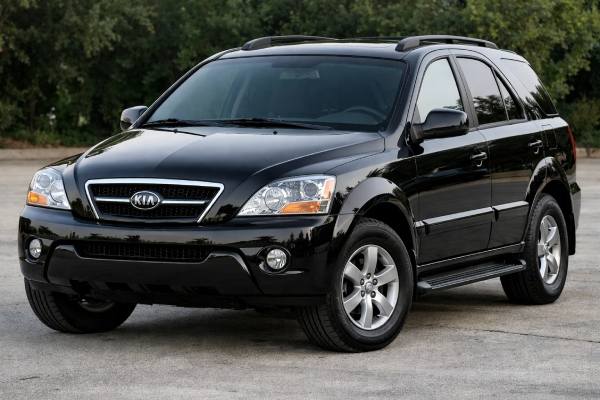
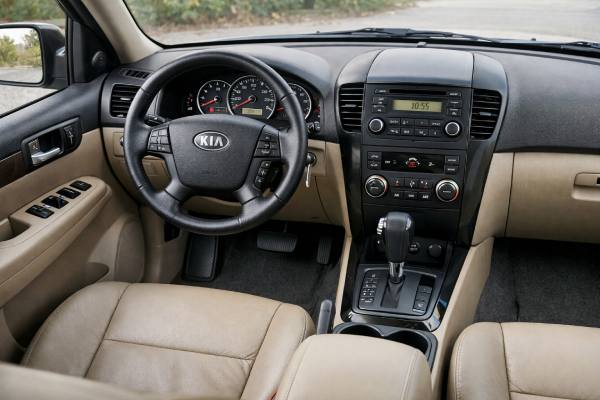
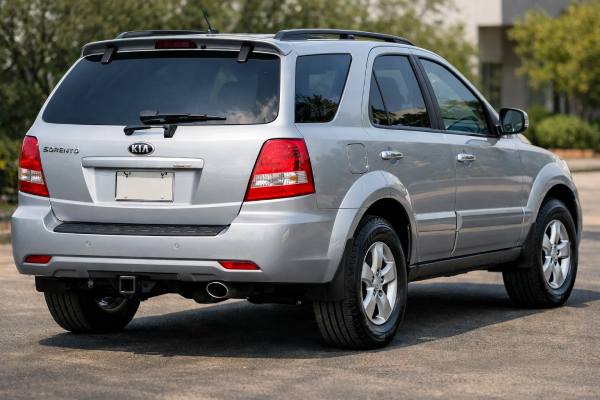
The facelift 2007–2009 Kia Sorento BL with the 2.5 CRDi (D4CB) and AWD/4×4 hardware is a very specific kind of SUV: body-on-frame toughness, low-range capability (on many versions), and diesel torque that suits towing and steep grades better than it suits stop-start commuting. In day-to-day ownership, its appeal comes down to two things: drivetrain layout and maintenance discipline. The AWD system adds traction and confidence on wet roads, snow, and light off-road work, but it also adds fluids, joints, and wear points you must service on time. The D4CB diesel can cover high mileage well, yet it punishes oil neglect and poor fuel hygiene—especially around injectors, turbo controls, and EGR soot. If you want an older SUV that feels mechanical, stable under load, and repairable, this Sorento can still make sense when bought carefully.
Owner Snapshot
- Strong low-rpm pulling power for towing and long hills, especially at 2,000–3,000 rpm.
- AWD/4×4 hardware improves traction on snow, mud, and wet ramps, with better load stability than many crossovers.
- Body-on-frame construction tolerates rough roads well when suspension bushings and alignment are kept in spec.
- Budget for diesel intake and EGR cleaning if the vehicle has lived on short trips or heavy city driving.
- Change engine oil and filter about every 10,000 miles (16,000 km) or 12 months (sooner under hard use).
Contents and shortcuts
- Kia Sorento BL AWD diesel essentials
- Kia Sorento BL D4CB AWD specifications
- Kia Sorento BL AWD trims and safety
- Common D4CB AWD problems
- Service plan and buying advice
- Real driving and fuel use
- AWD diesel rivals compared
Kia Sorento BL AWD diesel essentials
This 2007–2009 facelift Sorento BL sits in a category that has mostly disappeared: a mid-size SUV built on a ladder frame (body-on-frame), with a torque-rich diesel and a transfer-case-style driveline on many markets. If you come from modern crossovers, the first impression is weight and solidity. It feels planted, and it has a sense of mechanical “engagement” when you accelerate, brake, and steer—helped by the diesel’s strong midrange.
What the facelift changed in practice
Facelift updates varied by market, but the big ownership impact is usually equipment and refinement: better sound insulation, updated trim, and (often) improved standard safety content. For crash performance, many later Sorentos gained revisions to airbags and belts compared with earlier builds, though this does not magically make it a modern safety benchmark.
Why the D4CB diesel is the right match for AWD
The 2.5 CRDi’s value is torque. It pulls cleanly at low rpm, which reduces the need to “rev and slip” when moving off on steep grades, towing, or driving in soft ground. That matters because AWD hardware adds rotational mass and driveline drag; a torquey diesel hides those penalties better than a small petrol engine.
AWD/4×4 layout basics (what you’re actually buying)
Depending on market and trim, you may see:
- Part-time 4×4 (2H/4H/4L on a lever or rotary control) with a low range for slow, controlled climbing and engine braking.
- A torque-on-demand style system that behaves more like “automatic 4WD” but still uses transfer-case components.
Either way, the AWD Sorento is best thought of as a traction and load-control tool, not a sports SUV. The chassis is tuned for stability and durability. Keep expectations realistic in tight corners, and it becomes easy to like.
Who it suits best
- Drivers who tow, haul, or live on rough roads.
- Owners who can follow a maintenance schedule and don’t mind periodic underbody inspections.
- Anyone prioritizing traction and durability over modern cabin tech and advanced driver assistance.
Kia Sorento BL D4CB AWD specifications
Specifications vary by market, trim, tyres, and transmission. The tables below reflect typical figures for a 2007–2009 facelift Sorento BL with the D4CB 2.5 CRDi (170 hp) and AWD/4×4 driveline.
Powertrain and efficiency
| Item | Typical specification |
|---|---|
| Code | D4CB (2.5 CRDi diesel) |
| Engine layout and cylinders | Inline-4, 16-valve (DOHC common on later outputs) |
| Displacement | 2.5 L (≈2,497 cc) |
| Bore × stroke | ≈91.0 × 96.0 mm |
| Induction | Turbocharged (intercooled) |
| Fuel system | Common-rail diesel injection |
| Compression ratio | ≈17.7:1 (varies by version) |
| Max power | 170 hp (125 kW) @ ~3,800 rpm |
| Max torque | ~350–400 Nm (258–295 lb-ft) @ ~2,000 rpm |
| Timing drive | Chain (verify by VIN/engine build) |
| Rated efficiency | Often ~8.0–10.0 L/100 km combined (≈29–23 mpg US / 35–28 mpg UK) depending on tyres and gearbox |
| Real-world highway @ 120 km/h | Commonly ~8.5–10.0 L/100 km in good condition, higher with roof loads or AT |
Transmission and driveline
| Item | Typical specification |
|---|---|
| Transmission | 5-speed manual or 5-speed automatic (market dependent) |
| Drive type | AWD/4×4 with transfer case (some trims include low range) |
| Differentials | Typically open diffs; traction control does the “limited slip” work where fitted |
Chassis and dimensions
| Item | Typical specification |
|---|---|
| Platform type | Body-on-frame SUV |
| Suspension (front / rear) | Independent front; solid rear axle with links (common on this generation) |
| Steering | Hydraulic power steering |
| Brakes | 4-wheel discs (front usually ventilated) |
| Wheels and tyres (popular) | 235/65 R17 or 245/70 R16 (varies by market) |
| Ground clearance | Often ~200 mm (≈7.9 in), trim/tyres dependent |
| Length / width / height | ~4,565–4,590 mm / ~1,865–1,885 mm / ~1,710–1,810 mm |
| Wheelbase | ~2,710 mm (≈106.7 in) |
| Turning circle (kerb-to-kerb) | Roughly ~9.5–11.0 m (≈31–36 ft), spec dependent |
| Kerb (curb) weight | Commonly ~1,950–2,150 kg (4,300–4,740 lb), options dependent |
| GVWR | Often ~2,600–2,750 kg (5,730–6,060 lb) |
| Fuel tank | Commonly ~80 L (≈21.1 US gal / 17.6 UK gal) |
| Cargo volume | Market methods differ; expect roughly “mid-size SUV” capacity with a tall load bay |
Performance and capability
| Item | Typical specification |
|---|---|
| 0–100 km/h (0–62 mph) | ~11.5–13.5 s (tyres, weight, gearbox dependent) |
| Top speed | Often ~175–185 km/h (109–115 mph) |
| Braking 100–0 km/h | Highly tyre-dependent; typical older SUV ranges ~40–45 m (estimate) |
| Towing capacity | Often ~2,500–2,800 kg braked (5,510–6,170 lb), market dependent |
| Payload | Commonly ~500–650 kg (1,100–1,430 lb) |
Fluids, service capacities, and key torques (decision-useful)
| Item | Typical specification |
|---|---|
| Engine oil | Often ACEA B4/C3 class oils depending on region; common viscosities 5W-30 or 10W-30; capacity often large for this diesel |
| Engine oil capacity | ~8.2 L (≈8.7 US qt) for Sorento BL 2.5 diesel in published oil-capacity tables |
| Coolant | Ethylene-glycol type; mix commonly 50:50; capacity varies with radiator/heater spec |
| ATF (if automatic) | Often SP-III family fluids on many Hyundai/Kia 5AT units (verify by VIN/label) |
| Differentials and transfer case | Typically GL-5 75W-90 gear oil (verify by service manual) |
| A/C refrigerant | R134a (charge varies by market and rear A/C fitment) |
| Wheel lug nuts | Commonly ~90–110 Nm (66–81 lb-ft), verify for your wheels |
How to use these tables: treat them as a starting point for shopping and planning. Before you buy parts or fluids, cross-check your VIN, transfer case type, and transmission code, because small differences change capacities and specifications.
Kia Sorento BL AWD trims and safety
Trim names vary widely by country, but the 2007–2009 Sorento BL facelift typically breaks into a few recognizable “equipment levels,” often distinguished by wheels, interior materials, and the presence of stability control.
Trims and options that matter mechanically
Look for these items because they change how the vehicle drives or what it can reliably do:
- Low-range transfer case (4L): If your use case includes steep tracks, boat ramps, or snowed-in hills, low range is the difference between controlled progress and overheated brakes or clutch. Not every “AWD” badge guarantees it.
- Automatic vs manual: The manual can feel simpler and often cheaper to keep on the road, but clutch condition matters a lot if it has towed. The automatic is convenient in traffic and off-road crawling, yet it needs clean fluid to avoid shift flare and heat wear.
- Tyre and wheel packages: Larger wheels can sharpen steering response but can also make the ride harsher and increase the risk of rim damage on potholes. The more “truck-like” tyre sizes usually suit this chassis best.
- Tow package and cooling: Some markets pair tow ratings with additional cooling hardware. If you plan to tow, verify the presence of a proper hitch, wiring, and (ideally) transmission cooling support.
Quick identifiers when inspecting
- Transfer-case controls: A lever or clear 2H/4H/4L controls usually indicate true 4×4 hardware.
- Interior tells: Higher trims often bring leather, climate control, and upgraded audio, but confirm condition—replacing HVAC actuators and window regulators can add up.
- VIN/build plate clues: Use them to confirm axle ratio, gearbox type, and build date, which can affect recall coverage and parts.
Safety ratings and what they mean for 2007–2009
This generation’s safety story is mixed. Later models benefited from improvements to restraint systems and frontal protection compared with early production, but side-impact performance in older designs can lag behind newer SUVs. When evaluating safety, focus on:
- Airbag coverage: front, side torso, and curtain airbags can vary by trim/year/market.
- ABS, ESC, and traction control: Some Sorentos have ABS as a given but treat stability control as “must verify.” For AWD owners, ESC is a meaningful safety upgrade on slippery roads.
Driver assistance (ADAS) reality check
Do not expect modern ADAS features like automatic emergency braking, adaptive cruise control, or lane centering. The “assistance” suite is generally:
- ABS with electronic brake distribution,
- stability control and traction control where equipped,
- basic parking sensors/camera only if fitted in your market.
Because the car’s electronics are simpler, they are often easier to diagnose—but that also means you must compensate with tyres, brake condition, and defensive driving habits.
Common D4CB AWD problems
A well-kept D4CB Sorento can be a long-distance workhorse, but patterns repeat across high-mileage examples. The best way to think about issues is severity and how early you can spot them.
Common (expect to see at some point)
- EGR and intake soot build-up (medium cost)
Symptoms: sluggish response, smoky acceleration, rough idle, higher fuel use.
Why it happens: short trips and low-load driving increase soot accumulation.
Fix: EGR/intake cleaning and checking boost hoses and sensors. If the car has lived in town, plan this as routine reconditioning. - Injector sealing and “diesel tick” (medium to high cost if ignored)
Symptoms: ticking noise, fuel smell, black deposits around injectors, hard starts.
Why it happens: sealing washers and injector seats can leak combustion gases.
Fix: reseal correctly, clean seats, and avoid repeated “quick fixes.” Left alone, leaks can damage the injector seat and complicate removal. - Turbo control issues (medium cost)
Symptoms: underboost, limp mode, inconsistent power, whistle or siren noises.
Why it happens: vacuum lines, actuator control, sticky vanes (on some turbo types), or boost leaks.
Fix: pressure test charge-air system, renew tired vacuum hoses, and verify actuator movement before condemning the turbo.
Occasional (depends on use and maintenance)
- Timing chain noise or stretch indicators (high cost if advanced)
Symptoms: rattling on cold start, correlation faults, rough running at certain rpm.
Why it happens: oil neglect accelerates wear of chain guides and tensioners.
Fix: diagnose early; if confirmed, replace chain components before it becomes a bigger engine job. - Automatic transmission heat wear (high cost)
Symptoms: delayed engagement, shift flare, shudder, dark/burnt fluid smell.
Why it happens: towing or heavy traffic without timely ATF service.
Fix: correct-spec fluid service and cooling checks; persistent symptoms may indicate internal wear.
AWD/4×4-specific wear points (watch closely)
- Front CV joints and boots (low to medium cost)
Symptoms: clicking on turns, grease sling, torn boots.
Fix: replace boots early; replace joints/shafts if noise has started. - Prop shaft U-joints and center support (medium cost)
Symptoms: vibration under load, clunk on take-up, driveline shudder.
Fix: inspect play and balance; replace worn joints before they take out other components. - Transfer case and differential fluids neglected (medium cost now, high later)
Symptoms: whine, binding, heat smell after long drives.
Fix: service fluids on schedule and confirm the correct oil type.
Recalls, TSBs, and service actions
A key safety-related service action for some 2007–2009 Sorento builds involves the ABS/ESC hydraulic electronic control unit (HECU) remaining energized when parked, which can raise fire risk if moisture intrusion causes an internal short. Always run a VIN recall check and keep documentation showing recall completion.
Pre-purchase proof to request
- Recall-completion paperwork or dealer printout.
- Evidence of regular oil changes (diesel intervals matter).
- Any history of injector work, turbo hose replacements, and transfer case/diff fluid services.
Service plan and buying advice
With an older AWD diesel, reliability is less about luck and more about repeatable maintenance habits. The goal is to keep the engine clean internally, keep the AWD hardware lubricated, and catch corrosion and suspension wear before it becomes structural.
Practical maintenance schedule (distance and time)
Use this as a conservative baseline if you do mixed driving:
- Engine oil and filter: every 10,000 miles (16,000 km) or 12 months; shorten to 8,000–12,000 km if you do short trips, tow, or idle a lot.
- Fuel filter: every 20,000–30,000 miles (32,000–48,000 km) or sooner if fuel quality is questionable; water contamination is a diesel’s fast track to expensive repairs.
- Air filter: inspect every 10,000 miles (16,000 km); replace as needed.
- Cabin filter: yearly, or when airflow drops and windows fog more easily.
- Coolant: every 4–5 years (or per factory spec) and always pressure-test the system if the engine ever overheated.
- Brake fluid: every 2 years; ABS systems dislike moisture-laden fluid.
- ATF (if automatic): every 40,000–60,000 miles (65,000–100,000 km), sooner if towing.
- Transfer case and differential oils: every 30,000–50,000 miles (50,000–80,000 km); AWD longevity depends on clean oil.
- Tyre rotation and alignment: rotate every 5,000–8,000 miles (8,000–13,000 km); align annually or after suspension work.
- 12 V battery: test before winter; plan replacement roughly every 4–6 years depending on climate and use.
Fluids and parts tips that prevent “chain reaction” failures
- Use the correct oil quality, not just viscosity. Many diesel issues start with oil that cannot handle soot loading.
- Don’t ignore boost hoses: a small split can mimic turbo failure and can increase exhaust smoke.
- Keep the cooling system healthy: diesel torque encourages long pulls; a weak radiator or stuck thermostat turns that into overheating risk.
Buyer’s guide: what to inspect in person
Body and frame
- Inspect frame rails, crossmembers, and rear suspension mounts for rust scaling or repairs.
- Check seams around the rear wheel arches and underbody edges, especially if the car lived in salted winter regions.
Engine bay
- Look for injector-area black residue and listen for sharp ticking at idle.
- Check for oil leaks around the front of the engine and vacuum lines that look brittle or patched.
Drivetrain
- Confirm AWD engagement works correctly (no binding, no warning lights).
- On a test drive, do gentle acceleration/deceleration transitions: clunks can mean U-joints, diff mounts, or transfer-case wear.
- Check that the gearbox shifts smoothly and that the fluid does not smell burnt.
Suspension and brakes
- Expect some bushing and ball-joint wear at this age. What matters is whether it’s been maintained.
- Uneven tyre wear can signal alignment neglect or bent components.
Best ownership approach
If you buy one, assume you will do a “baseline service”: all fluids (engine, transmission, diffs, transfer case), filters, and a thorough underbody inspection. That initial spend often determines whether the next 30,000–50,000 miles are calm or constantly reactive.
Real driving and fuel use
This Sorento’s driving character is shaped by three factors: mass, diesel torque delivery, and AWD driveline drag. If you accept it as a stable, load-friendly SUV rather than a nimble crossover, it can be satisfying.
Ride, handling, and NVH
- Ride: The body-on-frame structure and suspension tuning typically prioritize durability. On good dampers, it rides with a “heavier” motion than modern unibody SUVs, absorbing rough surfaces without feeling fragile. On worn shocks, it can bounce and feel loose—so suspension condition matters more than many buyers expect.
- Handling: Turn-in is slower, and the center of gravity is higher than a crossover. The payoff is stability on the motorway and confidence on broken roads.
- Noise: Expect diesel clatter at idle and a steady low-frequency hum at cruise. Excessive whooshing, whistle, or droning can indicate boost leaks, worn tyres, or driveline bearings.
Powertrain character (what it feels like)
- Low-rpm torque: The engine’s useful band often starts around 1,700–1,900 rpm. In traffic, you can short-shift and surf torque rather than revving.
- Kickdown and hunting (automatic): A healthy automatic should shift decisively. If it hunts between gears on mild grades, check tyres (oversize can change load), transmission fluid condition, and boost performance.
- Manual behavior: A strong diesel can hide a slipping clutch for a while; test by accelerating in a high gear at low rpm—any sudden rev flare is a warning.
Real-world economy expectations
Older AWD diesels tend to reward steady speeds and punish short trips.
Typical observed ranges (good condition, stock tyres):
- City: ~10–12 L/100 km (≈24–20 mpg US / 28–24 mpg UK)
- Highway (100–120 km/h): ~8.5–10.0 L/100 km (≈28–24 mpg US / 33–28 mpg UK)
- Mixed: ~9–11 L/100 km (≈26–21 mpg US / 31–26 mpg UK)
Cold weather and short trips can add a noticeable penalty because the engine spends longer warming up and EGR/soot accumulation rises.
Traction and control in the real world
With good tyres, AWD is transformative on slick surfaces. The biggest practical gains come from:
- smoother pull-away on wet roundabouts and steep driveways,
- better stability under load and when towing,
- less wheelspin that would otherwise stress tyres and driveline mounts.
However, AWD does not replace tyre quality. A modest set of winter tyres can outperform AWD on all-seasons in real snow.
Towing and load behavior
When towing, the Sorento feels composed, but only if you manage heat:
- Keep cooling components healthy.
- Service transmission and driveline fluids early if towing is frequent.
- Expect fuel use to rise significantly under load; a 20–40% increase is normal depending on trailer weight and speed.
AWD diesel rivals compared
The fairest comparisons are other mid-2000s SUVs that mix towing ability with diesel torque and real AWD/4×4 hardware. Each alternative has a different “ownership personality,” and choosing well depends on whether you value parts availability, rust resistance, or drivetrain sophistication.
Where the Sorento BL AWD diesel wins
- Value per capability: It often undercuts more famous rivals while still offering body-on-frame strength and real traction hardware.
- Torque-first usability: The diesel suits hills, towing, and rural driving. You rarely need high rpm, which makes it relaxing.
- Repairability: The systems are comparatively straightforward—good news for independent shops and owners who prefer practical fixes over complex modules.
Where it gives up ground
- Safety generation gap: Even with improvements, it generally won’t match newer unibody SUVs in side-impact protection and modern crash structures.
- Refinement: Cabin noise, ride motions, and steering feel can seem dated if you are used to late-model crossovers.
- Age-sensitive upkeep: Rust, bushings, and driveline joints are not “if” items anymore—they are “when” items.
Common rival types and how they differ
- Toyota Land Cruiser Prado / Hilux Surf-type SUVs (market dependent): Often stronger long-term reputations and resale, but typically cost more to buy and maintain.
- Mitsubishi Pajero / Shogun-era alternatives: Strong 4×4 credibility and stability, but parts pricing and rust can still be factors depending on region.
- Nissan Pathfinder (R51) diesels (where sold): More unibody-like behavior and comfort in some configurations, but diesel-specific issues and automatic transmission upkeep can be critical.
- Hyundai Santa Fe (similar era): More crossover-oriented comfort and often better everyday manners, but usually less “truck hardware” and sometimes lower tow/rough-road tolerance depending on model.
Best-fit decision guide
Choose the Sorento BL AWD diesel if:
- you want a rugged older SUV for mixed road quality, snow, or towing,
- you can budget for baseline servicing and periodic suspension/driveline work,
- you value capability and cost control over modern tech.
Choose a more modern unibody SUV if:
- crash performance and cabin refinement are top priorities,
- you mostly do short urban trips where diesel soot systems suffer,
- you want newer ADAS features and quieter long-distance comfort.
If you buy the Sorento, buy the cleanest-maintained example, not the cheapest. Service history and underbody condition matter more than mileage on these.
References
- 2008 Kia Sorento 2008 (Safety Rating)
- IMPORTANT SAFETY RECALL 2020 (Recall Notice)
- Part 573 Safety Recall Report 20V-088 2020 (Recall Database)
- Engine Oil Grades and Capacities 2023 (Service Information)
- euroncap_kia_sorento_2003_4stars.pdf 2003 (Safety Rating)
Disclaimer
This article is for informational purposes only and is not a substitute for professional inspection, diagnosis, or repair. Specifications, torque values, fluids, service intervals, and procedures can vary by VIN, market, drivetrain version, and installed equipment. Always verify details using official service documentation for your exact vehicle and confirm recall status via an official VIN check.
If this guide helped, please consider sharing it on Facebook, X (Twitter), or your favorite forum to support our work.