
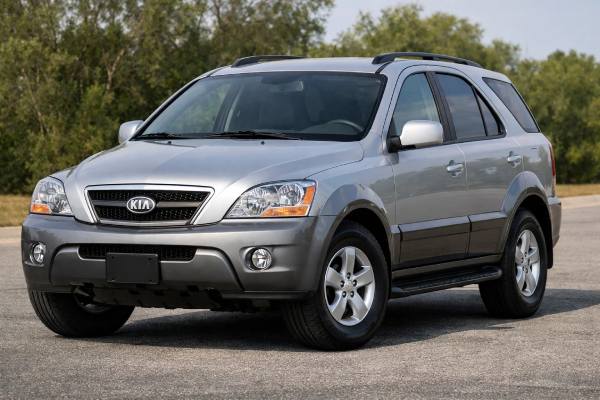
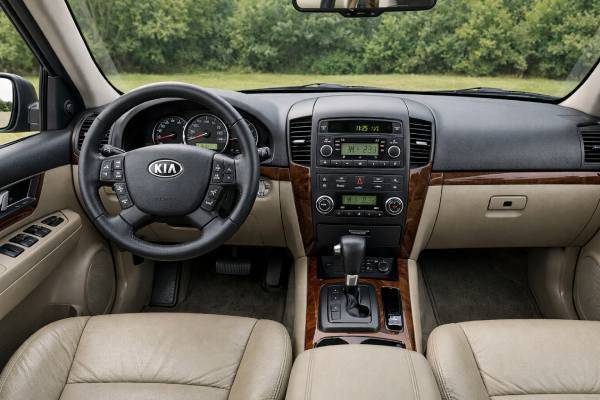
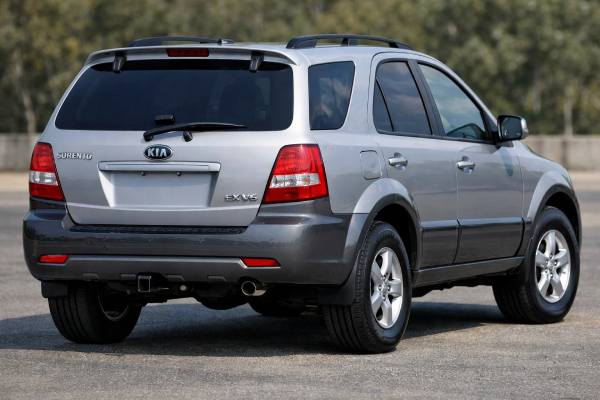
The facelift Kia Sorento BL (2007–2009) is a rare kind of SUV by today’s standards: a body-on-frame platform with a genuine AWD/4×4-style driveline, built to handle rough roads and towing-minded use. In 2.4 petrol G4JS form, it sits at the “practical entry” end of the range—usually cheaper to buy and simpler to service than the V6—while still carrying the Sorento’s heavy-duty chassis feel.
AWD changes the ownership equation. You gain all-weather traction and better stability on loose surfaces, but you also add extra fluids, seals, bearings, CV joints, and a transfer case that need periodic attention. This guide focuses on the AWD variant you specified, with special emphasis on what AWD adds: driveline wear patterns, service intervals, and how to avoid expensive failures that often start as small vibrations, leaks, or tyre mismatches.
At a Glance
- AWD traction is a real advantage in snow, gravel, and wet hills—especially with proper tyres.
- Body-on-frame construction handles heavy use well, but rust prevention is non-negotiable.
- Tyre mismatch can stress the AWD system; keep tread depth even and pressures correct.
- Confirm completion of ABS/HECU-related recall actions where applicable; it’s safety-critical.
- Service transfer case and differential oils about every 60,000–80,000 km (or sooner with towing).
Quick navigation
- Kia Sorento BL AWD ownership profile
- Kia Sorento BL AWD technical tables
- Kia Sorento BL AWD equipment and safety
- Problem patterns and recalls
- Service schedule and purchase checklist
- AWDs driving behavior and economy
- Competitors and value verdict
Kia Sorento BL AWD ownership profile
The facelift BL Sorento sits in a practical middle ground: it feels more robust than most crossovers of the same era, yet it’s easier to live with than many larger truck-based SUVs. The key engineering detail is the separate ladder frame. That frame supports the drivetrain and suspension loads in a way that tolerates towing and rough surfaces well—provided corrosion is controlled and suspension wear is not ignored.
On the AWD/4×4 side, this generation appears in more than one configuration depending on market and trim. Some vehicles use a shift-on-the-fly system with a low range (often indicated by a 4H/4L control and a “low” indicator). Others use a more automatic torque-on-demand style system with a lock mode. The practical takeaway is the same: you have a transfer case, a front differential, front CV axles, and typically more prop-shaft hardware than the RWD model. Each extra component brings seals and bearings that age, plus extra oils that need scheduled service.
The 2.4 G4JS engine choice makes this AWD Sorento feel “steady” rather than quick. It’s usually happiest when driven smoothly and kept in its torque band. For owners, that can be a benefit: fewer heat spikes and fewer hard kickdowns if you drive it like a tool instead of a sports SUV. Where this configuration can struggle is repeated heavy loads (full passengers, roof box, towing) combined with neglected cooling, old ATF, or poor tyre matching.
If you plan to keep the vehicle long-term, the best mindset is preventative:
- Keep tyres matched in size and tread depth across all four corners (important for AWD wear).
- Refresh driveline oils and address any seepage early.
- Treat suspension work as safety work: worn bushings can make a tall SUV feel unstable even if the engine is healthy.
- Rust-proof and inspect the frame annually, especially in salted-road climates.
Done right, the AWD Sorento BL is a dependable, confidence-building winter and gravel-road vehicle—with predictable costs as long as you stay ahead of the driveline.
Kia Sorento BL AWD technical tables
The tables below reflect common specifications for a 2007–2009 facelift Sorento BL, 2.4 petrol (G4JS), AWD. Because this model varies by market, treat figures as a verification checklist: confirm your exact output, gearbox, tyre size, and capacities on the vehicle labels and official documentation.
Powertrain and efficiency
| Item | Spec (typical for this configuration) |
|---|---|
| Code | G4JS (market-dependent labeling) |
| Engine layout and cylinders | Inline-4, NA; commonly DOHC; typically 4 valves/cyl |
| Bore × stroke | ~86.5 × 100.0 mm (3.41 × 3.94 in) (common for G4JS-family) |
| Displacement | 2.4 L (≈ 2350 cc) |
| Fuel system | Typically MPI (multi-point injection) |
| Compression ratio | ~10.0:1 (varies by market calibration) |
| Max power | 175 hp (129 kW) @ ~6000 rpm (verify for your VIN/market) |
| Max torque | Often ~220–230 Nm (162–170 lb-ft) @ ~3500–4000 rpm (verify) |
| Timing drive | Often timing belt on this engine family (verify) |
| Rated efficiency | Typically 10–14 L/100 km combined (test cycle varies) |
| Real-world highway @ 120 km/h | Often 11–13 L/100 km depending on tyres, wind, and load |
Transmission and AWD driveline
| Item | Spec (typical) |
|---|---|
| Transmission | 5-speed automatic or 5-speed manual (market/trim dependent) |
| Drive type | AWD / 4×4-type system (configuration varies: lock mode and/or low range) |
| Transfer case | Chain-driven unit is common in this class; serviceable oil |
| Differentials | Front and rear typically open (LSD uncommon; confirm by axle tag/build sheet) |
Chassis and dimensions (typical facelift BL range)
| Item | Spec (typical range) |
|---|---|
| Suspension (front/rear) | Independent front; rear multi-link/live-axle style depending on market |
| Steering | Hydraulic power steering (common) |
| Brakes | Typically 4-wheel discs; ABS common; ESC varies by market/trim |
| Wheels and tyres (popular sizes) | Common: 245/70 R16 or 235/65 R17 |
| Ground clearance | ~205–210 mm (8.1–8.3 in) |
| Length / width / height | ~4590 / 1865 / 1725 mm (≈ 180.7 / 73.4 / 67.9 in) |
| Wheelbase | ~2710 mm (106.7 in) |
| Turning circle (kerb-to-kerb) | ~10–11 m (33–36 ft) (tyres and alignment matter) |
| Kerb weight | Often 1950–2150 kg (4300–4740 lb) in AWD form |
| GVWR | Commonly 2500–2700 kg (5510–5950 lb) (check door-jamb plate) |
| Fuel tank | Often ~80 L (21.1 US gal / 17.6 UK gal) |
| Cargo volume | Roughly ~900 L seats up / 2000+ L seats down (method varies) |
Performance and capability (typical ranges)
| Item | Typical range |
|---|---|
| 0–100 km/h (0–62 mph) | ~12.0–14.5 s (gearbox and market power rating dominate) |
| Top speed | ~170–185 km/h (106–115 mph) |
| Braking 100–0 km/h | ~40–46 m with healthy brakes and good tyres |
| Towing capacity | Platform can be strong, but approvals vary; verify handbook/plate for braked and unbraked ratings |
| Payload | Commonly 450–700 kg depending on GVWR and equipment |
Fluids, service capacities, and key torque specs (verification-focused)
| Item | Practical guidance (typical) |
|---|---|
| Engine oil | Often API SL/SM era spec; common viscosity 5W-30 (climate dependent) |
| Engine oil capacity | Often ~4.3 L (4.5 US qt) with filter (verify before filling) |
| Coolant | Ethylene glycol long-life; typical 50/50 mix |
| ATF | Use the exact OEM-spec ATF for your transmission; multiple drain-and-fills preferred over “flush” on older units |
| Front differential oil | Typically 75W-90 gear oil (capacity varies) |
| Rear differential oil | Typically 75W-90 gear oil (capacity varies) |
| Transfer case oil | Often a specific ATF/gear oil depending on unit; verify label/manual |
| A/C refrigerant | Typically R134a; charge on under-hood label is authoritative |
| Wheel lug nuts | Often ~90–110 Nm (66–81 lb-ft) |
| Spark plugs | Often ~18–25 Nm (13–18 lb-ft) |
| Oil drain plug | Often ~30–40 Nm (22–30 lb-ft) |
For AWD Sorentos, the “most important spec” is not a single number—it’s tyre uniformity. Matching size, similar tread depth, and correct pressures are the simplest ways to protect the transfer case and differentials.
Kia Sorento BL AWD equipment and safety
For this generation, trim names vary by country, but equipment usually clusters into base, mid, and high grades. With the AWD model, the smartest way to think about trims is: what changes mechanical durability, safety coverage, and winter usability.
Trims and options worth prioritizing
- AWD controls and capability level: Determine whether your vehicle has a lock mode, a low range, or both. A low range can be a major advantage for steep, slow climbs and controlled descents, but it also means more driveline components to keep healthy.
- Cooling and towing prep: If your market offered tow packages (coolers, wiring, stronger charging system), those parts reduce heat stress—especially important with the smaller 2.4 engine working hard.
- Wheel and tyre packages: 16-inch wheels often ride better and cost less to keep in matched sets. 17-inch packages may look better and feel slightly more planted but can raise tyre costs and harshness.
- Stability control (ESC) and traction control (TCS): Availability varies by market and year. If you find a Sorento with ESC, it’s a meaningful safety upgrade for slippery conditions.
- Curtain airbags: For older SUVs, head-protecting curtain airbags can be one of the most important trim differences. Confirm presence by labels on the pillars/roofline and the airbag system configuration.
Quick identifiers to confirm what you have
- Door-jamb plate: tyre size, load ratings, and GVWR (helps you evaluate payload realistically).
- Under-hood label: emissions family and sometimes engine calibration details.
- Dash indicators at key-on: ABS, ESC/TCS, and airbag lights can hint at fitted modules (still confirm through VIN/build data).
- AWD switch/lever layout: a dedicated 4H/4L control suggests a more traditional 4×4 setup; a lock button suggests a more automatic AWD system.
Safety ratings and what they imply
This model sits in an era where frontal crash performance improved versus earlier years, but side-impact performance can vary, and older SUV structures often show limitations compared with modern crossovers. What matters most in real life is whether the vehicle has:
- A well-maintained restraint system (no SRS lights, no seat wiring damage).
- Side-curtain airbags (if equipped).
- Strong tyres and correctly functioning ABS/ESC systems.
Driver assistance and ADAS reality
On a 2007–2009 Sorento, “driver assistance” is mainly:
- ABS (critical for controlled stopping on wet/icy roads).
- TCS/ESC (if equipped; very helpful for avoiding spins and reducing oversteer on slick surfaces).
- Basic parking aids (market dependent), usually far less common than on newer vehicles.
If you service brakes, suspension, and tyres to a high standard, this Sorento can feel far safer than its age suggests—even without modern automatic braking or lane support.
Problem patterns and recalls
Reliability on an older AWD Sorento depends on three pillars: rust control, cooling and fluids, and driveline condition. The 2.4 engine can be dependable when maintained, but AWD hardware adds failure points that you want to catch early—before a small vibration becomes a transfer case or differential rebuild.
Common (high frequency), low–medium cost
- CV boot tears and axle wear
Symptoms: clicking in tight turns, grease sprayed near the inner wheel, vibration under load.
Likely cause: aging boots, lifted suspension geometry, or neglected cracks.
Remedy: replace boots early when possible; replace axles if joints are worn. Recheck alignment. - Prop-shaft joints and center support wear (where fitted)
Symptoms: shudder on take-off, vibration around 60–100 km/h, clunk on shift into drive.
Likely cause: worn U-joints/CV couplers or tired center bearing rubber.
Remedy: rebuild/replace affected joints; confirm angles and mounts. - Transfer case and differential seepage
Symptoms: oil misting on housings, wet seals, burning smell after highway driving.
Likely cause: aged seals, overfilled units, blocked breathers.
Remedy: service oils, clear breathers, reseal before fluid loss damages bearings.
Occasional, medium–high cost (AWD-specific)
- Transfer case chain stretch or clutch wear (system-dependent)
Symptoms: rhythmic rumble, binding sensation, delayed engagement, or drivetrain “wind-up.”
Likely cause: prolonged use with mismatched tyres, old fluid, heavy towing, or repeated high-load operation.
Remedy: correct tyres first, then diagnose. Some units respond to fluid service and calibration checks; others need mechanical repair. - Front differential bearing noise
Symptoms: whine that changes with throttle load, noise that rises with speed, metallic particles in drained oil.
Likely cause: long intervals on old oil, low oil level from leaks, or heavy load use.
Remedy: service oil early; if noise persists, plan for bearing work before gear damage.
Engine and chassis age issues (platform-wide)
- Cooling system aging: radiators, hoses, thermostats, and old coolant can trigger overheating under load.
- Oil leaks and PCV issues: seepage can be manageable but must not contaminate belts and mounts.
- Suspension wear: front control arms, ball joints, and rear links/bushings often define ride quality and safety.
Recalls and service actions you should treat as urgent
Certain Sorento BL model years are associated with ABS/HECU-related recall actions in some markets, involving the risk of an electrical short and potential engine-compartment fire under specific conditions. Even if the vehicle appears fine, verify completion by VIN and complete remedies immediately if open.
Pre-purchase checks that prevent the expensive surprises
- Confirm four matching tyres (size and similar tread depth).
- Test for binding in low-speed full-lock turns (a sign of driveline stress on some systems).
- Check for driveline vibration during steady cruise and gentle acceleration.
- Inspect underbody for frame rust, brake lines, and mounting points.
- Ask for proof of transfer case and differential oil changes; if none, budget to do them right away.
On an AWD Sorento, small driveline problems rarely stay small. Early diagnosis is the cheapest “repair.”
Service schedule and purchase checklist
A maintenance plan for the AWD BL Sorento should prioritize heat management (engine and transmission), driveline lubrication, and wear prevention from tyre mismatch. The schedule below is designed to be practical for real owners—safe defaults that reduce major failures.
Maintenance schedule (distance or time, whichever comes first)
- Engine oil and filter: every 10,000 km / 12 months (severe use: 5,000–7,500 km / 6 months)
Severe use includes short trips, frequent idling, dusty roads, towing, and very cold climates. - Engine air filter: inspect every 10,000–15,000 km, replace roughly 20,000–30,000 km depending on dust.
- Cabin filter (if fitted): every 15,000–20,000 km or annually for best HVAC airflow.
- Coolant: every 4–5 years (or per coolant type), and sooner if contamination is present.
- Spark plugs: typically 60,000–100,000 km depending on plug type and calibration.
- Brake fluid: every 2 years regardless of mileage; older ABS units benefit from clean fluid.
- ATF: every 50,000–80,000 km, sooner with towing or repeated mountain driving.
- Transfer case oil: every 60,000–80,000 km, sooner if you tow, drive off-road, or see water exposure.
- Front and rear differential oils: every 60,000–100,000 km; shorten interval with towing and high-speed highway use.
Timing components: treat as a decision item
If your G4JS application uses a timing belt (common for this engine family), plan a complete service:
- Replace belt at the official interval (many owners plan around 90,000 km, but verify your market spec).
- Replace belt, tensioner, idlers, and strongly consider the water pump if access overlaps.
- Fix oil leaks that can contaminate the belt path.
If your engine uses a timing chain (less common for this specific code), listen for cold-start rattle and watch for correlation faults; replace when symptoms or measurements indicate wear.
Tyres and alignment: AWD’s hidden maintenance item
- Rotate tyres every 10,000 km.
- Keep pressures correct, and avoid mixing brands/models if possible.
- If one tyre is replaced, measure tread depth—large differences can stress AWD components. Many AWD owners replace tyres in pairs or full sets for this reason.
Buyer’s checklist (high payoff items)
- Rust inspection: frame rails (inside and outside), body mounts, brake lines, suspension mounts.
- Driveline: vibration, clunks, seepage at transfer case/diffs, CV boots, prop-shaft play.
- Cooling: pressure test, check fan operation, confirm stable temperature under load.
- Transmission: cold and hot shift quality; inspect fluid condition and smell.
- Electrical integrity: battery age, charging voltage, and quality of any aftermarket wiring.
- Recall confirmation: printed VIN results and invoices for completed work where available.
A well-maintained AWD Sorento is not fragile—but it is sensitive to neglect. If you restore fluids, tyres, and suspension basics, the vehicle usually becomes predictable and satisfying to own.
AWD’s driving behavior and economy
Driving feel is where the BL Sorento’s “truck roots” show clearly. It sits higher, weighs more, and communicates more road texture than most crossovers. The AWD system adds traction and stability, but it also adds drag and sometimes extra noise—especially if tyres are aggressive or drivetrain mounts are tired.
Ride, handling, and highway stability
- Ride: Expect a firm, controlled motion over large bumps. With worn shocks or bushings, it can feel bouncy and less settled. Fresh dampers often transform the Sorento more than owners expect.
- Handling: Body roll is present, but it’s predictable. The best driving style is smooth inputs: steady braking, gentle throttle, and early steering.
- Steering: Hydraulic assist typically provides honest weight. If it feels vague, check front control arm bushings, ball joints, and alignment before blaming the steering rack.
- NVH (noise, vibration, harshness): Tyres and driveline joints are major variables. All-terrain tyres can add noticeable hum; a worn prop-shaft support can add vibration that feels like “wheel imbalance.”
Powertrain character (2.4 petrol with AWD)
A 2.4 in an AWD, body-on-frame SUV is about consistency:
- Expect modest low-end pull, stronger mid-range when the engine revs, and clear engine noise under full load.
- Automatic gearboxes of this era may downshift frequently on grades. Using a lower gear manually can reduce “hunting” and protect temperatures during long climbs.
- AWD traction makes launches more controlled on slippery surfaces, but it does not turn the Sorento into a fast SUV—plan passes early and keep safe margins.
Real-world efficiency
AWD usually increases consumption versus RWD due to extra rotating mass and friction:
- City: often 13–17 L/100 km depending on traffic and warm-up time.
- Highway (100–120 km/h): often 11–13.5 L/100 km.
- Mixed: often 12–15 L/100 km.
Cold weather and short trips can raise fuel use significantly, especially if the thermostat is weak or tyres are underinflated. If you care about economy, the biggest gains are simple: correct tyre pressure, clean air filter, healthy oxygen sensors, good alignment, and moderate cruising speed.
Snow, gravel, and light off-road behavior
With good tyres, AWD changes confidence dramatically:
- It reduces wheelspin on wet inclines and improves stability in loose gravel.
- It can mask tyre quality—until you need to stop. Winter tyres remain the biggest safety upgrade in snow.
- Avoid aggressive full-lock turning on high-grip dry pavement if your system uses a locked mode; follow the system rules to prevent driveline wind-up.
For owners who regularly face winter roads, the AWD BL Sorento’s main advantage is simple: it feels secure and predictable when maintained, even when conditions are not.
Competitors and value verdict
To judge the AWD BL Sorento fairly, compare it with vehicles that share its mission: practical family transport that can handle bad weather and occasional heavy work. The Sorento stands out because it offers a more “utility-grade” platform than many crossovers—at the cost of fuel economy and some refinement.
Rivals with a similar rugged mindset
- Traditional mid-size SUVs from the same era (market dependent): These can match the Sorento’s towing-friendly feel and rough-road tolerance. The trade-off is often higher parts costs, more corrosion risk, or less interior value for money.
- Compact-to-mid-size 4×4 SUVs: Some offer true low range and strong off-road geometry. Many feel narrower inside and can be less comfortable on long trips than the Sorento.
Where the Sorento can win: value, interior room, and a straightforward mechanical layout that most general workshops understand—especially if it hasn’t been modified heavily.
More refined crossovers that may suit daily driving better
- Crossover SUVs of the same years: These are typically quieter, easier in cities, and more fuel efficient. Many also have more modern crash structures for their time.
- Smaller AWD crossovers: Often cheaper to run and easier to park, but less comfortable with sustained heavy loads.
Where the crossovers can win: lower fuel use, more car-like ride, and often better ease-of-use in tight urban environments.
The simple decision rule
Choose the 2007–2009 Sorento BL AWD 2.4 if you want:
- Real traction and winter confidence, a sturdy chassis feel, and you don’t mind doing preventative maintenance.
Choose a more modern unibody crossover if you want:
- Better fuel economy, quieter cruising, and less sensitivity to rust and driveline servicing.
Value verdict for this exact configuration
The AWD 2.4 Sorento is best for drivers who value grip and durability over speed. If you buy one, budget for fluids, tyres, and suspension refresh, and insist on a clean underbody. When those boxes are checked, this Sorento delivers a reassuring, capable ownership experience that many lighter crossovers can’t replicate.
References
- 2008 Kia Sorento 2008 (Safety Rating)
- Part 573 Safety Recall Report 20V-088 2020 (Recall Database)
- sc186 – 2006-2010 my sedona and 2007-2009 my sorento 2020 (Recall Q and A)
- Check for Recalls: Vehicle, Car Seat, Tire, Equipment 2026 (Recall Database)
Disclaimer
This article is for informational purposes only and is not a substitute for professional inspection, diagnosis, or repair. Specifications, torque values, fluid capacities, service intervals, and procedures can vary by VIN, market, drivetrain system, and equipment, so always verify details using official owner and service documentation for your exact vehicle.
If this guide helped you, please consider sharing it on Facebook, X (Twitter), or your preferred community to support our work.