
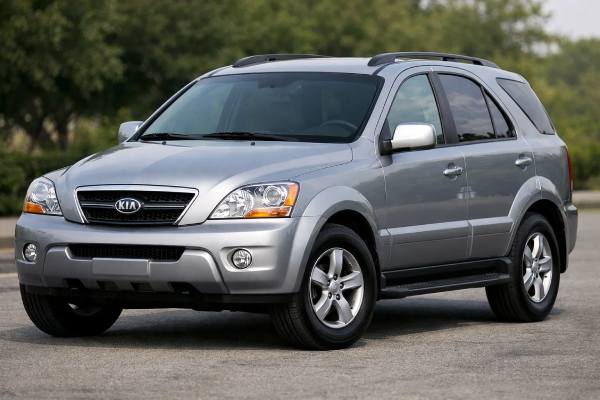
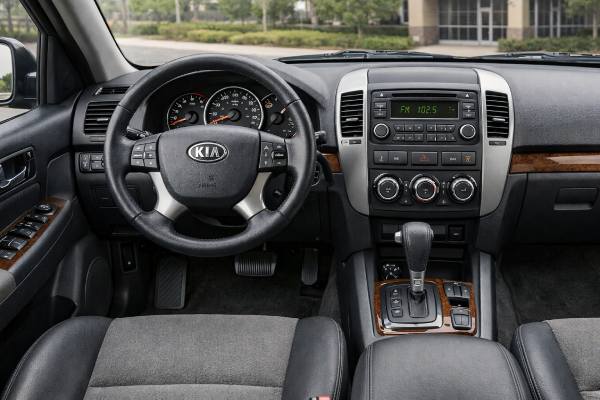
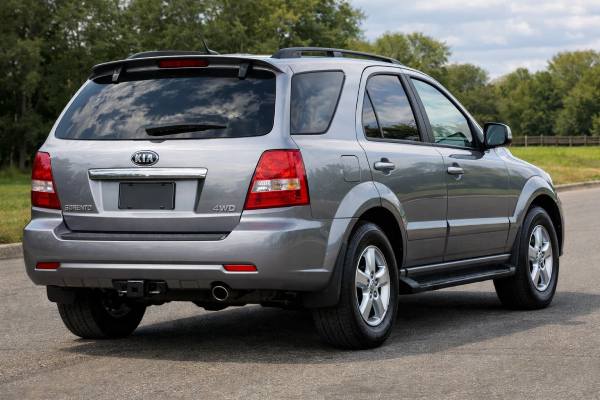
The facelifted Kia Sorento BL AWD with the 3.8-liter G6DA V6 sits in a useful sweet spot: body-on-frame toughness, a strong naturally aspirated gasoline engine, and a drivetrain that can handle real weather and real roads. Compared with the diesel variants, this V6 is usually quieter, smoother, and less sensitive to short trips, but it asks more from your fuel budget and cooling system. The key ownership theme is balance—when the AWD system, automatic transmission, and fluids are maintained on time, this Sorento can be a dependable long-haul family SUV with honest towing ability. Where owners get caught out is skipping transfer-case and differential services, ignoring early driveline vibrations, or treating an aging cooling system as “good enough.” This guide focuses on the exact 2007–2009 facelift AWD 3.8 V6 and what matters most in daily use and long-term durability.
Quick Specs and Notes
- Strong, smooth V6 power for hills and towing, with fewer “diesel-specific” hassles on short trips.
- Body-on-frame platform feels solid on rough roads and takes suspension wear better than many crossovers.
- AWD traction helps stability in rain and snow, but it adds service points (transfer case and two differentials).
- Budget for fuel and for cooling-system upkeep as the vehicle ages (radiator hoses, thermostat, fan operation).
- Plan to replace fluids in transfer case and differentials every 40,000–60,000 km (25,000–37,000 mi) if used in mixed climates, towing, or frequent city driving.
Navigate this guide
- Sorento BL AWD facelift profile
- Sorento BL 3.8 G6DA specs
- Sorento BL trims and safety tech
- Common failures and recalls
- Maintenance plan and buying checks
- Real-world driving and economy
- Rivals and alternatives
Sorento BL AWD facelift profile
This 2007–2009 facelift Sorento BL AWD is an “old-school” midsize SUV in the best and worst ways. Under the skin, it is body-on-frame with a relatively upright driving position, generous ground clearance, and suspension travel that tolerates poor surfaces better than many modern unibody crossovers. The facelift years brought small refinements—trim, equipment packaging, and (in many markets) incremental improvements to NVH (noise, vibration, and harshness)—but the core engineering stays consistent.
The highlight of this configuration is the G6DA 3.8-liter V6. Being naturally aspirated, it delivers power in a predictable, linear way, and it avoids common turbo concerns such as boost leaks or turbo bearing wear. In practical ownership terms, the V6 tends to feel more relaxed at highway speeds and less “busy” in stop-and-go driving than smaller engines working hard. It also typically pairs with an automatic transmission and an AWD system designed to provide traction rather than sporty handling.
AWD on this Sorento is not just a badge for winter—it adds genuine capability when paired with good tires, especially on wet hills, light mud, or snow. The trade-off is complexity: you now have a transfer case and two differentials to service, more seals that can seep with age, and more rotating mass that can amplify driveline vibrations if tires are mismatched or if a driveshaft support bearing wears.
If you want a clear “fit” statement: this Sorento is best for owners who value durability, occasional towing, and real-world traction, and who will treat it like a machine with scheduled fluids—not a maintenance-free appliance. The payoff is a sturdy daily SUV with genuine utility, as long as you keep its AWD and cooling systems healthy.
Sorento BL 3.8 G6DA specs
Below are specs and service-relevant data for the facelift 2007–2009 Sorento BL AWD with the 3.8 G6DA V6 (262 hp). Real numbers can vary by market, wheel package, and certification standard, so treat the tables as your planning baseline and verify by VIN where required.
Powertrain and efficiency
| Item | Specification |
|---|---|
| Engine code | G6DA |
| Layout and valvetrain | V6, DOHC, 4 valves/cyl (24V) |
| Displacement | 3.8 L (≈ 3,778 cc) |
| Bore × stroke | ≈ 96.0 × 87.0 mm (3.78 × 3.43 in) |
| Induction | Naturally aspirated |
| Fuel system | MPFI (multi-point fuel injection) |
| Compression ratio | ~10+:1 (varies by market calibration) |
| Max power | 262 hp (195 kW) @ ~6,000 rpm |
| Max torque | ~348 Nm (257 lb-ft) @ ~4,500 rpm |
| Timing drive | Chain (inspect for noise/stretch symptoms rather than fixed replacement) |
| Rated efficiency (typical) | ~12.5–14.5 L/100 km (18–16 mpg US / 23–19 mpg UK) |
| Real-world highway @ 120 km/h | ~11–12.5 L/100 km (21–19 mpg US / 26–23 mpg UK) |
Transmission and driveline
| Item | Specification |
|---|---|
| Transmission (common) | 5-speed automatic (market-dependent) |
| Drive type | AWD / 4×4 system (market-dependent control strategy) |
| Differentials | Open differentials common; traction relies on brake-based control and tire grip |
Chassis and dimensions
| Item | Specification (typical) |
|---|---|
| Suspension (front / rear) | Independent front / solid rear axle with links (typical for BL) |
| Steering | Hydraulic power steering (most markets) |
| Brakes | 4-wheel discs (diameters vary by trim) |
| Popular tyre size | 245/70 R16 or 245/60 R18 (depends on trim/market) |
| Ground clearance | ~200–210 mm (~7.9–8.3 in) |
| Length / width / height | ~4,685 / 1,865 / 1,740 mm (~184.4 / 73.4 / 68.5 in) |
| Wheelbase | ~2,710 mm (~106.7 in) |
| Turning circle | ~11.0–11.6 m (~36–38 ft), depending on wheel/tire |
| Kerb (curb) weight | ~1,950–2,100 kg (~4,300–4,630 lb), depending on equipment |
| Fuel tank | ~80 L (21.1 US gal / 17.6 UK gal) |
Performance and capability
| Item | Specification (typical) |
|---|---|
| 0–100 km/h (0–62 mph) | ~8.5–9.5 s (depends on tires, altitude, vehicle mass) |
| Top speed | ~185–195 km/h (~115–121 mph) |
| Braking 100–0 km/h | ~40–44 m (varies by tires and brake condition) |
| Towing capacity (braked) | Up to ~2,268 kg (~5,000 lb), market and hitch class dependent |
| Payload | Often ~500–650 kg (~1,100–1,430 lb), trim dependent |
Fluids and service capacities (planning baseline)
| System | Specification (typical) |
|---|---|
| Engine oil | 5W-30 (or 5W-20 in some markets), API/ILSAC gasoline spec; capacity ~5.0–5.5 L (5.3–5.8 US qt) |
| Coolant | Ethylene glycol long-life coolant; 50/50 mix typical; capacity ~8–10 L (8.5–10.6 US qt) |
| Automatic transmission | Hyundai/Kia ATF family varies by market; verify dipstick/label; service planning ~7–10 L total fill |
| Transfer case | Gear oil (often 75W-90 GL-5); capacity ~1–1.5 L |
| Differentials (front/rear) | Gear oil 75W-90 GL-5 typical; capacity varies by housing |
Safety and driver assistance (period-correct)
| Item | Notes |
|---|---|
| Crash ratings | Ratings vary by market and test protocol; some regions may have limited published data for this generation |
| ADAS | Pre-modern ADAS era: no AEB/ACC/LKA; focus is ABS, stability control (where fitted), and airbags |
| Child seats | ISOFIX/LATCH availability depends on market and trim; always confirm anchors and top tether points |
If you want one practical takeaway from the tables: this is a high-torque, high-mass AWD SUV, so fluids, tires, and brakes matter more than on a lighter crossover. Matching tire sizes and keeping driveline oils fresh often prevents the most annoying “mystery vibrations” and AWD binding complaints.
Sorento BL trims and safety tech
Because the Sorento BL was sold across many regions, trims and naming vary (EX/LX/limited-style grades in some markets; different grade names elsewhere). For the 2007–2009 facelift AWD V6, the most important differences are not cosmetic—they are functional and maintenance-relevant.
Trims and options that change ownership
Look for these equipment variables when shopping or planning service:
- Wheel and tire packages: Larger wheels can sharpen steering response but raise tire cost and can worsen ride on broken pavement. More importantly, AWD systems strongly prefer matched tire circumference—mixed brands or uneven tread depth can stress the driveline over time.
- Tow package and cooling: Factory towing equipment may include heavier-duty cooling components or wiring. If you plan to tow, verify the presence and condition of the hitch, wiring, and any auxiliary cooling provisions.
- Seating and comfort features: Leather and heated seats are common on higher trims; power seat motors and seat heaters are generally reliable, but age can bring switch or connector issues.
- Audio and infotainment tier: Period head units are simple but can suffer from button wear, failing backlights, or intermittent speakers. These are usually fixable but should be part of your negotiation.
Quick identifiers when viewing a used example
Use these checks to confirm you’re looking at the configuration you want:
- Badging and build info: Tailgate and under-hood labels often indicate engine family and emissions specification (market dependent).
- Driveline confirmation: Check for transfer-case hardware, driveshafts, and differential housings, not just an “AWD” badge.
- Tire match check: Confirm all four tires are the same size and similar tread depth; mismatches are a red flag on AWD.
- ABS and stability control lights: Confirm the ignition-on bulb check works, then ensure no warning lights remain after start.
Safety ratings and what “safety” means here
This Sorento is from the era when safety was primarily structure + airbags + stability control, not camera-and-radar driver assistance. Depending on market and trim, you can expect:
- Front airbags as standard in most markets.
- Side airbags and curtain airbags on higher trims or later years, market dependent.
- ABS widely fitted.
- Stability control and traction control may be standard or optional depending on market year and trim.
If you are comparing it to newer SUVs, be clear-eyed: you will not get modern crash-avoidance systems like automatic emergency braking (AEB) or lane-keeping assist. The best “upgrade” you can make is choosing a well-maintained example, fitting high-quality tires, and keeping brakes and suspension in top condition.
ADAS and calibration considerations
Even without ADAS, the Sorento still uses sensors and modules that can need attention:
- Wheel-speed sensors affect ABS and traction/stability behavior.
- Steering and alignment influence stability and tire wear; lifted or heavily worn suspension parts can make the vehicle feel vague.
- Brake system health matters because brake-based traction control (where equipped) relies on consistent brake performance.
Bottom line: prioritize trims with the most complete airbag package and stability control, then judge each used vehicle by maintenance evidence and driveline condition—those factors outweigh “luxury” options for long-term safety and confidence.
Common failures and recalls
For the Sorento BL AWD 3.8, problems tend to cluster into three buckets: driveline wear, cooling/heat management, and age-related electrical and rubber degradation. Below is a practical map by prevalence and cost impact, with symptoms and fixes.
Common (seen often)
- Driveline vibration (medium cost):
Symptoms: vibration under load, humming at speed, shudder on takeoff.
Likely causes: mismatched tires, worn driveshaft joints, center support bearing wear, or differential mount wear.
Remedy: match tires, inspect driveshaft U-joints/support bearing, replace worn mounts, then re-check alignment. - Transfer case or differential fluid neglect (low to medium cost if caught early):
Symptoms: whining, clunking during throttle transitions, binding in tight turns (more noticeable on dry pavement).
Likely causes: old fluid, contamination, or incorrect viscosity.
Remedy: drain and refill with correct spec, inspect for metal particles; if noise persists, plan deeper inspection. - Cooling system aging (medium cost, high risk if ignored):
Symptoms: temperature creep in traffic, coolant smell, slow leaks, heater performance changes.
Likely causes: tired radiator, thermostat aging, hoses swelling, weak radiator cap.
Remedy: pressure test, replace thermostat and cap proactively, refresh hoses as needed, and confirm fan operation.
Occasional (depends on use, climate, and service history)
- Automatic transmission shift flare or harsh shifts (medium to high cost):
Symptoms: delayed engagement, slipping feel during upshifts, flare on kickdown, or harsh 2–3 shifts.
Likely causes: old ATF, valve body wear, solenoid issues, overheated fluid from towing.
Remedy: confirm fluid condition and correct spec; do a service that matches the transmission design (avoid aggressive flushing on unknown history); address solenoids/valve body if symptoms persist. - Front suspension wear (low to medium cost):
Symptoms: clunks over bumps, wandering steering, uneven tire wear.
Likely causes: worn control-arm bushings, ball joints, sway-bar links.
Remedy: replace worn joints/bushings, then align; keep tire pressures correct to reduce edge wear.
Rare (but expensive when it happens)
- Overheating leading to head gasket or internal damage (high cost):
Symptoms: repeated overheating, coolant loss with no external leak, misfires, milky oil (rare but serious).
Likely causes: chronic neglect, stuck thermostat, radiator blockage, or severe coolant loss.
Remedy: stop driving when overheating; diagnose properly (combustion gas test, pressure test) before replacing parts.
Software updates and calibrations
This generation is not “software-heavy” like modern vehicles, but calibration still matters:
- ABS/stability faults can be triggered by failing wheel-speed sensors or wiring damage, and the fix may include sensor replacement plus proper fault clearing and verification.
- Transmission behavior can improve after correct fluid service and addressing underlying sensor issues; in some markets, dealers may have updates for shift quality, but availability varies widely.
Recalls, service actions, and verification
Because recall campaigns vary by region and production batch, treat recall status as a VIN-specific question:
- Check the manufacturer’s recall portal for your region.
- Confirm completion through dealer records where possible.
- If the vehicle has gaps in history, assume nothing—verify.
A pre-purchase strategy that works well here is to prioritize examples with documented driveline and cooling maintenance, because those are the systems that most often turn a “good deal” into an expensive project.
Maintenance plan and buying checks
If you maintain the Sorento BL AWD like an AWD truck-based SUV—fluids, tires, and cooling—you usually get a calmer ownership experience. The schedule below is a practical “real world” plan that fits mixed driving and aging vehicles. Adjust for severe use (short trips, towing, dusty roads, very cold climates).
Core maintenance schedule (distance or time)
- Engine oil and filter: every 8,000–10,000 km (5,000–6,200 mi) or 6–12 months.
Use the viscosity that matches your climate and the oil spec listed for your market. Short-trip driving benefits from shorter intervals. - Engine air filter: inspect every 15,000 km; replace 30,000–45,000 km depending on dust.
- Cabin air filter: every 15,000–30,000 km (or yearly if you want consistent HVAC airflow).
- Coolant: every 5 years or 100,000 km, then every 3–5 years depending on coolant type and condition.
On older vehicles, consider proactive thermostat and radiator cap replacement. - Spark plugs: typically 90,000–160,000 km depending on plug type (iridium often lasts longer). Replace coils only if weak or cracked.
- Automatic transmission fluid: every 50,000–80,000 km (30,000–50,000 mi), especially if towing or city-driven.
Match the correct ATF spec—this matters more than brand. - Transfer case fluid: every 40,000–60,000 km.
This is a top “skip causes problems” item. - Front and rear differential oil: every 40,000–60,000 km (or sooner after water crossings).
- Brake fluid: every 2 years, regardless of mileage.
- Brake inspection: every service; replace pads/rotors as needed and ensure calipers slide freely.
- Tire rotation and alignment: rotate every 10,000–12,000 km; align yearly or at first sign of uneven wear.
Keep all four tires closely matched in tread depth for AWD health. - 12 V battery: test annually; many batteries last 4–6 years, less in hot climates.
Fluid specifications and decision-ready torque values (typical)
These are common planning values; confirm for your exact fasteners and market.
- Wheel lug nuts: ~100–120 Nm (74–89 lb-ft)
- Engine oil drain plug: ~30–40 Nm (22–30 lb-ft)
- Spark plugs: ~15–25 Nm (11–18 lb-ft)
Buyer’s guide: inspection checklist that actually catches problems
Bring a flashlight and be systematic:
- Tires: same brand/size, even wear, similar tread depth across all four.
- Driveline: check for seepage at diff pinion seals, transfer case, and driveshaft joints; test for clunks on gentle throttle on/off.
- Cooling system: look for crusty residue near hose ends and radiator seams; confirm fans engage; check heater performance.
- Transmission behavior: cold start should engage smoothly; shifts should be consistent without flare.
- Suspension and steering: listen for clunks; check for uneven tire wear; confirm steering isn’t “floaty.”
- Rust/corrosion hotspots: inspect frame rails, subframe mounts, brake lines, and the rear axle area (especially in salted-road climates).
- Electrical: confirm ABS and airbag lights do their bulb check and then go out; test windows, locks, and HVAC modes.
Long-term outlook: if you buy a clean example and commit to driveline fluids and cooling upkeep, the Sorento BL AWD 3.8 can be a durable SUV. If you buy a neglected one, it can burn your budget quickly—mostly through transmission, overheating, and driveline vibration chasing.
Real-world driving and economy
In daily use, the 3.8 V6 Sorento BL AWD feels more like a traditional SUV than a modern crossover. You sit high, the body structure feels substantial, and the suspension is tuned to absorb rough surfaces rather than carve corners. The payoff is comfort and stability on imperfect roads; the cost is a bit of body roll and a less “sharp” steering feel.
Ride, handling, and NVH
- Ride quality: generally compliant over potholes and broken pavement, especially on taller sidewall tires (16-inch packages). Low-profile tires can make impacts harsher and can highlight suspension wear.
- Straight-line stability: strong, helped by the longer wheelbase and weight. Crosswinds are handled decently, though worn shocks can make the rear feel bouncy.
- Steering feel: typically light-to-moderate with hydraulic assist. As components age, play in bushings or ball joints can make steering feel vague—often fixable with front-end refresh and alignment.
- Braking feel: solid when the system is maintained. Brake-based traction control (where fitted) works best when pads, rotors, and fluid are in good condition.
Powertrain character
The V6’s strength is predictability. There’s no turbo lag—just steady pull that suits hills and passing. Expect:
- Confident midrange for overtakes, especially from 60–110 km/h (37–68 mph).
- Smoothness at highway speed, with less diesel-style vibration.
- Transmission logic that prioritizes durability and comfort over fast, sporty shifts.
Real-world efficiency (what owners usually see)
Fuel consumption is where this configuration differs most from the diesel Sorento:
- City driving: often 14–17 L/100 km (17–14 mpg US / 20–17 mpg UK), depending on traffic and warm-up time.
- Highway 100–120 km/h: often 11–12.5 L/100 km (21–19 mpg US / 26–23 mpg UK).
- Mixed driving: often 12.5–15 L/100 km (19–16 mpg US / 23–19 mpg UK).
Cold weather can push numbers higher due to richer warm-up fueling and AWD-related rolling resistance, especially on winter tires.
Traction, AWD behavior, and tires
AWD traction is a genuine advantage in rain, slush, and gravel. But the system is only as good as the tires:
- Use high-quality all-season or winter tires appropriate to your climate.
- Keep pressures correct and rotate regularly.
- Avoid running one tire brand-new and others half-worn—this can create circumference differences that stress AWD components.
Load and towing impressions
When properly equipped, the Sorento can tow confidently for its class. Expect a noticeable fuel penalty—often +15–30% under moderate towing and potentially more with high speed, hills, or headwinds. For towing longevity, focus on:
- Transmission fluid freshness and correct spec.
- Cooling system health.
- Brake condition and trailer brake setup where applicable.
If you drive it like a truck-based SUV and maintain it like one, the Sorento BL 3.8 rewards you with stable, confident everyday performance—especially in poor weather and on rough roads.
Rivals and alternatives
When you compare the Sorento BL AWD 3.8 to rivals, compare it as a body-on-frame midsize SUV with period-era safety tech, not as a modern three-row crossover. Its closest competitors are vehicles that offer similar durability, towing, and “real road” capability.
Where the Sorento BL AWD 3.8 stands out
- Value per capability: You often get V6 power, AWD hardware, and towing ability at a lower entry price than some Japanese rivals.
- Simple power delivery: The naturally aspirated V6 is easy to live with—no turbo boost management, and typically fewer “drivability mysteries.”
- Rough-road tolerance: The platform and suspension layout can handle broken pavement and gravel roads without feeling fragile.
Where rivals can be stronger
- Fuel efficiency: Many rivals—especially those with smaller engines or newer transmissions—use less fuel in mixed driving.
- Interior materials and refinement: Some competitors have better cabin plastics, quieter operation, and more polished ride tuning.
- Safety tech and crash data availability: Depending on region, you may find more complete published crash-test coverage and later-era safety equipment on competitors.
Practical rival short list (how to choose)
- If you want maximum reliability reputation and resale, look toward the mainstream Japanese midsize SUVs of the era—often more expensive upfront, sometimes less expensive to keep “quiet” long-term.
- If you want similar towing and ruggedness, compare other body-on-frame options. Pay attention to frame corrosion history in your climate.
- If you want better daily efficiency and a more modern feel, a unibody crossover alternative may suit you better—just accept that some crossovers are less happy with frequent towing or deep potholes.
A smart comparison method (instead of brand stereotypes)
Use these three questions:
- What is my real use case? (city commuting, winter travel, towing, rough roads)
- What is my maintenance style? (preventive fluids and inspections vs. “only when broken”)
- What matters more: fuel cost or purchase price?
If your answers include winter traction, occasional towing, and you’re willing to service AWD fluids on schedule, the Sorento BL AWD 3.8 is a rational choice. If you want lowest fuel spend and the newest safety tech, you will be happier in a newer crossover—even if it costs more upfront.
References
- Recalls 2026 (Recall Database)
- Welcome to VIN Decoding :: provided by vPIC 2026 (VIN Decoder)
- NHTSA Product Information Catalog and Vehicle Listing – Home 2026 (Vehicle Listing Database)
Disclaimer
This article is for informational purposes only and is not a substitute for professional inspection, diagnosis, or repair. Specifications, torque values, fluid types, capacities, service intervals, and procedures can vary by VIN, market, emissions calibration, and installed equipment. Always verify details using official service documentation and labels for your specific vehicle.
If this guide helped you, please consider sharing it on Facebook, X (Twitter), or your favorite forum to support our work.