

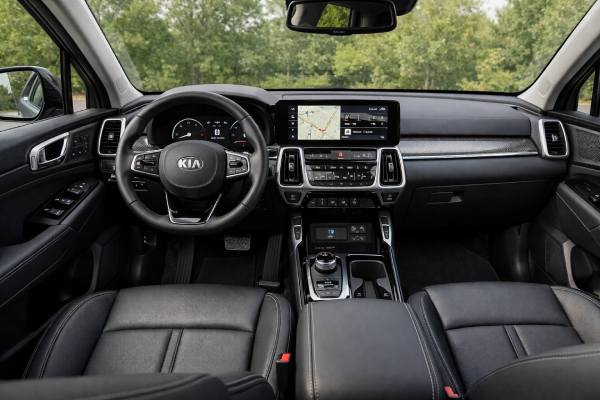
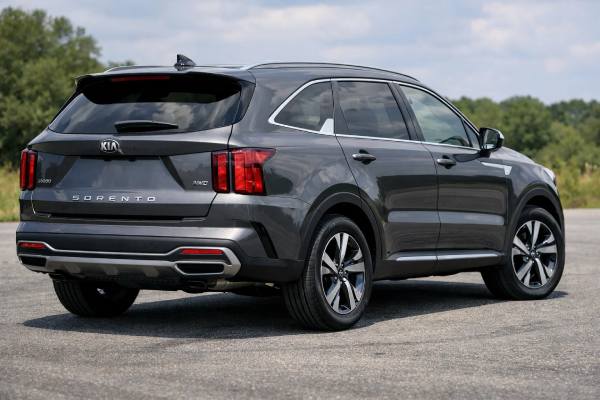
The 2021–2023 Kia Sorento MQ4 with the 191 hp Smartstream 2.5 and all-wheel drive is the “do-everyday-well” version of the lineup. You get the newest Sorento body structure, modern driver assistance potential, and three-row flexibility—while keeping the powertrain relatively simple compared with turbo and hybrid variants. The AWD system adds real confidence in wet and winter conditions, and it can make the Sorento feel more stable when the cabin is full. The tradeoff is predictable: a bit more fuel use, more driveline components, and a few extra fluid services that matter if you want the system to stay quiet and smooth.
This article focuses on the naturally aspirated 2.5 AWD configuration for model years 2021, 2022, and 2023. It covers the numbers buyers care about, how the AWD hardware changes maintenance, the issues that tend to show up first, and what to look for when buying used.
What to Know
- AWD improves traction and stability in rain and snow, especially on hills and during low-speed starts.
- The 2.5 non-turbo powertrain is simpler than turbo and hybrid options and tends to be easier to budget long-term.
- Keep tires closely matched in size and wear to protect the AWD coupling and avoid binding or noise.
- Plan additional driveline fluid services (rear differential and transfer case or power take-off unit, where applicable).
- Typical engine-oil interval for normal use is about 12 months / 12,000 km (short trips and heavy traffic often need shorter intervals).
Section overview
- Sorento MQ4 AWD 2.5 ownership brief
- Sorento MQ4 AWD 2.5 specs and capacities
- Sorento MQ4 AWD trims, safety, and ADAS
- Common issues, recalls, and service actions
- Care schedule and used-buy checks
- Driving character and real efficiency
- How this AWD Sorento stacks up
Sorento MQ4 AWD 2.5 ownership brief
The MQ4 Sorento is built around a clear mission: family flexibility with modern safety tech and a confident, stable road feel. In 2.5 AWD form, that mission comes through in small engineering choices that owners notice—like how calm the SUV feels on the highway, how predictable the throttle is in parking lots, and how AWD reduces the “one wheel spins first” drama when you pull away on wet paint lines or icy driveways.
The AWD system in this configuration is best thought of as active on-demand AWD. Most of the time it behaves like front-wheel drive to reduce losses. When the front tires slip or when the car predicts slip (based on steering angle, throttle position, and wheel-speed data), a coupling sends torque rearward. Many trims also include a lock mode meant for low-speed traction situations. It’s useful for snow starts, muddy construction entrances, and steep gravel ramps. It is not a substitute for a low-range transfer case or true off-road gearing, and it won’t turn the Sorento into a rock crawler. What it will do is make everyday conditions easier and safer.
The 191 hp naturally aspirated 2.5 isn’t a “fast” engine in a three-row SUV, but it is usually sufficient when you drive it like a midsize family crossover. It rewards smooth throttle inputs and steady cruising. If your use case is mostly commuting, school runs, weekend trips, and occasional winter travel, the 2.5 AWD fits well. If you regularly carry seven adults, live at high altitude, or do frequent high-speed passes with a loaded cabin, you may prefer a turbo or hybrid configuration for reserve power.
Where the AWD model changes ownership most is maintenance discipline:
- You have additional driveline components (rear differential, coupling, prop shaft, and in some layouts a transfer case or power take-off unit).
- Tire matching matters more; uneven tire diameters can keep the coupling working constantly, raising heat and wear.
- Neglected driveline fluid can show up as hums, shudders, or binding long before anything “fails.”
Buyers who treat this Sorento as a system—engine, transmission, AWD, brakes, tires, and software—tend to have a smooth ownership experience. Buyers who treat it like “oil changes only” can still do okay, but they are more likely to get nuisance issues that feel expensive because they arrive in clusters.
Sorento MQ4 AWD 2.5 specs and capacities
The tables below reflect typical specifications for a 2021–2023 Sorento MQ4 AWD with the naturally aspirated Smartstream 2.5 (191 hp). Exact figures can vary by region, trim, wheels, and equipment. Use these as a planning baseline and confirm your exact values by VIN and door-jamb labels.
Powertrain and efficiency
| Item | Specification |
|---|---|
| Code | Smartstream G2.5 GDi (2.5 l) |
| Engine layout and cylinders | Inline-4, 4 cylinders, DOHC, 4 valves/cyl (16 valves) |
| Bore × stroke | 88.5 × 101.5 mm (3.48 × 4.00 in) |
| Displacement | 2.5 L (2,497 cc) |
| Induction | Naturally aspirated |
| Fuel system | GDI (some markets describe a dual-injection strategy) |
| Compression ratio | 13.0:1 |
| Max power | 191 hp (142 kW) @ 6,100 rpm |
| Max torque | 247 Nm (182 lb-ft) @ 4,000 rpm |
| Timing drive | Chain |
| Rated efficiency (typical AWD estimate) | ~10.2 / 8.7 / 9.6 L/100 km (23 / 27 / 25 mpg US; 27.6 / 32.5 / 29.4 mpg UK) city / highway / combined |
| Real-world highway @ 120 km/h (75 mph) | Often ~9.2–10.2 L/100 km (23–26 mpg US), depending on wind, tires, load, and temperature |
Transmission and driveline
| Item | Specification |
|---|---|
| Transmission | 8-speed automatic |
| Drive type | AWD (on-demand coupling, lock mode on many trims) |
| Differential | Open differentials with brake-based traction control |
| AWD care note | Tire matching and driveline fluids matter more than on FWD models |
Chassis and dimensions
| Item | Specification |
|---|---|
| Suspension (front/rear) | MacPherson strut / multi-link |
| Steering | Motor-driven power steering; ratio varies by trim |
| Brakes (front/rear) | Disc / disc (front ventilated) |
| Brake diameter (typical) | ~325 mm (12.8 in) front / ~305 mm (12.0 in) rear |
| Wheels and tires (common) | 235/65 R17, 235/60 R18, 235/55 R19 (trim dependent) |
| Ground clearance | ~175 mm (6.9 in) |
| Length / width / height | ~4,810 / 1,900 / 1,695 mm (189.4 / 74.8 / 66.7 in) |
| Wheelbase | ~2,815 mm (110.8 in) |
| Turning circle (kerb-to-kerb) | ~11.6 m (38.1 ft) |
Weights and capacities
| Item | Specification |
|---|---|
| Kerb (curb) weight (typical AWD range) | ~1,740–1,820 kg (3,836–4,012 lb) |
| GVWR (typical range) | ~2,450 kg (5,401 lb) |
| Fuel tank (market dependent) | Often ~60–67 L (15.9–17.7 US gal / 13.2–14.7 UK gal) |
| Cargo volume | Varies by method; best compared within your market using the same standard |
| Towing capacity (typical for 2.5 NA) | Often around 907 kg (2,000 lb) when properly equipped; verify on the vehicle label |
| Payload | Check door-jamb label; trim and options change it meaningfully |
Performance and capability
| Metric | Typical result (real-world range) |
|---|---|
| Acceleration 0–100 km/h (0–62 mph) | ~9.5–10.8 s depending on load, surface, and tires |
| Top speed | Often electronically limited; market dependent |
| Braking 100–0 km/h | Tire-dependent; consistent maintenance matters more than “sport pads” |
| Traction in poor weather | Stronger than FWD on the same tires, best with true winter tires |
Fluids and service capacities
These are decision-grade values that should be confirmed by VIN and service documentation.
| System | Typical specification | Typical capacity |
|---|---|---|
| Engine oil | Full synthetic 0W-20 (market spec varies) | ~5.8 L (6.1 US qt) with filter |
| Coolant | Long-life ethylene glycol coolant | ~9 L (varies by market) |
| Automatic transmission | Manufacturer-specified ATF for 8-speed | Drain/fill varies; total fill higher |
| Rear differential | Hypoid gear oil (often 75W-90) | Typically under 1 L |
| Transfer case or power take-off unit | Fluid type varies by design | Typically under 1 L |
| A/C refrigerant | Type varies by market/year | Refer to under-hood label |
| Key torque specs | Wheel lug nuts; drain plug | Verify by VIN before final torque |
Safety and driver assistance
| Item | Notes |
|---|---|
| Crash ratings | Strong performance is common; award status depends on equipment |
| Headlight rating | Trim-dependent and can change overall safety awards |
| ADAS suite | AEB, lane support, blind-spot features vary by trim and market |
Sorento MQ4 AWD trims, safety, and ADAS
For the 2.5 AWD Sorento, trims are less about “luxury” and more about how the vehicle is configured for your life. There are three practical decision points: seating layout, lighting, and driver-assistance content. Drivetrain hardware is largely the same within this configuration, so focusing on the right equipment is the best way to avoid buyer’s remorse.
Trims and options that change how the car feels
- Wheel and tire package:
Smaller wheels (often 17-inch) usually ride better, cost less to replace, and are more forgiving in winter. Larger wheels (18–19-inch) can sharpen steering response but raise tire costs and sometimes increase road noise. - Seating configuration:
Second-row bench maximizes passenger capacity. Captain’s chairs improve access to the third row and can make car seats easier to manage. If you use the third row weekly, captain’s chairs can be worth more than an upgraded sound system. - Climate features:
Heated steering wheels, rear HVAC controls, and stronger seat ventilation aren’t just “nice”—they reduce fatigue and make longer trips feel easier, which matters in family use.
Quick identifiers when shopping used
- Headlights: Look closely at the headlamp housing and beam pattern at night. Headlight performance can affect safety-test outcomes and your own stress level in dark, wet conditions.
- Camera and sensor count: A simple rear camera is common, but surround-view systems and advanced parking aids require additional cameras and sensors. If you want them, confirm they are present and functioning.
- Cluster and steering-wheel controls: Advanced cruise and lane features often add dedicated buttons. If those buttons are missing, the feature likely isn’t installed.
Safety ratings and what varies by equipment
This Sorento generation is often recognized for strong crashworthiness. Where ratings and awards vary is typically:
- Headlight performance (beam quality and glare control)
- Front crash prevention performance (AEB capability and calibration)
- Trim-specific equipment availability (some lower trims omit key features)
A practical buyer rule: if safety is a priority, don’t assume “all Sorentos are the same.” Shop for the lighting and ADAS package you want and treat that as a must-have.
ADAS features and service implications
Common or available features (depending on trim and market) include:
- AEB (automatic emergency braking) with forward collision warning
- Lane keeping assist and lane following support
- Adaptive cruise control
- Blind-spot detection and rear cross-traffic alert
- Parking sensors and, on some trims, rear automatic braking
After certain repairs, ADAS may need calibration:
- Windshield replacement (camera alignment)
- Front bumper work (radar sensor positioning)
- Wheel alignment changes (can affect lane-keeping behavior)
If you’re buying used, ask whether the vehicle has had windshield replacement or front-end repairs and whether calibration was documented. It’s one of the easiest ways to avoid “mystery warning lights” later.
Common issues, recalls, and service actions
The 2021–2023 Sorento MQ4 2.5 AWD tends to be reliable when maintained, but like most modern SUVs it can experience a mix of mechanical wear, electrical gremlins, and campaign-related fixes. The good approach is to think in patterns: what shows up often, what shows up rarely but needs urgent attention, and what is preventable with service habits.
Common (usually manageable) issues
- 12 V battery weakness and low-voltage behavior (often 2–4 years):
Symptoms: slow crank, random infotainment resets, intermittent warning messages, sensors acting “busy” on cold mornings.
Likely cause: short-trip use, accessory loads, and normal battery aging.
Remedy: test the battery under load, verify charging voltage, clean grounds, and replace before it becomes unstable. - Brake vibration and noise (varies by driving style):
Symptoms: pedal pulsation, steering shake under braking, squeal at low speeds.
Likely cause: pad material transfer, caliper slide pin friction, or heat cycling from short aggressive stops.
Remedy: service slide pins, use quality friction parts, and inspect more often if you drive in mountains or heavy traffic. - Suspension noises over bumps:
Often linked to bushings or stabilizer components. It’s typically a comfort issue first, but ignoring it can speed tire wear.
AWD-specific wear points (occasional, but worth respecting)
- Rear differential and coupling fluid neglect (medium-to-high cost if ignored):
Symptoms: humming that changes with speed, vibration on acceleration, or binding sensation in tight turns.
Root cause: degraded or incorrect fluid, heat from extended slip, or tire mismatch.
Remedy: correct fluid service at sensible intervals; keep tire wear even; investigate early noises promptly. - Driveline clunks or vibration:
Symptoms: clunk on takeoff, vibration at 60–100 km/h.
Root cause: worn mounts, CV joints, or prop shaft components.
Remedy: inspect boots and joints early; replace torn boots before dirt destroys the joint.
Rare but high-severity items
- HVAC electrical overheating campaigns (vehicle-dependent):
Symptoms: melting smell, smoke through vents, blower fan failure.
Remedy: treat as urgent and verify recall eligibility by VIN. Do not “wait and see” with electrical heat events. - Tow hitch or accessory harness concerns (if equipped):
Some modern SUVs have seen harness-related recall actions in the industry. If your Sorento has a factory or dealer-installed hitch, check for open campaigns and follow any interim guidance until fixed.
Software updates and calibrations
Modern vehicles rely on calibration. Some drivability or sensor issues are best solved by official updates:
- Shift quality complaints that persist without mechanical explanation
- ADAS warning messages after battery events
- Infotainment instability
Ask your dealer or specialist shop whether a reflash applies to your symptom and whether it’s part of an official bulletin or field action.
How to verify service actions
For a used purchase, request:
- Official recall status by VIN
- Dealer history printout if available
- Proof of any campaign completion (repair order)
This approach protects you from buying a vehicle that “needs nothing” today but has expensive and avoidable surprises tomorrow.
Care schedule and used-buy checks
A strong maintenance plan for the Sorento MQ4 2.5 AWD is about preventing two kinds of problems: heat-related wear (oil and cooling health) and driveline wear (AWD fluids, tires, and joints). The schedule below is designed for long-term ownership, not minimum-cost short-term use.
Practical maintenance schedule
Every 10,000–12,000 km (6,000–7,500 miles) or 12 months
- Engine oil and filter (use the correct specification and viscosity for your market)
- Tire pressure check and tread inspection
- Brake inspection (pad thickness, rotor condition, caliper slide pins)
- Quick underbody inspection for leaks, torn boots, and damaged splash shields
Every 20,000–30,000 km (12,000–18,000 miles)
- Cabin air filter
- Engine air filter (sooner in dusty environments)
- Check alignment and rotate tires if wear pattern suggests it
Every 40,000–60,000 km (25,000–37,000 miles)
- Consider a transmission drain-and-fill if you do heavy city driving, hot-climate driving, or frequent mountain travel
- Replace brake fluid every 2 years regardless of mileage (moisture control)
- Inspect serpentine belt and cooling hoses closely
Every 60,000 km (40,000 miles) for AWD longevity
- Rear differential fluid service
- Transfer case or power take-off unit fluid service (where applicable)
Every 80,000–100,000 km (50,000–62,000 miles)
- Spark plugs (earlier if misfires develop or if operating conditions are severe)
- Cooling system inspection with pressure test if any coolant loss is suspected
Coolant replacement
- Long-life coolant intervals can be long, but the safest plan is to follow your market’s official interval and never mix coolant types. If you buy used and don’t know what coolant is in the system, consider a controlled flush and refill with the correct type.
Fluid specifications and torque values
Use VIN-specific documentation for final decisions, but keep these owner-level rules in mind:
- Don’t substitute “close enough” ATF or gear oils; shift quality and driveline noise are often fluid-spec problems.
- Wheel lug torque matters; under-torqued wheels loosen and over-torqued studs can stretch.
- If a shop can’t tell you which fluid spec they’re using, choose a different shop.
Used-buyer checklist
Paperwork
- Confirm consistent oil service history (receipts are ideal).
- Verify open recalls by VIN and obtain completion proof.
- Ask whether the vehicle towed frequently; towing should trigger extra fluid services.
Walkaround
- Inspect tires for even wear and matching brand/model. Mismatched tires on AWD are a red flag.
- Check for windshield replacement history (ADAS calibration relevance).
- Look under the vehicle for fresh undercoating that could hide leaks.
Test drive
- Cold start should be smooth and stable; persistent roughness deserves a scan.
- Brake from 80–30 km/h and feel for vibration.
- Drive a steady 70–100 km/h and note any driveline vibration.
- Check that AWD-related warnings are absent and that traction control behaves normally.
The best Sorento purchases are the ones where maintenance habits match the vehicle’s complexity. AWD is reliable, but it likes clean fluids and matched tires.
Driving character and real efficiency
In real-world driving, the 2.5 AWD Sorento feels “grown up.” It’s not trying to entertain you with aggressive power delivery; it’s trying to make family trips calm. That’s an advantage if you spend most of your time in traffic, on highways, or carrying passengers.
Ride, handling, and NVH
- Ride quality: Generally comfortable and well damped. Tire sidewall height changes the experience dramatically; 17-inch setups tend to feel softer and quieter, while 19-inch setups can feel firmer over sharp edges.
- Cornering balance: Safe and stable. AWD can help put power down more cleanly in wet turns, but the Sorento remains a family SUV—its priority is predictable behavior, not speed.
- Steering: Light-to-moderate effort, accurate, and easy to place. Feedback is limited, which is typical for this class.
- Cabin noise: Wind and tire noise dominate at highway speed. Some replacement tires will make the cabin noticeably louder or quieter; it’s worth choosing tires for noise and wet grip, not just price.
Powertrain character
The naturally aspirated 2.5 behaves best when you drive smoothly:
- Throttle response: linear and easy to modulate at low speeds.
- Passing: adequate rather than urgent. The 8-speed will downshift when you ask, but it’s not a “one downshift and gone” feeling like a turbo engine.
- Transmission behavior: usually smooth; if you notice frequent gear hunting on mild hills, try a different drive mode and consider fluid condition if mileage is higher.
Real-world efficiency and what changes it
A realistic expectation for many owners is:
- City: about 10.0–11.5 L/100 km (20–24 mpg US)
- Highway at 100–120 km/h: about 9.2–10.2 L/100 km (23–26 mpg US)
- Mixed: about 9.8–10.8 L/100 km (22–24 mpg US)
What moves the needle most:
- Speed: aerodynamic drag rises quickly above 110 km/h.
- Cold weather and short trips: warm-up enrichment can push consumption up noticeably.
- Tires: aggressive all-terrain style tires or underinflation can cost you fuel and add noise.
- Roof accessories: boxes and racks can add more fuel penalty than most owners expect.
Traction, control, and winter reality
AWD helps most during takeoff and in transitions—pulling away, merging, and climbing gentle grades in low traction. But tires still dominate. If you live in a true winter region, AWD with all-season tires is not the same as AWD with winter tires. The best “upgrade” for winter safety is still a dedicated winter tire set.
Performance metrics that matter
Instead of chasing one perfect test number, focus on what the vehicle consistently delivers:
- Confident highway cruising with low stress
- Predictable braking and stability when maintained
- Sufficient acceleration for normal merges, with planning required for aggressive passes
If you want a calm, competent AWD family SUV that rewards smooth driving, this Sorento is a good match. If you want strong passing at any speed with a full cabin, you may prefer a more powerful Sorento variant.
How this AWD Sorento stacks up
Cross-shopping is the fastest way to confirm whether the 2.5 AWD Sorento fits your real priorities. This configuration is strongest when you want AWD confidence and modern safety tech without moving into turbo or hybrid complexity. Here’s how it typically compares in the midsize family SUV space.
Versus Toyota Highlander AWD
A Highlander often leads on resale value and a “settled” ownership reputation. If you prioritize long-term resale and a conservative choice, it remains a benchmark. The Sorento’s counterargument is value per feature: you can often get more modern cabin tech and safety features at a lower used price, depending on your market. If you plan to keep the vehicle for many years and want AWD simplicity with modern packaging, the Sorento can be the smarter cost-per-year play—especially if you buy one with documented maintenance.
Versus Honda Pilot AWD
Pilot-style rivals usually offer a more adult-friendly third row and more overall cabin volume. If you regularly carry adults in row three, that matters. The Sorento is better described as “two rows plus a useful occasional third.” In exchange, it can feel easier to park and maneuver and may offer better feature value in comparable-year examples. Choose Pilot-like rivals for maximum people-hauling; choose Sorento for flexible family use with a slightly smaller footprint.
Versus Subaru Ascent
The Ascent’s standard AWD focus is appealing for winter climates. However, the drivetrain and packaging choices differ. If AWD is your top priority and you live in harsh winter conditions, cross-shopping an Ascent makes sense. The Sorento’s advantage is often cabin layout flexibility and feature packaging. Your choice here tends to hinge on how important the third row is and how much you value certain driver-assistance features in your region.
Versus Mazda CX-9
The CX-9 tends to feel sharper and more premium in driving response. If steering feel and handling are priorities, Mazda-style rivals often win. The Sorento is more comfort-biased and practical, with a stronger emphasis on everyday usability and family-focused storage solutions. If you want calm rather than sporty, Sorento fits.
Versus two-row alternatives
If you rarely use a third row, a two-row SUV can feel more spacious behind the second row and can be simpler to live with. But you lose flexibility. The Sorento’s value is that it can do “family duty” without forcing you into full-size SUV dimensions.
Best-fit summary
Choose the 2.5 AWD Sorento if you want:
- AWD confidence for rain and winter
- A straightforward non-turbo engine
- Modern safety tech potential and flexible seating
Consider rivals or stronger Sorento variants if you need:
- Frequent heavy towing
- Strong passing power with a full cabin
- A third row used by adults every week
References
- 2023 Kia Sorento Specifications 2023 (Manufacturer Specifications)
- 2023 Kia Sorento AWD 2023 (Official Fuel Economy Data)
- 2023 Kia Sorento 4-door SUV 2023 (Safety Rating)
- Vehicle Detail Search – 2023 KIA SORENTO SUV AWD 2023 (Recall Database)
- Official Kia Sorento 2020 safety rating 2020 (Safety Rating)
Disclaimer
This article is for informational purposes only and is not a substitute for professional inspection, diagnosis, or repair. Specifications, torque values, service intervals, and procedures vary by VIN, market, model year, and installed equipment. Always verify details using official owner and service documentation for your exact vehicle, and confirm recall status using official databases.
If this guide was useful, please consider sharing it on Facebook, X (Twitter), or your preferred community to support our work.