

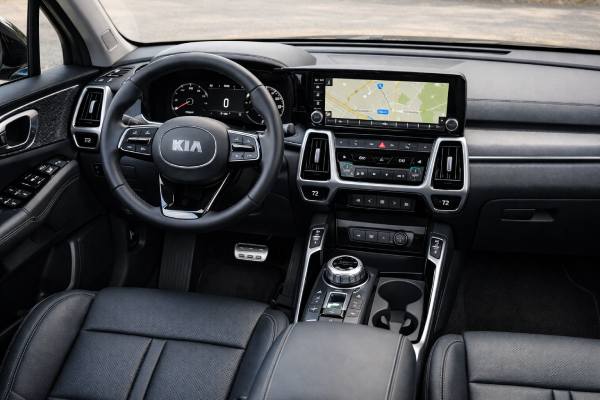
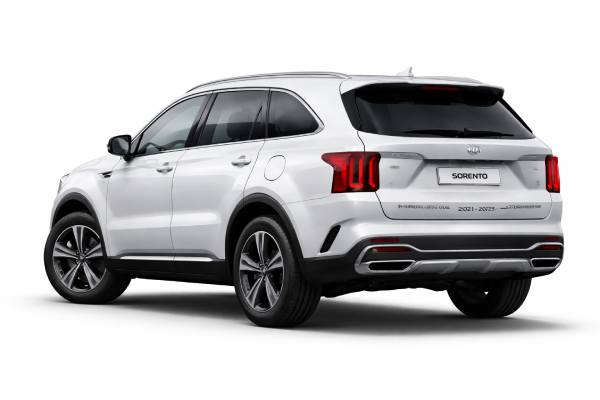
The 2021–2023 Kia Sorento MQ4 with the 2.2-liter Smartstream diesel and AWD is built around one clear mission: deliver long-distance efficiency and real towing strength without giving up modern family-SUV comfort. The 2.2 CRDi’s broad torque band suits the Sorento’s weight, and the AWD system adds confidence in rain, snow, and on loose surfaces—especially when paired with the 8-speed dual-clutch transmission (8DCT) many markets received with this engine. In day-to-day driving, this variant tends to feel relaxed rather than quick, with strong mid-range pull for passing and grade climbing. Ownership satisfaction usually comes down to matching usage to diesel realities: it rewards regular longer trips, correct oil and fuel quality, and attention to emissions-system health. If you maintain it like a torque-heavy, modern diesel SUV—not like a short-trip city runabout—the MQ4 diesel AWD can be a very capable all-rounder.
Owner Snapshot
- Strong towing and hill performance thanks to diesel torque and AWD traction.
- Efficient on steady highway runs, especially at moderate speeds and warm operating temps.
- Cabin and safety tech feel “new generation” for the class, with useful driver assists in most trims.
- Short-trip use can accelerate DPF/EGR issues—plan for regular longer drives to keep emissions systems happy.
- Change engine oil and filter about every 10,000–15,000 km (6,000–9,000 mi) or 12 months (market and duty-cycle dependent).
Guide contents
- Kia Sorento MQ4 AWD diesel deep dive
- Kia Sorento MQ4 2.2D spec sheet
- Kia Sorento MQ4 trims and ADAS
- Reliability and known trouble spots
- Maintenance plan and buying tips
- Road manners and real-world economy
- Rivals and where it fits
Kia Sorento MQ4 AWD diesel deep dive
This Sorento variant combines the MQ4 platform’s family-friendly packaging with a torque-focused powertrain meant for real work: highway miles, winter travel, and towing. The Smartstream 2.2 diesel is the key personality trait. Unlike small turbo gasoline engines that make their best power higher up, the diesel delivers strong pull in the middle of the rev range, so the Sorento feels calm under load—especially with passengers, roof boxes, or a trailer. In AWD form, it also puts that torque down more cleanly on wet roads and steep driveways, reducing wheelspin and traction-control “chatter.”
The AWD setup on this generation is typically an on-demand system: the vehicle runs primarily front-driven for efficiency, then sends torque rearward through an electronically controlled coupling when the front axle needs help. For owners, that means two practical things. First, it’s excellent for grip and stability in normal winter conditions (snowy streets, slushy highways), but it is not a low-range, rock-crawling 4×4. Second, it adds additional driveline components that need periodic fluid attention if you want long-term smoothness: rear differential oil and (where specified) coupling/transfer unit fluid checks.
From a body-and-cabin standpoint, MQ4 moved Sorento “upmarket.” The seating position, visibility, and cabin insulation are strong for the class. The third row is still best treated as occasional-use for adults, but it’s genuinely useful for kids or short trips. Cargo flexibility is a major advantage: the long wheelbase and boxier rear shape improve space efficiency compared with many mid-size crossovers that look large but pack poorly.
Who is this exact diesel AWD best for?
- Drivers doing frequent intercity or motorway trips, where the diesel stays hot and clean.
- Families who tow (caravans, small boats) or regularly drive steep grades.
- Owners in cold or wet climates who value traction and predictable stability.
Who should think twice?
- Short-trip, stop-start city users who rarely drive 20–30 minutes at steady speeds. Modern diesels can handle it, but emissions hardware (DPF/EGR/SCR) is happier when it sees regular hot running.
- Buyers who prioritize quick throttle snap and quietness above all; the diesel is refined, but it is not as silent as a strong hybrid at low speeds.
Kia Sorento MQ4 2.2D spec sheet
Specs vary by market, wheel size, trim, and certification cycle. The tables below reflect typical 2021–2023 MQ4 Sorento AWD 2.2 diesel configurations (common in Europe and similar regions). Always verify by VIN and local documentation for your exact build.
Powertrain and efficiency
| Item | Specification |
|---|---|
| Code | Smartstream D2.2 (market naming varies; often 2.2 CRDi) |
| Engine layout and cylinders | Inline-4, DOHC, 16-valve (4 valves/cyl) |
| Displacement | 2.2 L (≈ 2,151 cc) |
| Induction | Turbocharged |
| Fuel system | Common-rail direct injection (diesel) |
| Compression ratio (ICE) | Varies by calibration (diesel, high compression) |
| Max power | 202 hp (≈ 148 kW) @ rpm* |
| Max torque | ≈ 440 Nm (≈ 325 lb-ft) @ rpm* |
| Timing drive | Chain (typical for this family) |
| Rated efficiency | Commonly ~6.0–7.2 L/100 km (≈ 33–39 mpg US / 39–47 mpg UK), market dependent |
| Real-world highway @ 120 km/h | Often ~7.0–8.0 L/100 km (≈ 29–34 mpg US / 35–40 mpg UK), conditions dependent |
*Exact rpm peaks vary by region and calibration.
Transmission and driveline
| Item | Specification |
|---|---|
| Transmission | 8-speed dual-clutch automatic (8DCT, market dependent) |
| Drive type | AWD (on-demand, electronically controlled coupling) |
| Differential | Typically open differentials with brake-based traction control |
Chassis and dimensions
| Item | Specification |
|---|---|
| Suspension (front/rear) | MacPherson strut / multi-link |
| Steering | Electric power steering; ratio varies by spec |
| Brakes | 4-wheel disc (diameters vary by trim/wheel package) |
| Wheels and tyres (common) | 235/55 R19 or 235/60 R18 (market dependent) |
| Ground clearance | Typically ~170–176 mm (≈ 6.7–6.9 in) |
| Length / width / height | ≈ 4,810 / 1,900 / 1,695–1,700 mm (≈ 189.4 / 74.8 / 66.7 in) |
| Wheelbase | ≈ 2,815 mm (≈ 110.8 in) |
| Turning circle (kerb-to-kerb) | Often ~11.6–11.8 m (≈ 38–39 ft) |
| Kerb (curb) weight | Commonly ~1,900–2,050 kg (≈ 4,190–4,520 lb), depends on trim and seats |
| GVWR | Market dependent (often ~2,500–2,650 kg range) |
| Fuel tank | Commonly ~67 L (≈ 17.7 US gal / 14.7 UK gal) |
| Cargo volume | Varies by 5- vs 7-seat and measurement standard (VDA/SAE) |
Performance and capability
| Item | Typical figure |
|---|---|
| 0–100 km/h (0–62 mph) | ~9.0–10.0 s (trim and weight dependent) |
| Top speed | ~200 km/h (≈ 124 mph), market dependent |
| Braking distance | Strongly tyre-dependent; verify by test and wheel package |
| Towing capacity | Often up to ~2,500 kg (≈ 5,500 lb) braked in many markets; always check the VIN plate |
| Payload | Varies widely; calculate from GVWR minus curb weight |
Fluids and service capacities (typical guidance)
Capacities and specs vary by VIN, oil cooler, and service procedure. Treat these as decision-making estimates until you confirm for your exact engine and market.
| Fluid | Specification | Typical capacity |
|---|---|---|
| Engine oil | Low-SAPS diesel oil (ACEA C2/C3 commonly used), viscosity often 0W-30 or 5W-30 (market dependent) | ~5.5–6.5 L (≈ 5.8–6.9 US qt) |
| Coolant | Long-life OAT coolant (usually 50/50 mix) | ~7–9 L (≈ 7.4–9.5 US qt) |
| Transmission (8DCT) | OEM-specified DCT fluid | Service-dependent (fill procedure matters) |
| Rear differential (AWD) | Hypoid gear oil per OEM spec | ~0.6–1.2 L (procedure dependent) |
| A/C refrigerant | R-1234yf is common on many MQ4 builds | Charge varies by spec label |
| Key torque specs | Critical fasteners only (lug nuts, drain plugs) | Always confirm by service manual |
Safety and driver assistance (high-level)
| Item | Summary |
|---|---|
| Crash ratings | Euro NCAP: 5-star for the generation; check test year and protocol |
| IIHS | Ratings vary by trim and headlights; verify exact headlight package |
| ADAS suite | AEB, ACC, lane support, blind-spot features commonly available; standard vs optional varies by trim and year |
Kia Sorento MQ4 trims and ADAS
Trim names differ by country, but the buying logic stays the same: identify the combination of seating, wheel size, lighting, and driver-assistance you actually want, then confirm the mechanical spec (AWD + diesel + transmission) matches your needs.
Trims and options that matter for ownership
The big practical split is often 5-seat vs 7-seat and wheel size.
- 5-seat versions can have simpler packaging and sometimes slightly better curb weight and economy.
- 7-seat versions are the family hero, but the third row reduces cargo height and can add weight.
- 18-inch wheels usually ride better and cost less in tyres; they also tend to be quieter on rough surfaces.
- 19- or 20-inch wheels can look great and sharpen response, but they increase tyre cost and can make pothole impacts harsher.
Look for these option themes (names vary):
- Tow-oriented package: trailer wiring, cooling upgrades (where offered), and a higher tow rating in some markets.
- Premium lighting: LED projector headlights often improve visibility; this can also affect insurance and safety-test outcomes in some rating systems.
- Tech/Driver assist package: may add highway lane centering, enhanced AEB functions (junction assist, cyclist detection), blind-spot camera view, or surround-view parking cameras.
Quick identifiers when shopping used:
- Exterior badges may not reliably indicate AWD in every market—confirm through the VIN build sheet or drivetrain display in the infotainment/cluster.
- AWD controls: many have a terrain/snow mode selector or an AWD-related drive-mode screen.
- Wheel and brake package: larger wheels sometimes come with larger brake hardware; visually inspect rotor size if you care about repeated mountain braking.
Safety ratings: how to interpret them correctly
For this generation, strong overall crash performance is a highlight, but always keep the test context in mind:
- Ratings are tied to a specific test year and protocol. A “5-star” can still be very safe, but you should compare within the same rating system.
- Some systems treat headlights and ADAS availability as part of scoring. Two Sorentos can test similarly in structure but differ in “assist” outcomes depending on equipment.
Safety systems and ADAS: what’s typically included
Expect a modern baseline set on many 2021–2023 Sorento trims:
- Multiple airbags including front, side, and curtain airbags; some markets add driver knee airbag.
- ESC stability control, ABS, traction control, hill-start assist, and downhill braking support.
- ISOFIX/LATCH points: typically outboard second-row positions, with top tethers; confirm third-row provisions if you plan child seats there.
ADAS (availability varies by year/trim):
- AEB (car and pedestrian; sometimes cyclist and junction turning on higher trims).
- Adaptive cruise control (often with stop-and-go).
- Lane keeping / lane following (lane centering may be higher-trim or later-year).
- Blind-spot monitoring and rear cross-traffic alert (common on mid-to-high trims).
- Traffic sign recognition and driver attention monitoring in many markets.
Service note: after windshield replacement, front radar work, or suspension alignment changes, many systems require calibration. Budget time and choose a shop with the correct targets and scan tools.
Reliability and known trouble spots
Overall durability for the MQ4 Sorento is often solid when serviced on time, but this diesel AWD combo has predictable “modern diesel” pressure points. The smart approach is to separate issues by how common they are and how expensive they can become if ignored.
Common (most likely over typical ownership)
- DPF loading and forced regenerations (medium cost if ignored)
Symptoms: rising fuel consumption, fans running after shutdown, warning messages, sluggish response.
Likely cause: repeated short trips and low exhaust temperatures prevent passive regeneration.
Remedy: change driving pattern (regular 20–30 minute steady run), use correct oil (low ash), and address underlying faults early (temperature/pressure sensors). - EGR and intake soot buildup (medium cost)
Symptoms: uneven idle, reduced performance, recurring emissions codes.
Likely cause: diesel soot + EGR flow + short-trip operation.
Remedy: diagnosis first (don’t guess); clean/replace EGR components as required, ensure the engine reaches full temperature regularly. - AdBlue/SCR faults in equipped markets (medium to high depending on parts)
Symptoms: countdown-to-no-start warnings, emissions-related faults, crystallized residue near filler/lines.
Likely cause: sensor issues, crystallization from poor handling, temperature stress.
Remedy: use fresh fluid, keep the system sealed, fix leaks quickly, and update software where applicable.
Occasional (depends heavily on use and maintenance)
- 8DCT shift quality changes (medium to high)
Symptoms: low-speed shudder, hesitant engagement, rough takeoff.
Likely cause: clutch wear from heavy creeping, software calibration needs, or fluid condition (where serviceable).
Remedy: scan for adaptation codes, confirm correct fluid and fill procedure, update TCU software if available; adjust driving habits (avoid inching forward on steep grades—use brake hold). - AWD driveline noise or vibration (medium cost)
Symptoms: humming at speed, clunks on takeoff, vibration under load.
Likely cause: prop-shaft joints, rear diff oil degradation, mounts, or tyres mismatched in circumference.
Remedy: keep tyre sizes matched and rotated; service AWD-related fluids under severe duty; inspect joints and mounts.
Rare but higher severity
- Turbocharger or boost-control faults (high cost)
Symptoms: limp mode, whistle changes, smoke under load.
Likely cause: oil quality/interval issues, air leaks, actuator faults.
Remedy: confirm boost leaks and sensor readings before replacing hardware; prioritize correct oil and warm-up discipline. - Cooling system leaks (medium to high)
Symptoms: coolant smell, low coolant warnings, temperature fluctuations.
Likely cause: hose joints, plastic fittings, or radiator/heat exchanger issues.
Remedy: pressure test early; fix small leaks before they become overheating events.
Recalls, TSBs, and software actions
Modern vehicles live on calibrations. For the Sorento MQ4, it’s common to see software updates that improve drivability, emissions monitoring, or ADAS behavior. Your best practice is simple:
- Run the VIN through an official recall database.
- Ask the dealer to print campaign completion history.
- Confirm the latest infotainment and ADAS module updates if you experience sensor faults.
Maintenance plan and buying tips
A diesel AWD Sorento stays “easy” when you treat maintenance as prevention. The goal is to protect three expensive areas: the emissions system, the turbocharged engine, and the AWD/DCT driveline.
Practical maintenance schedule (typical ranges)
Use your local service book as the rule, but this schedule is a safe planning framework:
| Item | Interval (distance/time) | Notes |
|---|---|---|
| Engine oil and filter | 10,000–15,000 km (6,000–9,000 mi) or 12 months | Short trips, towing, and cold climates: use the shorter interval |
| Engine air filter | 20,000–30,000 km or 12–24 months | Dusty areas: inspect more often |
| Cabin air filter | 15,000–30,000 km or 12 months | Helps HVAC performance and interior air quality |
| Fuel filter (if serviceable) | 30,000–60,000 km | Diesel cleanliness matters for injectors |
| Brake fluid | Every 2 years | Moisture control for pedal feel and ABS reliability |
| Coolant | 5 years then per schedule | Confirm the exact coolant spec and change interval |
| DCT fluid (where specified) | 60,000–120,000 km (severe vs normal) | Follow OEM procedure; wrong fill can cause shift issues |
| Rear differential / AWD unit fluids | 60,000–120,000 km (severe vs normal) | Towing and mountain use: consider earlier service |
| Tyre rotation | 10,000–12,000 km | Vital for AWD: keep circumference matched |
| Alignment check | Yearly or after tyre wear/potholes | Protects tyres and stability |
| 12 V battery test | Annually after year 3 | Replace proactively if cranking slows or voltage drops |
| Emissions health drive | Monthly | 20–30 minutes steady-speed helps DPF regeneration |
Fluids and specs: what to insist on
- Engine oil must be the correct low-ash diesel spec for the DPF-equipped engine (wrong oil increases ash loading and shortens DPF life).
- Use quality diesel fuel and keep the tank above very low levels if you want to reduce contamination and water risks.
- If equipped with AdBlue, store it properly, avoid old containers, and keep the filler area clean to prevent crystallization issues.
Key torque values (decision-use only)
Because torque specs vary by wheel and hub design, confirm in your service manual. Still, these are commonly encountered checkpoints:
- Wheel lug nuts/bolts: often around 110–130 Nm (81–96 lb-ft) depending on wheel/hub design.
- Engine oil drain plug: commonly 25–40 Nm (18–30 lb-ft) depending on pan and plug design.
Used-buyer checklist (diesel AWD specific)
- Drive cycle check: if the seller only does short trips, ask about DPF warnings and regenerations.
- Scan tool pass: request a diagnostic scan for stored emissions and transmission codes.
- Service history: confirm oil intervals and the exact oil used.
- Tyre match: all four tyres should be same brand/model and similar wear; mismatched tyres can stress AWD.
- DCT behavior: test low-speed creeping, hill starts, and parking maneuvers for shudder or harsh engagement.
- AWD check: on a low-traction surface, confirm smooth rear engagement without bangs or vibration.
- Cooling and leaks: inspect for coolant smell, oil seepage, and intercooler hose residue.
Long-term outlook: maintained properly and used in the right duty cycle, this powertrain can age well. Neglected oil quality, repeated cold short trips, and ignored warning lights are what turn it expensive.
Road manners and real-world economy
The diesel AWD Sorento is not tuned as a sporty SUV; it’s tuned as a stable, confident long-distance tool. On the road, the most noticeable trait is effortless mid-range torque. It pulls strongly from moderate rpm without needing frequent downshifts, which is exactly what you want with passengers or a trailer.
Ride, handling, and NVH
- Ride: generally composed, with the suspension doing a good job of smoothing highways and typical urban broken pavement. Larger wheels can transmit sharper impacts—choose 18-inch wheels if comfort and tyre cost matter.
- Handling: predictable, mild understeer at the limit, and stable on sweeping motorway bends. The AWD system mainly supports traction rather than making the car feel “rear-driven.”
- Steering: light-to-medium effort with accuracy that suits family driving. Feedback is usually modest (normal for EPS in this class).
- NVH: at cruise, the diesel is subdued, but you may hear a more noticeable engine note under hard acceleration compared with a hybrid. Wind and tyre noise depend heavily on wheel/tyre choice.
Powertrain character and 8DCT behavior
The 8DCT can feel crisp when you accelerate decisively, but it may feel less smooth than a torque-converter automatic in stop-start crawling. You can improve your experience by driving it like a clutch system:
- Avoid long “creep” on steep inclines—use brake hold and clean takeoffs.
- In tight parking maneuvers, use gentle throttle inputs rather than feathering constantly.
- Let the transmission complete its engagement before asking for big torque (especially with a trailer).
Real-world fuel economy (what owners typically see)
Economy depends on speed, temperature, tyre choice, and load. Planning ranges:
- City-heavy use: often ~7.5–9.5 L/100 km (≈ 25–31 mpg US / 30–38 mpg UK), depending on traffic and warm-up time.
- Highway 100–120 km/h: often ~7.0–8.0 L/100 km (≈ 29–34 mpg US / 35–40 mpg UK).
- Mixed driving: commonly ~6.8–8.5 L/100 km (≈ 28–35 mpg US / 33–42 mpg UK).
Cold-weather note: winter fuel blend, longer warm-up times, and HVAC load can add ~0.5–1.5 L/100 km in many climates.
Load and towing behavior
Where this Sorento shines is controlled towing:
- The diesel’s torque reduces the need for constant downshifts on grades.
- AWD improves traction on wet ramps and gravel pull-offs.
- Expect a consumption penalty: moderate towing can add ~15–30%, heavy towing can exceed that depending on speed and terrain.
If you tow often, prioritize earlier oil changes, keep cooling components clean, and treat transmission and AWD fluids as “severe duty” maintenance.
Rivals and where it fits
The Sorento AWD diesel sits in a shrinking niche: a mid-size three-row-capable SUV with genuine torque and towing ability, but without moving up into full-size territory. Here’s how it typically compares in real shopping decisions.
Versus Hyundai Santa Fe (related platform)
A similarly sized cousin in many markets, often sharing engineering philosophy.
- Sorento advantage: third-row availability and often a more family-minivan-like flexibility; towing-friendly diesel torque where offered.
- Santa Fe advantage: some trims emphasize comfort and may feel slightly simpler in seat packaging if you don’t need seven seats.
Choose Sorento if you want the option of a third row or prioritize maximum versatility.
Versus Skoda Kodiaq and Volkswagen Tiguan Allspace
These are common EU-region alternatives.
- Sorento advantage: often stronger towing ratings in comparable configurations, and a substantial “big SUV” feel on the motorway.
- Kodiaq/Tiguan advantage: sometimes lighter curb weight and potentially slightly sharper efficiency at moderate speeds; broad dealer networks in some regions.
Choose Sorento if towing and torque-heavy cruising matter more than a slightly lighter, more “car-like” feel.
Versus Peugeot 5008 (often FWD-focused)
- Sorento advantage: AWD availability and the confidence that comes with it in winter; generally stronger towing focus.
- 5008 advantage: packaging cleverness and often lower running costs depending on powertrain and wheel sizes.
Choose Sorento if you need AWD or you regularly drive poor-weather routes.
Versus Toyota Highlander Hybrid (where available)
This is a different philosophy: hybrid smoothness and city efficiency rather than diesel torque.
- Sorento diesel advantage: towing stability under load and long-distance efficiency without relying on battery behavior; strong mid-range pull on grades.
- Highlander hybrid advantage: quieter low-speed operation and strong urban economy; less diesel-specific emissions complexity.
If your life is mostly city and suburb miles, the hybrid style may feel easier. If you live on the motorway, tow, or drive mountainous routes, the diesel AWD Sorento remains very compelling.
The bottom line
The Sorento AWD 2.2 diesel is a best-fit vehicle, not a universal one. It’s at its best when you:
- drive longer distances regularly,
- maintain it with correct fluids and intervals,
- and use its torque and traction for real-world tasks like winter travel and towing.
If those match your routine, it can be one of the most satisfying MQ4 configurations to own.
References
- Official Kia Sorento 2020 safety rating 2020 (Safety Rating)
- 2021 Kia Sorento 2021 (Safety Rating)
- Check for Recalls: Vehicle, Car Seat, Tire, Equipment | NHTSA 2026 (Recall Database)
- Manuals 2026 (Owner’s Manual Portal)
- Microsoft Word – Pressemappe_Kia_Sorento_2021.docx 2021 (Manufacturer Technical Guide)
Disclaimer
This article is for informational purposes only and is not a substitute for professional diagnosis, inspection, or repair. Specifications, torque values, service intervals, and procedures can vary by VIN, market, model year, and equipment. Always verify details using your official owner’s manual, factory service information, and the vehicle’s identification labels before purchasing parts or performing work.
If this guide helped you, please consider sharing it on Facebook, X (Twitter), or your favorite forum to support our work.