

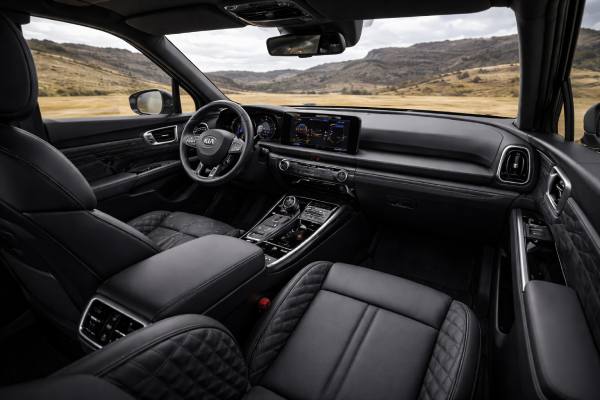
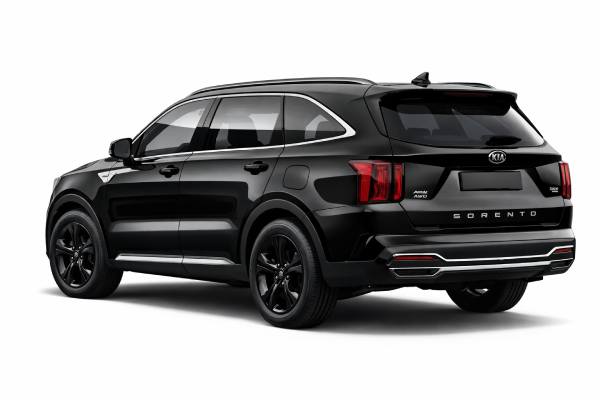
The 2024–present facelifted Kia Sorento Hybrid AWD (MQ4) is built around a “through-the-transmission” hybrid layout (Kia calls it TMED), where an electric motor is integrated with a conventional 6-speed automatic. The practical benefit is familiar driving feel—steady on the highway, predictable in hills, and less “rubber-band” behavior than many eCVT-style hybrids. The 1.6-liter turbo GDI engine focuses on mid-range torque, while the hybrid system fills gaps at low rpm and during quick merges.
For owners, the Sorento Hybrid’s appeal is balance: near-family-hauler space with meaningful fuel savings, AWD traction without a heavy efficiency penalty, and a chassis tuned for calm, long-distance travel. The facelift also aligns safety hardware and structure with newer side-impact requirements, which matters if you keep a vehicle for a decade.
Top Highlights
- Strong real-world efficiency for a 3-row-capable midsize SUV, especially in mixed driving and stop-and-go use.
- TMED hybrid with a 6-speed automatic feels natural at speed and under load compared with many eCVTs.
- AWD traction plus decent ground clearance can handle winter roads confidently on the right tyres.
- Ownership caveat: turbo-GDI hybrids reward consistent oil quality and cooling-system care to protect the turbo and hybrid electronics.
- Plan on engine oil and filter service about every 10,000–12,000 km (6,000–7,500 mi) or 12 months in normal use (shorter in severe service).
Guide contents
- Sorento Hybrid AWD facelift: what it is
- Sorento Hybrid AWD specs that matter
- Sorento Hybrid AWD trims and safety tech
- Reliability patterns and known problems
- Maintenance plan and buying advice
- Real driving performance and efficiency
- Rivals: how the Sorento Hybrid stacks up
Sorento Hybrid AWD facelift: what it is
The facelifted Sorento Hybrid AWD (MQ4) keeps the same core idea that made the pre-facelift model compelling: a compact 1.6-liter turbocharged gasoline direct-injection (GDI) engine paired with an electric motor, packaged into a drivetrain that still uses a traditional stepped automatic transmission. In everyday terms, it behaves like a normal SUV most of the time, but quietly “cheats” with electric torque when you pull away, roll through traffic, or climb grades.
Kia’s TMED approach places the main traction motor in line with the transmission. That matters for two reasons:
- Driving feel: The 6-speed can hold gears on climbs, downshift for passing, and avoid the steady high-rpm drone some hybrids develop under load.
- Control when towing or fully loaded: A stepped gearbox can manage heat and engine speed more predictably, provided you stay within the vehicle’s rated limits and maintain fluids.
The AWD system on this hybrid is designed for traction and stability rather than rock crawling. With appropriate tyres, it’s well suited to wet highways, slush, and compacted snow. Ground clearance is also usable for rutted winter roads and gravel tracks, but approach and departure angles still signal “crossover,” not “off-road SUV.”
The facelift era also overlaps with safety structure and restraint updates that improve side-impact occupant protection on later model years. Even if you never read a crash report, these structural changes can influence insurance outcomes, resale, and long-term confidence.
Sorento Hybrid AWD specs that matter
Below are the key technical specs for the Sorento Hybrid AWD in a clear, scan-friendly format. Values can vary by market, trim, wheels, and homologation cycle, but this gives a solid baseline for the 227 hp AWD hybrid configuration.
Powertrain and efficiency
| Item | Specification |
|---|---|
| Code / system type | Smartstream 1.6 T-GDi Hybrid (TMED) |
| Engine layout and cylinders | Inline-4 (I-4), turbo, GDI; valvetrain type varies by market documentation |
| Displacement | 1.6 L (1,598 cc) |
| Bore × stroke | 75.6 × 89.0 mm (3.0 × 3.5 in) |
| Induction | Turbocharged |
| Fuel system | GDI (direct injection) |
| Compression ratio | 10.5:1 |
| Max power (engine) | 177.2 hp (132.1 kW) @ 5,500 rpm |
| Max power (system) | 227 hp (169.3 kW) |
| Max torque (system) | 258 lb-ft (350 Nm) |
| Hybrid motor type | Permanent Magnet Synchronous Motor (traction motor) |
| Traction motor output | 44.2 kW (≈59.3 hp) @ 1,600–2,000 rpm |
| Traction motor torque | 194.7 lb-ft (265 Nm) @ 0–1,600 rpm |
| Hybrid battery | Lithium-ion polymer; 270 V; 1.0 kWh |
| Rated efficiency (AWD) | 35 mpg US combined (≈6.72 L/100 km) |
| Real-world highway @ 120 km/h (75 mph) | Typically ~7.0–7.8 L/100 km (30–34 mpg US) depending on temperature, wind, tyres, and load |
Transmission and driveline
| Item | Specification |
|---|---|
| Transmission | 6-speed automatic (hybrid-integrated TMED layout) |
| Drive type | AWD |
| Differential | Conventional open differentials with electronic brake-based traction control (typical for class) |
Chassis and dimensions
| Item | Specification |
|---|---|
| Suspension (front / rear) | MacPherson strut / multi-link |
| Steering | Rack-mounted motor-driven power steering (R-MDPS); 13.27:1 ratio |
| Brakes | Ventilated discs front/rear; 325 mm (12.8 in) front and rear |
| Popular tyre size | 235/65 R17 (common baseline fitment) |
| Ground clearance | 174 mm (6.85 in) |
| Length / width / height | 4,811 / 1,900 / 1,694 mm (189.4 / 74.8 / 66.7 in) |
| Wheelbase | 2,814 mm (110.8 in) |
| Turning circle (kerb-to-kerb) | 5.78 m (18.96 ft) |
| Curb weight (typical AWD range) | ~1,878–1,930 kg (4,140–4,255 lb), wheel/trim dependent |
| GVWR (typical AWD) | ~2,580 kg (5,688 lb) |
| Fuel tank | 67.0 L (17.7 US gal) |
| Cargo volume (SAE method) | 357 L (12.6 ft³) behind 3rd row; 1,090–1,274 L (38.5–45.0 ft³) behind 2nd row; 2,138 L (75.5 ft³) behind 1st row |
Performance and capability
| Item | Specification |
|---|---|
| 0–100 km/h (0–62 mph) | ~8.6 s |
| Top speed | 193 km/h (120 mph) |
| EV-only max speed (light load) | ~120 km/h (74.6 mph) |
| Braking distance (60–0 mph) | 38.4 m (126 ft) |
| Towing capacity | Market-dependent; verify by VIN and equipment (unbraked example: 750 kg / 1,654 lb) |
Fluids and service capacities (key known values)
| Item | Specification |
|---|---|
| Engine oil capacity | 4.8 L (with filter) |
| Coolant capacity | 3.1 L (engine only) |
| Other fluids (ATF, AWD coupling, brake fluid, A/C) | Vary by market and service procedure; confirm in official service documentation for your VIN |
Sorento Hybrid AWD trims and safety tech
Because the Sorento Hybrid is sold across multiple regions with different naming conventions, trims can be confusing. A practical way to think about it is: the hybrid powertrain is broadly consistent, while equipment changes around wheels, interior seating layout, driver assistance, headlights, and tow/utility packages.
Trims and options: what actually changes
Common differentiators you’ll see across regions and packages include:
- Wheel and tyre packages: 17-inch setups prioritize comfort and efficiency; larger wheels can sharpen steering response but often cost fuel economy and ride compliance.
- Seating configuration: Some markets offer a third row more consistently than others; check whether your hybrid is configured as 5-, 6-, or 7-seat. Second-row captain’s chairs can reduce total seating but improve access and comfort.
- Cooling and towing provisions: If a tow rating matters, verify the presence of the correct hitch structure, wiring, and any cooling upgrades required by your region’s towing guidance.
- Headlights and visibility tech: IIHS headlight ratings can vary by trim because beam pattern and glare control change with headlamp design and option packages.
- Infotainment and ADAS tiers: Higher trims typically add more sensors (parking cameras, surround view, blind-spot camera views) and expand highway assist features.
Quick identifiers you can use when shopping:
- Wheel size and brake feel: Larger wheels can correlate with higher trims; take a test drive over broken pavement to see if ride quality fits your needs.
- ADAS button layout: Vehicles with higher-level lane centering and highway assist often have more steering-wheel controls and menu options.
- Tailgate badging: “Hybrid” plus AWD labeling varies by market, but the hybrid-specific cluster and energy-flow screens are often the most reliable interior tells.
Safety ratings and what to pay attention to
For this generation of Sorento, you’ll commonly see safety information from two major bodies:
- Euro NCAP: The MQ4 Sorento achieved a 5-star result in the 2020 protocol with strong Adult and Child scores (useful context for the platform’s baseline crash structure).
- IIHS: U.S.-market Sorento evaluations show strong crashworthiness results and detail structural updates applied in later model years, particularly around side-impact protection.
ADAS and service implications
Most Sorento Hybrids include a strong baseline suite: automatic emergency braking (car/pedestrian/cyclist detection depending on market), adaptive cruise control, lane-keeping/lane-follow assistance, blind-spot monitoring, and rear cross-traffic alert. Two ownership notes matter:
- Calibration after repairs: Windshield replacement, bumper work, wheel alignment changes, and some suspension repairs can require camera/radar calibration.
- Tyre consistency: Mixing tyre types or uneven wear can interfere with AWD behavior and stability-control logic. Rotate tyres on schedule and keep all four close in tread depth.
Reliability patterns and known problems
The Sorento Hybrid AWD’s reliability profile is best understood as three overlapping systems: the turbo-GDI engine, the hybrid hardware (motor, battery, power electronics), and the AWD driveline. None are inherently fragile, but they respond differently to short trips, neglected fluids, and overheating events.
Below is a practical issue map, grouped by prevalence and typical cost tier. Mileage bands are broad because climate and usage patterns matter.
Common (low to medium cost)
- 12 V battery sensitivity and “no start” scenarios (often usage-related):
Symptoms: intermittent warnings, slow crank (if applicable), or the vehicle seeming “dead” after sitting.
Likely cause: frequent short trips, long accessory use in READY/ACC modes, or an aging 12 V battery.
Remedy: battery test, clean terminals, update software if applicable, and avoid long accessory draw without READY mode. - Brake feel changes from blended braking:
Symptoms: slight pedal “step” or inconsistent feel at very low speeds.
Likely cause: normal transition between regenerative braking and friction brakes; sometimes worsened by surface rust on rotors in humid climates.
Remedy: periodic firm stops to clean rotors; ensure brake service includes proper slider lubrication and pad bedding. - Cabin HVAC odor and reduced airflow:
Symptoms: musty smell, weak fan output.
Likely cause: cabin filter saturation, evaporator moisture.
Remedy: cabin filter replacement and HVAC cleaning as needed.
Occasional (medium cost)
- Turbo plumbing or boost-control quirks:
Symptoms: hesitation under load, underboost codes, or whistling noises.
Likely cause: boost leaks, wastegate control issues, sensor drift.
Remedy: smoke test intake plumbing, verify sensors, and apply any ECU updates that address drivability. - Cooling-system seepage or repeated low-coolant events:
Symptoms: coolant smell, slow coolant loss, temperature fluctuations.
Likely cause: hose junction seepage, radiator/expansion tank issues, or improper bleeding after service.
Remedy: pressure test, correct coolant type, and careful bleeding to prevent air pockets. - GDI intake valve deposits over time (usage-dependent):
Symptoms: rough idle, reduced efficiency, misfires at higher mileage.
Likely cause: direct injection doesn’t wash intake valves with fuel; short-trip use accelerates deposit formation.
Remedy: driving pattern adjustments, quality fuel, and cleaning procedures when symptoms appear.
Rare but higher consequence (high cost)
- Hybrid power electronics or motor-related faults:
Symptoms: warning lights, reduced power, charging/regen limitations.
Likely cause: component failure is uncommon, but heat, collision damage, or water intrusion can trigger expensive repairs.
Remedy: professional diagnosis with hybrid-specific tooling; confirm warranty coverage and software level.
Recalls, TSBs, and software actions
For a 2024–present vehicle, software updates can be as important as mechanical fixes. Updates may improve shift logic, hybrid transitions, sensor fault handling, or ADAS performance. Before purchase (or after buying used), request:
- Proof of completed recalls and service actions from a dealer printout
- Confirmation of ECU/TCU/ADAS update status
- A scan for stored history codes (even if the dash is clear)
Always verify recall completion by VIN using official channels for your market and confirm paperwork—don’t rely on seller statements alone.
Maintenance plan and buying advice
A hybrid Sorento rewards “boring consistency.” The goal is stable oil quality for the turbo-GDI engine, clean cooling passages for both engine and hybrid components, and predictable tyre/brake condition so the AWD and stability systems behave as designed.
Practical maintenance schedule (normal use)
Use this as a conservative planning guide; your official schedule can differ by market and “severe service” definitions.
| Interval | What to do |
|---|---|
| Every 10,000–12,000 km (6,000–7,500 mi) or 12 months | Engine oil and filter; inspect for leaks; check coolant level; inspect tyres and brakes |
| Every 15,000 km (9,000 mi) or 12 months | Tyre rotation; alignment check if uneven wear; inspect suspension bushings and steering components |
| Every 30,000 km (18,000 mi) | Engine air filter; cabin air filter (often sooner in dusty cities); brake inspection and slider service as needed |
| Every 40,000–60,000 km (25,000–37,000 mi) | Brake fluid test/replace based on moisture; more frequent in humid climates |
| Every 60,000–100,000 km (37,000–62,000 mi) | Spark plugs typically fall in this band for turbo-GDI engines (verify exact interval); inspect coolant hoses and accessory belt |
| 8–10 years (typical) | 12 V battery replacement window varies widely—test annually after year 3–4 if you do many short trips |
Hybrid-specific care notes:
- Cooling system discipline matters more than people expect. Hybrids run multiple heat sources (engine, turbo, power electronics). Never ignore repeated low coolant, and insist on correct bleeding after any coolant service.
- Regenerative braking can hide friction-brake neglect. Pads may look fine while rotors corrode. Periodic firm stops and proper brake servicing prevent vibration and seized caliper hardware.
- Tyre matching is not optional on AWD. Keep all four tyres the same brand/model when possible and keep tread depth close.
Fluids and specs (decision-useful)
Known baseline service capacities for this configuration:
- Engine oil: 4.8 L with filter
- Engine coolant (engine only figure): 3.1 L
For transmission fluid, AWD coupling/gear oils, and A/C refrigerant, use VIN-specific service data—procedures vary and “drain and fill” amounts can differ from total capacity.
Buyer’s guide: what to check before purchase
A smart pre-purchase inspection for a Sorento Hybrid AWD should include:
- Service history evidence: oil changes on time, coolant work documented, brake fluid replacement if age suggests it’s due
- Tyres: even wear, matching set, and no large tread-depth differences across axles
- Hybrid behavior: smooth transitions, no surging at steady throttle, predictable regen feel
- Cooling-system integrity: no dried coolant residue, stable temperature, heater output consistent
- ADAS operation: camera/radar warnings absent; test adaptive cruise and lane support on a safe road
Long-term durability outlook: with on-time fluids, matched tyres, and careful cooling-system maintenance, the hybrid drivetrain can age very well. Most expensive “hybrid scares” come from neglected cooling, accident damage, or poor-quality repairs—not from normal wear.
Real driving performance and efficiency
The Sorento Hybrid AWD’s personality is defined less by peak horsepower and more by how it delivers torque. The traction motor provides immediate response from a stop, then the turbo engine builds mid-range pull as speed rises. Because the drivetrain shifts through real gears, acceleration feels familiar: you get a purposeful surge rather than a constant-rpm climb.
Ride, handling, and NVH
- Ride comfort: The suspension leans toward calm and controlled rather than sporty. On 17-inch tyres, the Sorento Hybrid usually filters broken pavement better than many rivals on larger wheels.
- Straight-line stability: Strong; it’s an easy highway SUV. Crosswinds still move the body (it’s tall), but steering corrections are modest.
- Braking feel: Regenerative blending is generally smooth, but at parking-lot speeds you may notice slight changes in pedal response—normal for many hybrids.
- Cabin noise: At steady 100–120 km/h, the hybrid system often allows lower engine rpm than you’d expect, so noise depends more on tyres and wind than on powertrain.
Powertrain character and drive modes
In gentle driving, the system will favor electric assistance and early upshifts. In “Sport” (naming varies), it will hold gears longer and respond more sharply, but it won’t turn the Sorento into a hot SUV—think “more decisive,” not “more dramatic.”
One useful ownership trick: if you live in a hilly area, avoid “ping-pong throttle.” A steady pedal and anticipating climbs lets the hybrid system manage charge and boost more efficiently, reducing gear hunting and heat load.
Real-world efficiency expectations
Official combined figures for AWD land around the mid-30s mpg US, but real-world results depend heavily on speed and temperature:
- City and mixed driving: Often the Sorento Hybrid’s best case. Short bursts and frequent decels maximize regen and electric assist.
- Highway at 120 km/h (75 mph): Expect a noticeable drop versus rating, often into the ~7.0–7.8 L/100 km band depending on wind, roof racks, tyre choice, and ambient temperature.
- Cold weather: Hybrids can lose efficiency because the engine runs more for cabin heat and battery conditioning. If most trips are under 10 km, plan for a larger seasonal penalty.
Traction and control in AWD form
With good all-season or winter tyres, the AWD Sorento Hybrid feels secure in rain and snow. The system is tuned for stability, using traction control and torque distribution to prevent drama rather than to push power rearward for fun. If you regularly drive steep snowy roads, prioritize tyres first—AWD helps you move, tyres help you stop and turn.
Rivals: how the Sorento Hybrid stacks up
The Sorento Hybrid AWD sits in a busy space: efficient family SUVs that still need to handle road trips, winter weather, and occasional hauling. Here’s how it typically compares, focusing on ownership-relevant differences rather than brand loyalty.
Against Toyota Highlander Hybrid AWD
- Sorento Hybrid advantage: More “normal” transmission feel and often a more direct response when passing or climbing grades, especially for drivers who dislike eCVT behavior.
- Highlander Hybrid advantage: Frequently a benchmark for hybrid efficiency and long-term track record in many markets.
- Choose the Sorento if: You want hybrid savings without giving up a stepped-gear driving feel and you value the Sorento’s packaging and tech mix.
Against Hyundai Santa Fe Hybrid (similar corporate tech, different tuning)
- Sorento Hybrid advantage: Often offers more traditional three-row flexibility depending on market configuration.
- Santa Fe Hybrid advantage: Depending on model year, may emphasize cabin packaging or a different ride/handling balance.
- Choose the Sorento if: You want the Sorento’s blend of 3-row capability, familiar power delivery, and AWD traction.
Against Honda CR-V Hybrid AWD / Kia Sportage Hybrid AWD (smaller class)
- Sorento Hybrid advantage: More space, available third row in many markets, and greater road-trip comfort for larger families.
- Smaller hybrids’ advantage: Usually lighter and sometimes more efficient in city driving; easier to park and often lower running costs (tyres/brakes).
- Choose the Sorento if: You genuinely need midsize space and occasionally carry more passengers or cargo.
Against plug-in hybrid alternatives
- Sorento Hybrid advantage: No charging dependency—efficiency is always available, even for apartment living.
- PHEV advantage: If you can charge at home, short daily commutes can be mostly electric.
- Choose the Sorento Hybrid if: Your driving is varied, you can’t reliably charge, or you want simpler ownership with fewer charging variables.
The overall takeaway: the Sorento Hybrid AWD makes the most sense for drivers who want one vehicle to do many jobs—school runs, commuting, winter roads, and long highway travel—without paying the fuel penalty of a conventional midsize SUV.
References
- 2024 Kia Sorento HEV Specifications 2024 (Specifications)
- 2024 Kia Sorento Hybrid AWD 2024 (Fuel Economy and NHTSA Crash Test Results)
- 2024 Kia Sorento 4-door SUV 2024 (Safety Rating)
- Official Kia Sorento 2020 safety rating 2020 (Safety Rating)
Disclaimer
This article is for informational purposes only and is not a substitute for professional diagnosis, inspection, or repair. Specifications, torque values, service intervals, and procedures can vary by VIN, market, drivetrain calibration, and installed equipment. Always verify details using your official owner’s manual and service documentation for your exact vehicle.
If you found this guide useful, please consider sharing it on Facebook, X (Twitter), or your favorite forum to help others and support our work.