

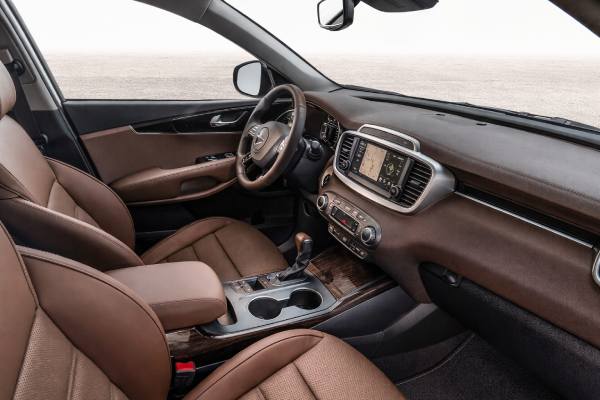

The 2018–2020 facelift Kia Kia Sorento with the 2.4-liter G4KJ four-cylinder is the “steady daily-driver” of the range: simple, naturally aspirated power, a conventional 6-speed automatic, and an on-demand AWD system aimed at real-world traction rather than hardcore off-roading. The facelift years matter because safety structure details and driver-assistance availability improved, and the cabin tech matured. In AWD form, you gain confidence in wet weather, light snow, and gravel, but you also add weight and extra driveline fluids to service.
For owners and shoppers, the big questions are usually the same: how the 2.4 feels with a loaded family SUV, what fuel economy looks like in practice, which trims actually include key safety tech, and what reliability patterns to watch—especially for the Theta-family engine and the AWD hardware. This guide answers those points with practical, ownership-focused detail.
Quick Specs and Notes
- Stable, predictable AWD traction for rain and winter tyres—best used as a “grip helper,” not a rock-crawler system.
- Simple 2.4 NA powertrain and 6-speed automatic are generally easy to live with and widely serviceable.
- Expect a modest fuel and tyre penalty versus FWD, especially in city use and cold weather.
- If service history is thin, budget for baseline fluids: engine oil, brake fluid, and AWD driveline fluids.
- Typical engine oil service: every 10,000–12,000 km (6,000–7,500 mi) or 12 months (shorter for heavy city use).
Contents and shortcuts
- Kia Sorento UM AWD focus
- Kia Sorento UM AWD specifications
- Kia Sorento UM AWD trims and tech
- Reliability and service campaigns
- Maintenance plan and buyer checks
- Driving feel and fuel use
- AWD rivals and comparisons
Kia Sorento UM AWD focus
The 2018–2020 facelift Sorento (UM) with the 2.4 G4KJ engine and AWD targets buyers who want three-row flexibility and confident all-weather mobility without moving into a more complex turbo or a heavier V6. In this configuration, the Sorento’s personality is defined by three things: traction management, predictable chassis tuning, and conservative power delivery.
AWD system in plain terms: this is an on-demand setup that can vary front-to-rear torque (rather than a full-time locked center differential). In normal cruising it behaves like a front-driver for efficiency. When the front tyres slip—or when the system anticipates slip based on inputs like steering angle and throttle—it sends torque to the rear axle. Many versions also offer an “AWD lock” style mode that requests a more even split at lower speeds, useful for pulling away on a slick incline or getting through loose surfaces like wet grass.
What AWD changes (and what it doesn’t):
- It improves launch traction and stability on slippery roads, especially with proper tyres.
- It does not increase braking grip on ice (tyres do that), and it’s not a substitute for ground clearance or underbody protection.
- It adds weight and driveline drag, so fuel economy and tyre wear tend to be slightly worse than FWD.
The 2.4 NA reality: 185 hp is adequate, not urgent. Around town it feels smooth and controllable, and it pairs well with the 6-speed automatic’s familiar, “non-hunting” behavior. With a full load of passengers and cargo, acceleration becomes a planning exercise—particularly on short highway merges or steep grades. The upside is linear throttle response and fewer heat-management demands than a small turbo engine under heavy load.
Facelift-year value: these years are often sought because infotainment and available driver aids improved, and some structural/safety details were updated across the range. If safety tech matters, the facelift window is where it becomes easier to find Sorentos with modern features like forward collision avoidance and lane support—depending heavily on trim and options.
Overall, this Sorento variant makes the most sense for drivers in mixed climates who prioritize predictable traction, reasonable service complexity, and family practicality over quick passing power.
Kia Sorento UM AWD specifications
Below are practical, model-specific specs for the facelift Sorento UM AWD with the 2.4 G4KJ and 6-speed automatic. Values can vary by trim, wheel size, and market equipment; where variation is common, ranges are shown.
Powertrain and efficiency
| Item | Specification |
|---|---|
| Engine code | G4KJ |
| Layout and valvetrain | Inline-4, DOHC, 4 valves/cyl |
| Displacement | 2.4 L (2,359 cc) |
| Bore × stroke | 88.0 × 97.0 mm (3.46 × 3.82 in) |
| Induction | Naturally aspirated |
| Fuel system | GDI (direct injection) |
| Compression ratio | 11.3:1 |
| Max power | 185 hp (138 kW) @ 6,000 rpm |
| Max torque | 241 Nm (178 lb-ft) @ 4,000 rpm |
| Timing drive | Chain |
| Rated efficiency (US EPA) | 11.2 / 9.0 / 10.2 L/100 km (21 / 26 / 23 mpg US) (city / highway / combined) |
| Real-world highway @ 120 km/h (75 mph) | Typically ~9.0–10.0 L/100 km (24–26 mpg US), depending on wind, tyres, load |
Transmission and driveline
| Item | Specification |
|---|---|
| Transmission | 6-speed automatic (torque-converter) |
| Drive type | AWD (on-demand) |
| Final drive ratio | 3.648 |
| Differentials | Open (with brake-based traction control) |
Chassis and dimensions
| Item | Specification |
|---|---|
| Suspension (front / rear) | MacPherson strut / multi-link |
| Steering | Rack-mounted MDPS (electric assist) |
| Turning circle (curb-to-curb) | 11.0 m (36.1 ft) |
| Brakes (front / rear) | Ventilated disc 320 mm (12.6 in) / disc 305 mm (12.0 in) |
| Common tyre size | 235/60 R18 (18 in rim) (varies by trim) |
| Ground clearance | 185 mm (7.3 in) |
| Length / width / height | 4,801 / 1,890 / 1,684 mm (189.0 / 74.4 / 66.3 in) |
| Wheelbase | 2,780 mm (109.4 in) |
| Fuel tank | 71 L (18.8 US gal / 15.7 UK gal) |
| Curb weight (typical AWD 2.4) | ~1,793–1,813 kg (3,953–3,997 lb) |
Cargo volume (SAE-style reporting)
| Configuration | Volume |
|---|---|
| Behind 3rd row | 320 L (11.3 ft³) |
| Behind 2nd row | 1,102 L (38.9 ft³) |
| Behind 1st row (max) | 2,073 L (73.2 ft³) |
Performance and capability (typical, driver-dependent)
| Metric | Typical range |
|---|---|
| 0–100 km/h (0–62 mph) | ~10.3–11.5 s |
| Top speed | ~185–195 km/h (115–121 mph) |
| Braking 100–0 km/h | ~39–43 m (tyres and surface dominate) |
| Towing capacity | Up to 907 kg (2,000 lb) braked (market/trim dependent) |
| Payload | Commonly ~450–600 kg (990–1,320 lb) depending on trim |
Fluids and service capacities (decision-level guide)
| System | Specification (typical) | Capacity (typical) |
|---|---|---|
| Engine oil | API SN/SP; ILSAC GF-5/6, 5W-20 or 5W-30 (climate dependent) | ~4.8–5.0 L (5.1–5.3 US qt) w/filter |
| Coolant | Long-life ethylene glycol (phosphate OAT/HOAT per OEM) | ~7.5–8.5 L (7.9–9.0 US qt) total |
| Automatic transmission | OEM-spec ATF (often SP-IV class) | ~7–8 L total; ~4–5 L drain/fill |
| Rear differential (AWD) | Hypoid gear oil (commonly 75W-90 GL-5) | ~0.6–0.9 L |
| Transfer case / PTU (AWD) | OEM-specified fluid (varies by unit) | ~0.5–0.8 L |
| Brake fluid | DOT 3 or DOT 4 | As required for flush |
Key torque specs (common reference ranges)
| Fastener | Torque (typical) |
|---|---|
| Wheel lug nuts | ~90–110 Nm (66–81 lb-ft) |
| Engine oil drain plug | ~35–45 Nm (26–33 lb-ft) |
Kia Sorento UM AWD trims and tech
Trim structure varies by market, but the ownership logic is consistent: on this generation, the safety and convenience “sweet spot” usually sits above the base trim, and AWD availability can depend on engine and grade.
Trims and options that matter
Rather than memorizing trim names, focus on functional equipment:
- AWD hardware and drive modes: Most AWD Sorentos offer selectable modes (normal/eco/sport style logic) and an AWD lock request. Verify the presence of the lock function and confirm it engages without warning lights.
- Wheels and brakes: 17–18 inch wheels often ride more comfortably and protect rims on rough roads. Larger wheels can sharpen response but raise tyre cost and pothole risk.
- Seating and cargo practicality: Third-row usability is best viewed as “occasional.” If you regularly carry adults in row three, check legroom and the ease of second-row slide and tumble.
- Infotainment generation: The facelift years are generally more consistent for smartphone integration and camera resolution. If you depend on navigation, check map update support and screen responsiveness.
Quick identifiers when shopping
- ADAS buttons and cluster icons: Cars with forward collision avoidance and lane features typically have steering-wheel or dash controls and corresponding instrument-cluster menus.
- Front camera/radar module: Many forward-collision systems place hardware near the windshield or in the grille area. Look for clean mounting and OEM-style trim; poorly repaired front ends can cause calibration headaches.
- Headlight type: Safety performance and night driving can change drastically with headlight spec. Identify whether the car has higher-output projector/LED units versus basic reflector units, and confirm aim and lens clarity.
Safety ratings and what they really mean
Safety ratings depend on test protocols and equipment. For this Sorento generation, strong results in key crash structure tests are common, but the best overall safety “package” depends on headlights and optional crash-prevention tech. When a rating body notes “optional system,” that’s a reminder to verify the car you’re buying actually has it.
Safety systems and ADAS overview
Common safety fundamentals include:
- Multi-airbag coverage (front, side torso, and curtain airbags on most trims)
- ABS with electronic brakeforce distribution
- Stability control and traction control
- Child-seat anchors (ISOFIX/LATCH) in the rear outboard positions, and top-tether anchors for forward-facing child seats
Driver assistance features you may find (often trim- or package-dependent):
- Forward collision avoidance / automatic emergency braking
- Adaptive cruise control on higher trims in some markets
- Lane departure warning and lane keeping support
- Blind-spot monitoring and rear cross-traffic alert
- Rear camera (standard in many markets by these years)
Calibration note: windshield replacement, front bumper repairs, wheel alignment changes, or suspension work can require sensor calibration on ADAS-equipped cars. Budget time and money for this after major repairs, and avoid cars with warning lights or “disabled” safety menus.
Reliability and service campaigns
This Sorento’s reliability story is best understood by separating engine, transmission, and AWD driveline, then adding the “modern car” layer: sensors, software, and electronics. Below is a practical map by prevalence and cost tier.
Common (watch closely)
- Oil consumption or high oil usage (engine) — cost tier: medium to high
Symptoms: dipstick level drops quickly, oil light flickers on braking/turns, exhaust smell after idling.
Likely causes: ring wear, PCV system issues, long oil intervals, or heavy short-trip use.
Remedy: shorten intervals, verify correct viscosity, check PCV and leaks, and document consumption rate (e.g., per 1,000 km/600 mi). Persistent high use can point to internal wear that needs deeper diagnosis. - Direct-injection carbon buildup (engine) — cost tier: medium
Symptoms: rough cold idle, hesitant throttle, misfire under load.
Likely causes: intake valve deposits (a DI trait), worsened by short trips.
Remedy: intake cleaning (method depends on shop), updated plugs if needed, and driving patterns that allow full warm-up. - AWD driveline fluid neglect — cost tier: low to medium
Symptoms: faint whine, vibration under load, binding sensation in tight turns (rare).
Likely causes: transfer case/rear diff fluids never changed, wrong fluid used, or leaks.
Remedy: inspect for seepage, confirm fluid condition, and service with the correct OEM spec at sensible intervals.
Occasional (important, but not universal)
- Wheel bearings and suspension wear — cost tier: medium
Symptoms: humming that changes with road speed, clunks over bumps, vague steering.
Likely causes: pothole impacts, heavy loads, and normal wear of bushings and ball joints.
Remedy: road test for noise, inspect bushings, and align after replacement. - Transmission shift quality concerns — cost tier: medium
Symptoms: flare on upshifts, delayed engagement, harsh 2–3 shift when cold.
Likely causes: degraded ATF, adaptation drift, or software logic sensitivity.
Remedy: verify fluid level/condition, perform correct service procedure, and consider a re-learn/reflash where applicable.
Rare but high-impact (know the signs)
- Bottom-end bearing damage risk (Theta-family discussions) — cost tier: high
Symptoms: knocking under load, metallic ticking that escalates, sudden loss of power, limp mode.
Likely causes: multiple factors can contribute; the key is that warning signs should never be ignored.
Remedy: stop driving if knock is present, scan for knock-related codes, and verify whether software updates, inspections, or extended coverage apply in your market.
Recalls, TSBs, and software updates: how to treat them
- Do not guess. Verify by VIN. A campaign can be “common” for the model but irrelevant to a specific car.
- Ask for proof: dealership invoice, campaign completion printout, or service record note with date and mileage.
- Software matters: engine and transmission calibrations can change drivability, warning thresholds, and sensor behavior. If the car has erratic shifting, unexplained warning lights, or ADAS faults, a dealer-level scan for updates is often the first correct step.
Pre-purchase checks to request
- Full oil-change history (dates, mileage, oil spec)
- Evidence of AWD fluid services (rear diff and transfer case)
- Scan report for current and pending codes (powertrain and chassis modules)
- Test drive long enough to fully warm up, then re-check idle quality and shift behavior
Maintenance plan and buyer checks
A strong maintenance routine is what makes this Sorento feel “boringly reliable.” The goal is to protect the engine (oil quality), keep the transmission consistent (fluid condition), and prevent AWD wear (fresh driveline fluids).
Practical maintenance schedule (distance/time)
Use the shorter interval when you do frequent short trips, heavy city driving, steep hills, dust, or towing.
- Engine oil and filter: every 10,000–12,000 km (6,000–7,500 mi) or 12 months; consider 7,500–8,000 km (4,500–5,000 mi) in severe use.
- Tyre rotation and brake inspection: every 10,000–12,000 km (6,000–7,500 mi). AWD benefits from even tread depth.
- Cabin air filter: every 15,000–20,000 km (9,000–12,000 mi) or yearly (more often in dusty cities).
- Engine air filter: inspect every 15,000–20,000 km; replace as needed.
- Brake fluid: every 2 years, regardless of mileage (moisture control).
- Coolant: typically 5 years / 100,000 km (60,000 mi) first change, then shorter thereafter (confirm by coolant type and label).
- Spark plugs (GDI): commonly 60,000–100,000 km (37,000–62,000 mi) depending on plug type and market schedule.
- Automatic transmission fluid: every 60,000–90,000 km (37,000–55,000 mi); choose the shorter end if you tow or drive in heat.
- Rear differential fluid (AWD): every 60,000–90,000 km.
- Transfer case/PTU fluid (AWD): every 60,000–90,000 km.
- Alignment check: annually, and after any suspension or tyre impact event.
- 12 V battery test: yearly after year 3; many batteries last 4–6 years depending on climate.
Fluids and parts: smart choices
- Use OEM-spec ATF and AWD fluids. “Universal” fluids can be fine in some cases but are a common source of shift complaints and driveline noise when misapplied.
- Stick to an engine oil grade appropriate for climate and driving load. If you see consumption, document it and avoid stretching oil intervals.
Buyer’s guide: inspection checklist (fast but thorough)
Walk-around and underbody
- Uneven tyre wear (alignment or worn bushings)
- CV boots, transfer case and rear diff seepage
- Exhaust and heat shields (rattles are common but easy to fix)
Engine bay
- Oil level and smell (burnt smell suggests overheating/neglect)
- Coolant level and color consistency
- PCV and intake hose condition (cracks create drivability issues)
Test drive
- Cold start: listen for abnormal knock; note idle stability
- Warm drive: confirm smooth 2–3 and 3–4 shifts, steady cruising lockup behavior
- Tight low-speed turns in a parking lot: listen/feel for binding or clunks
- Highway merge: check if kickdown is decisive or delayed (could be normal, or a fluid/adaptation issue)
Which years and options to seek
- Seek: facelift years with documented maintenance, good headlights, and the safety package you want (AEB/lane support).
- Be cautious with: cars missing records, showing mismatched tyres (tread depth differences), or with unresolved warning lights—especially AWD/ABS/ESC lights.
Long-term outlook: maintained examples can age well, but neglected fluids and long oil intervals are what turn this straightforward SUV into an expensive project.
Driving feel and fuel use
In AWD 2.4 form, the Sorento’s road manners are best described as calm and predictable. The suspension tune favors comfort, body control is reasonable for the class, and the steering is light-to-moderate with a consistent on-center feel—more “easy daily driver” than “sporty SUV.”
Ride, handling, and NVH (noise and vibration)
- Ride quality: 17–18 inch wheels generally deliver the best mix of compliance and control. Larger wheels can increase impact harshness over broken pavement.
- Handling balance: mild understeer at the limit (normal for a family AWD crossover). The AWD system’s main contribution is traction out of wet corners and stability on slick surfaces, not rear-driven agility.
- Cabin noise: at city speeds it’s typically quiet; at highway speeds, tyre choice becomes the biggest variable. All-season touring tyres usually reduce hum compared with aggressive tread patterns.
Powertrain character
- Throttle response: linear and easy to meter in traffic. There’s no turbo surge; what you ask for is what you get, just not very quickly when loaded.
- Low-rpm torque: adequate for normal driving, but passing and hill climbs often require a downshift.
- 6-speed automatic behavior: usually smooth and understandable. If you feel “busy” shifting on rolling highways, check tyre size consistency and consider whether the transmission fluid has been serviced correctly.
Real-world efficiency (what to expect)
Rated numbers are one thing; real life is another—especially with AWD. Typical owner results often land in these bands:
- City: ~11.0–12.5 L/100 km (19–21 mpg US / 23–25 mpg UK)
- Highway (100–120 km/h / 60–75 mph): ~9.0–10.0 L/100 km (24–26 mpg US / 29–31 mpg UK)
- Mixed: ~10.0–11.5 L/100 km (20–23 mpg US / 24–28 mpg UK)
Cold weather can add a noticeable penalty because the engine spends more time warming up and the AWD system may react more often to low-grip surfaces.
Performance metrics that matter day-to-day
For this configuration, the numbers mainly help you judge merging comfort:
- 0–100 km/h (0–62 mph): typically around the low-11-second range when loaded, closer to ~10.5 seconds lightly loaded.
- 80–120 km/h passing: plan ahead; it’s very sensitive to incline, load, and whether the transmission downshifts promptly.
Load and towing
If you tow within the rated limit, the Sorento can do it, but the 2.4 will work hard on grades. Practical advice:
- Keep cooling system service up to date.
- Use shorter transmission fluid intervals if you tow regularly.
- Expect a 20–40% fuel-consumption increase under moderate tow loads, more on hilly routes.
AWD rivals and comparisons
Shopping this Sorento usually means comparing it to other midsize crossovers with optional three-row seating. The Sorento’s strongest argument is often value and simplicity, while its main compromise is passing power in 2.4 form.
Where the Sorento AWD 2.4 stands out
- Straightforward drivetrain: a naturally aspirated engine and a traditional automatic are familiar to most independent shops. For buyers who keep cars a long time, this “known quantity” matters.
- Everyday AWD benefit: it’s well-suited to mixed climates—rain, slush, and packed snow—especially with proper tyres.
- Packaging: flexible seating and cargo solutions can make it feel more useful than its exterior size suggests.
Where rivals can be stronger
- Power and towing confidence: Many competitors offer stronger base torque or a more powerful optional engine that feels less strained with a full cabin. If you regularly drive mountainous routes, carry seven often, or tow frequently, this is the key decision point.
- Fuel economy (in some cases): Hybrids and newer multi-gear transmissions in some rivals can beat the Sorento’s real-world numbers—especially in stop-and-go use.
- Advanced safety tech availability: Depending on market, some rivals made AEB and lane features standard earlier or more consistently across trims.
How to choose based on your use case
- Mostly city, short trips, occasional snow: Sorento AWD is fine, but prioritize maintenance history and tyres. If a rival offers a hybrid or a more modern powertrain in your budget, it may save fuel over time.
- Frequent highway passing with a full load: consider rivals with a stronger engine option; it reduces stress and driver workload.
- Light towing or rooftop cargo often: choose the best-maintained example and plan on shorter ATF and coolant intervals. A stronger engine competitor can feel more relaxed, but condition matters more than brand.
Practical verdict
If your priority is a comfortable family SUV with confident foul-weather traction and manageable service complexity, the 2018–2020 Sorento AWD 2.4 is a sensible pick—especially when bought with records and the exact safety tech you want. If you value effortless passing, heavy towing, or “set-and-forget” fuel economy, you’ll likely be happier stepping to a stronger engine variant or a competitor with more torque.
References
- 2019 Kia Sorento Specifications 2019 (Specifications)
- 2019 Kia Sorento 2019 (Safety Rating)
- Vehicle Detail Search – 2019 KIA SORENTO SUV AWD | NHTSA 2019 (Recall Database)
- Recalls 2026 (VIN Recall Check)
- euroncap_kia_sorento_2014_5stars.pdf 2014 (Safety Rating)
Disclaimer
This article is for informational purposes only and is not a substitute for professional inspection, diagnosis, or repair. Specifications, torque values, service intervals, and procedures can vary by VIN, market, model year, and installed equipment. Always verify details using official service documentation for your exact vehicle and follow qualified technician guidance where appropriate.
If this guide helped you, please consider sharing it on Facebook, X (Twitter), or your favorite forum to support our work.