

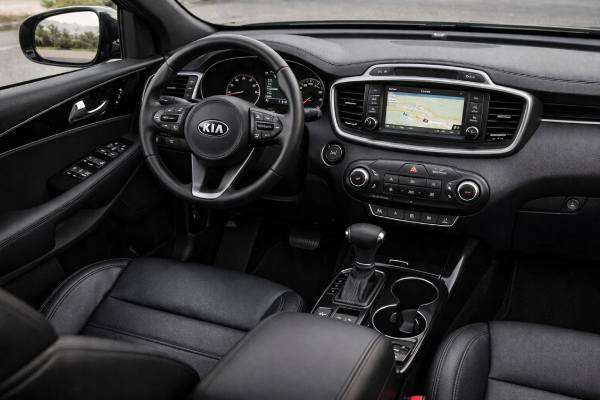
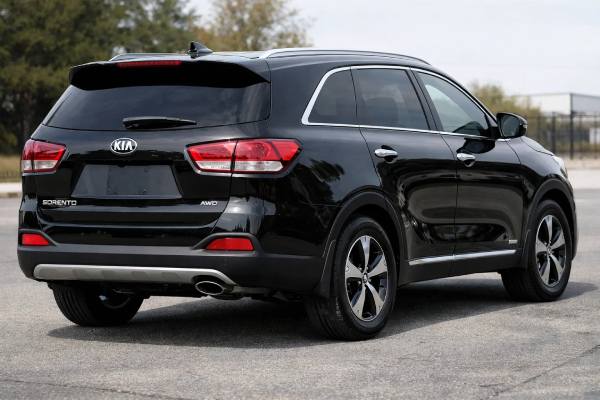
The 2015–2017 Kia Sorento (UM) with the 2.4-liter G4KJ inline-four and all-wheel drive is an ownership-focused configuration: it trades brisk acceleration for sensible running costs, predictable road manners, and the extra traction that matters on wet climbs, loose gravel, and winter commutes. The powertrain is straightforward—naturally aspirated direct injection paired with a conventional 6-speed automatic—so it tends to feel familiar to drivers moving from older crossovers.
Where this Sorento AWD stands out is its “do-everything” balance: stable highway manners, a comfortable ride, and usable cargo space—while still being sized for city parking. The key to a good long-term experience is maintenance discipline, especially oil-change consistency and timely AWD fluid service. Buy the right trim, verify recall and software actions, and this Sorento can be a practical, durable family SUV.
Owner Snapshot
- Confident foul-weather traction from a torque-on-demand AWD system with a lock mode for low-speed slippery conditions.
- Smooth, conventional 6-speed automatic feel—easy to live with in traffic and on long trips.
- Real-world fuel use rises quickly with speed; expect higher consumption above 110–120 km/h.
- Prioritize proof of engine-related service actions and consistent oil changes to reduce long-term risk.
- Service the AWD fluids about every 50,000–60,000 km (or sooner for towing, mountains, or heavy city use).
Guide contents
- Sorento UM AWD ownership fit
- Sorento UM AWD specifications
- Sorento UM AWD equipment and ADAS
- Known faults and service bulletins
- Maintenance schedule and buying tips
- AWD driving dynamics
- Competitors and alternatives
Sorento UM AWD ownership fit
Think of this Sorento as a “daily-driver SUV” first and a performance crossover second. The 2.4 GDI engine (185 hp) is tuned for steady, usable power rather than punch, and the AWD system’s main benefit is traction—not rock-crawling. For many owners, that is exactly the point: it feels calm, predictable, and easy to operate.
Where the AWD version makes the most sense
- Cold or wet climates: AWD helps the vehicle launch more cleanly on slick surfaces and reduces wheelspin when pulling into traffic on rain-polished asphalt.
- Hilly commutes and rough driveways: The extra driven axle helps on steep starts and uneven surfaces where a front-drive crossover can scrabble.
- Occasional light towing or heavy loading: Even if the tow rating is modest on the 2.4, AWD can improve stability and traction on boat ramps or wet grass—assuming you stay within limits.
Where it is not a perfect match
- Frequent high-speed highway travel: A naturally aspirated 2.4 needs revs to pass decisively, and aerodynamic drag rises fast above 110–120 km/h. Expect a noticeable fuel penalty at those speeds.
- You want fast acceleration with a full cabin: With passengers and cargo, the powertrain will feel “adequate” rather than strong. Plan passing maneuvers earlier.
- You want a low-maintenance AWD system: AWD adds service items—rear differential and transfer case fluids, plus more seals and joints to monitor.
Ownership traits that matter most
- The UM Sorento rides like a mid-size family SUV: comfortable, stable, and generally quiet for the class when tires and suspension bushings are healthy.
- The engine is direct-injected. Direct injection improves efficiency and cold-start behavior, but it can contribute to intake-valve deposits over time (more on prevention in the maintenance section).
- This generation’s long-term satisfaction often hinges on service history. If you are shopping used, a clean record and proof of recall completion matter more than mileage alone.
In short: choose this model if you value all-weather confidence and a conventional driving experience more than quick performance. If your typical use includes steep grades, winter roads, or mixed pavement quality, the AWD version is the better fit than the front-drive equivalent—so long as you budget for the extra fluid services.
Sorento UM AWD specifications
Below are practical, model-relevant specs for the Kia Sorento (UM) AWD with the 2.4 G4KJ engine and 6-speed automatic. Numbers can vary by market, trim, wheel size, and seating configuration. Use these as a decision guide, then verify exact values for your VIN and region in official documentation.
Powertrain and efficiency
| Item | Specification |
|---|---|
| Code | G4KJ |
| Engine layout and cylinders | Inline-4, DOHC, dual CVVT, 4 cylinders |
| Valves | 4 valves/cylinder (16-valve) |
| Bore × stroke | ~88.0 × 97.0 mm (3.46 × 3.82 in) |
| Displacement | 2.4 L (2,359 cc) |
| Induction | Naturally aspirated (NA) |
| Fuel system | Gasoline direct injection (GDI) |
| Compression ratio | 11.3:1 |
| Max power | 185 hp (138 kW) @ 6,000 rpm |
| Max torque | 241 Nm (178 lb-ft) @ 4,000 rpm |
| Timing drive | Chain |
| Rated efficiency (typical AWD) | ~10.7 L/100 km (22 mpg US combined) |
| Real-world highway @ 120 km/h | ~9.8–11.0 L/100 km (21–24 mpg US), depending on wind, tires, load |
Transmission and driveline
| Item | Specification |
|---|---|
| Transmission | 6-speed automatic with manual shift mode |
| Drive type | AWD (torque on demand) |
| AWD system note | Torque on demand with locking center differential mode (low-speed use) |
| Differential | Open differentials (front and rear), brake-based traction control |
Chassis and dimensions
| Item | Specification |
|---|---|
| Suspension (front/rear) | MacPherson strut / Multi-link |
| Steering | Electric power steering (EPS) |
| Brakes (front/rear) | Disc / Disc; ~320 mm (12.6 in) front, ~305 mm (12.0 in) rear (varies by trim) |
| Wheels and tires (common fitment) | 235/65 R17 or 235/60 R18 (market and trim dependent) |
| Ground clearance | 185 mm (7.3 in) |
| Approach / departure | 16.9° / 21.0° |
| Length / width / height | 4,760 / 1,890 / 1,689 mm (187.4 / 74.4 / 66.5 in) |
| Wheelbase | 2,779 mm (109.4 in) |
| Turning circle (kerb-to-kerb) | ~11.4 m (37.3 ft) |
| Curb weight (typical AWD 2.4) | ~1,742–1,800 kg (3,840–3,968 lb) |
| GVWR (varies by configuration) | ~2,340–2,490 kg (5,159–5,490 lb) |
| Fuel tank | ~71.2 L (18.8 US gal / 15.7 UK gal) |
| Cargo volume (typical) | 11.3 ft³ (320 L) behind 3rd row; 38.0 ft³ (1,076 L) behind 2nd row; 73.0 ft³ (2,067 L) behind 1st row (7-seat layout; method varies by region) |
Performance and capability (typical, real-world)
| Item | Typical range |
|---|---|
| 0–100 km/h (0–62 mph) | ~10.0–11.0 s |
| Top speed | ~185–195 km/h (115–121 mph) |
| Braking distance 100–0 km/h | ~39–42 m (128–138 ft) depending on tires |
| Towing capacity (common for 2.4) | ~907 kg (2,000 lb) braked (region-specific) |
| Payload | Typically ~450–600 kg (1,000–1,300 lb), trim dependent |
Fluids and service capacities (decision-grade)
These values can vary by transmission variant, cooler package, and market.
- Engine oil: API SN/ILSAC GF-5 class; typically 5W-20 or 5W-30 depending on climate. Capacity often ~4.8 L (5.1 US qt) with filter.
- Coolant: Phosphate-OAT long-life coolant; common 50/50 mix. Capacity often ~7–8 L total system.
- Automatic transmission fluid: OEM-spec ATF (model-specific). Service fill often ~3.5–4.5 L; total capacity higher.
- Rear differential / transfer case: OEM gear oil spec; service fills commonly under 1.0 L each.
Key torque specs (typical ranges)
- Wheel lug nuts: ~88–108 Nm (65–80 lb-ft)
- Engine oil drain plug: commonly ~30–40 Nm (22–30 lb-ft)
Always verify exact torque values for your VIN and fastener revision.
Sorento UM AWD equipment and ADAS
For 2015–2017 Sorento (UM), the 2.4 AWD setup typically lives in lower-to-mid trims in many markets. That is not a downside if your priority is value: you can get the traction benefits without paying for every luxury feature. The trick is knowing what changed by year and which options meaningfully affect safety and daily usability.
Trims and options that matter for this powertrain
Common trim positioning (varies by region)
- Entry trims (often L or LX equivalents): Most likely to pair the 2.4 with AWD as an option rather than standard. These trims may be 5-seat by default with an available 7-seat package.
- Mid trims: Sometimes keep the 2.4, but many markets push buyers toward a turbo 2.0 or V6 for higher trims. If you see a 2.4 AWD in a higher trim, confirm it is not a swapped powertrain or mis-listed ad.
Equipment differences that affect ownership
- Wheels and tires: 17-inch packages usually ride more comfortably and cost less to replace. 18-inch packages can sharpen steering response but can be noisier with certain tire models.
- Seat configuration: A 7-seat Sorento often has slightly different cargo numbers and a bit more weight, which you feel during acceleration.
- Tow prep: Some markets bundle a larger radiator, alternator, or hitch wiring in a tow package. If you plan to tow, look for evidence it was factory-equipped, not improvised.
Quick identifiers when shopping
- Confirm the AWD lock button presence and operation (or drive-mode dial, depending on market).
- Check the door-jamb tire placard for factory tire size and axle ratings.
- Verify the engine code via VIN decode or official service documentation rather than only the seller description.
Safety ratings and what they mean here
Crash-test ratings generally apply to the vehicle structure and restraint systems, not the driven wheels. So AWD does not “raise” a crash score by itself, but it can reduce the likelihood of certain loss-of-traction crashes in poor weather when paired with good tires.
IIHS (U.S.) notes
- This generation earned strong crashworthiness marks in key tests for the period, and awards often depended on equipment such as front crash prevention and headlight performance.
- Headlight ratings can vary by trim and option package; this matters because visibility is a safety feature you use every night.
Euro NCAP notes
- Euro NCAP results emphasize adult/child occupant protection and also score safety assist technology. For early UM-era testing, expect strong occupant scores, with pedestrian and driver-assist scores depending heavily on what was standard at the time.
Driver assistance systems (ADAS) and calibration realities
Depending on market and trim, you may see:
- AEB (autonomous emergency braking): Sometimes optional in this era; confirm by build sheet, not just by a windshield camera housing.
- BSD and RCTA: Blind-spot detection and rear cross-traffic alert are high-value for family use.
- Lane departure warning: Often optional; earlier systems may beep or vibrate rather than actively steer.
- Parking sensors and camera: Helpful, but camera quality varies with model year.
Service implication: After a windshield replacement, bumper removal, or alignment, some camera- or radar-based systems require calibration. If ADAS matters to you, ask for proof that calibrations were completed correctly after collision repairs.
Known faults and service bulletins
The Sorento UM with the G4KJ engine can be a solid long-term SUV when maintained well, but it has a few “known patterns” that are worth understanding. Below is a practical map by prevalence and cost tier, plus what to look for during inspection and test drive.
Engine and fuel system (G4KJ)
Common (low to medium cost)
- Oil seepage from gaskets and seals: Look for wetness around the valve cover perimeter and lower front engine area.
Symptom → burning-oil smell after a drive, small spots on driveway
Remedy → reseal, replace PCV valve if crankcase pressure is high - Ignition coils and plugs aging: Misfires under load or at idle.
Symptom → flashing check-engine light, rough running
Remedy → plug replacement at interval; coils as needed
Occasional (medium cost)
- Carbon buildup (direct injection): Intake valves can accumulate deposits, especially with many short trips and long oil intervals.
Symptom → slightly rough cold idle, sluggish response, reduced fuel economy
Remedy → intake cleaning (often walnut blasting), improve driving pattern and oil discipline - Cooling system wear items: Thermostat and water pump aging can show up as slow warm-up, temperature swings, or coolant loss.
Symptom → coolant smell, low reservoir level
Remedy → pressure test, replace worn components
Rare but high impact (high cost)
- Bottom-end bearing wear risk on some Theta II-family engines: This is the reason service actions and software updates matter so much.
Symptom → knocking under load, metal in oil, oil-pressure warnings, sudden loss of power
Remedy → immediate diagnosis; verify recall and monitoring software status; do not continue driving if knock is present
Transmission (6-speed automatic)
Occasional (medium cost)
- Shift flare or delayed engagement: Often tied to fluid condition, adaptation, or valve body wear.
Symptom → higher revs before upshift, hesitation selecting Drive
Remedy → fluid service with correct spec; scan for TCU codes; update software where applicable
AWD system and driveline (added complexity vs FWD)
Common (low cost if proactive)
- Neglected AWD fluids: Transfer case and rear differential oil degrade with heat cycles.
Symptom → light whine, driveline “tightness,” or early wear without clear warning
Remedy → schedule fluid changes; use correct gear oil spec
Occasional (medium cost)
- Seepage at seals: Look around the transfer case and rear differential.
Symptom → damp housing, oily residue, drip marks
Remedy → reseal before running low
Rare (high cost)
- Prop shaft or coupling wear: More likely with harsh use, mismatched tires, or long intervals.
Symptom → vibration under acceleration, clunk on takeoff
Remedy → diagnose joints/couplers, check mounts, verify tire sizes match
Recalls, TSBs, and how to verify
For this model family, you want written proof of:
- Recall completion (dealer printout or official VIN lookup result)
- Software updates (engine monitoring, drivability fixes, or transmission logic updates)
Pre-purchase checks to request
- Full oil-change history (dates, mileage, and oil grade).
- Proof of AWD fluid service (or budget to do it immediately).
- Scan report for stored and pending codes, not just a dash-light check.
- Cold-start test and a fully warmed-up test drive, listening for knock, rattle, or driveline vibration.
Maintenance schedule and buying tips
A Sorento AWD is easiest to own when you treat it like a system: engine, transmission, AWD hardware, brakes, and tires all depend on consistent service. The schedule below is a practical baseline. If you drive in heavy city traffic, short trips, mountains, extreme heat or cold, or you tow, use the “severe” intervals.
Practical maintenance schedule (distance and time)
Every 10,000–12,000 km or 12 months (severe: 6,000–8,000 km)
- Engine oil and filter (correct viscosity for climate)
- Inspect for leaks, check belt condition, top up fluids
- Tire pressure check and tread inspection
Every 15,000 km
- Tire rotation (AWD is sensitive to tire circumference differences)
- Alignment check if you see uneven wear
Every 30,000 km
- Engine air filter (sooner in dusty areas)
- Cabin air filter
- Brake inspection (pads, rotors, slide pins)
- Inspect AWD hardware for seepage and torn boots
Every 50,000–60,000 km (severe: 30,000–40,000 km)
- Transfer case fluid
- Rear differential fluid
- Automatic transmission fluid service (especially if you tow or see lots of heat)
- Brake fluid (or every 2 years, whichever comes first)
Every 160,000–170,000 km (or as specified for your market)
- Spark plugs (often long-life iridium, but confirm exact interval for your region)
- Cooling system service per official interval (many long-life coolants are 10 years/160,000 km initial, then shorter thereafter)
Battery and charging
- Test the 12 V battery annually after year 4; replace proactively around 5–7 years depending on climate.
Fluids, specifications, and “don’t guess” items
- Use the exact ATF specification required for your transmission variant. “Universal” fluids can cause shift quality problems.
- Use the correct coolant chemistry (phosphate-OAT type is common for this family). Mixing coolant types can reduce corrosion protection.
- For AWD gear oils, match the manufacturer’s spec, not just viscosity. Additives matter for wear protection.
Buyer’s guide: what to inspect on a used example
Walk-around and underside
- Uneven tire wear (alignment issues or worn suspension bushings)
- Oil wetness around engine and transmission cases
- Transfer case and rear differential seepage
Test drive
- Cold start: listen for harsh metallic knock or persistent ticking
- Warm drive: confirm smooth upshifts and steady lock-up in higher gears
- Low-speed tight turns: listen for binding or clunks (also check tire mismatch)
Paperwork that adds real value
- Recall completion proof
- Records showing short, consistent oil intervals
- Documentation of AWD fluid changes
Long-term durability outlook
With documented maintenance, the Sorento UM AWD 2.4 can deliver strong value: it is roomy, comfortable, and not overly complex compared with turbocharged or hybrid alternatives. The main risks come from neglected oil service, unknown recall status, and ignored AWD fluids. If those are handled, the ownership experience tends to be stable and predictable.
AWD driving dynamics
On the road, the Sorento UM AWD feels like a traditional mid-size crossover: calm steering, a settled ride, and a chassis tuned for comfort over sport. The real story is how the 2.4-liter engine and AWD system behave together in everyday conditions.
Ride, handling, and NVH
Ride quality: The suspension does a good job of smoothing broken pavement, especially on 17-inch tires with taller sidewalls. With 18-inch wheels, impacts can feel sharper, and tire choice becomes more important for road noise.
Handling: This is a stability-first setup. The Sorento tracks straight on the highway and stays composed in long corners, but you will notice body roll if you push it. The steering is light-to-moderate in effort and prioritizes predictability rather than feedback.
Braking feel: When pads and rotors are healthy, braking is consistent and easy to modulate. If you feel pulsation, it is often rotor runout or uneven pad deposits—common reconditioning items on used SUVs.
Powertrain character (2.4 GDI + 6AT)
The naturally aspirated 2.4 delivers its power higher in the rev range. Around town it is smooth and responsive enough, but:
- Passing power requires planning. Expect a downshift and a rise in revs when you ask for acceleration at 80–110 km/h.
- Full loads amplify the “adequate” feel. With passengers, cargo, and AWD weight, it can feel busy on hills.
- Transmission behavior is conventional. The 6-speed typically shifts smoothly and avoids the rubber-band feel some drivers dislike in CVTs.
Real-world efficiency
A realistic pattern for many owners:
- City-heavy driving: ~11.5–13.5 L/100 km (17–20 mpg US), depending on traffic and warm-up time
- Highway at 100–110 km/h: ~9.0–10.0 L/100 km (24–26 mpg US)
- Highway at 120 km/h: ~9.8–11.0 L/100 km (21–24 mpg US)
Cold weather, short trips, and roof boxes can push numbers higher quickly.
Traction and control
The AWD system is designed for grip management, not extreme terrain:
- In normal driving, it sends most torque to the front and adds rear torque when slip is detected.
- Lock mode can help on snow starts or muddy inclines at low speed, but it does not replace proper tires or ground clearance limits.
- AWD behavior depends heavily on matching tires. Keep all four tires the same brand, size, and similar tread depth to avoid driveline strain.
Towing and load behavior
With a modest tow rating, the best use case is light trailers and careful loading:
- Keep tongue weight within spec and distribute cargo low and centered.
- Expect a noticeable fuel penalty under tow and on long grades.
- If you tow regularly, shorten ATF and AWD fluid intervals to protect against heat-related wear.
Competitors and alternatives
The Sorento UM AWD 2.4 sits in a crowded space. Its strongest angle is balanced practicality: it offers real family space and a comfortable ride without forcing you into a turbo engine or premium fuel. Still, rival choices may fit better depending on your priorities.
If you want maximum reliability simplicity
Naturally aspirated rivals often appeal to owners who prefer fewer moving parts and predictable maintenance. In this comparison, the Sorento’s advantage is cabin and cargo usefulness, while the trade-off is that you must be more disciplined about oil service and recall verification for this engine family.
Best match: You want a comfortable, roomy SUV and you are willing to follow a strict maintenance plan.
If you want stronger performance
Competitors with V6 engines or turbocharged fours typically feel more effortless at highway speeds and under load. They can also be better for frequent towing. The Sorento 2.4 can do the job, but it will not feel relaxed when pushed hard with passengers and cargo.
Best match: You drive fast highways, live in mountainous areas, or regularly carry a full cabin.
If you want the best winter behavior
AWD helps, but tires matter more than drivetrain in many winter scenarios. The Sorento’s torque-on-demand setup is effective for daily winter roads, and the lock mode is a plus for starting traction. However, some rivals offer more sophisticated AWD strategies or more ground clearance in certain trims.
Best match: You value predictable winter traction and you will invest in proper seasonal tires.
Value verdict: who should choose this Sorento AWD?
Choose the Sorento UM AWD 2.4 if you want:
- A comfortable family SUV with usable cargo space and stable highway manners
- AWD for real weather and traction benefits, not for off-road extremes
- A conventional automatic transmission feel
Consider a different powertrain or a rival if:
- You want quick acceleration with a loaded cabin
- You tow frequently or drive steep grades daily
- You cannot verify recall status and service history on a used example
Smart shopping strategy: prioritize condition and documentation over trim badges. A well-documented, properly serviced Sorento AWD can be a better buy than a higher-trim example with gaps in maintenance and unknown software or recall history.
References
- 2017 Kia Sorento Specifications 2017 (Specifications)
- Gas Mileage of 2017 Kia Sorento 2017 (Fuel Economy Database)
- 2017 Kia Sorento 2017 (Safety Rating)
- Kia Sorento 2014 (Safety Rating)
- Owner’s Manuals and Documents 2026 (Owner’s Manual Portal)
Disclaimer
This article is for informational purposes only and is not a substitute for professional inspection, diagnosis, or repair. Specifications, torque values, service intervals, and procedures can vary by VIN, market, drivetrain calibration, and installed equipment. Always verify details using official manufacturer service information and the documentation specific to your vehicle.
If this guide helped you, please consider sharing it on Facebook, X (Twitter), or your favorite forum to support our work.