


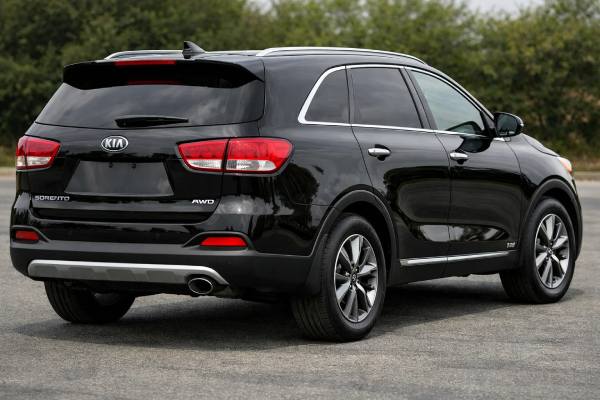
The 2015–2017 Sorento UM with the 2.2 CRDi diesel (D4HB) and AWD is one of those rare family SUVs that feels built for real-world work: long motorway days, winter weather, and towing without constant strain. The diesel’s strong mid-range torque suits the Sorento’s weight and cabin space, while the AWD system adds traction and stability when roads turn slick or when you’re pulling a trailer up a wet ramp. The ownership trade-off is complexity. Compared with FWD, AWD adds fluids, seals, bearings, and an electronically managed coupling that all benefit from preventative service. And like any modern diesel, this Sorento asks you to take emissions hardware seriously—especially the DPF (diesel particulate filter) and EGR system—because short-trip use can create expensive headaches. Maintain it with the correct low-ash oil, service the drivetrain on time, and the Sorento diesel AWD can be a durable, comfortable high-mileage SUV.
Key Takeaways
- Strong torque delivery suits towing and full-load motorway driving without feeling “busy.”
- AWD improves winter traction and low-speed grip on wet surfaces compared with FWD.
- Extra AWD hardware adds fluid services and wear points; skipping them raises long-term costs.
- Keep DPF and EGR healthy by avoiding endless short trips; plan regular fully-warm drives.
- Change engine oil and filter at least every 12 months (or sooner with heavy city use).
Jump to sections
- Sorento UM AWD diesel overview
- Sorento UM AWD D4HB specifications
- Sorento UM AWD equipment and safety
- Diesel AWD reliability and service actions
- Maintenance plan and buyer’s checklist
- Real driving and efficiency
- How it stacks up against rivals
Sorento UM AWD diesel overview
This Sorento is best understood as a torque-led family SUV with a traction upgrade. The D4HB 2.2 CRDi diesel is tuned to deliver its strongest work in the middle of the rev range, where you spend most of your time when merging, passing, climbing grades, or towing. In practical terms, that means fewer frantic downshifts and less “planning ahead” compared with smaller petrol engines, especially when the vehicle is full of passengers and luggage.
Adding AWD changes more than just snow performance. The system typically uses an electronically controlled coupling to feed the rear axle when the front tyres begin to slip or when conditions suggest extra stability is needed. In normal cruising it may behave mostly like a front-driven car, then blend rear drive in as required. That helps on wet roundabouts, steep gravel driveways, muddy campsites, and winter roads—places where the diesel’s torque can overwhelm front tyres in a FWD setup. It can also make towing feel calmer because the system reduces wheelspin when pulling away with a load.
The price of that capability is maintenance discipline. AWD adds a rear differential, a coupling or transfer unit, extra seals, and more bearings. These parts are reliable when lubricated and inspected, but they can become expensive when ignored. If you plan to keep the car long term, budgeting for drivetrain fluid services is smart ownership, not optional spending.
The other core theme is diesel aftertreatment. The Sorento’s emissions systems (DPF and EGR) are designed around regular full-temperature operation. If the vehicle’s life is mostly short, cold runs, soot loads rise and the car may try frequent regenerations or set fault codes. Owners who match the diesel to mixed or motorway driving typically have an easier time than those who use it as a pure city shuttle.
A well-chosen Sorento UM AWD diesel is an excellent “do-everything” SUV: it cruises comfortably, hauls confidently, and handles winter conditions with fewer compromises—provided you maintain both the engine and the AWD hardware as systems.
Sorento UM AWD D4HB specifications
The tables below focus on the 2015–2017 Sorento UM with the D4HB 2.2 CRDi diesel and AWD. Exact figures vary by market, seating configuration, wheel package, and transmission, so performance, weights, and capacities are presented as typical ranges where needed.
Powertrain and efficiency
| Item | Specification |
|---|---|
| Engine code | D4HB |
| Engine layout and cylinders | Inline-4 (I-4), DOHC, 16 valves |
| Bore × stroke | Varies by version/market (verify by service data for your VIN) |
| Displacement | 2.2 L (2,199 cc) |
| Induction | Turbocharged (typically variable-geometry) |
| Fuel system | Common-rail direct injection |
| Compression ratio | Market-dependent (diesel high-compression design) |
| Max power | 200 hp (147 kW) @ 3,800 rpm |
| Max torque | 441 Nm (325 lb-ft) @ ~1,750–2,750 rpm |
| Timing drive | Chain |
| Rated efficiency | Often ~6.3–7.4 L/100 km (37–32 mpg US / 45–38 mpg UK), test-cycle dependent |
| Real-world highway @ 120 km/h (75 mph) | Often ~7.8–9.0 L/100 km (30–26 mpg US / 36–31 mpg UK) depending on tyres and load |
Transmission and driveline
| Item | Typical setup |
|---|---|
| Transmission | Commonly 6-speed automatic; manual availability depends on market |
| Drive type | AWD (on-demand coupling with ESC integration) |
| Differential type | Open front and rear (traction managed by ESC/brake control) |
| AWD service points | Rear diff oil + coupling/transfer unit oil (exact layout varies) |
Chassis and dimensions
| Item | Typical range / note |
|---|---|
| Suspension (front/rear) | MacPherson strut / multi-link |
| Steering | Electric power steering |
| Brakes | 4-wheel discs (front vented); sizes vary by trim |
| Popular tyre sizes | 235/65 R17, 235/60 R18, or 235/55 R19 (market/trim dependent) |
| Ground clearance | ~185 mm (7.3 in) typical |
| Length / width / height | ~4,780 mm (188.2 in) / 1,890 mm (74.4 in) / ~1,685 mm (66.3 in) |
| Wheelbase | ~2,780 mm (109.4 in) |
| Turning circle (kerb-to-kerb) | ~11.0 m (36.1 ft) typical |
| Curb weight | Typically ~1,850–1,980 kg (4,079–4,365 lb) depending on seating and wheels |
| Fuel tank | Often ~71 L (18.8 US gal / 15.6 UK gal), market dependent |
Performance and capability (typical)
| Item | Typical figure |
|---|---|
| 0–100 km/h (0–62 mph) | ~9.0–10.0 s depending on transmission and wheels |
| Top speed | ~195–205 km/h (121–127 mph) market dependent |
| Braking distance 100–0 km/h | ~36–41 m depending on tyres and pads |
| Towing capacity | Often up to ~2,000 kg (4,409 lb) braked in many markets (verify on VIN plate) |
| Payload | Often ~550–700 kg (1,213–1,543 lb) market dependent |
Fluids and service capacities (decision-useful)
| Item | Practical guidance |
|---|---|
| Engine oil | Low-SAPS oil to protect aftertreatment; commonly ACEA C2/C3, often 5W-30 |
| Oil change discipline | Short-trip or towing use: shorten intervals |
| Coolant | Long-life ethylene glycol mix per label/service literature |
| Automatic transmission fluid | Use the exact approved ATF for the installed gearbox (VIN-specific) |
| Rear differential / AWD coupling | Use specified gear oil/transfer fluid per unit (VIN-specific) |
| A/C refrigerant | Check under-hood label (varies by production year/market) |
Key torque specs (common “must verify” items):
- Wheel lug nuts: ~90–110 Nm (66–81 lb-ft)
- Engine oil drain plug: ~30–40 Nm (22–30 lb-ft)
- Brake caliper carrier bolts: commonly ~90–120 Nm (66–89 lb-ft)
Safety and driver assistance (platform-level)
| Item | Notes |
|---|---|
| Euro NCAP rating (Sorento tested 2014) | 5 stars; strong adult and child occupant protection scores for that test version |
| Core safety systems | ESC, hill-start assist, multiple airbags (count varies by market) |
| ADAS availability | AEB/ACC/lane support vary by trim and country; verify by VIN equipment list |
Sorento UM AWD equipment and safety
Because trim names differ by region, it helps to think in “equipment themes” rather than badges. Most 2015–2017 Sorento UM line-ups offer three broad levels: a practical base model, a mid-grade family spec, and a higher trim focused on comfort and technology. For the AWD diesel, you should also pay attention to options that change the vehicle’s day-to-day behavior—wheels, towing equipment, seating configuration, and driver assistance.
Trims and options: what matters on this powertrain
- Wheel and tyre packages: 17-inch wheels usually deliver the best ride comfort and pothole resilience, which can matter on heavier diesels. 19-inch wheels can sharpen steering response but often raise tyre replacement cost and increase impact harshness.
- Seating (5 vs 7): A third row is valuable, but it affects cargo depth and sometimes curb weight. For frequent long trips with luggage, many owners prefer the packaging of the 5-seat version unless they truly need the third row.
- Tow preparation: Factory tow wiring and correct control modules matter. A well-integrated tow setup reduces electrical gremlins and improves trailer lighting reliability.
- Thermal management: Higher trims sometimes include more equipment that increases electrical load (heated seats, more speakers, extra lighting). That’s not “bad,” but it makes battery health and charging system condition more important as the car ages.
Quick identifiers when shopping used
- Tyre size (on the sidewall) is the quickest clue to original wheel package and ride character.
- Rear HVAC controls and roof vents often correlate with higher trims and family-focused specs.
- Buttons for driver assistance (lane support, collision warning) indicate the car has the sensors and modules that may require calibration after repairs.
Safety ratings: interpreting them correctly
The Sorento achieved a five-star score in the Euro NCAP test cycle of its era. That’s meaningful, but two practical points help owners make better decisions:
- Test version matters. Ratings are tied to the procedures and thresholds of that year. A 5-star vehicle from 2014 is not automatically “equal” to a 5-star vehicle tested under later, tougher protocols.
- Condition matters even more. Tyres, brakes, and suspension bushings have an outsized effect on real stopping distances and emergency stability—especially on a heavier SUV.
Safety systems and ADAS: what to verify
Across many markets, ESC and multiple airbags are standard, but advanced driver assistance is more variable. If your used Sorento has AEB, adaptive cruise, or lane support, treat these as systems with service implications:
- Windshield replacement or front-end repairs can require calibration.
- A poorly repaired bumper can interfere with sensor alignment.
- Battery voltage health can affect module stability and fault frequency.
For family buyers, a good rule is simple: prioritize a well-maintained example with strong tyres and a clean brake service history over a higher trim with uncertain maintenance. Safety is partly design—and partly upkeep.
Diesel AWD reliability and service actions
Reliability on the D4HB Sorento AWD is less about one “fatal flaw” and more about patterns: soot management, oil discipline, and drivetrain lubrication. Below is a practical severity-and-prevalence map to guide ownership and pre-purchase inspections.
Common issues (most likely on higher-mileage or city-driven diesels)
- DPF loading and regeneration problems (common / medium to high cost if ignored)
- Symptoms: warning lights, frequent regen behavior (fan running after shutdown), reduced power, rising fuel use.
- Likely causes: repeated short trips, interrupted regens, incorrect oil type (non low-SAPS), sensor problems that misreport soot loading.
- Remedy: correct oil spec, diagnose pressure sensor and lines, ensure regens complete, and address EGR/boost leaks that raise soot output.
- EGR system fouling (common / medium cost)
- Symptoms: hesitation, rough idle, smoke under load, EGR-related fault codes.
- Root cause: soot accumulation from low-load driving and heat cycling.
- Remedy: cleaning or replacement depending on severity; confirm there is no underlying boost leak or sensor fault driving excess soot.
- Boost leaks in intercooler plumbing (common / low to medium cost)
- Symptoms: reduced torque, whooshing noise, oily residue at hose joints.
- Remedy: pressure-test intake path; replace split hoses and tired clamps.
Occasional issues (worth checking, not guaranteed)
- Turbo control/actuation faults (occasional / high cost if it escalates)
- Symptoms: inconsistent power, limp mode, boost control codes.
- Root causes: actuator wear, sticky variable vanes, or control solenoid issues.
- Remedy: proper diagnosis matters; replacing the wrong part gets expensive quickly.
- AWD driveline fluid neglect (occasional / medium to high cost)
- Symptoms: humming, vibration, binding sensations, or noise that changes with speed/load.
- Root causes: old gear oil, water ingress, seal wear, or long-term overheating of lubricant.
- Remedy: service rear diff and coupling/transfer unit fluids on a preventative schedule; investigate noises early.
- Engine mounts and torque-related shunt (occasional / medium cost)
- Symptoms: thump during gear changes, vibration at idle.
- Remedy: inspect mounts and torque struts; heavy diesel torque can accelerate wear.
Rare but expensive (screen carefully)
- High-pressure fuel system contamination (rare / very high cost)
- Symptoms: hard starting, injector faults, metallic debris in fuel filter.
- Remedy: can require pump/injector replacement; frequent fuel filter service helps reduce risk.
- Timing chain stretch (very high mileage / poor oil history) (rare / high cost)
- Symptoms: cold-start rattle, timing correlation faults, roughness.
- Remedy: inspect timing components; address early before secondary damage.
Recalls, TSBs, and software updates
Official service actions vary by market. Instead of guessing, use two checks every time you evaluate a used Sorento:
- Run an official VIN recall lookup (for example via NHTSA for US vehicles or the local importer portal).
- Request dealer documentation showing recall completion and module updates.
Software updates can change how the car monitors emissions components, how the transmission behaves under load, and how fault thresholds are applied. A clean record here often separates a stable diesel from a frustrating one.
Maintenance plan and buyer’s checklist
If you want the Sorento diesel AWD to stay dependable, maintenance needs to be intentional rather than reactive. The goal is to protect three expensive areas: the turbocharged diesel core, the emissions hardware, and the AWD drivetrain.
Practical service schedule (real-world oriented)
Always confirm your VIN’s official schedule, but the plan below is a solid “owner’s baseline” for longevity.
| Item | Interval (typical) | Why it matters |
|---|---|---|
| Engine oil and filter | 15,000–20,000 km (10,000–12,500 mi) or 12 months | Short trips and towing justify shorter intervals; protects turbo and timing chain. |
| Engine air filter | 30,000 km (20,000 mi) or 24 months | Dirty filters increase soot and reduce efficiency. |
| Cabin air filter | 15,000–30,000 km (10,000–20,000 mi) | Improves HVAC performance and comfort. |
| Diesel fuel filter | 30,000–60,000 km (20,000–40,000 mi) | Helps protect high-pressure pump and injectors. |
| Brake fluid | Every 2 years | Moisture reduces braking performance under load. |
| Coolant | 5 years (or per official spec) | Prevents corrosion and overheating risk. |
| Automatic transmission fluid | 60,000–90,000 km (40,000–60,000 mi) | Towing and city heat accelerate fluid aging. |
| Rear differential oil | 60,000–90,000 km (40,000–60,000 mi) | Prevents bearing and gear wear. |
| AWD coupling/transfer fluid | 60,000–90,000 km (40,000–60,000 mi) | Maintains smooth torque transfer and reduces noise risk. |
| Tyre rotation + alignment check | Every 10,000–12,000 km (6,000–7,500 mi) | Protects tyres and improves stability. |
| 12 V battery test | Annually after year 4 | Diesels need strong cranking and stable module voltage. |
Fluids and specifications that owners should not “wing”
- Engine oil: Use the correct low-SAPS specification (commonly ACEA C2/C3) to protect the DPF. Wrong oil can shorten DPF life.
- AWD fluids: Rear diff oil and coupling/transfer fluids must match the unit. Even within the same model, components can differ by market and build date.
- ATF: Use only the approved transmission fluid; “universal” ATF is a common cause of long-term shift issues.
Buyer’s checklist (diesel + AWD focused)
- Service evidence: Confirm oil services occurred on time and that invoices specify the oil standard.
- Driving pattern clues: Ask how the car was used. Mostly city, short trips, and long idle time raise DPF/EGR risk.
- Test drive under load: On a warm engine, acceleration should feel smooth and strong without surging or limp behavior.
- AWD behavior: On a tight turn at low speed, there should be no harsh binding or abnormal grinding noises.
- Underbody inspection: Look for seepage around drivetrain seals and check for impact damage that could affect alignment and sensors.
- Tyres: AWD systems prefer matched tyres with similar tread depth; big differences can stress the coupling over time.
What to seek (and what to avoid)
- Seek: documented drivetrain fluid services, consistent oil discipline, and evidence of regular longer drives.
- Avoid or price accordingly: “DPF light was cleared,” unknown fluid history, mismatched tyres, or persistent warning lights.
A Sorento diesel AWD bought well and serviced as a system can be a strong long-term vehicle. Bought cheaply with missing history, it can become a chain of expensive “diesel mysteries.”
Real driving and efficiency
On the road, the Sorento UM diesel AWD leans into stability and effortlessness. It is not a lightweight SUV, but it feels composed at motorway speeds and relaxed when loaded. The diesel’s torque means you spend less time chasing revs and more time maintaining speed with small throttle inputs—exactly what you want in a family vehicle used for trips.
Ride, handling, and NVH
- Ride comfort: 17-inch wheels typically deliver the most forgiving ride, especially over broken surfaces. Larger wheels can feel sharper but also noisier on coarse asphalt.
- Straight-line stability: The Sorento generally tracks well at speed; correct alignment and quality tyres are the biggest factors in how “confident” it feels.
- Cornering balance: Expect safe understeer. AWD helps with traction on corner exit in poor conditions, but it doesn’t turn the Sorento into a sporty crossover.
- Cabin noise: At cruise, wind and tyre noise often matter more than engine noise. Tyre choice can transform the vehicle’s perceived refinement.
Powertrain character and transmission behavior
The D4HB’s most useful strength is its mid-range pull. In everyday driving, it tends to feel strong from roughly 1,700 rpm upward, which supports easy overtakes and hill climbs without dramatic downshifts. With an automatic, you’ll usually feel one decisive kickdown and then a sustained surge of torque. With a manual (where offered), the engine is flexible, but clutch and dual-mass flywheel condition become key wear considerations over time.
Drive modes (where fitted) often change throttle mapping and shift strategy more than they change the engine itself. For towing, a steadier throttle approach and conservative shift behavior generally keep temperatures under control.
Real-world efficiency expectations
Real consumption depends heavily on speed, temperature, tyres, and use of AWD traction.
- City (stop-start): ~8.5–10.0 L/100 km (28–24 mpg US / 33–28 mpg UK)
- Highway (100–120 km/h / 60–75 mph): ~7.8–9.0 L/100 km (30–26 mpg US / 36–31 mpg UK)
- Mixed driving: ~8.0–9.2 L/100 km (29–26 mpg US / 35–31 mpg UK)
Cold weather can push numbers upward because diesel warm-up is slower and the car may manage DPF regeneration more frequently.
Towing and load: what changes
This is where the diesel AWD version earns its keep. Expect stable pulling behavior and confident low-speed traction, but plan for fuel use to rise significantly:
- A moderate trailer often adds 20–40% consumption depending on speed and terrain.
- Keep transmission and drivetrain fluids on a conservative schedule if you tow.
- Watch tyre pressures and brake condition; the Sorento’s weight makes neglected brakes show up quickly.
For owners who regularly carry people, gear, and trailers through mixed conditions, this powertrain and drivetrain combination is one of the most sensible ways to use a midsize SUV.
How it stacks up against rivals
The Sorento UM diesel AWD competes on a specific promise: big torque, real space, and confident all-weather traction at a used price that is often friendlier than newer European rivals. Whether it’s the best choice depends on what you value most—modern driver assistance, low maintenance complexity, or towing and winter confidence.
Hyundai Santa Fe (similar era diesel where available)
Why cross-shop: Similar size and mission, often with comparable diesel torque.
Sorento advantage: Strong “family SUV” packaging and typically a solid towing-friendly feel.
Santa Fe advantage: Depending on trim and market, feature mixes and suspension tuning may suit different preferences.
Nissan X-Trail (diesel variants in some markets)
Why cross-shop: Often lighter on its feet and sometimes cheaper on consumables.
Sorento advantage: Stronger torque delivery and a more robust feel when loaded or towing.
X-Trail advantage: Can be easier to live with in dense city driving and parking.
Škoda Kodiaq (2.0 TDI, later overlap)
Why cross-shop: Excellent space efficiency and, in later years, more modern ADAS availability.
Sorento advantage: Often stronger value on the used market and a torque-rich feel that suits long trips.
Kodiaq advantage: Newer platform refinement and, depending on year, more advanced assistance tech.
Toyota and Honda alternatives (market dependent)
Where comparable diesel or AWD crossovers exist, these brands often win on perceived reliability and resale. The Sorento’s counterpoint is straightforward: it can deliver a lot of SUV for the money, and the 2.2 diesel’s torque is a strong match for real-world loads—if you buy a well-maintained example.
The practical verdict
Choose the Sorento UM diesel AWD if you want:
- Confident winter traction and towing stability
- Relaxed motorway performance with low-rpm torque
- Strong family space and comfort with a sensible used price
Consider alternatives if:
- Your driving is almost entirely short urban trips (DPF/EGR risk rises)
- You want the newest ADAS suite as a priority
- You prefer the lowest possible mechanical complexity for long-term ownership
In this segment, the best buy is rarely the cheapest listing. The best buy is the Sorento with the clearest service records—especially oil discipline and AWD fluid history—and a driving pattern that matches how modern diesels stay healthy.
References
- Kia Sorento – Euro NCAP Results 2014 2014 (Safety Rating)
- Check for Recalls: Vehicle, Car Seat, Tire, Equipment | NHTSA 2026 (Recall Database)
- Recalls 2026 (Recall Lookup)
- Engine Oil Grades and Capacities 2023 (Service Maintenance)
Disclaimer
This article is for informational purposes only and is not a substitute for professional inspection, diagnosis, or repair. Specifications, torque values, service intervals, and procedures vary by VIN, market, drivetrain hardware, and equipment; always verify details against official Kia service documentation for your exact vehicle.
If this guide helped, please consider sharing it on Facebook, X (Twitter), or another platform to support our work.