

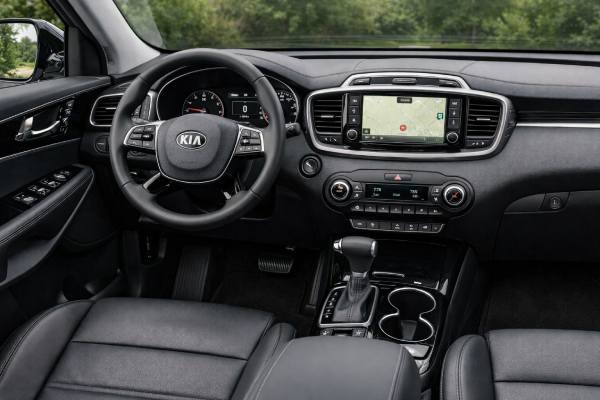
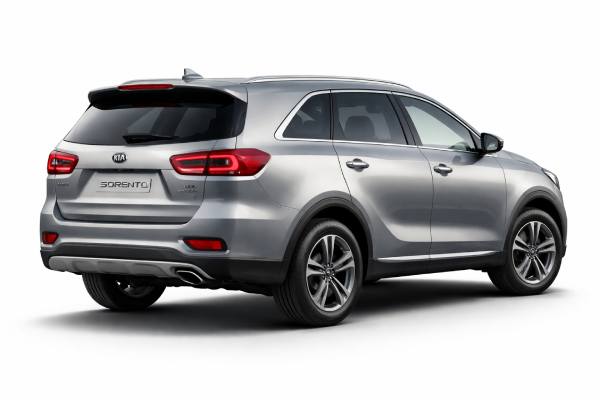
The facelifted Kia Sorento (UM) with the G4KH 2.0-liter turbo gasoline engine is a “big-family SUV” that tries to feel smaller than it is. You get strong midrange pull for effortless overtakes, a relaxed highway posture, and a chassis tuned more for stability than sharpness. The trade-off is that this powertrain asks for disciplined maintenance: clean oil, careful warm-up habits, and attention to cooling and boost-related hoses keep it happy long-term. For buyers who want three-row practicality without stepping up to a V6, this 2.0T is often the sweet spot—especially when paired with the right safety tech and a drivetrain setup that matches your climate and towing needs.
Owner Snapshot
- The 2.0T’s low-rpm torque makes the Sorento feel lighter than its size in everyday traffic and passing.
- Highway comfort is a highlight: stable tracking, calm steering, and good long-trip manners.
- AWD versions add winter traction and confidence on wet grades, but bring extra fluid services and wear points.
- Watch for turbo/PCV/oil-consumption symptoms if oil changes were stretched or the engine was frequently short-tripped.
- Plan engine oil changes every 10,000 km or 12 months (whichever comes first), and sooner under severe use.
Navigate this guide
- Kia Sorento UM 2.0T in focus
- Kia Sorento UM G4KH spec tables
- Kia Sorento UM trims and safety tech
- Reliability patterns and known faults
- Maintenance plan and buyer tips
- Road feel and real economy
- Rivals to cross-shop
Kia Sorento UM 2.0T in focus
The facelift 2018–2020 Sorento UM is built around a simple idea: family space and towing usefulness first, with a more “car-like” driving posture than truck-based SUVs. The G4KH 2.0T (Theta-family turbo four) fits that mission well because it delivers usable torque early. In practice, that means fewer downshifts on gentle hills and smoother merges than a naturally aspirated four of similar size. It also helps the Sorento stay competitive in real traffic even when loaded with people and luggage.
Packaging is one of the Sorento’s strongest points. The cabin offers upright seating, wide doors, and a sensible second row that’s easy to live with. If your market offers a third row, treat it as occasional seating for shorter passengers; the real advantage is flexibility—fold it flat and you have a large, square cargo area. The facelift years also improved the day-to-day impression with more modern infotainment options, available driver assistance features, and updated lighting on better-equipped trims.
Where ownership gets more nuanced is powertrain “care and feeding.” A turbocharged direct-injection engine rewards clean oil and proper operating temperature. Short trips and long oil intervals are the two patterns that most often shorten the life of turbo seals, PCV (positive crankcase ventilation) components, and timing-chain systems. If you’re shopping used, you want evidence of regular oil services and a driver who didn’t treat the engine like an on/off appliance.
Drivetrain choice matters too. FWD versions are typically lighter and can return slightly better fuel consumption in steady cruising, while AWD versions add confidence in rain, snow, and when pulling a trailer up slippery ramps. AWD also adds service items—rear differential oil, transfer case fluid, and an additional set of seals and bearings that can leak or wear. Neither is “wrong,” but the best fit depends on your climate, roads, and load.
Bottom line: the 2.0T Sorento UM can be a genuinely satisfying long-distance family SUV if you buy one with clear maintenance history, match the drivetrain to your use, and avoid ignoring small symptoms that hint at boost leaks, oil control issues, or cooling-system weakness.
Kia Sorento UM G4KH spec tables
Below are typical specifications for the Sorento UM facelift (2018–2020) equipped with the G4KH 2.0T. Exact figures can vary by market, emissions calibration, drivetrain (FWD vs AWD), wheel size, and trim weight. Use the tables as a decision guide, then verify details by VIN and your local documentation.
Powertrain and efficiency
| Item | Specification |
|---|---|
| Engine code | G4KH |
| Layout | Inline-4, DOHC, 4 valves/cyl (16V) |
| Displacement | 2.0 L (1998 cc) |
| Bore × stroke | 86.0 × 86.0 mm (3.39 × 3.39 in) |
| Induction | Turbocharged |
| Fuel system | Gasoline direct injection (GDI) |
| Compression ratio | ~9.5:1 (varies by calibration) |
| Max power | 240 hp (179 kW) @ ~6,000 rpm |
| Max torque | ~353 Nm (260 lb-ft) @ ~1,450–3,500 rpm |
| Timing drive | Chain |
| Rated efficiency (typical) | ~9.5–11.5 L/100 km (25–20 mpg US / 30–25 mpg UK) |
| Real-world highway @ 120 km/h | ~8.8–10.5 L/100 km (27–22 mpg US / 32–27 mpg UK) |
Transmission and driveline
| Item | Specification |
|---|---|
| Transmission | 6-speed automatic (market-dependent code) |
| Drive type | FWD or AWD (part-time, electronically controlled coupling) |
| Differential | Typically open diffs; AWD uses an active coupling/transfer unit |
Chassis and dimensions
| Item | Typical value (range) |
|---|---|
| Front suspension | MacPherson strut |
| Rear suspension | Multi-link |
| Steering | Electric power steering (EPS) |
| Brakes | 4-wheel discs (sizes vary by trim) |
| Common tyre sizes | 235/55 R18 or 235/50 R19 (popular markets) |
| Ground clearance | ~185 mm (7.3 in) |
| Length / width / height | ~4,800 / 1,890 / 1,685 mm (189.0 / 74.4 / 66.3 in) |
| Wheelbase | ~2,780 mm (109.4 in) |
| Turning circle | ~11.0–11.6 m (36–38 ft) |
| Curb weight | ~1,750–1,950 kg (3,860–4,300 lb) |
| Fuel tank | ~65–71 L (17–19 US gal / 14–16 UK gal) |
| Cargo volume | Market-dependent; commonly ~300–350 L seats up (rear row up), ~1,000–1,100 L (2nd row up), ~2,000+ L max |
Performance and capability
| Item | Typical value (range) |
|---|---|
| 0–100 km/h (0–62 mph) | ~7.6–8.6 s (trim and drivetrain dependent) |
| Top speed | ~195–205 km/h (121–127 mph) |
| Braking 100–0 km/h | ~38–42 m (varies by tyres and load) |
| Towing capacity | Often 1,650–2,000 kg braked (3,640–4,410 lb), market dependent |
| Payload | Commonly ~500–650 kg (1,100–1,430 lb) |
Fluids and service capacities (decision-grade)
| Fluid | Typical spec (verify by VIN) |
|---|---|
| Engine oil | Full synthetic; common grades 5W-30 or 5W-40 depending on climate; capacity ~5.0–5.8 L (5.3–6.1 US qt) |
| Coolant | Long-life ethylene glycol; 50/50 mix; capacity ~7–9 L (7.4–9.5 US qt) |
| Automatic transmission fluid | OEM-spec ATF; capacity varies widely by service method |
| AWD transfer case / rear diff | OEM gear oil spec; small capacities, but sensitive to neglect |
| A/C refrigerant | R-134a on many facelift years (market dependent); charge varies |
Safety and driver assistance (high-level)
| Item | Notes |
|---|---|
| Crash ratings | Vary by region/test year; see Euro NCAP and IIHS for test details |
| ADAS availability | Often includes AEB, ACC, lane support, blind-spot monitoring, rear cross-traffic alert—commonly trim/package dependent |
| Headlights | Ratings and performance vary significantly by trim and build date |
Kia Sorento UM trims and safety tech
Trim naming changes by country, but the facelift-era Sorento UM generally follows a familiar ladder: an entry grade with the essentials, a mid-trim with comfort upgrades, and higher trims that bundle premium audio, advanced lighting, and driver assistance. With the G4KH 2.0T, the most meaningful differences are not cosmetic—they’re functional: wheel/tire package, headlight type, brake hardware on some markets, and the availability of the full ADAS suite.
Trims and options that matter
When you’re comparing two similar Sorentos, focus on these differentiators:
- Headlights and visibility package: Projector HID/LED setups can materially improve nighttime confidence. Some builds have better beam control and less glare; others underperform despite bright color temperature.
- ADAS package content: Many markets require a specific package (or higher trim) to get AEB (automatic emergency braking), ACC (adaptive cruise control), and lane keeping/lane centering features.
- Wheel size and ride: 18-inch packages usually ride more comfortably and protect the wheels better on rough roads. 19-inch packages can sharpen response but often increase tire cost and pothole risk.
- Cabin cooling and HVAC features: If you live in a hot climate or run the third row, rear HVAC and stronger blower control matter more than leather type.
Quick identifiers when shopping used
- Badging is unreliable: Some owners debadge; some markets use different names for the same content.
- Look for camera and radar clues: A camera module near the rearview mirror and radar behind the grille usually indicates higher-level ADAS potential.
- Headlight housings tell the story: Full LED or projector hardware is visible even without turning the lights on.
- Build date and “late-year” updates: Facelift-era vehicles sometimes received mid-cycle changes to crash structure, headlight performance, and software behavior. The only safe way to confirm is the VIN and equipment list.
Safety ratings and what they mean in practice
Safety ratings depend on the testing body and the exact test version. In Europe, Euro NCAP scores are presented as stars plus adult/child/vulnerable road user and safety assist percentages. In the U.S., IIHS uses “Good/Adequate/Marginal/Poor” for crashworthiness items and provides separate evaluations for headlights and front-crash prevention.
The practical takeaway: a “high-rated” Sorento can still be a poor choice if it lacks the package that earned the rating. For example, some awards depend on specific headlight configurations and optional front-crash prevention. When comparing vehicles, match the rating notes to the exact trim and build period you’re buying.
ADAS and service implications
Driver assistance systems are helpful, but they add two ownership considerations:
- Calibration after repairs: Windshield replacement, front-end bodywork, and some suspension/steering work may require camera/radar calibration.
- Sensor cleanliness and alignment: Snow, ice, road salt, and misaligned bumpers can cause false warnings or feature shutdowns.
If your priority is safety tech, shop by equipment first and trim name second.
Reliability patterns and known faults
The Sorento UM platform is generally durable when maintained, but the G4KH 2.0T and the AWD hardware (if fitted) introduce several “small problems that become big problems” when ignored. The goal isn’t to fear the engine—it’s to know what early symptoms look like and what mileage bands they tend to appear in.
Most common issues (prevalence: common / cost: low–medium)
- Ignition coil and spark plug wear (60,000–120,000 km):
Symptoms: misfire under load, rough idle, flashing check-engine light.
Root cause: plugs worn or incorrect heat range; coils heat-soaked over time.
Remedy: replace plugs on schedule; replace coils as needed (often in sets if several fail). - PCV and crankcase ventilation problems (80,000 km+):
Symptoms: oil seepage, idle instability, increased oil consumption, whistling sounds.
Root cause: PCV valve sticking, hoses softening, more blow-by on short-trip engines.
Remedy: replace PCV valve and compromised hoses; verify no boost leaks. - Carbon buildup on intake valves (DI engines, mileage varies):
Symptoms: cold-start stumble, reduced efficiency, hesitation.
Root cause: direct injection doesn’t wash intake valves with fuel.
Remedy: intake cleaning (method depends on shop practice); improve oil vapor control.
Occasional issues (prevalence: occasional / cost: medium)
- Turbo-related leaks and actuator noises (80,000–160,000 km):
Symptoms: slow boost response, underboost codes, siren-like whine, rattles on lift-off.
Root cause: aging charge pipes, clamps, diverter/actuator wear, heat cycling.
Remedy: pressure-test the intake tract; repair leaks before chasing sensors. - Cooling system weak points (age-driven):
Symptoms: coolant smell, slow loss of coolant, overheating in traffic.
Root cause: plastic fittings, hoses, radiator end tanks, thermostat aging.
Remedy: address leaks early; turbo engines are less forgiving of overheating.
Higher-severity watch items (prevalence: rare–occasional / cost: high)
- Oil-control and bearing-risk patterns (maintenance dependent):
Symptoms: persistent oil consumption, low-oil events, knocking, metal debris in oil.
Root cause: extended oil intervals, poor-quality oil, repeated short trips, overheating history.
Remedy: prevention is best—shorten intervals under severe use; investigate consumption early with leak-down/compression and PCV checks.
Driveline and chassis notes
- AWD coupling/transfer unit wear (100,000 km+): binding, shudder, or delayed engagement can indicate fluid neglect or coupling wear. Fresh fluids and correct tire matching (same size and similar tread depth) are critical.
- Wheel bearings and suspension bushings (age + heavy loads): humming at speed or clunks over bumps are common “SUV life” issues; budget for periodic refresh.
- Electrical and infotainment glitches: usually software-driven; a dealer update can solve persistent pairing, camera, or sensor-warning oddities.
Recalls, service actions, and how to verify
Check recall completion through your market’s official database (in the U.S., NHTSA provides VIN-based recall lookup and vehicle pages). Even if a recall doesn’t apply to your exact engine, it can affect braking hydraulics, wiring, airbags, or module software. Ask the seller for dealer invoices that show recall remedy codes, not just “recall done.”
Maintenance plan and buyer tips
A turbo Sorento rewards proactive maintenance. The schedule below is practical rather than optimistic; it aims to prevent the kinds of failures that turn a good used SUV into an expensive project. Always align with your official service information, but if you need a conservative “owner’s plan,” this is a strong baseline.
Practical maintenance schedule (distance or time, whichever comes first)
| Item | Normal use | Severe use (short trips, towing, heat, heavy city) |
|---|---|---|
| Engine oil and filter | 10,000 km / 12 months | 6,000–8,000 km / 6 months |
| Cabin air filter | 15,000–20,000 km / 12 months | 10,000–15,000 km |
| Engine air filter | 30,000 km / 24 months | 20,000 km |
| Spark plugs | 60,000–100,000 km | 50,000–80,000 km |
| Coolant | 5 years / 100,000 km (typical long-life) | 4 years / 80,000 km |
| Brake fluid | Every 2 years | Every 2 years (no change) |
| ATF (automatic) | 60,000–100,000 km (service method dependent) | 50,000–80,000 km |
| AWD transfer case oil (if AWD) | 60,000–80,000 km | 50,000–60,000 km |
| Rear differential oil (if AWD) | 60,000–80,000 km | 50,000–60,000 km |
| Tires rotation | 10,000–12,000 km | 8,000–10,000 km |
| Alignment check | Yearly or with tire wear | Yearly |
Fluids, specifications, and “smart choices”
- Oil grade: use the viscosity recommended for your climate and engine label. Turbo engines often tolerate heat better with a quality full-synthetic and a sensible interval.
- Fuel quality: consistent high-quality fuel helps with knock control and injector cleanliness. If your market recommends higher octane for the turbo calibration, follow it.
- Cooling system: treat any coolant loss as urgent. Turbo engines can overheat quickly under load, and overheating can cascade into head gasket and turbo damage.
Essential torque values (decision-level)
Exact values vary by submodel, but these are the kinds of “critical fasteners” you should ensure a shop torques correctly:
- Wheel lug nuts/bolts (typically ~90–120 Nm / 66–89 lb-ft, confirm for your wheels)
- Spark plugs (commonly ~18–25 Nm / 13–18 lb-ft on many aluminum heads; confirm for your plug type)
- Drain plugs (engine oil, diff, transfer case) should be torqued to spec to avoid stripped pans and seepage
Buyer’s guide: what to inspect before purchase
Bring a scan tool (or pay for a pre-purchase inspection) and prioritize:
- Cold start behavior: listen for timing-chain rattle, lifter noise, and rough cold idle. A brief “turbo-ish” hiss is normal; loud whine or persistent rattle is not.
- Boost and throttle response: on a warm engine, a full-throttle pull should feel smooth and strong. Hesitation can indicate boost leaks, ignition issues, or fuel delivery problems.
- Oil-control evidence: check service records, then inspect tailpipe soot, intercooler plumbing for oil pooling, and the dipstick/underbody for leaks.
- Cooling system condition: look for crusty residue at hose joints and radiator end tanks; confirm the cabin heater is hot (air pockets can hint at low coolant).
- AWD health (if equipped): tight low-speed turns should not produce binding. Confirm matching tire sizes and similar tread depth across all corners.
If you want the safest ownership bet, choose the best-maintained example over the “nicest trim.” A fully optioned SUV with thin records is usually the more expensive vehicle.
Road feel and real economy
The Sorento UM’s driving personality is best described as confident and settled. It isn’t a sporty crossover, but it’s well tuned for what owners actually do: commute, carry, road-trip, and occasionally tow. The 2.0T helps the chassis feel less stressed than a naturally aspirated four because it doesn’t need to spin high rpm to move the vehicle with authority.
Ride, handling, and NVH
- Ride quality: On 18-inch tires, the Sorento typically filters rough pavement well and avoids harsh impacts. Larger wheels look good but can transmit more road texture and increase tire noise.
- Stability: Highway tracking is a strong point—there’s a planted, “grown-up” feel at 110–130 km/h that suits long trips.
- Steering: The EPS is usually light-to-moderate in effort, with more emphasis on smoothness than feedback. It’s easy to place in traffic but not especially communicative.
- Braking feel: Pedal response is generally predictable. If you feel pulsing or steering shake, suspect warped rotors, uneven pad deposits, or worn suspension joints.
Powertrain character
The G4KH’s best trait is its midrange surge. With peak torque arriving low, the transmission can hold a taller gear and still accelerate cleanly. Expect these behaviors:
- Around-town: responsive without needing aggressive throttle, as long as the turbo plumbing and ignition system are healthy.
- Kickdown and passing: quick and strong, but some calibrations feel “stepwise” as the 6-speed selects gears under sudden demand.
- Drive modes (if equipped): “Eco” may soften throttle mapping and encourage early upshifts; “Sport” usually holds gears longer and sharpens response.
Real-world efficiency
Turbo midsize SUVs are very sensitive to speed and load. As a practical guide:
- City driving: ~11–14 L/100 km (21–17 mpg US / 26–20 mpg UK) depending on traffic and warm-up time.
- Highway 100–120 km/h: ~8.8–10.5 L/100 km (27–22 mpg US / 32–27 mpg UK), assuming steady cruise and normal tires.
- Mixed use: ~9.5–12.0 L/100 km (25–20 mpg US / 30–24 mpg UK).
Cold weather can add a noticeable penalty because the engine runs richer during warm-up and the cabin heater demand often keeps the drivetrain from settling into its most efficient zone. If your driving is mostly short trips, shortening oil intervals matters more than chasing perfect fuel economy.
Load and towing notes
With the right equipment and cooling health, the Sorento can tow confidently within its rating. Expect:
- More downshifts on grades: normal for a turbo four under sustained load.
- Consumption increases: a moderate trailer can raise fuel use by 20–40%, and full load can exceed that depending on speed and terrain.
- Heat management matters: keep the cooling system and transmission service up to date; towing is where neglected fluids show up fastest.
Rivals to cross-shop
If you’re considering the Sorento UM 2.0T, you’re likely shopping the “midsize, family-first” crossover class. The best rival for you depends on whether you value third-row flexibility, driving feel, reliability reputation, or safety tech availability.
If you want similar practicality with a different feel
- Hyundai Santa Fe (same era): Often shares engineering DNA and can feel slightly more comfort-focused. Depending on market, it may offer different engine/transmission pairings and feature packaging.
- Ford Edge: Usually a two-row competitor in many markets. Strong road manners and good space, but it trades away third-row flexibility.
If long-term ownership simplicity is your top priority
- Toyota Highlander (where available): Typically strong resale and a reputation for durability. Often uses a V6 or hybrid rather than a turbo four, which can simplify ownership at the expense of some fuel-consumption patterns depending on version.
- Honda Pilot: Spacious and family-friendly, commonly V6-based. It’s often a better choice if you regularly carry adults in the third row and want effortless power without turbo behavior.
If you care most about driving dynamics
- Mazda CX-9: Frequently praised for steering and chassis polish. The trade-off is a tighter third row and sometimes less cargo utility with all seats in use.
- Nissan Murano: Comfortable and quiet, typically two-row in many markets. It can be a calm cruiser, though its CVT-based approach differs from the Sorento’s more traditional feel.
Where the Sorento 2.0T wins
- Torque-forward drivability: It feels strong in real traffic, especially when merging or passing.
- Balanced comfort: Stable highway manners and a family-friendly cabin layout.
- Feature value: When correctly optioned, the Sorento can offer a lot of safety tech and comfort for the money.
Where rivals can beat it
- Third-row adult comfort: Some larger rivals do better here, even if they cost more.
- Powertrain simplicity: A naturally aspirated V6 (or a well-executed hybrid) can be less sensitive to oil interval discipline than a turbo DI four.
- Trim/package complexity: Safety tech and headlight performance can vary widely by configuration, making “same model year” comparisons less meaningful.
If you’re buying used, pick the Sorento when you find a clean-history vehicle with consistent oil service, intact cooling health, and the safety package you actually want—not just the badge on the tailgate.
References
- 2018 Kia Sorento Overview 2018 (Manufacturer Overview)
- 2019 Kia Sorento 2019 (Safety Rating)
- Vehicle Detail Search – 2019 KIA SORENTO SUV FWD | NHTSA 2019 (Recall Database)
- Kia Sorento – Euro NCAP Results 2014 2014 (Safety Rating)
Disclaimer
This article is for informational purposes only and is not a substitute for professional diagnosis, inspection, or repair. Specifications, torque values, fluid capacities, service intervals, and procedures vary by VIN, market, model year, and installed equipment. Always verify details using official service documentation for your exact vehicle and consult a qualified technician when needed.
If you found this guide useful, please consider sharing it on Facebook, X (Twitter), or your favorite forum to help others and support our work.