

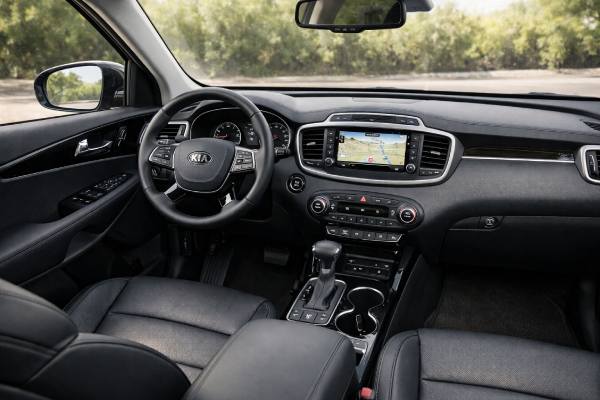
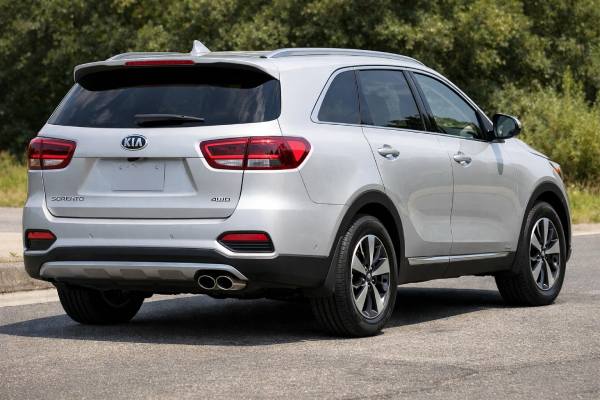
The facelifted 2018–2020 Kia Sorento UM with the 3.3-liter G6DH V6 and all-wheel drive is one of those SUVs that rewards owners who pay attention to details. The drivetrain is straightforward and strong: a naturally aspirated V6 paired with an 8-speed automatic and an on-demand AWD system with a lock mode for low-traction starts. In daily use, that translates to smooth power delivery, confident passing, and better foul-weather composure than the front-drive version—at the cost of extra weight and a few more fluids to service.
Where this Sorento shines is balance. It is sized for families who want a usable third row sometimes, not always, and it can tow meaningfully when equipped properly. The key to happy ownership is staying ahead of maintenance intervals, especially on a high-heat V6 and an AWD driveline that depends on clean, correct fluids.
Owner Snapshot
- Strong, linear V6 power and a smooth 8-speed automatic suit highway and towing use.
- AWD improves wet and winter traction and adds an AWD lock mode for low-speed grip.
- Budget for extra driveline fluid services (rear differential and transfer case) to avoid wear and noise.
- Plan oil and filter changes around 12,000 km (7,500 miles) or 12 months for normal use, sooner for severe driving.
- Expect real-world highway economy around 10.5–11.5 L/100 km at 120 km/h (about 20–22 mpg US), depending on tires and weather.
Navigate this guide
- Sorento UM AWD facelift deep dive
- Sorento UM V6 AWD specs and measurements
- Sorento UM AWD trims, safety, and ADAS
- Reliability, issues, recalls, and TSBs
- Maintenance plan and buying advice
- Road performance, traction, and economy
- Comparison to midsize SUV rivals
Sorento UM AWD facelift deep dive
The 2018–2020 Sorento UM facelift with the 3.3L G6DH V6 sits in a sweet spot: big enough to be family-useful, but not as bulky as full three-row SUVs. The facelift years matter because they brought meaningful updates in day-to-day feel, especially when paired with the V6. In most markets where this powertrain was offered, the V6 is matched to an 8-speed automatic that keeps the engine relaxed at cruising speeds and reduces the “busy” shifting you can feel in older 6-speed setups.
The AWD system is best described as on-demand, clutch-based AWD. Under steady, dry cruising it behaves like a front-drive vehicle to reduce drag. When the front tires slip, a coupling sends torque rearward. Many trims also offer an AWD lock mode that requests a more even split at low speeds, useful for pulling away on snow, wet grass, or a steep gravel ramp. It is not a low-range system and it is not meant for rock crawling. Think of it as traction insurance for weather and light-duty surfaces, not a substitute for a true 4×4.
For owners, the big AWD advantage is confidence: fewer wheelspin events in rain, better stability when merging or passing on sloppy roads, and a calmer feel when towing because the rear axle can help share the workload. The tradeoffs are predictable: slightly lower fuel economy, slightly more tire sensitivity (mismatched tires can confuse the AWD coupling), and more maintenance points—rear differential fluid, transfer case fluid (where applicable), and extra seals and joints that can age.
If you are shopping, the facelift V6 AWD Sorento is often chosen for three reasons:
- Performance without turbo complexity: smooth, naturally aspirated response.
- Usable towing: commonly up to 2,268 kg (5,000 lb) on V6 AWD when properly equipped.
- Value versus larger three-rows: you get much of the capability without the parking-lot footprint.
The best long-term examples tend to be owned by people who treat it like a “systems” vehicle: regular fluids, matched tires, and quick attention to warning lights rather than letting small faults become expensive ones.
Sorento UM V6 AWD specs and measurements
Below are typical US-market specifications for the facelift Sorento UM AWD with the 3.3L G6DH V6 and 8-speed automatic. Always verify by VIN and market, because wheel sizes, curb weight, and even final drive ratios can vary by trim and region.
Powertrain and efficiency
| Item | Specification |
|---|---|
| Engine code | G6DH |
| Layout | Front-engine, V6 |
| Valvetrain | DOHC, 24 valves (4 valves/cyl) |
| Displacement | 3.3 L (3,342 cc) |
| Induction | Naturally aspirated |
| Fuel system | Gasoline direct injection (GDI) |
| Compression ratio | 11.5:1 |
| Max power | 290 hp (216 kW) @ 6,400 rpm |
| Max torque | 342 Nm (252 lb-ft) @ 5,200 rpm |
| Timing drive | Chain |
| Recommended fuel | Regular unleaded (region-dependent octane rating) |
| Rated efficiency (AWD V6, typical) | 11.2 / 9.8 / 10.7 L/100 km (19 / 24 / 21 mpg US) city / highway / combined |
| Real-world highway @ 120 km/h | ~10.5–11.5 L/100 km (20–22 mpg US), load and weather dependent |
Transmission and driveline
| Item | Specification |
|---|---|
| Transmission | 8-speed automatic (torque-converter) |
| Drive type | AWD (on-demand clutch coupling, lock mode on many trims) |
| Differential | Open differentials; electronic brake-based traction control |
| Final drive (typical V6 AWD) | ~3.51:1 (varies by year/trim) |
Chassis and dimensions
| Item | Specification |
|---|---|
| Suspension (front) | MacPherson strut |
| Suspension (rear) | Multi-link |
| Steering | Electric power steering (column- or rack-mounted, trim dependent) |
| Turning circle (kerb-to-kerb) | ~11.4 m (37.3 ft) |
| Brakes (front/rear) | Ventilated disc / disc |
| Brake diameters (typical) | ~320 mm (12.6 in) front / ~305 mm (12.0 in) rear |
| Common tire sizes | 235/65 R17, 235/60 R18, 235/55 R19 (trim dependent) |
| Wheelbase | 2,778 mm (109.4 in) |
| Length | 4,801 mm (189.0 in) |
| Width | 1,890 mm (74.4 in) |
| Height (with roof rails, typical) | ~1,689 mm (66.5 in) |
Weight, capacities, capability
| Item | Specification |
|---|---|
| Curb weight (AWD V6 range, trim dependent) | ~1,860–1,970 kg (4,101–4,343 lb) |
| GVWR (AWD V6, typical) | ~2,550 kg (5,622 lb) |
| Fuel tank | 71 L (18.8 US gal / 15.6 UK gal) |
| Towing capacity (AWD V6, when equipped) | up to 2,268 kg (5,000 lb) |
| Payload | Varies widely by trim; check door-jamb label |
Fluids and service capacities (decision-grade)
These values are commonly encountered, but verify by VIN and service documentation because capacity can change with cooler packages and drain method.
| System | Typical specification | Typical capacity |
|---|---|---|
| Engine oil | API SN class oil, often 5W-30 (climate dependent) | ~6.5 L (6.9 US qt) with filter |
| Coolant | Long-life ethylene glycol (50/50 mix) | Varies by market; often ~8–10 L |
| Automatic transmission fluid | Hyundai and Kia SP-type ATF (model dependent) | Drain and fill varies; total fill higher |
| Rear differential | Hypoid gear oil (commonly 75W-90) | Usually under 1 L |
| Transfer case (if separate) | Gear oil or ATF depending on design | Usually under 1 L |
| A/C refrigerant | R-134a (most markets for these years) | Vehicle-label value |
Key torque specs (critical fasteners)
Use these as orientation only and verify before final tightening:
| Fastener | Typical torque |
|---|---|
| Wheel lug nuts | ~110 Nm (81 lb-ft) |
| Engine oil drain plug | ~35–40 Nm (26–30 lb-ft) |
Sorento UM AWD trims, safety, and ADAS
The facelift Sorento UM V6 AWD is usually sold in a ladder of trims that share the same core mechanical package but differ in wheels, braking feel (mostly due to tire choice), lighting, and driver assistance availability. For a buyer, the goal is to identify what is standard, what is package-dependent, and what changes how the vehicle behaves or costs to maintain.
Trims and options that matter mechanically
Across many markets, the V6 is typically available from mid trims upward, often with AWD as standard or optional. The mechanical differences you should actually care about are:
- Wheel and tire package:
17-inch setups usually ride softer and are cheaper to replace; 19-inch setups can sharpen response but increase tire cost and curb-ride harshness. - Cooling and towing equipment:
Some trims bundle towing prep, hitch wiring, or upgraded cooling. If you tow regularly, prioritize a vehicle that has clearly been set up for it and serviced accordingly. - Lighting:
Headlight type is not just convenience; it can affect safety ratings and nighttime fatigue. Higher trims often include upgraded projectors or LED units.
Quick identifiers when shopping used
These help you confirm what you are looking at without relying on the seller’s description:
- Badging and wheels: wheel size and design often track trim level more consistently than exterior badges.
- Interior cues: larger infotainment screens, premium audio branding, and seat material usually correlate with higher ADAS availability.
- Build sheet or original window label: if available, it is the fastest way to confirm driver assistance packages.
Safety ratings and how to interpret them
Two points matter with this generation:
- Crash structure performance is generally strong, but ratings can vary by test year and protocol.
- Crash avoidance scores often depend on optional equipment, especially forward collision avoidance and headlight performance.
For example, in some safety testing programs, the Sorento earns high marks for crashworthiness while headlight scores vary by trim and option. That means a lower trim can still be structurally safe but may not see the same overall award status without the right lighting and crash-prevention package.
Safety systems and driver assistance (ADAS)
Common equipment across many facelift V6 AWD trims includes:
- Multiple airbags (front, side, and curtain), plus stability control and traction control.
- ISOFIX or LATCH child-seat anchors for outer rear seating positions.
- Rear-view camera (availability and image quality vary by year and market).
Available or trim-dependent ADAS features often include:
- AEB (automatic emergency braking) with forward collision warning, sometimes with pedestrian detection.
- ACC (adaptive cruise control), often paired with stop-and-go on higher trims.
- LKA and lane support (lane keeping assist and lane departure prevention).
- BSD and RCTA (blind-spot detection and rear cross-traffic alert).
- Rear parking sensors, and on some configurations, rear automatic braking.
A practical ownership note: any windshield replacement, front bumper work, or alignment changes can require ADAS recalibration. If a used vehicle has a history of front-end damage, ask for documentation that sensors and cameras were properly re-aimed.
Reliability, issues, recalls, and TSBs
The 3.3L G6DH V6 is generally durable when serviced on time, but this Sorento’s long-term reliability depends on preventing heat and fluid breakdown from turning into expensive secondary damage. Below is a field-style map of what tends to show up, organized by prevalence and cost impact.
Common (watch closely)
- GDI carbon buildup (medium cost, drivability impact)
Symptoms: rough idle, hesitant acceleration, reduced fuel economy, occasional misfires.
Likely cause: intake valve deposits are common on direct-injection engines because fuel does not wash the valves.
Remedy: intake cleaning (chemical or walnut blasting), then shorten oil intervals and keep PCV system healthy. - Oil seepage at valve covers or timing cover (low to medium cost)
Symptoms: oil smell after driving, light smoke near exhaust-side surfaces, small drips.
Cause: gasket aging plus heat cycles.
Remedy: reseal and confirm crankcase ventilation is functioning so pressure does not push oil past seals. - Ignition coils and plugs (low to medium cost)
Symptoms: misfire under load, flashing check-engine light, poor fuel economy.
Cause: coil aging, plug wear, or oil contamination from a leaking cover gasket.
Remedy: replace plugs at the correct interval and address gasket leaks early to avoid repeated coil failures.
Occasional (AWD-specific attention)
- Rear differential or transfer case fluid neglect (medium to high cost)
Symptoms: humming or whining that changes with speed, binding during tight turns, vibration on acceleration.
Cause: old fluid, wrong fluid, or long intervals under towing and heat.
Remedy: service fluids proactively; if noise persists, inspect bearings and couplings before damage spreads. - Prop shaft and CV joint wear (medium cost)
Symptoms: clunk on takeoff, vibration at 60–90 km/h, clicking on turns (CV joints).
Cause: worn joints, torn boots, or driveline angles stressed by worn mounts.
Remedy: replace damaged boots early; verify mounts and alignment.
Rare but high-severity
- ABS and brake hydraulic control unit electrical faults (high severity, safety and fire risk)
Symptoms: ABS and ESC warning lights, burning smell, or battery drain; in extreme cases, overheating.
Cause: internal electrical short or fluid-related electrical issues in the control module assembly.
Remedy: confirm recall completion by VIN and have the updated fuse or module remedy performed as applicable. - Overheating from cooling system weakness (high cost if ignored)
Symptoms: rising temperature gauge, heater performance changes, coolant smell, fans running hard.
Cause: thermostat sticking, radiator efficiency loss, hose aging, or water pump seepage.
Remedy: treat any overheat as urgent; the V6 does not tolerate repeated temperature spikes.
Software and calibration notes
This generation can also see driveability improvements from ECU or TCU updates, especially if there are shift quality complaints, hesitation, or persistent sensor codes with no obvious mechanical root cause. When a shop suggests a reflash, ask what symptom it addresses and whether the update is tied to a manufacturer bulletin.
Pre-purchase checks to request
- Full service history with oil interval evidence (receipts matter).
- Proof of AWD driveline fluid services if the vehicle has higher mileage or has towed.
- Recall completion printout, especially for brake system module-related campaigns.
- Cold start test and a 20-minute drive to check for misfires, vibration, and temperature stability.
Maintenance plan and buying advice
A Sorento V6 AWD can run a long time if you treat maintenance as prevention, not reaction. The two themes are heat control (oil and coolant health) and driveline fluid care (AWD components that quietly wear when neglected).
Practical maintenance schedule (distance or time, whichever comes first)
Use this as a real-world plan that aligns with common manufacturer schedules, then adjust for your climate and driving style.
- Engine oil and filter: every 12,000 km (7,500 miles) or 12 months (normal use).
Severe use (short trips, heavy traffic, towing, very hot or very cold climate): every 6,000 km (3,750 miles) or 6 months. - Engine air filter: inspect every 12,000–15,000 km; replace every 24,000–30,000 km, sooner in dusty areas.
- Cabin air filter: every 12,000–20,000 km or annually.
- Spark plugs (iridium, typical): around 160,000 km (100,000 miles), but shorten if misfires develop or if fuel quality is poor.
- Coolant: typically every 5 years or 100,000–160,000 km, then every 3–5 years afterward. Do not mix coolant types.
- Automatic transmission fluid:
If you keep the vehicle long-term, a conservative plan is a drain and fill every 60,000–80,000 km (40,000–50,000 miles), sooner with towing. Avoid aggressive flushes on high-mileage units unless the service history is known. - Rear differential fluid: every 60,000 km (40,000 miles), sooner with towing or frequent mountain driving.
- Transfer case fluid (if separate): every 60,000 km (40,000 miles), same logic as the rear differential.
- Brake fluid: every 2 years, regardless of mileage.
- Brake pads and rotors: inspect every 15,000 km; replace based on wear and heat checking.
- Tires: rotate every 8,000–10,000 km; check alignment yearly.
AWD note: replace tires as a matched set when possible, or keep tread depth differences small to protect the coupling. - 12 V battery: test annually after year 3; many need replacement in the 4–6 year window depending on climate.
Fluid specifications (quick guidance)
- Oil viscosity: 5W-30 is common, with a specification aligned to the vehicle’s market requirements.
- ATF: use the exact specified SP-type fluid for the 8-speed automatic.
- Gear oils: use the correct viscosity and rating for rear differential and transfer case.
If a previous owner used “close enough” fluids, you may not see immediate symptoms, but long-term wear often accelerates. If you are unsure, a planned fluid correction service can be cheaper than gambling.
Buyer’s guide checklist (what to inspect)
- Cold start behavior: smooth idle, no ticking that persists, no misfire stumble.
- Transmission shifting: no harsh 2–3 upshift, no delayed engagement into drive or reverse.
- AWD function: on a low-traction surface, verify rear engagement; avoid tight-circle tests on dry pavement that can stress the system.
- Cooling system health: stable temperature, clean coolant, no sweet smell after a long drive.
- Oil leaks: check valve cover perimeter and underbody for wetness.
- Electrical and ADAS: confirm cameras and sensors behave normally; ask about recalibration after windshield or bumper work.
- Undercarriage corrosion: focus on subframes, brake lines, and seam areas if the vehicle lived in salted regions.
Long-term durability outlook
A well-maintained V6 AWD Sorento can be a dependable family SUV. The examples that disappoint are usually not “bad designs,” but vehicles that miss oil services, overheat once, tow without fluid changes, or run mismatched tires for years. Buy the maintenance history, not the mileage number.
Road performance, traction, and economy
The facelift Sorento V6 AWD drives like a mature, well-damped midsize SUV rather than a sporty crossover. It is tuned to feel calm on the highway, predictable in corners, and easy to place in daily traffic.
Ride, handling, and NVH
- Ride quality: generally composed, especially on 17-inch and 18-inch tires. The 19-inch setup can add sharpness over broken pavement, which some drivers interpret as “sporty” and others as “busy.”
- Straight-line stability: strong at motorway speeds, with a planted feel that benefits from the longer wheelbase and the AWD system’s ability to manage slip.
- Steering: light to moderate effort. It is accurate rather than talkative; expect reasonable precision, not performance-car feedback.
- Cabin noise: wind and tire noise are the main contributors. Tire choice can change the cabin feel more than most owners expect.
Powertrain character
The G6DH V6 is at its best when you drive it smoothly. It has a strong top end, but it is not a low-rpm torque monster like a modern turbo six. The 8-speed automatic helps by keeping the engine in a comfortable band, and in normal driving it shifts unobtrusively.
- Throttle response: clean and linear, with a predictable ramp in power.
- Kickdown: decisive, though you will feel multiple downshifts when you ask for maximum acceleration.
- Drive modes: if equipped, sport mode typically holds gears longer and sharpens response; eco modes soften throttle mapping.
Real-world efficiency (what owners actually see)
For a V6 AWD midsize SUV, efficiency is respectable but sensitive to speed and temperature.
- City: often 12.0–13.5 L/100 km (17–20 mpg US), depending on traffic and warm-up time.
- Highway 100–120 km/h: often 10.0–11.5 L/100 km (20–23 mpg US).
- Mixed use: many owners land near 11.0–12.5 L/100 km (19–21 mpg US).
Cold weather typically adds fuel use because the engine runs richer during warm-up and the cabin heater load increases. Short trips are the toughest case for this powertrain.
Traction and control in the real world
The AWD system’s benefit is most obvious in three scenarios:
- Wet roundabouts and highway merges: less front tire scrabble, cleaner launches.
- Snowy starts and mild climbs: lock mode can help you get moving without drama.
- Towing on ramps: extra rear grip can reduce wheelspin when pulling a trailer out of a slippery marina or campsite.
Keep expectations realistic: ground clearance and tire type still matter more than AWD badges. A good all-season or winter tire set is the biggest traction upgrade you can buy.
Performance metrics that matter to owners
Rather than chasing one exact test number, it is safer to frame the Sorento V6 AWD as:
- Quick enough for confident passing, especially from 60–120 km/h where the V6 can pull hard once it downshifts.
- Brake performance that tracks tire quality: good pads and properly bedded rotors matter, but tires dominate stopping distance.
If you value effortless towing and highway merging, the V6 is the right engine. If you mainly do short city trips, the V6’s warm-up and fuel use can feel like overkill.
Comparison to midsize SUV rivals
The facelift Sorento V6 AWD competes in a crowded space, and its strengths become clearer when you compare it to common alternatives.
Versus Honda Pilot AWD
A Pilot typically offers a roomier third row and more overall cabin volume. If you frequently carry adults in the third row, the Pilot is usually the better tool. The Sorento counters with a slightly smaller footprint that feels easier in tight parking and a trim-and-feature value story that can be compelling on the used market. For occasional third-row use, the Sorento’s “right-sized” packaging is often enough.
Versus Toyota Highlander AWD
A Highlander is a benchmark for long-term ownership comfort and resale stability. In many markets, it also carries a strong reputation for low drama. The Sorento often wins on purchase price, feature content for the money, and a more direct, straightforward power delivery feel in V6 form. If you want the most conservative ownership bet, many buyers lean Highlander. If you want value and still want a proven V6 layout, the Sorento is often the bargain.
Versus Mazda CX-9 AWD
The CX-9 is more engaging to drive, with sharper steering feel and a premium-leaning interior vibe. The Sorento is more relaxed and practical in its tuning, and its naturally aspirated V6 avoids turbo heat complexity. If you prioritize driving enjoyment, CX-9 usually takes it. If you prioritize smoother towing character and a simple, linear throttle response, the Sorento’s V6 has appeal.
Versus Ford Edge AWD (two-row alternative)
The Edge is a two-row SUV in many configurations, so it is a different choice: more second-row comfort focus, fewer seats, and often strong turbo performance depending on engine. If you do not need a third row at all, a two-row rival can feel more spacious day-to-day. The Sorento’s advantage is flexibility: it can do family duty occasionally in ways most two-rows cannot.
Bottom line for buyers
Choose the Sorento V6 AWD if you want:
- A smooth, naturally aspirated V6 feel with a modern 8-speed automatic.
- Real towing capability without stepping up to a larger three-row SUV.
- AWD confidence for rain, snow, and boat ramps, with a manageable footprint.
Look elsewhere if you want:
- A genuinely adult-friendly third row used every week.
- The sharpest handling in the segment.
- The simplest possible maintenance plan (AWD adds service points).
References
- 2019 Kia Sorento Specifications 2019 (Manufacturer Specifications)
- 2019 Kia Sorento AWD 2019 (Official Fuel Economy and Safety Summary)
- 2020 Kia Sorento 4-door SUV 2020 (Safety Rating)
- Vehicle Detail Search – 2019 KIA SORENTO SUV AWD | NHTSA 2019 (Vehicle Database)
- Check for Recalls: Vehicle, Car Seat, Tire, Equipment 2026 (Recall Database)
Disclaimer
This article is for informational purposes only and is not a substitute for professional inspection, diagnosis, or repair. Specifications, torque values, service intervals, and procedures vary by VIN, market, model year, and equipment. Always confirm details using official service information for the specific vehicle you are working on.
If this guide helped you, please consider sharing it on Facebook, X (Twitter), or your favorite forum to support our work.