
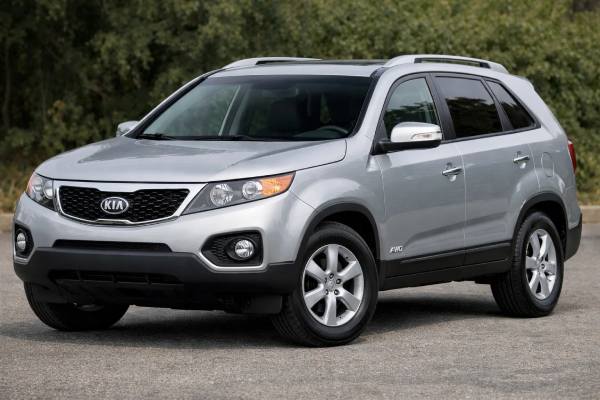
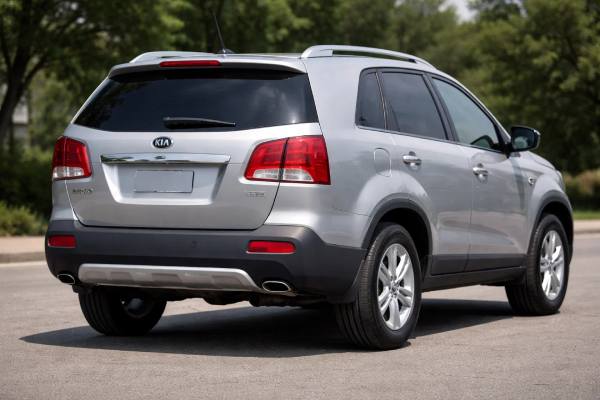
The 2010–2012 Kia Sorento (XM) with the 2.4-liter G4KE and all-wheel drive is a practical “do-most-things” family crossover: roomy enough for daily hauling, stable on the highway, and more sure-footed than 2WD versions when conditions turn wet, icy, or loose. The AWD hardware also changes the ownership equation. You gain traction and confidence, but you also add serviceable components—driveshaft, rear differential, and a transfer case or coupling assembly—that need periodic fluid care and tire-matching discipline.
This configuration is best for drivers who see real weather, gravel roads, steep driveways, or frequent weekend trips where grip matters more than outright speed. The 175 hp naturally aspirated four-cylinder is not quick, yet it’s predictable and easy to maintain when oil changes are consistent and recall work is up to date. Buy it like a technician would: confirm the drivetrain by VIN, check for complete maintenance records, and treat AWD fluid services as non-optional if you want long-term reliability.
Quick Specs and Notes
- Confident year-round traction with AWD, especially on winter tires in snow and slush.
- Family-friendly packaging with strong highway stability for the class.
- Advantage for buyers: AWD versions often feel more composed in rain and crosswinds.
- Caveat: AWD adds service items (transfer case and rear differential fluids) and tire-matching requirements.
- Plan AWD fluid service about every 60,000–90,000 km (40,000–55,000 mi) depending on use.
Section overview
- Sorento XM AWD ownership profile
- Sorento XM AWD specs and capacities
- Sorento XM AWD trims and safety
- Common faults, recalls, and fixes
- Service plan and smart buying
- Real driving performance and economy
- AWD rivals and alternatives
Sorento XM AWD ownership profile
The Sorento XM (2010–2012) sits in the sweet spot between compact crossovers and full-size family SUVs. In AWD four-cylinder form, it’s the version many people choose for one reason: it feels more “all-season ready” without stepping up to a V6. That said, the AWD system does not turn the Sorento into an off-road specialist. Think of it as a traction and stability tool—helpful on slippery hills, rutted parking lots, and muddy campsite entrances—rather than something designed for rock crawling.
From an engineering point of view, the biggest change versus 2WD is that torque can be routed to the rear axle through an electronically controlled coupling/transfer assembly and a rear driveline. In real ownership terms, this brings three practical implications:
- More fluids to maintain. You now have rear differential oil and transfer case/coupling oil (or a shared AWD unit depending on market). Fresh fluid is cheap compared with the cost of driveline repairs.
- Tires become part of the drivetrain. AWD systems dislike large rolling-diameter differences. Mixing tire brands, running uneven tread depths, or driving long periods on a compact spare can create binding, overheating, or premature wear.
- Small noises matter more. A faint whir, vibration, or “moan” that might be ignored on a 2WD vehicle is often an early clue in an AWD driveline (bearings, prop shaft support, or differential wear).
The G4KE 2.4-liter engine’s role is straightforward: it’s a naturally aspirated inline-four tuned for everyday use. You will feel the weight of AWD when accelerating, especially with passengers. The upside is a calmer, predictable power delivery and generally accessible service work (filters, plugs, accessory drive, and basic sensors). The downside is that the engine works harder when loaded, which makes oil level and oil quality especially important.
This Sorento is ideal for owners who plan to keep it for years and are comfortable with preventive maintenance. If you want the traction benefit but dislike the idea of extra fluid services or you often replace tires “one at a time,” a 2WD version may fit you better. If you need frequent towing or strong passing power, the V6 variants are usually the more satisfying match.
Sorento XM AWD specs and capacities
The tables below summarize common specifications for the 2010–2012 Sorento (XM) AWD with the G4KE 2.4. Exact numbers vary by market, trim, wheel package, seating (5 vs 7), and emissions calibration. Use these for planning and comparisons, then confirm details for your VIN.
Powertrain and efficiency (G4KE 2.4)
| Item | Spec (typical) |
|---|---|
| Engine code | G4KE |
| Engine layout and cylinders | Inline-4, DOHC, 16-valve (4 valves/cyl) |
| Bore × stroke | 88.0 × 97.0 mm (3.46 × 3.82 in) |
| Displacement | 2.4 L (2,359 cc) |
| Induction | Naturally aspirated |
| Fuel system | MPI (multi-point injection) |
| Compression ratio | ~10.5:1 (market dependent) |
| Max power | 175 hp (129 kW) @ ~6,000 rpm |
| Max torque | ~225 Nm (166 lb-ft) @ ~3,750 rpm |
| Timing drive | Chain |
| Rated efficiency (AWD typical) | ~9.0–10.5 L/100 km (26–22 mpg US / 31–27 mpg UK) |
| Real-world highway @ 120 km/h (75 mph) | ~9.0–11.0 L/100 km (26–21 mpg US / 31–26 mpg UK) |
Transmission and driveline (AWD)
| Item | Spec (typical) |
|---|---|
| Transmission | 6-speed automatic (most common); manual varies by market |
| Drive type | AWD (on-demand coupling style in most markets) |
| Differential | Typically open front and open rear with brake-based traction control assisting slip |
Chassis and dimensions
| Item | Spec (typical) |
|---|---|
| Suspension (front/rear) | MacPherson strut / multi-link |
| Steering | Electric power steering (EPS) |
| Brakes | 4-wheel discs (diameters vary by trim) |
| Most popular tire size (varies) | 235/60 R18 (common); other sizes by trim |
| Ground clearance | ~184 mm (7.2 in) |
| Length / width / height | ~4685 / 1885 / 1710 mm (184.4 / 74.2 / 67.3 in) |
| Wheelbase | ~2700 mm (106.3 in) |
| Turning circle (kerb-to-kerb) | ~11.0–11.6 m (36–38 ft), market dependent |
| Kerb weight (AWD typical) | ~1,720–1,880 kg (3,790–4,145 lb), equipment dependent |
| Fuel tank | ~70 L (18.5 US gal / 15.4 UK gal) |
Performance and capability
| Item | Spec (typical) |
|---|---|
| 0–100 km/h (0–62 mph) | ~11.5–13.0 s (trim and test method dependent) |
| Top speed | ~180–190 km/h (112–118 mph) |
| Braking distance | Tire-dependent; prioritize tire condition over “spec chasing” |
| Towing capacity | Commonly ~1,000–1,500 kg (2,200–3,300 lb), market and equipment dependent |
| Payload | VIN and market dependent; check door label/manual |
Fluids and service capacities (planning ranges)
AWD adds serviceable units. Capacities and specifications vary by hardware and market, so treat these as decision-level ranges:
| Item | Specification (typical) | Capacity (typical) |
|---|---|---|
| Engine oil | OEM-specified API/ILSAC grade; often 5W-20 or 5W-30 | ~4.3–4.8 L (4.5–5.1 US qt) with filter |
| Coolant | Long-life ethylene glycol; 50/50 mix | ~6.5–8.0 L (6.9–8.5 US qt) |
| ATF (6AT) | OEM-specified ATF only | Drain/fill often ~3–4 L (3.2–4.2 US qt); total higher |
| Transfer case or AWD coupling unit | Gear oil per OEM spec (often GL-5 type) | ~0.5–0.8 L (0.5–0.8 US qt) |
| Rear differential | Gear oil per OEM spec (often GL-5 75W-90 style) | ~0.6–1.0 L (0.6–1.1 US qt) |
| A/C refrigerant | Typically R-134a in this era | Charge varies with rear A/C |
Key torque specs (common ranges):
- Wheel nuts: ~88–108 Nm (65–80 lb-ft)
- Differential/transfer fill and drain plugs: commonly ~35–55 Nm (26–41 lb-ft)
Always verify the exact spec for your VIN before tightening.
Sorento XM AWD trims and safety
Trim names differ by region, but the AWD 2.4 Sorento typically appears in mid-level grades where buyers want all-season traction without stepping up to the V6. When you shop, focus less on the badge and more on the equipment that affects maintenance cost, ride quality, and safety performance.
Trims and options that change real ownership
- Wheel and tire package: Larger wheels can look better and sharpen response, but they raise tire costs and can amplify harshness. If comfort and long-term budget matter, a smaller wheel package is often the “quietly best” setup.
- Third-row seating (where offered): Adds flexibility but also weight and complexity (extra HVAC ducting, latches, and seat hardware). In a 2.4 AWD, the extra weight can make the vehicle feel noticeably slower.
- Tow preparation: Factory tow wiring and cooling provisions (if fitted) matter more than the hitch itself. If you tow, you want the best cooling setup and strict transmission fluid service.
- Comfort electronics: Panoramic roof, powered liftgate, heated seats, and upgraded audio are nice, but each adds potential age-related issues. Decide what you truly use.
Quick identifiers while shopping
- Door certification label: Confirms build month/year and GVWR. Build timing can matter for certain safety-test notes and campaign applicability.
- AWD confirmation: Look for an AWD badge, but verify by VIN and underbody inspection (rear driveshaft and rear differential presence).
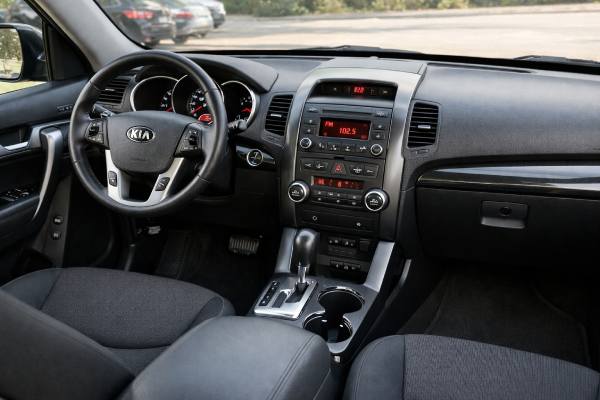
- Interior tells: Higher trims typically add leather surfaces, larger infotainment displays, and more steering-wheel controls; base trims are simpler and often cheaper to recondition.
Safety ratings and what they mean here
This generation performed well in major crash testing for its era, but details matter. Some tests and ratings apply only to certain build periods or equipment. For example, U.S. testing notes that side-impact protection was improved for vehicles built after a specific production point, and the tested vehicle configuration in published results may be an AWD model. The practical takeaway is simple: look for a Sorento with fully functioning airbags, no warning lights, and correct replacement windshield and sensor work if it has ever been repaired after an accident.
Safety systems and driver assistance (2010–2012 reality)
Expect strong “core” safety systems and limited modern driver assistance:
- Airbags: Front, side torso, and curtain airbags are common; verify curtain coverage if you carry rear passengers regularly.
- ESC and traction control: Essential on an AWD crossover because it helps manage wheel slip and stability in evasive maneuvers.
- Brake assist and ABS: Standard in most markets; keep brake fluid fresh to maintain pedal feel and ABS performance.
- Child-seat anchors: LATCH/ISOFIX is typically present; check ease of access if you install multiple seats.
- ADAS (modern features): Automatic emergency braking, adaptive cruise control, and lane-keeping assist were not typically standard in this era. Don’t buy expecting today’s driver-assist suite.
If safety is your top priority, prioritize the best tires you can afford, keep the brake system maintained, and choose a vehicle with verified accident repairs and complete recall history.
Common faults, recalls, and fixes
A 2010–2012 Sorento AWD 2.4 can be a solid long-term vehicle, but reliability is not “set and forget.” The highest-cost outcomes usually come from neglected fluids, ignored warning signs, or incomplete recall work. Below is a practical severity and frequency map focused on the AWD 2.4 ownership experience.
Common (frequent checks, usually manageable)
- Oil level sensitivity (severity: medium → high if ignored):
- Symptoms: louder ticking, rough running, oil level dropping between services.
- Root causes: extended oil intervals, low oil level, short-trip sludge formation.
- Fix: shorten oil intervals, monitor consumption, and investigate new noises early. A cheap oil habit prevents expensive engine outcomes.
- Tire mismatch strain on AWD (severity: medium):
- Symptoms: binding in tight turns, unusual driveline vibration, overheating smell after long runs, or repeated traction-control intervention.
- Root causes: uneven tread depth across axles, mixed tire sizes/brands, prolonged spare use.
- Fix: keep all four tires closely matched; rotate regularly; replace in pairs at minimum and ideally as a set if tread differences are large.
- Front-end wear (severity: low → medium):
- Symptoms: clunks, uneven tire wear, steering wander.
- Root causes: worn bushings, ball joints, stabilizer links; heavier AWD curb weight increases load.
- Fix: inspect annually; align after suspension work.
Occasional (age and mileage dependent)
- Rear differential seepage or noise (severity: medium):
- Symptoms: wet housing, faint whine that changes with speed.
- Root causes: aging seals, old gear oil, bearing wear accelerated by low fluid.
- Fix: repair leaks promptly and refresh fluid; don’t “wait for it to get loud.”
- Driveshaft vibration (severity: medium):
- Symptoms: vibration under load or at specific speeds.
- Root causes: worn center support bearing (if equipped), joint wear, out-of-balance shaft, or tired engine mounts.
- Fix: inspect driveline and mounts before replacing major parts.
- Transfer case/coupling fluid neglect (severity: medium → high):
- Symptoms: shudder, harsh engagement, or abnormal noises under load.
- Root causes: degraded lubricant, water contamination, or heat stress from repeated slip.
- Fix: fluid service and inspection; address tire issues that force the AWD to work harder.
Recalls, service actions, and why they matter
Several recall themes can intersect with this model range. Two important examples to verify by VIN are:
- HECU/ESC-related fire-risk recall remedy (fuse replacement and labeling on certain Sorento years): This addresses the risk of an electrical short in the hydraulic control unit area. Even if your vehicle shows no symptoms, completion matters because it reduces a rare but serious risk.
- Theta II monitoring software/engine-related campaign coverage (where applicable): Some Sorento vehicles with the 2.4 MPI were included in campaigns to add protective knock-sensor logic and reduce risk associated with severe engine damage.
Pre-purchase checks worth paying for
- Full scan for stored codes (engine, transmission, AWD/ESC modules).
- Driveline inspection for leaks and torn CV boots.
- Test drive with tight circles in a parking lot (listen for binding).
- Confirm all recalls complete through official VIN lookup and dealer history.
- Evidence of regular oil changes and at least one documented AWD fluid service if mileage is high.
Service plan and smart buying
The Sorento AWD 2.4 rewards routine care. Think of it as two maintenance tracks: the engine and transmission basics, plus the AWD-specific fluids and tire management that keep the driveline happy. If you follow a conservative plan, you greatly reduce the odds of expensive surprises.
Practical maintenance schedule (distance/time)
Choose the shorter interval for heavy city use, short trips, dusty roads, frequent hills, or towing.
| Item | Interval (typical) | Notes |
|---|---|---|
| Engine oil and filter | 8,000–10,000 km (5,000–6,000 mi) or 12 months | Short trips: 6,000–8,000 km is wise |
| Tire rotation | 10,000–12,000 km (6,000–7,500 mi) | Keep tread depths closely matched |
| Engine air filter | 20,000–30,000 km (12,000–18,000 mi) | Inspect earlier in dusty areas |
| Cabin air filter | 15,000–20,000 km (9,000–12,000 mi) | Helps HVAC performance and odor control |
| Spark plugs | 80,000–120,000 km (50,000–75,000 mi) | Correct plug type matters for misfire control |
| Coolant | 5 years then every 2–3 years (or per OEM) | Use correct long-life coolant |
| Brake fluid | Every 2 years | Protects ABS/ESC components and pedal feel |
| ATF (6AT) | 60,000–90,000 km (40,000–55,000 mi) | Earlier if towing or hot climate |
| Transfer case/coupling fluid | 60,000–90,000 km (40,000–55,000 mi) | Fresh fluid is cheap insurance |
| Rear differential oil | 60,000–90,000 km (40,000–55,000 mi) | Check for leaks at every oil service |
| Belts and hoses | Inspect yearly; replace by condition | Age failures rise after 10+ years |
| 12 V battery test | Annually after year 4 | Replace proactively before winter if weak |
Fluid specifications (decision-level guidance)
- Gear oils (AWD): Many markets specify a GL-5 style gear oil for rear differential and transfer unit, commonly in the 75W-90 range, but exact specs vary. Use the OEM requirement, not a guess.
- ATF: Use the specified Kia/Hyundai ATF type only. “Universal” fluids can cause shift complaints over time.
- Coolant: Stick to the correct long-life coolant type and bleeding procedure to avoid air pockets.
Buyer’s guide: what to inspect before purchase
AWD-specific
- Look for diff and transfer case seepage (wet housings, damp seals).
- Confirm four matching tires and similar tread depth across all corners.
- Check for vibration on acceleration (driveshaft and mounts).
- Confirm AWD lock button (if equipped) functions without warning lights.
Engine and transmission
- Cold start: listen for abnormal knocking or harsh ticking.
- Smooth idle and consistent power delivery under load.
- No delayed engagement selecting Drive or Reverse.
Chassis and body
- Even tire wear suggests alignment and suspension health.
- Check subframes and brake lines for corrosion in winter climates.
- Verify all power features and HVAC modes operate correctly.
Best “value” picks in this configuration
If you want the lowest long-term stress, look for an AWD 2.4 Sorento with:
- documented oil services,
- at least one AWD fluid service by higher mileage,
- a clean scan report,
- and completed recalls.
A slightly higher-mileage vehicle with strong records is often the better buy than a low-mileage example with missing history.
Real driving performance and economy
The Sorento XM AWD 2.4 drives like a comfort-focused family crossover with a traction advantage. It is not a performance SUV, but it is steady and predictable—qualities many owners value more than speed. Your experience depends heavily on tires and maintenance: a well-aligned Sorento on good tires can feel composed; a neglected one can feel noisy, vague, or busy.
Ride, handling, and NVH
- Ride quality: Typically compliant over everyday pavement. Larger wheel packages can add sharpness over potholes.
- Highway stability: One of the Sorento’s strengths; it tends to track confidently if alignment and tires are correct.
- Cornering balance: Safe and mildly understeery, as expected. AWD mainly helps you put power down on exit rather than changing the fundamental handling balance.
- Cabin noise: Wind and tire noise rise with speed; aggressive tread tires can make it sound much older than it is.
Powertrain character (what 175 hp feels like)
This engine likes rpm. Around town, it feels adequate with light throttle, but passing and hill climbing often require a downshift. With AWD and passengers, expect:
- more frequent downshifts on grades,
- higher rpm when merging,
- and slower 50–80 mph (80–120 km/h) acceleration than V6 competitors.
The upside is smooth, linear response—no turbo lag, no sudden surges—just steady power when you ask for it.
Real-world fuel use (AWD penalty included)
AWD typically costs fuel versus 2WD, especially in city driving and cold weather. Many owners see:
- City: ~10.5–13.0 L/100 km (22–18 mpg US / 27–22 mpg UK)
- Highway (100–120 km/h / 60–75 mph): ~9.0–11.0 L/100 km (26–21 mpg US / 31–26 mpg UK)
- Mixed: ~9.5–11.5 L/100 km (25–20 mpg US / 30–25 mpg UK)
Cold weather can add a meaningful penalty because warm-up takes longer and winter tires increase rolling resistance.
Traction and control: what AWD helps with
- Snow and slush starts: Easier pull-away from stops with less wheelspin.
- Wet roundabouts and ramps: Better stability when accelerating into traffic.
- Loose surfaces: Gravel roads and muddy lots are less stressful.
What it does not do: make worn tires safe, shorten braking distances on ice, or substitute for winter driving habits. If you live in a snow climate, the single best upgrade remains quality winter tires—AWD simply helps you use them more effectively.
Towing and loading reality
Light towing is possible, but the 2.4 works hard with AWD and weight. Plan for:
- a noticeable fuel increase under load,
- more frequent downshifts on hills,
- and a strong preference for fresh ATF if towing is regular.
If towing is central to your use, consider whether a V6 Sorento or a rival with higher tow ratings fits your needs better.
AWD rivals and alternatives
To judge the Sorento XM AWD 2.4 fairly, compare it to vehicles that offer similar space and similar “all-season” intent. The Sorento’s core advantages are value, packaging, and straightforward everyday usability. Its main compromises are modest acceleration and the extra maintenance overhead of AWD.
Hyundai Santa Fe (same era AWD)
A close cousin in size and market positioning. Many buyers cross-shop these two on condition and price alone. Pick the one with:
- better service records,
- healthier tires and brakes,
- and cleaner recall history.
The Sorento often wins on interior versatility and features-per-dollar; the Santa Fe can feel slightly more refined in some trims.
Toyota RAV4 and Honda CR-V (AWD)
These are usually smaller inside than the Sorento, but often appeal for reputation and resale. If you don’t need the Sorento’s space, a well-kept RAV4 or CR-V can be a simpler long-term bet. The tradeoff is less cargo and rear-seat flexibility.
Subaru Forester and Outback
Subaru’s AWD reputation is strong, and the vehicles can feel very secure in poor weather. However, you may trade into different maintenance considerations and potentially higher used pricing in snow states. If winter confidence is your number-one goal and you’re comfortable with Subaru ownership patterns, they remain strong alternatives.
Ford Edge and Mazda CX-9 (AWD)
- Ford Edge: often comfortable and roomy for five passengers, sometimes a strong used value. Powertrain and maintenance history vary widely, so inspection matters.
- Mazda CX-9: usually more engaging to drive, but fuel use is commonly higher and most examples rely on larger engines.
When the Sorento XM AWD 2.4 is the best pick
Choose it if you want:
- midsize space without full-size SUV bulk,
- a calm highway vehicle with real winter traction,
- and manageable ownership costs when you follow a strict maintenance plan.
Avoid it if you:
- require strong acceleration with a full load,
- plan frequent towing near the vehicle’s limits,
- or dislike maintaining matching tires and extra driveline fluids.
In the used market, the winning move is often simple: buy the cleanest example with the best records, not the “nicest spec sheet.”
References
- 2011 Kia Sorento 2011 (Safety Rating)
- Euro NCAP | Press Release Aug. 2009 – Euro NCAP Safety comes clean 2009 (Safety Rating)
- Part 573 Safety Recall Report 23V-652 2023 (Recall Database)
- Part 573 Safety Recall Report 23V-877 2023 (Recall Database)
- Annual Fuel Cost Estimates 2011 (Official Fuel Economy Guide)
Disclaimer
This article is for informational purposes only and is not a substitute for professional diagnosis, inspection, or repair. Specifications, torque values, fluid capacities, service intervals, and procedures vary by VIN, market, production date, and equipment. Always verify details using the official owner’s manual and service documentation for your exact vehicle, and confirm open recalls through official VIN lookup tools and dealer records.
If this guide helped you, please consider sharing it on Facebook, X (Twitter), or your favorite community to support our work.