

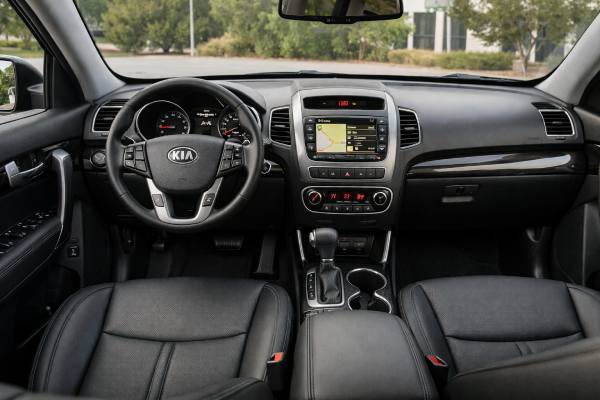
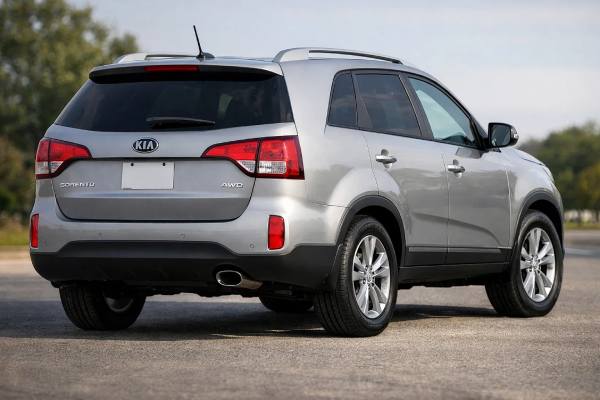
The 2013–2014 facelift of the Kia Sorento XM with AWD and the 2.4-liter “Theta” four-cylinder is a practical, heavy-duty take on a family crossover: a relatively stout chassis, a conventional automatic transmission, and an on-demand AWD system that prioritizes everyday traction over off-road theatrics. In ownership terms, the story is mostly about matching expectations to the powertrain. The 2.4 is durable when it’s serviced on time, kept full of clean oil, and not forced into constant wide-open-throttle work—yet it can feel strained in a fully loaded Sorento, especially with AWD. The facelift years also brought meaningful refinements (noise control, feature availability, and safety equipment depending on market), making these models a sweet spot for buyers who want modern usability without newer-car complexity. The key is to buy based on condition, documented service, and the exact engine variant installed.
Essential Insights
- Strong winter-road confidence from on-demand AWD and a stable, long-wheelbase platform.
- Practical cabin packaging: easy daily ergonomics and family-friendly cargo flexibility.
- Conventional 6-speed automatic tends to age better than early CVTs when fluids are maintained.
- Watch for 2.4-liter engine noise, oil consumption, and overdue coolant/ATF services on higher-mileage examples.
- Plan engine oil service every 10,000–12,000 km (6,000–7,500 mi) or 12 months (shorter for severe use).
Contents and shortcuts
- Sorento XM AWD facelift basics
- Sorento XM AWD 2.4 tech specs
- Sorento XM trims and safety tech
- Reliability and known problem spots
- Maintenance plan and buying checklist
- On-road performance and economy
- Rivals and value positioning
Sorento XM AWD facelift basics
The facelifted 2013–2014 Sorento XM sits in a useful middle ground: big enough for real family duty, but still sized and geared like a mainstream crossover rather than a truck-based SUV. In AWD form it typically uses an electronically controlled, on-demand coupling that sends extra torque rearward when the front tires slip (and, in some markets/trims, allows a “lock” mode at low speeds). That means confident traction on wet roads, slush, and gravel driveways—without the weight, noise, and fuel penalty of a full-time mechanical 4×4 system.
The 2.4-liter engine in these years is commonly associated with the Hyundai-Kia “Theta” family. Depending on market and emissions package, you may see different labeling (and sometimes different engine codes) for closely related variants. Your prompt references G4KE with 191 hp—in practice, some regions paired 191 hp with direct injection while others used multi-point injection with slightly different outputs. The takeaway is simple: verify your exact engine by VIN/under-hood label, because maintenance items (spark plug type/interval, oil spec, and campaign eligibility) can change.
As a platform, the Sorento XM is tuned for stability and load carrying. The long wheelbase and relatively wide track help it feel planted at highway speeds. The tradeoff is that, with AWD and the heavier body, the 2.4 can feel busy under acceleration—especially with passengers or cargo. Buyers who accept “adequate” rather than “quick” often like this powertrain because it’s straightforward, easy to service, and not dependent on turbo hardware.
Where these facelift years shine is usability: improved sound isolation and feature packaging versus earlier XM builds, and a cabin layout that stays intuitive even today. If you shop carefully—service history, clean driveline fluids, and a quiet engine under load—this Sorento can be a sensible long-term keeper.
Sorento XM AWD 2.4 tech specs
Below are typical specifications for the 2013–2014 Sorento XM facelift with AWD and the 2.4-liter gasoline four-cylinder around 191 hp. Treat numbers as market-dependent and confirm against your VIN, door-jamb labels, and official documentation.
Powertrain and efficiency
| Item | Specification |
|---|---|
| Engine code | G4KE (Theta-family 2.4) market-dependent labeling |
| Layout | Inline-4 (I-4), DOHC, 4 valves/cyl |
| Bore × stroke | 88.0 × 97.0 mm (3.46 × 3.82 in) |
| Displacement | 2.4 L (2,359 cc) |
| Induction | Naturally aspirated |
| Fuel system | MPFI or GDI depending on market |
| Compression ratio | ~10.5:1 (MPI) to ~11.3:1 (GDI) depending on variant |
| Max power | 191 hp (about 140 kW) @ rpm varies by calibration |
| Max torque | typically ~240–250 Nm (177–184 lb-ft) depending on variant |
| Timing drive | Chain |
| Rated efficiency (AWD reference) | around 9.8–11.0 L/100 km (24–21 mpg US combined equivalent), market/test-cycle dependent |
| Real-world highway @ 120 km/h | typically ~9–10.5 L/100 km (27–22 mpg US) depending on load/tires/wind |
Transmission and driveline
| Item | Specification |
|---|---|
| Transmission | 6-speed automatic (torque-converter) |
| Drive type | On-demand AWD (electronically controlled coupling) |
| Differential | Open (front/rear); traction control manages wheel slip |
Chassis and dimensions (common XM facelift ranges)
| Item | Typical specification |
|---|---|
| Suspension (front/rear) | MacPherson strut / multi-link |
| Brakes | 4-wheel disc (diameters vary by trim/market) |
| Wheels/tires (common) | 235/60 R17 or 235/55 R18 (popular fitments vary) |
| Ground clearance | ~185 mm (7.3 in) depending on wheels/market |
| Length / width / height | ~4,685 / 1,885 / 1,685–1,735 mm (184.4 / 74.2 / 66.3–68.3 in) depending on roof rails |
| Wheelbase | ~2,700 mm (106.3 in) |
| Turning circle (kerb-to-kerb) | ~11.0 m (36 ft) typical |
| Kerb (curb) weight | ~1,700–1,850 kg (3,750–4,080 lb) depending on trim/seating |
| Fuel tank | commonly ~64 L (16.9 US gal / 14.1 UK gal) |
Performance and capability (typical)
| Item | Typical range |
|---|---|
| 0–100 km/h (0–62 mph) | ~10–11 s (trim/tires/conditions matter) |
| Top speed | ~185–195 km/h (115–121 mph) market-dependent |
| Towing capacity | often 750–1,650 kg braked (1,650–3,640 lb), varies widely by market/packaging |
| Payload | commonly 500–650 kg (1,100–1,430 lb) depending on GVWR/trim |
Fluids and service capacities (common Theta 2.4 family guidance)
| Item | Typical specification (verify for your variant) |
|---|---|
| Engine oil | API/ILSAC spec per market; commonly 5W-20 or 5W-30 |
| Engine oil capacity | ~4.5–4.8 L (4.8–5.1 US qt) with filter |
| Coolant | Long-life ethylene glycol (mix ratio commonly 50/50) |
| ATF | Hyundai/Kia ATF SP-IV (typical for 6AT applications) |
| AWD coupling / rear diff | Gear oil spec varies; commonly 75W-90 GL-5 (confirm) |
Safety and driver assistance (what’s realistic for 2013–2014)
- Crash ratings: you’ll see results reported by different bodies depending on region and test year; always compare like-for-like tests and exact model year.
- Driver assistance (ADAS): in this era, expect basics (ESC, traction control, ABS) and possibly optional blind-spot monitoring/rear cross-traffic alerts on higher trims in some markets; full modern AEB and lane centering are generally not part of this generation’s mainstream equipment.
Sorento XM trims and safety tech
Trim structure on the Sorento XM facelift varies by market, but the pattern is consistent: a value-focused base grade, one or two mid-level “comfort” trims, and a higher trim that bundles larger wheels, upgraded lighting, and more convenience features. For buyers, the most important thing is not the badge—it’s the equipment that changes how the vehicle drives, how it ages, and what it costs to refresh.
Trims and options that matter mechanically
Look for these items because they affect durability, ride quality, and running costs:
- Wheel size (17 vs 18/19 in): larger wheels can sharpen steering response but often increase tire cost and make pothole impacts harsher. If your roads are rough, 17-inch wheels with a taller tire sidewall are usually the most forgiving.
- Seating configuration (5 vs 7 seats): seven-seat versions add weight and sometimes change rear suspension loading. They’re great for flexibility, but check rear shocks and rear spring sag on higher-mileage vehicles.
- Cooling package/tow prep: if equipped, it can reduce thermal stress on the transmission and engine when climbing grades or carrying heavy loads.
- AWD controls: some versions include a low-speed lock function; it’s useful in snow and mud, but it also tempts owners to use it on dry pavement—something you should avoid to reduce driveline bind and heat.
Quick trim identifiers when shopping
- Exterior cues: wheel design/diameter, fog lamps, roof rails, and rear parking sensors often track trim level more reliably than badges.
- Interior cues: seat material, dual-zone climate controls, heated seat switches, and premium audio branding are strong hints—yet always verify with the VIN build data if you can.
- Build date matters: early- vs late-production in a given model year can shift feature availability and software calibration.
Safety systems and real-world implications
Most 2013–2014 Sorento XM facelift vehicles include the essentials:
- ABS and ESC (electronic stability control): ESC is a major safety advantage in emergency maneuvers and low-traction conditions.
- Airbags: typically front, side torso, and side curtain airbags, though counts and coverage can vary.
- Child-seat anchors: ISOFIX/LATCH is common; confirm anchor accessibility if you plan to use bulky child seats.
Optional systems (market/trim dependent) may include:
- Blind-spot detection and rear cross-traffic alert: helpful, but aging sensors can be sensitive to bumper damage, poor grounds, or prior collision repairs.
- Parking sensors and camera: very useful for a tall rear hatch and high beltline; check camera clarity and sensor consistency.
If you prioritize safety, also consider the “maintenance side” of safety: healthy tires, fresh brake fluid, and properly aligned suspension bushings do as much for accident avoidance as any optional gadget on a 2013–2014 vehicle.
Reliability and known problem spots
Reliability on the Sorento XM facelift with the 2.4 and AWD is best understood as a set of predictable aging patterns. None are guaranteed, but many are common enough that you should actively screen for them during a pre-purchase inspection.
Engine (2.4 Theta-family): what to watch
Common (low to medium cost, age/mileage related)
- Oil consumption: Symptoms include dropping oil level between services and oil-fouled plugs. Root causes range from stuck rings to PCV system issues and long oil intervals. Remedy: shorten oil intervals, verify PCV operation, and document consumption rate (e.g., per 1,000 km/600 mi) before committing to deeper work.
- Ignition coils and plugs: Misfires under load are often coils or worn plugs. Remedy: replace coils as needed and use the correct plug type/heat range.
Occasional but important (medium to high cost)
- Bearing wear/knock risk on certain 2.4 variants: Some Hyundai-Kia 2.4 engines (especially certain direct-injection applications) have been associated with bearing wear that presents as a rhythmic knock, limp mode, or metal debris in oil. Remedy is campaign-dependent: inspections, software updates, and in severe cases engine replacement. Verify whether your exact engine/VIN is included in any service actions and whether the work was completed.
Rare but serious
- Overheating due to neglected cooling system: A small coolant leak or clogged radiator becomes expensive if ignored. Remedy: pressure test, repair leaks, and refill with the correct coolant mix.
Transmission and AWD driveline
Common (medium cost if ignored)
- Old ATF causing harsh shifts or shudder: Many owners assume “lifetime” fluid. In reality, heat and shear degrade ATF. Remedy: drain-and-fill cycles with the correct spec fluid; avoid power flushes on unknown history unless a specialist recommends it.
- AWD coupling/rear driveline fluids: Dirty or low fluid can lead to noise, binding, or coupling wear. Remedy: service at sensible intervals, especially if the car has seen snow, towing, or frequent short trips.
Chassis, steering, and brakes
Common (low to medium cost)
- Front suspension wear: Clunks over bumps often point to sway bar links, bushings, or strut mounts.
- Wheel bearing hum: A growl that changes with gentle steering input can signal a bearing nearing end of life.
- Brake slider pin issues: Uneven pad wear and hot wheels after driving can come from seized caliper pins. Cleaning/lubrication is cheap prevention.
Electronics and interior aging
- Battery and charging health: Low voltage causes “ghost” faults (ABS, stability control warnings). A battery load test is essential.
- Infotainment and camera: Check for intermittent screen behavior, weak radio reception, and camera distortion—repairs can be annoyingly expensive for an older vehicle.
A careful road test should include: a cold start, a steady 2,000–3,000 rpm cruise, a few full-throttle merges, tight low-speed turns (to feel driveline bind), and a controlled hard stop to test brake stability.
Maintenance plan and buying checklist
A 2013–2014 Sorento XM AWD is at the age where “basic maintenance” becomes a strategy, not a reminder. The goal is to reduce heat, friction, and corrosion—because those three forces drive most expensive failures.
Practical maintenance schedule (distance/time)
Use this as a conservative plan for mixed driving; shorten intervals for heavy city use, short trips, dusty roads, hot climates, or towing.
- Engine oil and filter: every 10,000–12,000 km (6,000–7,500 mi) or 12 months. If you see any oil consumption, shorten to 7,500–10,000 km (4,500–6,000 mi).
- Engine air filter: inspect every oil service; replace about 20,000–30,000 km (12,000–18,000 mi) in dusty conditions.
- Cabin air filter: every 15,000–20,000 km (9,000–12,000 mi) or annually.
- Coolant: typically long-life; consider replacement around 5 years / 100,000 km (60,000 mi) if history is unknown, then follow your market’s official interval.
- Spark plugs: 60,000–100,000+ km (40,000–60,000+ mi) depending on plug type and injection system—verify for your exact engine.
- Serpentine belt and hoses: inspect annually; replace belt at first signs of cracking/glazing or around 100,000–160,000 km (60,000–100,000 mi) as preventive maintenance.
- Automatic transmission fluid (ATF): drain-and-fill service around 60,000–80,000 km (40,000–50,000 mi); earlier if the vehicle tows or lives in mountains.
- Rear differential and AWD coupling/transfer fluids: 40,000–60,000 km (25,000–37,000 mi) if used in snow/towing; otherwise 60,000–100,000 km (37,000–60,000 mi).
- Brake fluid: every 2 years, regardless of mileage.
- Brake pads/rotors: inspect at every tire rotation; watch for stuck calipers.
- Tire rotation and alignment: rotate every 10,000–12,000 km (6,000–7,500 mi); align yearly or after major pothole impacts.
- 12 V battery: test yearly; many last 4–6 years depending on climate.
Fluid specs and torque values (decision-grade)
Because specs vary, think of these as “checkpoints” to confirm in your documentation:
- Oil: use the viscosity your engine label/manual specifies; avoid experimenting with very thick oil as a “fix.”
- ATF: use the correct Hyundai/Kia ATF spec for the 6-speed unit; mixing fluids is a false economy.
- Critical torque examples (typical): wheel lug nuts often fall around 90–110 Nm (66–81 lb-ft); spark plugs often around 18–25 Nm (13–18 lb-ft). Always verify for your exact wheels and plugs.
Buyer’s guide: what to inspect before purchase
- Service history proof: oil intervals, coolant exchange, ATF service, and AWD/driveline fluids.
- Cold start behavior: listen for ticking, knocking, or unstable idle; confirm oil level before starting.
- Full-throttle pull: any check-engine light, misfire, or “flat” power should be investigated.
- Low-speed tight turns: feel for binding, hopping, or clunks from the AWD/driveline.
- Brake balance: hard stop should be straight and stable; no steering wheel shimmy.
- Rust hotspots: rear subframe areas, brake lines, and body seams depending on climate.
- Electronics scan: a simple OBD scan can reveal stored misfire, timing correlation, or catalyst-efficiency codes.
Well-bought, the Sorento XM facelift can be a durable family tool. Poorly maintained, it can become a chain of medium-cost repairs that add up quickly—so pay for condition and documentation.
On-road performance and economy
On the road, the 2013–2014 Sorento XM AWD feels like what it is: a substantial crossover designed to carry people and gear comfortably, not a light, eager compact. The steering is typically tuned for stability over feedback; you’ll notice a calm, planted attitude on the highway and predictable responses in crosswinds. Around town, the Sorento’s higher seating position and broad mirrors help with visibility, but the turning circle and tall rear can make parking sensors/camera feel like “must-have” features rather than luxuries.
Powertrain character: what it feels like day to day
The 2.4-liter naturally aspirated engine delivers its best work in the midrange. Off the line, it’s adequate, but you’ll often use more throttle than you expect because the AWD hardware and vehicle mass demand it. Merging and passing are usually “plan-ahead” maneuvers: the 6-speed automatic will kick down decisively, and the engine note will rise under load. This is normal behavior, but it’s also where a tired ignition system, dirty throttle body, or weak fuel delivery will show up as hesitation or shudder.
The 6-speed automatic is generally well matched to the engine for smoothness. You may feel occasional gear hunting on rolling hills at highway speed—especially if you’re cruising right at the edge of the torque band. Using a manual mode (if equipped) or simply easing throttle inputs can reduce that hunting and keep temperatures down.
Ride, handling, and NVH
Ride quality is usually a strong point on standard tire sizes. Larger wheels can introduce sharp impacts over broken pavement. In corners, body roll is present but controlled; the Sorento prefers clean, steady steering rather than abrupt inputs. Brake feel is typically easy to modulate, but older vehicles often develop a “soft” pedal if brake fluid has absorbed moisture—one reason a two-year brake fluid interval is worth following.
At 100–120 km/h (60–75 mph), wind noise is moderate and tire noise becomes the main variable. Aggressive tread patterns (common on budget replacements) can make the cabin noticeably louder.
Real-world fuel economy (what owners often see)
Expect economy to vary with terrain and load more than with small driving style tweaks:
- City: often ~11–13 L/100 km (21–18 mpg US) in dense traffic or cold weather.
- Highway (100–120 km/h): often ~9–10.5 L/100 km (26–22 mpg US).
- Mixed: commonly ~10–12 L/100 km (24–20 mpg US).
Cold weather can add a meaningful penalty because the engine spends more time warming up and AWD engagement can increase on slick surfaces. The best strategy is simple: correct tire pressures, clean air filtration, timely oil changes, and avoiding sustained wide-open-throttle climbs when fully loaded.
If you want the Sorento’s comfort and traction but regularly drive with seven seats full or tow frequently, the 2.4 will do it—but it will feel like work. In that use case, condition and cooling/ATF maintenance matter even more than mileage.
Rivals and value positioning
Cross-shopping the 2013–2014 Sorento XM AWD usually comes down to a few core alternatives: similar-size family crossovers with broadly comparable features, but different strengths in powertrains, interior packaging, and long-term running costs. Here’s how the Sorento tends to stack up in real buyer terms.
Versus Hyundai Santa Fe (similar platform family)
A closely related rival often offers a similar ride/handling baseline and familiar powertrain options. The deciding factor is usually trim content and condition, not engineering philosophy. If you find a Santa Fe with cleaner service history and better drivetrain maintenance, it can be the smarter buy—even if the Sorento’s cabin layout fits you better.
Versus Toyota Highlander
The Highlander’s reputation is anchored in smoothness and long-term durability, especially in powertrain consistency. The tradeoffs are often higher purchase prices for comparable mileage and, depending on market, fewer “value trims” with the same feature density. If you want the lowest ownership stress and can pay more up front, the Highlander is a strong benchmark.
Versus Honda Pilot
The Pilot typically emphasizes space and family usability, often with stronger acceleration in V6 form. The Sorento can feel more manageable in size and easier to park, but the Pilot can win on “effortless” loaded driving. If you do frequent highway trips with full passenger load, the Pilot’s power advantage can matter.
Versus Ford Edge / Nissan Murano (comfort-led crossovers)
These models can deliver a quiet, comfortable feel with strong highway manners. The ownership question is transmission and drivetrain longevity versus a conventional 6-speed automatic like the Sorento’s. If you prioritize simple mechanical aging and predictable service, the Sorento’s conventional setup can be reassuring.
Where the Sorento XM AWD 2.4 makes the most sense
Choose this Sorento when you want:
- A stable, comfortable family crossover with real winter-road competence.
- A conventional automatic and broadly serviceable mechanical layout.
- Strong value—especially if you can buy one with documented fluid services and a quiet engine under load.
Skip it (or shop more carefully) when you need:
- Frequent towing or mountain driving with full load (you may prefer a stronger engine).
- The latest crash-avoidance tech (AEB/lane centering), which is typically outside this generation’s equipment set.
- A “set-and-forget” purchase with minimal inspection effort; these cars reward careful buying.
In short: a well-maintained 2013–2014 Sorento XM AWD can be a solid, honest family tool. Your best result comes from verifying the exact engine variant, prioritizing service history, and budgeting for catch-up maintenance rather than chasing the lowest price.
References
- 2014 Kia Sorento Specifications 2014 (Manufacturer Specifications)
- 2014 Kia Sorento 2014 (Safety Rating)
- Fuel Economy of 2014 Kia Sorento 2014 (Fuel Economy Database)
- Check for Recalls: Vehicle, Car Seat, Tire, Equipment | NHTSA 2026 (Recall Database)
- Kia Global Information System – TSB 2017 (Recall Campaign Bulletin)
Disclaimer
This article is for informational purposes only and is not a substitute for professional diagnosis, inspection, or repair. Specifications, torque values, fluid types, capacities, service intervals, and campaign eligibility can vary by VIN, market, production date, and equipment. Always verify details using your official owner’s manual, service documentation, and dealer/VIN records before performing maintenance or repairs.
If this guide helped you, please consider sharing it on Facebook or X/Twitter to support our work.