

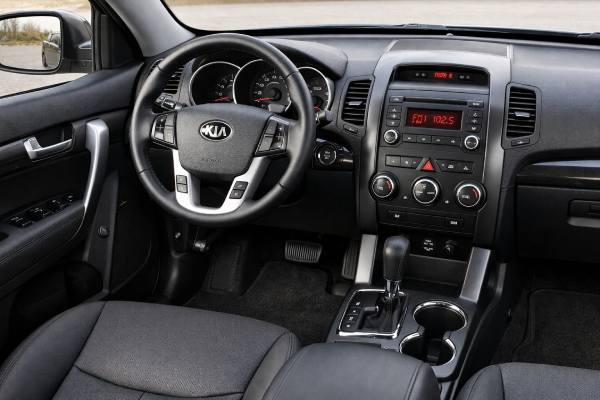
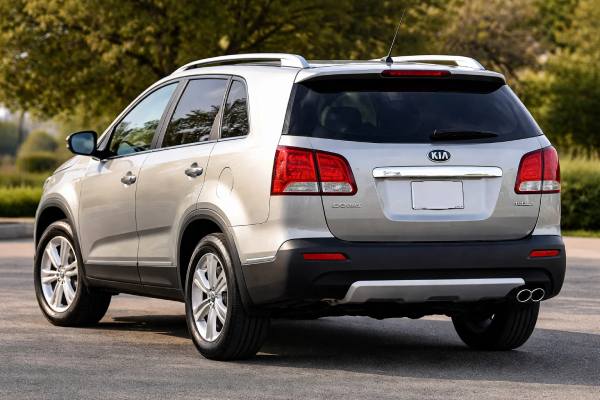
The 2010–2012 Kia Sorento XM with the 2.2 CRDi (D4HB) and on-demand AWD is one of those “do-it-all” SUVs that can quietly rack up big mileage—if you treat it like a modern diesel. It brings strong mid-range torque for real-world overtakes, a planted highway feel, and useful towing ability for its class. The trade-off is that the emissions hardware (DPF and EGR) and AWD driveline add maintenance needs that petrol or 2WD versions don’t share.
For owners, the sweet spot is a Sorento that sees regular long drives, gets correct low-ash oil, and has documented drivetrain fluid services. Buy and maintain it that way, and you can enjoy the practical cabin, confident winter traction, and a diesel powertrain that feels relaxed under load rather than strained.
Owner Snapshot
- Strong low-rpm pull makes towing and motorway merges easy, even when loaded.
- AWD adds confident traction on wet roads, snow, and gravel without constant driver input.
- Long-distance cruising is its comfort zone: stable, quiet enough, and efficient for its size.
- Short-trip use can accelerate DPF/EGR clogging; frequent interrupted regenerations are costly.
- Plan for AWD and drivetrain fluid service about every 40,000–60,000 km (or sooner with towing).
What’s inside
- Sorento XM AWD diesel overview
- Sorento XM AWD technical specs
- Sorento XM AWD equipment and safety
- Reliability hotspots and recalls
- Maintenance plan and buying tips
- Driving feel and real economy
- How it stacks up to rivals
Sorento XM AWD diesel overview
This Sorento variant combines Kia’s second-generation “XM” body with the 2.2 CRDi D4HB turbo-diesel (around 197 hp) and a part-time, electronically managed AWD system. In everyday terms, it behaves like a front-driven crossover most of the time, then sends torque rearward when front traction drops or when you demand more acceleration. That layout keeps fuel use sensible compared to a full-time 4×4, yet still gives the confidence you want for winter roads, wet grass, boat ramps, and unpaved tracks.
The D4HB’s main advantage is how it delivers effort. You don’t “rev” it to make progress—you lean on torque. That matters in a family SUV: pulling away uphill, overtaking at 80–120 km/h, and towing all feel calmer than with a smaller petrol engine. The six-speed automatic found in many markets also suits the diesel well, keeping revs low and avoiding constant shifting.
Where ownership gets more serious is emissions hardware and drivetrain complexity. Most 2010–2012 diesel Sorentos use a DPF (diesel particulate filter) that needs periodic hot-running regeneration, and an EGR system that can soot up with repeated short trips. The AWD hardware adds a rear differential and transfer case/coupling that require periodic fluid service to prevent bearing noise or clutch wear. None of this is “fragile,” but it is sensitive to neglect.
If you want the best version of this Sorento, look for a history of correct oil and filter use, evidence of diesel-friendly driving (regular longer trips), and receipts showing drivetrain fluids have been changed at least once. Treated that way, the Sorento XM AWD diesel can be a durable, high-mileage long-distance family workhorse that still feels composed with a trailer behind it.
Sorento XM AWD technical specs
Specifications vary by market (EU/UK/AU), seating (5 vs 7), wheel size, and transmission. The tables below reflect the typical 2010–2012 Sorento XM 2.2 CRDi AWD configuration and highlight where you should confirm details by VIN.
Powertrain and efficiency (D4HB 2.2 CRDi)
| Item | Typical spec (2010–2012 XM 2.2 CRDi AWD) |
|---|---|
| Code | D4HB (2.2 CRDi) |
| Layout | Inline-4, turbo-diesel |
| Valvetrain | DOHC, 4 valves/cyl (16V) |
| Bore × stroke | ~85.4 × 96.0 mm (3.36 × 3.78 in) |
| Displacement | 2.2 L (2,199 cc) |
| Induction | Turbocharged (VGT common), intercooled |
| Fuel system | Common-rail direct injection |
| Compression ratio | ~16.0:1 (market-dependent) |
| Max power | ~197 hp (147 kW) @ ~3,800 rpm (varies) |
| Max torque | ~421 Nm (311 lb-ft) @ ~1,800–2,500 rpm (varies) |
| Timing drive | Chain |
| Rated efficiency | ~7.0–7.8 L/100 km (33.6–30.2 mpg US / 40.4–36.2 mpg UK) typical combined range |
| Real-world highway @ 120 km/h | ~6.5–7.2 L/100 km (36–33 mpg US / 43–39 mpg UK) with healthy DPF and correct tyres |
Transmission and driveline
| Item | Typical spec |
|---|---|
| Transmission | 6-speed automatic (common) or 6-speed manual (market-dependent) |
| Drive type | On-demand AWD (electronically controlled coupling) |
| Differentials | Open front and rear (traction via brake-based stability system) |
Chassis and dimensions
| Item | Typical spec / range |
|---|---|
| Suspension (front/rear) | MacPherson strut / multi-link |
| Steering | Electric power steering (EPS) on many markets; ratio varies |
| Brakes | 4-wheel discs (sizes vary by trim) |
| Popular tyre size | 235/60 R18 (common), also 235/65 R17 or 235/55 R19 |
| Ground clearance | ~184 mm (~7.2 in) typical |
| Length / width / height | ~4,685 / 1,885 / 1,710 mm (184.4 / 74.2 / 67.3 in) approx. |
| Wheelbase | ~2,700 mm (~106.3 in) |
| Turning circle | ~11.0 m (~36 ft) typical |
| Curb weight | ~1,800–1,950 kg (3,968–4,299 lb) depending on trim/seating |
| GVWR | Market-dependent; commonly ~2,500–2,650 kg (5,512–5,843 lb) |
| Fuel tank | ~64 L (16.9 US gal / 14.1 UK gal) typical |
| Cargo volume | Varies by 5/7 seats; expect roughly ~500–550 L seats up, ~1,500+ L seats folded (method differs) |
Performance and capability
| Item | Typical figure (varies by trim/gearbox) |
|---|---|
| 0–100 km/h (0–62 mph) | ~9.0–10.0 s |
| Top speed | ~190–200 km/h (118–124 mph) |
| 100–0 km/h braking | ~38–41 m (dependent on tyres) |
| Towing capacity (braked/unbraked) | Often up to ~2,000 kg / 750 kg (check VIN plate) |
| Payload | Commonly ~500–650 kg (1,100–1,430 lb), equipment dependent |
Fluids and service capacities (verify by VIN)
| System | Spec and typical capacity guidance |
|---|---|
| Engine oil | ACEA C3 low-SAPS recommended for DPF; capacity commonly ~6.7 L (7.1 US qt) incl. filter |
| Coolant | Long-life OAT type in many markets; capacity often ~8–10 L total system |
| Automatic transmission | ATF spec by gearbox; total fill often ~7–8 L (service drain is less) |
| Transfer case / AWD coupling | Gear oil / specialty fluid depending on unit; often ~0.5–1.0 L |
| Rear differential | Gear oil; often ~0.6–1.0 L |
| A/C refrigerant | R134a common for this era; charge varies by market (~600–750 g typical) |
Key torque specs (typical ranges; verify)
| Fastener | Typical torque range |
|---|---|
| Wheel nuts | ~90–110 Nm (66–81 lb-ft) |
| Engine oil drain plug | ~35–45 Nm (26–33 lb-ft) |
| Differential/transfer fill and drain plugs | Often ~35–60 Nm (26–44 lb-ft) depending on plug design |
The takeaway from the tables: the Sorento XM AWD diesel is not exotic, but it is a “systems” vehicle. The diesel is happiest when emissions components stay clean, and the AWD hardware lasts longer when its fluids are treated as scheduled items—not lifetime fill.
Sorento XM AWD equipment and safety
Trim names vary widely by country (for example: LX/EX, KX-series, Platinum, or regional “Grade” packages), so it’s more useful to focus on what changes mechanically and what changes functionally.
Trims and options that matter most
Most 2.2 CRDi AWD Sorentos share the same core engine and AWD concept, but equipment packages can significantly change daily comfort and running costs:
- Wheel size (17 vs 18 vs 19 inches): Larger wheels usually sharpen steering response but can increase tyre costs, reduce ride compliance on broken surfaces, and slightly raise fuel use. For ownership value, 17–18 inch packages tend to be the sweet spot.
- 5-seat vs 7-seat layout: The third row is useful for kids, but it reduces cargo depth when in use and can add weight. Check rear suspension condition more carefully on regularly fully loaded 7-seaters.
- Transmission choice: Automatics are common and suit towing; manuals can be efficient but may bring dual-mass flywheel wear if driven hard in city traffic.
- Towing package (factory or dealer): This can change cooling, wiring, and sometimes towing limits. Verify that trailer wiring is tidy and fused correctly.
Quick identifiers to look for when the listing is vague:
- AWD models often show “AWD/4WD” on the tailgate or in cluster menus (market-dependent), and may have a driveline tunnel and rear diff visible underneath.
- The diesel typically has higher idle clatter, “CRDi” badging, and (in many markets) a stronger mid-range surge than the petrol 2.4.
Safety ratings and what they mean
For 2010–2012 XM-era Sorentos, you will typically see safety references from different rating bodies depending on region:
- Euro NCAP (Europe): Tested the Sorento around the launch period of this generation. Euro NCAP’s protocol changes over time, so compare only within the same era. Still, a strong result indicates good baseline structure and restraint performance for the period.
- ANCAP (Australia/New Zealand): Often publishes a rating that applies to specific build dates and equipment (for example, seatbelt reminder configurations). This can matter because small equipment changes can affect rating applicability.
- IIHS (USA): IIHS pages are useful for understanding crash mode performance and structural notes for US-market Sorentos. The US model-year mapping can differ from EU “first registration” years, so treat IIHS as region-specific guidance.
Safety systems and driver assistance (ADAS)
In 2010–2012, “driver assistance” usually meant stability control rather than modern camera/radar features:
- Core systems you should expect: ABS, ESC (electronic stability control), traction control, and multiple airbags (front, side, and curtain airbags on most trims).
- Child-seat provisions: ISOFIX/LATCH anchor points are typically present, but check access and anchor condition—especially on 7-seat versions where rear packaging can complicate fitment.
- Modern ADAS (AEB/ACC/lane centering): Generally not available on this era Sorento. If you see it listed, assume it is either incorrect or added via aftermarket equipment, which should be evaluated carefully for integration quality.
For owners, the practical safety move is simple: keep tyre quality high, maintain brake fluid and pads, and ensure stability control sensors (wheel speed sensors) are healthy—because those systems are doing much of the “active safety” work on this platform.
Reliability hotspots and recalls
The Sorento XM 2.2 CRDi AWD can be dependable, but its reliability profile depends heavily on usage pattern and maintenance discipline. Below is a practical map of what tends to go wrong, when it shows up, and how expensive it can become.
Common issues (most likely)
- DPF loading from short trips (medium to high cost if ignored):
Symptoms: Rising fuel use, frequent fan operation after shutdown, warning lights, limp mode, repeated “regen” requests, or oil level rising (diesel dilution).
Likely cause: Interrupted regenerations, low exhaust temperatures, or a sensor fault causing improper regen logic.
Remedy: Confirm soot/ash load with proper diagnostics, fix sensor issues (pressure/temperature), then perform a controlled regeneration. If ash load is high, cleaning or replacement may be required. Adjust driving habits: periodic sustained motorway runs help. - EGR valve/cooler soot buildup (medium cost):
Symptoms: Rough idle, hesitation, smoke, reduced power, fault codes, sometimes coolant loss if a cooler develops leaks.
Likely cause: Diesel soot plus short-trip operation.
Remedy: Cleaning or replacing the EGR valve/cooler, plus addressing the root cause (thermostat stuck open, low running temps, or neglected air filtration). - Swirl flap/intake contamination (medium cost):
Symptoms: Flat spots, inconsistent boost response, fault codes related to intake runner control.
Likely cause: Soot and oil mist deposits in intake manifold; actuator wear.
Remedy: Intake inspection/cleaning; actuator repair or replacement where applicable.
Occasional issues (depends on mileage and use)
- Turbo control and boost leaks (medium cost):
Symptoms: Underboost codes, whistling, sluggish acceleration, intermittent limp mode.
Root causes: Vacuum leaks, sticky VGT mechanism, split hoses, or intercooler leaks.
Remedy: Smoke/pressure test the charge system; check vacuum supply and solenoids; clean/repair turbo hardware as needed. - Timing chain noise (medium to high cost):
Symptoms: Rattle on cold start, noise that changes with rpm, timing correlation codes in severe cases.
Root causes: Chain stretch, tensioner wear, guide wear—often accelerated by extended oil intervals or wrong oil.
Remedy: Address early. Once a chain system is noisy, delaying can raise repair scope and cost. - AWD driveline fluid neglect (medium cost now, high later):
Symptoms: Whine/hum from rear, vibration under load, shudder during tight turns (if coupling issues), seepage at seals.
Root causes: “Lifetime” fluid assumptions, water ingress, heat from towing.
Remedy: Service transfer case and rear diff fluids on schedule; repair leaks promptly.
Rare but costly
- Injector sealing or fuel system wear (high cost):
Symptoms: Hard starting, diesel smell, misfire, excessive smoke, high correction values on diagnostics.
Remedy: Proper diesel specialist diagnostics before replacing parts; confirm rail pressure and return flow.
Recalls, service actions, and software updates
Because recalls and service campaigns differ by market and VIN range, the best approach is process-driven:
- Run the official recall check for your region and confirm completion status.
- Ask for dealer history printouts if possible; many completed actions do not appear in private paperwork.
- Scan all modules (engine and transmission especially) to check for stored faults and calibration-related issues.
A good pre-purchase sign is a seller who can show evidence of completed recall work and recent software updates where relevant. A bad sign is a vehicle with warning lights “cleared for sale” and no documentation—especially on modern diesels where emissions control issues can hide until you drive it in the right conditions.
Maintenance plan and buying tips
A maintenance plan for the Sorento XM AWD diesel should prioritize three things: clean oil (for the turbo and timing chain), healthy emissions hardware (DPF/EGR), and serviced AWD fluids (for long-term driveline quietness). Below is a practical schedule you can follow even if your local manual lists longer intervals.
Practical maintenance schedule (distance/time)
Use the shorter of distance or time.
| Item | Interval (typical best practice) | Notes |
|---|---|---|
| Engine oil and filter | 10,000–12,500 km or 12 months | Use correct low-ash (ACEA C3) oil for DPF; shorten if mostly city/short trips |
| Fuel filter | 30,000–60,000 km | Water/contamination control is critical on common-rail diesels |
| Engine air filter | 20,000–30,000 km | Sooner in dusty regions |
| Cabin filter | 15,000–20,000 km | Comfort and HVAC performance |
| Brake fluid | Every 2 years | Moisture control protects ABS/ESC components |
| Coolant | 4–5 years (then per condition) | Confirm correct spec; avoid mixing incompatible types |
| Automatic transmission fluid | 60,000–80,000 km (severe use sooner) | Especially important if towing or hot climate |
| Transfer case fluid | 40,000–60,000 km | “Lifetime” fill is not a durability strategy |
| Rear differential fluid | 40,000–60,000 km | Same logic as transfer case |
| Tyre rotation and alignment check | 10,000–15,000 km | Protects tyres and improves stability |
| Glow plugs (inspect) | By symptoms / higher mileage | Hard starting and rough cold idle cues |
| Battery test (12 V) | Annually after year 4 | Modern diesels are sensitive to low voltage |
Fluids and specs that matter
- Oil choice is not optional on DPF diesels. Low-SAPS oil (often ACEA C3) helps reduce ash accumulation in the DPF and protects turbo bearings.
- ATF and AWD oils should be treated as wear items. Heat cycles and shear degrade oils long before a unit “fails,” and fresh oil is cheap compared to bearings and couplings.
- Don’t chase “thicker oil” fixes for diesel noises. If you have timing chain rattle or turbo issues, correct diagnosis beats viscosity guesses.
Essential checks before you buy
Bring a checklist and stick to it:
- Cold start behavior: It should fire quickly with minimal smoke. Long cranking suggests glow plug, fuel pressure, injector leak-back, or low battery voltage.
- DPF health clues: Look for warning lights, strong diesel smell, or an oil level that is overfull (possible diesel dilution). If possible, scan soot load and regen history with proper diagnostics.
- Boost and intake: Drive it up a hill at low rpm and moderate throttle. It should build torque smoothly. Surging or flat spots can hint at boost leaks, sticky turbo control, or EGR issues.
- AWD function: On a low-traction surface (safely), verify it can send power rearward without harsh clunks. Listen for rear whine at steady speeds.
- Undercarriage leaks and corrosion hotspots: Check rear diff seals, transfer case area, and subframe seams. Surface rust is common; structural corrosion is not.
- Service proof: You want receipts, not promises. Especially oil changes and any drivetrain fluid services.
Which versions to seek or avoid (practical guidance)
- Seek: Vehicles with documented oil changes, correct oil spec use, and evidence of motorway use. A Sorento that regularly does longer trips is often a healthier diesel than a “city-only” example with low mileage.
- Be cautious: Short-trip commuters, vehicles with repeated DPF/EGR faults, or AWD models with no transfer case/rear diff service history.
- Best ownership match: Drivers who do mixed use with regular long drives, or tow occasionally and maintain fluids proactively.
Long-term, this Sorento rewards owners who treat it like a modern diesel SUV—because it is one.
Driving feel and real economy
The XM Sorento AWD diesel has a calm, slightly heavy-footed character that suits distance driving. It’s not trying to be a sporty crossover; it’s built to feel stable, predictable, and confident when carrying people and gear.
Ride, handling, and NVH
- Ride: On 17–18 inch wheels, it generally rides with a firm-but-controlled feel. Bigger wheels can make potholes and sharp edges more noticeable.
- Handling: The chassis is secure rather than agile. It prefers smooth inputs, but it resists crosswinds well for a tall SUV.
- Steering: Electric assistance tends to be light-to-moderate with limited road texture. Alignment matters—worn tyres or incorrect toe settings can make it feel nervous.
- Cabin noise: Expect typical diesel presence at idle, then a quieter, low-rpm cruise once settled. Tyre choice influences highway noise as much as any mechanical factor.
Powertrain character (what it feels like)
The D4HB’s torque defines the experience. In normal driving, you surf the mid-range rather than chasing rpm. Automatics usually upshift early, which keeps the engine in its efficient band. Under strong throttle, it should downshift decisively without excessive hunting. If it hunts between gears on gentle hills, check for:
- Incorrect tyre sizes (gear ratio effect)
- Dirty boost control or weak vacuum supply
- DPF restriction forcing unusual load behavior
Real-world efficiency (what owners actually see)
Real numbers depend on tyres, roof boxes, short trips, and DPF health. Typical expectations for a healthy AWD diesel Sorento:
- City: ~9.0–10.5 L/100 km (26–22 mpg US / 31–27 mpg UK)
- Highway (100–120 km/h): ~6.5–7.2 L/100 km (36–33 mpg US / 43–39 mpg UK)
- Mixed driving: ~7.5–8.5 L/100 km (31–28 mpg US / 38–33 mpg UK)
Cold weather and short journeys can raise consumption notably, not only due to warm-up losses but also because DPF regeneration events add fuel.
AWD behavior and traction
This AWD system is designed for traction, not rock crawling. On slippery surfaces, it can feel reassuringly “in the background.” You’ll notice it most when pulling away on wet inclines or accelerating out of a snowy junction. A few practical notes:
- Tyres still matter more than AWD. Good winter tyres transform the vehicle more than any drivetrain mode.
- Matched tyre circumference is critical. Uneven wear or mixed tyre models can stress the AWD coupling over time.
- Stability control strategy: The system often uses brake-based traction control to manage wheelspin, so worn brakes or low-quality pads can affect feel.
Towing and load
With the diesel’s torque, towing feels natural, but you should expect:
- A noticeable fuel penalty (often +15–30% depending on trailer size and speed)
- More heat in the driveline, making ATF and AWD fluid service more important
- Better stability with correct tongue weight and properly functioning trailer wiring
In short: it’s a strong distance tool, and when it’s maintained well, it feels “grown-up” rather than strained—even in real-world, fully loaded use.
How it stacks up to rivals
In the 2010–2012 era, the Sorento XM AWD diesel competed in a crowded space: family SUVs that needed to handle motorway travel, occasional poor weather, and the reality of child seats and luggage. Here’s where it typically lands against key rival types.
Versus Hyundai Santa Fe (similar platform cousin)
- Sorento advantages: Often feels a touch more “utility-first” in towing attitude and cabin packaging; the diesel torque delivery is very comparable.
- Santa Fe advantages: Depending on market and trim, may offer slightly different suspension tuning or interior ergonomics that some drivers prefer.
- Verdict: Choose based on service history and condition, not brand—these vehicles reward maintenance more than badge choice.
Versus Toyota RAV4 / Honda CR-V (lighter crossovers)
- Sorento advantages: More torque-forward feel, often higher towing capability, and a more planted highway stance under load.
- RAV4/CR-V advantages: Typically simpler ownership (especially petrol versions), often better city efficiency, and fewer diesel-emissions complications if you avoid diesel altogether.
- Verdict: If your driving is mostly short trips, the lighter petrol crossover can be the smarter long-term pick. If you do long distances or tow, the Sorento’s diesel makes sense.
Versus Nissan X-Trail and similar mid-size SUVs
- Sorento advantages: Strong pulling power and a robust “big SUV” feel; often better long-distance calm.
- X-Trail advantages: Depending on engine choice, may be cheaper to run in town and easier to park/own in tight cities.
- Verdict: The Sorento is better as a long-haul family carrier; smaller rivals can be better as urban tools.
Versus Volkswagen Tiguan-era diesels (European flavor)
- Sorento advantages: More space, often stronger towing posture, and a relaxed engine character when loaded.
- Tiguan advantages: Often more car-like steering and handling feel, sometimes better fuel economy, and more compact dimensions.
- Verdict: Pick Tiguan for compact agility; pick Sorento for capacity and load comfort.
The ownership decision that matters most
The Sorento AWD diesel is the right choice when your lifestyle matches what a DPF diesel wants:
- Regular longer drives
- Periodic higher-load operation (it actually helps keep systems clean)
- Proactive fluid servicing for AWD and transmission
If your reality is short trips, school runs, and stop-start traffic with rare motorway time, a petrol alternative (or a simpler 2WD configuration) can deliver a more predictable cost curve. But if you use it as intended, the Sorento XM AWD diesel can be a strong-value SUV with genuine work capability and confident all-weather traction.
References
- Kia Sorento – Euro NCAP Results 2009 2009 (Safety Rating)
- 2011 Kia Sorento 2011 (Safety Rating)
- Kia Sorento | Safety Rating & Report | ANCAP 2010 (Safety Rating)
- Kia Recalls | Kia Europe 2026 (Recall Database)
- Engine Oil Grades and Capacities 2023 (Service Guide)
Disclaimer
This article is for informational purposes only and is not a substitute for professional diagnosis, inspection, or repair. Specifications, torque values, service intervals, and procedures vary by VIN, market, model year, and fitted equipment. Always verify details using your official owner’s manual and service documentation for your exact vehicle, and consult qualified technicians when faults or warning lights appear.
If this guide helped you, please consider sharing it on Facebook, X/Twitter, or your favorite forum to support our work.