

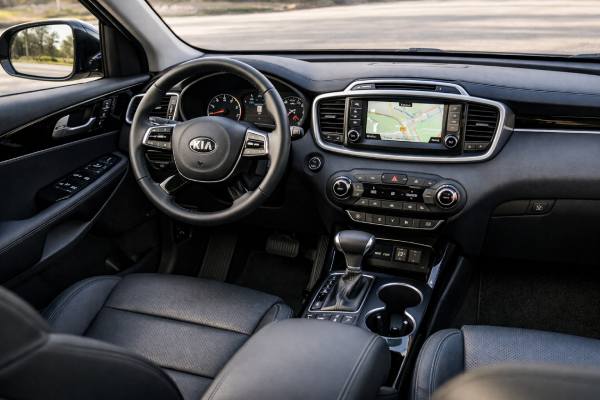

The 2018–2020 facelift Kia Sorento UM in FWD with the 2.4 GDI (G4KJ) 185 hp is the “steady daily” version of the lineup: simpler than the turbo or V6 trims, still roomy enough for real family duty, and generally cheaper to run when you stay ahead of fluids and sensors. Its engineering story is straightforward—naturally aspirated four-cylinder, conventional torque-converter automatic, and a chassis tuned for comfort—so the ownership experience depends less on exotic hardware and more on service history, software campaigns, and how it’s been used (short trips vs long highway miles). If you’re shopping used, this is the trim where documentation matters: a well-maintained 2.4 can be a solid value, while a neglected one can turn “affordable SUV” into “catch-up maintenance project.”
Owner Snapshot
- Comfortable ride and family-practical packaging without the fuel cost of the V6.
- Conventional 6-speed automatic is predictable and generally easier to service than newer complex drivetrains.
- Broad parts availability and plenty of independent-shop familiarity with this powertrain family.
- Verify engine software campaigns and listen for abnormal bottom-end noise; history is everything on the 2.4 GDI family.
- Plan engine oil changes every 10,000–12,000 km (6,000–7,500 mi) or 12 months (short-trip use: sooner).
Navigate this guide
- Kia Sorento UM FWD guide
- Kia Sorento UM 2.4 specs
- Kia Sorento UM trims and safety
- Reliability and common problems
- Maintenance schedule and buying
- Real-world driving and economy
- Rivals and smart alternatives
Kia Sorento UM FWD guide
This facelift Sorento sits in a sweet spot: it’s a mid-size crossover that feels “grown up” on the highway, yet it’s not so large that it becomes a parking-lot chore. In FWD 2.4 form, the priorities are comfort, everyday usability, and predictable ownership costs—assuming the maintenance story checks out.
What the 2.4 FWD version is best at
- Daily comfort and stability: The suspension tune is soft enough for rough urban pavement, but the chassis still tracks straight at speed.
- Family logistics: A usable third row (best for kids), wide-opening doors, and a cargo area that works for strollers, groceries, and road-trip bags.
- Lower complexity vs higher trims: No turbo plumbing, no AWD coupling hardware to service, and fewer “performance” consumables.
Where expectations should be realistic
- Performance is “adequate,” not punchy. The 2.4’s torque peak sits higher in the rev range, so brisk passing often means a downshift and noise.
- FWD traction is tire-dependent. In wet/cold climates, a good all-season (or winter tire) matters more than people expect in a 3-row crossover.
- Used-market variance is huge. Two identical-looking Sorentos can drive very differently based on oil-change discipline, cooling-system health, and whether recall/TSB actions were completed.
Facelift notes specific to 2018–2020
The facelift years mostly refine the ownership experience rather than re-invent the vehicle: infotainment and trim packaging shifted, driver-assistance availability broadened, and some drivability improvements arrived via software updates and service campaigns. Treat the “facelift” as a packaging and refinement update—and evaluate each vehicle by VIN, build date, and service record rather than assuming all 2018–2020 examples are the same.
Who should choose it
Pick this configuration if you want a straightforward family crossover with a conventional drivetrain, you drive mainly on-road, and you’re willing to be methodical about maintenance and verification steps before purchase. If you regularly tow, carry heavy loads in mountains, or want effortless passing power, the V6 variants typically fit better.
Kia Sorento UM 2.4 specs
Below are the key specifications for the UM facelift Sorento FWD with the 2.4 GDI (G4KJ) rated at 185 hp, with units presented for real-world comparison. Specs can vary by market and trim; the tables reflect the common 2018–2020-era configuration and the widely published manufacturer-style figures for the 2.4 FWD layout.
Powertrain and efficiency
| Item | Specification |
|---|---|
| Engine code | G4KJ |
| Engine layout & cylinders | Inline-4, DOHC, dual CVVT, 4 valves/cyl |
| Displacement | 2.4 L (2,359 cc) |
| Induction | Naturally aspirated |
| Fuel system | Gasoline Direct Injection (GDI) |
| Compression ratio | ~11.3:1 (market dependent) |
| Max power | 185 hp (138 kW) @ 6,000 rpm |
| Max torque | 241 Nm (178 lb-ft) @ 4,000 rpm |
| Timing drive | Chain |
| Rated efficiency | ~9.4 L/100 km combined (≈ 25 mpg US combined) |
| Real-world highway @ 120 km/h (75 mph) | Commonly ~8.5–10.0 L/100 km (27–23 mpg US), depending on wind, tires, and load |
Transmission and driveline
| Item | Specification |
|---|---|
| Transmission | 6-speed automatic (torque converter) |
| Drive type | FWD |
| Differential | Open |
Chassis, brakes, wheels, and dimensions
| Item | Specification |
|---|---|
| Suspension (front/rear) | MacPherson strut / multi-link independent |
| Steering | Electric power steering (MDPS) |
| Brakes (front/rear) | Disc / disc (diameters vary by trim and market) |
| Wheels/Tyres (most popular) | 235/65 R17 (common base fitment; 18–19 in on higher trims) |
| Ground clearance | ~185 mm (7.3 in) |
| Length / Width / Height | ~4,801 mm (189.0 in) / ~1,890 mm (74.4 in) / ~1,689 mm (66.5 in) |
| Wheelbase | ~2,779 mm (109.4 in) |
| Turning circle (kerb-to-kerb) | ~11.34 m (37.2 ft) |
| Kerb (curb) weight | ~1,720–1,780 kg (3,790–3,925 lb), trim dependent |
| GVWR | Trim dependent; verify door-jamb label |
| Fuel tank (ICE) | ~71 L (≈ 18.8 US gal / 15.6 UK gal) |
Cargo volume and seating practicality
Cargo figures depend on measurement method (VDA vs SAE) and seat configuration, but the ownership takeaway is consistent:
- Behind 3rd row: enough for a few grocery bags or compact stroller pieces.
- Behind 2nd row: practical for family luggage and bulky shopping.
- Seats down: genuinely useful moving space for flat-pack furniture and weekend projects.
If cargo is a priority, bring your largest real item (stroller, dog crate, suitcase set) to the viewing. The third row’s footprint changes the “floor shape” more than people expect.
Performance and capability
| Item | Typical value (varies by market/test) |
|---|---|
| Acceleration 0–100 km/h (0–62 mph) | ~10–11 s |
| Top speed | ~190 km/h (118 mph), market dependent |
| Towing capacity | Commonly 907 kg (2,000 lb) braked |
| Payload | Verify on door label for the exact vehicle |
Fluids and service capacities (verify by VIN)
These planning values help you budget and talk to a shop confidently, but always confirm the exact spec for your market and VIN.
| Item | What to confirm | Typical planning value |
|---|---|---|
| Engine oil | Specification and viscosity (often 5W-20 or 5W-30 by market) | ~4.5–5.0 L (4.8–5.3 US qt) with filter |
| Coolant | Long-life type and mix ratio | Usually 50/50; capacity varies |
| Transmission/ATF | Correct OEM fluid specification | Service method and capacity vary |
| Brake fluid | DOT rating per cap/manual | Replace on time more than “miles” |
| A/C refrigerant | Refrigerant type and charge | Confirm under-hood label |
| Key torque specs | Drain plug, wheel nuts, caliper bolts | Confirm in service documentation |
Kia Sorento UM trims and safety
Trims for the facelift years vary by region, but the ownership logic is consistent: with the 2.4 FWD, your biggest “trim decision” is whether you want a simple, lower-cost family hauler or you’re willing to pay more for driver-assistance features and comfort upgrades.
Common trims and what changes in practice
Even when badges differ (L/LX/EX, regional “Comfort” packages, and market-specific names), look for these functional differences:
- Wheel and tire packages: 17-inch wheels ride softer and tend to cost less to replace; 19-inch packages can feel sharper but increase tire cost and pothole risk.
- Seating and interior comfort: power driver seat, heated seats/steering wheel, leather surfaces, and third-row usability can change with trim.
- Infotainment tiers: bigger screens often add navigation, better camera views, and sometimes more stable phone integration.
- Lighting: headlight design and bulb type can vary; this matters for both visibility and replacement cost.
- Convenience hardware: power liftgate, parking sensors, and upgraded audio are “daily feel” upgrades that many owners value.
Quick identifiers when shopping used
- Engine confirmation: verify 2.4 GDI via the under-hood emissions label and VIN decoding.
- Door-jamb tire size: a fast clue to wheel package and often trim level.
- ADAS buttons and camera housings: adaptive cruise and lane support usually add steering-wheel buttons and visible camera/sensor modules.
Safety ratings: how to interpret them
Safety scores can differ by test body and by equipment (especially headlights and advanced safety options). When you read ratings:
- Confirm the exact model year and test protocol version.
- Note whether the rating assumes optional safety equipment.
- Treat headlight performance as trim-specific; the same vehicle name can have very different night-driving confidence depending on lamps and aim.
Driver assistance (ADAS) and service implications
Depending on year and trim, you may encounter:
- AEB (automatic emergency braking): helpful in low-speed traffic; can require calibration after windshield or front-end repairs.
- Lane support systems: can be sensitive to windshield replacement and suspension geometry changes (alignment matters).
- Blind-spot monitoring and rear cross-traffic alert: useful daily; sensor issues often trace to bumper damage, water intrusion, or poor repairs.
- Parking sensors and camera: check for clear image and no intermittent dropouts.
A practical shopping tip: if ADAS features matter to you, don’t assume they’re present because you see a “nice” infotainment screen. Confirm feature operation during the test drive, check for warning lights, and scan for stored diagnostic codes if possible.
Reliability and common problems
For this Sorento, reliability is less about exotic failure modes and more about a few known patterns—especially around the 2.4 GDI engine family, basic oil discipline, and the electronics you get as trims rise.
Issue map by prevalence and cost
Common (watch closely):
- Oil level neglect and extended oil-change intervals: The most preventable “big bill” pathway on many direct-injection engines is simply running low on oil or stretching intervals while doing short trips.
- Software campaigns and drivability updates: Some vehicles have factory updates aimed at monitoring engine behavior, improving drivability, or addressing warning-light logic. A VIN check and dealer service history matter.
- Direct-injection intake valve deposits (higher mileage): Can show up as rough idle, hesitant tip-in, and slightly worse fuel economy.
Occasional:
- EVAP and sensor faults: intermittent check-engine lights can come from evap leaks, purge valves, or engine sensor issues that are annoying rather than catastrophic.
- Cooling-system wear items: thermostat behavior, radiator caps, aging hoses, and coolant condition are time-and-heat driven.
- Battery and charging stability (12 V): modern vehicles are sensitive to weak batteries; odd electrical glitches can be as simple as low voltage.
Rare but high impact (VIN-dependent):
- Recall or service action items: steering, camera, or other safety-related actions can apply to certain build windows. You must confirm completion with an official VIN lookup and documentation.
Symptoms → likely cause → recommended remedy
- Blinking warning light + reduced power (limp mode):
Likely related to protective logic or a fault the ECU considers potentially harmful.
Remedy: stop hard driving, check oil level immediately, scan codes, and verify any applicable software actions. - Knock, heavy rattle, or deep ticking that follows RPM:
Could be harmless accessory noise—or something expensive.
Remedy: treat it as serious until proven otherwise; do not buy without a professional assessment and a documented service history. - Rough idle, stumble on light throttle, slower response:
Often intake deposits, vacuum leaks, or sensor/EVAP issues.
Remedy: scan for codes and fuel trims, inspect PCV and intake plumbing, and use a targeted cleaning/repair plan rather than parts-swapping. - Harsh shifts, delayed engagement, or shudder:
Can be old fluid, adaptation issues, or early solenoid/valve body behavior.
Remedy: confirm proper fluid spec, service history, and use a conservative service approach (often drain-and-fill cycles) rather than aggressive flushing.
Pre-purchase checks to request
- Complete service history with dates and mileage.
- Proof of completed recalls and service actions (VIN-based records).
- Evidence of regular oil changes and, ideally, oil level checks.
- A scan report (even a basic one) showing no stored or pending faults.
- A test drive long enough to reach full operating temperature.
Maintenance schedule and buying
If you do only one thing to protect this Sorento’s long-term cost, make it consistent maintenance—especially oil level discipline. The 2.4 GDI’s reputation is highly sensitive to neglect, short-trip operation, and “forgotten” oil changes.
Practical maintenance schedule (distance/time)
Use the tighter interval if you do short trips, heavy city use, extreme temperatures, or lots of idling.
- Engine oil and filter: every 10,000–12,000 km (6,000–7,500 mi) or 12 months; severe use: 5,000–8,000 km (3,000–5,000 mi). Check oil level monthly.
- Engine air filter: inspect every oil change; replace ~20,000–30,000 km (12,000–18,000 mi) depending on dust.
- Cabin air filter: every 15,000–20,000 km (9,000–12,000 mi) or annually.
- Coolant: follow the long-life coolant interval in the service literature; replace sooner if condition is questionable or unknown.
- Spark plugs (DI engine): commonly ~100,000 km (60,000 mi) range, but confirm by market spec and plug type.
- Timing chain: no routine “replace interval” like a belt; instead inspect for noise, timing-correlation faults, and tensioner/guide wear, and repair if out of spec.
- Serpentine/aux belt and hoses: inspect annually; replace at the first signs of cracking, glazing, noise, or seepage.
- Automatic transmission fluid (ATF): if history is unknown, plan a proper service strategy using the correct OEM fluid. Many owners prefer earlier servicing than “lifetime” claims suggest, especially with heavy city use or towing.
- Brake fluid: every 2 years is a safe, conservative interval for most climates.
- Brake pads/rotors: inspect at every tire rotation; service when thickness/condition demands it.
- Tires: rotate every 10,000–12,000 km (6,000–7,500 mi); align if you see uneven wear.
- 12 V battery: test annually after year 4; replacement commonly needed around years 4–6 depending on climate.
Ownership-focused fluid guidance
- Use the correct oil viscosity and certification for your market and climate; when in doubt, follow the under-hood label and official literature for that VIN.
- Prioritize coolant health (correct type and mix) over topping up with “whatever is available.”
- For the transmission, matching the exact ATF specification matters more than brand. Wrong fluid can cause shift quality issues and long-term wear.
Buyer’s inspection checklist (what to actually look for)
- Cold start behavior: listen for abnormal knocking/rattling, watch for smoke, and verify smooth idle.
- Oil level and condition: low oil at viewing time is a red flag regardless of what the seller says.
- Scan for codes: even if the dash is clean; pending codes matter.
- Transmission behavior: smooth engagement in R and D, consistent upshifts, and stable cruising without hunting.
- Cooling system evidence: dried coolant residue, sweet smell, heater inconsistency, or unexplained temperature changes.
- Electronics and camera function: confirm stable camera image and no intermittent dropouts.
- Brake feel and steering: no vibration under braking, no looseness, and no clunks over bumps.
- Recall/service action proof: official VIN lookup plus a dealer printout beats verbal assurances.
Which years and options make the most sense
For the 2.4 FWD buyer, the best value usually comes from a well-documented vehicle with the right safety and comfort equipment rather than chasing the newest badge. Prioritize: documented oil service, completed campaigns/recalls, and a trim with the driver-assistance features you actually want and will maintain correctly.
Real-world driving and economy
The 2.4 FWD Sorento is tuned for calm, predictable driving. If you’re coming from a smaller SUV, the first impression is often how “settled” it feels—especially on rough roads and at highway speeds.
Ride, handling, and NVH
- Ride quality: The suspension does a good job smoothing broken pavement. On 17-inch tires, it’s notably more forgiving than many sportier crossovers.
- Handling balance: It’s not sporty, but it’s stable. In quick lane changes, you’ll feel the height and weight, yet it remains controlled when tires are in good shape.
- Steering feel: electric assist is light and easy in parking lots; on-center feel is generally secure, though feedback is limited (normal for the class).
- Noise: expect more engine noise under hard acceleration (it has to rev). Cabin noise at speed is often tire-and-road-surface dominated.
Powertrain character
This engine’s torque arrives higher than many modern turbos, so the transmission will downshift to deliver passing power.
- In-town, it’s smooth and easy.
- On the highway, you plan passes a beat earlier than you would with a V6.
- Manual mode can help on long grades by holding a gear and reducing shift “busyness.”
Real-world efficiency and what changes it
Rated economy depends on market test cycles, but owner experience usually follows these patterns:
- Mixed commuting: can land near the combined rating when trips are long enough to fully warm the engine.
- 120 km/h (75 mph) highway: typically worse than gentle cruising; headwinds and roof cargo can shift results quickly on a taller vehicle.
- Cold weather and short trips: often the worst case due to longer warm-up and richer fueling.
- Tires: aggressive tread, low pressure, and oversized wheels can cost noticeable fuel.
If fuel cost is your top priority, this drivetrain rewards consistent tire pressure, clean filters, and avoiding unnecessary roof racks and cargo boxes.
Load and towing (light-duty reality)
With a typical 2,000 lb (907 kg) tow rating, this setup is meant for light trailers and occasional towing, not frequent heavy loads. If you tow:
- Keep transmission fluid condition a priority.
- Expect more downshifts on grades and higher fuel consumption.
- Use trailer brakes where required and avoid pushing payload limits.
Rivals and smart alternatives
Cross-shopping is where the Sorento 2.4 FWD can look either like a bargain or merely “average,” depending on what you value: simplicity, space, safety tech, or long-term powertrain confidence.
How it compares in everyday ownership
Versus Toyota Highlander (same era):
Highlanders often win on long-term powertrain reputation, while the Sorento can win on purchase price and features-per-dollar. If you keep cars for a decade and want the lowest drama path, Toyota is a common pick; if you want more equipment for the money, the Sorento can be compelling—provided the service record is excellent.
Versus Honda Pilot:
Pilot typically offers strong space and a capable V6 option, but pricing can be higher. The Sorento 2.4 is less about speed and more about value and comfort; the Honda’s performance reserve can feel nicer with a full load.
Versus Mazda CX-9 (turbo 2-row/3-row depending on market):
The Mazda often feels more “driver-focused” but can be tighter in third-row space. The Sorento tends to prioritize calm ride and practicality.
Versus Hyundai Santa Fe (related engineering family):
You may see similar strengths (value and packaging) and similar cautions around some engine families. Shop the specific vehicle, not just the badge: maintenance history and campaign completion are what separate “great deal” from “future expense.”
When the Sorento 2.4 FWD is the right call
Choose it when you want:
- 3-row flexibility without moving to a full-size SUV.
- A conventional automatic and a simple FWD layout.
- A comfortable ride and sensible running costs for the size.
- A used purchase you can verify properly with records and inspection.
When a different pick is smarter
Consider alternatives if:
- You frequently tow, drive steep grades with passengers, or want strong passing without noise—V6 options (in the Sorento or rivals) can be the better match.
- You prioritize “set it and forget it” longevity above all else—some rivals have fewer powertrain question marks in this era.
- You need AWD for your climate and roads—buying AWD from the start is usually better than trying to “solve” traction later.
References
- 2019 Kia Sorento Specifications 2019 (Specifications)
- 2019 Kia Sorento 2019 (Safety Rating)
- Vehicle Detail Search – 2019 KIA SORENTO | NHTSA 2019 (Recall Database)
- Part 573 Safety Recall Report 18V-656 2018 (Recall Database)
- Part 573 Safety Recall Report 23V-639 2023 (Recall Database)
Disclaimer
This article is for informational purposes only and is not a substitute for professional diagnosis, inspection, or repair. Specifications, torque values, service intervals, fluids, and procedures can vary by VIN, market, model year, and installed equipment—always verify details against the official owner’s manual and service documentation for your exact vehicle. If you found this guide useful, please consider sharing it on Facebook, X/Twitter, or your favorite forum to support our work.