
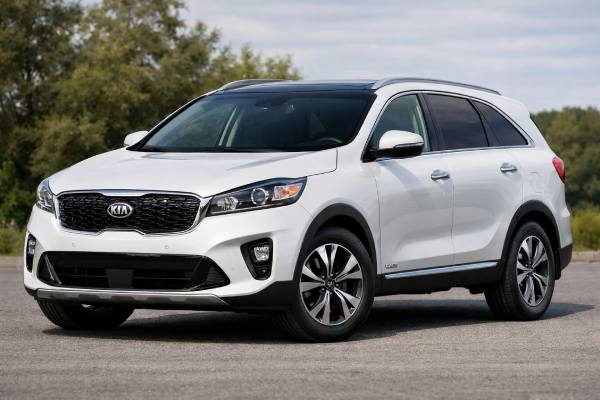
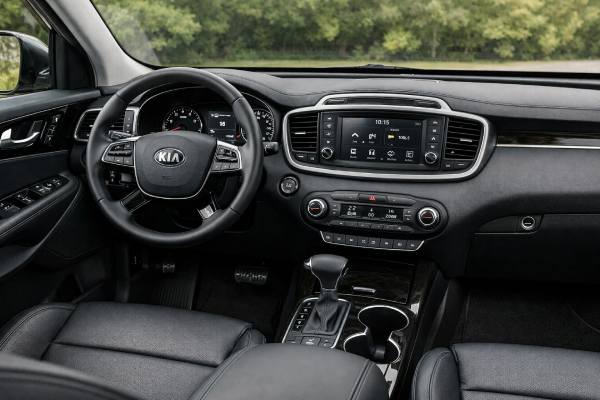

The 2018–2020 facelift Kia Sorento UM with the 2.2 CRDi (D4HB) diesel and front-wheel drive is built around one core ownership idea: usable torque with long-distance comfort. This engine’s strong mid-range pull suits a seven-seat family SUV, especially on motorways and hilly routes, where it can feel more relaxed than many small turbo-petrol alternatives. The facelift also brought a more modern cabin experience, and in many markets it paired the diesel with an 8-speed automatic that keeps revs low at speed.
Where this Sorento rewards attentive owners is in diesel-specific care: the DPF (diesel particulate filter), EGR system, and intake soot management all depend heavily on driving pattern and oil quality. Buy well, maintain it on time, and it can be a capable, refined, and efficient long-haul SUV with a practical footprint.
Quick Specs and Notes
- Strong low- and mid-rpm torque makes highway merges and loaded driving feel easy.
- Comfortable, stable ride that suits family travel and long distances.
- Practical packaging with three-row flexibility and a large cargo hold in 5-seat use.
- If most trips are short and cold, expect more frequent DPF regens and higher soot-related maintenance risk.
- Plan engine oil service every 10,000–12,000 km or 12 months (whichever comes first) for conservative ownership.
On this page
- Kia Sorento UM 2.2 diesel profile
- Kia Sorento UM D4HB spec sheet
- Kia Sorento UM diesel trims and ADAS
- Diesel reliability and known faults
- Service plan and buying tips
- Driving, towing, and economy
- Competitors for diesel Sorento
Kia Sorento UM 2.2 diesel profile
In facelift form (2018–2020), the Sorento UM’s 2.2 CRDi diesel sits in a sweet spot for buyers who want a large, calm family SUV without jumping to a premium badge. The D4HB engine is a modern common-rail turbo-diesel tuned for torque-first drivability, which matters more than peak horsepower in a vehicle that often carries passengers, luggage, or a trailer. Around town, it pulls cleanly from low revs; on the motorway, it settles into a quiet, low-rpm cruise when paired with the common 8-speed automatic.
Front-wheel drive changes the character slightly versus AWD models. You give up some snow and loose-surface traction, but you often gain a bit of simplicity, weight reduction, and potentially lower running costs. For many owners in mild climates who spend most time on paved roads, FWD is the sensible configuration—especially if the vehicle is mainly a commuter, family shuttle, and road-trip machine.
Engineering-wise, this powertrain tends to reward steady, warmed-up driving. Like most Euro 6-era diesels, it relies on emissions hardware—particularly the EGR and DPF—to keep soot and NOx in check. The best ownership pattern is simple: avoid endless short trips, give it periodic sustained runs to complete DPF regeneration, and keep oil quality high. If your use is mostly urban, you can still make it work, but your “maintenance mindset” needs to be more proactive.
As a used buy, the most important question is not “does it start and drive?” but “has it been used like a diesel wants to be used?” A Sorento that has seen regular highway mileage and consistent servicing can feel remarkably tight even at higher kilometres. One that lived a stop-start city life with delayed oil changes may come with expensive soot-related surprises.
Kia Sorento UM D4HB spec sheet
Specifications can vary by market, trim, and equipment (especially wheels, brakes, and towing certification). The tables below focus on the typical 2018–2020 facelift Sorento UM 2.2 CRDi FWD (200 hp class).
Powertrain and efficiency
| Item | Specification |
|---|---|
| Engine code | D4HB (2.2 CRDi) |
| Layout | Inline-4, turbo-diesel, DOHC, 16 valves |
| Displacement | 2.2 L (2,199 cc) |
| Induction | Turbocharger with intercooler (VGT-type in many applications) |
| Fuel system | Common-rail direct injection |
| Max power | 200 hp (147 kW) @ ~3,800 rpm (market dependent) |
| Max torque | ~440–450 Nm (325–332 lb-ft) @ ~1,750–2,750 rpm (market dependent) |
| Timing drive | Chain |
| Emissions equipment | DPF; EGR system (market dependent details) |
| Rated efficiency | Typically mid–high 5s to mid 6s L/100 km depending on test cycle and wheels |
| Real-world highway @ 120 km/h | Commonly ~6.5–7.5 L/100 km with a healthy drivetrain and correct tyres |
Transmission and driveline
| Item | Specification |
|---|---|
| Transmission | 6-speed manual or 8-speed automatic (market/trim dependent) |
| Drive type | FWD |
| Differential | Open (front transaxle) |
Chassis and dimensions
| Item | Specification |
|---|---|
| Suspension (front/rear) | MacPherson strut / multi-link |
| Steering | Electric power steering (rack type on many trims) |
| Brakes | 4-wheel discs (diameter varies by trim/wheel size) |
| Popular tyre size | Commonly 235/60 R18 or 235/55 R19 (market dependent) |
| Ground clearance | Typically around the mid-180 mm range (spec varies by wheels and market) |
| Length / width / height | ~4,800 / 1,890 / 1,690 mm (varies slightly by roof rails) |
| Wheelbase | ~2,780 mm |
| Turning circle | Typically ~11.0–11.6 m (kerb-to-kerb, market dependent) |
| Kerb weight | Often ~1,820–1,900 kg depending on seats, gearbox, and equipment |
| GVWR | Often around ~2,500 kg class (check door sticker) |
| Fuel tank | ~71 L |
| Cargo volume | Highly seating-dependent; large in 5-seat mode; smaller with third row in use |
Performance and capability
| Item | Typical value (varies by market/gearbox) |
|---|---|
| 0–100 km/h (0–62 mph) | ~9.0–10.0 s |
| Top speed | ~200–205 km/h |
| Towing capacity | Typically up to ~2,000–2,500 kg braked (verify tow plate and registration docs) |
| Payload | Commonly ~500–650 kg (depends on GVWR and kerb weight) |
Fluids and service capacities (practical owner view)
| Item | Typical guidance (confirm for your VIN) |
|---|---|
| Engine oil | Low-SAPS ACEA C2/C3 5W-30 commonly specified |
| Engine oil capacity | Around 6.5 L (with filter) |
| Coolant | Long-life OAT-type coolant (spec varies); mix commonly 50/50 where applicable |
| ATF (if automatic) | OEM-specified ATF for the installed transmission |
| A/C refrigerant | Type/charge varies by market and model year |
| Key torque specs | Wheel nuts commonly ~90–110 Nm; drain plugs and chassis fasteners vary |
Safety and driver assistance (high-level)
| Item | Notes |
|---|---|
| Crash ratings | Sorento UM line achieved strong results in Euro NCAP testing (original test year and protocol apply) |
| ADAS | Depending on trim: AEB, ACC, lane support, blind-spot monitoring, rear cross-traffic alert, traffic sign functions |
Kia Sorento UM diesel trims and ADAS
Trim names differ widely by country, but the facelift Sorento UM generally follows a familiar structure: a value-focused base grade, mid-range family trims, and a higher equipment line (often with larger wheels, upgraded lighting, and more driver assistance). For the 2.2 diesel, the biggest functional differences typically come from gearbox pairing, wheel/tyre package, and safety tech availability.
Trims and option patterns you’ll actually notice
- Transmission pairing: In many markets, higher trims lean toward the 8-speed automatic, while some entry trims keep a manual option. If you test-drive two cars, the automatic often feels quieter at motorway speeds because it can hold lower rpm.
- Wheel size: 18-inch wheels usually ride more comfortably and are less prone to rim damage on rough surfaces. 19-inch packages can sharpen response but often cost more in tyres and can increase road noise.
- Seating configuration: Many markets offer 7 seats, but some have 5-seat variants. A 7-seat Sorento is more flexible day-to-day, yet a 5-seat layout can feel roomier in the cargo area and may weigh slightly less.
- Lighting and visibility: LED headlamps and better fog lighting tend to cluster in higher trims and can materially improve night driving. If your region has long winter nights, this matters.
- Infotainment/audio: Look for factory navigation, better speakers, and larger screens on upper trims. It’s not just convenience—some safety functions (camera views, sensor displays) integrate better on the higher head units.
Safety ratings: how to read them for a facelift
Crash-test scores apply to a tested configuration under a specific protocol. The Sorento UM’s structure and restraint design are broadly consistent, but facelift updates can change equipment availability and ADAS coverage. Treat the rating as a strong baseline, then judge your specific car by what it actually has: airbags, seatbelt pretensioners, ESC, and whether AEB and lane support are fitted and working.
ADAS: what to check before you buy
Driver assistance features are great when they’re correctly calibrated and supported, but they add inspection steps:
- AEB and radar cruise: Confirm the car can detect and track vehicles smoothly. Jerky braking or frequent warnings can indicate sensor alignment or radar issues.
- Lane support: A worn steering wheel, misaligned front end, or poor-quality tyres can make lane keeping feel inconsistent.
- Blind-spot and cross-traffic: These rely on rear radar modules; accident repairs and bumper replacements can cause faults if not done carefully.
- Camera and parking sensors: A “works sometimes” reverse camera often hints at wiring fatigue or moisture issues.
If you plan to keep the car long-term, it’s worth choosing a trim where key safety systems are factory-integrated, not retrofit or partially functioning after repairs.
Diesel reliability and known faults
The D4HB 2.2 CRDi is widely used across the Hyundai–Kia family, and its core hardware can be durable. Most real-world “diesel Sorento problems” come from three themes: soot management, heat management, and maintenance history. Below is a practical issue map using prevalence and cost tier to help you prioritise.
Common (watch closely)
- DPF loading and forced regens (medium–high cost):
Symptoms: Rising fuel consumption, frequent fan operation after shutdown, warning lights, limp mode.
Root cause: Short trips, interrupted regens, poor oil choice, or sensor faults.
Remedy: Confirm correct oil spec, check differential pressure readings, fix underlying sensor/EGR issues, then complete regeneration strategy (sometimes dealer-level). - EGR and intake soot (medium cost):
Symptoms: Hesitation, rough idle, smoke, reduced torque, recurring fault codes.
Root cause: Soot accumulation in EGR paths and intake manifold.
Remedy: Cleaning or replacement depending on severity; address driving pattern and service intervals. - Boost leaks from hoses/clamps (low–medium cost):
Symptoms: Whooshing under load, reduced power, oily mist near intercooler piping.
Root cause: Age-hardened hoses, loose clamps, small splits.
Remedy: Replace hoses/clamps; pressure test the charge system.
Occasional (depends on use and servicing)
- Injector sealing and fuel system sensitivity (medium–high cost):
Symptoms: Hard start, diesel smell, knocking, excessive smoke, poor economy.
Root cause: Seal leakage, injector wear, fuel contamination.
Remedy: Leak-off testing, seal service, and strict fuel filter discipline. - Turbo actuator or vane control issues (medium–high cost):
Symptoms: Underboost/overboost codes, limp mode, inconsistent surge.
Root cause: Sooted variable geometry mechanism or actuator wear.
Remedy: Cleaning, actuator replacement, or turbo service depending on damage.
Rare but expensive (verify history)
- Cooling-system neglect leading to overheating (high cost):
Symptoms: Temperature spikes, coolant loss, heater output changes.
Root cause: Leaks, stuck thermostat, radiator efficiency loss.
Remedy: Pressure test, component replacement, correct coolant refill and bleeding.
Software and calibrations
Modern diesels often rely on ECU logic to manage EGR rates, DPF regeneration, and sensor thresholds. If you see repeated warnings without clear mechanical faults, ask for evidence of official software updates and diagnostic printouts. A correct reflash can resolve driveability quirks and unnecessary regen frequency in some cases.
Pre-purchase checks to request
- Full service records with dates, mileage, and oil spec notes.
- Proof of recent fuel filter service and clean air filtration.
- Scan for stored emissions-related codes, not just the dashboard light status.
- Evidence of regular longer drives (or at least a lifestyle that suits diesel operation).
A diesel Sorento can be a strong used buy—but only if it has been treated like a diesel, not like a short-hop city car.
Service plan and buying tips
A good maintenance plan for the Sorento UM 2.2 diesel balances official intervals with real-world conditions. The safest approach is to shorten oil intervals, stay strict on filters, and treat the emissions system as a maintenance item—not a mystery box.
Practical maintenance schedule (distance/time)
- Engine oil and filter: every 10,000–12,000 km or 12 months (conservative), especially for mixed or city use.
- Air filter: inspect every 15,000 km; replace typically 30,000 km (sooner in dusty areas).
- Cabin filter: 15,000–20,000 km or annually for comfort and HVAC performance.
- Fuel filter: typically 30,000–40,000 km (or every 2 years), sooner if fuel quality is uncertain.
- Brake fluid: every 2 years.
- Coolant: commonly 5 years then interval-based (verify the exact coolant spec for your market).
- Automatic transmission fluid (if fitted): consider 60,000–80,000 km service for long-term ownership, especially with towing or heavy traffic.
- Serpentine belt and hoses: inspect annually; replace by condition (cracks, glazing, squeal).
- Glow plugs (diesel): inspect by symptoms; more relevant in cold climates after higher mileage.
- Battery and charging system: test yearly; plan replacement around 4–6 years depending on climate and usage.
Fluids and specifications (owner decision level)
- Use the correct low-SAPS oil specification for DPF-equipped diesels. The wrong oil increases ash loading in the DPF and can shorten its life.
- Always match coolant type (do not mix incompatible formulas). If history is unknown, a proper drain/refill with the correct coolant is safer than topping up blindly.
Buyer’s guide: what to look for on inspection
- Cold start: should start promptly with minimal smoke; excessive cranking or uneven idle suggests fuel or glow system issues.
- Road test under load: accelerate from 1,500–3,000 rpm. The pull should be smooth; sudden flat spots can indicate boost leaks or EGR issues.
- Transmission behaviour: if automatic, check for shudder at steady speeds and harsh downshifts; if manual, listen for DMF chatter and feel for clutch slip.
- DPF cues: ask about warning lights, recent forced regens, and typical trip lengths.
- Cooling system: inspect for dried coolant residue, sweet smell, or low reservoir level.
- Tyres and alignment: uneven wear can indicate suspension bushing wear or previous accident repairs.
Which versions to seek (general guidance)
- For comfort and cost control: 18-inch wheels and a well-documented service history beat “top trim with unknown maintenance” almost every time.
- For frequent towing or heavy loads: prioritise a car with documented transmission and cooling-system care, and verify the tow rating on the vehicle’s plate/documentation.
Long-term durability is very achievable here, but the car needs a caretaker mindset—especially around oil, filters, and diesel emissions components.
Driving, towing, and economy
On the road, the 2.2 diesel Sorento feels like it was tuned for effortless progress rather than excitement. The steering is typically light-to-moderate and prioritises stability; the chassis is calm at speed, and the suspension is set up to manage family loads without constant fidgeting. With 18-inch tyres, the ride usually has a rounded, “big SUV” compliance that suits poor road surfaces. Larger wheels can add firmness and more impact harshness over sharp edges.
Powertrain character
The D4HB’s torque delivery is the headline. Most of the usable shove arrives early, which means you don’t need to chase revs. In everyday driving, it rewards short-shifting (manual) or steady throttle (automatic). If equipped with the 8-speed automatic, you’ll usually feel:
- Low rpm at cruise, which reduces noise and can help economy.
- Strong mid-range response for passing without dramatic downshifts.
- Occasional “gear hunting” on rolling terrain if you hover at the edge of a gear—often reduced by using a sport or manual mode selectively.
Real-world economy
Real-world results depend heavily on speed and trip length. Typical owner patterns often look like:
- Highway (100–120 km/h): ~6.5–7.5 L/100 km when healthy and warmed up.
- Mixed use: ~7.0–8.5 L/100 km depending on traffic and load.
- City-heavy, short trips: ~8.5–10.0 L/100 km and increased regen frequency.
Cold weather can push consumption up meaningfully, and repeated short trips are where DPF and EGR stress rises the most.
Towing and load behaviour
When towing within the certified limit, the diesel’s torque makes the Sorento feel composed—especially on gentle grades. What matters is temperature management and braking discipline:
- Expect a noticeable consumption increase under tow (often 20–40% depending on trailer shape and speed).
- Use lower gears on descents to reduce brake heat.
- Keep tyres, alignment, and brakes in top condition; they carry the safety load more than the engine does.
If towing is a regular job, factor in more frequent transmission service, more frequent brake inspections, and stricter oil-change discipline.
Competitors for diesel Sorento
Diesel seven-seat SUVs are a shrinking category in many regions, but the Sorento UM still lines up against a few well-known alternatives. The best choice usually depends on whether you value third-row usability, driving feel, or long-term running costs.
If you want a similar family mission
- Hyundai Santa Fe (similar diesel era): Often very close mechanically and philosophically—comfortable, torque-rich, family-first. Choose based on price, condition, and equipment rather than badge.
- Skoda Kodiaq 2.0 TDI: Typically feels more “European” in steering and cabin layout, and can be very efficient. Third-row space varies by configuration, and equipment/option complexity can be higher.
- Peugeot 5008 diesel: Strong packaging and efficiency with a lighter feel, but it can be more sensitive to maintenance detail and drivetrain choices depending on model year.
If towing and stability are priorities
- Volkswagen Tiguan Allspace 2.0 TDI: Often competent and refined, though towing certification and gearbox variants differ widely by market.
- Nissan X-Trail diesel (where available): Practical and often good value used, but drivetrain and refinement vary substantially by generation and spec.
Where the Sorento FWD diesel tends to win
- Torque and relaxed cruising that suits long-distance family travel.
- Straightforward practicality with a genuinely useful cabin layout in many trims.
- Ownership value when bought with full history and maintained correctly.
Where rivals can beat it
- Some competitors offer sharper handling or a more modern infotainment experience depending on year.
- Certain European diesels can return slightly better fuel economy at lower speeds due to gearing and weight.
- If you regularly drive in snow, an AWD rival (or an AWD Sorento) can be a better fit than this FWD variant.
A good rule: if your use is mostly paved roads and long trips, the Sorento FWD diesel is a strong match. If your life includes frequent snow, muddy tracks, or steep wet launches with a trailer, consider an AWD configuration or a rival with a stronger traction advantage.
References
- Engine Oil Grades and Capacities 2023 (Service Document)
- Service Intervals V25.1 2024 (Service Document)
- Kia Sorento – Euro NCAP Results 2014 2014 (Safety Rating)
- MergedFile 2020 (Brochure and Specs)
Disclaimer
This article is for informational purposes only and is not a substitute for professional diagnosis, inspection, or repair. Specifications, torque values, service intervals, and procedures can vary by VIN, market, model year, and equipment level. Always verify details using the correct official owner’s manual and service documentation for your specific vehicle, and follow local regulations for towing and modifications.
If you found this guide useful, please consider sharing it on Facebook, X (Twitter), or your favorite forum to support our work.