


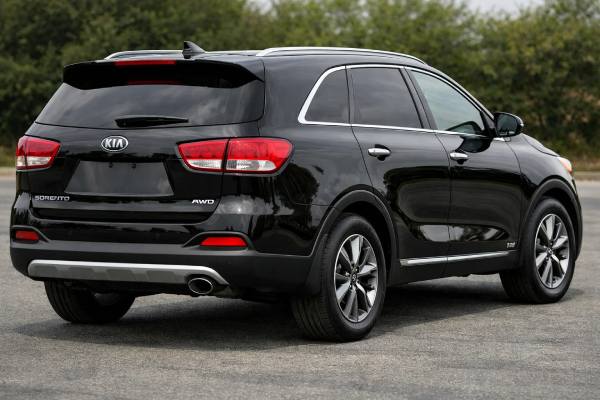
The 2015–2017 Kia Sorento UM with the 2.2 CRDi diesel (D4HB) is built around one core idea: deliver big-SUV torque and long-distance efficiency without the size and fuel thirst of a body-on-frame truck. In front-wheel-drive form, it tends to feel a touch lighter and more direct than the AWD version, while still offering the same strong mid-range pull that makes motorway passing and loaded family trips easier. The engine’s modern common-rail injection and turbocharging give it a wide, usable torque band, but ownership also comes with diesel-specific responsibilities—especially around emissions hardware like the DPF (diesel particulate filter) and EGR system. If you maintain it with the right oil specification, drive it in a way that lets it complete regenerations, and keep up with fluid services, this Sorento can be a capable, comfortable, high-mileage family SUV.
Owner Snapshot
- Strong low-rpm torque makes towing and motorway driving feel relaxed, even with passengers and luggage.
- FWD layout typically means slightly lower weight and fewer drivetrain parts to service than AWD.
- Diesel emissions hardware (DPF/EGR) needs the right driving pattern; repeated short trips raise clogging risk.
- Use the correct low-SAPS oil (ACEA C2/C3) and replace it on time to protect the turbo and DPF system.
- Plan for an oil service at least every 12 months (or sooner with heavy city use), even if mileage is low.
What’s inside
- Sorento UM 2.2 diesel profile
- Sorento UM diesel specs table
- Sorento UM trims and safety tech
- Common faults and fixes
- Service plan and buying tips
- Road manners and economy
- Rival check for value
Sorento UM 2.2 diesel profile
This Sorento variant sits in a sweet spot for drivers who want a true family SUV—high seating, real cargo capacity, and long-distance comfort—but also want the fuel range and pulling power that a modern diesel can offer. The D4HB 2.2 CRDi is the “workhorse” engine in many markets: it delivers strong torque low in the rev range, so the Sorento doesn’t need to downshift constantly on hills or when overtaking. In everyday driving, you’ll notice that the engine’s best effort happens well before redline; it’s designed to surf torque rather than chase rpm.
Front-wheel drive changes the character in subtle but important ways. With fewer rotating drivetrain components than AWD, the FWD Sorento can feel a little more responsive to throttle changes and slightly calmer in tight urban manoeuvres. It also tends to be cheaper to maintain over the long run because you avoid rear drivetrain fluids and components. The trade-off is traction: on wet grass, steep gravel driveways, or snow, the torque that feels so effortless on the motorway can overwhelm the front tyres more easily. Good tyres matter more here than many owners expect.
Engineering-wise, the key ownership theme is emissions aftertreatment. This engine relies on systems such as the EGR (exhaust gas recirculation) circuit and a DPF to meet emissions targets. Those parts work well when the vehicle sees regular longer runs and reaches full operating temperature. If the Sorento lives on short, cold trips, soot loading rises, regeneration may be interrupted, and the car can start asking for service or forcing frequent regens. That doesn’t make the vehicle “bad”—it just means this configuration rewards the right usage pattern.
If your driving is mostly mixed or motorway, the 2.2 diesel Sorento UM FWD is often a strong ownership match: comfortable, stable at speed, and capable with passengers and gear. If your driving is mostly short city hops, it can still work, but you’ll need a more disciplined maintenance approach and occasional planned longer drives.
Sorento UM diesel specs table
The tables below focus on the 2015–2017 Sorento UM with the D4HB 2.2 CRDi diesel and front-wheel drive. Many specs vary slightly by market, seating (5 vs 7), wheel size, and transmission, so treat performance and weights as typical ranges rather than absolutes.
Powertrain and efficiency
| Item | Specification |
|---|---|
| Engine code | D4HB |
| Layout and cylinders | Inline-4 (I-4), DOHC, 16-valve |
| Displacement | 2.2 L (2,199 cc) |
| Induction | Turbocharged (VGT) |
| Fuel system | Common-rail direct injection |
| Compression ratio | ~16.0:1 (market-dependent) |
| Max power | 200 hp (147 kW) @ 3,800 rpm |
| Max torque | 441 Nm (325 lb-ft) @ ~1,750–2,750 rpm |
| Timing drive | Chain |
| Emissions equipment | EGR + DPF (and market-dependent NOx control) |
| Rated efficiency | Typically ~6.0–7.0 L/100 km (39–34 mpg US / 47–40 mpg UK), market and test-cycle dependent |
| Real-world highway @ 120 km/h (75 mph) | Often ~7.5–8.5 L/100 km (31–28 mpg US / 38–33 mpg UK), tyres and load dependent |
Transmission and driveline
| Item | Specification |
|---|---|
| Transmission | Commonly 6-speed automatic (market-dependent); 6-speed manual in some regions |
| Drive type | FWD |
| Differential | Open (traction managed by ESC/brake control) |
Chassis and dimensions
| Item | Specification |
|---|---|
| Suspension (front/rear) | MacPherson strut / multi-link (typical for UM) |
| Steering | Electric power steering |
| Brakes | 4-wheel disc (vented front), sizes vary by wheel package |
| Popular tyre size | 235/65 R17 or 235/55 R19 (varies by trim/market) |
| Ground clearance | ~185 mm (7.3 in) (varies slightly by trim) |
| Length / width / height | ~4,780 mm (188.2 in) / 1,890 mm (74.4 in) / ~1,685 mm (66.3 in) |
| Wheelbase | ~2,780 mm (109.4 in) |
| Turning circle (kerb-to-kerb) | ~11.0 m (36.1 ft) typical |
| Curb weight | Typically ~1,750–1,850 kg (3,858–4,079 lb), seating and transmission dependent |
| GVWR | Often ~2,450–2,550 kg (5,401–5,622 lb), market dependent |
| Fuel tank | Often ~71 L (18.8 US gal / 15.6 UK gal), market dependent |
| Cargo volume | Market dependent; typically ~600 L (≈21 ft³) seats up, expanding substantially with rows folded (method varies VDA/SAE) |
Performance and capability (typical)
| Item | Specification |
|---|---|
| 0–100 km/h (0–62 mph) | ~8.7–9.6 s (transmission and trim dependent) |
| Top speed | ~200–205 km/h (124–127 mph) |
| Braking 100–0 km/h | Commonly ~36–40 m (setup and tyres dependent) |
| Towing capacity | Often up to ~2,000 kg (4,409 lb) braked in many markets (verify by VIN/plate) |
| Payload | Often ~600–700 kg (1,323–1,543 lb), market dependent |
Fluids and service capacities (decision-useful)
| Item | Specification |
|---|---|
| Engine oil | ACEA C2/C3 low-SAPS; commonly 5W-30 |
| Engine oil capacity | 6.5 L (6.9 US qt) (with filter) |
| Coolant | Ethylene glycol long-life coolant; mix per label (often 50/50) |
| Automatic transmission fluid | ATF spec varies by transmission; confirm exact fluid by VIN |
| A/C refrigerant | R-134a (many 2015–2017 builds) or market-dependent alternative; confirm under-hood label |
Key torque specs (critical fasteners only, typical ranges—verify by service manual):
- Wheel lug nuts: ~90–110 Nm (66–81 lb-ft)
- Engine oil drain plug: ~30–40 Nm (22–30 lb-ft)
- Front brake caliper carrier bolts: commonly ~90–120 Nm (66–89 lb-ft)
Safety and driver assistance (platform-level)
| Item | Notes |
|---|---|
| Euro NCAP (2014 Sorento test) | 5 stars; Adult 90%, Child 83%, Pedestrian 67%, Safety Assist 71% |
| Airbags | Typically front + front side + curtain (count and coverage vary) |
| Child seats | ISOFIX/LATCH availability depends on market seating configuration |
| ADAS | Many 2015–2017 trims focus on ESC, hill-start assist, parking sensors/camera; advanced AEB/ACC are market/trim dependent |
Sorento UM trims and safety tech
Trim names vary widely by country, but most 2015–2017 Sorento UM line-ups follow a familiar pattern: a value-focused base grade, a mid-trim with comfort and tech, and a higher trim with premium interior and driver-assist upgrades. For the 2.2 diesel FWD, the most important “trim differences” are often mechanical by implication—wheel and tyre sizes, brake package sizing, and sometimes cooling capacity or tow-rating certification—rather than dramatic engine changes.
Trims and options: what typically changes
Common equipment differences you’ll see across grades:
- Wheel and tyre packages: 17-inch wheels with taller sidewalls usually ride more comfortably and can be more forgiving on poor roads; 19-inch packages sharpen steering response but can increase tyre cost and road noise.
- Seating layout: Many markets offered both 5-seat and 7-seat configurations. The third row is best treated as occasional-use for adults, but it’s valuable for short family trips.
- Infotainment tiers: Base units may have simpler displays and fewer connectivity features; higher trims often add factory navigation, better audio, and more USB/charging points.
- Parking equipment: Rear camera, front/rear sensors, and park assist features become more common as you climb trims—useful on a wide SUV.
Quick identifiers when shopping used
If you’re inspecting a used example without perfect paperwork, these cues help:
- Tyre size on the sidewall tells you a lot about the original spec (and whether the car still wears its correct wheel package).
- Rear HVAC controls and roof vents often correlate with higher trims and/or 7-seat models.
- Presence of factory tow electrics or a properly integrated tow module can indicate the vehicle was set up for towing use, which should trigger closer inspection of service history.
Safety ratings and what they mean for owners
For European-market vehicles, the Sorento achieved a five-star Euro NCAP rating in the 2014 test cycle, with strong adult and child occupant scores. That does not mean every trim is identical; it means the tested configuration met the requirements of that test version. Pay attention to:
- Tyre condition and braking system maintenance: these influence real stopping distances far more than most owners realise.
- Headlights: higher trims may include stronger lighting performance. On an SUV used for motorway driving, headlight quality is a safety feature, not a luxury.
Safety systems and ADAS: standard vs optional reality
Across 2015–2017, most Sorento UM diesels include:
- ESC (stability control) and traction management
- Hill-start assist
- Multiple airbags (coverage varies by market and seating)
More advanced ADAS (AEB, adaptive cruise, lane support) can be trim- and market-dependent in these years. If your priority is modern driver assistance, verify by VIN build sheet and confirm that the relevant sensors are present (camera modules, radar units, and correct bumper inserts). Also remember: after windshield replacement, alignment work, or front-end repairs, some systems require calibration to function properly.
Common faults and fixes
A well-maintained D4HB Sorento can cover high mileage, but the reliability story is shaped by how diesel systems age. Below is a practical map of what tends to show up, when it appears, and what usually fixes it. Think in two categories: diesel-emissions health (DPF/EGR) and high-torque wear (mounts, driveline, turbo plumbing).
Common (seen often on mixed-use diesels)
- DPF soot loading / frequent regeneration
- Symptoms: DPF warning, rising fuel use, fan running after shutdown, rough idle during regen, limp mode in worst cases.
- Likely cause: repeated short trips, interrupted regens, incorrect oil type (non low-SAPS), or underlying sensor/EGR issues.
- Remedy: restore correct oil spec, ensure the car completes regens (planned longer drives), check differential pressure sensor lines, and address EGR faults. Forced regen may be needed if soot load is too high.
- EGR valve or cooler fouling
- Symptoms: hesitation, smoky acceleration, fault lights, uneven idle.
- Likely cause: soot accumulation, especially with lots of low-load driving.
- Remedy: cleaning or replacement depending on severity; make sure the root cause (driving pattern, sensors, boost leaks) is addressed or it returns.
- Boost leaks (intercooler hoses and clamps)
- Symptoms: reduced power, whistle/woosh noises, oily residue near hose joints, sometimes overboost/underboost codes.
- Likely cause: hose aging, clamp relaxation, minor splits.
- Remedy: pressure-test intake tract, replace damaged hoses, and recheck after a few weeks.
Occasional (not rare, but not universal)
- Turbo actuator or variable-geometry sticking
- Symptoms: inconsistent power, limp mode under load, boost control faults.
- Cause: soot/heat cycling, actuator wear, vacuum/solenoid issues (depending on design).
- Remedy: diagnosis must confirm whether it’s the actuator, control solenoid, or the turbo mechanism itself.
- Cooling system seepage (hoses, radiator end tanks, thermostat housing)
- Symptoms: coolant smell, slow level drop, damp areas on undertray.
- Cause: age-related seal hardening and hose fatigue.
- Remedy: fix leaks early; diesels run high thermal loads, and overheating can snowball into bigger problems.
- Engine mounts and drivetrain “thump”
- Symptoms: clunk when shifting from drive to reverse, vibration at idle.
- Cause: mount wear accelerated by diesel torque.
- Remedy: replace worn mounts; check lower torque mount carefully.
Rare but high-cost (worth screening before purchase)
- High-pressure fuel system contamination
- Symptoms: hard starting, misfire, metallic debris in fuel filter, injector faults.
- Cause: contaminated fuel or internal pump wear.
- Remedy: can escalate to pump/injector replacement; strict fuel filter changes help reduce risk.
- Timing chain stretch (high mileage / poor oil discipline)
- Symptoms: rattle on cold start, correlation faults, loss of smoothness.
- Cause: long oil intervals, wrong oil, high soot load.
- Remedy: inspect timing components; replace if out of spec.
Recalls, service actions, and software
Even when a vehicle feels fine, ECU/TCU updates can matter for driveability, emission monitoring, and fault sensitivity. Best practice on a used Sorento is simple:
- Ask for dealer printout showing completed recalls and campaigns.
- Confirm that any warning lights have been fixed with the correct root-cause repair, not just cleared.
- If the vehicle has ADAS features, check for calibration history after windshield or bumper work.
Service plan and buying tips
A diesel Sorento rewards owners who think in systems. The goal is to keep oil quality high, prevent soot-related problems, and stay ahead of wear items that torque and vehicle weight naturally accelerate.
Practical maintenance schedule (distance/time)
Use this as a conservative real-world plan. If your official manual specifies different intervals for your market and VIN, follow the official document.
| Item | Interval (typical) | Notes |
|---|---|---|
| Engine oil and filter | 15,000–30,000 km (10,000–20,000 mi) or 12 months | Short trips, towing, and city driving justify the shorter end. Use ACEA C2/C3 low-SAPS. |
| Engine air filter | 30,000 km (20,000 mi) or 24 months | Dusty climates: check every oil service. |
| Cabin filter | 15,000–30,000 km (10,000–20,000 mi) | Helps HVAC performance and reduces blower strain. |
| Fuel filter (diesel) | 30,000–60,000 km (20,000–40,000 mi) | Critical for injector and pump life. |
| Coolant | 5 years / 100,000–150,000 km | Replace sooner if contamination or leaks appear. |
| Brake fluid | Every 2 years | Moisture reduces braking performance. |
| Transmission fluid (6AT) | 60,000–90,000 km (40,000–60,000 mi) | Earlier if towing or heavy city use. |
| Tyre rotation and alignment | Rotate every 10,000–12,000 km (6,000–7,500 mi) | Alignment saves tyres and improves stability. |
| Battery test | Annually after year 4 | Diesels rely heavily on healthy 12 V systems. |
Fluids, specs, and “don’t guess” items
- Engine oil specification matters more than brand. Low-SAPS oils (ACEA C2/C3) protect the DPF and support long-term turbo health.
- ATF is not universal. Use the exact approved fluid for the installed transmission; mixing “close enough” fluids can create shift issues over time.
- Coolant type and mix ratio should match the label or service literature.
Buyer’s inspection checklist (diesel-specific focus)
When viewing a used car, you want to catch patterns, not just faults.
- Cold start behaviour: Listen for abnormal rattles, note cranking speed, and watch for excessive smoke.
- Boost and torque delivery: Under steady acceleration, the engine should pull smoothly without surging.
- DPF/EGR clues: Ask about driving pattern (short trips vs motorway). Frequent warning lights or “it just needed a reset” stories are red flags.
- Oil service history: Look for the correct oil spec and consistent timing. Long gaps matter on a diesel.
- Cooling system: Check coolant level and signs of dried residue on hoses or radiator edges.
- Tyres and brakes: Uneven tyre wear hints at alignment or suspension bushing wear; heavy SUVs reveal neglected brakes quickly.
Which versions to seek or avoid
- Seek: cars with documented oil services, evidence of regular longer drives, and clean underbody condition.
- Be cautious: vehicles used almost exclusively for short city runs, especially if the owner cannot describe DPF behaviour or maintenance history.
Long-term durability outlook: if you match the diesel to the right usage pattern and keep to quality fluid service, the platform can be a dependable high-mileage family SUV. If you ignore oil spec, skip fluid changes, and do only short trips, it tends to become an emissions-maintenance project.
Road manners and economy
On the road, the Sorento UM diesel feels like a vehicle designed for distance. The cabin is generally quiet at a steady cruise, and the engine’s torque means it rarely feels strained. In FWD form, steering response can feel slightly lighter than AWD equivalents, and the car often feels a bit less “busy” through the drivetrain in low-speed manoeuvres. The Sorento is still a tall, substantial SUV, so the driving experience is more about stability and comfort than sporty cornering.
Ride, handling, and NVH (noise, vibration, harshness)
- Ride quality: With 17-inch wheels and taller tyres, the Sorento tends to absorb broken pavement well. Larger wheels improve turn-in but can transmit more sharp impacts.
- Handling balance: Expect safe, predictable understeer near the limit. It’s tuned for family confidence, not rotation.
- Steering feel: Electric steering is typically light-to-moderate; feedback is adequate, not talkative.
- Braking feel: Strong initial bite depends heavily on pad compound and rotor condition. A well-maintained system should feel stable and consistent on repeated stops.
Powertrain character
The D4HB’s personality is defined by its mid-range. From roughly 1,700 rpm upward, the engine’s torque makes the Sorento feel eager without needing high rpm. That’s ideal for overtakes and hills. With an automatic, you’ll often feel one decisive downshift and then a strong, sustained pull. With a manual, the engine is forgiving, but clutch and flywheel condition becomes a key long-term wear factor.
Because it’s FWD, traction is the limiting factor on slippery surfaces. Under hard acceleration in the wet, the front tyres may spin or the traction control may intervene. Good tyres and sensible throttle are the solution.
Real-world efficiency expectations
Diesel SUVs can look excellent on a test cycle and merely “good” in real life. For many owners, realistic numbers look like this:
- City (stop-start): ~8.0–9.5 L/100 km (29–25 mpg US / 35–30 mpg UK) depending on traffic and warm-up time
- Highway (100–120 km/h / 60–75 mph): ~7.0–8.5 L/100 km (34–28 mpg US / 40–33 mpg UK)
- Mixed driving: ~7.5–8.5 L/100 km (31–28 mpg US / 38–33 mpg UK)
Cold weather, short trips, roof boxes, and heavy tyres can push consumption upward. Towing typically adds a noticeable penalty; a 20–40% increase is a reasonable planning number depending on trailer size and speed.
Towing and load behaviour
The 2.2 diesel is well suited to towing because it produces torque where you actually use it. What matters most is heat and maintenance:
- Keep transmission fluid service conservative if you tow regularly.
- Make sure cooling components (radiator, hoses, fans) are in good condition.
- Use correct tyre pressures for load and recheck brakes more frequently.
Rival check for value
In the 2015–2017 used-SUV landscape, the Sorento UM 2.2 diesel FWD competes less on “headline acceleration” and more on the combination of torque, space, and ownership practicality. Here’s how it typically stacks up against common alternatives in markets where diesel midsize SUVs were popular.
Hyundai Santa Fe (similar era, diesel)
Why cross-shop: Closely related engineering in many regions, similar interior space, comparable diesel torque.
Sorento advantage: Often feels slightly more family-focused in seating flexibility and storage details.
Santa Fe advantage: Depending on trim, it may offer a different suspension tune and feature mix that some drivers prefer.
Nissan X-Trail (2.0 dCi in some markets)
Why cross-shop: Efficient packaging and often competitive running costs.
Sorento advantage: More torque and a heavier-duty feel when fully loaded; often better for towing.
X-Trail advantage: Lighter feel in the city and sometimes lower tyre and brake costs.
Skoda Kodiaq (2.0 TDI, later overlap)
Why cross-shop: Excellent space efficiency and strong practicality, especially in later model years.
Sorento advantage: The 2.2 diesel’s torque delivery feels effortless, and the Sorento often represents stronger value on the used market.
Kodiaq advantage: Newer platform features and, depending on year, more modern driver-assist availability.
Toyota and Honda alternatives (diesel availability varies)
Where Toyota or Honda diesels exist, they’re often valued for brand reputation. The Sorento’s strongest counterargument is straightforward: it’s frequently a better “torque-per-money” purchase, and it can offer a lot of SUV for the price—if you buy one with the right service history.
The bottom-line value judgment
Choose the Sorento UM 2.2 diesel FWD if you want:
- A relaxed, torque-rich motorway vehicle
- Real family space with optional third-row flexibility (market dependent)
- Potentially simpler long-term maintenance than AWD variants
- A used-price sweet spot versus newer rivals
Look elsewhere if:
- Your driving is almost all short city trips (DPF/EGR risks rise)
- You need maximum traction in winter conditions without relying on tyres alone
- You prioritize the newest ADAS features across the board
The best Sorento diesel is not the cheapest one—it’s the one with the cleanest, most consistent service story and a usage pattern that fits how diesel emissions systems stay healthy.
References
- The Kia SORENTO 2015 (Brochure)
- Engine Oil Grades and Capacities 2023 (Service Maintenance)
- OWNER’S MANUAL QUICK REFERENCE GUIDE 2015 (Owner’s Manual)
- Kia Sorento – Euro NCAP Results 2014 2014 (Safety Rating)
Disclaimer
This article is for informational purposes only and is not a substitute for professional inspection, diagnosis, or repair. Specifications, torque values, service intervals, and procedures can vary by VIN, market, drivetrain, and equipment; always verify details using official Kia documentation for your exact vehicle and follow qualified technician guidance when needed.
If you found this guide useful, please consider sharing it on Facebook, X (Twitter), or your favourite forum to help support our work.