

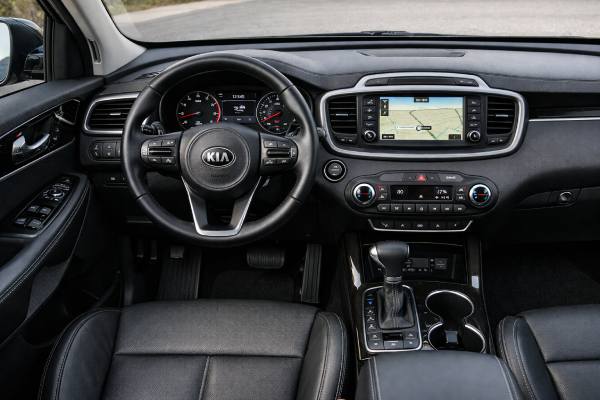
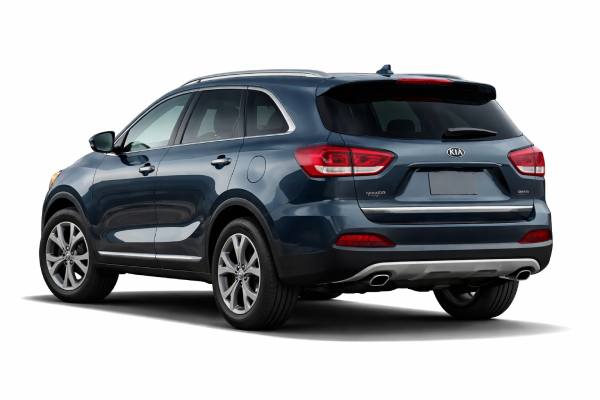
The 2016–2017 Kia Sorento (UM) with the 2.0-liter turbo G4KH and front-wheel drive is the “punchy” choice in the lineup: it trades the diesel’s low-end pull and the V6’s smoothness for a broad, responsive midrange and lighter steering feel over the nose. In everyday use, this powertrain is defined by two things—boosted torque in the middle of the rev range and heat management. The engine’s direct injection and turbocharger make oil quality and cooling system health more important than on the naturally aspirated versions. The FWD layout also changes how the Sorento puts power down: tire choice and alignment matter more for traction, torque steer, and front tire wear.
This guide focuses on the exact 2016–2017 Sorento UM FWD with the 240 hp 2.0T, and what to expect as an owner.
Quick Specs and Notes
- Strong mid-range acceleration for a midsize 3-row SUV; passing power feels effortless at 60–120 km/h (40–75 mph).
- FWD keeps curb weight and driveline complexity lower than AWD, which can reduce long-term service costs.
- Large cabin and practical cargo shape; easy to live with for family duty and road trips.
- Turbo GDI ownership is maintenance-sensitive—short oil intervals and clean intake/PCV habits pay off.
- Plan oil service about every 8,000–10,000 km (5,000–6,000 mi) or 6–12 months (whichever comes first), depending on driving conditions.
What’s inside
- Sorento UM 2.0T FWD rundown
- Sorento UM G4KH specs tables
- Sorento UM trims and safety tech
- Reliability and known weak spots
- Maintenance schedule and buyer tips
- Driving feel and fuel use
- Rivals and value comparison
Sorento UM 2.0T FWD rundown
In the 2016–2017 Sorento UM range, the 2.0T G4KH is the “boosted” four-cylinder that makes the SUV feel quicker than its size suggests. Power delivery is less about high-rpm drama and more about a strong surge from the midrange—useful for merging, hills, and passing with passengers on board. With FWD, you also avoid the extra rear driveline and its fluid services, seals, and couplings, which is a real ownership advantage once mileage climbs.
The trade-off is that FWD asks more from the front tires. Under hard acceleration on cold pavement or worn all-seasons, the Sorento can spin a front wheel before the traction control reins it in. That isn’t a defect—it is a predictable outcome of 240 hp going through the front axle in a tall, family-oriented chassis. Owners who fit quality tires (and keep alignment in spec) usually report a calmer, more premium feel.
From an engineering point of view, this powertrain is also more “thermal” than the non-turbo engines. Turbocharging adds heat to the intake charge, oil system, and cooling loop. That means two habits matter more than people expect:
- Clean oil, on time. Turbo bearings and timing-chain tensioners dislike neglected oil.
- Healthy cooling system. A marginal radiator, thermostat, or weak coolant mix can show up first on long grades, high ambient temperatures, or stop-and-go traffic.
The cabin and packaging are where this Sorento earns its keep. It is a true midsize SUV with usable space for families, a comfortable second row, and a third row that works best for kids or shorter trips. The cargo area is practical, and the lift-over height is manageable—small factors that add up when you own the vehicle for years.
If your priorities are a quieter highway ride, strong real-world acceleration, and lower driveline complexity than AWD, the 2016–2017 Sorento FWD 2.0T is a smart match—provided you buy one with evidence of consistent maintenance.
Sorento UM G4KH specs tables
Below are practical specs for the 2016–2017 Sorento UM FWD with the 2.0T (G4KH). Some figures vary by market, trim, wheels/tires, and calibration, so treat them as typical ranges unless your documentation specifies otherwise.
Powertrain and efficiency
| Item | Spec |
|---|---|
| Engine code | G4KH |
| Layout | Inline-4, turbocharged, DOHC |
| Displacement | 2.0 L (1,998 cc) |
| Induction | Turbo |
| Fuel system | Gasoline direct injection (GDI) |
| Max power | 240 hp (179 kW) @ ~6,000 rpm* |
| Max torque | ~350–365 Nm (258–269 lb-ft) @ ~1,750–4,500 rpm* |
| Timing drive | Chain |
| Compression ratio | ~9.5:1 (typical for this family)* |
| Bore × stroke | ~86 × 86 mm (3.39 × 3.39 in)* |
| Rated fuel economy | Commonly ~9–12 L/100 km (20–27 mpg US / 24–32 mpg UK), trim- and cycle-dependent* |
| Real-world highway @ 120 km/h (75 mph) | Often ~8.5–10.0 L/100 km (23–28 mpg US / 28–34 mpg UK), weather and tires matter |
*Common values for this configuration; verify for your VIN/market.
Transmission and driveline
| Item | Spec |
|---|---|
| Transmission | 6-speed automatic (market-dependent code) |
| Drive type | FWD |
| Differential | Open (traction control manages wheelspin) |
Chassis and dimensions
| Item | Spec |
|---|---|
| Front suspension | MacPherson strut |
| Rear suspension | Multi-link |
| Steering | Electric power steering |
| Brakes | 4-wheel discs (ABS, stability control) |
| Common tire sizes | 235/60 R18 or 235/55 R19 (varies by trim) |
| Length | ~4,780 mm (188.2 in) |
| Width | ~1,890 mm (74.4 in) |
| Height | ~1,690 mm (66.5 in), trim-dependent |
| Wheelbase | ~2,780 mm (109.4 in) |
| Ground clearance | ~185 mm (7.3 in), trim-dependent |
| Turning circle | ~11.4 m (37.4 ft), typical |
Capacity and utility
| Item | Spec |
|---|---|
| Curb weight | ~1,780–1,900 kg (3,925–4,190 lb), trim/equipment dependent |
| Fuel tank | ~71 L (18.8 US gal / 15.6 UK gal) |
| Cargo volume (behind 3rd / 2nd / 1st) | ~320 / 1,075 / 2,065 L (11.3 / 38.0 / 73.0 ft³), typical US-method conversions |
| Towing capacity | Often up to ~907 kg (2,000 lb) when properly equipped; market rules vary |
| Payload | Commonly ~450–600 kg (990–1,320 lb), trim-dependent |
Fluids and service capacities (typical)
| Item | Spec |
|---|---|
| Engine oil | Full synthetic preferred; common grades 5W-30 or 5W-40 depending on climate/spec |
| Oil capacity | ~5.0–5.7 L (5.3–6.0 US qt), filter-dependent* |
| Coolant | Long-life ethylene glycol mix; typical 50/50 |
| ATF | Manufacturer-spec fluid (often SP-IV class); exact spec depends on market |
Key torque specs (common “decision-making” values)
| Fastener | Typical spec |
|---|---|
| Wheel lug nuts | ~90–110 Nm (66–81 lb-ft) |
| Engine oil drain plug | ~30–40 Nm (22–30 lb-ft) |
These torque figures are intentionally limited to high-impact items. Always confirm the exact values for your engine and pan design in official service documentation.
Sorento UM trims and safety tech
For 2016–2017, the 2.0T (240 hp) engine is commonly associated with higher trims in many markets, because it is positioned as the “performance” four-cylinder. The practical way to identify the right vehicle is to confirm the engine code and displacement on the VIN/build label and match it to the under-hood emissions label or registration data. Badging alone is not enough, because wheel packages and appearance options can blur trim lines.
Trims and options that matter mechanically
The biggest equipment differences that affect ownership are not cosmetic—they are functional:
- Wheel and tire size: 19-inch packages can sharpen steering response, but they often ride firmer and increase tire cost. They can also raise road noise on coarse pavement.
- Brake feel and heat capacity: Most setups are competent for daily use, but repeated downhill braking with a full load highlights the advantage of fresh brake fluid and quality pads.
- Cooling capacity and towing prep: Some packages add towing hardware or upgraded cooling. If you plan to tow even occasionally, look for evidence of proper towing equipment and prior maintenance.
Infotainment and convenience features vary widely (audio tiers, navigation, power liftgate, panoramic roof), and these can affect long-term repair costs simply because there is more to age, rattle, or fail. When shopping, test every switch and confirm that driver-assistance sensors have no warning lights.
Safety ratings and crash-test context
Safety ratings depend on test body, test year, and the exact configuration tested. In many regions, the UM Sorento earned strong crash performance for its era, but you must interpret that correctly:
- Euro NCAP results apply to the tested year and safety spec of that test vehicle. A later model year can share the same structure but differ in standard safety technology.
- IIHS ratings often split performance by crash mode and headlight availability; a vehicle can score well structurally but lose points on headlights.
Safety systems and ADAS availability
Most Sorento UM models include core safety features such as:
- Multiple airbags (front, side, curtain) and seatbelt pretensioners
- ABS and stability control
- Hill-start assist and brake assist (trim-dependent naming)
Advanced driver assistance (ADAS) can be standard or optional depending on trim and market. Typical features you may see include:
- AEB (automatic emergency braking) and forward collision warning
- Blind-spot detection and rear cross-traffic alert
- Lane departure warning or lane support features
- Adaptive cruise control (often packaged)
If the vehicle has AEB, radar, or camera-based lane systems, remember that windscreen replacement, alignment work, and front-end repairs may require sensor calibration. A bargain repair that skips calibration can create a safety and drivability problem later.
Reliability and known weak spots
The 2.0T G4KH Sorento can be dependable, but it rewards owners who treat it like a turbocharged, direct-injection engine—not like a low-stress commuter four-cylinder. Below are the issues that show up most often, grouped by prevalence and cost tier. Mileage bands are typical and vary with maintenance and driving style.
Common (low to medium cost)
- Carbon buildup on intake valves (40,000–120,000 km / 25,000–75,000 mi)
Symptoms: rough cold start, occasional misfire under load, reduced fuel economy.
Cause: direct injection does not wash valves with fuel.
Remedy: intake valve cleaning (methods vary), plus shortened oil intervals and a healthy PCV system to reduce future deposits. - Ignition coil and spark plug sensitivity (60,000–140,000 km / 40,000–90,000 mi)
Symptoms: misfire codes, shudder on acceleration, flashing check engine light under boost.
Cause: plug gap wear, coil weakness, heat cycling.
Remedy: replace plugs with correct heat range and torque; replace coils as needed (often best as a set if multiple fail). - PCV and breather system wear (age-driven)
Symptoms: oil mist in intake tract, idle fluctuations, higher oil consumption.
Cause: stuck PCV valve or hardened hoses.
Remedy: replace PCV valve and inspect hoses; address oil leaks early.
Occasional (medium cost)
- Turbo wastegate rattle or boost control issues
Symptoms: rattling noise, inconsistent boost, underboost codes.
Cause: actuator wear, linkage play, boost solenoid issues, vacuum leaks (if equipped).
Remedy: diagnose carefully—many “turbo problems” are controls or leaks, not a failed turbocharger. - Cooling system aging (80,000–160,000 km / 50,000–100,000 mi)
Symptoms: slow coolant loss, overheating on grades, heater output changes.
Cause: radiator end tanks, thermostat, water pump seepage, weak cap.
Remedy: pressure test, repair the true leak source, refresh coolant with correct mix.
Rare but high impact (high cost)
- Engine bearing damage / severe knock events (varies by build history)
Symptoms: knocking, low oil pressure warnings, metal in oil, sudden power loss.
Cause: can be multi-factor—oil starvation, contamination, overheating, or known campaign-related issues on some builds.
Remedy: immediate shutdown and professional diagnosis. If applicable, confirm any software updates or recall actions were completed and documented.
Software, recalls, and service actions
For this era, it is essential to check for outstanding recalls and control-module updates. Some fixes are not “parts”—they are calibration updates that change knock detection behavior, drivability, or warning thresholds. Practical steps:
- Run an official VIN recall check and print the results for your records.
- Ask for dealer service history showing completed actions and dates.
- Scan for stored codes even if the dash is clear; intermittent boost and misfire issues can leave history codes.
A Sorento that has consistent oil changes, documented recall completion, and clean cooling system service is usually the one that stays out of the expensive problem category.
Maintenance schedule and buyer tips
A turbo GDI Sorento is not complicated to maintain, but it is less forgiving of “whenever I remember” service. Use the schedule below as a practical baseline and adjust for severe use (short trips, high heat, heavy city traffic, towing, or dusty environments).
Practical maintenance schedule (distance/time)
- Engine oil and filter: every 8,000–10,000 km (5,000–6,000 mi) or 6–12 months
Use a quality full synthetic that meets your market’s required standard. Short trips and cold starts justify the shorter end. - Cabin air filter: every 15,000–30,000 km (10,000–20,000 mi)
Replace sooner in dusty cities or if HVAC airflow drops. - Engine air filter: inspect every 15,000 km (10,000 mi); replace typically 30,000–45,000 km (20,000–30,000 mi).
- Spark plugs: commonly 80,000–160,000 km (50,000–100,000 mi) depending on plug type and market interval
Turbo engines are sensitive to plug condition; don’t stretch intervals if you feel misfire under boost. - Coolant: often first change around 160,000–200,000 km (100,000–125,000 mi) or ~10 years, then shorter intervals afterward
If you buy used, verify coolant condition rather than trusting age alone. - Automatic transmission fluid (ATF): inspect and consider service 60,000–90,000 km (40,000–60,000 mi) under severe use
“Lifetime” fluid claims rarely match real-world heat and city driving. - Brake fluid: every 2 years
This is cheap protection against a soft pedal and corrosion in ABS components. - Brake pads and rotors: inspect at every tire rotation; expect wider variation depending on driving style.
- Tires: rotate every 8,000–10,000 km (5,000–6,000 mi)
FWD turbo models can wear front tires quickly if alignment is even slightly off. - Battery (12 V): test annually after 3 years; many last 4–6 years depending on climate.
Buyer’s guide: what to inspect before purchase
Documents to request
- Proof of frequent oil services (look for consistent intervals)
- Recall/TSB completion records
- Evidence of coolant and brake fluid service if mileage is moderate to high
Physical checks
- Cold start behavior: listen for timing-chain rattle, rough idle, or misfire
- Boost under load: a smooth pull is good; hesitation can indicate ignition or boost control issues
- Underbody inspection: check for oil seepage and coolant staining
- Tire wear pattern: inside-edge wear can point to alignment or worn suspension bushings
- Electronics test: camera, sensors, parking aids, and infotainment should behave consistently
Which examples age best
Look for a Sorento with conservative wheel size (often 18-inch), documented maintenance, and no evidence of chronic overheating or repeated misfire repairs. The best long-term owners treat this engine as “maintenance-forward,” and those vehicles usually show it in the paperwork.
Driving feel and fuel use
The 2.0T FWD Sorento’s personality is defined by midrange torque and relaxed highway manners. Around town, it feels responsive without needing high rpm; the turbo helps the vehicle step off confidently from 30–60 km/h (20–40 mph), which is where many family SUVs feel sluggish. Under heavier throttle, the front tires and traction control become part of the experience—especially on wet roads. With good tires, the power is usable and predictable; with cheap or worn tires, you will notice wheelspin and more intervention.
Ride, handling, and NVH
Ride quality is typically tuned for comfort. The Sorento tracks straight on the highway, and the cabin is generally quiet enough for long trips, though larger wheels can raise road noise. Steering is light-to-moderate in effort, prioritizing easy parking over detailed feedback. In corners, the chassis is stable, but it is not a sporty SUV; weight transfer is noticeable, and the vehicle prefers smooth inputs.
Braking feel is solid when the system is healthy. The two biggest factors that change the impression are brake fluid age and pad quality. Old brake fluid can make the pedal feel softer during repeated stops.
Powertrain character and transmission behavior
The 6-speed automatic generally keeps the engine in its torque band, but you may feel downshifts on rolling hills or during quick passing requests. Turbo engines also magnify maintenance differences: a fresh ignition system and clean air path produce smoother boost, while worn plugs/coils can make the drivetrain feel “busy” or hesitant.
Real-world efficiency
In mixed driving, many owners see a meaningful spread based on speed and temperature:
- City: often ~11–14 L/100 km (17–21 mpg US / 20–26 mpg UK)
- Highway (100–120 km/h / 60–75 mph): often ~8.5–10.0 L/100 km (23–28 mpg US / 28–34 mpg UK)
- Mixed: commonly ~9.5–12.0 L/100 km (20–25 mpg US / 24–30 mpg UK)
Cold weather can add noticeable consumption because the engine warms up slowly and the turbo drivetrain runs richer during warm-up. If you drive short trips, treating oil changes as a time-based service (not just distance) helps preserve the turbocharger and timing system.
Load and towing notes
If you tow within the vehicle’s rating, expect a clear fuel economy penalty and more heat in the transmission and cooling system on long grades. For occasional towing, fresh ATF (at sensible intervals) and a clean radiator stack are the difference between “fine” and “stressed.”
Rivals and value comparison
The 2016–2017 Sorento 2.0T FWD sits in a competitive slice of the midsize SUV market: it offers near-premium space and features, but it competes against rivals known for strong resale and broad service familiarity. Here is how it generally compares in ownership terms.
Where this Sorento wins
- Power-per-dollar: A 240 hp turbo engine in a family SUV often feels stronger than many base engines in the class, especially for passing and loaded driving.
- Cabin packaging: The Sorento’s interior space and cargo practicality are a consistent strength, particularly if you actually use the third row occasionally.
- Feature availability: Many examples are well-equipped for their price point, with comfort and driver-assistance features that can cost more on some competitors.
Where rivals may edge it out
- Long-term simplicity: Naturally aspirated competitors with port injection (or less complex turbo systems) can be more forgiving if maintenance history is imperfect.
- Fuel economy consistency: Some rivals deliver more predictable consumption, especially in city traffic, because turbo efficiency depends heavily on driving style.
- Resale strength: Depending on market, certain Japanese competitors often hold value more strongly, though purchase prices may also be higher.
Practical rival set (why cross-shop)
- If you want maximum resale stability and broad mechanic familiarity, cross-shop mainstream Japanese midsize SUVs in similar years.
- If you want a similar cabin concept with a different feel and potentially different engine options, cross-shop close platform competitors from the same era.
- If you prioritize a “set it and forget it” powertrain, compare against non-turbo configurations, even if they are slower.
The ownership verdict
Choose the Sorento 2.0T FWD when you value strong real-world acceleration, a roomy cabin, and good equipment levels—and you are willing to maintain it like a turbo GDI vehicle. Avoid it if you need a vehicle that will tolerate irregular oil service, or if you frequently drive on low-traction roads where AWD would reduce stress and improve control. A well-maintained example is a satisfying long-term family SUV; a neglected one can become a “catch-up maintenance” project quickly.
References
- 2016 Kia Sorento Specifications 2016 (Manufacturer Specifications)
- 2016 Kia Sorento 4-door SUV 2016 (Safety Rating)
- Vehicle Detail Search – 2016 KIA SORENTO SUV FWD | NHTSA 2026 (Recall Database)
- Kia Sorento – Euro NCAP Results 2014 2014 (Safety Rating)
Disclaimer
This article is for informational purposes only and is not a substitute for professional inspection, diagnosis, or repair. Specifications, torque values, service intervals, and procedures can vary by VIN, market, model year, and equipment; always verify details using official service documentation for your exact vehicle. If this guide helped, please consider sharing it on Facebook, X/Twitter, or your favorite forum to support our work.