
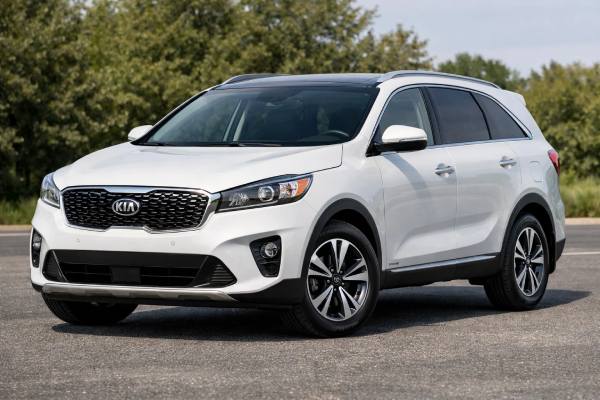
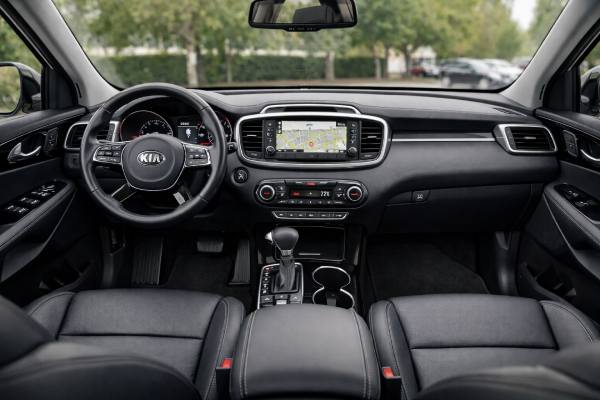
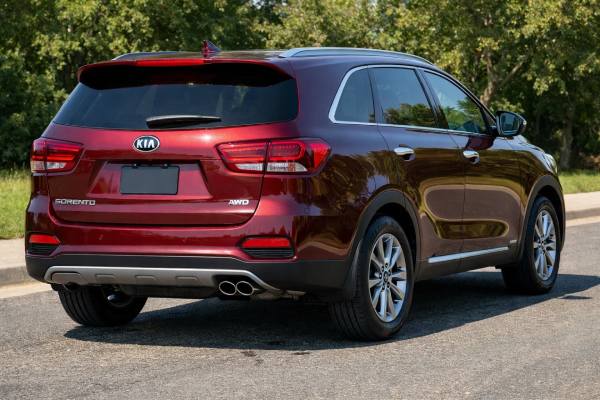
The 2018–2020 facelift Kia Sorento UM in FWD form with the 3.3L G6DH V6 targets a very specific buyer: someone who wants three-row practicality without moving up to a full-size SUV, and who prefers a smooth naturally aspirated engine over smaller turbo options. In these years, the Sorento’s V6 pairing is defined by two things owners feel every day—effortless mid-range pull for merging and towing, and a drivetrain tuned more for quiet, predictable road manners than sharp handling.
The facelift years also matter because Kia refined equipment packaging and, by 2019, improved certain safety-structure outcomes in U.S. small-overlap testing and offered configurations that can qualify for strong safety awards when properly equipped. At the same time, long-term ownership hinges on routine fluid service, careful cooling-system upkeep, and staying current on recall completion—especially campaigns tied to brake hydraulic control units on some Hyundai and Kia vehicles.
Key Takeaways
- Strong, smooth V6 power delivery makes highway merging and moderate towing feel easy.
- Practical three-row packaging with useful cargo space behind row two for family duty.
- Best safety outcomes depend on getting the right headlights and crash-prevention equipment.
- Ownership caveat: verify recall completion and watch for brake-fluid or ABS/ESC warning signs.
- Plan on engine-oil service about every 12 months / 12,000 km (7,500 mi) in normal use (short-trip or hot/cold severe use often needs shorter intervals).
Contents and shortcuts
- Sorento UM FWD facelift overview
- Sorento UM 3.3 V6 specs and dimensions
- Sorento UM trims, options, and ADAS
- Reliability and common 3.3 V6 issues
- Maintenance plan and buying checklist
- Real-world driving and efficiency
- Rivals versus value
Sorento UM FWD facelift overview
Think of the 2018–2020 Sorento UM V6 FWD as the “steady hand” in the midsize three-row class. The platform is a steel unibody crossover with independent suspension at both ends, tuned to isolate road noise and keep the cabin calm on long trips. The facelift years brought updated styling and—more importantly for shoppers—more modern driver assistance availability and better packaging of comfort features, depending on trim.
In FWD form, the V6 model’s value is how relaxed it feels when loaded. The 3.3L’s torque curve doesn’t require you to wind it out; it will climb grades and pass at highway speeds with fewer downshifts than many four-cylinder alternatives. If you regularly carry adults in the third row, the V6 is the powertrain that makes the Sorento feel like it has “enough engine” instead of “just acceptable engine.”
This version is also a practical choice for owners who want moderate towing without going to a body-on-frame SUV. In common U.S.-market configurations, V6 trims are often rated up to 3,500 lb (1,588 kg) in FWD form, which covers small campers, lightweight boats, and utility trailers—assuming you set it up correctly with proper hitch hardware, trailer brakes where required, and conservative loading.
Where you should calibrate expectations: it’s not trying to be sporty, and FWD traction can be the limiting factor on steep, slippery ramps or snowy inclines when towing. Also, “facelift 2018–2020” is a model-family label—equipment can vary by market and by build date, so the best approach is to shop by the features that matter (headlights, crash prevention, seating, tow package) rather than assuming every 2019 or 2020 is the same.
Bottom line: if your priorities are smooth power, quiet road behavior, usable three-row space, and straightforward family-SUV ownership (with disciplined maintenance), the Sorento UM V6 FWD makes a strong case.
Sorento UM 3.3 V6 specs and dimensions
Below are U.S.-market reference specs that closely represent the facelift-era Sorento UM V6, with notes where year/trim differences matter (for example, some V6 configurations use an 8-speed automatic in later years). Always confirm by VIN and door-jamb labels for your exact vehicle.
Powertrain and efficiency (3.3L G6DH V6 FWD)
| Item | Spec |
|---|---|
| Code | G6DH (Lambda II V6, GDI) |
| Engine layout and cylinders | V6, 6 cylinders, DOHC, 4 valves/cyl |
| Bore × stroke | 92.0 × 83.8 mm (3.62 × 3.30 in) |
| Displacement | 3.3 L (3,342 cc) |
| Induction | Naturally aspirated |
| Fuel system | Direct injection (GDI) |
| Compression ratio | 11.5:1 |
| Max power | 290 hp (216 kW) @ ~6,400 rpm (application-dependent) |
| Max torque | ~342 Nm (252 lb-ft) |
| Timing drive | Chain |
| Rated efficiency (EPA, FWD V6 reference) | 10.7 L/100 km combined (22 mpg US), 12.4 city (19 mpg), 9.0 highway (26 mpg) |
| Real-world highway @ 120 km/h (75 mph) | Typically 9–11 L/100 km (21–26 mpg US) depending on load, tyres, wind, and temperature |
Transmission and driveline
| Item | Spec |
|---|---|
| Transmission | Automatic; V6 trims commonly list an electronically controlled 8-speed in later specs |
| Drive type | FWD |
| Differential | Open |
Chassis and dimensions
| Item | Spec |
|---|---|
| Suspension (front/rear) | Independent MacPherson struts / independent multi-link |
| Steering | MDPS electric power steering; ratio 14.1:1 (FWD reference) |
| Turning circle (kerb-to-kerb) | ~11.3 m (37.2 ft) |
| Brakes (front/rear) | Ventilated disc / solid disc |
| Brake diameter (front/rear) | 320 / 305 mm (12.6 / 12.0 in) |
| Wheels and tyres (popular sizes) | 235/65 R17, 235/60 R18, 235/55 R19 |
| Ground clearance | 185 mm (7.3 in) |
| Approach angle | ~16.9° |
| Kerb (curb) weight (FWD range, trim-dependent) | ~1,800–1,910 kg (3,968–4,211 lb) |
| GVWR (FWD, reference) | ~2,490 kg (5,489 lb) |
Cargo and capability
| Item | Spec |
|---|---|
| Cargo volume (7-seat, behind 3rd row) | ~320 L (11.3 ft³) |
| Cargo volume (7-seat, behind 2nd row) | ~1,076 L (38.0 ft³) |
| Cargo volume (behind 1st row, max) | ~2,067 L (73.0 ft³) |
| Fuel tank | 71.2 L (18.8 US gal / 15.7 UK gal) |
| Towing capacity (FWD, V6 reference) | Up to 1,588 kg (3,500 lb), trim/market-dependent |
Fluids and service capacities (practical decision values)
These can vary by VIN, cooler packages, and market. Use them as planning numbers, then confirm with your service literature and under-hood labels.
| Item | Spec (typical) |
|---|---|
| Engine oil | Full synthetic meeting the manual spec; common grades 5W-30 (climate-dependent) |
| Engine oil capacity | ~5.7 L (6.0 US qt) with filter (application-dependent) |
| Coolant | Long-life ethylene glycol (OAT); confirm spec and mix ratio per market |
| ATF | Kia/Hyundai-spec ATF for the installed transmission (verify by transmission code) |
| A/C refrigerant | R-134a; charge varies—verify under-hood sticker |
| Key torque specs (common critical fasteners) | Wheel lug nuts typically ~90–110 Nm (66–81 lb-ft); oil drain plug varies by pan/plug design—confirm by VIN |
Safety and driver assistance (headline)
- U.S. crash-test performance is strong in many categories, and 2019–2020 models can qualify for top-tier safety awards when equipped with the right headlights and front crash prevention.
- European star ratings exist for earlier protocol years, but they are best treated as historical context rather than a direct 2018–2020 apples-to-apples comparison.
Sorento UM trims, options, and ADAS
For the 2018–2020 facelift run, the Sorento’s shopping “unlock” is understanding that safety and lighting equipment can matter as much as the engine. In many markets, the 3.3 V6 is bundled with higher trims, which tends to bring better infotainment, stronger seat materials, and more standard driver assistance—but the details still vary.
Trims and options that change ownership
Here’s what typically makes a real difference in daily use and long-term satisfaction:
- Headlights: If you care about night driving, prioritize trims/packages with strong low-beam performance. Good lighting reduces fatigue more than most comfort options.
- Seating configuration: Many Sorentos are sold as 7-passenger. If you frequently carry adults in row three, look for easy second-row access (one-touch slide) and rear HVAC controls.
- Infotainment tiers: Larger screens, better navigation/voice performance, and premium audio can add value, but they also add cost if you need module repairs out of warranty.
- Tow equipment: A factory tow package (or properly engineered equivalent) matters because it often includes upgraded cooling and correct wiring provisions. Even if you only tow a few times a year, it reduces heat stress on the transmission.
Quick identifiers when shopping used
When you’re scanning listings or walking a lot:
- Tyre and wheel size: 17/18/19-inch packages often correlate with trim level; larger wheels look great but can cost more in tyres and may ride firmer.
- Brake feel and pedal consistency: A firm, consistent pedal during a test drive is a good sign; a soft pedal can be air, old fluid, or worn components—none of which is “mysterious,” but all of which are negotiating points.
Safety ratings and what they really mean here
- Crashworthiness: 2019–2020 model-year changes improved passenger-side small-overlap outcomes in the U.S. test regime, depending on configuration.
- Awards vs. your exact car: Top-tier awards often depend on specific headlights and front crash prevention being present and performing at a certain level. Two Sorentos can look identical in photos and still score differently on paper because one has the “right” lights and sensors.
ADAS and calibration implications
Common systems you may see (varying by trim/market):
- AEB (automatic emergency braking), sometimes with pedestrian detection
- ACC (adaptive cruise control)
- LKA/LFA (lane keeping / lane following support)
- BSD/RCTA (blind-spot detection / rear cross-traffic alert)
After repairs—especially windshield replacement, front bumper work, or wheel alignment—some systems can require sensor aiming or calibration. If you’re buying used, it’s worth asking whether any front-end repair has occurred and whether recalibration documentation exists.
The best buying approach is simple: decide which safety suite and headlights you want first, then choose the cleanest example with documented service and completed recalls.
Reliability and common 3.3 V6 issues
The G6DH 3.3L V6 is generally regarded as a durable engine when it gets clean oil, correct coolant, and sensible heat management. Where owners get into trouble is not usually “one fatal design flaw,” but a stack of smaller risks: deferred fluid service, short-trip sludge accumulation, neglected cooling components, and ignoring early warning lights.
Below is a practical prevalence × severity map for facelift-era Sorento UM V6 ownership. Exact incidence varies by climate, service quality, and driving patterns.
Common (low to medium cost)
- Carbon buildup on GDI intake valves (GDI characteristic)
- Symptoms: rough idle, hesitation, misfire codes, reduced fuel economy
- Likely root cause: oil vapor deposits on intake valves (no fuel washing like port injection)
- Remedy: intake cleaning (walnut blasting or approved chemical method), PCV system inspection
- Ignition coils and spark plugs (age and heat)
- Symptoms: misfire under load, flashing MIL, poor acceleration
- Remedy: replace plugs at interval; replace failed coils as needed
Occasional (medium cost)
- Cooling system wear (hoses, thermostat, radiator end tanks over time)
- Symptoms: slow coolant loss, overheating in traffic, heater performance changes
- Remedy: pressure test, renew weak components before overheating events
- Transmission shift quality complaints (depends on the exact transmission and software)
- Symptoms: harsh shifts, hesitation, gear hunting on grades
- Remedy: confirm fluid condition and correct spec; check for ECU/TCU updates; address mounts if worn
Rare but high-severity (treat seriously)
- Fire-risk recall campaigns (certain Hyundai and Kia vehicles, including some Sorento model years)
- Symptoms: ABS/ESC warning lights, burning smell, visible smoke (can occur while parked)
- Root cause: recall risk tied to electrical short conditions; remedy can involve fuse changes and related campaign actions
- What to do: verify recall status by VIN; follow any official “park outside” guidance until fixed
- Rearview camera moisture issues (documented for certain years/build windows)
- Symptoms: camera image intermittently missing or fails entirely
- Remedy: inspection and repair per campaign instructions
Pre-purchase checks you should request
- Complete service history, focusing on oil-change frequency and coolant service.
- Recall completion proof (dealer printout or VIN lookup results).
- Scan for stored codes even if the dash is clear—intermittent misfires and sensor faults can hide.
- Cooling-system pressure test if mileage is higher or if you see any dried coolant residue.
A good Sorento UM V6 is usually a “boringly reliable” family vehicle. A neglected one can become expensive fast—not because it’s fragile, but because heat and deferred maintenance punish modern GDI powertrains.
Maintenance plan and buying checklist
A strong maintenance plan for the 2018–2020 Sorento UM 3.3 FWD is less about fancy products and more about consistency and correct specifications. If you do the basics on time, the V6 tends to reward you with smoothness and longevity.
Practical maintenance schedule (distance or time, whichever comes first)
Use this as an owner-friendly baseline; shorten intervals for repeated short trips, towing, extreme heat/cold, or heavy city use.
- Engine oil and filter: every 12,000 km / 12 months (7,500 mi) normal; 6,000 km / 6 months (3,750 mi) severe-use baseline
- Engine air filter: inspect every oil change; replace about every 24,000–48,000 km (15k–30k mi) depending on dust
- Cabin air filter: every 12 months (more often in dusty cities)
- Coolant: typically 5 years / 100,000 km (60k mi) for first change on long-life coolant, then shorter—verify for your market and coolant type
- Spark plugs: often ~160,000 km (100k mi) for long-life iridium plugs, but verify; earlier replacement can help if you tow or idle a lot
- Brake fluid: every 2 years (moisture control)
- ATF: inspect condition regularly; many owners benefit from a 60,000–90,000 km (40k–60k mi) service interval if towing or city-heavy
- Tyre rotation and alignment check: rotate every 10,000–12,000 km (6k–7.5k mi); align when tyres show uneven wear
- 12 V battery: test annually after year 3; many batteries last 4–6 years depending on climate
Fluids and specs (owner decision level)
- Oil: use the viscosity grade specified for your climate and the performance spec in your manual; avoid extending intervals unless oil analysis supports it.
- Coolant: do not “mix and hope.” Mixing incompatible coolants can shorten water pump and radiator life.
- ATF: the wrong ATF can create shift quality issues; confirm the exact transmission family before servicing.
Buyer’s checklist (10-minute walkaround + test drive)
- Look under the front end for oil seepage, coolant staining, and any fresh undercoating that looks like it’s hiding leaks.
- During a cold start, listen for persistent ticking or rough idle beyond the first seconds.
- Test all cameras and parking sensors; intermittent rear camera behavior matters because documented campaigns exist for certain years/builds.
- On the test drive:
- Do a steady 60–100 km/h (40–60 mph) pull—misfires often show under moderate load.
- Check for hesitation when rolling into throttle on a mild hill.
- Brake firmly from speed; vibration suggests rotor issues or suspension play.
Long-term durability outlook
If you buy a well-kept example and keep fluids fresh, the Sorento UM V6 can be a long-term family SUV. Your biggest “buying win” is choosing the cleanest history and the best safety equipment, not chasing the lowest price.
Real-world driving and efficiency
The 3.3L Sorento’s driving personality is easy to summarize: it’s quiet, stable, and unbothered by passengers and luggage. Steering is light-to-moderate and tuned for predictability; the chassis feels composed in sweeping turns, and the suspension does a good job filtering rough pavement for a crossover with three-row packaging. Independent rear multi-link suspension helps it feel less “busy” over highway expansion joints than some simpler designs.
Powertrain character
The naturally aspirated V6 is linear—no turbo surge, no lag, just a smooth build in power as revs rise. In daily driving, that translates to fewer “plan ahead” moments when merging. The automatic transmission behavior depends on year and software: some calibrations prioritize early upshifts for economy, which can feel a bit reluctant until you press deeper into the pedal. When it downshifts, the V6 has enough reserve to complete passes without sounding strained.
Real-world efficiency
For the V6 FWD configuration in this era, a reasonable expectation is roughly:
- City: about 12–13 L/100 km (18–20 mpg US)
- Highway: about 9–10 L/100 km (24–27 mpg US)
- Combined: about 10–11 L/100 km (21–23 mpg US)
In practice:
- At a steady 120 km/h (75 mph), many owners land in the 9–11 L/100 km (21–26 mpg US) band if tyres are properly inflated and the vehicle isn’t overloaded.
- Cold weather and short trips can easily add 10–25% fuel consumption because the engine spends more time warming up and enriching the mixture.
Load and towing behavior (FWD focus)
With the V6, moderate towing is within the Sorento’s comfort zone—up to 3,500 lb (1,588 kg) in common specs—so long as you set expectations correctly:
- FWD traction is the first limiter on slippery surfaces.
- Heat management is the second: towing in summer puts real load into the transmission and cooling system.
- Expect a consumption penalty: towing often increases fuel use by 30–60% depending on trailer shape and speed.
The takeaway: the Sorento UM V6 is not a performance SUV, but it is a confident, easy long-distance tool—especially when you buy it for what it is: a calm family crossover with honest power.
Rivals versus value
In the 2018–2020 window, the Sorento UM V6 FWD competes in a crowded space. The smart comparison is not “which is best,” but “which best fits your use case.”
Versus three-row family staples
- Honda Pilot (V6): often feels roomier in the third row and cargo area, with a reputation for family ergonomics. The tradeoff is that you may pay more on the used market for similar mileage and condition.
- Toyota Highlander (V6, older generation): typically strong resale and a polished drivetrain feel. You’re often shopping older tech for the same money, depending on your local market.
- Nissan Pathfinder (V6, same era): can be a value play, but you’re comparing different transmission designs across years, so condition and service history matter even more.
Versus “near cousins” and two-row alternatives
- Hyundai Santa Fe (V6 variants): similar design themes, sometimes similar safety-equipment logic. Shop based on feature set and the best documented maintenance, not badge alone.
- Ford Edge (two-row): if you don’t need the third row, a two-row SUV can feel more spacious behind the second row and may drive a bit tighter. But you lose occasional-need passenger capacity.
Where the Sorento V6 FWD wins
- Power for the price: a naturally aspirated V6 in this class is appealing to buyers who dislike small turbo behavior or who value smoothness under load.
- Balanced packaging: usable third row in a not-too-large footprint, plus strong cargo behind the second row.
- Safety potential: when properly equipped, the model can align with strong 2019–2020 U.S. safety outcomes.
Where rivals may fit better
- If you tow frequently on steep grades or in winter climates, an AWD variant (or a different vehicle class) can reduce stress and traction compromises.
- If you routinely carry adults in the third row, some competitors offer a more spacious “true” third row.
Value verdict: the best Sorento UM V6 FWD is the one with (1) the safety equipment you actually want, (2) clean maintenance records, and (3) verified recall completion. If you can check those three boxes, it’s a very rational family SUV purchase.
References
- 2019 Kia Sorento Specifications 2019 (Manufacturer Specifications)
- 2019 Kia Sorento FWD 2019 (Official Fuel Economy Data)
- 2019 Kia Sorento 2019 (Safety Rating)
- Vehicle Detail Search – 2019 KIA SORENTO 2019 (Recall Database)
- Kia Sorento 2014 (Safety Rating)
Disclaimer
This article is for informational purposes only and is not a substitute for professional inspection, diagnosis, or repair. Specifications, torque values, service intervals, and procedures can vary by VIN, market, drivetrain, and installed equipment. Always verify details using your official owner’s literature and service documentation for your exact vehicle.
If you found this guide useful, please consider sharing it on Facebook, X (Twitter), or your favorite forum/community to support our work.