

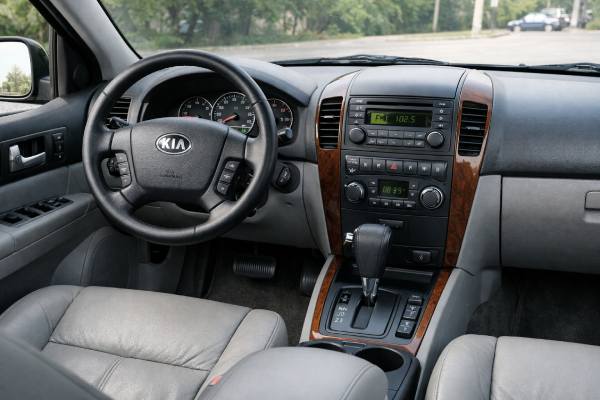
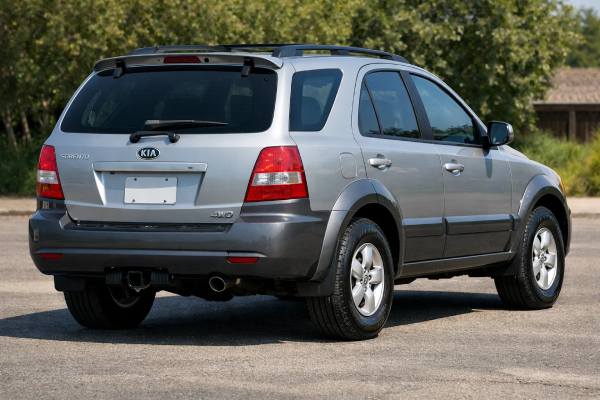
The first-generation Kia Sorento BL is a traditional, body-on-frame SUV with a longitudinal drivetrain—closer in feel and service needs to a light-duty truck than a modern crossover. In RWD form with the 2.5 CRDi (D4CB) diesel, it’s best understood as a torque-first, long-legged utility vehicle: strong mid-range pull, relaxed cruising, and a chassis that tolerates rough roads and real load carrying. The trade-offs are equally clear. It’s heavier and less refined than later unibody SUVs, and it relies on diligent maintenance of diesel-specific systems—fuel filtration, intake and EGR cleanliness, cooling health, and leak control—to stay reliable at higher mileage. If you’re shopping today, condition and service history matter more than the badge: a well-kept Sorento diesel can be a steady workhorse, while a neglected one can quickly become an expensive project.
Owner Snapshot
- Strong low-rpm torque makes towing light trailers and climbing grades easier than the power figure suggests.
- Body-on-frame construction tolerates bad roads, curb strikes, and heavy use better than many crossovers.
- Simple, pre-ADAS safety tech reduces sensor-related headaches as the vehicle ages.
- Diesel fuel and air systems punish shortcuts; plan on proactive fuel-filter changes and intake/EGR cleaning.
- Use a clear routine: engine oil and filter every 16,000 km (10,000 miles) or 12 months (whichever comes first).
**Quick navigation**
- Kia Sorento BL diesel RWD explained
- Kia Sorento BL D4CB specs and dimensions
- Kia Sorento BL diesel trims and safety
- Diesel reliability hotspots
- Maintenance schedule for D4CB
- Driving feel and consumption
- Diesel Sorento vs rivals
Kia Sorento BL diesel RWD explained
This 2002–2006 Sorento BL is built around a simple, durable formula: a strong ladder frame, long-travel suspension, and a longitudinal powertrain layout. In RWD, the driveline is mechanically straightforward (rear prop shaft, rear differential), which can reduce transfer-case and front-axle wear compared with 4WD versions—useful if your driving is mostly paved roads, long commutes, and occasional light towing.
The D4CB 2.5 CRDi diesel (commonly marketed as 2.5 CRDi) is the heart of the package. It’s tuned for usable torque rather than headline horsepower, so it feels strongest in the mid-range—pulling smoothly from low rpm and holding speed on grades without constant downshifts. That matches the Sorento’s mission: carrying people, luggage, and gear without strain, rather than chasing quick 0–100 km/h numbers.
Chassis-wise, expect a “truck-SUV” personality. The steering is typically heavier and slower than modern crossovers, and the suspension prioritizes stability and load control over sharp cornering. On rough surfaces, the body-on-frame structure can feel solid and tolerant, but you may notice more shake and vibration over small bumps than you’d get in a unibody SUV of similar size.
The ownership story hinges on maintenance discipline. A diesel of this era rewards clean oil, clean fuel, and clean air. If previous owners skipped fuel-filter intervals or drove it hard on old coolant, small issues can cascade: injector wear, turbo stress, EGR clogging, and overheating risk. On the other hand, if service history is consistent, the Sorento’s fundamentals—frame, driveline, and diesel torque delivery—can age well.
When you inspect one today, think in systems:
- Structure and underside: frame rust, impacts, and underbody repairs.
- Cooling and oil health: leaks, sludge signs, and stable operating temperature.
- Diesel fueling: smooth idle, cold-start behavior, and absence of diesel knock or excessive smoke.
- Suspension and steering: ball joints, bushings, and alignment wear (a common cost center on heavier SUVs).
Kia Sorento BL D4CB specs and dimensions
Below are practical, ownership-focused specifications for the RWD 2.5 CRDi (D4CB) 140 hp configuration. Some figures vary by market, gearbox, and calibration, so treat them as a planning baseline and verify against your VIN/service data.
Powertrain and efficiency
| Item | Specification |
|---|---|
| Code | D4CB |
| Engine layout and cylinders | Inline-4 diesel, common-rail direct injection (CRDi) |
| Induction | Turbocharged (market-dependent hardware) |
| Displacement | 2.5 L (≈ 2,497 cc) |
| Max power | 140 hp (103 kW) @ ~3,800 rpm (typical rating) |
| Max torque | Commonly ~314–343 Nm @ ~2,000 rpm (market-dependent) |
| Timing drive | Typically timing chain (inspect for noise/stretch symptoms) |
| Rated efficiency (typical) | ~8.5–10.5 L/100 km (≈ 22–28 mpg US / 27–33 mpg UK), depending on gearing and body spec |
| Real-world highway @ 120 km/h | ~9.0–11.0 L/100 km in good tune; higher with roof loads, AT, or headwinds |
Transmission and driveline
| Item | Specification |
|---|---|
| Transmission | 5-speed manual or 5-speed automatic (market dependent) |
| Drive type | RWD (rear differential, no transfer case on RWD models) |
| Differential | Open rear differential (most common) |
Chassis and dimensions
| Item | Specification |
|---|---|
| Platform type | Body-on-frame (ladder frame) |
| Suspension (front / rear) | Independent front; solid rear axle with coils (typical BL layout) |
| Brakes | 4-wheel disc on many trims; verify rotor sizes by trim |
| Wheels/Tyres (popular sizes) | Commonly 235/70 R16 or 245/70 R16 (varies by trim/market) |
| Ground clearance | ~200–220 mm typical (market/tyre dependent) |
| Length / width / height | ~4,570 / 1,865 / 1,730 mm (approx. by market/roof rails) |
| Wheelbase | ~2,710 mm (approx.) |
| Turning circle | ~11.0–12.0 m typical for the class |
| Kerb (curb) weight | ~1,900–2,050 kg depending on trim/gearbox |
| Fuel tank | Often ~80 L (verify by market) |
Performance and capability
| Item | Typical value (real-world dependent) |
|---|---|
| 0–100 km/h (0–62 mph) | ~14–17 s (gearbox, tyres, load dependent) |
| Top speed | ~165–175 km/h (≈ 103–109 mph) |
| Braking distance 100–0 km/h | Depends heavily on tyres and brake condition; plan inspections rather than trusting a number |
| Towing capacity | Market-rated; commonly in the ~2,000–2,800 kg braked range for the platform—verify local rating and hitch type |
| Payload | Often ~500–650 kg depending on trim/tyres |
Fluids and service capacities (practical planning)
| Fluid | Planning spec (verify by VIN/market) |
|---|---|
| Engine oil | Diesel-rated oil meeting the required ACEA/API level for your market; capacity varies by engine version. A published guide lists 8.2 L for Sorento (BL) 2.5 diesel in some markets. |
| Coolant | Long-life ethylene glycol mix; capacity varies—confirm during service |
| Transmission/ATF | Spec depends on gearbox; confirm before servicing |
| Differential oil | Hypoid gear oil (commonly 75W-90/80W-90); capacity varies |
Safety and driver assistance (era-correct)
| Area | What to expect |
|---|---|
| Crash ratings | Test results vary by body style and equipment; see IIHS results that apply to 2003–2006 models for key patterns. ([iihs.org][1]) |
| ADAS | Typically none beyond ABS and (later/trim-dependent) stability control; no AEB/ACC/lane support |
Kia Sorento BL diesel trims and safety
Because the Sorento BL was sold across many regions, trim names vary (common patterns include base/mid/high grades rather than a universal global naming scheme). Instead of chasing trim labels, it’s smarter to identify equipment by what you can see and test—especially on older SUVs where options were mixed and retrofits are common.
Trims and option patterns that matter
Look for these functional differences, because they affect maintenance cost and driving feel:
- Gearbox and cooling package: Automatic versions often run more heat into the cooling system under load. Confirm the radiator and fan operation are healthy, and check for signs of past overheating (staining, swollen hoses, brittle plastic tanks).
- Wheels and tyres: Larger wheels can sharpen steering response slightly but also increase road noise and tyre costs. Uneven wear often points to worn front-end parts (ball joints, tie rods, bushings).
- Brake and stability equipment: Some markets introduced traction/stability control earlier or made it optional. If equipped, confirm the ABS/ESP warning lights behave correctly at start-up and do not return on a test drive.
- Seating and interior durability: Leather vs cloth is less important than seat frame stability and belt function. A loose driver seat or belt retractor issues are safety concerns and can also hint at accident history.
Quick identifiers you can use during inspection:
- VIN/build plate and option stickers (when present) are the most reliable.
- Dashboard warning lamp check: ABS/airbag/ESP lamps should illuminate briefly on ignition and then go out.
- Underbody and rear axle hardware: RWD models are simpler underneath than 4WD, which can be a plus if you want fewer rotating parts to maintain.
Safety ratings and what they mean today
For this generation, it’s common to see a mixed story: acceptable performance in one test area and weak performance in another. IIHS results for 2003–2006 Sorento models show this pattern clearly, with a stronger showing in the moderate overlap frontal test and a notably weaker showing in the original side-impact test for the applicable range. ([iihs.org][1])
What that means as an owner in 2026:
- Tyres and brakes matter more than ever. Fresh, correct-load tyres and properly serviced brakes help you avoid crashes in the first place.
- Airbag readiness is non-negotiable. Any airbag warning light should be treated as a “stop and fix” item.
- Head restraints and seating position matter. Older SUVs often have less effective head restraint geometry; setting head restraints correctly reduces whiplash risk.
Safety systems and ADAS reality
Expect classic safety hardware:
- Dual front airbags are common; side airbags and curtains are trim/market dependent.
- ABS is typical; stability/traction control may be optional depending on year and region.
- Child-seat anchorage systems (ISOFIX/LATCH) depend on market and model year—verify in the vehicle itself rather than assuming.
The upside: there’s little ADAS calibration complexity after repairs. The downside: you don’t get modern crash-avoidance aids, so driver attention and basic maintenance play a larger role.
Diesel reliability hotspots
The D4CB 2.5 CRDi can run for a long time, but it’s not forgiving of neglect. The most important reliability idea is this: many “big” diesel failures begin as small issues—dirty fuel, minor boost leaks, stuck EGR, or borderline cooling—and then snowball into injector wear, turbo damage, or overheating events.
Below is a practical map of issues by prevalence and cost tier, with symptoms and remedies.
Common issues (plan for them)
- Fuel filter restriction (low to medium cost):
Symptoms: hesitation under load, hard starts, rough idle, loss of power at higher rpm.
Root cause: overdue fuel filter, water contamination, or poor-quality fuel.
Remedy: change fuel filter on schedule (often more frequently than gas vehicles), drain water separator where fitted, and use clean fueling practices. - EGR and intake fouling (medium cost):
Symptoms: sluggish response, smoke under acceleration, uneven idle, recurring engine lights.
Root cause: soot buildup from EGR operation, short trips, and low-load driving.
Remedy: periodic EGR/intake cleaning; avoid constant short-trip use when possible; confirm correct thermostat operation so the engine reaches full temperature. - Boost leaks and turbo control faults (medium to high cost):
Symptoms: “whoosh” noises, low boost, limp mode, oily residue on hoses/intercooler joints.
Root cause: split hoses, loose clamps, worn intercooler connections, or sticky control hardware.
Remedy: pressure-test intake tract, replace suspect hoses, confirm actuator/vacuum control function where applicable.
Occasional issues (watch age and mileage bands)
- Injector sealing and blow-by (medium to high cost):
Symptoms: chuffing sound, diesel smell in cabin, tar-like deposits around injectors, hard starts.
Root cause: injector seat leakage or degraded sealing washers (varies by design).
Remedy: address early—clean, reseal, and verify injector condition before the deposits become severe. - Cooling system weakness (high severity if ignored):
Symptoms: temperature creep on hills, coolant loss, heater output changes, pressure in hoses.
Root cause: aged radiator, weak cap, thermostat issues, or leaks.
Remedy: restore cooling integrity proactively; on an older SUV, a cooling overhaul can be cheaper than one overheating event.
Rarer but expensive (verify during purchase)
- High-pressure fuel system wear:
Symptoms: persistent misfire, metallic contamination, repeated injector failures.
Remedy: professional diagnosis; do not keep driving—damage can spread through the system. - Timing chain stretch/noise (if applicable):
Symptoms: rattling on cold start, timing correlation faults, rough running.
Remedy: inspect and replace chain/guides/tensioner if out of spec; use correct oil and intervals to slow wear.
A final reliability note: the Sorento’s front suspension and steering joints carry a lot of weight. Even in RWD, worn ball joints, bushings, and tie rods can create vague steering, tyre wear, and clunks. Budget for a front-end refresh on higher-mileage examples.
Maintenance schedule for D4CB
A simple schedule, executed consistently, is the best way to keep a 2002–2006 diesel Sorento affordable. Use time-and-distance rules, and shorten intervals if you do short trips, heavy city use, frequent towing, or very cold starts.
Core schedule (typical road use)
- Engine oil and filter: every 16,000 km (10,000 miles) or 12 months. A published Kia guide lists the interval and provides oil capacity and grade guidance for many models, including Sorento BL diesel entries.
- Service interval structure: Kia’s published UK interval schedule commonly uses 10,000 miles / 12 months steps for routine servicing on many models and eras. ([Kia][2])
- Fuel filter: every 20,000–30,000 km is a conservative planning range for older CRDi systems; shorten if fuel quality is uncertain.
- Air filter: inspect every service; replace at least every 20,000–30,000 km (sooner in dusty regions).
- Cabin filter: every 15,000–30,000 km depending on dust/pollen load.
Longer-interval items (age matters as much as mileage)
- Coolant: refresh on a time basis (commonly every 4–5 years) unless your official documentation specifies otherwise. Old coolant can accelerate corrosion and radiator failure.
- Brake fluid: every 2 years. Moisture in brake fluid reduces boiling point and increases corrosion risk.
- Transmission service:
- Automatic: plan periodic ATF servicing based on official spec; older automatics often benefit from shorter intervals under heat/tow use.
- Manual: gear oil refresh at longer intervals; inspect for leaks at seals and output.
- Rear differential oil: periodic change (commonly 40,000–60,000 km planning interval) and always after deep-water exposure.
Belts, chains, and “inspect not ignore” items
- Timing components: If your D4CB configuration uses a chain, treat it as “inspect by symptoms,” not “lifetime and forget.” Listen for cold-start rattle and investigate timing-related fault codes early.
- Serpentine/aux belt: inspect at every service; replace at the first signs of cracking, glazing, or noise.
- Hoses and clamps: a small coolant leak becomes a big overheating bill on an older diesel.
Buyer’s guide checklist (fast but effective)
- Cold start: should fire cleanly without extended cranking or heavy smoke.
- Idle quality: stable idle, no hunting; minimal diesel smell in cabin.
- Boost behavior: pulls smoothly; no limp mode; check for oily residue on charge pipes.
- Cooling test: confirm it reaches temperature and stays there on a hill.
- Underside: frame corrosion, rear diff leaks, fuel and brake line condition.
- Front end: clunks over bumps, wandering, uneven tyre wear.
- Paperwork: evidence of consistent oil services and recent fuel filter changes is more valuable than cosmetic upgrades.
Long-term outlook: when serviced on time, the Sorento’s structure and basic driveline can be durable. Most “kills” are avoidable—overheating, dirty fuel, and ignored boost or injector symptoms.
Driving feel and consumption
In daily driving, the 2.5 CRDi Sorento RWD feels like a torque-led utility SUV. The diesel’s strongest trait is its ability to move mass without drama: it pulls from low rpm, holds speed on moderate grades, and feels calm at cruising speeds once you’re in top gear. You won’t mistake it for a modern, quiet crossover, but you can make it feel surprisingly composed with the right tyres, fresh suspension joints, and good engine mounts.
Ride, handling, and NVH
- Ride: The body-on-frame structure and heavier unsprung components mean you may feel more secondary motion over small, sharp bumps. Over larger undulations, it often feels stable and “set,” especially with fresh shocks.
- Handling balance: Expect safe understeer and modest body roll. The Sorento isn’t designed for quick direction changes, but it can feel secure in long sweepers.
- Steering: Typically heavier and slower than modern SUVs. If the steering feels vague or “wandery,” suspect alignment, tyre mismatch, or worn front-end parts.
- Noise: Diesel clatter at cold start is normal; excessive injector knock, loud turbo whine, or booming droning can signal problems (mounts, exhaust leaks, or intake leaks).
Powertrain character
- Throttle response: Stronger once boost builds; a slight delay at low rpm can be normal depending on turbo setup and gearbox.
- Automatic behavior: Older automatics may hunt between gears on rolling terrain. If you feel shuddering, harsh shifts, or flare (rpm rise without speed increase), prioritize transmission diagnosis before purchase.
- Manual behavior: Clutch feel should be progressive; slipping under load is a warning sign, especially if the vehicle has towed.
Real-world efficiency
Your fuel use is shaped by speed, load, and tyre choice:
- City and short trips: often the worst case for older diesels because the engine runs cool and the EGR system soots up faster.
- Highway at 100–120 km/h: typically the best use case; a healthy Sorento often returns a stable, predictable consumption figure.
- Cold weather: expect noticeable increases in consumption and slower warm-up; make sure the thermostat is healthy.
As a practical planning range, many owners see something like ~9–11 L/100 km at 120 km/h when the vehicle is in good tune, with higher figures when towing, running aggressive all-terrain tyres, or carrying roof loads. The Sorento responds well to “boring” optimization: correct tyre pressures, clean air path, and smooth fueling.
Diesel Sorento vs rivals
To compare this Sorento fairly, match it with other early-to-mid-2000s SUVs that offer diesel torque and true utility. Your decision usually comes down to three questions: do you need body-on-frame toughness, do you value diesel pulling power, and how much refinement are you willing to trade for simplicity?
Where the Sorento diesel RWD stands out
- Truck-like fundamentals at a used-car price: Body-on-frame construction and a longitudinal layout can handle rougher duty cycles—work sites, poor roads, heavier payloads—better than many car-based crossovers.
- Diesel torque delivery: Even at 140 hp, the mid-range torque makes it feel stronger than the number suggests when loaded.
- Simpler driveline than 4WD versions: If you truly don’t need 4WD, RWD can reduce the number of wear components and potential leaks underneath.
Where rivals can beat it
- Refinement and packaging: Many unibody SUVs of the era (and most newer crossovers) ride more quietly and use cabin space more efficiently.
- Safety evolution: Later vehicles gained stronger side-impact structures, better restraint designs, and eventually modern crash-avoidance tech—none of which this era Sorento offers. IIHS results for the Sorento’s applicable model range highlight why safety comparisons matter. ([iihs.org][1])
- Parts and specialist support (region-dependent): Depending on your country, some Japanese or European rivals may have deeper independent-specialist networks for diesel diagnostics.
Quick decision guide
Choose the Sorento BL diesel RWD if you want:
- A sturdy, load-tolerant SUV for mixed use and long trips
- Diesel torque for real-world pulling and relaxed cruising
- A simpler used-vehicle experience without modern ADAS complexity
Consider an alternative if you want:
- The quietest ride, best fuel economy, and most modern safety structure
- A vehicle that does mostly city short trips (older diesels often dislike that use)
- The easiest “any shop can diagnose it fast” ownership experience
The best rival is often not a specific model—it’s the best-maintained example in your price range. For older diesels, condition wins.
References
- 2003 Kia Sorento 2026 (Safety Rating) ([iihs.org][1])
- Vehicle Detail Search – 2004 KIA SORENTO 4 DR RWD | NHTSA 2026 (Recall Database) ([NHTSA][3])
- Engine Oil Grades and Capacities 2023 (Service Guide)
- 7.2 Kia Service Intervals.xlsx 2025 (Service Guide) ([Kia][2])
- Kia Car Owners Manual | Kia UK 2026 (Owner’s Manual)
Disclaimer
This article is for informational purposes only and is not a substitute for professional inspection, diagnosis, or repair. Specifications, torque values, service intervals, and procedures vary by VIN, market, and equipment. Always verify details using your official owner’s manual and service documentation for your exact vehicle, and consult a qualified technician when needed.
If you found this guide useful, please consider sharing it on Facebook, X (Twitter), or your preferred platform—your support helps us keep producing practical ownership content.