
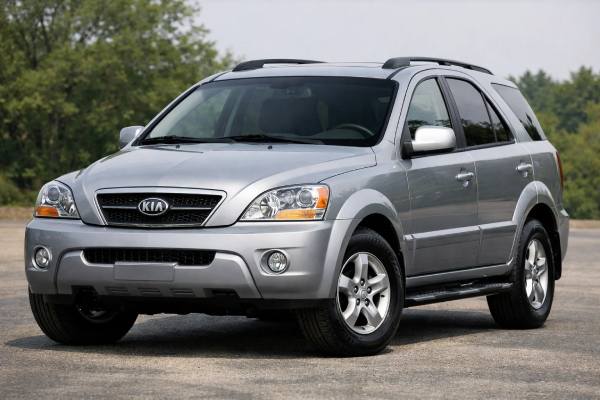


The facelifted Kia Sorento BL (2007–2009) is an interesting SUV because it blends “old-school” toughness with family-car practicality. Underneath, it is body-on-frame (truck-like) rather than a unibody crossover, which affects everything from ride feel to corrosion risks and long-term chassis wear. In RWD form, it is simpler than the 4×4 versions—fewer driveline parts to service—yet it still carries the Sorento’s signature traits: strong towing-focused hardware, a tall seating position, and honest, mechanical controls.
This guide focuses on the 2.4-litre petrol G4JS variant as requested. Be aware that outputs and equipment vary widely by market (and some catalogs list different power figures for “2.4” Sorentos). Use the engine label, VIN build data, and your local owner documentation to confirm the exact rating and service specs for your vehicle.
What to Know
- Body-on-frame toughness and simple RWD layout can be a durability win if rust is controlled early.
- Steering and handling feel heavier than newer crossovers, but stability is excellent at highway speeds.
- Watch carefully for underbody corrosion, especially around frame rails and mounting points.
- If your Sorento is included, complete ABS/HECU-related fire-risk recall actions immediately.
- Plan engine oil service every 10,000 km or 12 months (reduce to 5,000–7,500 km for severe use).
Explore the sections
- Kia Sorento BL facelift explained
- Kia Sorento BL 2.4 specs
- Kia Sorento BL trims and safety
- Reliability and known faults
- Maintenance and buying tips
- Road feel and real economy
- Rivals and best alternatives
Kia Sorento BL facelift explained
The 2007–2009 facelift is the sweet spot for many first-generation Sorento owners because it improved safety hardware and brought small but meaningful refinements while keeping the same rugged core. The BL Sorento is body-on-frame, which means the cabin and body sit on a separate ladder-type chassis. Compared with unibody crossovers, this architecture typically gives you:
- Better tolerance for rough-road use and repeated heavy loads (if corrosion is kept away).
- More “truck-like” ride motions over broken pavement—especially with older dampers or tired rear bushings.
- More potential rust risk in the frame and mounting points versus a newer, galvanized unibody design.
In RWD, the Sorento is mechanically straightforward: engine up front, driveshaft to a rear differential, and fewer wear items than 4×4 systems (no transfer case, front diff, or front CV axles). That simplicity can reduce long-term costs, but traction is the trade-off. On wet grass, packed snow, and steep gravel, RWD needs good tyres and measured throttle.
About the 2.4 G4JS: this engine family is generally a conventional, naturally aspirated four-cylinder with a timing belt and multi-point injection in many applications. However, Sorento 2.4 specs (power, torque, and even displacement details) are not consistent across regions and listing databases. Some markets mainly received the V6 and diesel choices, while others offered a 2.4 as an entry point. Treat the “175 hp” rating as a market-specific claim and verify with your VIN and engine label. The upside is that, regardless of exact rating, the ownership pattern is similar: keep oil clean, keep cooling healthy, and stay ahead of belt-driven timing service if your engine uses a belt.
The facelift years are also when safety equipment started to improve. In several markets, changes to airbags and restraints helped frontal-offset performance, but side-impact performance in older SUV designs can vary widely depending on curtain airbag fitment and structural details. That is why trim selection and option content matters more than people expect on this generation.
Kia Sorento BL 2.4 specs
Below are practical specs for the Sorento BL facelift (2007–2009) RWD, 2.4 petrol (G4JS) as a configuration target. Because factory specs vary by region, the tables include common ranges and the items you should confirm on your exact vehicle (door-jamb plate, under-hood label, and official service literature).
Powertrain and efficiency
| Item | Spec (typical for this configuration) |
|---|---|
| Code | G4JS (market-dependent labeling) |
| Engine layout and cylinders | Inline-4, NA, DOHC (varies), 4 valves/cyl (common) |
| Displacement | ~2.4 L (≈ 2350 cc) |
| Bore × stroke | ~86.5 × 100.0 mm (common for G4JS-family) |
| Fuel system | Multi-point injection (MPI) |
| Compression ratio | ~10.0:1 (varies) |
| Max power | 175 hp (129 kW) @ ~6000 rpm (verify for your VIN) |
| Max torque | Often listed ~225 Nm (166 lb-ft) @ ~3750 rpm (verify) |
| Timing drive | Timing belt (common on G4JS-family) |
| Rated efficiency | Typically 9–13 L/100 km combined (market/test dependent) |
| Real-world highway @ 120 km/h | Often 10–12 L/100 km depending on tyres, load, and wind |
Transmission and driveline
| Item | Spec (typical) |
|---|---|
| Transmission | 5-speed automatic or 5-speed manual (market/trim dependent) |
| Drive type | RWD |
| Differential | Rear open differential (LSD rare; confirm by axle tag/build sheet) |
Chassis and dimensions
| Item | Spec (typical BL facelift range) |
|---|---|
| Suspension (front/rear) | Independent front (often double-wishbone); rear multi-link with solid axle or rear-link live axle (market dependent) |
| Steering | Hydraulic power steering (common) |
| Brakes | 4-wheel discs on many trims; ABS standard in many markets |
| Wheels and tyres | Common sizes: 245/70 R16 or 235/65 R17 (varies) |
| Ground clearance | ~205–210 mm (8.1–8.3 in) |
| Length / width / height | ~4590 / 1865 / 1725 mm (≈ 180.7 / 73.4 / 67.9 in) |
| Wheelbase | ~2710 mm (106.7 in) |
| Turning circle | ~9.5–11.0 m (31–36 ft) depending on market tyres/wheels |
| Kerb weight | Often 1900–2050 kg (4189–4520 lb) depending on equipment |
| GVWR | Often 2500–2600 kg (5510–5730 lb) (confirm on door sticker) |
| Fuel tank | Commonly ~80 L (21.1 US gal / 17.6 UK gal) |
| Cargo volume | Roughly ~900 L seats up / ~2000+ L seats down (method varies) |
Performance and capability (typical for a 2.4 RWD Sorento)
| Item | Typical range |
|---|---|
| 0–100 km/h (0–62 mph) | ~11.5–13.5 s (depends strongly on gearbox and power rating) |
| Top speed | ~175–185 km/h (109–115 mph) |
| Braking 100–0 km/h | ~40–45 m with good tyres and healthy brakes |
| Towing capacity | Often ~2000–2800 kg braked on this platform, but engine/gearbox and market approvals vary—verify plate and handbook |
| Payload | Commonly 500–700 kg depending on GVWR and curb weight |
Fluids, service capacities, and key torque specs (verify for your VIN)
| Item | Practical guidance (typical) |
|---|---|
| Engine oil | Usually API SL/SM era spec; common viscosity 5W-30 (climate dependent) |
| Oil capacity | Often ~4.5–5.2 L with filter (confirm before filling to avoid overfill) |
| Coolant | Ethylene glycol long-life coolant; typical 50/50 mix |
| ATF | OEM-spec ATF for the fitted transmission; partial drain usually ~4–5 L |
| Rear differential | Typically 75W-90 gear oil, ~1.0–1.5 L |
| A/C refrigerant | Typically R134a, charge commonly ~700 g (label under hood is authoritative) |
| Wheel lug nuts | Often ~90–110 Nm (66–81 lb-ft) |
| Spark plugs | Often ~18–25 Nm (13–18 lb-ft) |
| Oil drain plug | Often ~30–40 Nm (22–30 lb-ft) |
If you keep one principle in mind for this generation: verify the exact spec at the vehicle, then maintain it like a work tool. The BL Sorento rewards that approach with very predictable ownership.
Kia Sorento BL trims and safety
Trim names vary by market, but many facelift BL Sorentos follow a familiar ladder: base, mid, and high grades (often similar to LX/EX concepts). What matters more than the badge is the equipment content that changes ownership and safety outcomes.
Trims and options that actually matter
When shopping or decoding your own vehicle, prioritize these functional differences:
- Wheels and tyres: 16-inch packages usually ride softer and cost less to tyre. 17-inch packages can feel more stable but may be harsher over sharp edges.
- Brake system specification: most versions have ABS; higher trims may add traction control and stability control depending on region and year.
- Cooling package and tow hardware: factory tow prep (if available) can include a transmission cooler and higher-capacity radiator. On an older SUV, this is a meaningful reliability advantage.
- Seating and interior durability: leather looks upscale, but check seat bolster wear, heater function, and whether airbags are seat-mounted (some systems are integrated into seats).
- Audio and electrical load: premium audio, multiple power accessories, and aftermarket additions can strain older alternators and battery cables.
Quick identifiers for the right configuration
Useful ways to confirm what you have without guessing:
- Door-jamb plate: GVWR, tyre size, and sometimes axle code.
- Under-hood emissions label: engine family and sometimes power certification.
- Rear axle tag or stamp: can hint at ratio and whether limited-slip is fitted (rare; do not assume).
- Dashboard indicators: ABS, ESC, and airbag lamps during key-on self-test can hint at fitted modules (still confirm with VIN data).
Safety ratings and what they mean here
This generation sits at an awkward point in SUV safety evolution. Frontal crash performance improved in later years of the first generation, but side-impact performance can be highly dependent on curtain airbags and structure, and older SUV designs often show wider variation than modern crossovers. If your vehicle has front and rear side-curtain airbags, that is a meaningful benefit for head protection.
Driver assistance and active safety
Expect basic assistance compared with modern vehicles:
- ABS is common and very important on a tall, heavy SUV.
- Stability control (ESC) may be standard or optional depending on market and year—confirm rather than assume.
- Parking sensors and camera systems are usually absent from factory on this era, so visibility and mirror adjustment matter.
A practical ownership note: if you service the suspension, steering, or wheel alignment, the Sorento typically becomes much safer-feeling even without modern ADAS. Fresh tyres, correct alignment, and strong brakes do more for real-world avoidance than most people give them credit for.
Reliability and known faults
A well-kept BL Sorento can age gracefully, but it has a predictable set of issues that show up as mileage and years stack up. Think in terms of what fails often, what fails expensively, and what fails in ways that create safety risk.
Common (high frequency), usually low–medium cost
- Oil seepage and gasket leaks
Symptoms: oil smell after a drive, damp valve cover edges, drops on driveway.
Likely cause: aging valve cover gasket, front crank seal seep, tired PCV system.
Fix: replace gaskets, verify crankcase ventilation, clean and re-check after 500–1,000 km. - Cooling system aging
Symptoms: slow coolant loss, temperature creeping in traffic, weak cabin heat.
Likely cause: radiator end-tank aging, hose swelling, thermostat sticking, old coolant.
Fix: pressure test, replace weak components proactively, refresh coolant on schedule. - Suspension wear and “truck wobble” feel
Symptoms: clunks over bumps, wandering at speed, steering shimmy.
Likely cause: worn control arm bushings/ball joints, tired shocks, rear link bushings.
Fix: restore bushings and dampers, then align. This often transforms the vehicle.
Occasional (medium frequency), medium–high cost
- Automatic transmission shift quality issues
Symptoms: harsh shifts, flare on upshift, delayed engagement.
Likely cause: aged ATF, valve body wear, solenoid issues, overheating from towing.
Fix: correct ATF spec and service approach (often multiple drain-and-fills), check cooler flow, diagnose with scan tool before replacing parts. - Timing-belt-driven engine risk (if belt-equipped)
Symptoms: chirping, belt cracks, oil contamination near timing covers.
Likely cause: overdue belt service, leaking seals, tired tensioner/idlers.
Fix: full timing service kit (belt, tensioner, idlers), and consider water pump replacement at the same time.
Rare but high severity (safety and fire risk)
- ABS/HECU moisture-related short risk (recall campaigns in some markets)
Symptoms: ABS light, burning smell near engine bay, unexplained battery drain (sometimes none before failure).
Risk: in certain recalls, the hydraulic electronic control unit can remain energized and may short if moisture enters, creating engine-compartment fire risk even with the vehicle off.
Fix: verify recall completion by VIN, and complete the official remedy immediately. - Occupant classification / airbag logic concerns (market-specific actions)
Symptoms: passenger airbag “off” indicator behaving unexpectedly; warnings after seat removal or wiring disturbance.
Fix: check for applicable service actions, do not ignore SRS lights, and avoid guessing—airbag systems need correct diagnosis.
Corrosion: the “make or break” factor
On older body-on-frame SUVs, rust is not cosmetic—it can become structural:
- Inspect frame rails, especially inside faces where moisture traps.
- Check body mounts, suspension mounting points, and brake line routing.
- Pay attention to vehicles from snow-salt regions and coastal climates.
If you catch corrosion early, treat it, and keep drain paths clear, the BL Sorento can last a long time. If you ignore it, it can turn a good SUV into an unsafe one surprisingly quickly.
Maintenance and buying tips
A practical schedule for this Sorento is less about chasing perfection and more about preventing the known expensive failures. Use the intervals below as a sensible baseline, then tighten them if you drive short trips, tow, idle heavily, or live in extreme temperatures.
Core maintenance schedule (distance or time, whichever comes first)
- Engine oil and filter: every 10,000 km / 12 months (severe use: 5,000–7,500 km / 6 months)
Use the viscosity recommended for your climate; many owners run 5W-30 year-round, but always follow the under-hood label and handbook. - Air filter (engine): inspect every 10,000–15,000 km, replace around 20,000–30,000 km depending on dust.
- Cabin filter (if fitted): every 15,000–20,000 km or annually if you want strong HVAC airflow.
- Coolant: every 4–5 years (or per coolant type), and sooner if contamination is found.
- Spark plugs: typically 60,000–100,000 km depending on plug type (confirm what is installed).
- Brake fluid: every 2 years, regardless of mileage.
- ATF: every 50,000–80,000 km (sooner with towing); use the correct spec and avoid “universal” fluids unless verified compatible.
- Rear differential oil (RWD): every 60,000–100,000 km, sooner if water contamination is suspected.
- Belts and hoses: inspect annually; replace at the first sign of cracking, glazing, swelling, or seepage.
Timing components: the big decision item
If your G4JS application uses a timing belt, treat belt service as non-optional:
- Plan belt service around 90,000 km (or earlier if your handbook specifies).
- Replace belt, tensioner, idlers, and strongly consider the water pump in the same job if access overlaps.
- Fix any oil leaks that can contaminate the belt path.
Buyer’s inspection checklist (high value items)
- Rust and structure: frame rails, body mounts, suspension mounts, brake lines.
- Cooling health: pressure test, look for dried coolant residue, check heater performance.
- Driveline feel: clunks on take-up, vibration at 80–120 km/h, rear diff noise under load.
- Transmission behavior: cold and hot shifts, engagement delay, and fluid condition.
- Electrical sanity: charging voltage, battery age, and any aftermarket wiring quality.
- Recall/service action proof: VIN check printout and dealer documentation if possible.
Best ownership strategy for long life
- Budget for a suspension refresh over time (bushings, ball joints, shocks).
- Keep tyres matched and aligned—this reduces stress on steering and helps stability.
- If you tow, prioritize cooling capacity and shorten fluid intervals.
Done this way, the facelift BL Sorento can be a dependable, honest SUV even in 2026—especially for owners who prefer simple mechanicals over complex driver aids.
Road feel and real economy
The BL Sorento does not drive like a modern crossover—and that is not automatically a bad thing. Expect a more substantial, weighty character with clear benefits and trade-offs.
Ride, handling, and NVH
- Ride: With healthy dampers and good tyres, it rides with a firm, controlled “truck” rhythm. Over sharp potholes, you feel more impact than in a newer unibody SUV, but the structure tolerates repeated hits well.
- Handling: Body roll is noticeable, yet predictable. The Sorento is best driven with smooth inputs rather than late braking and quick lane changes.
- Steering: Hydraulic steering (common on this era) typically gives a heavier wheel with more natural feedback than many electric systems. If it feels vague, worn front-end parts are usually the reason.
- Noise: Wind and tyre noise rise at highway speeds, especially with aggressive all-terrain tyres. Fresh door seals and quieter touring tyres can make a bigger difference than people expect.
Powertrain character (2.4 petrol)
A naturally aspirated 2.4 in a heavy SUV is usually about steady effort, not effortless speed:
- Expect moderate low-end pull, better mid-range when the engine is kept in its torque band, and more audible engine work under full load.
- Automatics of this era may “hunt” on hills if the vehicle is heavily loaded; manual selection of a lower gear can stabilize temperatures and reduce wear.
Real-world efficiency expectations
Real fuel use depends heavily on tyre choice, speed, and load:
- City: often 12–16 L/100 km in stop-and-go.
- Highway (100–120 km/h): often 9.5–12.5 L/100 km.
- Mixed: often 10.5–14 L/100 km.
Cold weather, short trips, roof racks, and underinflated tyres can easily add 10–20% consumption. If you care about economy, the biggest wins are boring: tyre pressure, alignment, gentle throttle, and keeping highway speed reasonable.
Load and towing behavior
If your market rating allows towing, the chassis can feel stable, but the 2.4 engine may require patience:
- Use lower gears on grades to keep coolant and ATF temperatures under control.
- Expect a noticeable fuel penalty under tow (often +20–40% depending on trailer size and speed).
- Ensure trailer wiring is professional and fused correctly—older electrical systems do not love sloppy add-ons.
If you want the BL Sorento experience at its best, keep the suspension tight and the cooling system strong. Those two things determine whether it feels “solid” or “tired.”
Rivals and best alternatives
The fairest way to compare a facelift BL Sorento RWD is to separate rivals into two groups: truck-like SUVs that match its construction philosophy, and unibody crossovers that match its family-use mission.
If you want similar toughness
- Jeep Liberty (KK/KJ era)
Often offers a similarly rugged feel and simple mechanicals. Downsides can include higher fuel use and interior aging. - Older-frame mid-size SUVs (market dependent)
Many feel as robust as the Sorento, but rust and neglected maintenance can be even more severe than on the Kia.
Why the Sorento can win: it often offers a strong value mix of space, towing-friendly hardware, and straightforward servicing—if corrosion is under control.
If you want a more modern daily-driver feel
- Hyundai Santa Fe (similar era crossover)
Typically rides more comfortably and can feel more car-like in corners. Often has less “heavy-duty” vibe than the Sorento. - Toyota RAV4 and Honda CR-V (similar years)
Usually win on efficiency, ease of driving, and parts support. They typically lose on heavy-duty feel and (depending on engine) towing ambition. - Mitsubishi Outlander and Nissan X-Trail
Often deliver practical packaging and more modern road manners, but vary widely by engine and transmission choice.
Why the Sorento can still be the right pick: If your priorities are a commanding driving position, robust chassis feel, and a simpler RWD driveline, the BL Sorento remains a compelling older-SUV choice. If your priorities are quietness, fuel economy, and urban maneuverability, the crossovers are usually better.
The decision shortcut
Choose the Sorento BL RWD 2.4 if you want:
- A sturdy, traditional SUV feel and you are willing to stay on top of maintenance and rust prevention.
Choose a unibody crossover if you want:
- Easier city driving, better fuel economy, and generally newer-feeling safety engineering for the same budget.
In other words: the Sorento is a satisfying choice when bought carefully and maintained proactively—but it is less forgiving of neglect than many smaller crossovers.
References
- 2008 Kia Sorento 2008 (Safety Rating)
- Vehicle Detail Search – 2008 KIA SORENTO 4 DR RWD | NHTSA 2008 (Vehicle Database)
- Part 573 Safety Recall Report 20V-088 2020 (Recall Database)
- Engine Oil Grades and Capacities 2023 (Service Guide)
Disclaimer
This article is for informational purposes and is not a substitute for professional inspection, diagnosis, or repair. Specifications, torque values, fluid capacities, service intervals, and procedures vary by VIN, market, drivetrain, and equipment, so always verify details using your official owner and service documentation for your exact vehicle.
If you found this guide useful, please consider sharing it on Facebook, X (Twitter), or your favorite forum to support our work.