
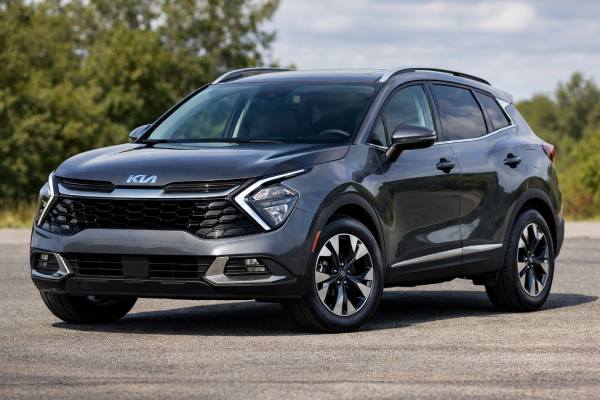
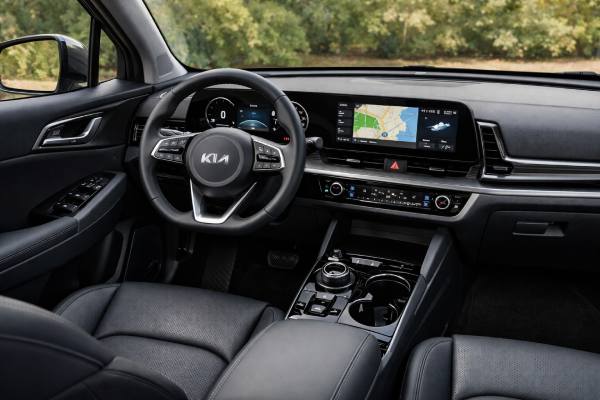
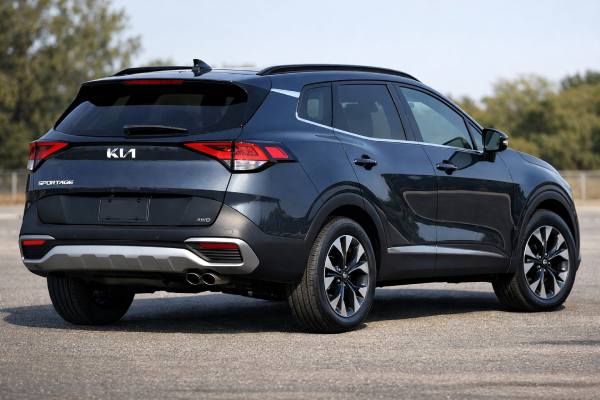
The Kia Sportage NQ5 with the 1.6-liter G4FP turbo petrol engine and all-wheel drive is a more sophisticated SUV than the older naturally aspirated Sportage generations, but it still aims at everyday usability rather than drama. In this 160 hp form, it combines a downsized turbo engine, a 48-volt mild-hybrid system in many European AWD versions, a 7-speed dual-clutch transmission, and an electronically controlled AWD setup. That mix gives it stronger mid-range pull and better traction than the old 2.0 FWD formula, while keeping the Sportage’s family-friendly packaging.
It is also a model that needs careful specification checking. The NQ5 range varies by market, and some facelift-era AWD petrol versions now use a higher output. For that reason, the smart way to assess this car is by VIN, production year, and local market sheet. When matched correctly, the 160 hp AWD Sportage is one of the most rounded compact SUVs in the class.
Essential Insights
- Strong traction, stable motorway manners, and a roomy cabin are the core strengths of this AWD Sportage.
- The 1.6 turbo engine feels much stronger in the mid-range than older non-turbo petrol Sportage models.
- Mid trims on 17- or 18-inch wheels usually give the best comfort-to-cost balance.
- The 7-speed dual-clutch transmission needs a careful road test in traffic and at low speed before purchase.
- A sensible service rhythm is every 15,000 km or 12 months, with shorter oil intervals wise in heavy urban use.
Navigate this guide
- Sportage NQ5 AWD profile
- Sportage NQ5 technical figures
- Sportage NQ5 grades and ADAS
- Ownership risks and fixes
- Service plan and used buying
- Road manners and fuel use
- Against Tucson CX-5 and RAV4
Sportage NQ5 AWD profile
The NQ5 Sportage marked a real step forward for Kia’s compact SUV. It is larger, more mature, and more ambitious than the QL it replaced. In 1.6 AWD form, it also shifts the model’s character away from simple family transport and toward a more modern crossover formula: turbocharged petrol power, dual-clutch transmission, mild-hybrid assistance in many markets, and on-demand all-wheel drive.
That sounds like a big jump in complexity, and it is, but the engineering choice makes sense. The old naturally aspirated engines were dependable and easy to understand, yet they could feel flat once the vehicle was fully loaded or asked to climb at highway speed. The 1.6 turbo solves that with a healthier torque band, which suits the Sportage’s bigger body. It feels more relaxed in daily driving because it does not need to work as hard for the same result.
The AWD system also changes the appeal of the car. Most owners will never use it for serious off-roading, but it improves wet-road traction, winter security, and general stability when the surface is poor. That matters more in a family SUV than brochure-style adventure claims. Buyers in colder climates, hilly areas, or mixed rural use will notice the benefit far more than a city-only driver.
The NQ5 platform is one of the model’s quiet strengths. It rides with more polish than earlier Sportages, and the cabin packaging is notably better. Rear-seat room is generous for the class, the driving position is easy to get comfortable in, and cargo space is competitive. In other words, the engineering under the bonnet became more modern without losing the practical traits that made the Sportage popular.
There is one important ownership caveat. The badge alone does not tell the full story. Equipment, wheel size, mild-hybrid content, and even engine output can vary by market and facelift year. Some later AWD petrol versions in certain markets moved beyond the original 160 hp figure. So while the NQ5 AWD is easy to recommend in principle, the exact car still needs to be checked carefully by VIN and official local data. That is especially important for used buyers who assume every 1.6 AWD Sportage is mechanically identical.
Sportage NQ5 technical figures
The 160 hp AWD Sportage is best understood as a Europe-focused NQ5 specification built around the 1.6 T-GDi petrol engine, 7-speed dual-clutch transmission, and all-wheel drive. Open factory literature gives a solid picture of the core package, though some fluid capacities and workshop torque values remain VIN-specific and are not always published in owner-facing documents.
Powertrain and efficiency
| Item | Kia Sportage AWD (NQ5) 1.6 T-GDi 160 hp |
|---|---|
| Code | G4FP |
| Engine layout and cylinders | Inline-4, 4 cylinders, DOHC, 4 valves per cylinder |
| Bore × stroke | 75.6 × 89.0 mm (2.98 × 3.50 in) |
| Displacement | 1.6 L (1,598 cc) |
| Induction | Turbocharged |
| Fuel system | Direct injection |
| Compression ratio | 10.5:1 |
| Max power | 160 hp (118 kW) |
| Max torque | 265 Nm (195 lb-ft) |
| Timing drive | Chain |
| Mild-hybrid system | 48 V in many AWD European automatic versions |
| Rated efficiency | Around 7.2 L/100 km (32.7 mpg US / 39.2 mpg UK) in official AWD market data |
| Real-world highway at 120 km/h (75 mph) | Usually about 7.2–8.2 L/100 km depending on tyres, weather, and load |
Transmission and driveline
| Item | Kia Sportage AWD (NQ5) 1.6 T-GDi 160 hp |
|---|---|
| Transmission | 7-speed dual-clutch automatic |
| Drive type | Electronically controlled AWD |
| Differential | Open front and rear, with on-demand torque transfer |
| Drive modes | Market and trim dependent; often Eco, Normal, and Sport |
Chassis and dimensions
| Item | Typical NQ5 AWD petrol data |
|---|---|
| Suspension front / rear | MacPherson strut / Multi-link |
| Steering | Rack-and-pinion, electric power assist |
| Steering turns lock-to-lock | About 2.45 |
| Brakes | Front ventilated discs 320 mm (12.6 in), rear discs 300 mm (11.8 in) |
| Most common tyre sizes | 215/65 R17, 235/55 R18, 235/50 R19 |
| Ground clearance | 170 mm (6.7 in) |
| Approach / departure / breakover angles | 17.0° / 26.4° / 16.7° |
| Length | 4,515 mm (177.8 in) on early NQ5 European data |
| Width | 1,865 mm (73.4 in) |
| Height | 1,650 mm (65.0 in) |
| Wheelbase | 2,680 mm (105.5 in) |
| Turning circle | 10.92 m (35.8 ft) |
| Kerb weight | Roughly 1,600–1,750 kg (3,527–3,858 lb), trim dependent |
| GVWR | About 2,200 kg (4,850 lb), market dependent |
| Cargo volume | Up to 591 L (20.9 ft³) seats up and up to 1,780 L (62.9 ft³) seats folded, drivetrain and method dependent |
Performance and capability
| Item | Typical AWD petrol figures |
|---|---|
| 0–100 km/h | Around the high-9-second range, market dependent |
| Top speed | Around 190–200 km/h depending on year and market |
| Braking distance | Not commonly published in owner-facing Kia literature |
| Towing capacity | Up to 1,650 kg (3,638 lb) braked / 750 kg (1,653 lb) unbraked in published AWD petrol data |
| Payload | Around 578 kg (1,274 lb), trim dependent |
Fluids and service capacities
| Item | Notes |
|---|---|
| Engine oil | Official Kia oil guides list API SN Plus or SP and 0W-20 for the NQ5 1.6 T-GDi in at least one market guide; capacity 4.8 L (5.1 US qt) |
| Coolant | Verify by VIN and market manual |
| Transmission fluid | Verify by VIN and workshop data |
| AWD coupling and differential fluids | Verify by VIN and workshop data |
| A/C refrigerant and compressor oil | Verify by VIN and market service literature |
| Key torque specs | Use official workshop data only, as public owner-facing PDFs do not fully list them |
Safety and driver assistance
| Item | Kia Sportage NQ5 |
|---|---|
| Euro NCAP | 5 stars; Adult 87%, Child 86%, Vulnerable Road Users 66%, Safety Assist 72% |
| IIHS | Not directly applicable to this Europe-focused 160 hp AWD configuration |
| ADAS suite | AEB, lane-keeping support, lane-follow assist, speed-limit assist, adaptive cruise, blind-spot systems, and rear cross-traffic functions depending on trim and market |
Sportage NQ5 grades and ADAS
The NQ5 Sportage range is wide enough that trim choice changes the ownership experience almost as much as engine choice. The 160 hp AWD version is usually found in mid or upper trims rather than base fleet-style grades. That is good news for used buyers, because the AWD petrol often comes with a more complete comfort and safety package from the start.
In broad terms, entry-level trims focus on the fundamentals: LED lighting, basic climate control, parking sensors, touchscreen infotainment, smartphone connectivity, and a core set of safety systems. Mid trims add the equipment most owners actually appreciate day to day, such as heated seats, a larger display, navigation, upgraded camera systems, dual-zone climate control, keyless entry, and better cabin trim materials. Upper grades usually bring larger wheels, upgraded upholstery, premium audio, panoramic roof options, more advanced parking aids, and the fullest ADAS specification.
The practical used-market sweet spot is usually the middle of the range. That is where you get the better seats, camera, climate functions, and useful driver-assistance features without forcing yourself into the biggest wheels and highest tyre bills. On 17- or 18-inch wheels, the Sportage usually rides better and stays cheaper to keep.
Safety is a major selling point of the NQ5. The body structure improved substantially over earlier generations, and the Euro NCAP result confirms that it is a strong modern family SUV. Standard and optional systems vary by market, but the overall direction is clear: Kia pushed the Sportage into the mainstream safety upper tier.
Depending on trim and market year, the NQ5 can include:
- Forward collision avoidance with vehicle, pedestrian, and cyclist detection.
- Lane-keeping assist and lane-follow assist.
- Intelligent speed-limit assist.
- Adaptive cruise control.
- Blind-spot collision warning.
- Rear cross-traffic collision warning or avoidance.
- Parking sensors and reverse camera.
- Highway-oriented support features on better-equipped versions.
That variety matters after repairs. Windscreen replacement, bumper work, alignment, and even ride-height changes from incorrect tyres can affect ADAS calibration. A used Sportage with a replaced screen or front-end repair should come with evidence that any camera- or radar-based systems were recalibrated correctly. On a modern SUV, that is not a small detail. It is part of the safety inspection.
Quick visual clues also help when checking trim accuracy. Larger curved displays, seat trim quality, wheel size, tailgate operation, roof equipment, and mirror-mounted blind-spot hardware can quickly tell you whether a seller’s trim claim is realistic.
Ownership risks and fixes
The NQ5 1.6 AWD is still a relatively young vehicle, so its reliability picture is more about early ownership patterns than deep, long-term age-related failure history. That is both good and bad. The good news is that there is no broad evidence that this exact drivetrain is fundamentally flawed. The caution is that newer, more software-heavy vehicles can develop faults that are annoying before they become expensive.
The main risk areas break down like this:
- Common and low cost: 12 V battery weakness, brake disc corrosion on lightly used cars, tyre wear from poor alignment, software glitches in infotainment, and intermittent camera or parking-sensor complaints.
- Occasional and medium cost: dual-clutch low-speed hesitation, shudder during repeated stop-start traffic, noisy suspension links, and sensor faults that trigger temporary warning messages.
- Less common but important: unresolved recall work, persistent charging-system warnings on mild-hybrid cars, and neglected fluid service in AWD driveline components on higher-mileage vehicles.
The engine itself should be treated like a modern small turbo petrol engine, because that is exactly what it is. That means it responds well to good oil service discipline and does not reward neglect. A stretched oil interval is riskier here than on an old large-capacity naturally aspirated petrol unit. Direct injection also means intake carbon build-up can become a longer-term consideration, especially on urban cars that do many short trips.
The 7-speed dual-clutch transmission deserves extra attention. Many owners will never have a serious issue, but used buyers should test it carefully. Symptoms to watch include a jerky first take-up, hesitation when pulling into traffic, hot shudder after urban crawling, or clunky low-speed parking maneuvers. Those do not always mean failure, but they do point to a car that needs closer diagnosis.
The AWD system is usually quiet in normal use, yet it still deserves fluid-service awareness over the long term. Listen for driveline hums, feel for vibration on full-lock maneuvers, and inspect for warning lights tied to traction or chassis systems. Most used examples will be fine, but the point of AWD is confidence, and a noisy system ruins that quickly.
Recall and service-action history matters. A good example from the NQ5 era involved certain 2022–2023 Sportage vehicles in an official recall tied to voltage instability during starting, which could cause the instrument cluster not to illuminate properly. The practical lesson is simple: run the VIN through the official recall portal and confirm dealer completion records before you buy. On a modern Kia, software and campaign history are part of reliability, not separate from it.
Service plan and used buying
For routine maintenance, the NQ5 1.6 AWD responds best to a conservative approach rather than the longest possible interval. Official market guides commonly show a petrol Sportage service rhythm of 15,000 km or 12 months, and that is a good base line. For short-trip driving, towing, hot weather, or heavy traffic, cutting oil changes closer to 10,000–12,000 km is a smart move.
A practical owner schedule looks like this:
- Engine oil and filter: every 10,000–15,000 km or 12 months.
- Engine air filter: inspect every service; replace around 20,000–30,000 km.
- Cabin filter: yearly or around 15,000–20,000 km.
- Spark plugs: around 60,000 km is a sensible planning point.
- Brake fluid: every 2 years.
- Coolant: inspect yearly and replace by official market schedule.
- DCT fluid and AWD driveline fluids: inspect service history closely; for long-term ownership, preventive fluid work around 60,000–80,000 km is reasonable.
- Brake pads and discs: inspect every service.
- Tyre rotation: every 8,000–10,000 km.
- Alignment check: at least yearly, and after pothole impacts.
- Auxiliary belts and hoses: inspect every service.
- Timing chain: no routine replacement interval, but inspect immediately if noise or timing faults appear.
- 12 V battery: yearly testing after year 3 or 4.
The engine oil guide is one of the few areas where open official data give a direct figure. In at least one Kia market document, the NQ5 1.6 T-GDi is listed with 4.8 liters of oil and an API SN Plus or SP requirement. Even then, viscosity can vary by region and climate, so the handbook for the exact VIN still wins.
As a used purchase, the best examples are usually dealer-serviced or specialist-serviced cars with complete digital history, normal tyre wear, no warning lights, and proof of recall completion. Mid trims remain the sweet spot. They give most of the comfort and safety equipment buyers want without the highest running costs.
Inspect these points before buying:
- Cold start behavior and idle smoothness.
- DCT take-up from standstill when cold and fully warm.
- Steering alignment and tyre wear consistency.
- Correct ADAS operation with no stored warnings.
- Evidence of regular oil changes, not only annual stamps without detail.
- Signs of prior front-end repair around the radar, bumper, and windscreen.
- Underside condition, especially if the car lived in harsh winter climates.
The long-term durability outlook is promising, but this is not an old-school simple SUV. It rewards buyers who treat maintenance history and software campaign history with the same seriousness.
Road manners and fuel use
On the road, the NQ5 AWD feels more grown-up than earlier Sportages. The first thing most drivers notice is composure. It tracks cleanly on faster roads, feels secure in crosswinds, and absorbs broken surfaces with better control than the previous generation. That makes it a strong family-road-trip vehicle even before you consider the extra traction from AWD.
The suspension tune is comfort-first, but not loose. There is still noticeable body movement if you push it hard, yet the Sportage never feels untidy. The multi-link rear suspension helps it stay calm over mid-corner bumps, and that matters more in daily driving than a sporty steering setup. Steering feel is light rather than talkative, which suits the vehicle’s mission.
The 1.6 turbo petrol gives the NQ5 a more useful power band than the older 2.0 MPI. Low- to mid-range pull is the key advantage. In city driving, it feels alert without needing high revs. On country roads, it overtakes with more confidence than the old naturally aspirated engine. It is not fast enough to feel genuinely premium, but it is strong enough that the car no longer feels underpowered.
The 7-speed dual-clutch transmission shapes the experience. Once moving, it shifts cleanly and helps the turbo engine stay in its useful torque range. In stop-start traffic, however, it can feel less smooth than a traditional torque-converter automatic. That is normal to a point. What you want is consistency, not perfection.
Real-world fuel use is usually reasonable rather than outstanding:
- City: about 8.5–10.5 L/100 km.
- Highway: about 7.2–8.2 L/100 km at normal motorway pace.
- Mixed driving: about 7.8–9.0 L/100 km.
- Cold weather or short trips: expect a noticeable penalty.
- Moderate towing or full load: consumption often rises by about 20–35 percent.
AWD is most valuable in poor conditions. Wet roundabouts, snowy inclines, and muddy exits are where the car justifies its extra weight and complexity. It is not a hard-core off-roader, but it feels confident on the kinds of surfaces that make a front-drive crossover scrabble for grip. That calm, capable feeling is one of the NQ5 AWD’s strongest real-world advantages.
Against Tucson CX-5 and RAV4
The Kia Sportage NQ5 AWD enters one of the most competitive SUV classes on the market, so context matters. Its closest rival is the Hyundai Tucson, because the two share much of their engineering philosophy. The choice between them often comes down to design, trim logic, seat comfort, and local pricing rather than a dramatic mechanical difference. The Sportage usually feels a little bolder inside and out, while the Tucson often looks more restrained.
Against the Mazda CX-5 AWD, the Kia gives up some steering feel and cabin richness, but it fights back with fresher packaging, a roomier rear seat, and a more modern ADAS environment. The Mazda often feels more premium from the driver’s seat. The Kia usually feels more modern as a family tool.
Compared with a Toyota RAV4 AWD, the Sportage cannot match hybrid efficiency or Toyota’s resale confidence. That is the hard truth. But the Kia can still appeal to buyers who prefer the response of a turbo petrol, want a more European-feeling cabin layout, or find the RAV4 overpriced in the used market.
The Nissan Qashqai is another useful benchmark. It is often easy to park and smartly packaged, but the Sportage generally offers a more substantial cabin, stronger long-distance comfort, and a more mature feel on rougher roads. The Kia feels like the bigger car because, in many ways, it is.
A Volkswagen Tiguan 4Motion remains a credible rival too. It often delivers clean ergonomics and a mature driving feel, but it can cost more to buy and maintain, especially once higher-spec examples age. The Sportage’s value case is usually stronger.
So where does the NQ5 AWD land overall? It is not the class leader in every category, but it is hard to find a category where it fails badly. That balance is its real strength. For buyers who want traction, family space, modern safety, and a useful turbo petrol engine without moving into premium-brand money, the Sportage AWD makes a very convincing case.
References
- Der Kia Sportage. 2026 (Price List)
- Engine Oil Grades and Capacities – Kia 2025 (Owner’s Manual Data)
- Kia Service Intervals 2023 (Maintenance Guide)
- Official Kia Sportage 2022 safety rating 2022 (Safety Rating)
- Recalls by manufacturer (2023) 2023 (Recall Database)
Disclaimer
This article is for informational purposes only and is not a substitute for professional diagnosis, inspection, or repair. Specifications, torque values, fluid grades, service intervals, procedures, and equipment can vary by VIN, market, trim, and production date, so always verify details against the official service documentation for the exact vehicle.
If this guide was useful, please consider sharing it on Facebook, X, or another platform to support our work.