

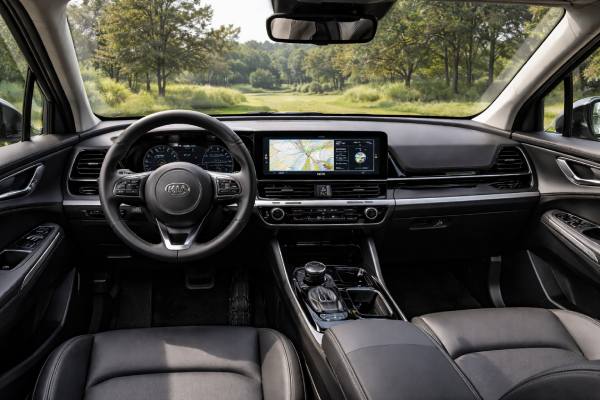
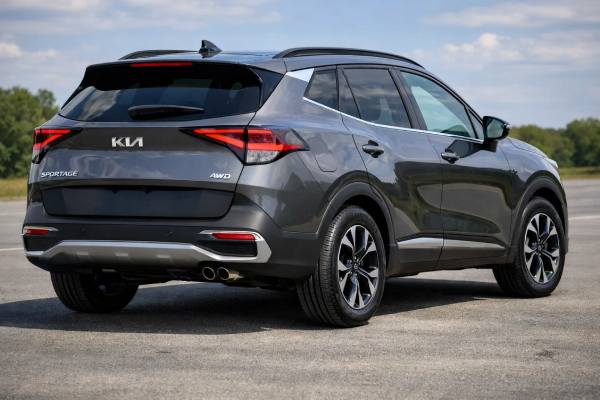
The Kia Sportage NQ5 with the naturally aspirated 2.5-liter G4KN engine and AWD is the straightforward choice in today’s Sportage range. It does not rely on turbocharging, hybrid hardware, or a CVT-style transmission. Instead, it combines a conventional 8-speed automatic, a roomy body, and a road-focused all-wheel-drive system that is easy to understand and easy to live with. That makes it especially appealing for buyers who want a family SUV with solid space, predictable power delivery, and fewer powertrain layers than the hybrid models. The trade-off is clear: the 2.5 AWD is more about smoothness and simplicity than outright pace or best-in-class fuel economy. In return, you get one of the most spacious compact SUVs in the segment, regular-fuel compatibility, useful winter traction, and a platform that has already built a strong safety record. The key is choosing the right trim, checking recall history, and matching expectations to what this engine is designed to do.
Essential Insights
- The 2.5-liter G4KN and 8-speed automatic give the NQ5 Sportage a simpler ownership profile than the hybrid and turbo alternatives.
- Cabin and cargo space are major strengths, especially for families who regularly use the rear seat.
- AWD traction and Snow mode improve confidence in rain, slush, and light trail use.
- Early build cars deserve careful recall and software-history checks, especially for transmission and steering-related campaigns.
- A sensible oil-service routine is every 8,000–10,000 miles (13,000–16,000 km) or 12 months.
Quick navigation
- Kia Sportage NQ5 AWD character
- Kia Sportage NQ5 hard data
- Kia Sportage NQ5 grades and safety
- Failure points and recalls
- Service schedule and buying advice
- Real-world pace and mpg
- Against today’s compact SUVs
Kia Sportage NQ5 AWD character
The NQ5 Sportage moved the model forward more than a simple redesign usually does. It grew into a larger, more useful family SUV, and in 2.5 AWD form it became the most traditional version of the range. That matters because many compact SUVs now mix turbo engines, dual-clutch gearboxes, or hybrid systems that improve efficiency but can make long-term ownership more complex. The 2.5 AWD Sportage takes a simpler route: a naturally aspirated four-cylinder, an 8-speed automatic, and an electronically managed AWD system with multiple drive modes.
That combination shapes the whole ownership experience. The engine does not feel explosive, but it is smooth, linear, and easy to predict. Around town it responds cleanly, and on the highway it settles into a quiet, low-stress rhythm. The automatic gearbox is also an advantage. It feels more natural in traffic and parking situations than many dual-clutch setups, and it avoids the droning character some CVT-equipped rivals still have.
The Sportage’s real strength, though, is how well it packages family use. Rear-seat room is among the best in the class, the cargo area is genuinely large, and the cabin layout is modern without becoming frustrating. Even lower trims feel substantial, while better trims add features that make the car feel more expensive than its badge suggests. That is one reason the 2.5 AWD version makes sense: it lets buyers get the NQ5’s body, cabin, and safety structure without stepping into hybrid pricing or complexity.
AWD is tuned for weather, gravel, and stability rather than for difficult off-roading. It adds traction on wet inclines, winter roads, and muddy access tracks, and on some trims a center-lock function helps spread torque more decisively at low speeds. Still, this is a road-first SUV. The X-Pro style trims push the appearance and tire package in a tougher direction, but the core mission remains family transport, not rock crawling.
Viewed as a used or nearly new buy, the NQ5 2.5 AWD works best for drivers who want size, comfort, and straightforward ownership. It is not the quickest Sportage, nor the most efficient. But it is the version that often makes the most sense once the warranty years start passing and the vehicle has to function as a normal long-term household car.
Kia Sportage NQ5 hard data
The figures below focus on the U.S.-market style Kia Sportage NQ5 AWD with the G4KN 2.5-liter naturally aspirated petrol engine and 8-speed automatic. Some details vary slightly by trim, wheel size, and build date, so ranges are used where that reflects factory variation more honestly than a single number.
Powertrain and efficiency
| Item | Kia Sportage NQ5 AWD 2.5 |
|---|---|
| Code | G4KN |
| Engine layout and cylinders | Inline-4, DOHC, 4 cylinders, 4 valves per cylinder |
| Bore × stroke | 88.5 × 101.5 mm (3.48 × 4.00 in) |
| Displacement | 2.5 L (2,497 cc) |
| Induction | Naturally aspirated |
| Fuel system | GDI and MPI |
| Compression ratio | 13.0:1 |
| Max power | 187 hp (139 kW) @ 6,100 rpm |
| Max torque | 241 Nm (178 lb-ft) @ 4,000 rpm |
| Timing drive | Chain-driven layout |
| Rated efficiency | About 9.0–9.4 L/100 km (25–26 mpg US / 30.0–31.4 mpg UK) combined, depending on trim |
| Real-world highway @ 120 km/h (75 mph) | Usually about 8.1–9.0 L/100 km (26.1–29.0 mpg US / 31.4–34.9 mpg UK) |
Transmission and driveline
| Item | Kia Sportage NQ5 AWD 2.5 |
|---|---|
| Transmission | 8-speed automatic |
| Transmission code | Public factory trim charts do not list the code clearly |
| Drive type | AWD |
| Differential | Open axle differentials with electronically controlled AWD coupling |
| AWD modes | Normal, Smart, Sport, and Snow |
| Center lock | Available on equipped AWD trims |
Chassis and dimensions
| Item | Kia Sportage NQ5 AWD 2.5 |
|---|---|
| Suspension front | Independent MacPherson strut with coil springs and stabilizer bar |
| Suspension rear | Independent multi-link with stabilizer bar |
| Steering | Column-mounted motor-driven power steering |
| Steering ratio | Public trim charts do not state a numeric ratio clearly |
| Brakes | Front vented discs 320 mm (12.6 in), rear solid discs 300 mm (11.8 in) |
| Most common tyre sizes | 235/65 R17, 235/60 R18, 235/55 R19 |
| Ground clearance | 211 mm (8.3 in) |
| Angles | Approach 18.9°, departure 26.6°, breakover 19.3° |
| Length | 4,661 mm (183.5 in) |
| Width | 1,864 mm (73.4 in) |
| Height | 1,684–1,699 mm (66.3–66.9 in), depending on trim |
| Wheelbase | 2,756 mm (108.5 in) |
| Turning circle | Verify by trim; public factory presentations are inconsistent on the exact curb-to-curb figure |
Weights, capacities, performance, fluids, and safety
| Item | Kia Sportage NQ5 AWD 2.5 |
|---|---|
| Kerb weight | About 1,618–1,728 kg (3,566–3,809 lb) |
| GVWR | About 2,200 kg (4,850 lb) |
| Fuel tank | 54.1 L (14.3 US gal / 11.9 UK gal) |
| Cargo volume | 1,121 L / 2,098 L (39.6 / 74.1 ft³), SAE seats up / down |
| 0–100 km/h | Roughly 9.5–10.0 s in typical real-world testing |
| Top speed | About 190 km/h (118 mph) is a realistic upper range for this powertrain |
| Braking distance | Highly tyre-dependent; no single factory figure is commonly published |
| Towing capacity | 1,134 kg (2,500 lb) braked / 750 kg (1,653 lb) unbraked |
| Payload | Roughly 472–582 kg (1,041–1,283 lb), depending on trim |
| Engine oil | Full synthetic 0W-20; about 5.6 L (5.9 US qt) for drain and refill |
| Coolant | Use the correct Kia-approved long-life coolant; verify exact fill quantity by VIN |
| Transmission fluid | Kia-specific ATF; verify service-fill quantity by repair procedure |
| Differential and transfer case | Use VIN-specific AWD fluid data before service |
| A/C refrigerant | Check under-bonnet label for exact type and charge |
| Key torque specs | Wheel nuts commonly 107–127 Nm (79–94 lb-ft) |
| Crash ratings | Euro NCAP 5 stars for the NQ5 generation; IIHS strong crash results on recent U.S.-market vehicles |
| Headlight rating | Trim-dependent, improved on later well-equipped versions |
| ADAS suite | AEB, lane keeping and lane following, blind-spot support, rear cross-traffic, smart cruise, highway assist, and driver attention features vary by trim |
The big picture behind these numbers is clear. The NQ5 2.5 AWD offers strong interior packaging, good towing ability for the class, and conventional mechanicals. It gives away some efficiency to hybrid rivals, but it remains a very usable family SUV with solid hardware and few gimmicks.
Kia Sportage NQ5 grades and safety
Trim choice changes this Sportage more than the headline engine figure suggests. In the North American range, the 2.5 AWD powertrain appears across multiple trims, from practical entry versions to feature-heavy models and the more rugged-looking X-Line and X-Pro derivatives. That means a buyer is not really choosing one car, but a family of cars with the same powertrain and noticeably different character.
The most sensible trim split is this. Lower and mid trims usually give you the best ride comfort, lower tyre costs, and fewer expensive cosmetic extras to worry about later. They still benefit from the same roomy shell, same 2.5 engine, and same 8-speed automatic. EX and similar mid-level grades often hit the sweet spot for value because they add comfort and convenience without bringing the heaviest wheel-and-tech burden. X-Line models lean into visual toughness and AWD identity, while X-Pro and X-Pro Prestige versions tilt furthest toward rough-road styling, distinctive wheel-and-tire setups, and a more outdoors-focused image.
Quick identifiers help when shopping:
- 17-inch wheel cars usually deliver the calmest ride.
- 19-inch trims look sharper but can ride firmer and wear tyres faster.
- X-Line cars are the style-led AWD versions.
- X-Pro trims stand out through their more adventurous tyre and trim approach.
- Top trims bring the fullest ADAS and camera packages, but also the most electronics to inspect.
Mechanically, the differences are modest rather than dramatic. The AWD system and engine stay broadly the same, but tyre choice, wheel diameter, equipment weight, and trim-specific features alter the ownership feel. That is why two Sportage AWDs can look similar online but feel quite different on the road.
Safety is one of the NQ5’s strongest selling points. The generation earned a 5-star Euro NCAP result, and U.S.-market IIHS testing has been strong as well. More importantly for buyers, the safety story improved over time. Early trim differences, especially in headlights and front crash prevention hardware, mattered more. Later versions brought more consistent ADAS coverage and stronger all-around results. That means build year and trim both matter when a buyer wants the best safety package, not just the most features.
Core systems are strong across the range: multiple airbags, modern body engineering, stability control, automatic emergency braking, and child-seat compatibility that suits family duty well. Higher trims add blind-spot camera support, surround-view parking systems, more advanced cruise control, and better lane-centering capability. As with any modern SUV, those features only retain their value if they still work correctly after windshield, bumper, or accident repair. A used NQ5 with front-end damage history deserves a more careful ADAS check than a conventional older SUV would.
Failure points and recalls
The G4KN 2.5 AWD Sportage is generally reassuring because it does not carry the same complexity burden as the hybrid and plug-in versions. It uses a naturally aspirated engine and a normal stepped automatic, which already removes several possible long-term risk areas. Even so, the NQ5 is not a “nothing ever goes wrong” SUV. Its known concerns are more about specific recall items, occasional software behavior, and the usual modern-SUV wear points than about one chronic engine flaw.
Most common, low to medium cost:
- Brake feel changes and rotor complaints.
Symptoms: steering shake, vibration under braking, uneven stopping feel.
Likely cause: pad deposits, rotor wear, or infrequent heavy braking on lightly used cars.
Remedy: inspect pads, disc condition, slider movement, and tyre balance before assuming a bigger chassis issue. - Tyre noise and edge wear on 19-inch trims.
Symptoms: booming highway noise, tramlining, uneven inner or outer shoulder wear.
Likely cause: wheel size, alignment drift, or neglected rotations.
Remedy: alignment check, tyre rotation history review, and bush inspection.
Occasional, medium cost:
- Infotainment or camera glitches.
Symptoms: frozen display, lagging menus, parking-camera bugs, intermittent warnings.
Likely cause: software, low voltage, or module calibration issues.
Remedy: battery-state check first, then module updates and fault-code scan. - Steering or ADAS warning messages after repair work.
Symptoms: steering assist warning, lane-keeping faults, or front camera errors.
Likely cause: poor calibration after body, glass, or wheel-alignment work.
Remedy: correct recalibration rather than parts guessing.
Recall-related, medium to high importance:
- 2023 transmission electric oil-pump recall.
The main concern involved a damaged capacitor in the transmission oil-pump controller that could create smoke, limp mode, or fire risk. - 2024 power steering recall.
Certain vehicles were affected by contamination in the motor-driven power-steering power pack, which could reduce steering assist. - Roof molding campaign on some 2023–2024 vehicles.
This centered on molding pieces that could loosen or detach, sometimes with wind noise first.
Engine-specific concerns are relatively modest so far. The 2.5 GDI and MPI layout benefits from both direct and port injection, which helps reduce the heavy intake-valve deposit issue seen on some DI-only engines. Oil consumption is not the defining reputation of this model, but it is still wise to monitor level between services on any long-stroke naturally aspirated four-cylinder. Cooling-system failures and timing-drive problems are not class-defining pattern faults here, which is encouraging.
For pre-purchase checks, ask for recall proof, module scan results, tyre history, battery age, and evidence that any windshield or front-end repair was followed by proper calibration. The best NQ5s are the ones with boring histories. On this model, boring is a virtue.
Service schedule and buying advice
Kia’s factory schedule is designed to look broad enough for many driving styles, but long-term owners usually do better with a practical maintenance plan that is a little stricter. The NQ5 2.5 AWD is simple by current standards, and that simplicity pays off if you keep fluids fresh, rotate tyres on time, and do not wait for a warning light to tell you basic service is overdue.
A practical ownership schedule looks like this:
| Item | Practical interval | Notes |
|---|---|---|
| Engine oil and filter | Every 8,000–10,000 miles (13,000–16,000 km) or 12 months | Full synthetic 0W-20 works best with shorter real-world intervals |
| Engine air filter | Inspect every service; replace around 20,000–30,000 miles (32,000–48,000 km) sooner in dust | Helps airflow, fuel economy, and throttle response |
| Cabin air filter | Every 12 months or 15,000–20,000 miles (24,000–32,000 km) | Also helps HVAC performance |
| Coolant | Inspect yearly; follow VIN-specific long-life schedule | Use only correct Kia-approved coolant |
| Spark plugs | Around 60,000–75,000 miles (96,000–121,000 km) is a prudent target | High-mileage cars benefit from not stretching plug life |
| Fuel system additive | Use only if fuel quality is inconsistent; many manuals suggest periodic detergent support | Regular Top Tier fuel is the easier solution |
| Timing components | Chain inspection only if noisy or showing timing-correlation faults | No routine replacement interval like a belt system |
| Serpentine belt and hoses | Inspect at each service | Replace by wear, cracking, or age |
| Automatic transmission fluid | Around 40,000–60,000 miles (64,000–97,000 km) in severe use or towing is wise | Much smarter than waiting for poor shift quality |
| AWD driveline fluids | Preventive service in the same 40,000–60,000 mile window is sensible for heavy use | Especially relevant for tow or snow-duty vehicles |
| Brake fluid | Every 2 years | Keeps pedal feel and hydraulic health consistent |
| Brake pads and rotors | Inspect every service | Heavy wheels and family loads accelerate wear |
| Tyre rotation | Every 5,000–8,000 miles (8,000–13,000 km) | Important on AWD models to protect tyre matching |
| Alignment check | At least yearly or after pothole impacts | Prevents expensive tyre wear |
| 12 V battery test | From year 4 onward | Weak batteries trigger many false electronic complaints |
Fluid and decision-making basics are simple: use regular 87-octane fuel or higher, stick with the specified 0W-20 oil, and verify ATF and AWD fluid details by VIN rather than guessing from internet charts. Wheel nut torque in the usual 107–127 Nm range is a useful confirmed figure for tyre work, but deeper workshop torque values should come from the correct service literature.
As a buyer, the safest trims are often the mid-range AWD models with moderate wheel sizes and clear service records. Seek clean history, full recall completion, matched tyres, and no ADAS warnings. Approach repaired front-end cars, neglected 19-inch-wheel examples, and any vehicle with vague transmission or steering history more cautiously. Long-term, this Sportage looks durable if serviced properly. It becomes far less convincing only when owners treat a modern SUV like an appliance that never needs preventive care.
Real-world pace and mpg
On the road, the Sportage 2.5 AWD feels more mature than exciting, and that is usually a compliment. It is not fast in the way turbo rivals can feel fast, but it is smooth, quiet enough, and easy to drive well. The naturally aspirated engine builds power in a predictable way, which makes low-speed parking, city driving, and winter traction more reassuring than in some sharper but fussier rivals. The 8-speed automatic suits the powertrain well. It shifts cleanly, does not hunt excessively in normal use, and feels much more natural in stop-start traffic than many dual-clutch systems.
Ride quality depends heavily on wheel size. The 17-inch versions are the calmest and most forgiving, particularly over broken pavement. Eighteen-inch trims are still well balanced. Nineteens look better in pictures, but they increase impact harshness, tyre noise, and sometimes straight-line tramlining. The chassis itself is stable and well sorted. Body control is tidy, steering weight is sensible, and the Sportage feels planted at highway speeds.
Real-world efficiency is adequate rather than outstanding. Expect roughly:
- city driving: about 10.2–11.2 L/100 km,
- steady highway driving: about 8.1–9.0 L/100 km,
- mixed use: about 9.0–10.0 L/100 km.
Cold weather, roof boxes, all-terrain tyres, and repeated short trips can push those figures higher. That is the cost of using a naturally aspirated AWD family SUV that prioritizes space and conventional hardware over maximum efficiency.
The AWD system earns its keep in poor weather. Snow mode softens responses and helps low-speed traction, while the center-lock function on equipped trims improves torque distribution on slippery surfaces. It does not transform the Sportage into a serious off-roader, but it does make it feel secure on snow-covered streets, wet ramps, and loose gravel. Tyres still matter more than any mode button.
Towing is respectable for the class. The Sportage handles moderate trailers confidently if the load is balanced and the tyres are in good shape. Under tow, expect fuel use to rise by about 25 to 35 percent, and do not ignore the effect of heat and extra weight on brakes and transmission fluid. As a daily driver, though, the most important point is this: the NQ5 2.5 AWD feels composed, easy, and honest. It may not thrill on a short test drive, but that same calm character is exactly why many owners keep liking it after several years.
Against today’s compact SUVs
The Sportage NQ5 2.5 AWD makes the strongest case for itself when compared with rivals on real ownership terms rather than brochure headlines. It is not the most efficient AWD compact SUV, and it is not the quickest. What it does offer is a rare mix of cabin space, conventional mechanicals, modern safety, and strong equipment value.
Against the Toyota RAV4 AWD, the Kia usually wins on interior design freshness, rear-seat room, and feature-per-dollar value. The Toyota counters with stronger long-term fuel economy and a longer-established resale reputation. If a buyer wants the simpler non-hybrid ownership path but still values a more spacious and more modern-feeling cabin, the Sportage makes a persuasive argument.
Against the Honda CR-V, the picture depends on powertrain. The newer CR-V hybrid is more efficient and refined in some situations, but the Kia’s naturally aspirated 2.5 and 8-speed automatic can feel simpler to own over the very long run. The Sportage also often looks better equipped at equivalent money.
Against the Mazda CX-5 2.5 AWD, the Kia gives up some steering feel and premium polish, but it wins comfortably on rear-seat space, cargo room, and infotainment openness. The Mazda is the driver’s choice. The Kia is the family pragmatist.
Against the Hyundai Tucson 2.5 AWD, the comparison is especially close. They share much of their engineering, so trim, price, and condition matter more than the badge. The Sportage tends to feel a little bolder in design and often a touch more upscale inside, while the Tucson takes a cleaner and more conservative approach.
That leaves the verdict. The Sportage NQ5 2.5 AWD is the smart choice for buyers who want:
- a roomy family SUV,
- conventional petrol and automatic hardware,
- strong safety credentials,
- and useful AWD without stepping into hybrid cost or complexity.
Drivers who care most about fuel savings or sharp acceleration will find stronger alternatives. Buyers who want size, simplicity, and all-weather confidence at a competitive price will find that this Sportage is one of the easiest compact SUVs to recommend.
References
- Compare Trim Levels of the 2025 Kia Sportage | Model Chart: LX, EX, X-Line AWD, SX, SX Prestige, Sportage X-Pro & Sportage X-Pro Prestige | Kia 2025 (Specification)
- Recommended lubricants and capacities – Kia Owner’s Manual 2025 (Owner’s Manual)
- 2024 Kia Sportage 2024 (Safety Rating)
- Official Kia Sportage 2022 safety rating 2022 (Safety Rating)
- Check for Recalls: Vehicle, Car Seat, Tire, Equipment 2026 (Recall Database)
Disclaimer
This article is for informational purposes only and is not a substitute for professional diagnosis or repair. Specifications, torque values, service intervals, fluid requirements, and procedures can vary by VIN, market, build date, trim, and equipment, so always verify details against the official service documentation for the exact vehicle.
If this guide helped you, please consider sharing it on Facebook, X, or another social platform to support our work.