
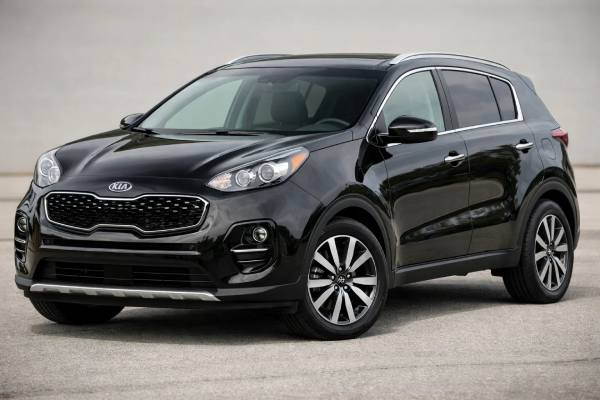
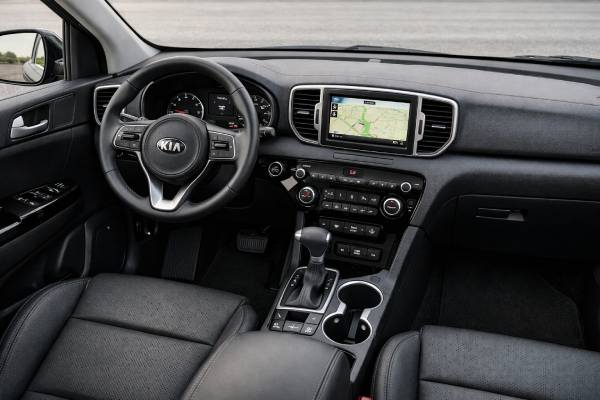
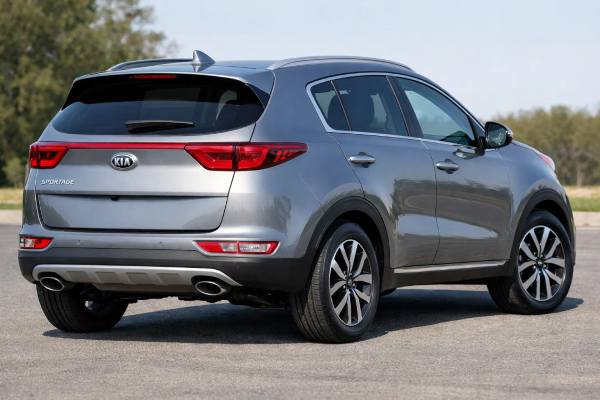
The Kia Sportage QL with the naturally aspirated 2.4-liter G4KJ engine and all-wheel drive is one of the more sensible versions of the early fourth-generation Sportage. It does not chase the sharper acceleration of the turbo model, but it gives owners something many used-SUV buyers value more: a simpler torque-converter automatic, predictable drivability, and fewer transmission-related headaches in daily traffic. In this form, the Sportage leans toward dependable family use rather than flashy performance.
This engine and output are most closely associated with North America-spec QL vehicles, especially the early years of the generation, even though the QL program itself began globally in 2016. That matters because the 181 hp AWD setup sits in a useful middle ground. It has enough power for real highway work, a well-packaged cabin, and a chassis that feels more mature than many budget-minded rivals. The key ownership questions are engine-condition history, recall completion, and how well the car has been serviced.
Fast Facts
- The 2.4-liter AWD setup feels smoother in traffic than the 1.6 turbo dual-clutch alternative.
- Cabin space, cargo room, and winter traction are strong points for family use.
- The 6-speed automatic is usually more durable than the small-turbo DCT combinations found elsewhere in the range.
- Oil-consumption history and recall completion matter more than trim level alone on a used example.
- A smart oil-service rhythm is every 8,000–12,000 km or 6–12 months, depending on use.
Navigate this guide
- Kia Sportage QL 2.4 character
- Kia Sportage QL numbers and capacities
- Kia Sportage QL grades and driver aids
- Fault patterns and campaign history
- Service schedule and smart buying
- Road manners and real economy
- Where it sits against rivals
Kia Sportage QL 2.4 character
The 2.4 AWD Sportage is the version for buyers who want the QL generation’s stronger platform and practical shape without stepping into the more expensive, more stressed turbo territory. In daily use, that matters more than the raw power gap suggests. The G4KJ 2.4-liter direct-injection engine delivers 181 hp and 175 lb-ft, which is enough to move the Sportage with confidence, but its real advantage is how naturally it works with the conventional 6-speed automatic.
That transmission changes the ownership story. Unlike the smaller turbo Sportage variants that depend on a dual-clutch gearbox for their character, the 2.4 AWD feels calmer at parking speeds, in stop-start commuting, and when creeping up inclines or backing a trailer. For many used buyers, that smoother low-speed behavior is an advantage worth more than an extra second in a magazine acceleration test.
The chassis also deserves credit. The QL Sportage feels more planted and more substantial than earlier Sportages, and it does a good job of balancing ride comfort with body control. On broken roads, it does not float or crash badly unless it sits on the larger wheel packages. The all-wheel-drive system helps too. It is not meant for serious off-road work, but it gives the car better launch traction, more confidence on wet roads, and more predictable behavior in snow with the right tires.
There is a clear trade-off. This version is not especially fast, and it is not especially efficient by class standards. The 2.4 GDI engine also belongs to the Theta-family discussion that every informed used-SUV shopper now knows about. That does not make every Sportage 2.4 a problem vehicle, but it does mean the buying process must be disciplined. Oil-level habits, service records, recall completion, and evidence of software or campaign work matter more here than on some simpler rivals.
What makes the 2.4 AWD Sportage appealing anyway is how balanced it feels when healthy. The cabin is roomy enough for small families, cargo space is strong for the class, and upper trims add useful comfort and safety equipment without pushing repair complexity into luxury-SUV territory. It is not the emotional choice in the segment. It is the practical one with a few clear warnings attached.
In short, this is the early QL Sportage for people who want the safer bet in traffic, the better setup for bad weather, and a compact SUV that feels sturdier than its price point suggests.
Kia Sportage QL numbers and capacities
The tables below focus on the North America-spec Kia Sportage QL 2.4 AWD configuration that best matches the G4KJ 181 hp setup. Public factory data are strongest for 2017–2018 model-year vehicles, which are the main fit for this powertrain in this generation.
Powertrain and efficiency
| Item | Kia Sportage QL 2.4 AWD |
|---|---|
| Code | G4KJ |
| Engine layout and cylinders | Inline-4, 4 cylinders, DOHC, 4 valves per cylinder |
| Bore × stroke | 88.0 × 97.0 mm (3.46 × 3.82 in) |
| Displacement | 2.4 L (2,359 cc) |
| Induction | Naturally aspirated |
| Fuel system | Gasoline direct injection |
| Compression ratio | 11.3:1 |
| Max power | 181 hp (135 kW) @ 6,000 rpm |
| Max torque | 237 Nm (175 lb-ft) @ 4,000 rpm |
| Timing drive | Chain |
| Fuel requirement | Regular unleaded, 87 AKI or higher |
| Rated efficiency | AWD automatic: 21 city / 25 highway / 22 combined mpg US; about 11.2 / 9.4 / 10.7 L/100 km |
| Real-world highway @ 120 km/h | Typically about 8.7–9.8 L/100 km in good condition |
Transmission and driveline
| Item | Kia Sportage QL 2.4 AWD |
|---|---|
| Transmission | 6-speed automatic |
| Final drive ratio | 3.195:1 AWD |
| Clutch type | Torque converter |
| Drive type | Active AWD |
| Differential | Open front and rear differentials with brake-based traction management |
Chassis and dimensions
| Item | Kia Sportage QL 2.4 AWD |
|---|---|
| Suspension front / rear | MacPherson strut / multi-link |
| Steering | Motor-assisted rack and pinion |
| Steering ratio | 14.4:1 |
| Turns lock-to-lock | 2.71 |
| Brakes | Front 305 mm (12.0 in) disc / rear 302 mm (11.9 in) disc |
| Most common tire sizes | 225/60 R17 or 225/55 R18 |
| Ground clearance | 173 mm (6.8 in) AWD |
| Approach / departure / breakover | 28.0° / 24.6° / 19.5° AWD |
| Length / width / height | 4,481 / 1,854 / 1,656 mm (176.4 / 73.0 / 65.2 in) with roof rails |
| Wheelbase | 2,670 mm (105.1 in) |
| Turning circle | 10.6 m (34.8 ft) |
| Kerb weight | About 1,564–1,696 kg (3,448–3,739 lb), depending on trim and options |
| GVWR | Verify by door sticker; public Kia media data do not consistently list it for this trim |
| Fuel tank | 62.1 L (16.4 US gal) |
| Cargo volume | 869 L / 1,702 L (30.7 / 60.1 ft³), SAE, seats up / seats folded |
Performance and capability
| Item | Kia Sportage QL 2.4 AWD |
|---|---|
| 0–100 km/h | Roughly 9.2–9.8 s in typical real-world testing |
| Top speed | Not consistently published in open North America factory literature |
| Braking distance 100–0 km/h | Not consistently published in open factory literature |
| Towing capacity | 907 kg (2,000 lb) braked / 748 kg (1,650 lb) unbraked |
| Payload | Trim- and label-dependent; verify on the individual vehicle sticker |
Fluids and service capacities
| Item | Kia Sportage QL 2.4 AWD |
|---|---|
| Engine oil | 5W-30 commonly specified; 4.8 L (5.1 US qt) |
| Coolant | Long-life ethylene glycol type, typically 50:50 mix; public spec pages are not consistent enough for a trusted dry-fill number |
| Transmission / ATF | Verify by VIN and service literature before drain or overhaul work |
| Differential / transfer case | Verify by VIN and AWD unit specification |
| A/C refrigerant | Verify by VIN and production date |
| A/C compressor oil | Verify by VIN and production date |
| Key torque specs | Wheel nuts 107–127 Nm (79–94 lb-ft); spark plugs 14.7–24.5 Nm (10.9–18.0 lb-ft) |
Safety and driver assistance
| Item | Kia Sportage QL 2.4 AWD |
|---|---|
| Euro NCAP | QL-generation Sportage body shell achieved 5 stars in Europe; exact percentages apply to Euro-spec test vehicles rather than this U.S.-market 2.4 AWD trim |
| IIHS | Good in major crashworthiness tests for 2017–2019 application; 2018 Top Safety Pick when equipped with optional front crash prevention and specific headlights built after June 2017 |
| Headlight rating | LX and many EX halogen setups: Poor; later SX HID setup built after June 2017: Acceptable |
| ADAS suite | Depending on trim and package: AEB, lane departure warning, blind-spot detection, rear cross-traffic alert, rear camera, parking assist, high-beam assist |
The key point in these numbers is simple: this Sportage is not a performance SUV, but it is usefully capable. It is roomy, stable, and much easier to live with than a spec sheet alone might suggest.
Kia Sportage QL grades and driver aids
For the 2.4 AWD buyer, the trim story is mostly about LX versus EX. The SX Turbo sits outside this engine discussion because it uses the 2.0 turbo engine. That means most used examples you will actually compare are LX AWD and EX AWD, plus whatever option packages were fitted when new.
The LX AWD is usually the value entry point. It commonly came with 17-inch alloy wheels, cloth trim, a simpler infotainment setup, and the smallest repair-risk footprint. In 2018, Kia upgraded the LX with better cloth trim and added the optional LX Technology Package, which could bring blind-spot detection, rear cross-traffic alert, lane departure warning, autonomous emergency braking, power-folding mirrors, and a larger infotainment screen through package content. That makes late LX AWD examples more attractive than many buyers expect.
The EX AWD is the richer daily-driver choice. It usually rides on 18-inch wheels, adds more convenience equipment, and often feels like the sweet spot of the range. In 2018, blind-spot detection and rear cross-traffic alert became standard on EX, along with heated mirrors and some trim upgrades. Available packages could add panoramic roof equipment, upgraded audio, smart power tailgate, ventilated seats, and additional active-safety features.
A few quick identifiers help when sorting cars in person:
- 17-inch wheels and simpler cloth cabin often point to LX.
- 18-inch wheels, larger screen, more chrome or gloss-black trim, and richer seat trim usually point to EX.
- Technology or premium-package cars may have parking sensors, larger infotainment, upgraded audio, and added safety hardware that are not obvious in basic listings.
- Window sticker copies or VIN-based dealer build sheets are worth far more than seller descriptions.
The good news is that the 2.4 AWD cars share the same basic mechanical layout, so trim differences do not radically alter durability. The main differences are wheel-and-tire cost, comfort equipment, and active-safety content.
Safety equipment is one of the Sportage’s stronger points. Standard passive-safety hardware included dual front airbags, front seat-mounted side airbags, full-length side-curtain airbags with rollover sensor, ABS, traction control, stability control, hill-start assist, downhill brake control, and LATCH child-seat anchors. Structurally, the QL-generation shell is stronger than the previous Sportage, and that helps explain why the model performed well in major crash testing.
Driver assistance varied by year and package. In 2017, systems such as blind-spot detection, rear cross-traffic alert, autonomous emergency braking, lane departure warning, high-beam assist, and parking sensors were generally package content or trim-dependent. By 2018, some of this equipment spread further down the range. That makes 2018 EX AWD models particularly appealing if safety technology matters.
One detail many used buyers miss is calibration. If the car has forward camera or sensor-based systems, windshield replacement and some front- or rear-end repairs should be followed by proper calibration. Missing paperwork here does not automatically kill the deal, but it should lower the price.
Fault patterns and campaign history
The 2.4 AWD Sportage has a different risk profile from the 1.6 turbo model. Its 6-speed automatic is usually the calmer and more durable transmission choice, but the 2.4 GDI engine introduces its own concerns. The most important issues are easy to group by prevalence and cost.
- Common, high-cost risk, usually after poor oil-control history: oil consumption and bottom-end wear.
Symptoms: falling oil level between services, ticking that turns into rod knock, flashing engine light, or loss of power.
Likely root cause: wear within the Theta-family 2.4 GDI engine, sometimes linked to oil consumption, bearing distress, or delayed detection of a developing internal problem.
Recommended remedy: document oil use early, perform proper diagnosis, and confirm whether prior campaign or warranty work exists. A seller who cannot explain frequent top-offs is a major risk. - Occasional, low- to medium-cost: carbon build-up and drivability roughness.
Symptoms: rough idle, lazy throttle response, cold-start stumble, and reduced economy.
Likely root cause: direct injection allows intake deposits to build over time, especially on short-trip vehicles.
Recommended remedy: inspect plugs and coils first, then address intake cleaning if symptoms justify it. - Occasional, medium-cost: ignition and misfire issues.
Symptoms: hesitation under load, check-engine light, or uneven idle.
Likely cause: aging spark plugs, coils, or fuel-quality sensitivity.
Recommended remedy: start with the basics before chasing sensors. - Occasional, medium-cost: cooling-system seepage.
Symptoms: sweet smell, low coolant level, dried residue around joints, or heat-cycle instability.
Likely cause: hoses, pump seepage, or housing-related leaks.
Recommended remedy: pressure-test early and avoid repeated overheating. - Occasional, medium-cost: AWD and chassis wear.
Symptoms: humming from wheel bearings, rear driveline noise, vibration, or clunks over sharp bumps.
Likely cause: wheel bearings, bushings, links, or neglected AWD fluid service.
Recommended remedy: road-test at speed, inspect tires for mismatch, and do not ignore vibration on lock or under throttle.
Software and campaigns matter here. Kia service literature and later campaign activity show that engine monitoring, oil-consumption diagnosis, and recall updates are part of the ownership picture for Theta-family vehicles. On the safety side, the most important widely discussed campaign for this generation is the HECU fire-risk recall, which applies to certain Sportage models and involves fuse changes, with software update work on some EPB-equipped vehicles. Early accessory trailer tow harness campaigns and later tow-harness fire actions can also matter if the vehicle has genuine Kia towing hardware.
The good news is that the 6-speed automatic itself is generally a strong point. Compared with the 7-speed dual-clutch used elsewhere in the range, it is the easier gearbox to own long-term. Fluid neglect can still create shift harshness or wear, but it is not usually the headline weak spot.
For a used purchase, ask for these documents:
- Full oil-service history, not just stamp-book intervals.
- Recall and campaign proof, especially engine- and HECU-related work.
- Evidence of correct repairs if the engine was replaced.
- Records for AWD-related fluid service, if any.
- Proof of ADAS calibration after windshield or body repair on equipped cars.
The Sportage 2.4 becomes much safer to buy when its paperwork is strong. Without that paper trail, risk climbs quickly.
Service schedule and smart buying
The best way to own a 2.4 AWD Sportage is to service it more thoughtfully than the minimum schedule suggests. This is not the model to run long oil intervals and hope for the best. A conservative approach costs less than one major engine event.
A practical maintenance plan looks like this:
- Engine oil and filter: every 8,000–12,000 km or 6–12 months in normal use. In heavy city driving, repeated short trips, extreme heat, towing, or dusty use, stay closer to the short end.
- Engine air filter: inspect every service and usually replace around 24,000–30,000 km, sooner in dusty areas.
- Cabin air filter: replace roughly every 12 months or 15,000–20,000 km.
- Spark plugs: inspect by mileage history and replace around 90,000–100,000 km if no earlier symptom appears.
- Coolant: replace by time and condition; a five- to ten-year window is typical depending on the exact coolant history and region.
- Brake fluid: every 2 years is a sensible target.
- ATF: the factory language is less aggressive than many specialists prefer, but a preventive 60,000–90,000 km drain-and-fill approach is reasonable for long-term ownership.
- AWD fluids: inspect service history and treat 60,000–90,000 km as a smart checkpoint on hard-used vehicles.
- Accessory belt and hoses: inspect from about year five onward and replace by condition.
- Brake pads, rotors, tires, and alignment: inspect at every service.
- 12 V battery: begin routine testing from year four.
For decision-making, the most useful public figures are these: engine oil capacity is 4.8 L, wheel-nut torque is 107–127 Nm, and spark-plug torque is 14.7–24.5 Nm. For drain-plug, ATF, and AWD-coupling procedures, always defer to VIN-specific service documentation.
As a used buyer, inspect the car in this order:
- Cold start: listen for metallic knock, long crank, or rough idle.
- Oil level and service evidence: low oil with no good explanation is a red flag.
- Warm road test: check shift quality, straight tracking, and steady power under load.
- Underside check: look for oil sweating, coolant residue, and impact damage.
- AWD clues: confirm matching tires on all four corners and even wear.
- Electronics: test camera, sensors, seat functions, and climate control.
- Recall proof: verify by VIN through the official recall portal and dealer records.
The trims to seek are usually 2018 LX AWD with Technology Package or 2018 EX AWD, depending on budget. Those give a better equipment balance and broader active-safety availability. Earlier 2017 cars can still be good buys if they are cheaper, fully documented, and clean underneath. Cars to avoid are the ones with patchy oil history, unexplained engine replacements, warning lights, mixed tires, or seller stories that do not line up with invoices.
Long-term durability is fair to good when maintenance is proactive. It becomes poor when owners treat oil level and recall work as optional.
Road manners and real economy
On the road, the 2.4 AWD Sportage feels honest. It does not feel especially quick, but it does feel settled. That distinction matters. In family use, the Sportage’s strong point is not drama. It is the sense that the car is composed on highways, easy to place in traffic, and predictable in poor weather.
Ride quality is generally better on 17-inch wheels than on larger packages. The suspension has enough compliance to absorb broken surfaces without constantly shaking the cabin, yet body control stays respectable in quick lane changes. Steering is light to medium in effort and accurate enough, though it does not deliver much texture through the wheel. Straight-line stability is good, and the Sportage feels like a mature compact SUV rather than a lifted hatchback.
The powertrain character is smooth but not urgent. Around town, the naturally aspirated 2.4 relies more on revs than the smaller turbo engine does, so the first part of the throttle can feel ordinary. Once moving, though, the 6-speed automatic works well with the engine. Downshifts are predictable, part-throttle operation is smooth, and there is less of the low-speed awkwardness that can spoil a dual-clutch setup in daily use.
Real-world fuel use is the trade-off. In mixed driving, expect roughly 10.0–11.2 L/100 km. In city-heavy use, 11.5–13.0 L/100 km is normal. On steady highway work at 100–120 km/h, many healthy cars land around 8.7–9.8 L/100 km. Cold weather, roof loads, aggressive tires, and short trips can worsen that quickly.
A few real-use impressions stand out:
- Noise levels: wind and engine noise are acceptable, but coarse asphalt can make tire noise noticeable on bigger wheels.
- Braking feel: firm and easy to judge, with no unusual behavior in normal use.
- AWD behavior: reassuring in rain and snow, especially when paired with quality all-season or winter tires.
- Load carrying: the chassis stays composed with family luggage, though the engine can feel merely adequate on long grades.
For moderate towing or a full holiday load, the 2.4 AWD remains stable enough, but plan on a noticeable fuel penalty, often around 15–25 percent depending on speed and terrain. It is capable rather than enthusiastic in that role.
The broader verdict from behind the wheel is simple: the 2.4 AWD Sportage is better to live with than it is to brag about. It is smooth enough, roomy enough, and secure enough to win buyers who care more about calm ownership than about acceleration headlines.
Where it sits against rivals
The Sportage 2.4 AWD enters a crowded field, and its position becomes clearer when you compare priorities rather than brochures.
Against the Mazda CX-5 2.5 AWD, the Kia loses on steering feel and driver engagement. The Mazda is the more polished driver’s car. The Kia fights back with a stronger value story, a more generous equipment-per-dollar feel in many used examples, and a conventional ownership experience that still feels solid when the paperwork is right.
Against the Toyota RAV4 AWD of the same era, the Sportage feels more stylish inside and often better equipped for the money, especially in upper trims. The Toyota usually wins on fuel economy reputation and powertrain trust. Buyers who want the safer long-term bet often lean RAV4. Buyers who want more features for the price often lean Sportage.
Against the Honda CR-V AWD, the Kia usually feels more straightforward but less refined. The Honda often gives better packaging efficiency and a more polished cabin atmosphere. The Sportage counters with a more planted feel on the road and, in 2.4 form, avoids some of the early concerns that shaped first-generation small-turbo ownership debates elsewhere in the class.
Against the Hyundai Tucson 2.0 or 1.6T AWD, the story is more internal. The Sportage and Tucson share key engineering, so condition and history matter more than brand. The Kia usually presents a slightly stronger design identity and, in some trims, a more upmarket cabin vibe. The Hyundai can be the better buy if it is cheaper with equal maintenance history.
The best way to sum up the Sportage is this:
- Choose it for value, equipment, cabin usability, and a conventional automatic.
- Skip it if your priority is best-in-class fuel economy or the least engine-risk anxiety.
- Buy it only when the service history is strong enough to support the car’s weak points.
That last point is the whole verdict. A clean, documented 2.4 AWD Sportage can make excellent used-SUV sense because its transmission, packaging, and daily drivability are genuinely good. A neglected one quickly stops looking like a bargain. Compared with rivals, the Sportage does not win by being flawless. It wins by offering a lot of real-world utility in a package that still feels competitive when you buy the right example.
References
- 2018 Kia Sportage Specifications 2017 (Specification Sheet)
- 2018 Kia Sportage Features and Options 2017 (Features Guide)
- 2018 Kia Sportage 4-door SUV 2018 (Safety Rating)
- Part 573 Safety Recall Report 21V-137 2021 (Recall Database)
- excessive oil consumption nu/gamma/theta/kappa engines 2022 (TSB)
Disclaimer
This article is for informational purposes only and is not a substitute for professional diagnosis, inspection, or repair. Specifications, torque values, service intervals, fluid types, capacities, and repair procedures can vary by VIN, market, production date, drivetrain, and equipment, so always verify critical details against official Kia service documentation for the exact vehicle.
If this guide was useful, please consider sharing it on Facebook, X, or another platform to support our work.