
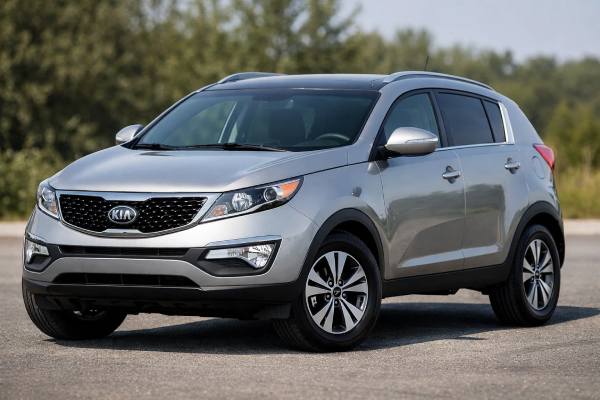
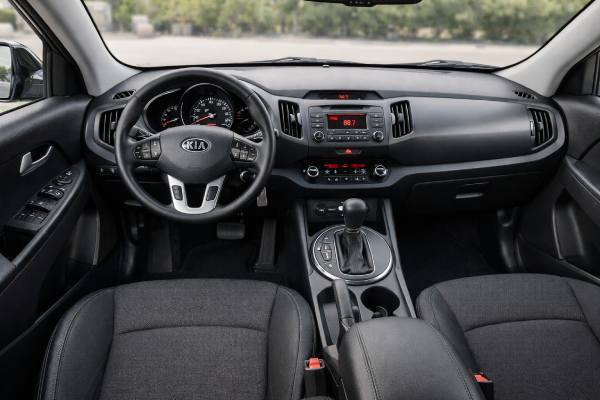
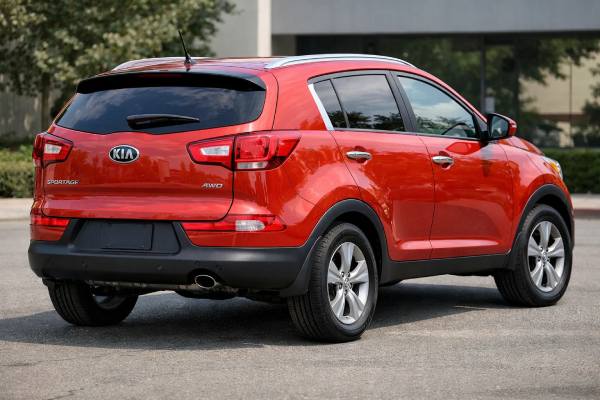
The 2010–2013 Kia Sportage SL AWD with the G4KD 2.0-litre petrol engine is one of those compact SUVs that makes more sense the longer you look at it. It brought a major leap over the old KM-generation Sportage: sharper design, a stiffer body, better cabin packaging, electric power steering, six-speed gearboxes, and a more refined on-demand AWD system. In this form, the Sportage is not a fast SUV, but it is a balanced one. The naturally aspirated Theta II engine is simple compared with later turbocharged alternatives, the chassis is easy to live with every day, and the car feels secure in poor weather without pretending to be a hard-core off-roader. The trade-offs are familiar. Fuel economy is only average, rear visibility is not great, and neglected examples can become expensive through chain noise, worn suspension parts, and long-deferred fluid service. Buy on condition, not badge polish.
Owner Snapshot
- The G4KD 2.0 petrol is smoother and simpler than later small turbo engines, with no turbocharger or direct injection to complicate ownership.
- The SL platform is more mature and more car-like than the earlier KM, with better body stiffness, cabin quality, and crash performance.
- AWD lock mode is useful on snow, mud, and steep wet ramps, even though this is still a road-focused crossover.
- Timing-chain noise, incomplete recall work, and rusty underbodies deserve more attention than odometer numbers.
- A sensible oil-service target is every 15,000 km or 12 months at the latest, with shorter intervals for short trips or hard use.
Section overview
- Kia Sportage SL ownership picture
- Kia Sportage SL tech sheet
- Kia Sportage SL grades and protection
- Failure points and campaign history
- Service plan and buying checklist
- Road behavior and consumption
- Sportage SL next to rivals
Kia Sportage SL ownership picture
The SL-generation Sportage marked the point where Kia stopped building merely sensible compact SUVs and started building compact SUVs people actively wanted. That matters because the 2010–2013 model still feels modern enough in the basics. It has a rigid steel unibody, independent suspension at both ends, electric power steering, electronic stability control, and a cabin layout that finally looked designed rather than assembled. In AWD form, it also gained a more useful bad-weather character than the front-drive version, with the extra security buyers expect from a family crossover.
The G4KD 2.0-litre petrol engine fits that personality well. It is a naturally aspirated Theta II four-cylinder with dual continuously variable valve timing, multi-point fuel injection, and a timing chain. Output is 163 hp and about 195 Nm, which is enough to keep the Sportage feeling alert in normal driving without making it quick. The advantage is not excitement. The advantage is predictability. There is no turbo lag, no diesel particulate-filter worry, and no direct-injection carbon issue to dominate ownership. It is a fairly plain engine, and that is exactly why many used buyers prefer it.
The drivetrain also reflects the period. Depending on market, the 2.0 petrol AWD came with a six-speed manual or six-speed automatic and an electronically controlled AWD system. In everyday use, the system runs primarily as a front-drive vehicle, then shifts torque rearward when conditions demand it. The dashboard lock function helps at lower speeds on loose or slippery surfaces by fixing torque distribution more aggressively, but it does not turn the Sportage into a low-range 4×4. Ground clearance and approach angles are decent, yet the SL is best thought of as a crossover for rough weather and poor roads, not deep-rut trail work.
In ownership terms, this version of the Sportage has two strong selling points. First, it is simpler than many newer rivals. Second, it still feels substantial enough to justify proper maintenance. That combination is useful on the used market. A cared-for car can still feel tight, quiet enough, and genuinely practical. A neglected one tends to show its age quickly through chain rattle, tired dampers, worn bushes, cheap tyres, and underbody corrosion.
That is the real ownership picture. The Sportage SL 2.0 AWD is not special because it is rare or glamorous. It is special because it can still work very well as a daily family SUV if the previous owners treated it like a long-term car rather than a disposable appliance. Documentation matters. Underbody condition matters. Tyres matter. Service history matters. When those pieces line up, this model still holds together better than many buyers expect.
Kia Sportage SL tech sheet
The figures below focus on the 2010–2013 Kia Sportage SL AWD with the naturally aspirated 2.0-litre petrol engine commonly identified by the G4KD engine code. Some open factory figures vary by transmission, trim, market, and wheel package, so those differences are noted where they meaningfully change the vehicle.
| Powertrain and efficiency | Data |
|---|---|
| Code | G4KD |
| Engine layout and cylinders | Inline-4, 4 cylinders, DOHC, 4 valves per cylinder |
| Bore × stroke | 86.0 × 86.0 mm (3.39 × 3.39 in) |
| Displacement | 2.0 L (1,998 cc) |
| Induction | Naturally aspirated |
| Fuel system | Multi-point fuel injection |
| Compression ratio | 10.5:1 |
| Max power | 163 hp (120 kW) @ 6,200 rpm |
| Max torque | 195 Nm (144 lb-ft) @ 4,600 rpm |
| Timing drive | Chain |
| Transmission | 6-speed manual or 6-speed automatic, market dependent |
| Drive type | Electronically controlled on-demand AWD with lock mode |
| Differential | Open front and rear, controlled center coupling |
| Rated efficiency | Old-cycle official figures varied by gearbox and market; AWD versions generally sat around the high-8s to low-9s L/100 km combined |
| Real-world highway @ 120 km/h | Typically about 8.5–9.5 L/100 km (27.7–24.8 mpg US / 33.2–29.7 mpg UK) in healthy condition |
| Chassis and dimensions | Data |
|---|---|
| Suspension, front / rear | MacPherson strut / multi-link independent |
| Steering | Electric power-assisted rack-and-pinion |
| Steering ratio | 2.96 turns lock-to-lock |
| Brakes | 300 × 28 mm ventilated front discs; 284 × 10 mm solid rear discs on AWD |
| Wheels and tyres | Common factory sizes: 215/70 R16, 225/60 R17, or 235/55 R18 |
| Ground clearance | About 172 mm (6.8 in), tyre dependent |
| Approach / departure / breakover angle | 22.7° / 28.2° / 17.7° |
| Length / width / height | 4,440 / 1,855 / 1,635 mm (174.8 / 73.0 / 64.4 in) |
| Height with roof rails | 1,645 mm (64.8 in) |
| Wheelbase | 2,640 mm (103.9 in) |
| Turning circle | 10.58 m (34.7 ft) |
| Kerb weight | About 1,525 kg manual / 1,544 kg automatic (3,362 / 3,404 lb) |
| GVWR | About 2,030 kg (4,475 lb) |
| Fuel tank | 58 L (15.3 US gal / 12.8 UK gal) |
| Cargo volume | 564 L / 1,353 L (19.9 / 47.8 ft³), VDA, behind rear seats / behind front seats |
| Performance and capability | Data |
|---|---|
| 0–100 km/h (0–62 mph) | About 10.7 s manual / 11.2 s automatic |
| Top speed | About 182 km/h (113 mph) manual / 180 km/h (112 mph) automatic |
| Braking distance | No consistently published open factory figure for this exact AWD petrol variant |
| Towing capacity | 750 kg (1,653 lb) unbraked / 1,900 kg (4,189 lb) braked manual, 1,600 kg (3,527 lb) braked automatic |
| Payload | Roughly 500 kg, depending on gearbox and market |
| Fluids and service capacities | Data |
|---|---|
| Engine oil | ACEA A3 or A5, commonly 5W-30 or 5W-40; 5.8 L (6.1 US qt) with filter |
| Coolant | Ethylene-glycol based for aluminum engine and radiator; 6.8 L manual / 6.7 L automatic |
| Transmission fluid | Manual: API GL-4 SAE 75W/85, 2.1–2.2 L; Automatic: Kia genuine ATF SP-IV, 7.1 L |
| Rear differential / transfer case | API GL-5 SAE 75W/90; rear axle 0.65 L, transfer case 0.6 L |
| Brake and clutch fluid | DOT 3 or DOT 4; about 0.7–0.8 L |
| A/C refrigerant | R-134a |
| Wheel nut torque | 88–107 Nm (65–79 lb-ft) |
| Safety and driver assistance | Data |
|---|---|
| Crash ratings | Euro NCAP 2010: 5 stars; adult 93%, child 86%, pedestrian 49%, safety assist 86% |
| IIHS | Strong original test record for the generation, including period Top Safety Pick status in North America |
| Headlight rating | No modern IIHS headlight score published for this generation |
| ADAS suite | No AEB, ACC, lane-centering, blind-spot monitoring, or traffic-sign assist |
| Stability and braking aids | ABS and ESC, with traction and stability functions depending on trim and market |
The key lesson from the numbers is that the Sportage SL 2.0 AWD is a well-packaged compact SUV rather than a power SUV. The useful towing figures, decent cargo space, and settled chassis do more for the ownership case than the engine output alone.
Kia Sportage SL grades and protection
Trim naming varied by market, but the broad pattern stayed consistent. The 2.0 petrol AWD sat above the entry 1.6 petrol in most European-style ranges and below the fully loaded diesel flagships in markets where the diesel carried stronger demand. That usually meant buyers saw this version in mid- to upper-grade form, often with alloy wheels, upgraded trim fabrics or part-leather, automatic climate control, cruise control, and a more complete infotainment package than the cheapest front-drive models.
The first thing to check is not the badge but the hardware. On this generation, wheel size, transmission, seat trim, and whether the vehicle has the AWD lock function tell you more about how the car will feel than the market-specific trim name. A 16-inch wheel car usually rides better and costs less to keep in tyres. Seventeen-inch cars often hit the best balance. Eighteen-inch cars look better to some buyers but bring more road noise, more rim-risk on broken roads, and higher tyre bills.
Year-to-year changes during 2010–2013 were fairly modest. The shape, dashboard, basic body shell, and main safety structure remained the same. Equipment packages shifted, special editions appeared, and infotainment options changed by country, but the big facelift came later. For a used buyer, that means the real differences among 2010–2013 cars are condition, service history, and exact equipment rather than some dramatic hidden engineering update in one model year.
Safety was one of the SL Sportage’s strongest selling points when new. Euro NCAP awarded the model five stars in 2010, with particularly strong adult-occupant and child-occupant scores for the era. That matters because the Sportage entered the market just as crash standards were becoming more demanding. The tested diesel EX was not the exact same powertrain as this petrol AWD, but the body shell and core restraint design are representative enough to make the result useful for buyers. The standout detail is that electronic stability control was standard across the tested variants, which helped lift the safety-assist score.
In practical equipment terms, the Sportage could be fitted with front airbags, front side airbags, full-length curtain airbags, active front head restraints, ISOFIX child-seat anchors, ABS, ESC, hill-start assist, and downhill brake control, depending on market and trim. Rear parking sensors, reversing camera systems, auto lights, and smart-key entry also appeared on better-equipped cars. What it did not have was the modern ADAS layer people now take for granted. There is no autonomous emergency braking, no blind-spot warning, no lane-centering, and no adaptive cruise control.
That makes maintenance part of the safety story. A 2012 Sportage with healthy ESC, matched tyres, proper alignment, fresh dampers, and fully functioning airbags is a much safer used buy than a better-trimmed example wearing cheap tyres and ignored warning lights. Buyers sometimes shop by leather seats and panoramic roof. On the SL Sportage, the smarter play is to shop by tyres, brakes, underbody, and proof that every warning lamp goes out as it should.
Failure points and campaign history
The 2.0 AWD Sportage SL has a better reputation than some later Kia and Hyundai models, but it is not trouble-free. Its failure pattern is also very typical of a 2010s compact crossover: more medium-cost wear points than single catastrophic weak spots. That is good news for methodical owners and bad news for buyers who ignore early symptoms.
The engine itself is usually dependable when oil level and oil quality stay under control. The G4KD is not the same thing as the later, better-known U.S. Theta II GDI recall cases that shaped public perception of the brand. This naturally aspirated MPI engine generally avoids the most infamous part of that story. Still, it has its own weak points. Timing-chain noise at cold start, stretched chains on neglected cars, sticky variable-valve-timing control solenoids, tired ignition coils, dirty throttle bodies, and valve-cover or timing-cover seepage are the issues you are more likely to meet. None of these should be ignored, because one small drivability complaint on this engine often turns into two or three more if the oil has been left too long.
Common issue areas by prevalence look like this:
- Common, low to medium cost: anti-roll-bar links, front lower-arm bushes, rear suspension bushes, wheel bearings, brake-disc corrosion, tired batteries, and weak tailgate struts.
- Common, medium cost: chain noise or timing-correlation faults, seized rear brake hardware, worn dampers, cracked engine mounts, and oil leaks around covers and seals.
- Occasional, medium to high cost: transfer-case or coupling complaints linked to neglected driveline fluids or badly mismatched tyres, noisy automatic gearboxes with old fluid, or steering-column and EPS complaints.
- Occasional, high cost: severe underbody corrosion in salt climates, engine damage caused by oil leaks or low oil level, or unresolved AWD coupling problems.
The driveline deserves special attention. This AWD system works well when tyres match closely and fluids are fresh. It works badly when owners save money with one or two odd tyres, ignore differential and transfer-case oils, or drive through long periods of vibration and clicking. A used Sportage with mismatched tyre brands and obvious tread-depth differences should be treated cautiously, because that often means the rest of the driveline maintenance was handled with similar care.
Campaign history matters too. In the North American recall record, early 2011 Sportages had stop-lamp-switch campaigns because intermittent current flow through the switch could affect brake lights, cruise-control behavior, and ESC warnings. More recently, certain 2011–2013 Sportages were recalled for HECU fuse-related fire risk, with owners advised to confirm the repair and, during the interim phase of the campaign, park outside and away from structures. Some 2011–2012 vehicles also appeared in oil-pan leak recall records. In salt-belt markets, underbody anti-corrosion campaigns are equally important because subframes, suspension arms, and fuel or brake-line protection degrade faster than casual buyers expect.
For pre-purchase screening, ask for proof of completed recall work, not vague statements. Then listen for cold-start chain noise, inspect the sump and lower engine for oil traces, check for ABS or ESC lights, and drive the car long enough for the AWD and automatic gearbox to warm up properly. Most bad SL Sportages announce themselves clearly if you take the time to look.
Service plan and buying checklist
The smartest way to own a Sportage SL 2.0 AWD is to ignore the fantasy that it is a low-maintenance SUV. It is actually a simple SUV that rewards disciplined servicing. That is a good thing, because the work it wants is mostly normal work: oil, filters, coolant, gearbox fluid, AWD fluids, brakes, tyres, and careful inspection of underbody condition.
A practical maintenance plan for real ownership looks like this:
| Item | Practical interval |
|---|---|
| Engine oil and filter | Every 10,000–15,000 km or 12 months |
| Engine air filter | Inspect every service; replace about every 20,000–30,000 km |
| Cabin air filter | Every 12 months or sooner if airflow drops |
| Spark plugs | Inspect by 45,000–60,000 km; replace by plug type and history |
| Timing chain | No fixed replacement interval; inspect for rattle, correlation faults, and guide or tensioner wear |
| Coolant | Refresh by age and condition; do not leave it indefinitely because the factory fill still looks clean |
| Manual gearbox oil | About every 60,000 km in real life |
| Automatic transmission fluid | About every 45,000–60,000 km if you want the box to stay healthy |
| Transfer case oil | About every 40,000–60,000 km |
| Rear differential oil | About every 40,000–60,000 km |
| Brake fluid | Every 2 years |
| Brake inspection | Every service, especially rear brakes |
| Tyre rotation | About every 10,000–12,000 km |
| Alignment check | At tyre replacement or after suspension work |
| 12 V battery test | Annually after year four |
| Auxiliary belt and hoses | Inspect every service |
Fluid choices matter. Kia’s own oil guides for the SL 2.0 petrol point to ACEA A3 or A5 oil, commonly 5W-30 or 5W-40, and oil capacity with filter is 5.8 litres. Manual transmission oil is GL-4 75W/85. The automatic wants SP-IV fluid. The transfer case and rear differential use GL-5 75W/90. Coolant is ethylene-glycol based for aluminum engines and radiators. Wheel nut torque stays in the 88–107 Nm range.
The buying checklist is even more important than the schedule:
- Confirm the engine starts quietly from cold.
- Check for oil dampness at the timing cover, rocker cover, and sump.
- Inspect transfer case and rear differential for leaks.
- Verify all four tyres match closely in brand, size, and wear.
- Scan the car for stored engine, ABS, ESC, and AWD faults.
- Look under the rear floor, subframes, and line brackets for rust.
- Test every electrical item, especially parking sensors, camera, climate control, cruise control, and steering-wheel switches.
- On an automatic, feel for clean engagement and no delayed Drive selection.
- On a manual, check clutch bite and dual-mass-flywheel behavior if fitted in that market.
The best buys are usually 2012–2013 cars with moderate wheel sizes, full service history, clean underbodies, and evidence of recent fluid work. The trims to seek are the ones with the safety and comfort features you actually want, not the ones with the biggest wheels. The ones to avoid are the cars that look cheap to buy because they are cheap to inspect: incomplete recall history, mismatched tyres, chain noise, oil leaks, or obvious rust. Long-term durability is respectable here, but only when the basics are done on time.
Road behavior and consumption
On the road, the 2.0 AWD Sportage SL feels like a compact crossover from the moment the class became genuinely polished. The driving position is upright and natural, visibility forward is strong, and the car does not feel heavy on its feet in the way many older SUVs did. The body stays tidy in normal cornering, the chassis resists roll well enough, and the suspension strikes a decent balance between firmness and control. It is not plush, but it is composed.
The engine character is straightforward. The G4KD likes to rev cleanly and responds in a linear way, but it does not deliver a big low-rpm shove. That means the 2.0 petrol feels fine around town and acceptable on the open road, yet it can feel ordinary when fully loaded or climbing long grades. The six-speed manual suits it well because it keeps the engine in the useful part of the rev band. The automatic is easier in traffic, but it blunts the car slightly and makes the performance figures look exactly like they feel: good enough, not generous.
Ride quality depends heavily on wheel size. Sixteen- and seventeen-inch cars usually ride with the least fuss and the lowest tyre roar. Eighteen-inch versions often feel sharper at low speed and transmit more impact harshness over poor surfaces. That matters on used examples because old dampers and budget tyres can make the car feel much harsher than it did when new.
Noise levels are respectable for the class and age. The petrol engine is reasonably smooth, wind noise is controlled well enough up to motorway speeds, and the main source of cabin coarseness is often tyre choice rather than the engine itself. A Sportage on quality tyres feels more refined than many buyers expect. A Sportage on hard, cheap replacements can sound much older.
Fuel use is where the 2.0 AWD makes its compromise. In real use, expect roughly 11–13 L/100 km in dense city driving, around 8.5–9.5 L/100 km on a true 120 km/h highway run, and about 9.5–11.5 L/100 km in mixed everyday use. Cold weather, roof loads, winter tyres, and short-trip driving all push those numbers upward. The automatic usually uses a little more. None of this is shocking for a naturally aspirated AWD SUV of the period, but it is important to go in with realistic expectations.
Traction is one of the car’s better qualities. In rain, slush, and light snow, the AWD system gives the Sportage a secure, settled feel. The lock mode is useful on slippery starts and shallow loose surfaces, though it is not meant for constant use on dry pavement. Towing stability is decent within the car’s real limits, and the chassis does not feel nervous with a moderate trailer. This is not a fast or exciting SUV, but it is an easy one to trust when the weather turns poor.
Sportage SL next to rivals
The Hyundai ix35 is the most obvious comparison because it is effectively the Sportage’s closest relative. If you are shopping both, do not invent differences that are not really there. Buy the cleaner one, the one with the better paperwork, and the one with the healthier underbody. The Kia often wins on styling and cabin drama. The Hyundai often appeals to buyers who want a slightly quieter visual design. Mechanically, history matters far more than brand preference.
Against the Toyota RAV4 of the same period, the Kia generally offers stronger value for money and more distinctive styling. The Toyota usually counters with a stronger long-term ownership reputation and slightly lower perceived risk. If you are buying on caution alone, the Toyota still feels like the safer default. If you are buying on equipment, styling, and value, the Sportage becomes very persuasive.
The Honda CR-V remains the benchmark for easy family use. It is usually better packaged inside, often feels airier in the rear, and carries Honda’s strong used-market image. The Sportage fights back with better design, a more modern-feeling dashboard for its age, and a firmer, more planted character on the road. Buyers with young families may prefer the Honda’s interior logic. Buyers who care more about chassis feel and appearance often lean toward the Kia.
The Nissan Qashqai sits slightly differently because many versions were more urban-focused and less powerful in base form. Compared with the Qashqai, the Sportage usually feels more substantial and more SUV-like, which can be either a strength or a weakness depending on what you want. The Kia rides with a bit more heft and looks tougher. The Nissan often feels lighter and easier in town.
So where does the 2010–2013 Sportage SL AWD 2.0 land? It is a strong used buy for someone who wants a compact SUV with honest engineering, solid crash credentials for its era, real winter usefulness, and acceptable running costs when maintained properly. It is a weaker choice for buyers chasing the lowest fuel spend, the quietest ride, or modern driver assistance. Its best advantage is balance. It does many things well, without one standout trick, and that makes a good example more valuable than the market sometimes realizes.
References
- Instruktionsbok 2013 (Owner’s Manual)
- Engine Oil Grades and Capacities – Kia 2016 (Service Information)
- Kia Service Intervals 2023 (Service Information)
- Kia Sportage – Euro NCAP Results 2010 2010 (Safety Rating)
- Part 573 Safety Recall Report 23V-652 2023 (Recall Database)
Disclaimer
This article is for informational purposes only and is not a substitute for professional diagnosis, repair, or inspection. Specifications, torque values, service intervals, procedures, and fitted equipment can vary by VIN, market, model year, transmission, and trim, so always verify details against the correct official service documentation for the exact vehicle.
If this guide helped you, please consider sharing it on Facebook, X, or another social platform to support our work.