
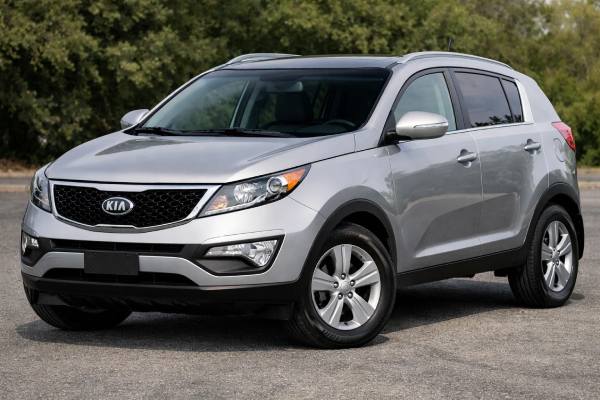
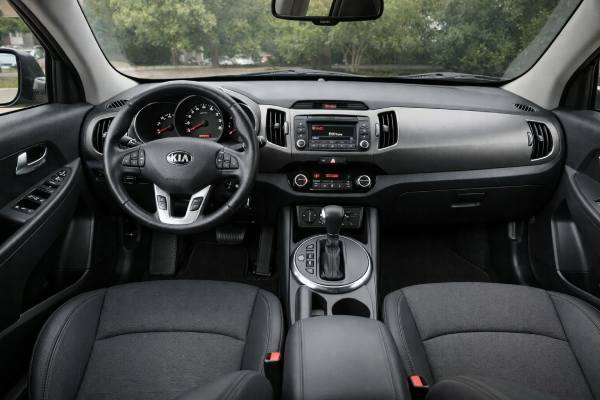
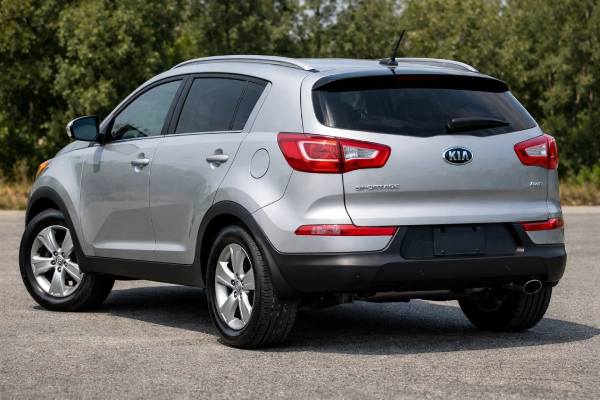
The 2011–2013 Kia Sportage AWD with the 2.0-liter G4KH turbo engine is the sharp end of the early SL range. It combines the third-generation Sportage’s modern unibody platform, compact size, and useful cargo space with a genuinely strong turbocharged engine and Kia’s Dynamax all-wheel-drive system. In 260 hp form, this is not the quiet, budget-focused Sportage many buyers expect. It is quicker, firmer, and more ambitious, especially in SX Turbo trim, where Kia added sport-tuned suspension, 18-inch wheels, and stronger visual cues. That makes it one of the more interesting compact SUVs of its era, but also one that demands more careful buying and maintenance than the naturally aspirated versions. The engine can feel lively and refined when healthy, yet it sits inside the wider Theta II reliability story, which means service history, recall completion, and oil discipline matter more here than on a simpler base model.
Essential Insights
- The 2.0-liter turbo gives the SL Sportage genuinely strong midrange performance for its size and era.
- Dynamax AWD improves traction on wet roads, gravel, and snow without making the Sportage feel bulky.
- SX Turbo models add firmer dampers, stronger equipment levels, and a more purposeful chassis setup.
- Unresolved Theta II engine campaign work is the biggest ownership risk, not routine wear items.
- Official Kia service publications list 20,000 miles or 12 months in some markets, but shorter oil-change intervals are wiser for long-term turbo durability.
What’s inside
- Sportage SL Turbo Identity
- Sportage SL Technical Picture
- Sportage SL SX and Safety
- Known Failures and Campaigns
- Service Plan and Buyer Checks
- Turbo Road Feel and Economy
- How It Stacks Up
Sportage SL Turbo Identity
The SL Sportage marked a major shift for the nameplate. Compared with the earlier KM model, it looked lower, wider, and more modern, and it drove that way too. Kia kept the compact-SUV footprint that made the Sportage easy to park and easy to place on narrow roads, but it wrapped that in a more car-like platform with better crash structure, more polished suspension tuning, and a cabin that felt less basic. In ordinary petrol and diesel trims, that already made the SL generation a big step forward. In 2.0 turbo AWD form, it became something more distinctive.
The 260 hp figure in this article points directly to the North American Sportage SX Turbo AWD configuration. That matters because many non-U.S. SL Sportages used different engines, different outputs, or different trim structures. In the U.S. and Canada, the SX Turbo was the performance flagship. Kia launched it in 2011 as a more powerful, more driver-focused version of the Sportage, pairing the turbocharged Theta II 2.0-liter engine with a six-speed automatic and available AWD. Kia also added sport-tuned suspension, unique styling, and stronger equipment levels to separate it from the regular LX and EX models.
That combination gives the SL turbo Sportage a split personality that still makes it appealing today. On one hand, it remains a practical compact SUV with good visibility, decent rear-seat space, a flexible cargo area, and reasonable road comfort. On the other hand, it has enough torque to feel much quicker than the badge suggests. Peak torque arrives low in the rev range, so the car does not need to be driven hard to feel energetic. That helps it in the real world. It feels strong in merging, passing, and climbing without needing constant full-throttle driving.
The AWD system also suits the turbo model well. Kia’s Dynamax setup is not a low-range off-road system, and this is not a serious trail machine. What it does well is add confidence. Under normal conditions the vehicle stays front-biased, which helps efficiency. When slip begins or the driver requests more traction, the system can move torque rearward quickly. There is also a lock mode for low-speed slippery conditions. In winter climates or mixed-surface driving, that gives the Sportage a more secure feel than a typical front-drive crossover.
The catch is simple: this is the most rewarding early SL Sportage to drive, but also the one that needs the most careful research before you buy. The turbo engine, direct injection, and Theta II recall history mean it is not enough to judge one by the way it looks or the way it performs on a short test drive. The best examples are excellent used SUVs. The wrong ones can become expensive quickly.
Sportage SL Technical Picture
The figures below reflect the 2011–2013 Sportage SX Turbo AWD configuration as sold in North America, because that is the version tied to the 260 hp output. Some values vary slightly by source or model year, but the core engineering package stayed stable across this period.
| Powertrain and efficiency | Figure |
|---|---|
| Code | G4KH |
| Engine layout and cylinders | Inline-4, DOHC, 4 valves per cylinder |
| Bore × stroke | 86.0 × 86.0 mm (3.39 × 3.39 in) |
| Displacement | 2.0 L (1,998 cc) |
| Induction | Twin-scroll turbocharger |
| Fuel system | Gasoline direct injection |
| Compression ratio | 9.5:1 |
| Max power | 260 hp (194 kW) @ 6,000 rpm |
| Max torque | 365 Nm (269 lb-ft) @ 1,850–3,000 rpm |
| Timing drive | Chain |
| Rated efficiency | About 10.7 L/100 km combined from EPA city/highway figures (22 mpg US / 26.4 mpg UK equivalent) |
| Real-world highway @ 120 km/h (75 mph) | About 8.8–9.8 L/100 km (24–27 mpg US / 29–32 mpg UK) |
| Transmission and driveline | Figure |
|---|---|
| Transmission | 6-speed automatic with manual shift mode |
| Transmission code | Not consistently published in open official SL Sportage spec sheets |
| Drive type | AWD, on-demand Dynamax system |
| Differential | Open axle differentials with electronically managed torque transfer |
| Low-speed traction feature | Lock mode for a fixed split at low speeds |
| Chassis and dimensions | Figure |
|---|---|
| Suspension front | MacPherson strut with coil spring and gas shock absorber |
| Suspension rear | Multi-link with gas shock absorber |
| Steering | Rack-and-pinion, motor-driven power assist |
| Steering turns lock-to-lock | 2.96 |
| Brakes | 4-wheel disc; front ventilated |
| Brake size | 300 mm (11.8 in) front / 284 mm (11.2 in) rear AWD |
| Most common tyre size | 235/55 R18 |
| Ground clearance | 172 mm (6.77 in) |
| Approach / departure angle | 28.1° / 28.2° |
| Length | 4,450 mm (175.2 in) |
| Width | 1,854 mm (73.0 in) |
| Height | 1,636 mm (64.4 in) |
| Wheelbase | 2,639 mm (103.9 in) |
| Turning circle, kerb-to-kerb | 10.6 m (34.7 ft) |
| Kerb weight | 1,572 kg (3,466 lb) |
| Fuel tank | 57.9 L (15.3 US gal / 12.7 UK gal) |
| Cargo volume | 739 L (26.1 ft³) seats up / 1,546 L (54.6 ft³) seats down |
| Performance and capability | Figure |
|---|---|
| 0–100 km/h (0–62 mph) | About 7.0 s in period testing, tyre and surface dependent |
| Top speed | About 200 km/h (124 mph), market and limiter dependent |
| Towing capacity | 907 kg (2,000 lb) |
| Payload | Verify on the door-jamb label; open market data varies too much to publish safely |
| Fluids and service capacities | Figure |
|---|---|
| Engine oil | 5W-30 commonly used; Kia petrol oil guides for the SL 2.0 list 5W-30 / 5W-40 in some markets; capacity commonly listed at about 5.8 L (6.1 US qt), but confirm by VIN and dipstick |
| Coolant | 50:50 ethylene-glycol mix; exact capacity varies by market literature |
| Transmission / ATF | Use Kia-approved fluid for the exact transaxle specification; verify by VIN before servicing |
| Differential / transfer case | Use the specified AWD gear oils for the transfer unit and rear drive module; quantities vary by service procedure |
| A/C refrigerant | R134a |
| A/C compressor oil | PAG type; verify charge amount from service label or workshop data |
| Key torque specs | Wheel nuts typically 88–107 Nm (65–79 lb-ft); use VIN-specific workshop data for engine, suspension, and AWD fasteners |
| Safety and driver assistance | Figure |
|---|---|
| IIHS ratings | Good moderate overlap front, Good side, Good roof strength, Good head restraints and seats, Poor small overlap front |
| Euro NCAP | European-spec third-generation Sportage achieved a 5-star result in 2010 |
| Headlight rating | No IIHS headlight score published for this generation |
| ADAS suite | None |
| Core safety equipment | Front airbags, front side airbags, side curtain airbags, ABS, ESC, EBD, Hill Start Assist, and Downhill Brake Control |
The key engineering takeaway is simple. The SL turbo AWD is not just a faster base Sportage. It has a specific hardware mix that changes the verdict: turbo torque, six-speed automatic, firmer suspension, larger wheels, and an active AWD system that is more useful than decorative.
Sportage SL SX and Safety
For this particular 2011–2013 specification, trim matters a lot because the 260 hp engine belongs to the SX Turbo story. Kia introduced the SX in 2011 as the more powerful, more aggressive Sportage. It added the turbocharged 2.0-liter GDI engine, a firmer suspension tune, unique 18-inch alloy wheels, dual exhaust, distinctive side-sill moldings, and an SX-specific grille. That gave the car a much stronger visual identity than the standard LX and EX models. More important, it changed the way the Sportage drove. The SX did not turn into a hot hatch on stilts, but it became noticeably sharper and more eager.
The 2012 model year added meaningful polish. Kia improved refinement, added more insulation, and brought new rear suspension dynamic dampers across the line. EX trims gained standard high-performance dampers, while SX models kept their role as the top driving-oriented version. Kia also rolled in newer infotainment features, including UVO on upper trims, and broadened equipment packages. By 2013, the SL formula was essentially mature. The SX Turbo still sat at the top of the range and still offered the 260 hp engine, leather seating, push-button start, upgraded gauge graphics, and the more premium equipment mix buyers expected from the flagship.
For used shoppers, the equipment details are worth checking closely. An honest SX Turbo AWD should have the turbo engine, six-speed automatic, 18-inch wheels, unique exterior trim, and the stronger standard equipment set. It may also have options such as navigation, panoramic sunroof, heated front seats, ventilated driver’s seat, premium audio, and key convenience features depending on region and package. Because these cars are now old enough to have collected replacement wheels, body repairs, and swapped interior parts, it is better to verify by VIN and actual equipment than by badges alone.
Safety is one of the strong points of the SL generation relative to earlier Sportages. The 2013 IIHS page shows a Top Safety Pick designation and Good ratings in moderate overlap front, side, roof strength, and head restraints and seats. That is a real strength for a compact SUV from this era. The important nuance is that the same IIHS page also shows a Poor rating in the later small-overlap front test that applies to 2011–2016 models. In plain language, the SL Sportage was strong by the standards of its original crash regime, but it does not meet the tougher later benchmark as well. That is useful context for buyers comparing it with newer crossovers.
European buyers saw another strong result. The third-generation Sportage earned a five-star Euro NCAP result in 2010, and Euro NCAP later named it the best-performing small off-road 4×4 in its 2010 class grouping. That result does not map perfectly to every U.S.-spec SX Turbo feature set, but it does reinforce the point that the SL platform itself was a serious step forward in safety engineering.
Driver assistance is still basic by current standards. There is no automatic emergency braking, no adaptive cruise, no lane-centering, and no blind-spot system in the modern sense. What the SL does offer is a solid set of core safety hardware: multiple airbags, ABS, ESC, brake-force distribution, hill-start assist, and downhill brake control. For a used buyer, that means the safest example is the one with clean structural history, correct tyres, properly functioning ESC and ABS, and complete recall and campaign records.
Known Failures and Campaigns
The single biggest issue surrounding the 2011–2013 Sportage 2.0 turbo is the Theta II engine campaign history. Any serious buying guide for this model has to begin there. Kia’s official recall report for 17V-224 states that certain 2011–2013 Sportage vehicles with the 2.0L Turbo GDI engine may have been affected by crankshaft machining debris and uneven crankpin surface roughness. In the clearest practical terms, restricted oil flow can increase bearing temperatures, accelerate connecting-rod bearing wear, produce cyclic knocking, trigger warning lamps, and eventually cause stalling or engine failure if ignored. On this model, unresolved campaign history is the first red flag, not an afterthought.
Kia later added the KSDS software campaign. That update installs the Knock Sensor Detection System so the ECU can detect vibrations associated with excessive rod-bearing wear. If it sees the right pattern, the system flashes the malfunction lamp, stores DTC P1326, and places the vehicle in a limp-home mode to reduce the chance of catastrophic failure. This is useful protection, but it is not a substitute for buying a healthy engine. If a seller says “the knock-sensor update was done” as though that alone proves the engine is good, be cautious. It proves the software was updated, not that the engine is perfect.
Turbo-related maintenance also deserves attention. Kia’s own recall service instructions for affected turbo engines specify replacement of the turbocharger oil feed line and gaskets during the engine campaign process. That tells you something important about ownership priorities. Clean oil, correct oil, and a healthy feed path are critical on this engine. Any sign of neglected oil service, turbo smoke, noisy cold starts, or coked-up feed hardware should move the car into the high-risk category.
Beyond the campaign issues, the rest of the G4KH ownership picture is more conventional but still important. Direct-injection intake deposits are occasional rather than guaranteed, but they become more likely on short-trip cars and higher-mileage examples. Symptoms include rough idle, uneven pull, and reduced throttle sharpness. Ignition coils and plugs can also become stress points sooner than on a non-turbo engine. If a car hesitates under boost or misfires under load, start with ignition health before chasing exotic causes.
On the chassis side, expect the normal early-2010s compact SUV wear items. Front lower-arm bushings, drop links, dampers, and wheel bearings are common consumables. A worn SX Turbo can feel much worse than it should because the firmer factory tune exaggerates slack and cheap tyre choices. On AWD cars, mismatched tyres and neglected driveline fluids can create vibration, transfer-case complaints, or a generally unhappy driveline feel. The Dynamax system is useful, but it does not like being ignored.
There are also occasional body and equipment issues. Panoramic sunroof cars can develop shade or seal complaints. Interior trim rattles, aging tailgate struts, and tired door seals are not unusual on higher-mileage examples. None of those are deal breakers. The engine, however, can be. Pre-purchase, ask for proof of recall completion, proof of KSDS update, records of oil-service frequency, and ideally evidence of any engine replacement or inspection carried out under campaign rules. On this model, paperwork is part of the mechanical inspection.
Service Plan and Buyer Checks
The official service picture for the SL Sportage varies by market. Kia service publications in some regions list 20,000 miles or 12 months for 2011–2015 Sportage petrol models, but that should not be treated as the only answer for a 2.0 turbo AWD. This engine rewards conservative maintenance, especially as the car ages. For a used G4KH Sportage, the sensible plan is to separate the official maximum interval from the practical interval you actually want to live with.
A good real-world maintenance schedule looks like this:
- Engine oil and filter: every 5,000–7,500 miles or 6–12 months. For short trips, cold starts, or hard driving, stay near the short end.
- Engine air filter: inspect every service and replace roughly every 15,000–20,000 miles, sooner in dust.
- Cabin air filter: every 12 months or about 15,000 miles.
- Spark plugs: around every 45,000–60,000 miles, depending on condition and tune stability.
- Timing chain system: no fixed replacement interval, but inspect for cold-start rattle, correlation faults, and abnormal noise. Replace guides, chain, or tensioner only when symptoms or measurements justify it.
- Coolant: every 5 years is a reasonable planning point if history is clear; sooner if condition is unknown.
- Automatic transmission fluid: every 40,000–60,000 miles is smart preventive maintenance.
- Transfer case and rear differential fluids: every 30,000–40,000 miles on AWD models.
- Brake fluid: every 2 years.
- Brake pads, discs, and hoses: inspect at every service.
- Tyre rotation and alignment: every 5,000–8,000 miles, especially on AWD models.
- Battery and charging system: test before winter; modern turbo engines are less tolerant of weak voltage than older simple engines.
- PCV system, boost hoses, and intercooler plumbing: inspect regularly for leaks and oil residue.
For lubricants, keep things simple and exact. Use the correct 5W-30 or other Kia-approved viscosity for the specific market and climate, and do not cut corners with bargain oil. This engine family has already taught owners that oil quality and interval discipline matter. The same caution applies to the automatic transmission and AWD fluids. Use the correct fluid, not the nearest generic bottle on the shelf.
As a buyer, inspect in this order:
- Confirm the car really is a 260 hp turbo AWD model.
- Check recall completion and KSDS status next.
- Review oil-change history after that.
- Then inspect for cold-start noise, warning lamps, smoke, misfire, and boost-related hesitation.
- Then look under the car for fluid seepage, corrosion, and mismatched tyres.
- Then road-test it long enough to assess transmission quality, steering straightness, brake feel, and AWD behavior on a low-grip surface if possible.
The best used examples are usually 2012 or 2013 SX Turbo AWD cars with complete service records, campaign history fully closed, and no signs of engine replacement done carelessly. I would be cautious with cars that have a fresh-looking engine bay but vague paperwork, very recent auction history, or suspiciously quiet sellers when asked about P1326, KSDS, or SC147. Long-term durability is acceptable if the engine campaign history is clear and maintenance is proactive. Without those two conditions, this is not a casual used-car buy.
Turbo Road Feel and Economy
From the driver’s seat, the 2011–2013 Sportage SX Turbo AWD still feels more special than most used compact SUVs in its price range. The engine is the reason. With 269 lb-ft arriving low in the rev range, the car feels stronger in the real world than the 260 hp number alone suggests. It responds quickly once the turbo is in its sweet spot, and it pulls with enough urgency to make normal overtakes and motorway merges easy. This is not a high-revving performance car pretending to be an SUV. It is a torque-rich crossover that knows how to use its midrange.
Throttle response is good for the era, though not instant by modern standards. There is a brief moment of turbo buildup if you ask for hard acceleration from low revs, but it is brief enough that most drivers will simply register the car as eager rather than laggy. The six-speed automatic is a decent partner. It is not as quick or as smooth as later eight-speed units, but it suits the engine’s torque band and usually shifts cleanly when healthy. In everyday driving it feels more relaxed than the naturally aspirated SL Sportage because it does not need to hunt for revs as often.
Ride and handling depend heavily on condition, but the factory tuning is clear. SX models are firmer than ordinary Sportages, and that makes the car feel more tied down in medium-speed bends. Steering is still light and somewhat filtered, yet it is accurate enough for the class. Straight-line stability is good, and the body stays controlled enough that the car never feels sloppy when it is in proper mechanical condition. What you do not get is sports-sedan feedback. The SX Turbo is quick and composed, not deeply communicative.
Noise levels are mixed. Wind and road noise are average for an early-2010s compact SUV on 18-inch tyres. Under boost, the engine sounds stronger than the base 2.4, though not especially charismatic. What matters more is that it feels effortlessly quicker. That ease is what separates it from most mainstream rivals of the same era.
Official fuel economy for the 2013 AWD turbo is 20 mpg city and 25 mpg highway. In metric terms, that translates to roughly 11.8 L/100 km in city use and 9.4 L/100 km on the highway. Real ownership numbers usually land close to that. In mixed driving, a healthy AWD turbo often returns around 10.5–11.5 L/100 km. At a steady 120 km/h, expect roughly 8.8–9.8 L/100 km if the tyres, alignment, and engine health are all good. Cold weather, short trips, roof loads, cheap tyres, or a dragging brake will pull that upward quickly.
The AWD system is well judged for the way most owners actually drive. On dry roads it stays unobtrusive. In rain, snow, gravel, and steep wet climbs, it adds a welcome layer of security. The lock mode is useful in genuinely slippery situations, though it is meant for low-speed traction rather than full-time use. With winter tyres, the Sportage becomes a very capable bad-weather crossover. With poor tyres, the AWD advantage shrinks fast. This is one of those vehicles where tyre quality makes a bigger difference than many buyers expect.
How It Stacks Up
The turbo AWD Sportage makes the most sense when you compare it with the compact crossovers buyers actually considered in the early 2010s. Against the Honda CR-V and Toyota RAV4 of the same period, the Kia feels more punchy and more eager in turbo form. It also tends to offer stronger value on the used market. The downside is that it does not carry the same reputation for engine-related peace of mind. A naturally aspirated CR-V may feel slower and less exciting, but it often wins the low-drama ownership contest.
Against the Ford Escape 2.0T, the Sportage is closely matched in concept: compact size, turbo power, and a more spirited road feel than the class norm. The Kia generally feels simpler inside and less flashy in its tech approach, but also less risky than some of Ford’s more complex long-term trouble spots. Against the Mazda CX-5, especially the early naturally aspirated versions, the Kia wins on straight-line shove but loses on steering feel and chassis polish. The Mazda is the better driver’s car. The Kia is the more muscular bargain.
The closest relative is the Hyundai Tucson, and there the choice becomes very narrow. The two vehicles share core architecture, and in many markets the decision comes down to price, equipment, and maintenance records rather than engineering differences. If the Sportage is the better-kept turbo AWD example, it is the better buy. If the Tucson is cleaner and better documented, brand loyalty should not decide the result.
The strongest case for the 2011–2013 Sportage 2.0T AWD is that it offers something many rivals did not: genuinely useful turbo torque in a practical, compact package without stepping into premium-brand complexity or price. It looks modern enough, it has a strong equipment story in SX trim, and it can still feel quick in today’s traffic. That is real value.
Its biggest weakness is equally clear. The engine campaign history is not background noise. It is central to the buying decision. If you want a used compact SUV you can purchase with minimal research and minimal mechanical risk, this is not the obvious choice. If you are willing to inspect carefully, verify paperwork, and stay ahead of maintenance, it becomes much more appealing.
That is why the SL turbo Sportage remains interesting. It is not the safest blind purchase in the segment, and it is not the most polished. But it may be one of the most rewarding compact Kia SUVs of its era when bought correctly.
References
- 2013 Kia Sportage Specifications 2012 (Specifications)
- 2013 Kia Sportage 2026 (Safety Rating)
- Part 573 Safety Recall Report 17V-224 2017 (Recall Report)
- Kia Service Intervals 2023 (Service Guide)
- Engine Oil Grades and Capacities – Kia 2023 (Service Guide)
Disclaimer
This article is for informational purposes only and is not a substitute for professional diagnosis, inspection, or repair. Specifications, torque values, service intervals, fluid capacities, procedures, and fitted equipment can vary by VIN, market, trim, and production date, so always verify details against the official service documentation for the exact vehicle.
If this guide helped you, please consider sharing it on Facebook, X, or another platform to support our work.