
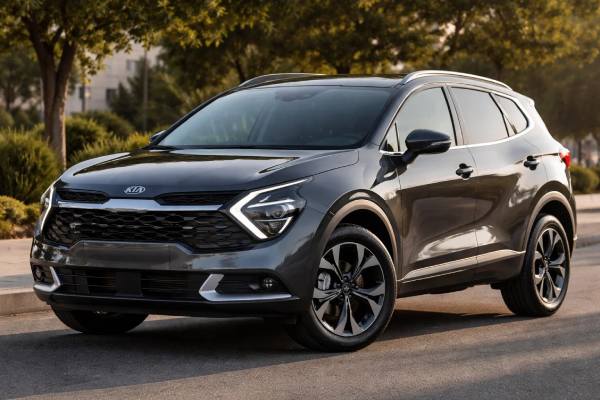
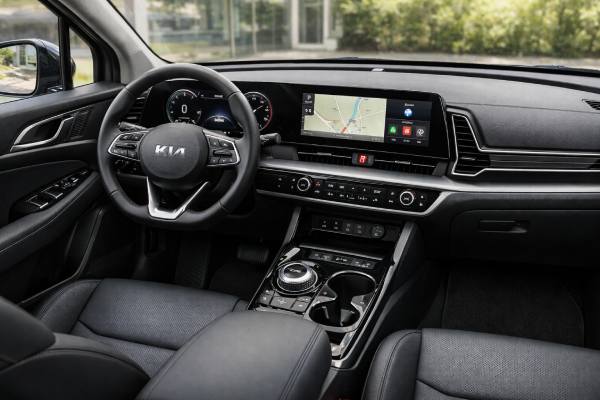

The European-market Kia Sportage NQ5 AWD with the 1.6-liter D4FE diesel is a very specific kind of family SUV. It is not the fastest Sportage, and it is not the simplest because it combines a turbo diesel, a 48-volt mild-hybrid system, all-wheel drive, SCR emissions hardware, and a 7-speed dual-clutch gearbox. What it does offer is strong real-world torque, long-distance ease, and fuel economy that still makes sense for drivers who spend real time on motorways, mountain roads, or mixed-weather routes. This version also sits in an interesting place in the lineup: it feels more grown-up and more capable than the basic front-wheel-drive models, but it demands more careful maintenance and more informed used-car shopping. In Europe, it remains relevant because some markets have kept the 1.6 CRDi AWD mild-hybrid in the range beyond launch. For the right owner, it is one of the most useful NQ5 variants.
Essential Insights
- The 1.6 CRDi AWD suits high-mileage drivers who want better motorway economy than a petrol Sportage.
- AWD, Terrain modes, and extra ground clearance make it more useful on snow, gravel, and steep wet roads.
- The long-wheelbase European NQ5 platform delivers a roomy cabin and a mature ride.
- Short-trip use is the main ownership risk because DPF regeneration, AdBlue, and diesel aftertreatment dislike repeated cold running.
- Normal service planning starts at 20,000 km or 12 months, with shorter oil intervals wise for severe use.
Navigate this guide
- Kia Sportage NQ5 diesel AWD outline
- Kia Sportage NQ5 diesel AWD spec sheet
- Kia Sportage NQ5 grade and safety map
- Weak points and VIN checks
- Care plan and smart buy tips
- Road manners and diesel economy
- Where it beats the competition
Kia Sportage NQ5 diesel AWD outline
The NQ5-generation Sportage is the larger, more mature European Sportage, and the 1.6 CRDi AWD version is one of its most use-focused variants. This model combines Kia’s 1.6-liter turbo diesel with a 48-volt mild-hybrid system, a 7-speed dual-clutch automatic, and an on-demand AWD layout. That recipe tells you exactly who it is for. It is aimed at drivers who do long mixed journeys, deal with winter weather, and want a compact SUV that can cover motorway distance without feeling underpowered or thirsty.
The diesel’s 136 hp figure does not sound impressive on paper, but the useful part of the story is torque. With 320 Nm arriving low in the rev range, the Sportage feels stronger in normal driving than the power number suggests. It pulls cleanly from low speed, cruises easily, and suits loaded family use better than many small petrol engines that need higher revs to feel alert. The mild-hybrid system does not turn it into an electric vehicle, but it helps smooth stop-start behavior, supports efficiency, and takes some strain off the engine during transitions.
This AWD version also brings real functional gains over the front-wheel-drive diesel. In European trim, ground clearance rises, the AWD lock function is available for low-speed traction help, and Terrain modes for Snow, Mud, and Sand make the vehicle more useful on loose or slippery surfaces. It is still a road-biased crossover, not a true off-roader, but it feels much better matched to rural roads, ski trips, or wet towing ramps than the 2WD model.
There is a cost to that versatility. The AWD diesel is heavier than the FWD version, slower than the hybrid petrols off the line, and more complex than a basic petrol Sportage. It also asks more from the owner. DPF regeneration, AdBlue supply, AWD driveline inspections, and dual-clutch behavior all matter. That is why this Sportage is best for drivers who really use its strengths. If your life is mostly short urban hops, the diesel is hard to justify. If your routine includes 20,000 km to 30,000 km a year, long highway runs, cold weather, and occasional rough-surface travel, it becomes far more convincing.
Another important point is market scope. This is a Europe-focused version, not a universal global Sportage spec. The D4FE 1.6 diesel AWD mild-hybrid remained publicly listed in some European markets after launch, including late-2025 price lists, so “2022–present” still makes sense in that context. Buyers should still verify local availability because trim names, tyre packages, and standard safety features vary by country.
Kia Sportage NQ5 diesel AWD spec sheet
The figures below reflect the European-market NQ5 Sportage 1.6 CRDi AWD mild-hybrid with the 7-speed DCT. Where public Kia material varies by trim or market, the article uses ranges rather than forcing one exact number onto every country.
| Item | Specification |
|---|---|
| Code | D4FE |
| Engine layout and cylinders | Inline-4 turbo diesel, 4 cylinders |
| Bore × stroke | 77.0 × 85.8 mm (3.03 × 3.38 in) |
| Displacement | 1.6 L (1,598 cc) |
| Induction | Turbocharged |
| Fuel system | Common rail direct injection |
| Mild-hybrid system | 48 V MHEV, lithium-ion polymer battery, about 0.44 kWh gross |
| Max power | 136 hp (100 kW) @ 4,000 rpm |
| Max torque | 320 Nm (236 lb-ft) @ 2,000–2,250 rpm |
| Timing drive | Timing belt system with related oil-belt service notes in Kia maintenance literature |
| Compression ratio | Verify by VIN-specific workshop data |
| Rated efficiency | Usually about 5.4–5.9 L/100 km combined (about 40–44 mpg US / 48–52 mpg UK), trim-dependent |
| Real-world highway @ 120 km/h (75 mph) | Typically around 5.8–6.6 L/100 km (36–41 mpg US / 43–49 mpg UK) |
The diesel’s public official figures vary because wheel size and trim matter. A 17-inch or 18-inch car can post noticeably better WLTP numbers than a 19-inch GT-line-style setup. That is worth remembering when comparing used listings.
| Item | Specification |
|---|---|
| Transmission | 7-speed dual-clutch automatic |
| Drive type | AWD |
| Differential | Open axle differentials with electronically managed torque transfer rearward |
| AWD features | Lock mode and Terrain modes on appropriate AWD variants |
| Item | Specification |
|---|---|
| Front suspension | MacPherson strut |
| Rear suspension | Multi-link |
| Steering | Motor-assisted rack and pinion |
| Brakes | Four-wheel discs; exact diameters vary by market and wheel package |
| Most common tyre sizes | 215/65 R17, 235/55 R18, 235/50 R19 |
| Ground clearance | About 181 mm (7.1 in), trim-dependent |
| Length | 4,515 mm (177.8 in) |
| Width | 1,865 mm (73.4 in) |
| Height | About 1,645–1,650 mm (64.8–65.0 in) |
| Wheelbase | 2,680 mm (105.5 in) |
| Turning circle | About 10.9 m (35.8 ft) |
| Kerb weight | Roughly 1,658–1,676 kg (3,656–3,695 lb), market-dependent |
| GVWR | About 2,225 kg (4,905 lb) |
| Fuel tank | 54 L (14.3 US gal / 11.9 UK gal) |
| Cargo volume | About 526 L / 1,715 L (18.6 / 60.6 ft³) for AWD diesel 48V layouts in some published specs |
| General European luggage reference | Up to about 591 L / 1,780 L VDA on broader NQ5 specs, depending on powertrain and floor packaging |
AWD diesel packaging can reduce luggage volume versus the roomiest front-wheel-drive or hybrid versions, so buyers should check the exact boot-floor layout on the car they want.
| Item | Specification |
|---|---|
| 0–100 km/h | 11.6 s |
| Top speed | 180 km/h (112 mph) |
| Towing capacity | 1,650 kg (3,638 lb) braked / 750 kg (1,653 lb) unbraked |
| Payload | Market- and trim-dependent; calculate from actual kerb weight and plate data |
| Item | Specification |
|---|---|
| Engine oil | 4.4 L (4.6 US qt); use VIN-correct low-ash oil meeting the required ACEA specification |
| Coolant | Use Kia-approved coolant for the exact engine and market; public owner data shows about 7.3 L for some 1.6 diesel MHEV manual layouts, so verify AWD DCT fill by VIN |
| Transmission fluid | Use Kia-specified DCT fluid; public consumer sources do not consistently publish fill quantity for every AWD DCT market version |
| Rear differential oil | About 0.53–0.63 L; API GL-5 SAE 75W/85 |
| Transfer case oil | About 0.48–0.52 L |
| AdBlue / urea solution | 14 L tank; use ISO 22241 / DIN 70070 fluid |
| Brake fluid | DOT 4 LV type per Kia specification |
| Key torque values | Verify by VIN-specific workshop manual before service-critical work |
On safety, the strongest public headline is Euro NCAP. The 2022 Sportage scored five stars, with 87% adult occupant, 86% child occupant, 66% vulnerable road user, and 72% safety assist. The tested coverage specifically included the 1.6 CRDi 48V MHEV in both 4×2 and 4×4 form, which makes the result directly relevant to this diesel AWD version.
Kia Sportage NQ5 grade and safety map
The AWD 1.6 diesel is a trim-sensitive Sportage. In many European markets, it appeared in grades such as Business, Style, GT-line, and GT-line Plus, although names and equipment bundles vary by country. That makes it important to shop by actual equipment, not only by badge name. A Style car in one country can overlap heavily with a GT-line in another, while entry fleet-oriented grades may focus on the diesel’s economy rather than its visual appeal.
Mechanically, the main hardware stays stable across trims. The 1.6 CRDi 48V mild-hybrid, 7-speed DCT, and AWD layout remain the heart of the vehicle. What changes are wheel size, seat trim, lighting, audio, camera hardware, and the depth of driver-assistance features. Lower and middle trims often ride on 17- or 18-inch wheels, which usually help comfort and efficiency. Upper trims with 19-inch wheels look better and feel more premium, but they can trim some of the diesel’s fuel-economy advantage and add tyre cost.
Quick identifiers matter when you view listings. Business and fleet-style trims often have the cleanest specification sheets but plainer interiors. Style grades typically bring a useful comfort jump and often make the best long-term ownership choice. GT-line cars add the sportier visual package, larger wheels, and more aggressive cabin detailing. GT-line Plus-type cars are where camera features, smarter lighting, blind-view displays, parking aids, and the broader convenience suite usually appear.
Safety equipment is one of the Sportage NQ5’s strongest areas. Across European specifications, the model commonly includes autonomous emergency braking with vehicle, pedestrian, and cyclist detection, intelligent speed limit assist, lane keeping assist, lane following assist, driver attention warning, high beam assist, and trailer stability support. Upper trims or option packs add more advanced functions such as Highway Driving Assist, blind-spot collision avoidance, rear cross-traffic collision avoidance, surround-view camera systems, and smarter cruise control integration.
The airbag layout is also strong for the class. European NQ5 specifications commonly include front airbags, front side airbags, curtain airbags, and a center airbag between the front occupants. ISOFIX child-seat anchor points are part of the expected package, and the body structure itself performed well in Euro NCAP’s adult and child protection tests.
The main safety nuance is calibration and equipment fit. Camera- and radar-based systems are excellent when working correctly, but they depend on proper alignment. After a windshield replacement, front-end repair, or even certain suspension and alignment jobs, the vehicle may need recalibration. That matters for used buyers, because a repaired car can still drive neatly while its lane-centering or forward-warning system is slightly out of tune. The safest used purchase is one with documented repair history and proof that any needed calibration was completed after body or glass work.
Weak points and VIN checks
The 1.6 diesel AWD Sportage is too new to have the long historical record of an older Kia diesel, but the likely ownership risks are already clear from the hardware mix. Most are not dramatic design failures. They are use-pattern issues, maintenance-discipline issues, or systems that react badly to neglect.
Common and usually low to medium cost
- Interrupted DPF regeneration from repeated short trips.
- AdBlue warnings caused by low fluid, poor-quality fluid, or contamination.
- 12-volt battery weakness on lightly used cars with lots of electronic load.
- Uneven tyre wear from alignment drift or mixed-brand tyre replacement.
Occasional and medium cost
- Diesel intake and EGR contamination from urban use.
- DCT hesitation or jerky low-speed behavior if software is old or the clutch calibration is unhappy.
- Sensor faults related to emissions hardware, NOx monitoring, or temperature sensors.
- Mild-hybrid belt or belt-drive inspection items being ignored past schedule.
Occasional and potentially high cost
- Repeated DPF issues on cars that never get long hot runs.
- AWD driveline wear accelerated by tyre mismatch.
- SCR / AdBlue system faults that trigger reduced-power or no-start countdown warnings if ignored.
- Expensive front-end repairs that also require ADAS calibration work.
The most important reliability rule is simple: this Sportage dislikes the wrong usage pattern more than it dislikes the wrong badge. A car that sees regular motorway use, correct oil, and proper service timing is far less risky than one that lives only in cold-stop urban traffic. When a diesel particulate filter needs regeneration, the vehicle must get the conditions to complete it. Ignore those warnings, and what begins as a minor drivability issue can turn into a workshop bill.
Symptoms are usually logical. Frequent fan running, rising fuel use, interrupted stop-start, or a “diesel filter regeneration required” message often point toward DPF loading. AdBlue messages are usually straightforward at first, but if owners ignore them, the system can eventually force a restart limitation. A shuddery DCT in traffic does not always mean failure; it may point to old software, calibration needs, or heavy creeping use. Driveline rumble or resistance on tight turns often points first to tyres rather than major AWD hardware.
Because this is a current-generation, region-specific model, recall and service action status should always be checked by VIN rather than by rumor. Ask for dealer printouts, online recall confirmation where available, and proof of any software updates. That matters not only for safety items but also for drivability, gearbox behavior, infotainment stability, and ADAS performance. A clean VIN history is more valuable here than on a simpler old SUV because the vehicle has more modules and more systems that can improve with updates.
Care plan and smart buy tips
The best maintenance plan for this Sportage starts with honesty about how it is used. Kia publishes normal service intervals of 20,000 km or 12 months for current diesel Sportage service schedules in some European markets, and that is a fair baseline for drivers who do regular longer trips. But severe use matters. Cold weather, towing, dust, repeated short journeys, and constant stop-start driving justify shorter oil service intervals and closer inspection of the aftertreatment system.
A practical schedule for an owner or buyer looks like this:
- Engine oil and filter: every 20,000 km or 12 months in normal use, but every 10,000 km or 12 months is the wiser pattern for severe urban or short-trip driving.
- Cabin and engine air filters: inspect every service; replace by condition or scheduled interval.
- Fuel filter: replace on schedule for your VIN and market rather than guessing, because modern common-rail diesels are sensitive to fuel contamination.
- Coolant: first replacement at 200,000 km or 120 months in the published schedule.
- Drive belts: inspect around 80,000 km or 48 months, then regularly after that.
- MHSG belt on 48 V system: inspect on schedule and do not ignore belt-noise or wear signs.
- Timing belt system: inspect around 120,000 km; replace timing belt, oil belt, water pump, tensioner, and idler around 240,000 km according to Kia schedule guidance.
- Brake fluid: inspect regularly and replace on time with the correct low-viscosity DOT 4 type.
- Rear differential and transfer case: inspect for leaks and condition periodically; use the correct fluids only.
- Propeller shaft and AWD hardware: inspect periodically, especially on vehicles used in winter salt or gravel-road conditions.
- AdBlue system: keep quality fluid in the tank and pay attention to warning messages early.
- Tyres: rotate regularly and keep all four as closely matched as possible in brand, size, and wear.
For buyers, the inspection checklist matters more than glossy trim. Start with cold start quality, warning lights, idle smoothness, and the service record. Then check for DPF or AdBlue messages, underbody damage, seepage around AWD components, and tyre mismatch. Look at the rear differential area, transfer case area, and the condition of the belly pans. On the road, test low-speed DCT smoothness, motorway stability, brake feel, and steering-centering quality.
The best versions to target are usually mid- and upper-trim cars on 17- or 18-inch wheels, because they combine comfort, strong equipment, and better efficiency than the heaviest 19-inch setups. Be cautious with cars that have lived purely in town, cars with incomplete service history, or cars showing evidence of front-end repair without calibration paperwork. Long-term durability should be good if the usage pattern fits the drivetrain. If it does not, even a low-mileage example can become a poor choice.
Road manners and diesel economy
The diesel AWD Sportage feels exactly like a European family SUV should feel: secure, composed, and easier in real traffic than its power figure suggests. The low-end torque makes the vehicle feel natural at ordinary speeds. It pulls cleanly from roundabouts, climbs hills without fuss, and settles into motorway cruising with less strain than a small petrol engine usually shows. You notice the diesel most on cold start and under harder acceleration, but once warm, it becomes a relaxed long-distance companion.
The 7-speed DCT suits the engine reasonably well. It shifts cleanly at speed and helps the car feel efficient on fast roads. In crawling traffic, it can feel more mechanical than a torque-converter automatic, which is normal for this type of gearbox. That is not a flaw by itself, but buyers should still test low-speed behavior carefully because software condition, clutch adaptation, and battery health all affect how polished the transmission feels.
Ride quality is one of the Sportage’s strong points. The long European wheelbase helps it absorb broken surfaces well, and the body feels planted on fast roads. It is not the sharpest crossover in the class, but it is stable and reassuring. Steering is accurate rather than especially talkative. On 17-inch wheels, comfort is strong. On 18-inch wheels, the balance remains good. On 19-inch wheels, the visual payoff is clear, but small-edge impacts are felt more sharply and tyre replacement becomes costlier.
The AWD system adds security more than excitement. In the wet, on snow, and on loose gravel, the Sportage launches more cleanly and feels less likely to waste torque through the front axle. Terrain modes help tailor response for low-grip conditions, while the AWD lock mode can assist at low speed on slippery surfaces. Still, tyres matter more than the switchgear. A good winter or all-weather tyre will transform the car more than any software mode can.
Fuel economy is where this variant earns its keep. Official combined figures sit in the mid-5 L/100 km range depending on trim, and real-world results often stay convincing for a family AWD SUV. Expect about 5.5–6.5 L/100 km in mixed driving, around 5.8–6.6 L/100 km at a true 120 km/h cruise, and perhaps 6.8–7.8 L/100 km in cold urban use with frequent regeneration interruptions. That is still solid for an AWD diesel automatic. The main trade-off is that the efficiency advantage only fully appears when the car is used as intended.
Where it beats the competition
The AWD diesel Sportage competes in a narrow but still relevant part of the European market. Its closest relative is the Hyundai Tucson 1.6 CRDi AWD, which shares much of the same engineering logic. Between those two, the choice often comes down to trim, styling preference, seat comfort, and price rather than big technical differences. The Kia’s strengths are its long warranty reputation in Europe, strong cabin design, and the way its trims often bundle useful equipment without forcing every buyer into the most expensive grade.
Against a Volkswagen Tiguan 2.0 TDI 4Motion, the Kia usually gives up some badge prestige and, in certain versions, some outright towing polish. It often wins on equipment value and warranty appeal. Against a Peugeot 3008 diesel, the Kia tends to feel more conventional in controls and more practical in drivetrain choice, especially for buyers who prefer a straightforward layout over a more stylized cabin. Against a Mazda CX-5 diesel AWD, the Kia is usually less driver-focused but often easier to justify on cabin tech, packaging, and ownership value.
The Sportage’s biggest advantage is balance. It offers a roomy cabin, modern ADAS, useful towing ability, convincing motorway economy, and true wet-weather usefulness without becoming oversized. The downsides are just as clear. It is not quick, it is not as mechanically simple as a naturally aspirated petrol SUV, and it is poorly matched to owners who only do short urban errands. That is why this variant makes most sense for drivers who genuinely need diesel range and AWD traction.
For a family doing long European road trips, mixed commuting, and winter travel, it remains a smart specification. For a city-only household, a petrol hybrid Sportage is usually the better call. In other words, the diesel AWD does not win by being universally best. It wins by fitting the right job unusually well. When matched to that job, it is one of the most rational NQ5 choices in the whole range.
References
- Sportage 2025 (Price List)
- The Sportage 2025 (Brochure)
- The all-new Sportage – a pioneering SUV designed and developed for Europe 2021 (Press Release)
- Official Kia Sportage 2022 safety rating 2022 (Safety Rating)
- Kia Service Intervals 2023 (Service Intervals)
Disclaimer
This article is for informational purposes only and is not a substitute for professional diagnosis or repair. Specifications, torque values, service intervals, procedures, and fluid requirements vary by VIN, market, trim, and equipment, so always verify details against the official service and owner documentation for the exact vehicle.
If this guide helped you, please consider sharing it on Facebook, X, or another platform to support our work.