
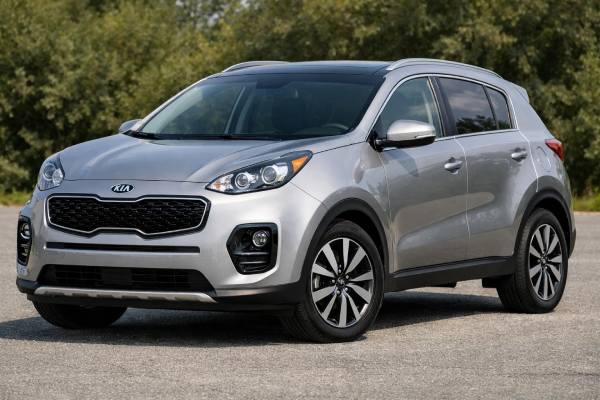
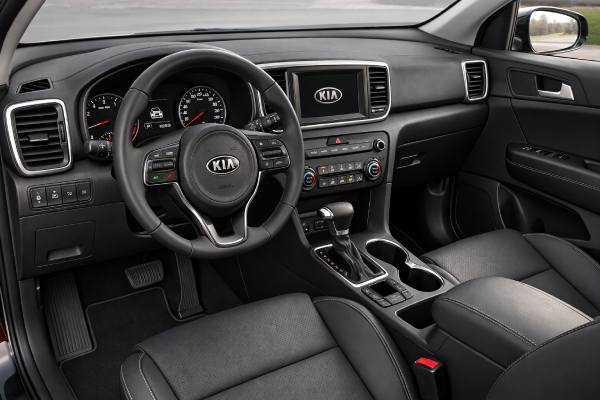
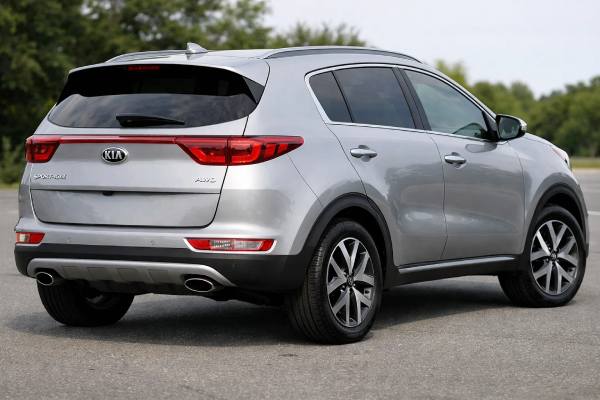
The 2016–2018 Kia Sportage QL AWD with the 2.0-litre D4HA diesel and 136 hp is one of the most rational versions of the fourth-generation Sportage. It combines the stronger QL body, secure all-wheel-drive traction, and the low-speed pulling power that suits a family SUV better than the smaller petrol engines. For many buyers, that matters more than headline speed. This version was built for steady real-world use: motorway travel, winter weather, mixed family driving, and occasional towing. It also arrived with meaningful engineering upgrades over the older Sportage, including a stiffer shell, better refinement, and a revised R-family diesel with improved efficiency and noise control. The catch is that it is still a modern Euro 6b diesel. That means short-trip use, neglected fluid services, and missed DPF care can turn an otherwise solid SUV into an expensive one. Buy the right example, though, and this Sportage remains a capable, durable, comfort-first compact SUV.
Essential Insights
- The 2.0 CRDi AWD suits the Sportage well, with strong low-rpm torque and better load-carrying confidence than the smaller petrol engines.
- The QL platform brings a more rigid body, calmer ride, and better cabin refinement than the older Sportage.
- Official figures allow up to 2,200 kg braked towing in manual AWD form, which is a real advantage in this class.
- The main ownership caveat is diesel-related: repeated short trips can accelerate DPF, EGR, and battery issues.
- Official service schedules vary by market, with published Kia intervals ranging from 30,000 km or 12 months to 20,000 miles or 12 months for this diesel family.
Section overview
- Kia Sportage QL diesel profile
- Kia Sportage QL numbers and hardware
- Kia Sportage QL equipment and protection
- Known faults and official actions
- Upkeep plan and purchase pointers
- Diesel manners and road pace
- Where it beats rivals
Kia Sportage QL diesel profile
The QL-generation Sportage marked a real engineering improvement over the outgoing model. Kia put heavy effort into the structure, using much more advanced high-strength steel and a significant increase in torsional rigidity. Owners feel that in several ways. The body resists shake better on broken roads, the doors and cabin feel more solid, and the suspension has a better foundation to do its job. The result is a compact SUV that feels mature rather than flimsy, which is one reason the QL still holds up well as a used buy.
This 2.0-litre AWD diesel sits near the practical center of the range. It is not the most powerful Sportage, but it is one of the most usable. The 136 hp version of Kia’s R-family diesel makes 373 Nm from low in the rev range, which gives it the kind of easy pulling character that suits the car’s size. In normal driving, that matters more than the raw power figure. It moves away cleanly, carries passengers without strain, and feels far less breathless than the naturally aspirated petrol options once the road opens up or the car is loaded. For drivers who live in hilly regions, tow occasionally, or regularly use motorways, it is one of the more convincing QL powertrains.
The AWD system adds another layer of usefulness. This is not a heavy-duty off-road transfer case, and the Sportage was never designed as a true low-range 4×4. What it does provide is better traction on wet roads, gravel, and light snow, plus improved stability when climbing steep slip roads or pulling away on poor surfaces. In a used compact SUV, that still has value. It also broadens the Sportage’s role from simple family crossover to all-weather utility vehicle.
There are trade-offs. The 2.0 diesel is heavier than the smaller engines, and the AWD system adds more mass again. That helps stability but does not make the car feel especially light on its feet. More importantly, this is a Euro 6b diesel with emissions hardware that prefers regular longer runs. Cars used mainly for cold starts and short urban trips are the ones that can develop DPF, EGR, and battery complaints. This version is happiest when it gets proper warm-up time and steady driving.
That is the key ownership theme. The 2.0 CRDi AWD QL is not the right Sportage for every driver. It makes less sense as a school-run-only car that never sees open-road use. It makes much more sense for drivers covering regular distance, carrying family or gear, and wanting the extra security of AWD without stepping into a larger SUV. In used form, it stands out less for glamour than for how well its engineering brief matches real life. That is a good quality in a family SUV, and it is why this specification remains attractive years after launch.
Kia Sportage QL numbers and hardware
For the 2016–2018 European-market Sportage QL AWD 2.0 CRDi 136, Kia published a fairly complete technical picture. The exact vehicle most buyers will be looking at is the lower-output 2.0 R diesel with either a 6-speed manual or 6-speed automatic and on-demand AWD. Some details, especially fluid fills beyond engine oil and certain torque figures, still need VIN-specific service data, but the main engineering numbers are clear.
| Powertrain item | Specification |
|---|---|
| Engine code | D4HA / R-family 2.0 CRDi |
| Engine layout | Inline-4, turbocharged diesel |
| Valvetrain | DOHC, 16 valves |
| Valves per cylinder | 4 |
| Displacement | 2.0 L (1,995 cc) |
| Bore × stroke | 84.0 × 90.0 mm (3.31 × 3.54 in) |
| Compression ratio | 16.0:1 |
| Fuel system | Common-rail direct injection |
| Induction | Turbocharged |
| Max power | 136 hp class (100 kW) @ 4,000 rpm |
| Max torque | 373 Nm (275 lb-ft) @ 1,500–2,500 rpm |
| Timing drive | Chain |
| Emissions class | Euro Stage 6b |
| Transmission and driveline | Specification |
|---|---|
| Transmission | 6-speed manual or 6-speed automatic |
| Drive type | AWD |
| Differential | Open, with electronic brake-based traction control |
| Steering type | Electric motor-driven rack-and-pinion power steering |
| Steering ratio | 14.39:1 on AWD |
| Turns lock-to-lock | 2.71 |
| Turning circle | 5.3 m (17.4 ft) |
| Chassis and dimensions | Specification |
|---|---|
| Front suspension | MacPherson strut, coil springs, anti-roll bar |
| Rear suspension | Multi-link, coil springs, anti-roll bar |
| Front brakes | 305 mm ventilated discs |
| Rear brakes | 302 mm solid discs |
| Standard tyre size | 215/70 R16 |
| Optional tyre sizes | 225/60 R17, 245/45 R19 |
| Length | 4,480 mm (176.4 in) |
| Width | 1,855 mm (73.0 in) |
| Height | 1,635 mm (64.4 in) |
| Wheelbase | 2,670 mm (105.1 in) |
| Fuel tank | 62 L (16.4 US gal / 13.6 UK gal) |
| Cargo volume | 503 L with tyre mobility kit / 491 L with temporary spare |
| Kerb weight AWD manual | 1,587 kg (3,499 lb) |
| Kerb weight AWD automatic | 1,615 kg (3,560 lb) |
| GVWR | 2,250 kg (4,960 lb) |
| Performance and capability | Specification |
|---|---|
| 0–100 km/h AWD manual | 10.5 s |
| 0–100 km/h AWD automatic | 12.0 s |
| Top speed | 184 km/h (114 mph) |
| Braked towing | 2,200 kg manual / 1,900 kg automatic |
| Unbraked towing | 750 kg |
| Approximate payload | About 663 kg manual / 635 kg automatic |
| Efficiency | Official AWD figure |
|---|---|
| Combined economy | 5.2 L/100 km manual / 5.9 L/100 km automatic |
| Extra-urban economy | 4.8 L/100 km manual / 5.2 L/100 km automatic |
| Urban economy | 6.0 L/100 km manual / 7.0 L/100 km automatic |
| CO₂ | 139 g/km manual / 154 g/km automatic |
| Fluids and service basics | Published figure |
|---|---|
| Engine oil capacity | 7.6 L (8.0 US qt) |
| Engine oil specification | ACEA C2 / C3 |
| Engine oil viscosity | 5W-30 |
| Coolant, transmission fluid, transfer and rear drive fluid | Verify by VIN-specific service data |
| Key torque values | Verify by official service manual for exact market and equipment |
| Safety and assistance | Published figure |
|---|---|
| Euro NCAP | 5 stars |
| Adult occupant | 90% |
| Child occupant | 83% |
| Vulnerable road user | 66% |
| Safety assist | 71% |
| IIHS 2017 model line | Top Safety Pick with optional front crash prevention |
| IIHS headlights | Poor |
The technical picture is straightforward. This Sportage is not light, but the diesel torque and AWD pairing make it far better matched to the platform than the base petrol. The official numbers also confirm its strongest practical strength: this is one of the more capable towing and load-carrying versions of the QL range, especially with the manual gearbox.
Kia Sportage QL equipment and protection
For the 2.0 CRDi AWD 136, trim differences matter, but not in the way many buyers expect. Mechanically, this engine was available both in the standard Sportage and in GT Line trim. That is important because it means a buyer can choose between a more understated, comfort-led specification and a sportier-looking version without necessarily moving to the higher-output 185 hp engine. In used form, that makes the 136 AWD one of the easier Sportage variants to shop by condition rather than by performance hierarchy.
Standard and mid-grade examples often came with 16- or 17-inch wheels, simpler upholstery, smaller infotainment screens, and a more restrained visual finish. Those trims are often the smarter used buy. They usually cost less to tyre, ride a little better on poor roads, and tend to have fewer expensive cosmetic items to refurbish. GT Line models add more drama: unique 19-inch wheels, ice-cube LED fog lamps, sportier exterior trim, dual exhaust styling cues, a D-shaped steering wheel, piano-black cabin trim, and alloy pedals. Those details improve showroom appeal, but they do not transform the core mechanical character of the 136 hp diesel.
Equipment also varied by market. Some cars have navigation, larger touchscreens, premium audio, keyless entry, electric seat adjustment, heated seats, and powered tailgates. Others keep the basics. The safest buying approach is to judge the actual car, not the trim badge alone. A clean mid-spec car with sound history is a better long-term prospect than a tired top-spec example with accident repairs or neglected maintenance.
Safety is one of the QL’s biggest strengths. Kia made this generation substantially stiffer than the old Sportage, and that stronger shell underpins its crash results. The Sportage earned a five-star Euro NCAP rating with strong adult and child protection scores, and it also tested well in IIHS evaluation for the U.S.-market model line. The detail buyers should remember is that safety scores and safety equipment are not the same thing. The shell is strong across the range, but many advanced systems were optional or market-dependent.
Available active-safety features on the QL included Autonomous Emergency Braking, Lane Departure Warning, Lane Keeping Assist, High Beam Assist, Speed Limit Information Function, Blind Spot Detection with Lane Change Assist, and Rear Cross Traffic Alert. Kia was clear at launch that availability depended on market. That means a late 2018 car is not automatically a fully loaded ADAS car. Buyers need to check for the front camera, radar hardware, mirror warning lamps, and menu settings rather than assuming.
There is also a service implication here. Cars with camera- and radar-based systems need proper calibration after windscreen replacement, front bumper repair, alignment work, or accident repair. If the car has had front-end work and the seller cannot document calibration, treat that as a real concern. The QL Sportage is structurally safe and well engineered, but the full safety benefit depends on the exact equipment fitted and whether that equipment still works correctly. In used-car terms, safety is partly about specification and partly about repair quality.
Known faults and official actions
The 2.0 CRDi AWD QL does not suffer from one single, universal defect that defines the entire model. Its problem pattern is more typical of a modern diesel SUV: most issues relate to usage pattern, delayed fluid service, or age-related wear. That is good news, because it means a well-kept example can still be a strong buy. It also means inspection matters more than internet folklore.
Common, usually low to medium cost
- Battery and stop-start complaints: diesels with frequent short trips or cold-weather use can show weak battery behavior early. Symptoms include sluggish cranking, stop-start not working, and scattered electrical warnings.
- Rear brake corrosion: lightly used cars often suffer more than heavily used ones. Symptoms include dragging brakes, rusty rear discs, and uneven pad wear.
- Tyre mismatch and alignment wear: AWD systems are sensitive to tyre rolling differences. Mixed tyres or uneven wear can create driveline strain and poor feel.
- DPF stress from short-trip use: interrupted regeneration is one of the biggest ownership risks. Symptoms include warning lights, rising fuel use, fans running after shutdown, and limp-home behavior.
Occasional, medium cost
- EGR and intake contamination: repeated cold running can lead to soot build-up. Symptoms are hesitant response, rougher running, and fault codes.
- Fuel-system and sensor faults: diesel pressure-control, airflow, glow-plug, and exhaust-sensor issues can appear with age. They are usually manageable, but diagnosis matters.
- AWD driveline neglect: skipped rear-drive or coupling fluid attention, or prolonged use with mismatched tyres, can lead to vibration or driveline complaints.
- Suspension wear: front links, bushes, wheel bearings, and top mounts are normal age-related wear points.
Less common but higher cost
- Timing-chain wear from poor oil service: there is no routine timing-belt replacement, but the chain still depends on clean oil. Cold-start rattle or timing-correlation faults deserve quick investigation.
- Turbocharger stress after poor shutdown habits or missed oil changes: most survive well when maintained, but neglected examples can develop whistle, oil mist, or weak boost response.
- DPF replacement: this is more often the result of the wrong use pattern than a bad design, but it is a high-cost outcome all the same.
A useful way to think about this engine is that it prefers regular hot running. Owners who mainly do mixed commuting, regional travel, or motorway mileage often have fewer emissions-related problems than owners who use the car as a stop-start urban runabout. That pattern is common with Euro 6b diesels, and the Sportage is no exception.
On software and calibration, the car is simpler than later mild-hybrid and fully connected models, but updates still matter. Infotainment faults, parking-camera issues, or ADAS warnings may be solved by software or recalibration rather than hardware. A dealer or specialist scan before purchase is worth the money.
For recalls and service campaigns, the important point is honesty: open public sources do not show one diesel-AWD-specific campaign that defines this European 2016–2018 variant. Campaigns can be market-specific, trim-specific, or supplier-specific. The safest process is to request dealer printouts and run an official VIN check rather than relying on generic model-year assumptions.
Before buying, ask for:
- Full service history with dated oil services.
- Proof of recall or campaign completion where applicable.
- Evidence of recent brake and driveline fluid work.
- Cold-start inspection from truly cold.
- A scan for engine, ABS, AWD, and ADAS fault memory.
- Confirmation that all four tyres match in size, brand family, and wear level.
The long-term durability outlook is good when the use pattern suits the engine. The biggest risk is not weak basic engineering. It is buying a diesel that has spent its life doing the wrong kind of driving.
Upkeep plan and purchase pointers
For this Sportage, the right maintenance plan begins with one important fact: Kia’s official intervals vary by market. Public Kia Ireland material lists 2016–2021 Sportage diesel at 30,000 km or 12 months, while Kia’s UK oil-and-capacity document for the 2016–2018 QL 2.0 R diesel is paired with a 20,000-mile or 12-month interval. That wide regional spread is a reminder that the VIN-market handbook is the true baseline. For long-term ownership, most careful buyers should still service more conservatively than the longest published maximum.
| Item | Practical schedule |
|---|---|
| Engine oil and filter | Every 12 months at minimum; 12,000–15,000 km is a wise real-world target for mixed use |
| Engine air filter | Inspect every service; replace about every 20,000–30,000 km depending on dust |
| Cabin filter | Every 12 months or 15,000–20,000 km |
| Fuel filter | Replace on schedule and sooner if poor fuel quality or water contamination is suspected |
| Brake fluid | Every 2 years |
| Coolant | Inspect yearly; replace to the VIN-market schedule or sooner if history is unknown |
| Manual gearbox oil | Consider preventive renewal around 80,000–100,000 km |
| Automatic transmission fluid | Preventive service around 60,000–80,000 km is sensible on towing or city-use cars |
| Rear drive and AWD fluids | Inspect history and renew around 40,000–60,000 km on hard-used vehicles |
| Tyre rotation | About every 10,000 km if wear pattern allows |
| Wheel alignment | When tyres wear unevenly, steering pulls, or suspension parts are replaced |
| 12 V battery test | Every year from year 4 onward |
| Timing chain | No fixed replacement interval; inspect if noisy, stretched, or fault codes appear |
| Drive belts and hoses | Inspect every service |
| DPF and regen health | Monitor driving pattern, fault history, and soot-load behavior on diagnostic scan |
The public official oil data is clear enough for one important line item: this engine takes 7.6 L of 5W-30 meeting ACEA C2 or C3. That is useful because correct oil quality matters on a turbo diesel with emissions hardware and timing-chain dependence. Coolant type, refrigerant charge, and detailed torque values should be confirmed in the VIN-specific service documentation before major work, because they can vary by market and equipment.
A good used inspection for this model should focus on the systems most likely to cost real money:
- Look for DPF or engine-management warnings, even if they are only stored and not currently displayed.
- Check for chain rattle at cold start.
- Inspect the underside for leaks around the engine, gearbox, rear drive, and transfer area.
- Confirm the AWD system works smoothly on a slow full-lock maneuver and under firm acceleration on a loose surface.
- Check the rear brakes closely.
- Test the air conditioning, camera, parking sensors, seat heaters, and infotainment.
- Review tyre condition carefully. On AWD cars, tyre neglect is not a minor issue.
The best buys are often standard or mid-spec AWD diesels on 17-inch wheels with full history and obvious long-run use. They may lack some visual drama, but they usually make the most sense. Large wheels, patchy history, and obvious urban-only use are warning signs. From a durability standpoint, the 2.0 CRDi AWD is a strong used proposition when maintained proactively. Leave it on stretched intervals and short-trip duty, and it becomes much less appealing.
Diesel manners and road pace
The 2.0 CRDi 136 suits the QL Sportage better than the raw output figure suggests. From the driver’s seat, the important number is not 136 hp. It is the 373 Nm of torque delivered low in the rev range. That gives the car the sort of everyday strength a family SUV needs. It pulls away cleanly, copes well with hills, and feels much less strained than the smaller petrol engines when the cabin is full or the boot is loaded.
Ride quality is one of the QL’s main strengths. The stronger shell helps the suspension feel settled and cohesive, and the multi-link rear end contributes to the mature road manners. The Sportage is not a sports SUV, but it is composed. It tracks straight on faster roads, handles broken surfaces without fuss, and feels stable in crosswinds and poor weather. The AWD system adds another layer of confidence on wet roads and winter surfaces, especially on sensible tyres.
Steering is accurate enough, though not especially rich in feedback. That is normal for this class and this era. The car’s real skill is not excitement but ease. It feels predictable and secure, which is exactly what many buyers want from a compact diesel SUV. Braking is also reassuring, with a firm enough pedal and good stability under a hard stop, though rear brake condition on used examples varies a lot and can affect how polished the car feels.
Noise and refinement are improved over the older Sportage, but this is still a diesel. At cold idle, you hear it. Under load, there is a clear working-engine note. Once warm and cruising, though, the cabin settles down well, helped by the stronger body and better overall noise control of the QL generation. The Sportage never feels especially premium, but it often feels more substantial than many rivals of the same age.
Performance is best described as strong enough rather than fast. The manual AWD reaches 100 km/h in 10.5 seconds, while the automatic takes 12.0 seconds. Those are not exciting numbers, but in real use the car feels more capable than they suggest because the torque is where drivers need it. Passing from medium speeds is more convincing than a base petrol Sportage, and the car remains relaxed at motorway pace.
Real-world economy usually looks like this:
- City and short mixed use: about 7.0–8.5 L/100 km
- Highway at 100–120 km/h: about 6.0–7.2 L/100 km
- Mixed driving: about 6.2–7.0 L/100 km
The automatic usually sits at the heavier end of those ranges, and cold weather, roof accessories, towing, and repeated DPF regeneration will push consumption upward. Moderate towing can add roughly 20–35% depending on speed, weight, and terrain.
In plain terms, the driving verdict is clear. The chassis is calm, the diesel torque fits the vehicle, and the AWD system adds real utility. The only real limitation is that this is a comfort-first SUV, not a quick one. For many buyers, that is not a weakness at all. It is exactly the point.
Where it beats rivals
The 2016–2018 Sportage 2.0 CRDi 136 AWD makes the most sense when compared with other diesel-era compact SUVs on usefulness rather than showroom excitement.
Against the Hyundai Tucson 2.0 CRDi AWD, the comparison is naturally close. The Hyundai shares much of the engineering, so the decision often comes down to condition, trim, and taste. The Kia usually feels more expressive in design and a little more distinctive inside, while the Hyundai is often the more conservative choice. Mechanically, there is very little to separate them when both are healthy.
Compared with a Mazda CX-5 2.2D AWD, the Kia gives away steering feel and driver engagement. The Mazda is the sharper tool. The Sportage answers with a calmer, sturdier everyday character and often better value on the used market. Buyers who want relaxed, secure family use may prefer the Kia’s personality.
Next to a Honda CR-V diesel AWD, the Kia often loses a little in outright interior cleverness and airy cabin feel. The Honda is one of the smartest packaging solutions in the class. The Sportage fights back with stronger visual design, a more planted feel on the road, and, in many markets, better used pricing for similar age and mileage.
Versus a Nissan X-Trail dCi 4×4, the Sportage feels more solid and slightly more cohesive. The Nissan counters with seven-seat availability in some versions and a more obviously family-oriented cabin. The Kia’s edge is that it feels more tightly engineered and often a little more premium from behind the wheel.
Compared with a Toyota RAV4 diesel 4WD of the period, the Sportage cannot lean on Toyota’s durability reputation, but it often looks and feels more modern inside and can offer stronger value. The Kia’s 2,200 kg manual towing rating is also a genuine advantage in certain use cases.
So where does the Sportage win? It wins on balance. It gives buyers a strong structure, useful diesel torque, AWD traction, credible towing ability, good ride comfort, and a cabin that still feels modern enough years later. It does not dominate any single category, but it avoids many of the compromises that make some rivals harder to recommend as they age.
The final verdict is straightforward. This is one of the more convincing used QL Sportage variants for buyers who actually need a diesel SUV. It is not the best choice for low-mileage urban use, and it is not the sharpest driver’s car in the class. But for distance driving, family duty, winter traction, and occasional towing, the 2.0 CRDi 136 AWD is one of the most sensible Sportages of its generation. Buy on history, usage pattern, and condition, and it still makes a lot of sense.
References
- Kia Sportage 2016 (Press Kit)
- Five-star safety ratings for all-new Kia Optima and Sportage 2015 (Safety Rating)
- 2017 Kia Sportage 2017 (Safety Rating)
- Engine Oil Grades and Capacities – Kia 2023 (Service Guide)
- Kia Service Intervals 2025 (Service Schedule)
Disclaimer
This article is for informational purposes only and is not a substitute for professional diagnosis or repair. Specifications, torque values, service intervals, procedures, and equipment vary by VIN, market, transmission, and trim, so always verify critical details against the official owner’s manual, service documentation, and parts data for your exact vehicle.
If this guide helped you, please consider sharing it on Facebook, X, or another platform to support our work.