
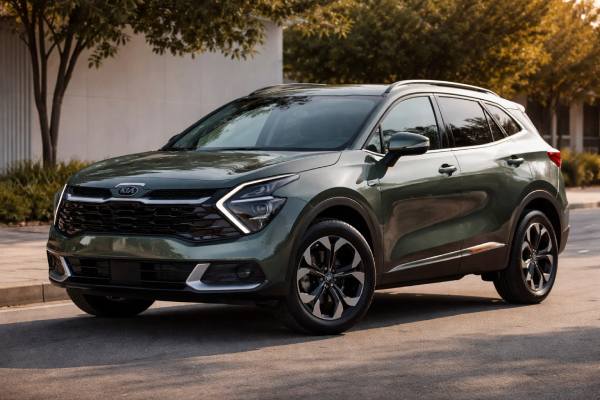
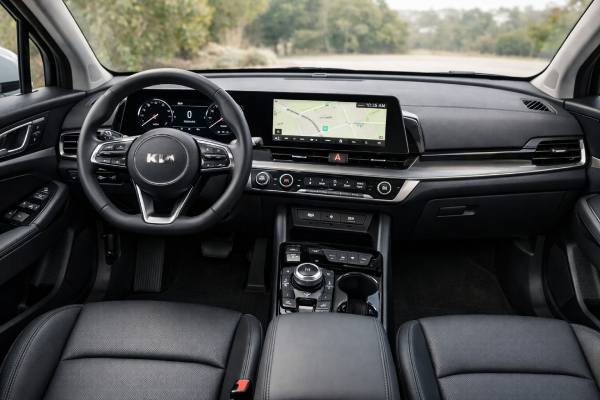
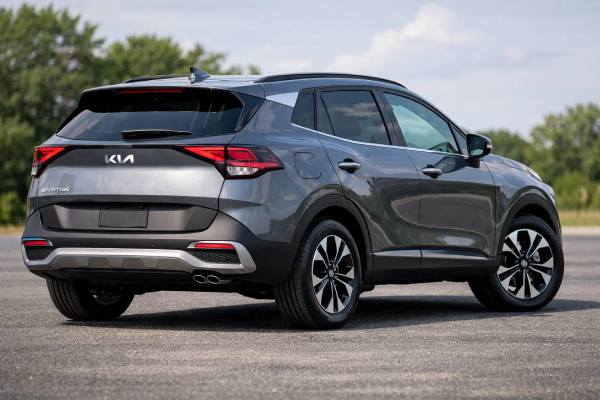
The Kia Sportage NQ5 1.6 diesel in front-wheel-drive form is the quiet workhorse of the current Sportage range. It is not the headline powertrain, but for buyers who cover real distance, it makes a strong case for itself. The engine commonly associated with this version is the 1.6 CRDi 48-volt mild-hybrid unit that Kia’s public literature also labels as the 1.6 CRDi EcoDynamics+ or 1.6 New U-III diesel. In official brochures it is rated at 136 PS, which many listings round to 136 hp, and it pairs low-end torque with better motorway economy than the petrol models. The bigger story is how well it suits the NQ5 platform: the cabin is roomy, the boot is generous, and the safety package is strong. Ownership is less about outright performance and more about using the car properly. This diesel rewards long runs, steady maintenance, and a careful eye on recall history, software updates, and emissions-system health.
Quick Specs and Notes
- Strong mid-range torque and low cruising effort make it an easy long-distance family SUV.
- Boot space, rear-seat room, and towing ability are real strengths in everyday use.
- Official safety performance is strong, with a five-star Euro NCAP result for the NQ5 Sportage.
- Short-trip use can age the DPF, SCR, and EGR systems faster than the rest of the vehicle.
- A sensible oil and inspection rhythm is every 15,000 km or 12 months, with harder-use cars worth checking sooner.
What’s inside
- Kia Sportage NQ5 diesel character
- Kia Sportage NQ5 data tables
- Kia Sportage NQ5 grades and crash tech
- Trouble spots and factory actions
- Upkeep plan and buyer filters
- How the diesel feels
- Sportage diesel versus competitors
Kia Sportage NQ5 diesel character
This is the version of the NQ5 Sportage for people who still drive enough to benefit from diesel torque. In a market that has shifted heavily toward hybrid and plug-in hybrid choices, the front-drive 1.6 diesel remains attractive because it delivers the qualities many family SUV buyers actually use every day: easy low-rpm pull, relaxed motorway cruising, and good fuel economy without needing a large battery pack. It also fits the NQ5’s personality. This generation is roomy, more upscale inside than older Sportages, and tuned to feel secure and mature rather than sporty.
The diesel itself is the main reason to choose it. Public Kia documents describe the current unit as a 1.6 CRDi EcoDynamics+ 48-volt mild-hybrid. It produces 100 kW, shown as 136 PS in factory literature, and 320 Nm of torque. That means it feels stronger in normal traffic than the number alone suggests. It pulls cleanly from low revs, copes well with passengers and luggage, and does not need frequent downshifts on fast roads. If you spend much of your time at 100 to 130 km/h, it usually feels more settled than the smaller petrol choices.
There is an important buying nuance, though. This is not one single globally identical version. Across Europe, the same basic NQ5 diesel front-driver has appeared in more than one trim structure and, depending on market and year, with either a manual gearbox or a seven-speed dual-clutch transmission. Some brochures show only the mild-hybrid diesel now, while others no longer list a diesel at all. That is why VIN-based shopping matters more than usual. Buyers should confirm not just the engine but the gearbox, emissions label, trim, and local-market equipment list before comparing performance figures or service parts.
As an ownership proposition, the diesel makes most sense for mixed to heavy mileage. It is a better fit for commuters, long-distance drivers, and families who travel regularly than for owners doing repeated cold starts and short urban hops. That difference matters because the engine’s emissions hardware is effective, but it likes proper operating temperature and enough steady running to regenerate cleanly. If that sounds manageable, the payoff is strong real-world range and an easygoing character.
In plain terms, this Sportage is not about excitement. It is about efficiency, space, and long-trip usability. That makes it one of the more rational current diesel SUVs, especially for buyers who want a mainstream brand rather than a premium-badged alternative.
Kia Sportage NQ5 data tables
For this article, the baseline region is current open European Kia documentation for the front-drive 1.6 diesel NQ5. One detail is worth clearing up immediately: factory brochures typically state 136 PS, which is why many classifieds call the car “136 hp.” The useful constant is the output in kilowatts and torque: 100 kW and 320 Nm.
| Powertrain and efficiency | Figure |
|---|---|
| Code | D4FE / public Kia literature commonly labels it 1.6 CRDi EcoDynamics+ or 1.6 New U-III diesel |
| Engine layout and cylinders | Inline-4, DOHC, 16 valves |
| Bore × stroke | 77.0 × 85.8 mm (3.03 × 3.38 in) |
| Displacement | 1.6 L (1,598 cc) |
| Induction | Turbocharged |
| Fuel system | Common-rail direct injection |
| Compression ratio | Verify by VIN and service data |
| Max power | 136 PS / 100 kW @ 4,000 rpm |
| Max torque | 320 Nm (236 lb-ft) @ 2,000–2,250 rpm |
| Timing drive | Chain-driven cam system is generally used on this engine family; verify by VIN before major parts ordering |
| Rated efficiency, current FWD mild-hybrid manual | about 5.0 to 5.1 L/100 km |
| Rated efficiency, current FWD mild-hybrid DCT in some markets | about 5.5 L/100 km |
| Real-world highway at 120 km/h | typically about 5.6 to 6.3 L/100 km |
| Transmission and driveline | Figure |
|---|---|
| Transmission | 6-speed manual in some current public brochures; 7-speed DCT offered in some European markets and trims |
| Drive type | FWD |
| Differential | Open |
| Chassis and dimensions | Figure |
|---|---|
| Front suspension | MacPherson strut |
| Rear suspension | Multi-link |
| Brakes | 320 mm ventilated front discs (12.6 in), 300 mm rear discs (11.8 in) |
| Most common tyre sizes | 215/65 R17, 235/55 R18, 235/50 R19 |
| Ground clearance | about 170 mm (6.7 in) |
| Length | 4,515 mm (177.8 in) in the Irish open brochure baseline |
| Width | 1,865 mm (73.4 in) |
| Height | 1,650 mm (65.0 in) |
| Wheelbase | 2,680 mm (105.5 in) |
| Turning circle | about 10.9 m curb-to-curb |
| Kerb weight | about 1,668 kg (3,677 lb) for the 136 PS diesel mild-hybrid manual in the Irish brochure |
| GVWR | about 2,145 kg (4,729 lb) |
| Fuel tank | 54 L (14.3 US gal / 11.9 UK gal) |
| Cargo volume, seats up | 526 L VDA (18.6 ft³) |
| Cargo volume, seats down | 1,715 L VDA (60.6 ft³) |
| Performance and capability | Figure |
|---|---|
| 0–100 km/h | 11.4 s |
| Top speed | 180 km/h (112 mph) |
| Braking distance | Verify by tyre, trim, and test source |
| Towing capacity, braked | up to 1,950 kg (4,299 lb) in the Irish brochure baseline |
| Towing capacity, unbraked | 750 kg (1,653 lb) |
| Payload | roughly 475 to 520 kg depending on exact trim and equipment |
| Fluids and service capacities | Figure |
|---|---|
| Engine oil | 5W-30, ACEA C2 / C3 / C5 |
| Engine oil capacity | 4.4 L (4.6 US qt) |
| Coolant | Verify by VIN and current service data |
| Transmission fluid | Verify by gearbox type and VIN |
| Differential / transfer case | Not applicable on FWD |
| A/C refrigerant | Verify by VIN and under-hood label |
| A/C compressor oil | Verify by VIN and under-hood label |
| Key torque specs | Public owner-facing sources do not provide a full model-specific torque chart; verify from service documentation |
| Safety and driver assistance | Figure |
|---|---|
| Euro NCAP | 5 stars |
| Adult occupant | 87% |
| Child occupant | 86% |
| Vulnerable road users | 66% |
| Safety assist | 72% |
| Headlight rating | IIHS not generally applicable to this European-spec version |
| Typical ADAS availability | AEB, lane keeping, lane follow assist, speed-limit assist, driver attention warning standard in many trims; blind-spot, highway assist, and upgraded collision functions vary by trim and market |
The big message from the data is simple. This Sportage diesel is not especially quick, but it is roomy, efficient, and torquey enough for the job buyers usually ask of it.
Kia Sportage NQ5 grades and crash tech
Trim matters a lot on this Sportage because the diesel powertrain changes the character of the car, but the trim decides whether the ownership experience feels basic, complete, or genuinely premium. In the baseline Irish-market material, the diesel sits in K2, K3, and GT-line form. Other European markets use different names, but the structure is similar: lower trim for value, middle trim for real-world comfort, upper trim for design and tech.
K2 is the sensible starting point. It usually rides on 17-inch wheels and already includes the safety essentials most buyers expect in a modern family SUV. That makes it the best-value used choice if the goal is comfort and low tyre cost. K3 adds the equipment many people end up wanting anyway: larger alloys, better seat trim, more convenience features, telematics, stronger cabin presentation, and a more complete ownership feel. GT-line changes the tone the most. It brings the 19-inch look, sportier exterior treatment, extra cabin detailing, more advanced lighting, and a broader driver-assistance list. It also tends to ride a little firmer and costs more to re-tyre.
There are useful visual clues when you are browsing used cars. K2 cars are the easiest to spot by their simpler wheel design and more understated cabin trim. K3 usually brings a more premium seat finish and added convenience features. GT-line cars stand out with the 19-inch alloys, darker exterior accents, more aggressive trim pieces, and a sportier interior. If comfort is the priority, the mid-trim wheel and tyre package is often the sweet spot.
Safety is a major strength. Euro NCAP awarded the 2022 Sportage five stars, with especially strong adult and child protection scores. The NQ5 also benefits from a seven-airbag layout that includes a center airbag between the front seats in many European specifications. That extra airbag matters because it reflects how much Kia pushed this generation toward a more modern safety standard rather than treating crash protection as a box-ticking exercise.
The standard active-safety baseline is already solid. Factory brochures list Forward Collision-Avoidance Assist for city, pedestrian, and cyclist scenarios, lane-keeping assistance, lane-follow assist, speed-limit assist, driver-attention warning, cruise control, reversing camera, and parking sensors among the key features available on mainstream trims. Higher grades and market-specific packs add more. These can include upgraded forward collision support for turning situations, navigation-based smart cruise, Highway Driving Assist, blind-spot collision support, and more advanced lighting.
That brings one important used-buy point. Extra ADAS equipment is valuable, but it also raises the quality threshold for repairs. Windscreen replacement, camera alignment, radar mounting, and front-bumper repair all matter more now. A Sportage with repaired front-end damage can still be a good car, but only if the calibration work was done properly and documented.
Trouble spots and factory actions
The NQ5 1.6 diesel does not currently present as a fundamentally flawed engine-and-gearbox combination. That is the good news. The less glamorous truth is that this is still a modern small-capacity turbo diesel with emissions hardware, 48-volt support components, and a rising amount of electronics. So the reliability conversation is mostly about usage pattern, software, and maintenance discipline rather than one dramatic single defect.
The most common issue pattern is still diesel-related. Cars used for short, cold, urban trips are the most likely to develop DPF loading problems, incomplete regenerations, EGR contamination, and rising soot stress in the intake and emissions systems. The warning signs are familiar: more frequent cooling-fan activity after shutdown, reduced economy, regeneration interruptions, limp-home behavior, or dashboard messages linked to the exhaust system. These problems are not unique to Kia. They are the normal penalty a modern diesel pays when used like a city runabout.
The second group of faults is lower-cost but common on newer tech-heavy SUVs: infotainment bugs, phone-connection errors, occasional camera or radar warnings, and sensor faults that disappear after restart. These often sound worse than they are. In many cases the correct fix is a software update, not expensive parts. Owners should treat software history as part of service history, especially on a current-generation car.
The third group depends on gearbox. Manual cars are mechanically simpler and easier to assess, but they can still suffer from clutch wear if they have lived in traffic, on steep hills, or with regular towing. DCT cars deserve a more careful test drive. A little low-speed hesitation can be normal for a dual-clutch unit. Persistent shudder, repeated harsh take-up, rough reverse engagement, or warning messages are not normal. Those symptoms deserve diagnosis, not excuses.
For the engine itself, these are the realistic medium-term watch points:
- DPF and SCR stress on short-trip cars
- EGR and intake soot over time
- charge-air hose leaks or oily misting
- NOx or exhaust-related sensor faults
- 48-volt mild-hybrid warnings that should never be ignored
Factory actions matter too. On the broader 2023 Sportage NQ5 platform, Kia issued a brake-booster inspection and replacement campaign in some markets because a misaligned diaphragm could cause an internal vacuum leak and reduced brake assist. That does not mean every European diesel is affected, but it does mean buyers should stop guessing and run the VIN through official recall channels. It is also a reminder that newer vehicles can have important campaign work even when they feel mechanically fine.
Before purchase, ask for dealer printouts or digital records showing software status, campaign completion, and the last major service visit. Also check for clean, even braking; normal pedal feel; matching tyres; and an engine that warms, pulls, and idles consistently. A healthy NQ5 diesel should feel neat and composed, not edgy or uncertain.
Upkeep plan and buyer filters
This Sportage rewards methodical servicing. The best maintenance plan is not the absolute longest one the brochure allows. It is a realistic one that reflects diesel use, modern emissions hardware, and the cost of leaving small problems untouched. The 1.6 diesel can cover big miles well, but only if oil quality, filter condition, and regeneration health stay under control.
| Practical maintenance item | Sensible interval |
|---|---|
| Engine oil and filter | Every 15,000 km or 12 months in mixed use; shorten toward 10,000 to 12,000 km in hard urban use |
| Engine air filter | Inspect every service; replace around 30,000 km sooner in dust |
| Cabin air filter | Every 15,000 to 20,000 km or yearly |
| Fuel filter | Follow VIN-specific diesel schedule; inspect history closely on higher-mileage cars |
| Coolant | Follow official VIN schedule; do not assume one universal interval across all markets |
| Brake fluid | Every 2 to 3 years |
| Brake pads and discs | Inspect every service |
| Tyre rotation | About every 10,000 km |
| Wheel alignment | Check yearly or whenever tyre wear suggests a problem |
| Manual gearbox oil | Consider an early change in long-term ownership even if not listed as routine |
| DCT fluid | Verify gearbox-specific service data; conservative owners often service earlier than “filled for life” language suggests |
| Timing components | Chain-driven system; inspect for noise or timing faults and replace only when condition requires |
| 12 V battery | Test yearly after year 4 |
| 48 V system | Inspect promptly if any warning appears; do not delay diagnosis |
The most useful public fluid facts are the engine-oil ones. Kia’s open service guide for the NQ5 diesel lists 4.4 litres, 5W-30, and ACEA C2, C3, or C5 compatibility. That is enough for decision-making when you are checking invoices or planning basic service. For coolant fill, DCT fill, refrigerant charge, and the complete torque chart, the honest answer is better than a guessed one: verify by VIN in official service documentation.
As a used buy, the best filters are practical rather than glamorous:
- full Kia or specialist history
- documented campaign and software completion
- evidence of regular longer runs, not only city use
- matched tyres with good tread depth
- no stored emissions or ADAS faults
- smooth cold start and clean warm restart
The most tempting cars to avoid are cheap high-trim examples with giant wheels, mixed tyres, and vague answers about warning lights or software. On this model, a clean mid-trim diesel with proper service history is usually a better long-term bet than a flashy top-trim car that has been maintained to the bare minimum.
Long-term durability looks promising rather than proven-perfect, simply because the model is still relatively young. The powertrain itself appears capable of big mileage, but the emissions system and electronics will decide whether ownership feels easy or irritating. Buy on condition and history, not just year and trim.
How the diesel feels
On the road, the NQ5 diesel behaves exactly the way many family-SUV buyers hope it will. It is calm, solid, and easy to drive. It does not chase sportiness, and that is part of the appeal. The steering is light enough for town use, straight-line stability is good, and the chassis feels planted on the motorway. Compared with some rivals, it can feel a little heavier in its responses, but it also feels more settled and less fidgety over distance.
The ride depends heavily on wheels. Seventeen-inch setups suit the car best if comfort matters most. Eighteens are a fair compromise. Nineteens look right on GT-line models, but they add cost and can pass more sharp-edged impact noise into the cabin. The Sportage’s body control is generally tidy, though. It does not wallow, and it holds its line well on quicker roads, especially with passengers and luggage onboard.
The diesel engine is strongest in the exact situations that matter to this kind of buyer. It has a solid low-to-mid-range pull and enough torque to avoid constant shifting. That makes the car easy in traffic and more relaxed than the petrol version once speeds rise. It is not quick off the line, and the official 0–100 km/h time confirms that. But it does not feel weak once moving. It feels useful.
Noise, vibration, and harshness are well managed for a diesel family SUV. You still hear the engine more clearly on cold starts than in the hybrid models, but at a steady cruise it settles down well. The cabin’s general refinement is good enough that tyre choice and road surface often become more noticeable than the engine itself.
Real-world economy is the reason many buyers still seek this powertrain out. Expect roughly 5.6 to 6.3 L/100 km on a steady 120 km/h motorway run, about 5.0 to 5.8 L/100 km on slower mixed rural work, and around 6.0 to 7.0 L/100 km in mixed real use depending on traffic, temperature, and tyre choice. Repeated cold starts, short trips, winter weather, and heavy loads will push the number upward. So will the DCT in some conditions.
Because this is the front-drive model, tyre quality matters more than drivetrain branding. With good tyres, traction is completely adequate for ordinary weather and light towing. With poor tyres, you feel the front axle working harder when the road is wet or loaded uphill. The upside is lower mass and a little less driveline drag than the AWD version.
This is the verdict from behind the wheel: the diesel Sportage feels better the farther you go. It is at its best when the trip is long enough for the engine and exhaust after-treatment systems to do their job properly.
Sportage diesel versus competitors
The Sportage diesel sits in an unusual place now because fewer rivals still offer this exact kind of mainstream front-drive diesel SUV. That actually helps its appeal. For buyers who still want diesel torque and range, the Sportage competes less on trend and more on substance.
The most direct comparison is the Hyundai Tucson 1.6 CRDi, because the two vehicles share core engineering. The Hyundai often looks a little more conservative and can feel slightly more restrained in design. The Kia feels more expressive and, in many trims, a bit more modern inside. The real choice usually comes down to price, equipment, and whichever car has the cleaner history. Mechanically, neither has a decisive advantage.
Against a Volkswagen Tiguan 2.0 TDI, the Kia counters with strong packaging, a more dramatic cabin design, and usually better value for money in comparable trim. The VW still tends to feel slightly more polished in control weighting and overall maturity, but the gap is smaller than badge hierarchy suggests. The Sportage often wins for buyers who want more visible equipment for the money.
Against a Peugeot 3008 diesel, the Kia offers a more straightforward cabin, more rear-seat room, and fewer styling compromises. The Peugeot feels more distinctive from the driver’s seat and can seem a little lighter on its feet. The Kia answers with more conventional ergonomics and, for many buyers, easier day-to-day usability.
Against a Nissan Qashqai, the Sportage generally feels larger, roomier, and more relaxed at speed. The Nissan can be lighter and easier in town, but the Kia feels more substantial when loaded or driven for hours at a time. That difference matters in family ownership.
The Sportage’s strongest arguments are easy to summarize:
- very good cabin and luggage space
- strong motorway fuel economy
- solid torque for real use
- strong safety result
- wide trim spread with good equipment
Its weaker points are just as clear:
- it is only a smart buy for drivers who still suit diesel use
- top trims ride worse on large wheels
- DCT versions need careful assessment
- some rivals still feel slightly more polished to drive
For the right owner, though, the case is strong. If you want a modern, roomy family SUV and your use pattern still fits diesel ownership, the NQ5 1.6 front-drive diesel remains one of the more sensible choices in the class. If your life is mostly short urban use, a hybrid is the smarter rival. The difference is not the badge. It is the way the car will be used.
References
- The Sportage 2025 (Brochure)
- Der Kia Sportage. 2026 (Price List)
- Engine Oil Grades and Capacities – Kia 2023 (Service Guide)
- Official Kia Sportage 2022 safety rating 2022 (Safety Rating)
- Kia Recalls | Kia Europe 2026 (Recall Database)
Disclaimer
This article is for informational purposes only and is not a substitute for professional diagnosis, repair, or VIN-specific workshop data. Specifications, torque values, service intervals, software status, procedures, and parts fitment can vary by VIN, market, gearbox, trim, and emissions configuration, so always verify the exact vehicle against official Kia service documentation before carrying out maintenance or repairs.
If this guide helped you, please consider sharing it on Facebook, X, or another platform to support our work.