
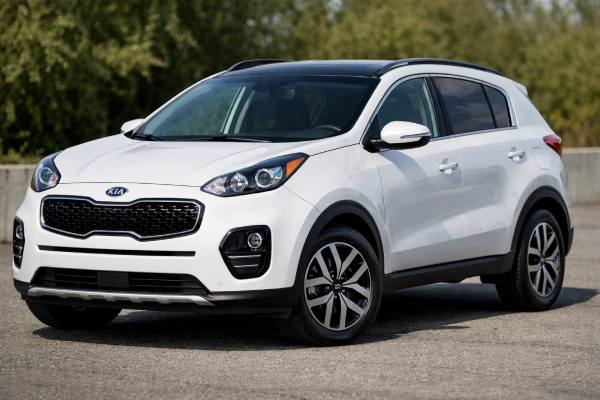

The 2016–2018 Kia Sportage QL 1.7 diesel is the quiet achiever of the range. It is not the fastest Sportage, and it was never meant to be. Its appeal comes from a different mix: a simple front-wheel-drive layout, a six-speed manual gearbox, useful low-rpm diesel torque, and strong long-distance economy. In Europe, this 115 hp 1.7 CRDi sat near the center of the lineup and, in many markets, became the rational choice for drivers who wanted a family SUV without the cost, weight, or complexity of the bigger 2.0 diesel or all-wheel drive. The QL generation itself also brought a stronger body, more cabin space, and noticeably better refinement than the older Sportage. One buying detail matters today: this 1.7 diesel belongs mainly to the pre-facelift years, because Kia’s 2018 update began replacing it in many markets with the newer 1.6 CRDi family.
What to Know
- The 1.7 CRDi gives the QL Sportage excellent highway economy and relaxed low-speed torque for daily use.
- Front-wheel drive and a 6-speed manual keep this version lighter and mechanically simpler than the larger diesel AWD models.
- The QL body is roomier, quieter, and stiffer than the earlier Sportage, which helps comfort and safety.
- Short-trip use is the main ownership caveat, because diesel emissions hardware ages better on regular longer runs.
- A sensible real-world oil-service target is every 10,000–15,000 km or 12 months, even where longer official intervals exist.
Guide contents
- Kia Sportage QL 1.7 Diesel Basics
- Kia Sportage QL Numbers and Hardware
- Kia Sportage QL Trims and Safety Kit
- Ownership Risks and Factory Actions
- Upkeep Plan and Used-Buying Checks
- On-Road Behavior and Economy
- Diesel Sportage Against Competitors
Kia Sportage QL 1.7 Diesel Basics
The fourth-generation QL Sportage was a meaningful upgrade over the old SL model, and the 1.7 diesel benefited from nearly all of those improvements. Kia stretched the wheelbase to 2,670 mm, pushed overall length to 4,480 mm, kept the width at 1,855 mm, and maintained a practical roof height around 1,635 mm. More important than the raw numbers, the body shell used a far greater share of advanced high-strength steel than before, and torsional rigidity improved significantly. That stiffer platform is one reason the QL still feels mature today. It rides with more control than the earlier Sportage and isolates road noise better, especially on 16-inch and 17-inch wheel packages.
For this specific diesel version, the formula is straightforward. The D4FD 1.7-liter CRDi, also known within Kia’s U-II diesel family, drives only the front wheels in 115 hp form and uses a six-speed manual gearbox. That matters on the used market because it makes this one of the least mechanically complicated QL variants. There is no AWD hardware to service, no automatic transmission to evaluate, and no extra mass from the larger 2.0 diesel package. In day-to-day use, the engine’s 280 Nm of torque arrives low in the rev range, so the car feels stronger at normal road speeds than the modest power figure suggests. It is built for steady progress, not quick launches.
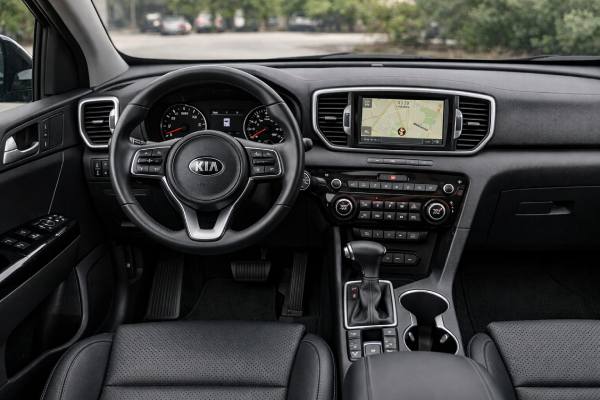
This version also fits the Sportage’s family-SUV mission well. The cabin is easy to understand, the seating position is upright without feeling van-like, and the cargo area is generous for a compact crossover. Official luggage capacity is 503 liters with the tyre mobility kit, or 491 liters with the temporary spare. Rear-seat comfort improved over the older model thanks to the longer wheelbase, lower floor, and revised rear bench geometry. For owners who spend more time commuting, touring, or carrying family gear than chasing performance, those changes are more important than another 20 or 30 horsepower.
The main caution is timing. This 1.7 diesel belongs to the earlier QL years. During the 2018 update, Kia began replacing the 1.7 CRDi with the newer 1.6 CRDi in many European markets. That means buyers need to identify cars by engine, VIN, and service records, not only by registration year. A 2018-registered Sportage is not automatically the same mechanical package as a 2016 or 2017 car.
Kia Sportage QL Numbers and Hardware
The specification summary below reflects the common European 2016–2018 Kia Sportage QL 1.7 CRDi 115 hp front-wheel-drive manual. Where open factory data varies by market or trim, the table notes that clearly rather than stretching a figure across every country.
Powertrain and efficiency
| Item | Kia Sportage QL 1.7 CRDi 115 FWD |
|---|---|
| Code | D4FD / U-II 1.7 CRDi |
| Engine layout and cylinders | Inline-4, 4 cylinders, DOHC, 4 valves per cylinder |
| Bore × stroke | 77.2 × 90.0 mm (3.04 × 3.54 in) |
| Displacement | 1.7 L (1,685 cc) |
| Induction | Turbocharged |
| Fuel system | Common-rail direct injection |
| Compression ratio | 16.0:1 |
| Max power | 115 hp (84.6 kW) @ 4,000 rpm |
| Max torque | 280 Nm (207 lb-ft) @ 1,250–2,750 rpm |
| Timing drive | Chain-type layout on the U-II diesel family; verify by VIN/service data |
| Rated efficiency | 4.6 L/100 km combined, 4.2 extra-urban, 5.4 urban (51.1 mpg US / 61.4 mpg UK combined) |
| Real-world highway @ 120 km/h (75 mph) | Typically about 5.4–6.0 L/100 km, depending on tyre size, wind, and load |
Transmission and driveline
| Item | Kia Sportage QL 1.7 CRDi 115 FWD |
|---|---|
| Transmission | 6-speed manual |
| Transmission code | Not consistently published in public factory material |
| Drive type | FWD |
| Differential | Open front differential |
| Final drive ratio | 4.188 |
Chassis and dimensions
| Item | Kia Sportage QL 1.7 CRDi 115 FWD |
|---|---|
| Suspension, front / rear | MacPherson strut / dual lower-arm multi-link |
| Steering | Electric motor-driven rack-and-pinion power steering |
| Steering ratio | 14.34:1 |
| Turns lock-to-lock | 2.71 |
| Brakes | 305 mm (12.0 in) ventilated front discs / 302 mm (11.9 in) rear discs |
| Most common tyre size | 215/70 R16 or 225/60 R17 |
| Ground clearance | 172 mm (6.8 in) |
| Approach / departure / breakover | 16.7° / 23.9° / 18.6° |
| Length / width / height | 4,480 / 1,855 / 1,635 mm (176.4 / 73.0 / 64.4 in) |
| Wheelbase | 2,670 mm (105.1 in) |
| Turning circle | 5.3 m (17.4 ft) |
| Kerb weight | 1,379–1,471 kg (3,040–3,243 lb), trim dependent |
| GVWR | 1,895 kg (4,178 lb) |
| Fuel tank | 62 L (16.4 US gal / 13.6 UK gal) |
| Cargo volume | 503 L (17.8 ft³) seats up with tyre mobility kit; 491 L (17.3 ft³) with temporary spare; up to about 1,452 L (51.3 ft³) seats folded, VDA |
Performance and capability
| Item | Kia Sportage QL 1.7 CRDi 115 FWD |
|---|---|
| 0–100 km/h (0–62 mph) | 11.5 s |
| Top speed | 176 km/h (109 mph) |
| Braking distance 100–0 km/h | Not consistently published in open official sources |
| Towing capacity | 1,400 kg (3,086 lb) braked / 650 kg (1,433 lb) unbraked |
| Payload | About 424–516 kg (935–1,138 lb), depending on trim and kerb weight |
Fluids and service capacities
| Item | Kia Sportage QL 1.7 CRDi 115 FWD |
|---|---|
| Engine oil | ACEA C2 / C3, 5W-30; 5.3 L (5.6 US qt) |
| Coolant | Phosphate ethylene-glycol coolant; exact fill can vary by market documentation |
| Transmission / gear oil | Verify by VIN and gearbox code in workshop data |
| Differential / transfer case | Not applicable on this FWD model |
| A/C refrigerant | Verify by under-hood label and market-specific service data |
| A/C compressor oil | Verify by refrigerant type and market-specific service data |
| Key torque specs | Wheel nuts commonly 107–127 Nm (79–94 lb-ft) |
Safety and driver assistance
| Item | Kia Sportage QL 1.7 CRDi 115 FWD |
|---|---|
| Crash ratings | Euro NCAP 5 stars; adult occupant 90%, child occupant 83%, safety assist 71% |
| Vulnerable road users | Verify exact protocol sheet for the tested market/version |
| IIHS | Not applicable to this European diesel configuration |
| Headlight rating (IIHS) | Not applicable |
| ADAS suite | AEB, lane keeping assist, high beam assist, speed limit information, blind-spot detection, and rear cross-traffic alert were market and trim dependent |
The numbers tell the real story. This is not the Sportage to buy for speed. It is the one to buy for usable torque, efficient long-distance driving, and a relatively simple mechanical layout inside a well-developed QL chassis.
Kia Sportage QL Trims and Safety Kit
The 1.7 diesel sat in the mainstream of the European QL lineup, so it appeared in more trims than the high-output engines. That is helpful today because buyers can find everything from sensible base cars on 16-inch wheels to better-equipped models with navigation, heated seats, parking sensors, and a stronger safety package. Mechanically, though, the 115 hp 1.7 CRDi stayed simple: front-wheel drive and a six-speed manual. If you are looking at a Sportage sold as a 1.7 diesel automatic, AWD, or late-facelift car, double-check the engine and trim because that usually means you are looking at a different powertrain altogether.
Visual identifiers matter. Entry and mid trims usually carry 16-inch or 17-inch wheels, more modest exterior trim, and either a tyre mobility kit or temporary spare. GT Line-style appearance cues were aimed more at the higher-output engines, so the 1.7 diesel often shows up in more practical specifications rather than sporty ones. Inside, the spread runs from simpler audio systems and cloth seats to dual-zone climate control, navigation, heated seats, rear camera, and larger central displays. That matters because the used-market sweet spot is not the cheapest trim. It is usually a mid-grade 1.7 diesel with 17-inch wheels, rear camera, good service records, and no oversized wheel package to hurt ride quality.
Safety was a genuine QL strength. Kia’s European materials stressed the much stronger body shell, the broader use of advanced high-strength steel, and new active-safety features. Euro NCAP awarded the new Sportage five stars, with especially strong adult and child protection scores. Kia also listed optional or market-dependent systems such as autonomous emergency braking, lane keeping assist, high beam assist, speed limit information, blind-spot detection, and rear cross-traffic alert. As with many crossovers from this period, the structure was consistently strong, but the actual ADAS content varied a lot by country and grade.
That variation is important when buying a used example. A basic 1.7 diesel can still be a good purchase because the platform, seating package, rear ISOFIX points, and stability systems were strong foundations. But higher-spec cars add convenience and often a more complete active-safety suite. If a car has front camera-based systems, ask whether the windshield has ever been replaced and whether recalibration was done correctly. If it has parking sensors and a reversing camera, check them on the test drive because small electrical faults in these systems are annoying rather than catastrophic, but they do affect day-to-day usefulness.
One final year-to-year point matters. By the 2018 update, Kia’s facelift communication said the existing 1.7-litre CRDi was replaced by the new 1.6-litre diesel in many markets. So when shopping by registration year, a late 2018 vehicle may already be outside the exact 1.7-diesel group covered here.
Ownership Risks and Factory Actions
The 1.7 CRDi Sportage is usually a better long-term bet than the faster, more complex Sportage derivatives, but it still needs to be matched to the right kind of owner. The main issues are not exotic. They are the familiar weak points of a mid-2010s small diesel SUV used in mixed family duty.
Common and usually low to medium cost
- DPF loading on short-trip cars
Symptoms: rising fuel use, cooling fans running after shutdown, warning lights, or repeated regeneration attempts.
Likely cause: frequent short journeys that never let the diesel particulate filter complete a proper regeneration cycle.
Remedy: longer periodic motorway runs, correct oil, and diagnosis before forcing repeat regens. - EGR soot build-up
Symptoms: hesitant low-rpm response, uneven idle, smoke under load, or fault codes.
Likely cause: exhaust-gas recirculation deposits building over time, especially on urban-use cars.
Remedy: clean or replace the affected components after proper diagnosis. - Clutch and dual-mass flywheel wear
Symptoms: chatter at idle, vibration on take-up, slip under load, or a heavy pedal.
Likely cause: age, towing, steep-hill use, and stop-start city driving.
Remedy: replace as a matched clutch and flywheel job when needed. - Boost-hose and vacuum-related leaks
Symptoms: soft midrange torque, hissing under load, limp mode, or overboost/underboost faults.
Likely cause: split hoses, clamps, or actuator-control issues.
Remedy: pressure test the intake tract and repair leaks before chasing harder parts.
Occasional and worth watching
- Front suspension wear
The QL chassis is strong, but drop links, bushes, and dampers still wear. Clunks and inside-edge tyre wear are the early clues. - Wheel bearings and brake drag
Heavier SUV loads and neglected brake servicing can show up as humming bearings or sticky rear brakes, especially on cars that sit unused. - Battery and glow-system complaints
A weak 12 V battery can make a diesel seem worse than it is. Hard cold starts, slow crank, and fault lights often begin there.
Software and service actions
Public Kia materials for this exact 1.7 diesel do not point to one dominant Europe-wide diesel-specific campaign in the way some other powertrains do, but that does not remove the need for a VIN check. Recalls and service actions vary by country, importer, and production batch. On any used Sportage, ask a Kia dealer to confirm open campaigns, ECU updates, and completed service actions from the VIN, not from the seller’s memory.
What to check before buying
- Full service history, with proof of correct oil grade.
- Evidence the car does regular longer runs, not only city use.
- Clean cold start with no smoke clouds or DMF rattle.
- No stored DPF, EGR, boost, or glow-system faults.
- Recent clutch, brakes, and tyre work on higher-mileage examples.
The good news is that the 1.7 CRDi’s risks are usually understandable. This is not a diesel with a single famous disaster point. It is a diesel that punishes neglect, wrong oil, and the wrong duty cycle. If the car has been serviced well and used properly, its reliability outlook is generally respectable.
Upkeep Plan and Used-Buying Checks
This Sportage rewards owners who treat it like a diesel, not like a petrol car that happens to use less fuel. Kia’s published intervals vary by market. Open Irish interval data lists 2016–2021 Sportage diesel service at 30,000 km or 12 months, while the UK oil-capacity guide lists the same QL 1.7 diesel with 20,000 miles or 12 months. In real used-car life, that is too long for many cars, especially those doing short trips. A shorter practical schedule is safer.
Practical maintenance schedule
| Item | Practical interval | Notes |
|---|---|---|
| Engine oil and filter | Every 10,000–15,000 km or 12 months | Official schedules are longer in some markets, but shorter intervals help DPF and turbo life |
| Engine air filter | Inspect every 15,000 km; replace around 30,000–45,000 km | Sooner on dusty roads |
| Cabin air filter | Every 15,000 km or 12 months | Cheap and worth keeping fresh |
| Fuel filter | Around 30,000–60,000 km, depending on fuel quality and market schedule | Important on common-rail diesels |
| Coolant | Replace by age if history is unclear | Old coolant is false economy |
| Manual transmission oil | Refresh around 80,000–120,000 km in real use | Not glamorous, but it helps shift quality |
| Brake fluid | Every 2–3 years | Essential for pedal feel and corrosion control |
| Brake inspection | Every service | Check inner pad wear and slider freedom |
| Serpentine belt and hoses | Inspect every 30,000 km or 24 months | Replace on noise, cracks, swelling, or glazing |
| Timing chain | No fixed replacement interval | Inspect if there is rattle, poor history, or timing-correlation faults |
| Tyre rotation | Every 8,000–10,000 km | Helps even wear on FWD cars |
| Alignment check | At least yearly | Especially important if tyres wear on the inner shoulders |
| 12 V battery test | Yearly after year 4 | A weak battery hurts diesel starting and false-diagnosis rates |
| DPF and EGR health check | As mileage rises, or if the car is used mostly in town | Better to catch patterns early |
Fluid and decision points
- Engine oil: 5.3 L, ACEA C2 / C3, 5W-30
- Fuel tank: 62 L
- Wheel-nut torque: commonly 107–127 Nm
- Official published service interval baselines vary by market, so shorter real-world intervals are safer for aging used cars
Used-buyer checklist
Look under the car first. Check the lower arms, subframe edges, brake pipes, rear suspension hardware, and exhaust brackets for corrosion. Then inspect the engine bay for oily boost hoses, diesel leaks, loose clamps, dried coolant, and signs of poor prior repair. On the road, the engine should pull cleanly from low revs without flat spots. The clutch should take up smoothly, the gearbox should not baulk badly when cold, and there should be no heavy flywheel vibration at idle.
Best versions to seek
- Mid-spec 2016–2017 cars on 16-inch or 17-inch wheels.
- Cars with documented long-run use and regular servicing.
- Well-kept examples with no remaps and no emissions faults.
Versions to approach carefully
- Cars used only in town.
- High-mileage cars with original clutch and vague service history.
- Late-2018 registrations that may actually be the newer 1.6 diesel instead of the 1.7 covered here.
Long term, the outlook is good if the car’s past use matches diesel ownership. Buy the cleanest history first, the nicest trim second.
On-Road Behavior and Economy
The 1.7 diesel Sportage is a calmer, more grown-up drive than its output suggests. Around town, it does not leap away from a stop, but the low-rpm torque means it needs fewer revs and fewer downshifts than a small naturally aspirated petrol SUV. The six-speed manual is part of the appeal here. It suits the engine’s character and helps the car feel more connected and lighter on its feet than the heavier automatic or AWD diesel alternatives in the wider Sportage range.
Ride comfort is one of the QL’s biggest strengths. Kia reworked the suspension, steering, and rear subframe mounting for this generation, and the results are obvious. Broken urban surfaces are absorbed better than in the older Sportage, straight-line stability is solid, and the cabin feels well insulated for the class. On 16-inch or 17-inch tyres, it is a comfortable motorway companion. The steering is not sports-car communicative, but it is accurate and steady, and the rack-mounted motor system gives better consistency than many older electric setups. A 5.3 m turning circle and 2.71 turns lock-to-lock also make the Sportage easy enough to place in city driving despite its SUV proportions.
Performance is adequate rather than brisk. Officially, the 1.7 diesel reaches 100 km/h in 11.5 seconds and tops out at 176 km/h. That is enough for family use and relaxed motorway work, but overtakes need planning when the car is loaded. The engine’s strength is not speed. It is its willingness between about 1,500 and 3,000 rpm, where it feels stronger than the brochure headline suggests. If you tow within the modest 1,400 kg braked limit or carry five people and luggage, the engine will work honestly, but it is still the entry diesel, not the one for heavy towing.
Fuel economy is where this version earns its place. Official figures are 4.6 L/100 km combined, 4.2 extra-urban, and 5.4 urban. In real ownership, that usually translates to roughly:
- City: about 5.8–6.8 L/100 km
- Highway at 100–120 km/h: about 5.0–6.0 L/100 km
- Mixed use: about 5.3–6.2 L/100 km
Cold weather, short trips, DPF regeneration, roof loads, and wide tyres all push those figures upward. Even so, this remains the QL Sportage for drivers who spend time on the motorway and want the lowest fuel spend without moving to a much smaller car.
Diesel Sportage Against Competitors
The 1.7-diesel Sportage competes best against other mid-2010s front-drive diesel family SUVs such as the Hyundai Tucson 1.7 CRDi, Nissan Qashqai 1.5 dCi, Renault Kadjar 1.5 dCi, Peugeot 3008 1.6 BlueHDi, and Mazda CX-5 2.2D in lower-output forms. It does not win every category, but it has a clear identity.
Against the Hyundai Tucson 1.7 CRDi, the Kia is the closest relative. The choice often comes down to condition, trim, and price. The Sportage usually feels slightly more design-led inside, while the Tucson often looks more conservative. Mechanically, there is little to separate them, so service history matters more than badge preference.
Against the Nissan Qashqai 1.5 dCi and Renault Kadjar 1.5 dCi, the Sportage offers a more substantial cabin and a broader, more SUV-like feel. The Renault-Nissan diesels can beat it for outright economy, but the Kia feels like the more solid long-distance car and it offers stronger towing ability than some 1.5-liter rivals.
Against the Peugeot 3008 1.6 BlueHDi, the Sportage is less stylish inside and not as modern-looking, but many buyers prefer its more conventional controls and seating position. The Kia also feels simpler to live with if you value traditional ergonomics over novelty.
Against the Mazda CX-5 diesel, the Sportage loses on steering feel and driver involvement. The Mazda is the better enthusiast’s choice. But the Kia counters with lower running expectations in 1.7 form, a simpler FWD/manual layout in this exact version, and strong all-round family usability.
That is really the point of the QL 1.7 diesel. It is not the class hero for performance, and it is not the boldest design today. What it offers is a very usable balance: strong economy, honest packaging, mature ride quality, and fewer mechanical complications than the faster Sportage variants. For many used buyers, that makes it one of the most sensible QL models to own.
References
- Sportage 2016 2016 (Press Kit)
- Five-star safety ratings for all-new Kia Optima and Sportage 2015 (Safety Rating)
- ■ Especificaciones técnicas Nuevo Kia Sportage 2015 (Technical Specifications)
- Kia Service Intervals 2023 (Service Guide)
- Engine Oil Grades and Capacities 2023 (Service Guide)
Disclaimer
This article is for informational purposes only and is not a substitute for professional diagnosis, repair, or vehicle-specific service advice. Specifications, torque values, fluid requirements, service intervals, and repair procedures can vary by VIN, market, production date, emissions package, and installed equipment, so always verify against the correct official service documentation for the exact vehicle.
If this guide helped you, please consider sharing it on Facebook, X/Twitter, or another social platform to support our work.