


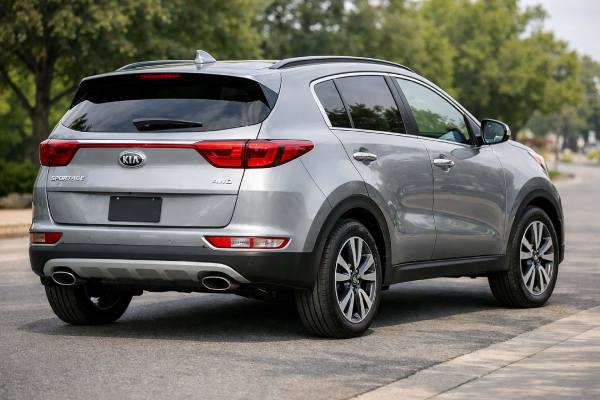
The 2016–2018 Kia Sportage QL 2.0 diesel FWD is one of the most sensible versions of the fourth-generation Sportage if you want torque, space, and long-distance ease without the extra weight and cost of all-wheel drive. Its D4HA 2.0-litre turbo diesel gives the QL the low-rpm pull that the entry petrols never quite deliver, so the car feels calmer with passengers, luggage, or a moderate trailer. Front-wheel drive also keeps the driveline simpler than the AWD models, which matters once these SUVs reach higher mileage. The one point buyers need to understand is timing. Factory launch data clearly lists this exact 136 PS 2.0 diesel in the early QL range, while the upgraded 2018 European Sportage switched to the new 1.6 diesel and 48-volt 2.0 mild-hybrid lineup. In practice, that means some 2018-registered 2.0 diesel Sportages are earlier-spec cars sold later. For used buyers, that is not a problem. It simply makes VIN checks and service history more important.
What to Know
- Strong low-rpm torque makes this diesel Sportage feel far easier than the basic petrol versions.
- Front-wheel drive lowers complexity and usually ownership cost compared with AWD models.
- The QL cabin is roomy, refined enough for long trips, and backed by a genuinely useful boot.
- Short-trip use can accelerate DPF, EGR, and soot-related diesel issues if maintenance is weak.
- A cautious real-world oil-service target is every 10,000 miles or 12 months in harder use.
Contents and shortcuts
- Kia Sportage QL Diesel Overview
- Kia Sportage QL Spec Data
- Kia Sportage QL Trims Safety
- Reliability Patterns and Service Actions
- Maintenance Plan and Buyer Advice
- Driving Impressions and Economy
- Sportage QL Versus Main Rivals
Kia Sportage QL Diesel Overview
The front-wheel-drive Sportage QL with the lower-output 2.0-litre R-series diesel is the quiet achiever of the early QL range. It does not carry the image of the GT Line petrol models, and it lacks the extra traction of the 185 PS diesel AWD, but it answers the needs of many used-SUV buyers better than either. It gives the Sportage enough torque to feel naturally suited to family duty while avoiding the extra driveline parts, tyre costs, and rear-coupling maintenance that come with AWD. Factory figures list 136 PS and 373 Nm, and that torque arrives from just 1,500 rpm. In everyday driving, that translates into fewer downshifts, easier motorway joining, and less strain with a loaded cabin.
The QL generation itself is a strong platform. Kia lengthened the wheelbase to 2,670 mm, stretched overall length to 4,480 mm, kept width at 1,855 mm, and substantially stiffened the structure with far more advanced high-strength steel than before. Those changes are not just brochure filler. They explain why the QL feels more planted and more substantial than the older SL-generation car. The cabin is quieter, the ride is more settled, and the boot is genuinely family useful at 503 litres with the tyre mobility kit or 491 litres with the temporary spare. Fuel capacity also grew to 62 litres, which suits the diesel model especially well on longer journeys.
The diesel engine fits that platform better than the entry petrols. The 1.6 GDi petrol can feel underpowered in a QL body, while the 2.0 diesel has enough low-end torque to move the car with much less effort. This does not make the 136 PS diesel fast, but it does make it naturally relaxed. That is an important distinction. A family crossover rarely needs to be exciting. It needs to feel easy, stable, and unbothered by passengers and luggage, and this drivetrain usually achieves that.
The timeline matters, though. The launch-era QL range in Europe clearly included this 2.0-litre 136 PS engine. By the time Kia rolled out the upgraded 2018 Sportage in Europe, the diesel story had changed: the old 1.7 diesel was replaced by the new 1.6 U3, and the 2.0 diesel became a 48-volt mild-hybrid 185 PS unit. That means “2018 2.0 diesel 136” often describes a late-registered earlier-spec car rather than a true upgraded 2018 European Sportage. Buyers should therefore trust the VIN, engine code, and build date more than the first registration year.
Ownership logic is simple. This Sportage makes sense for drivers who do regular mixed or motorway miles, want diesel torque, and do not need AWD. It makes less sense for drivers who mostly crawl through short urban trips and never let a diesel get properly hot. Use it as intended, and it feels like one of the more rational QL variants. Ignore that, and it can inherit the same emissions-related annoyances as many modern diesels from this era.
Kia Sportage QL Spec Data
Below are the key technical details for the Kia Sportage QL 2.0 CRDi FWD with the D4HA engine. Some workshop-only details vary by VIN, market, and production date, so critical service values should always be confirmed against official service documentation for the exact car.
Powertrain and efficiency
| Item | Kia Sportage FWD (QL) 2.0 CRDi low-output |
|---|---|
| Code | D4HA / 2.0 CRDi R |
| Engine layout and cylinders | Inline-4, DOHC, 4 cylinders, 4 valves per cylinder |
| Bore × stroke | 84.0 × 90.0 mm (3.31 × 3.54 in) |
| Displacement | 2.0 L (1,995 cc) |
| Induction | Turbocharged |
| Fuel system | Common-rail direct injection |
| Compression ratio | 16.0:1 |
| Max power | 136 PS (100 kW) @ 4,000 rpm |
| Max torque | 373 Nm (275 lb-ft) @ 1,500–2,500 rpm |
| Timing drive | Chain |
| Rated efficiency | 4.7–4.6 L/100 km combined, depending on ISG fitment |
| Real-world highway @ 120 km/h | Usually about 6.0–7.0 L/100 km |
Transmission and driveline
| Item | Kia Sportage FWD (QL) 2.0 CRDi low-output |
|---|---|
| Transmission | 6-speed manual |
| Drive type | FWD |
| Differential | Open |
| Final drive | 4.563 |
Chassis and dimensions
| Item | Kia Sportage FWD (QL) 2.0 CRDi low-output |
|---|---|
| Front suspension | MacPherson strut, coil springs, gas-filled dampers |
| Rear suspension | Independent multi-link |
| Steering | Electric rack-and-pinion |
| Steering ratio | Rack-mounted electric steering on this engine family |
| Turns lock-to-lock | 2.71 |
| Turning circle | 5.3 m turning radius, about 10.6 m kerb-to-kerb |
| Brakes | Front vented discs / rear solid discs |
| Front brake diameter | 305 mm (12.0 in) |
| Rear brake diameter | 302 mm (11.9 in) |
| Most popular tyre size | 215/70 R16 |
| Other factory sizes | 225/60 R17, 245/45 R19 |
| Length | 4,480 mm (176.4 in) |
| Width | 1,855 mm (73.0 in) |
| Height | 1,635 mm (64.4 in) |
| Wheelbase | 2,670 mm (105.1 in) |
| Kerb weight | 1,425 kg (3,142 lb) |
| GVWR | 2,000 kg (4,409 lb) |
| Fuel tank | 62 L (16.4 US gal / 13.6 UK gal) |
| Cargo volume | 503 L or 491 L, depending on spare-wheel arrangement |
Performance and capability
| Item | Kia Sportage FWD (QL) 2.0 CRDi low-output |
|---|---|
| 0–100 km/h | 11.5 s |
| Top speed | 176 km/h (109 mph) |
| Towing capacity | 1,400 kg (3,086 lb) braked |
| Unbraked towing | 750 kg (1,653 lb) |
| Payload | About 575 kg (1,268 lb), based on kerb and gross weight |
Fluids and service capacities
| Item | Kia Sportage FWD (QL) 2.0 CRDi low-output |
|---|---|
| Engine oil specification | ACEA C2 / C3 |
| Engine oil viscosity | 5W-30 |
| Engine oil capacity | 7.6 L (8.0 US qt) |
| Coolant | Verify by VIN and service document |
| Transmission fluid | Verify by gearbox code |
| Differential / transfer case | Not applicable for this FWD model |
| A/C refrigerant | Verify from under-bonnet label |
| A/C compressor oil | Verify from workshop data |
| Key torque specs | Use official service literature for wheel nuts, drains, and brake fasteners |
Safety and driver assistance
| Item | Kia Sportage FWD (QL) 2.0 CRDi low-output |
|---|---|
| Euro NCAP | 5 stars |
| Euro NCAP subscores | 90% adult, 83% child, 66% vulnerable road users, 71% safety assist |
| Headlight rating | Market- and lamp-package dependent |
| ADAS availability | AEB, lane support, speed limit info, blind-spot monitoring, and rear cross-traffic alert were trim-dependent |
These figures show the core appeal of this model. It offers a useful boot, solid towing ability for a front-drive compact SUV, and diesel torque that suits the body far better than the smaller petrol engines. The limitation is pace rather than usefulness. It is brisk enough for normal life, but it is not a fast Sportage.
Kia Sportage QL Trims Safety
Trim names changed across Europe, so the best way to understand the 2.0 diesel FWD is by equipment pattern rather than by assuming every market used the same badge ladder. In general, the early QL range moved from practical standard versions to richer family trims and then to sport-styled or premium-looking grades. Kia’s launch material also makes clear that both low- and high-output 2.0-litre diesels were available in standard Sportage form and in GT Line specification. That matters because the same engine can appear in a straightforward ownership-focused trim or in a car with larger wheels, more cabin tech, and more expensive replacement parts.
For used buyers, mid-range versions are usually the sweet spot. They tend to add the features that genuinely improve daily life, such as better infotainment, parking sensors or a reversing camera, folding mirrors, climate upgrades, and nicer seat trim, without necessarily adding the highest tyre and wheel costs. Lower trims are often honest buys if the condition is strong, but they can feel sparse if you do long trips. Top trims look tempting, yet on an older compact SUV they also mean more electronics, more things to diagnose, and, often, 19-inch tyres that cost more and ride less sweetly than the 16-inch or 17-inch setups.
Wheel choice changes the ownership experience more than many buyers expect. On this engine, the 16-inch factory setup is arguably the best match. It keeps the ride calmer, tyre bills lower, and unsprung weight more modest. Seventeen-inch wheels remain a good compromise. Nineteens improve appearance but can make the car feel busier on broken roads and add unnecessary expense on a version whose strength is calm competence rather than sportiness. When inspecting a used Sportage, wheel damage and tyre brand tell you a great deal about how carefully the car has been run.
Safety was one of the QL’s major advances. Kia’s European material states that the fourth-generation Sportage achieved the maximum five-star Euro NCAP rating, and the company highlighted the stronger bodyshell, improved load paths, and much wider use of advanced high-strength steel. Euro NCAP scoring cited 90% for adult occupant protection and 83% for child occupant protection, which is strong for a family SUV from this period. The car also came with multiple airbags, ESC, ABS, ISOFIX anchorages, and a chassis tuned for predictable responses rather than flashiness.
The active-safety picture is good for the era, but buyers should not assume every car has the full list. Depending on market and trim, available systems included Autonomous Emergency Braking, Lane Departure Warning, Lane Keeping Assist, High Beam Assist, Speed Limit Information, Blind Spot Detection, and Rear Cross Traffic Alert. Later specification sheets for the QL family also show how these features spread unevenly through the trim ladder. In practice, that means two outwardly similar 2.0 diesel Sportages can differ a lot in camera, radar, or lane-support equipment. That matters for both daily use and repair cost after windscreen or front-end work.
The practical advice is simple. Shop by condition and equipment together. A well-kept mid-spec diesel with the right options is often a better long-term choice than a neglected top-spec example with expensive wheels and half-working driver aids.
Reliability Patterns and Service Actions
The 2.0 diesel FWD QL is usually dependable when it has been used in a diesel-friendly way. The engine itself is not known as a weak unit, and deleting AWD hardware from the equation removes one whole set of potential future costs. Most problems come not from one fatal design flaw, but from the typical pattern seen in many mid-2010s diesels: short-trip use, delayed maintenance, and owners who treat warning lights as background noise instead of early clues.
The common, lower-cost problems are familiar used-SUV wear items. Rear brake drag or rusty discs can appear on lightly used cars. Suspension links and bushes wear on rough roads. Weak 12 V batteries can trigger stop-start issues and nuisance warnings. Parking sensors, reversing cameras, and infotainment glitches are more likely on better-equipped trims simply because there is more hardware to age. None of these are model-defining disasters, but they help separate a genuinely cared-for Sportage from one that has been run on minimum effort.
The more important medium-cost issues are diesel-specific. DPF loading is the headline one. Cars used mainly for short urban trips often fail to complete regeneration properly, and that can lead to warning lights, limp mode, repeated hot-fan behaviour after short drives, or steadily worsening fuel economy. EGR contamination follows a similar pattern. If soot builds up because the car rarely gets fully hot, the owner may notice hesitation, rougher response, smoke, or fault codes. Intake-side deposits can also dull performance over time. These are not reasons to avoid the engine. They are reasons to buy one that has been used appropriately and serviced on time.
Timing-chain concerns should be treated as a monitoring item rather than a routine expectation. This engine uses a chain, not a belt, but chain-driven diesels still rely heavily on clean oil and sensible intervals. Persistent cold-start rattle, upper-engine noise, or timing-correlation faults deserve attention. They are not everyday failures on this Sportage, yet ignoring them would be expensive.
The launch-era 2.0-litre diesel also used emissions hardware designed for Euro 6b compliance, including a lean NOx trap strategy, rather than the later SCR-and-AdBlue arrangement of the upgraded 2018 European diesel range. That distinction matters in diagnosis. A seller or workshop that treats every QL diesel as mechanically identical may already be telling you they do not really know the car.
Public source material does not provide one neat all-market recall list for this exact model and engine, so the correct buying approach is straightforward: run an official VIN check, ask a Kia dealer to confirm completed campaigns, and request invoices where possible. Do not rely on “no lights on the dash” as proof that software updates, emissions work, or service actions were handled properly. Before buying, ask for full service history, evidence of recent fluid work, and proof the DPF system has not been tampered with. A cold start, an underbody inspection, and a full scan reveal far more than a polished body shell.
Maintenance Plan and Buyer Advice
Kia’s published oil and capacity guide lists the QL 2.0 R diesel at 20,000 miles or 12 months, and Kia’s service-interval guide for several European markets uses the same annual baseline. Those are the factory references, and they are the right values to record. Still, for an older diesel SUV, those figures work best as the outer boundary, not always the ideal real-world target. A car that spends its life on short commutes, cold starts, towing, or repeated stop-start use benefits from shorter oil intervals and closer monitoring of filters, brakes, and emissions hardware.
Practical maintenance schedule
| Item | Practical ownership interval |
|---|---|
| Engine oil and filter | Official baseline 20,000 miles or 30,000 km / 12 months; safer real-world target 8,000–10,000 miles / 12 months in harder use |
| Engine air filter | Inspect every service; replace around 15,000–20,000 miles sooner in dust |
| Cabin air filter | Replace every 12 months or about 10,000–15,000 miles |
| Fuel filter | Replace on schedule and do not delay on higher-mileage cars |
| Coolant | Inspect every service; replace by VIN-correct official schedule |
| Timing chain | No fixed interval; inspect if noisy or if timing faults appear |
| Auxiliary belt and hoses | Inspect every service; replace on age, cracking, or noise |
| Manual gearbox oil | Check for leaks and shift quality; preventative change is sensible in long-term ownership |
| Brake fluid | Replace every 2 years |
| Brake pads and discs | Inspect every service, especially rear brakes |
| Tyres and alignment | Rotate around every 6,000–8,000 miles; check alignment after pothole strikes |
| 12 V battery | Test yearly from year four onward |
| DPF and EGR health | Give the car regular fully warm runs so regeneration can complete properly |
Fluid notes
| Item | Data |
|---|---|
| Engine oil spec | ACEA C2 / C3 |
| Engine oil viscosity | 5W-30 |
| Engine oil capacity | 7.6 L (8.0 US qt) |
| Coolant | Verify by VIN and service literature |
| Gearbox fluid | Confirm by exact transmission code |
| Brake fluid | Confirm by reservoir cap and service documentation |
| A/C refrigerant and oil | Use under-bonnet label and workshop literature |
| Essential torque values | Use official workshop documents for wheel nuts, brake carriers, and drain plugs |
As a buyer’s guide, inspect the vehicle in a sensible order. Start underneath. Look for oil misting, torn boots, poor jacking points, damaged undertrays, corroded brake pipes, and uneven tyre wear. Then perform a proper cold start. The engine should settle cleanly without prolonged chain rattle, excessive smoke, or unstable idle. After that, drive it at mixed speeds. Check clutch take-up, turbo response, steering straightness, brake feel, and whether the car pulls evenly through the mid-range.
Then scan it. This matters more than many private sellers admit. A QL diesel can drive well and still hold stored clues about DPF saturation, boost-control faults, EGR behaviour, or sensor issues. Finally, read the service file critically. The best examples usually show regular oil changes, fuel-filter attention, and use patterns that fit a diesel. The ones to avoid are short-trip cars with vague history, recently cleared warning codes, cheap mixed tyres, and half-answered questions about emissions work.
Long-term durability is good when the car is treated like the diesel tourer it really is. It wants clean fluids, complete heat cycles, and a buyer who values condition over trim theatrics.
Driving Impressions and Economy
On the road, the Sportage 2.0 diesel FWD feels exactly like a compact SUV with the right amount of torque and no need to prove anything. The official figures are modest rather than thrilling: 0–100 km/h in 11.5 seconds and a top speed of 176 km/h. But those numbers do not explain why this version feels better than the base petrols in everyday use. The diesel’s 373 Nm arrives low, so the car moves with much less strain. It feels easier off the line, more relaxed on inclines, and less dependent on constant downshifts when loaded.
That suits the QL chassis well. Kia’s fourth-generation Sportage was engineered to be quieter, more stable, and more mature than the model before it, and you feel that in routine driving. It tracks cleanly on the motorway, copes with rougher secondary roads without becoming floaty, and keeps cabin noise reasonably well controlled for a diesel family SUV. The engine is still a diesel, so some clatter remains when cold or under hard load, but once warm it settles into an unobtrusive cruise better than many buyers expect from the badge alone.
Ride and handling are best described as secure and neutral. The steering is not rich in feel, yet it is accurate enough and helped by the rack-mounted setup fitted to all engines except one left-hand-drive base-petrol exception in some early technical material. On 16-inch wheels, the car rides with a calm, rounded response that suits broken roads and daily commuting. Seventeen-inch tyres still work well. Nineteens sharpen appearance but tend to add little real benefit on this engine. Because this is the front-drive version, it also feels slightly lighter and simpler in its responses than the diesel AWD models, even if ultimate bad-weather traction is lower.
Real-world economy is one of the reasons to buy it, but expectations should stay realistic. Official combined figures of 4.7–4.6 L/100 km look excellent, and the car can approach that only in very gentle use. In ordinary mixed driving, many owners should expect something more like 5.8–6.8 L/100 km. A steady 120 km/h highway run often lands around 6.0–7.0 L/100 km depending on tyres, weather, and load. Dense city use or repeated interrupted regens can push it higher into the 7s or even the 8s. Winter, roof loads, and cheap tyres all widen the gap between brochure and reality.
For towing and load carrying, this is a competent rather than ideal tool. Kia lists 1,400 kg braked for this FWD low-output 2.0 diesel, which is enough for light caravans, bike trailers, or small utility duty. The engine has enough mid-range strength to cope, but front-wheel drive still limits traction on wet ramps or steep launches, and full-load economy will drop noticeably. In return, the day-to-day ownership case is stronger. For buyers who mostly stay on paved roads and want a relaxed diesel family SUV rather than a lifestyle off-roader, this version often feels like the most rational compromise in the range.
Sportage QL Versus Main Rivals
The Sportage QL 2.0 diesel FWD competes best when you judge it as a used-family SUV rather than as a badge statement. Its strongest arguments are torque, cabin room, motorway refinement, and value. Its weak points are the familiar ones for an older diesel: emissions complexity, modest performance on paper, and less brand cachet than some German rivals.
The closest natural alternative is the related Hyundai Tucson from the same era. The broad engineering philosophy is similar, and in some markets the Tucson can be cheaper for an almost identical ownership proposition. The Sportage often feels slightly more stylish and a little more robust inside, while the Hyundai can win on price or availability. In used form, condition matters far more than whether the grille says Kia or Hyundai.
Against a Volkswagen Tiguan 2.0 TDI front-drive model, the Sportage usually loses on badge prestige and, in some trims, cabin finish. But it often wins on value, and it can feel like the less risky buy when you factor purchase price against expected upkeep. The Tiguan may drive with slightly more precision, yet the Kia often makes the stronger sense-per-dollar case.
Compared with a Mazda CX-5 diesel, the Kia is less engaging from the driver’s seat but usually calmer in character. The Mazda appeals more to people who notice steering feel and body control first. The Sportage appeals more to buyers who want space, torque, and a straightforward motorway companion. Against a Honda CR-V or Toyota RAV4 diesel from the same broad era, the Kia often feels more contemporary inside for the money, even if some buyers still place extra weight on Japanese brand reputation. Those comparisons matter because the Sportage does not need to be the class hero in every category. It only needs to offer a convincing balance.
Its biggest used-market advantage is that balance. A well-kept 2.0 diesel FWD QL can undercut more fashionable rivals while still delivering strong family practicality, a five-star Euro NCAP rating, useful towing ability, and a mature road manner. The front-drive layout also helps it versus the diesel AWD Sportage if your climate and usage do not truly demand extra traction. There is simply less hardware to age.
The people who should buy this Sportage are easy to define. They are drivers who do real road miles, want diesel torque, care about space, and prefer a rational value choice over a premium badge. The people who should avoid it are equally clear: buyers who do only short urban trips, dislike diesel maintenance realities, or want the security of AWD for regular snow, ramps, or unpaved work. For everyone else, the 2.0 diesel FWD remains one of the more underrated QL variants precisely because it is so grounded in practical use rather than showroom drama.
References
- Kia Sportage 2016 (Press Kit)
- Press information 2018 (Press Kit)
- Engine Oil Grades and Capacities – Kia 2023 (Service Information)
- Kia Service Intervals 2023 (Service Information)
- Kia Sportage – Euro NCAP Results 2015 2015 (Safety Rating)
Disclaimer
This article is for informational purposes only and is not a substitute for professional diagnosis, inspection, or repair. Specifications, torque values, intervals, procedures, and even equipment fitment can vary by VIN, market, production date, and trim, so always verify critical details against the correct official service documentation for the exact vehicle.
If this guide helped you, please consider sharing it on Facebook, X, or another social platform to support our work.