
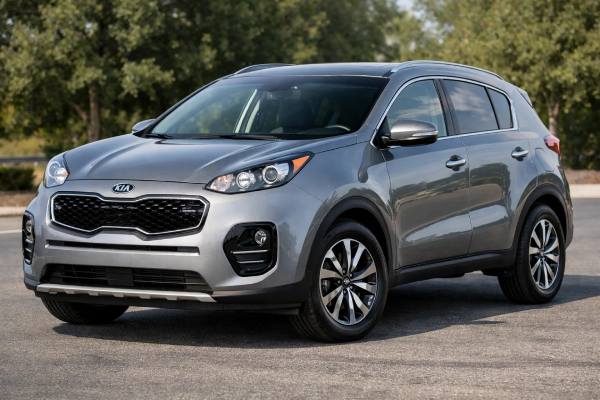
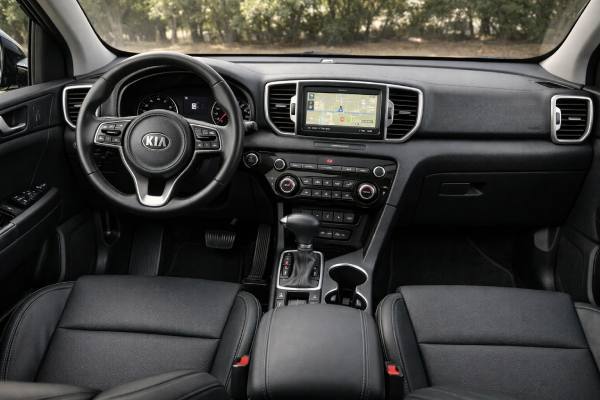
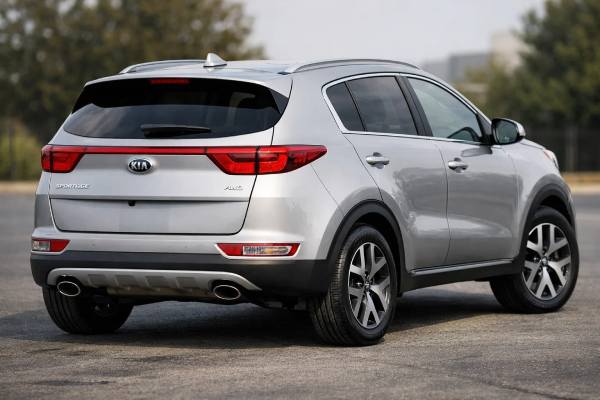
The 2016–2018 Kia Sportage QL with the 2.0-liter D4HA diesel is one of the most capable versions of the fourth-generation Sportage for drivers who cover real distance. In its front-wheel-drive manual form, this engine brings 185 hp-class output and a stout 400 Nm torque figure, which gives the compact SUV an easy, long-legged character on highways and with a trailer attached. It also benefits from the stronger QL body shell, a well-judged suspension setup, and a cabin that still feels solid years later. The appeal is clear: good towing ability, strong mid-range pull, and lower real-world fuel use than the petrol range. The caution is just as important. This is a modern Euro 6 diesel, so service history, oil quality, fuel-filter care, and DPF-friendly use matter more than a glossy trim badge. Buy a clean, well-documented example, and this Sportage can still feel like a very sensible all-round family SUV.
What to Know
- Strong 400 Nm torque makes this one of the easiest QL Sportage engines for motorway and towing use.
- Front-wheel-drive manual form keeps the drivetrain simpler than the AWD automatic alternatives.
- Official combined economy around 4.8–4.9 L/100 km is a genuine advantage for high-mile drivers.
- The main caveat is diesel-use pattern: repeated short trips can create DPF and EGR-related headaches.
- Engine oil service is typically every 20,000 km or 12 months, though shorter intervals make sense on older cars.
What’s inside
- Kia Sportage QL Diesel Profile
- Kia Sportage QL Data Sheet
- Kia Sportage QL Trims and Safety Tech
- Reliability Patterns and Service Alerts
- Upkeep Schedule and Purchase Checks
- Real Driving and Economy
- Where It Sits Among Rivals
Kia Sportage QL Diesel Profile
This is the Sportage for drivers who want the fourth-generation QL body at its most useful rather than its most fashionable. The D4HA 2.0 CRDi sits above the smaller 1.7-liter diesel and gives the Sportage the sort of torque output that changes how the vehicle feels in everyday driving. On paper, the step from a lower-powered diesel to the 185 hp version may not look dramatic. On the road, the difference is easy to feel. The engine has the weight and shove that suit the Sportage’s size, especially when the car is full of passengers, climbing a long grade, or towing.
What makes this exact version interesting is that the original QL range allowed the high-output 2.0 diesel with front-wheel drive and a six-speed manual. That is worth emphasizing because many buyers assume the 185 hp diesel was always an AWD-only or automatic-only proposition. It was not, at least in the early QL range. In practice, the FWD manual gives you most of the engine’s appeal while avoiding some of the extra mass and complexity that come with all-wheel drive and the automatic transmission.
The engineering recipe is straightforward and strong. You get a 1,995 cc turbocharged common-rail diesel, a six-speed manual gearbox, a front-drive layout, a multi-link rear suspension, and a body shell that was a real step forward for the Sportage line. Kia improved rigidity, refinement, and cabin quality significantly with the QL. Even now, that matters. A healthy QL Sportage still feels more mature than many older compact SUVs when you shut the door, settle onto the motorway, or drive over a broken secondary road.
There is one important year-range nuance. The original 2016 QL technical material clearly supports the 185 PS diesel in front-wheel-drive manual form. By the 2018 update, Kia reworked the diesel lineup, adding the new 1.6 U3 diesel and introducing the 185 PS EcoDynamics+ mild-hybrid story. In many markets, late-2018 diesel range structure no longer mirrored the original early-QL lineup exactly. That means the title “2018 Sportage 2.0 diesel” does not automatically guarantee the same hardware as a 2016 or 2017 car. VIN-level verification matters.
That detail actually improves the buyer’s guide rather than complicating it. It reminds you that this is not a badge-led purchase. The best example is the one whose specification, market, and maintenance history all line up. On the right car, the 2.0 diesel makes the Sportage feel like a compact SUV with genuine long-distance ability. On the wrong car, poor short-trip use and weak servicing can turn a very good drivetrain into a costly one. This version rewards careful buyers.
Kia Sportage QL Data Sheet
The specifications below focus on the original 2016–2018 Kia Sportage QL 2.0 CRDi 185 front-wheel-drive six-speed manual where official data is available. A few late-2018 market details changed with the updated diesel lineup, so always verify by VIN and country-specific brochure if you are buying a specific car.
| Powertrain and efficiency | Value |
|---|---|
| Code | D4HA |
| Engine layout and cylinders | Inline-4, DOHC, 16 valves, 4 valves per cylinder |
| Bore × stroke | 84.0 × 90.0 mm (3.31 × 3.54 in) |
| Displacement | 2.0 L (1,995 cc) |
| Induction | Turbocharged |
| Fuel system | Common-rail direct injection |
| Compression ratio | 16.0:1 |
| Max power | 185 PS (136 kW) @ 4,000 rpm |
| Max torque | 400 Nm (295 lb-ft) @ 1,750–2,750 rpm |
| Timing drive | Chain |
| Rated efficiency | 4.9 / 4.8 L/100 km combined, depending on ISG fitment |
| Rated efficiency in mpg | About 48.0 / 49.0 mpg US, 57.7 / 58.8 mpg UK |
| Real-world highway @ 120 km/h (75 mph) | Usually around 5.8–6.5 L/100 km in good condition |
| Transmission and driveline | Value |
|---|---|
| Transmission | 6-speed manual |
| Drive type | Front-wheel drive |
| Final drive | 3.041 |
| Differential | Open front differential |
| Automatic note | 6-speed automatic was paired with AWD, not this exact FWD version |
| Chassis and dimensions | Value |
|---|---|
| Suspension, front | MacPherson strut, coil springs, anti-roll bar |
| Suspension, rear | Multi-link, coil springs, anti-roll bar |
| Steering | Electric motor-driven rack-and-pinion |
| Steering ratio | 14.34:1 |
| Turns lock-to-lock | 2.71 |
| Brakes | 305 mm ventilated front discs, 302 mm solid rear discs |
| Wheels and tyres | 215/70 R16 standard; 225/60 R17 or 245/45 R19 depending on trim |
| Length | 4,480 mm (176.4 in) |
| Width | 1,855 mm (73.0 in) |
| Height | 1,635 mm (64.4 in) |
| Wheelbase | 2,670 mm (105.1 in) |
| Turning circle | 5.3 m listed in Kia technical data |
| Kerb weight | 1,529 kg (3,371 lb) |
| GVWR | 2,235 kg (4,928 lb) |
| Fuel tank | 62 L (16.4 US gal / 13.6 UK gal) |
| Cargo volume | 503 L (17.8 ft³) VDA with tyre mobility kit; 491 L (17.3 ft³) with spare |
| Performance and capability | Value |
|---|---|
| 0–100 km/h | 10.3 s |
| Top speed | 186 km/h (116 mph) |
| Braking distance | Tyre- and test-dependent; no single universal factory figure published |
| Towing capacity | 2,200 kg (4,850 lb) braked |
| Unbraked towing | 750 kg (1,653 lb) |
| Payload | About 706 kg (1,557 lb), based on published curb and gross weight |
| Fluids and service capacities | Value |
|---|---|
| Engine oil | ACEA C2 / C3, SAE 5W-30; 7.6 L (8.0 US qt) |
| Coolant | Ethylene-glycol phosphate-based coolant; verify exact refill quantity by VIN and workshop data |
| Manual transmission fluid | Verify by gearbox code before refill |
| Differential / transfer case | Not applicable to this FWD model |
| A/C refrigerant | Verify by under-hood label before service |
| A/C compressor oil | Verify by under-hood label before service |
| Wheel nut torque | Commonly 107–127 Nm (79–94 lb-ft) |
| Safety and driver assistance | Value |
|---|---|
| Euro NCAP | 5 stars |
| Adult occupant | 90% |
| Child occupant | 83% |
| Safety assist | 71% |
| Standard passive safety | Front, side, and curtain airbags; ISOFIX points in second row |
| ADAS availability | Market- and trim-dependent: AEB, LKAS, HBA, SLIF, BSD, and RCTA were available on higher-spec cars |
The technical picture explains the appeal well. This is not a featherweight SUV, but the torque-rich diesel and useful tow rating give it a calm, capable character. The numbers also show why trim matters. Wheel size changes the ride, and market specification changes the safety and convenience story more than many used listings admit.
Kia Sportage QL Trims and Safety Tech
The trim structure for the 185 hp diesel varied by country, which is normal for European-market Sportage models. Even so, there are clear patterns. The higher-output 2.0 CRDi was typically not positioned as an entry-level fleet engine. It was usually attached to better-equipped versions of the QL, and in many markets it was available on standard Sportage trims as well as the sportier GT Line. That is good news for buyers because the stronger diesel often arrives with the equipment that makes the QL feel properly modern.
GT Line is the obvious visual marker. These cars commonly bring the 19-inch wheel package, darker exterior trim pieces, a more aggressive bumper treatment, LED “ice cube” fog lamps, and sportier cabin details such as a different steering wheel and trim finish. Standard or mid-range trims usually ride on 16- or 17-inch wheels and often make more sense as long-term daily drivers because they combine the same useful engine with a softer ride and cheaper tyre replacement.
Wheel choice is not a cosmetic footnote on this model. The Sportage chassis is good enough that tyre and wheel setup genuinely change the ownership feel. A 16- or 17-inch diesel Sportage is quieter, rounder over bad surfaces, and usually less expensive to keep happy. A GT Line on 19s looks better in photos and may have more desirable equipment, but it can feel busier on rough roads and more exposed to poor tyre choices. In the used market, that matters.
Safety is one of the stronger QL traits. The fourth-generation Sportage earned a five-star Euro NCAP result, with a strong 90 percent adult-occupant score and 83 percent for child-occupant protection. That result did not come from software alone. Kia strengthened the body structure substantially, using a much larger share of advanced high-strength steel than in the previous Sportage. In practical terms, the QL feels structurally sound and still compares well as a family crossover body shell.
Standard passive safety equipment was broad for the class. Front airbags, front side airbags, curtain airbags, electronic stability systems, and ISOFIX anchor points were part of the basic safety story. The bigger year-and-trim differences are in active safety. Depending on market and specification, buyers could get Autonomous Emergency Braking, Lane Keeping Assist, High Beam Assist, Speed Limit Information Function, Blind Spot Detection, and Rear Cross Traffic Alert.
The 2018 update improved that story further. Kia’s revised Sportage added newer active-driver aids and upgraded infotainment, and depending on market there were changes to trim packaging that broadened the availability of features buyers now actively search for. That means a later car can be meaningfully better equipped than an earlier one even when the core platform feels the same.
The practical advice is simple. Decode the car, not just the badge. Check whether it actually has AEB, blind-spot monitoring, LED lighting, larger brakes, or premium audio if those details matter to you. A seller’s advert often compresses several trims into one vague description. On the QL Sportage, the equipment list changes ownership quality more than many buyers expect.
Reliability Patterns and Service Alerts
The D4HA 2.0 CRDi is generally a strong fit for the QL Sportage, but it is still a modern diesel. That means reliability is closely tied to how the car was used, not just how many miles it covered. A high-mile motorway car with disciplined servicing can be a better purchase than a low-mile short-trip car that spent years clogging its emissions hardware and stretching service intervals.
The most common trouble pattern is usage-related rather than catastrophic. Cars that mostly do short city runs can build soot load in the EGR and intake path, struggle to complete DPF regenerations, dilute oil, and feel flat or hesitant. The typical symptom chain is familiar: rising fuel use, frequent cooling-fan activity after shutdown, a more active idle, sluggish response, or a diesel particulate filter warning. The likely causes are repeated interrupted regenerations, sticky EGR operation, or poor servicing. The remedy is proper diagnosis, not parts darts. On many cars, the answer starts with checking fault history, confirming sensor behavior, and then cleaning, repairing, or updating where necessary.
A useful issue map looks like this:
- Common, low to medium cost: worn glow plugs, tired batteries, weak intake hoses, dirty MAP or boost-control plumbing, and neglected fuel filters.
- Occasional, medium cost: EGR fouling, DPF saturation from urban use, intercooler or boost-pipe leaks, and clutch wear on heavily worked manual cars.
- Occasional, medium to high cost: injector imbalance, turbo wear on poorly serviced engines, or dual-mass flywheel fatigue on hard-used cars.
- Less common, but important: timing-chain noise on neglected engines, cooling-system leaks, and corrosion on underbody hardware in harsh winter climates.
The drivetrain layout helps here. Because this exact car is FWD manual, it avoids AWD coupling concerns and the extra heat and complexity of the automatic version. That does not remove all risk, but it narrows the list. In real ownership, the engine and its emissions hardware are the focus, not the rear driveline.
Software and calibration history can matter more than buyers realize. On modern diesels, updates can improve regeneration logic, warning strategies, and general driveability. Even when there is no dramatic recall headline, dealer software history is still worth asking about. The same goes for driver-assistance calibration on later cars. If a Sportage has had windscreen replacement, front-end repair, or sensor work, the ADAS functions should be treated as check items, not assumptions.
Recall and service-action verification should always be done by VIN. Kia’s own recall support pages make that clear, and that matters because recall exposure varies by market, build date, and installed equipment. For this European diesel, public model-wide recall chatter is not as loud as it is for some North American Kia powertrains, but that is not the same thing as a guarantee. The right approach is simple: run the VIN, keep dealer records, and do not rely on the seller saying “everything has been done.”
The pre-purchase check list should include cold start, smoke check, smooth boost delivery, clean clutch take-up, stable idle, and proof of regular oil and fuel-filter service. Also inspect the underbody, brake lines, heat shields, and suspension arms carefully. A diesel Sportage with the wrong life can age quickly. A diesel Sportage with the right life can remain a very solid vehicle.
Upkeep Schedule and Purchase Checks
A good maintenance strategy for this engine is conservative rather than heroic. Kia’s published oil guide lists the 2016–2018 QL 2.0 R Diesel at 7.6 liters with ACEA C2 or C3 5W-30 oil and a nominal 20,000 km or 12-month service interval. That is workable on the right use pattern, but as these vehicles age, many owners are better off shortening the oil interval. On a turbo diesel with DPF hardware, cleaner oil is cheap insurance.
A practical schedule for a used 2.0 CRDi Sportage looks like this:
- Engine oil and filter: every 10,000–15,000 km or 12 months on most used examples, even though the official oil guide allows longer.
- Fuel filter: replace on schedule and sooner if fuel quality is suspect or starting becomes difficult.
- Engine air filter: inspect at every service and replace as needed, usually around 15,000–30,000 km depending on dust.
- Cabin air filter: yearly or about every 15,000 km.
- Coolant: inspect regularly; replace by official schedule and verify exact coolant type before refill.
- Manual transmission fluid: if history is unknown, changing it preventively is sensible.
- Brake fluid: replace by time, not just mileage. Two years is a good working rule.
- Brake pads, rotors, hoses, and sliders: inspect at every service.
- Auxiliary belt and tensioners: inspect from midlife onward, especially on higher-mile cars.
- Timing chain: no routine replacement interval; inspect by noise, timing-correlation faults, and service history.
- 12 V battery: test yearly once it reaches four years old.
- DPF-friendly use: give the car regular longer runs so regeneration can finish properly.
Key planning figures are straightforward enough to matter. Engine oil capacity is 7.6 L. The correct oil class is ACEA C2 or C3 in 5W-30 grade. Wheel-nut torque is commonly in the 107–127 Nm range. Beyond that, exact coolant fill, gearbox-fluid quantity, refrigerant charge, and model-specific torque values should be confirmed with VIN-specific service information before major work.
The buyer’s inspection checklist should stay disciplined:
- Full service history with invoices.
- Proof of regular oil service using the correct diesel-spec oil.
- Fuel-filter replacement history.
- No DPF or engine-management warnings.
- Clean cold start with no excessive smoke or chain noise.
- Smooth turbo response without whistle, surge, or limp-mode behavior.
- Clutch that does not slip under load.
- Even tyre wear and quality tyres in the correct size.
- No coolant staining, boost-oil residue, or underbody damage.
- VIN-based recall and campaign check.
Which versions are best? An early 2016–2017 front-drive manual is attractive if you want the exact simpler D4HA FWD formula described here. A late-2018 car can be attractive for newer safety tech and emissions hardware, but it needs closer attention because some markets restructured the diesel lineup. In both cases, the best trim is the best-kept one.
The long-term durability outlook is good with conditions. The body and chassis age well. The interior generally holds together respectably. The engine is durable when serviced correctly and used as a diesel should be used. The danger is not the engine’s design alone. It is neglect, short-trip use, and vague maintenance history.
Real Driving and Economy
The strongest argument for this Sportage is how natural the 2.0 diesel feels in the chassis. Compact SUVs can sometimes feel under-engined, especially when loaded. This one usually does not. The 400 Nm torque output arrives in the sort of rev range where normal drivers actually use it, so the car feels relaxed rather than urgent. That makes it better at daily work than the 0–100 km/h number suggests.
Officially, the FWD manual reaches 100 km/h in 10.3 seconds and tops out at 186 km/h. Those are decent numbers, but they undersell the real character. What you notice first is the easy surge in the middle of the rev range. The Sportage does not need constant downshifts on a motorway incline, and it does not feel breathless with four people aboard. That is the real value of the larger diesel.
Ride and handling are mature rather than sporty. The suspension is fully independent front and rear, and Kia tuned the QL to feel composed on poor European surfaces. Straight-line stability is one of its best traits. The car tracks confidently at speed, resists crosswind fuss fairly well, and does not feel loose or brittle. Steering feedback is not especially rich, but the rack is quick enough that the Sportage never feels clumsy.
Noise, vibration, and harshness are good for the class and era, though still recognizably diesel. There is some cold-start clatter and a clear low-speed diesel note, but once warm and settled into a cruise, the car becomes quieter than many older diesel SUVs. On smaller wheels, it is a better long-distance companion than many buyers expect. On 19-inch tyres, more road texture and impact harshness come through the cabin.
Real-world fuel use is one of the engine’s biggest strengths, but it depends heavily on use pattern:
- City: around 7.0–8.0 L/100 km in dense urban work, sometimes worse if regenerations are frequently interrupted.
- Highway at 100–120 km/h: around 5.8–6.5 L/100 km.
- Mixed driving: around 6.2–7.0 L/100 km.
Cold weather, larger wheels, roof load, clogged filters, and repeated short trips can worsen those figures. Conversely, a healthy long-run car can get surprisingly close to the official combined number on a gentle trip. This is the sort of diesel that rewards steady-speed work.
Braking feel is confident and predictable. The standard 305 mm front and 302 mm rear setup is more than adequate for the vehicle’s role, and brake performance only really suffers when tyres are poor or maintenance has been deferred. As with many SUVs, tyre choice changes the result more than the brochure figures suggest.
For towing and carrying weight, this engine is easily the pick of the non-electrified FWD Sportage range. The 2,200 kg braked towing figure is serious for a compact SUV of this class, and the engine’s torque means it does not have to work outrageously hard to do useful towing. The limits are traction and heat management under severe use, not basic strength. With a trailer, expect fuel use to rise sharply, often 20–35 percent depending on speed and load.
The verdict from the driver’s seat is simple. This is not the most exciting Sportage. It may be the most convincing one for buyers who actually drive.
Where It Sits Among Rivals
Against its main rivals, the 2.0 CRDi Sportage FWD makes the strongest case as the practical high-mileage choice. It is not the sharpest handler in the segment, and it is not the most premium inside, but it combines useful torque, a strong tow rating, sensible packaging, and generally manageable ownership when bought carefully.
Against a Nissan Qashqai diesel of the same period, the Sportage usually feels more substantial and more capable under load. The Kia has the stronger towing story and, in 185 hp form, the deeper reserve of performance. The Qashqai can feel lighter and easier in town, but the Sportage is the more confident long-distance tool.
Against a Hyundai Tucson, the comparison is naturally close because the two share much of their engineering philosophy. The decision often comes down to styling, specification, and the exact car in front of you. The Sportage has the bolder design and, in many trims, the slightly richer visual identity. The Tucson tends to be the more conservative choice. In used form, documented maintenance should decide this matchup more than brand preference.
Against a Volkswagen Tiguan diesel, the Kia gives up a little cabin polish and some badge prestige, but it often wins on value and equipment per euro or pound. The Tiguan may feel more premium in some trims, yet the Sportage counters with strong torque, a good chassis, and a usually lower buy-in cost. For a buyer who wants an honest used SUV rather than a prestige-adjacent one, the Kia can make a lot of sense.
Against a Mazda CX-5 diesel, the Sportage is less engaging to drive. The Mazda feels more connected and often more polished dynamically. The Kia answers with a more relaxed ownership feel, good practicality, and, depending on market, a better used-price position. Buyers who prioritize steering feel and cornering balance usually lean Mazda. Buyers who prioritize value, towing, and a straightforward family-SUV brief often find the Kia easier to justify.
The biggest internal rival, though, may be another Sportage engine. A petrol QL can be the better choice for low-mile, urban owners who do not want to think about DPF health. A smaller diesel can be enough for cost-focused commuting. The 2.0 D4HA FWD is the right Sportage for a driver who regularly does longer trips, carries weight, or tows, and who values torque more than warm-hatch responses.
That buyer profile is important. This is a use-case vehicle. In the right hands, it is arguably one of the most rational versions of the QL Sportage. In the wrong hands, especially with short-trip urban use and lazy servicing, it loses much of its advantage.
The final verdict is clear. The 2016–2018 Kia Sportage QL 2.0 diesel FWD is not the universal best compact SUV of its era. It is one of the better ones for real-distance drivers who want a roomy, capable, well-built family crossover with strong mid-range performance and useful towing ability. Its success as a used buy depends less on trim glamour and more on diesel-appropriate use, proper servicing, and VIN-level verification. Choose on history first, and this Sportage can still be a very satisfying SUV.
References
- Sportage 2016 (Press Kit)
- The new Kia Sportage 2018 (Press Kit)
- Five-star safety ratings for all-new Kia Optima and Sportage 2015 (Safety Rating)
- Engine Oil Grades and Capacities – Kia 2023 (Service Guide)
- Kia Recalls 2026 (Recall Information)
Disclaimer
This article is for informational purposes only and is not a substitute for professional diagnosis, repair, or market-specific technical advice. Specifications, torque values, service intervals, capacities, procedures, equipment, and recall status can vary by VIN, market, model year, trim, and emissions package, so always verify against the official Kia service documentation for the exact vehicle before carrying out maintenance or repair work.
If this guide helped you, please share it on Facebook, X, or another platform to support our work.