
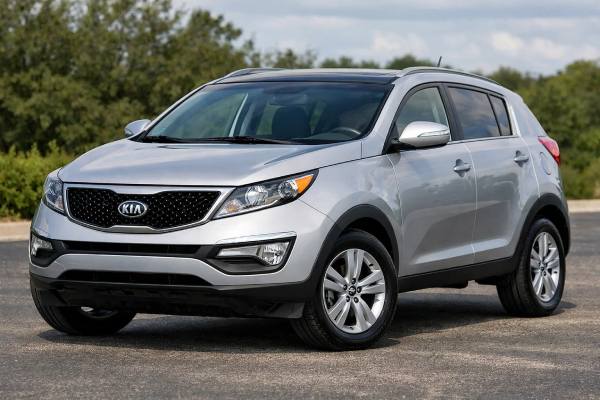
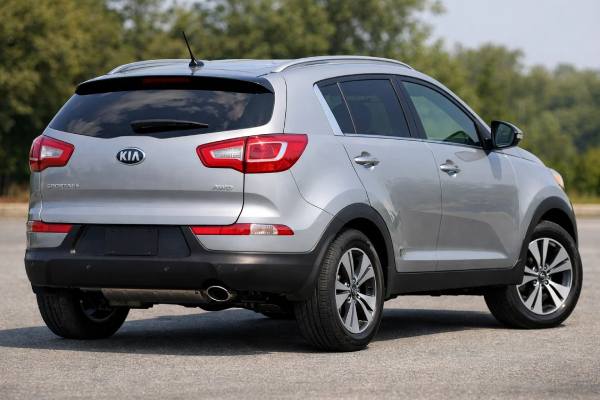
The 2010–2013 Kia Sportage FWD with the 1.7-liter D4FD diesel is the efficiency-focused version of the third-generation SL line. It gives up all-wheel drive, but that trade makes sense for many owners. You get lower weight, lower running costs, less driveline drag, and simpler maintenance, while still keeping the Sportage’s useful cabin, raised seating position, and clean, modern body shape. The key engineering story is the U-II diesel itself: a small common-rail turbo-diesel tuned for torque rather than headline speed.
That character defines the ownership experience. The 1.7 CRDi is at its best on long commutes, mixed rural driving, and everyday family use where economy matters more than brisk acceleration. It also sits in the sweet spot of the early SL range, before later facelift complexity and before emissions hardware age became more of a risk. Today, this version still makes sense as a practical used crossover, but only if its diesel system, service history, and underbody condition have been looked after carefully.
What to Know
- The 1.7 CRDi is one of the most economical engines in the early SL Sportage range.
- FWD versions are lighter, simpler, and usually cheaper to maintain than AWD 2.0 diesel models.
- The SL body offers a roomy cabin and a genuinely useful boot for a compact SUV.
- Short-trip use can create DPF, EGR, and intake-soot problems on neglected cars.
- Kia lists a 20,000 km / 12 month service interval for 2011–2015 Sportage models in this family.
Contents and shortcuts
- Kia Sportage SL in Context
- Kia Sportage SL Data Sheet
- Kia Sportage SL Equipment and Protection
- Failure Patterns and Recall Work
- Maintenance Map and Buyer Filters
- Driving Character and Diesel Economy
- Rival Matchups and Value
Kia Sportage SL in Context
The SL-generation Sportage was a major shift for Kia. It moved the model further away from the utilitarian feel of older Sportages and much closer to the modern compact crossover formula that buyers now expect. The body became sleeker, the cabin gained a more car-like dashboard and seating layout, and the engineering emphasis moved toward road comfort, safety, and everyday usability rather than rugged off-road character. In front-wheel-drive 1.7 diesel form, that transition is especially clear.
This version was never the fast or glamorous choice in the range. Instead, it was the rational one. The D4FD 1.7-liter U-II diesel was added as the economy-led engine for European buyers who wanted lower fuel and tax costs without moving down to a smaller hatchback. Paired with front-wheel drive and a 6-speed manual, it turned the Sportage into a sensible long-distance family tool rather than a lifestyle SUV. That matters now because the used market often rewards the simpler version. A 1.7 FWD avoids the extra mass, complexity, and service burden of the AWD transfer hardware, while still giving owners most of the practicality that makes the Sportage attractive.
On the road, that translates into a clear personality. The 1.7 diesel is not quick, but it has enough mid-range pull for real use. Its strength is not outright punch from a standstill. It is the way it settles into steady progress once moving, especially on A-roads and motorways. If your driving pattern is mostly urban stop-start traffic with repeated cold starts, this is not the best Sportage engine. If your pattern includes frequent medium or long runs, it is one of the better choices.
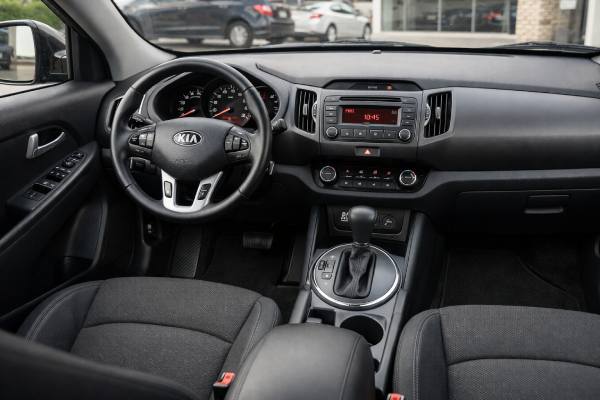
The SL’s packaging also helps its case. The cabin is wide enough to feel family-friendly, rear-seat room is useful rather than token, and the boot is large for the class. Visibility is decent, the higher driving position is easy to adapt to, and the controls are straightforward. Those things sound ordinary, but they matter in long-term ownership more than styling trends do.
The trade-off is that this remains an early-2010s diesel crossover. It does not have the polish of a later Tucson or the refined steering feel of the best Honda CR-Vs. Safety is strong for its era but no longer exceptional. And a neglected diesel version can turn cheap to buy and expensive to fix very quickly. As a used proposition, then, the 1.7 FWD Sportage is best seen as a smart, efficient family crossover that rewards the buyer who values history and condition over trim badges and visual shine.
Kia Sportage SL Data Sheet
The 2010–2013 Sportage 1.7 CRDi FWD was sold across several European markets with small variations in wheel size, trim weight, emissions tuning, and economy figures. The table below reflects the common early SL 1.7 U-II diesel manual specification and flags the areas where market or equipment differences can shift the numbers slightly.
| Powertrain and efficiency | Specification |
|---|---|
| Engine code | D4FD |
| Engine layout and cylinders | Inline-4, 4 cylinders, DOHC, 4 valves per cylinder |
| Bore × stroke | 77.2 × 90.0 mm (3.04 × 3.54 in) |
| Displacement | 1.7 l (1,685 cc) |
| Induction | Turbocharged, intercooler |
| Fuel system | Common-rail direct injection |
| Compression ratio | About 17.0:1 |
| Max power | 115 hp (85 kW) @ 4,000 rpm |
| Max torque | 255 Nm (188 lb-ft) @ about 1,800 rpm |
| Timing drive | Chain |
| Rated efficiency | About 5.3–5.5 l/100 km (43–44 mpg US / 51–54 mpg UK) combined |
| Real-world highway @ 120 km/h | Usually about 6.2–6.8 l/100 km in healthy condition |
| Transmission and driveline | Specification |
|---|---|
| Transmission | 6-speed manual |
| Drive type | FWD |
| Differential | Open front differential |
| Chassis and dimensions | Specification |
|---|---|
| Suspension front | MacPherson strut, coil springs, anti-roll bar |
| Suspension rear | Independent multi-link rear suspension |
| Steering | Electric power steering, rack-and-pinion |
| Brakes | Front ventilated discs, rear solid discs |
| Typical brake diameters | Around 280 mm front and 262 mm rear on common 1.7 trims |
| Wheels and tyres | Common size 215/70 R16; 17-inch packages also appeared on higher trims |
| Ground clearance | About 170 mm (6.7 in), market and wheel dependent |
| Length | 4,440 mm (174.8 in) |
| Width | 1,855 mm (73.0 in) |
| Height | About 1,635 mm (64.4 in) |
| Wheelbase | 2,640 mm (103.9 in) |
| Turning circle | About 10.6 m (34.8 ft) |
| Kerb weight | About 1,490 kg (3,285 lb) |
| GVWR | About 1,940 kg (4,277 lb) |
| Fuel tank | 58 l (15.3 US gal / 12.8 UK gal) |
| Cargo volume | About 564 l (19.9 ft³) seats up and 1,353 l (47.8 ft³) seats folded |
| Performance and capability | Specification |
|---|---|
| 0–100 km/h | About 11.9–12.3 sec depending on trim and test method |
| Top speed | About 173 km/h (107 mph) |
| Braking distance | Not consistently published for the exact 1.7 FWD trim in open official sources |
| Towing capacity | About 1,200 kg (2,646 lb) braked, 750 kg (1,653 lb) unbraked |
| Payload | About 450 kg (992 lb) |
| Fluids and service capacities | Specification |
|---|---|
| Engine oil | ACEA C3 5W-30; 5.3 l (5.6 US qt) |
| Coolant | Phosphate-based ethylene-glycol coolant mix; capacity varies by market, commonly around 7 l total |
| Manual transmission fluid | Verify by gearbox code; commonly around 1.8–1.9 l of GL-4 manual transmission oil |
| Differential / transfer case | Not applicable on FWD |
| Brake fluid | DOT 3 or DOT 4, market dependent |
| A/C refrigerant | Verify on under-bonnet label before service |
| Key torque specs | Wheel-fastener torque should be confirmed by VIN and wheel type; commonly near 100–110 Nm |
| Safety and driver assistance | Specification |
|---|---|
| Euro NCAP | 5 stars; 93% adult, 86% child, 49% pedestrian, 86% safety assist |
| IIHS | 2012–13 Top Safety Pick in period criteria; later small overlap result applying to the generation was Poor |
| Headlight rating | No widely used period IIHS headlight score for this trim |
| ADAS suite | No AEB, ACC, LKA, BSD, or modern lane-centering features |
The most important technical point here is balance. This Sportage is not about peak output. It is about giving the SL body enough torque and economy to work well in everyday use. That remains its strongest selling point.
Kia Sportage SL Equipment and Protection
Trim names for the early SL Sportage vary by market, so a buyer should not rely too heavily on badges alone. In the UK, you may see straightforward number-based grades. In other European markets, trim naming can shift to LX, EX, Vision, Concept, or local special editions. For the 1.7 CRDi FWD, the key point is that this engine was usually positioned as the economy-friendly mainstream choice rather than the premium or sporty one. That means equipment levels can range from very basic to surprisingly well-equipped.
Entry trims often came with cloth seats, manual air conditioning, 16-inch wheels, a simpler audio setup, and fewer cosmetic extras. Mid-grade versions usually added automatic climate control, better infotainment, rear parking sensors, upgraded trim materials, cruise control, Bluetooth, and 17-inch wheels. Higher-spec examples sometimes include leather or part-leather trim, heated front seats, panoramic glass roof, navigation, reversing camera, and more exterior brightwork. Those extras are nice, but on a used 1.7 diesel, mechanical condition is still more important than cabin toys.
Quick identifiers help when shopping. Smaller wheels and simpler trim usually point to lower-spec, lighter cars that often ride slightly better and cost less to maintain. ISG or EcoDynamics badging may indicate stop-start calibration and economy-led setup. Navigation units, camera systems, and panoramic roofs are most common on upper trims. The 1.7 diesel was front-drive only in most early-market configurations, so if you see AWD controls, you are looking at a different drivetrain.
Safety equipment was strong for the time. Most examples offered a useful passive-safety package with front, side, and curtain airbags, ABS, electronic stability control, hill-start assist, and downhill brake control depending on market and grade. ISOFIX child-seat mounts were part of the package buyers expected in this class, and the Sportage performed well in Euro NCAP’s 2010 testing, earning five stars with strong adult and child-occupant scores. That result is one of the reasons the SL represented such a clear step forward from the older Sportage generations.
The picture is more mixed when you judge it by later standards. In U.S. IIHS terms, the generation earned a 2012–13 Top Safety Pick under the test regime of that period. However, the later driver-side small-overlap result that applied to 2011–16 Sportage models was Poor. That is important context because it shows how quickly safety benchmarks moved in the early 2010s. The SL was competitive when new, but it does not match modern small-SUV crash expectations.
There is also effectively no modern ADAS content. You do not get autonomous emergency braking, blind-spot monitoring, lane centering, adaptive cruise control, rear cross-traffic braking, or sign recognition. At most, later or higher trims may offer parking sensors and a rear camera. So the used buyer’s safest move is simple: choose a clean-history car with working airbags, proper warning-light behavior, correct tyres, and intact stability-control hardware rather than chase trim names alone.
Failure Patterns and Recall Work
The 1.7 CRDi Sportage is generally a decent long-term vehicle, but its weak spots are predictable. Most are linked either to diesel operating conditions or to age-related wear in a relatively heavy front-drive crossover. None of that makes it a bad choice. It just means buyers need to know what kind of trouble matters.
The most common issues sit in the intake and emissions system. On cars used mostly for short trips, repeated cold starts, or slow urban traffic, soot build-up becomes the main theme. Symptoms include sluggish response, frequent regeneration behavior, warning lights, limp mode, higher fuel use, and rough running. Likely causes are an EGR valve that is sticking, intake contamination, a diesel particulate filter carrying too much soot load, or pressure-sensor and temperature-sensor faults around the DPF system. The remedy depends on severity: forced regeneration, cleaning, sensor replacement, or in some cases DPF replacement if the ash load is no longer manageable.
The second layer of problems is less frequent but more expensive. Injector wear or poor injector correction values can show up as hard starting, rough idle, diesel knock, smoke, or uneven running under load. Turbo issues often start with boost leaks from hoses or clamps before the turbocharger itself fails. If a car feels flat, check for split pipework first. Timing-chain trouble is not common in the same way a neglected timing belt is on older engines, but high-mileage, poorly serviced D4FD engines can develop chain noise, tensioner wear, or timing-correlation faults. Treat any cold-start rattle seriously.
Driveline and chassis wear are also part of the picture. Because this is a front-drive crossover with decent torque, clutch wear can show up earlier on heavily urban cars. Some examples also suffer dual-mass flywheel vibration or chatter. Suspension reconditioning is routine rather than exceptional: anti-roll-bar links, front control-arm bushes, rear bushes, and wheel bearings all deserve careful inspection. Electric power steering faults are not common, but warning lights, inconsistent assistance, or column noises should never be ignored.
Corrosion is better controlled than on older Kias, but it is not irrelevant. Focus on rear subframe mounting areas, suspension arms, brake lines, front subframe edges, wheel arches, and tailgate seams. Cars from wet or salted-road climates deserve a full underside inspection.
The headline official recall most relevant to this generation is the stop-lamp-switch campaign affecting certain 2011 model-year Sportage vehicles. The switch could suffer intermittent electrical interruption, which could affect brake-light function, cruise-control behavior, and ESC-related warning activity. That sounds small, but it is safety-critical and easy to verify by VIN. There is no substitute for checking recall completion with a dealer or official database.
For a pre-purchase inspection, request service history, DPF and injector records, proof of correct oil use, recall completion, and a scan report. Then inspect the car cold. Watch the exhaust, listen for chain noise, test clutch take-up, check steering feel, and examine the underside. A healthy 1.7 Sportage feels merely ordinary. A tired one reveals itself quickly.
Maintenance Map and Buyer Filters
This is a car that rewards disciplined, boring maintenance. That is not a weakness. It is exactly how you keep a common-rail diesel crossover affordable. Kia’s published intervals are relatively generous for this era, but many experienced owners shorten some of them on older vehicles, especially when use is mainly urban or cold-start heavy.
A practical maintenance plan for the 2010–2013 1.7 CRDi FWD looks like this:
- Engine oil and filter: every 20,000 km / 12 months officially, but 10,000–15,000 km is a smarter working interval for short-trip or stop-start use.
- Air filter: inspect at every service and replace around 30,000 km, sooner in dusty conditions.
- Cabin filter: every 12 months or 15,000–20,000 km.
- Fuel filter: replace regularly, usually around 30,000–40,000 km depending on fuel quality and use.
- Coolant: refresh by age if the history is incomplete, and inspect hoses, radiator, thermostat, and expansion tank at the same time.
- Timing chain: no routine replacement interval like a belt, but inspect for start-up rattle, correlation faults, and tensioner wear as mileage rises.
- Auxiliary belt and hoses: inspect yearly and replace if cracked, noisy, or contaminated.
- Manual gearbox oil: many owners treat it as a lifetime fill, but a proactive change around 60,000–90,000 km is sensible.
- Brake fluid: every 2 years.
- Brake inspection: check pad wear, disc corrosion, caliper freedom, rear-brake operation, and hose condition at each service.
- Tyre rotation and alignment: inspect every 10,000–12,000 km or yearly.
- Battery and glow-plug system: test before winter or whenever starts become slow.
Useful service data for decisions and budgeting includes:
- Engine oil: ACEA C3 5W-30, 5.3 l.
- Coolant: phosphate-based ethylene-glycol mix, roughly 7 l total depending on market.
- Fuel tank: 58 l.
- Manual transmission fluid: verify by gearbox code; roughly 1.8–1.9 l is common.
- Brake fluid: DOT 3 or DOT 4 depending on market manual.
- Wheel-fastener torque: verify by wheel type, commonly near 100–110 Nm.
As a used buy, the best examples are usually stock, manual, non-modified cars with sensible tyres and clear service paperwork. Seek evidence of regular oil services with correct C3-grade oil, good motorway use, and recent brake and suspension work. A car that has done repeated long trips is often a better diesel buy than a low-mileage urban car.
What should make you cautious? Warm-engine inspections, missing paperwork, budget tyres, DPF warning history, excess crankcase fumes, clutch vibration, or a seller who claims the gearbox or coolant has “never needed doing.” Common reconditioning items include drop links, bushes, discs, batteries, glow plugs, boost hoses, and clutch components. Long-term durability is decent if the car has been used and serviced the way a diesel likes. It falls apart financially when it has been treated like a town-only runabout.
Driving Character and Diesel Economy
The 1.7 CRDi FWD Sportage does not try to feel sporty, and that is probably the right choice. It is best when driven smoothly, using its torque and tall gearing rather than chasing revs. The result is a calm, competent crossover that covers distance well, even if it never feels eager.
From the first few miles, the engine’s character is obvious. There is useful low-to-mid-range pull once the turbo is awake, but there is not much point extending the engine hard. The gearbox works with that. The 6-speed manual gives the diesel a relaxed cruising nature and keeps motorway revs sensible. In day-to-day traffic, it feels strong enough to carry passengers and luggage without drama, but you need realistic expectations. This is not the version to choose if you regularly demand fast overtakes on short gaps.
Ride quality is one of the SL Sportage’s better traits. The suspension is firm enough to control the tall body but compliant enough for poor roads and longer journeys. On 16-inch wheels, the car is usually at its most comfortable. Larger wheels sharpen the look but can add a little more noise and edge over broken surfaces. Straight-line stability is good, and that is one reason the car still works as a family long-distance tool.
Handling is predictable rather than involving. The steering is light and easy in town, though it does not communicate much. Body roll is noticeable if you push, but the chassis feels secure rather than lazy. FWD versions also have a cleaner, lighter feel than the heavier AWD cars, even if they do not have the same bad-weather traction. Brake feel is service-sensitive: fresh fluid and good tyres make a big difference, while neglected cars feel older than they should.
Real-world fuel economy remains the main attraction. In mixed driving, a healthy 1.7 FWD usually returns around 5.5–6.2 l/100 km. On a steady highway run at 100–120 km/h, seeing something in the low-to-mid 6s is realistic. In urban winter use, short trips and active DPF regeneration can push that much higher. Cold weather often adds roughly 0.5 to 1.0 l/100 km depending on route length and warm-up pattern. That is why buyer use case matters. A driver who regularly covers distance will see the best side of this engine. A driver doing short local errands may only see its drawbacks.
Load carrying is respectable. The Sportage keeps its composure with a full family on board, and the diesel’s torque helps when climbing or merging. Towing is possible, but the 1.7 is not the best Sportage tow car in the range. It can handle a moderate braked trailer, but it feels more comfortable as a load carrier than a frequent tower. In that sense, its driving verdict is straightforward: refined enough, efficient enough, and competent enough to be easy to live with, provided you bought the right version for your actual driving pattern.
Rival Matchups and Value
The early SL Sportage 1.7 CRDi FWD sits in one of the most competitive used-SUV classes of its era. Its natural rivals include the Hyundai ix35 1.7 CRDi, Nissan Qashqai 1.5 or 1.6 dCi, Volkswagen Tiguan 2.0 TDI, Ford Kuga 2.0 TDCi, and Honda CR-V diesel. Some rivals are better to drive. Some feel more premium. Some hold their value more strongly. The Sportage’s case rests on balance.
Against the Hyundai ix35, the Kia is really a cousin rather than a separate engineering idea. The two share much of their hardware, so condition and price matter more than the badge. The Sportage often wins on design and cabin impression, while the Hyundai can feel slightly more conservative. Against the Nissan Qashqai, the Kia usually offers more cabin and boot usefulness, and it often feels like the more substantial vehicle. The Qashqai can be easier in town, but the Sportage feels more like a family crossover than a tall hatchback.
The Honda CR-V is the more polished long-distance choice, and in many markets it carries a stronger reliability reputation. The Volkswagen Tiguan can feel more premium and more precise, but it can also be more expensive to buy and potentially less forgiving when neglected. The Ford Kuga tends to be stronger dynamically, but not always cheaper to own.
Where the Sportage fights back is value and simplicity. The 1.7 FWD layout is lighter and less mechanically involved than the AWD diesels many rivals push buyers toward. It delivers the styling and raised driving position people want from a crossover without loading the car with unnecessary driveline hardware. It also has a straightforward interior, sensible ergonomics, and a large enough boot to justify its footprint.
This makes it particularly suitable for three types of buyer:
- a family driver who wants space and economy rather than speed;
- a commuter who covers enough distance to keep a diesel healthy;
- a used buyer who wants one of the better-looking compact SUVs of the period without paying Japanese-rival money.
It is less ideal for someone who only does short urban trips, needs true AWD traction, or wants the sharpest handling in the class. It is also not the best match for buyers who want a hands-off ownership experience with no preventive maintenance thought. This Sportage needs a bit of care and the right use pattern.
Overall, the 1.7 CRDi FWD SL compares well because it understands its mission. It is not the fastest, fanciest, or toughest rival. It is the efficient, practical, good-value one. When bought well, that is often the most useful kind of used SUV to own.
References
- Engine Oil Grades and Capacities – Kia 2023 (Service Data)
- Service Intervals 2016 (Service Data)
- Kia Sportage – Euro NCAP Results 2010 2010 (Safety Rating)
- 2013 Kia Sportage 4-door SUV 2026 (Safety Rating)
- Part 573 Safety Recall Report 15V-360 2015 (Recall Database)
Disclaimer
This article is for informational purposes only and is not a substitute for professional diagnosis, repair, inspection, or workshop procedures. Specifications, torque values, intervals, fluid requirements, emissions equipment, and repair methods can vary by VIN, market, trim, and production date, so always verify critical details against official service documentation for the exact vehicle.
If this guide helped you, please consider sharing it on Facebook, X, or another platform to support our work.