
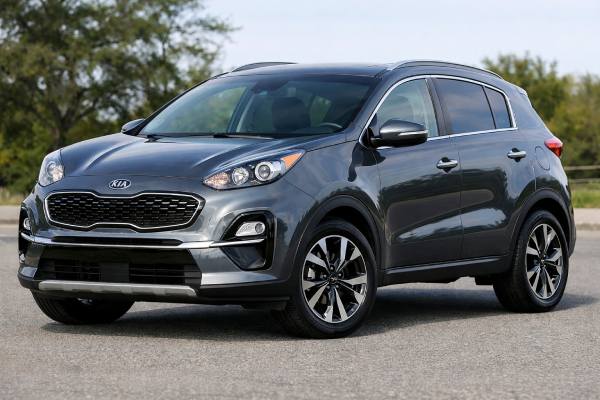
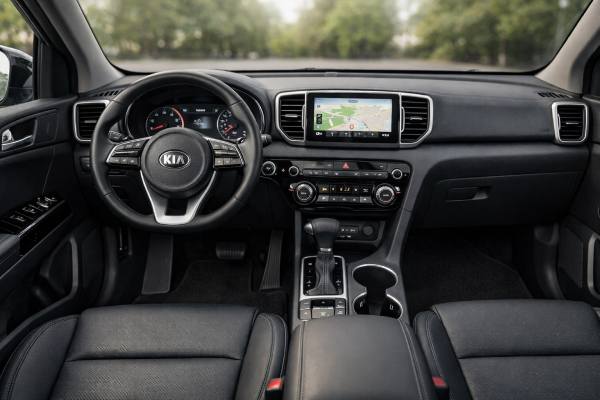
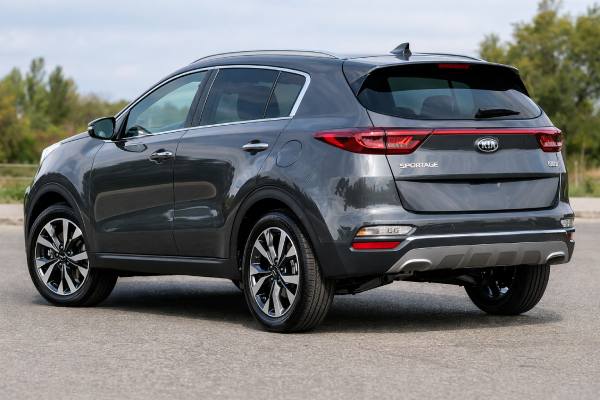
The facelifted Kia Sportage QL with the G4FJ 1.6-liter turbo petrol engine sits in a useful sweet spot. It gives the fourth-generation Sportage the power it always needed, while AWD adds better traction in rain, snow, and steep starts. In practice, this version feels more relaxed than the base petrol, more refined than many expect from a mainstream compact SUV, and easier to live with than some rivals that promise more than they deliver. The key detail is that “177 hp” is the common market shorthand, while factory output is typically listed as 177 PS, or about 174 bhp and 130 kW.
For buyers, the late-QL facelift matters because it combines the mature chassis, updated cabin, and broader safety equipment of the 2019-on cars. It is not the cheapest Sportage to run, and the 7-speed dual-clutch version needs careful inspection, but a well-kept example can still be a very balanced long-term family SUV.
Owner Snapshot
- Strong mid-range torque and AWD traction make this one of the easiest QL petrol Sportages to use every day.
- The cabin is practical, and boot volume stays competitive at roughly 491–503 L with the rear seats up.
- Ride comfort is best on 17-inch wheels; 19-inch cars look sharper but feel firmer and noisier.
- Check recall completion, service history, and low-speed behavior carefully on 7DCT examples.
- Engine oil service is typically every 12 months or 10,000 miles (16,000 km), whichever comes first.
Guide contents
- Sportage QL AWD profile
- Sportage QL AWD data
- Sportage QL AWD trims and safety
- Reliability and service actions
- Maintenance and smart buying
- Real-world driving and economy
- Against key compact SUVs
Sportage QL AWD profile
The 2019 facelift did not reinvent the QL Sportage, but it did make the range easier to recommend. Styling became cleaner, cabin materials and graphics were updated, and the equipment ladder was reshuffled to make driver assistance easier to find. In this AWD 1.6 T-GDi form, the Sportage finally had enough torque to match its size and weight. The engine’s 265 Nm plateau from low revs gives it a stronger, less strained character than the naturally aspirated 1.6, especially with passengers or luggage on board.
The G4FJ engine is a direct-injected, turbocharged four-cylinder from Kia’s Gamma family. In the Sportage, it works with either a 6-speed manual or a 7-speed dual-clutch transmission depending on trim and market. The manual is the simpler long-term choice and also carries the stronger towing rating. The DCT is quicker and smoother once moving, but it is the version that deserves the closest inspection in urban stop-start use.
This facelifted AWD model suits drivers who want a compact SUV that feels planted rather than flashy. The steering is accurate, the chassis is stable on the motorway, and the rear suspension gives it a more settled feel than some cheaper front-drive crossovers. AWD on this car is aimed at road confidence, wet-weather traction, and light winter duty, not serious off-roading. Ground clearance is useful for rough roads, curbs, and mild gravel work, but the Sportage remains a road-biased SUV.
Ownership strengths are easy to understand. It has a roomy cabin, a practical boot, good seat comfort, and late-QL models usually carry a solid feature set. It also avoids some of the complexity that later hybrid-era rivals introduced. At the same time, this is not the most efficient petrol SUV in the class, and 19-inch wheel packages can make the ride busier than many family buyers expect.
Viewed as a used buy, the facelifted QL AWD 1.6T is best thought of as a mature all-rounder. It is not the segment leader in any single category, but it is strong in enough areas that a carefully chosen example can still feel like a smart, well-balanced purchase several years on.
Sportage QL AWD data
Below are the key figures that matter most for the facelifted 2019–2022 Kia Sportage QL AWD with the G4FJ 1.6 T-GDi petrol engine. Some values vary slightly by market, wheel size, and gearbox, so the ranges below reflect the normal factory spread for this exact powertrain.
Powertrain and efficiency
| Item | Kia Sportage QL AWD 1.6 T-GDi |
|---|---|
| Code | G4FJ |
| Engine layout and cylinders | Inline-4, DOHC, 16 valves, 4 valves per cylinder |
| Bore × stroke | 77.0 × 85.4 mm (3.03 × 3.36 in) |
| Displacement | 1.6 L (1,591 cc) |
| Induction | Turbocharged |
| Fuel system | Direct injection |
| Compression ratio | 10.0:1 |
| Max power | 177 PS / about 174 hp (130 kW) @ 5,500 rpm |
| Max torque | 265 Nm (195 lb-ft) @ 1,500–4,500 rpm |
| Timing drive | Chain |
| Emissions class | Euro 6d Temp on facelift European models |
| Rated efficiency | About 7.4–7.9 L/100 km (29.8–31.8 mpg US / 35.8–38.2 mpg UK), depending on trim and gearbox |
| Real-world highway at 120 km/h | Usually around 8.0–9.0 L/100 km (26.1–29.4 mpg US / 31.4–35.3 mpg UK) |
Transmission, driveline, chassis, and dimensions
| Item | Kia Sportage QL AWD 1.6 T-GDi |
|---|---|
| Transmission | 6-speed manual or 7-speed dual-clutch automatic |
| Drive type | On-demand AWD |
| Differential layout | Open axle differentials with electronically controlled AWD coupling |
| Front suspension | MacPherson strut |
| Rear suspension | Independent multi-link / double-wishbone type arrangement |
| Steering | Electric rack-and-pinion, about 13.8:1 |
| Brakes | Front vented discs 305 mm (12.0 in) on smaller wheels or 320 mm (12.6 in) on 19-inch setups; rear solid discs 302 mm (11.9 in) |
| Common tyre sizes | 225/60 R17 or 245/45 R19 |
| Ground clearance | 172 mm (6.8 in) |
| Length | 4,485 mm (176.6 in) |
| Width | 1,855 mm (73.0 in) |
| Height | 1,635 mm (64.4 in) |
| Wheelbase | 2,670 mm (105.1 in) |
| Turning circle | 11.0 m (36.1 ft) |
Weights, capacity, and performance
| Item | Kia Sportage QL AWD 1.6 T-GDi |
|---|---|
| Kerb weight | Roughly 1,529–1,637 kg (3,371–3,609 lb), depending on trim, wheels, and gearbox |
| GVWR | Around 2,170–2,200 kg (4,784–4,850 lb), depending on spec |
| Fuel tank | 62 L (16.4 US gal / 13.6 UK gal) |
| Cargo volume, seats up | 491–503 L (17.3–17.8 ft³), VDA |
| Cargo volume, seats down | 1,480–1,492 L (52.3–52.7 ft³), VDA |
| 0–100 km/h | About 9.5 s manual / 9.1 s DCT |
| 0–60 mph | About 8.9 s manual / 8.8 s DCT on typical UK 19-inch trims |
| Top speed | 201–202 km/h (125–126 mph) |
| Braked towing capacity | 1,900 kg (4,189 lb) manual / 1,600 kg (3,527 lb) DCT |
| Unbraked towing capacity | 750 kg (1,653 lb) |
| Payload | Usually about 560–640 kg (1,235–1,411 lb), depending on exact trim |
Fluids, service capacities, and safety highlights
| Item | Kia Sportage QL AWD 1.6 T-GDi |
|---|---|
| Engine oil | ACEA A5, commonly 5W-30; 4.0 L (4.2 US qt) |
| Coolant | Long-life factory coolant; capacity and exact chemistry should be verified by VIN and market |
| Gearbox fluid | Gearbox-specific; verify by transmission code before service |
| Rear drive and transfer fluids | AWD unit-specific; verify by VIN and workshop data |
| A/C refrigerant | Type and charge vary by market and build date; check under-bonnet label |
| Crash ratings | Euro NCAP 5-star result for the QL generation in its original European test cycle; IIHS Top Safety Pick status on certain U.S.-market 2021 configurations with qualifying headlights and front crash prevention |
| IIHS headlight result | Trim-dependent rather than uniformly strong |
| ADAS availability | Lane keeping, driver attention warning, high-beam assist, speed-limit information, forward collision warning/AEB, and blind-spot support varied by trim and year |
The big picture is straightforward. The AWD 1.6T Sportage has enough output, enough towing ability, and enough cabin space to serve as a genuine family all-rounder. Its weak point on paper is efficiency. Its weak point in the used market is specification overlap, because wheel size, transmission, and trim can change the ownership experience more than many buyers expect.
Sportage QL AWD trims and safety
On the facelifted QL Sportage, trim matters almost as much as engine choice. In most European and UK markets, the 1.6 T-GDi AWD sat higher in the range than the base petrol. That means many examples come with useful comfort and safety equipment, but not all of them carry the same wheel size, ADAS package, or transmission. As a result, two 1.6T AWD Sportages can feel noticeably different on the road and in ownership costs.
In broad terms, lower and mid trims often paired the AWD manual with smaller wheels and a more comfort-focused setup. These versions are the quietest and usually the most forgiving over broken roads. Upper trims, including sportier-looking GT-Line style grades, often moved to 19-inch wheels and leaned harder on visual upgrades, camera systems, and cabin tech. GT-Line S or similar top trims generally brought the fullest equipment set, including the most complete parking and driver-assistance features.
Quick identifiers help when browsing used stock:
- 17-inch wheel cars tend to be the comfort sweet spot.
- 19-inch wheel cars usually signal higher trim and a firmer ride.
- GT-Line styling commonly adds more aggressive bumpers, darker exterior accents, and sport-themed interior details.
- Top trims often add larger infotainment screens, upgraded audio, extra cameras, and more driver aids.
Mechanical differences also matter. The AWD manual version is the better towing option on paper and the more conservative long-term ownership bet. The AWD 7DCT version feels quicker and more upscale when healthy, but it needs better condition checking. Tyre package choice also changes the verdict. A Sportage on quality 17-inch tyres feels calmer, lighter, and more compliant than the same car on fashionable 19s.
Safety provision on facelift cars is respectable for the class and age. The QL generation achieved a 5-star Euro NCAP result in its original European crash-test cycle, while U.S.-market 2021 Sportage variants earned strong IIHS results, including Top Safety Pick status when fitted with qualifying headlights and front crash-prevention hardware. That does not mean every late-QL Sportage is equally equipped. Forward collision assistance, blind-spot warning, lane-keeping support, driver attention warning, and traffic-sign features were more common on higher trims than on entry versions.
Child-seat practicality is good. ISOFIX anchorages and top tether points are straightforward to access, and the body shell feels substantial. Airbag coverage was competitive for the segment, with front, side, and curtain protection on most mainstream specifications.
One more ownership detail deserves attention: modern driver-assistance equipment often needs recalibration after windshield replacement, front bumper work, or accident repair. On a used Sportage, poor camera alignment or warning messages can be a sign of incomplete post-repair setup rather than a simple sensor fault.
Reliability and service actions
The facelifted Sportage QL AWD 1.6 T-GDi is generally a better used bet than the badge-heavy crossover market sometimes suggests. It benefits from a mature platform, a well-known engine family, and simpler mechanical layout than many later hybrids. Still, it is not trouble-free, and buyers should separate normal wear items from genuine pattern faults.
Here is the practical reliability map.
Common, low to medium cost:
- Low-speed hesitation or shudder on some 7DCT cars.
Symptoms: jerky crawl, awkward parking-speed take-up, or slight clutch smell in heavy traffic.
Likely cause: clutch wear, adaptation drift, or heat-sensitive dual-clutch behavior.
Remedy: software check, adaptation, and clutch diagnosis before assuming major gearbox failure. - Tyre and alignment sensitivity on 19-inch cars.
Symptoms: road roar, tramlining, inner-edge tyre wear.
Likely cause: wheel size, alignment drift, or tired suspension bushes.
Remedy: alignment check, tyre condition review, and suspension inspection.
Occasional, medium cost:
- Misfire under load.
Symptoms: hesitation, flashing engine light, or rough pull in the mid-range.
Likely cause: plugs, coils, or boost-related ignition stress.
Remedy: plugs and coils first, then scan data and boost-system checks. - Intake carbon build-up on higher-mileage direct-injection engines.
Symptoms: rough idle, uneven throttle response, and gradual performance dulling.
Likely cause: deposit build-up on intake valves, especially after years of short trips.
Remedy: intake cleaning if confirmed by inspection.
Occasional, medium to high cost:
- Turbo or boost-control issues.
Symptoms: underboost fault, limp mode, or flat top-end response.
Likely cause: leaks in charge plumbing, actuator issues, or sensor faults.
Remedy: smoke test, live-data diagnosis, and proper boost-system inspection.
Driveline and chassis points are more about neglect than design drama. The AWD coupling and rear drive components need clean fluids and matched tyres. Cars that run long periods on mismatched tyre diameters can place unnecessary stress on the AWD system. Front suspension bushes, drop links, and wheel bearings are normal wear areas by age and mileage, especially on rough roads.
Service actions and recalls matter more than forum folklore. Two checks are especially important:
- HECU-related fire recall history on affected 2017–2021 Sportages in certain markets.
- Dealer verification of all outstanding campaigns and field actions by VIN.
For pre-purchase inspection, ask for:
- complete service history,
- proof of recall completion,
- cold-start behavior,
- smooth boost under load,
- clean DCT operation at parking speeds,
- even tyre wear,
- no AWD warning lights,
- and evidence that any ADAS-related repairs were recalibrated correctly.
The durability outlook is good when maintenance has been regular. It becomes much less attractive when servicing has been stretched, cheap tyres were used, or transmission behavior was ignored until it became expensive.
Maintenance and smart buying
This Sportage rewards routine care. The engine and chassis are not especially fragile, but they do respond badly to skipped fluids, neglected ignition service, and “lifetime” thinking around driveline maintenance.
A practical maintenance schedule for the 2019–2022 1.6 T-GDi AWD looks like this:
| Item | Practical interval | Notes |
|---|---|---|
| Engine oil and filter | Every 10,000 miles / 16,000 km / 12 months | Use the correct ACEA A5 oil, commonly 5W-30 |
| Engine air filter | Inspect every service; replace around 20,000–30,000 km in dusty use | Shorter interval if driven in dust or urban grime |
| Cabin filter | Every 12 months or 15,000–20,000 km | Helps HVAC performance and cabin air quality |
| Spark plugs | About 60,000 km / 40,000 miles is a sensible working target | Turbo DI engines are hard on plugs |
| Brake fluid | Every 2 years | Important for pedal feel and ABS health |
| Coolant | Verify by VIN and market schedule | Do not guess chemistry; use correct factory-compatible coolant |
| Tyre rotation | About every 10,000 km / 6,000 miles | Only if tyre type and wear pattern allow |
| Alignment check | Yearly or after impact damage | Especially important on 19-inch cars |
| Brake inspection | Every service | Watch for seized sliders and uneven pad wear |
| 12 V battery test | From year 4 onward | Many original batteries weaken around 4–6 years |
| Timing chain | No routine replacement interval | Inspect if noisy, poorly maintained, or showing timing-correlation faults |
| AWD and final drive fluids | Preventive changes around 40,000–60,000 km in hard use are sensible | Especially for towing, mountain use, or severe conditions |
A few buying rules make a big difference.
Best versions to seek:
- AWD manual cars on 17-inch wheels if you want the simplest ownership path.
- Well-documented 7DCT cars only if low-speed operation is smooth and service history is strong.
- Higher trims if you value ADAS and comfort, but not at the expense of tyre, suspension, or transmission condition.
Versions to approach more carefully:
- DCT cars with any launch shudder, delayed engagement, or repeated clutch smell.
- Cars on mixed tyre brands or mismatched sizes.
- Examples with vague service records, cheap budget tyres, or missing recall paperwork.
Inspection checklist:
- check for oil seepage and coolant staining,
- inspect boost hoses and intake plumbing,
- listen for suspension knocks,
- scan all modules, not just the engine ECU,
- test every camera, sensor, and parking aid,
- inspect inner tyre shoulders,
- and look underneath for impact damage or corrosion around subframes and seams.
Long-term durability is good rather than exceptional. A maintained car can age well. A neglected one becomes expensive because the problems tend to stack rather than appear one by one.
Real-world driving and economy
The best thing about the 1.6 T-GDi AWD Sportage is that it feels appropriately powered. That sounds modest, but it matters. Many compact SUVs of this era feel either under-engined or over-weighted. The Sportage avoids that problem. It does not feel fast, but it feels sufficiently strong in normal use, especially from 1,500 rpm upward where the turbo torque starts doing real work.
Around town, the manual is predictable and easy to meter, while the DCT gives the car a more polished feel once rolling. At crawling speeds, though, the dual-clutch can feel less natural than a conventional torque-converter automatic. That does not automatically mean fault; it is part of the gearbox’s design character. Still, a healthy example should not jerk sharply, hesitate excessively, or smell hot after a short test drive.
Ride and noise depend heavily on wheels. On 17-inch tyres, the QL Sportage rides with good body control and a mature motorway feel. It tracks straight, deals well with expansion joints, and keeps wind noise in check. On 19s, the car looks better but becomes busier over sharp edges, louder on coarse asphalt, and less relaxed on poor roads. Steering is accurate but not rich in feedback. Braking is progressive and easy to judge in everyday driving.
In real fuel use, expect roughly:
- city driving: about 9.5–11.0 L/100 km,
- mixed use: about 7.8–9.0 L/100 km,
- steady motorway use at 120 km/h: about 8.0–9.0 L/100 km.
Cold weather, short trips, and winter tyres can push those numbers higher. This is one reason the Sportage feels strongest as a medium-mileage family car rather than a high-mileage fuel saver.
AWD behavior is reassuring rather than adventurous. It improves starts on wet inclines, helps stability on poor surfaces, and gives the car a more secure feel in winter. It does not turn the Sportage into a trail machine. The tyre package, modest ground clearance, and road-biased calibration tell you exactly what the car is for: bad weather, not boulders.
When towing, the manual version is the stronger choice on paper and in feel. The chassis remains stable with sensible trailer loads, but fuel consumption rises noticeably under load and long grades demand cooling-system confidence. As a daily driver, though, the Sportage’s real strength is composure. It feels settled, honest, and easy to place, which is why a well-kept one still makes sense today.
Against key compact SUVs
The facelifted Kia Sportage QL AWD 1.6T sits in a crowded class, so context matters. Against its main rivals, it usually wins on equipment value and straightforward usability rather than on one knockout metric.
Against the Hyundai Tucson of the same era, the Sportage is the closest comparison because the two share so much underneath. The Sportage tends to feel slightly more style-led and, in many markets, a little better equipped for the money. The Tucson often feels marginally more conservative in ride and cabin presentation. Mechanically, they are close enough that condition matters more than badge choice.
Against the Nissan Qashqai, the Kia feels heavier but also more substantial. The Sportage offers a stronger sense of solidity, better towing credibility in the right spec, and generally a more planted motorway feel. The Qashqai can feel lighter on its feet and easier in town, but it is not as convincing when fully loaded or when buyers want a stronger petrol AWD setup.
Against the Honda CR-V, the Sportage gives up some outright cabin cleverness and fuel thrift, but it often wins on purchase value and visual appeal. The CR-V is usually the more spacious and efficient family tool. The Kia counters with stronger equipment-for-money and a slightly more compact footprint that some drivers prefer.
There is also a value argument. A late-QL Sportage often undercuts equivalent rivals while still offering heated seats, stronger infotainment, useful ADAS, and a good AWD setup. The trade-off is that it never quite leads the class for efficiency, and the DCT version needs more careful used-market filtering than some conventional automatics.
So who should choose it? Buyers who want:
- a well-equipped compact SUV,
- a strong petrol engine without hybrid complexity,
- useful AWD for real weather,
- and a practical family cabin.
Who might look elsewhere?
- high-mileage drivers who care most about fuel economy,
- buyers who want the smoothest possible automatic in heavy traffic,
- or those who need the biggest rear cabin in the class.
Overall, the Sportage QL AWD 1.6 T-GDi compares very well when bought on condition, wheel size, and service history rather than trim badge alone. That is the key to getting the good one.
References
- sportage-specification.pdf 2019 (Specification)
- Engine Oil Grades and Capacities – Kia 2023 (Owner Information)
- 2021 Kia Sportage 2021 (Safety Rating)
- Kia Sportage – Euro NCAP Results 2015 2015 (Safety Rating)
- Part 573 Safety Recall Report 21V-137 2021 (Recall Database)
Disclaimer
This article is for informational purposes only and is not a substitute for professional diagnosis, inspection, or repair. Specifications, torque values, service intervals, fluid requirements, and repair procedures can vary by VIN, market, model year, transmission, and equipment level, so always verify details against official service documentation for the exact vehicle.
If this guide helped you, please consider sharing it on Facebook, X, or another social platform to support our work.