
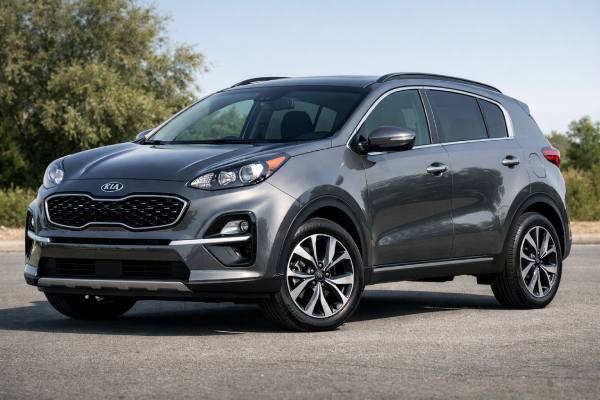
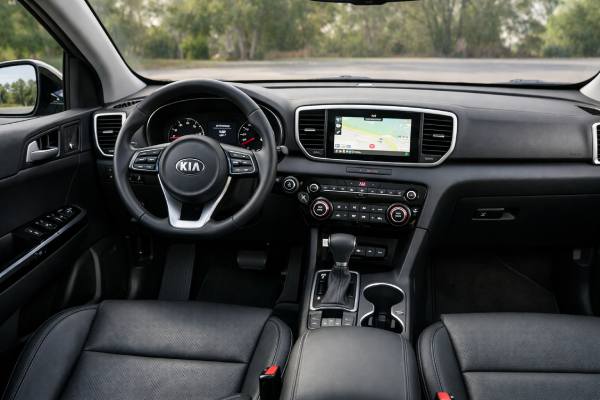
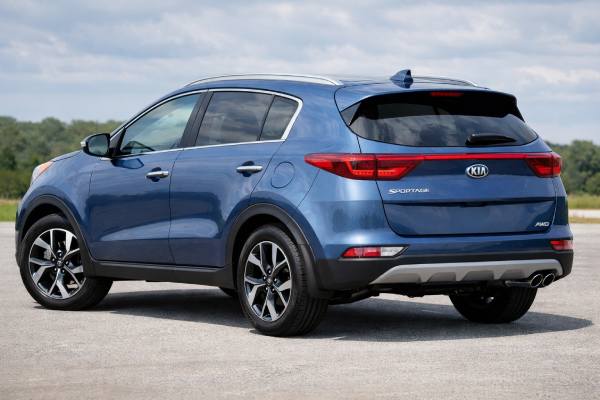
The all-wheel-drive Kia Sportage QL with the G4KJ 2.4-liter engine is the more all-weather version of Kia’s compact SUV formula. It keeps the same naturally aspirated four-cylinder and conventional 6-speed automatic as the FWD model, but adds a rear drive system that improves traction on wet roads, gravel, and winter surfaces. That extra grip comes with a small fuel-economy penalty and a bit more weight, yet it also gives the Sportage a broader use case for buyers in mixed climates. In North America, the visual facelift arrives for 2020, while 2019 remains a carryover QL with the same core AWD hardware and 2.4-liter powertrain. That split matters because trim names, safety-tech availability, and value changed more than the basic engineering did. For used buyers, the real story is simple: choose the right trim, confirm recall work, and make sure the engine and AWD driveline have been serviced on time.
Fast Facts
- AWD gives the Sportage better year-round traction without changing its simple 2.4-liter and 6-speed automatic layout.
- Ground clearance and approach angle are better than the FWD model, which helps on snow, rough tracks, and steep ramps.
- EX AWD and later Nightfall AWD models usually offer the best mix of comfort, safety tech, and resale appeal.
- Check recall completion, engine oil history, and rear driveline condition before buying.
- Rotate tyres and inspect oil level every 12,000 km / 7,500 mi or 12 months.
What’s inside
- Kia Sportage QL AWD essentials
- Kia Sportage QL AWD numbers
- Kia Sportage QL AWD trims and protection
- Trouble spots and campaign fixes
- Service schedule and buying advice
- Real-world feel and economy
- Rival matchups and value
Kia Sportage QL AWD essentials
The AWD 2.4 Sportage is the version to choose when the compact-SUV brief includes poor weather, steep driveways, rough winter roads, or light trail access. It is still a road-biased crossover, not a heavy-duty off-roader, but the extra axle changes the way the vehicle works in daily life. Kia’s AWD setup adds a rear drive connection that can send torque rearward when front grip drops, and the system also offers a lock mode for low-speed traction support. That makes the AWD Sportage more confidence-inspiring in snow and rain than the FWD version, even though the basic personality remains calm and commuter-friendly.
The engine stays the same G4KJ 2.4-liter direct-injected four-cylinder with 181 hp and 175 lb-ft. It is paired with a 6-speed automatic rather than a CVT, which still matters in the used market because some buyers prefer fixed gear changes and proven service habits over a belt-driven transmission. The penalty is that the Sportage is only average for fuel economy and only adequate for acceleration. The AWD system adds roughly 143 lb over the comparable FWD 2.4 model, and you can feel that in both throttle response and fuel use.
One detail deserves context. If you are shopping in the U.S. or Canada, 2020 is the true facelift year. The 2019 model shares the same platform, AWD concept, engine, and gearbox, but keeps the earlier front-end styling and slightly older trim logic. From an ownership view, that means 2019 still belongs in the same conversation if you care about drivetrain simplicity, cargo space, and winter traction. If you care more about facelift styling, updated standard safety features, and later package structure, 2020–2022 is the clearer target.
The best reasons to buy the AWD model are practical. Ground clearance rises to 6.8 inches instead of 6.4, approach angle improves sharply, and the chassis keeps a proper multi-link rear suspension. Cargo space is unchanged from FWD, rear-seat room remains useful, and the higher-riding AWD stance suits buyers who routinely drive through slush, broken pavement, or unpaved access roads. The main trade-offs are predictable: lower mpg, slightly dearer tyres and driveline service, and more used-car inspection points underneath. In other words, the AWD Sportage is the more versatile version, but only when the climate or road conditions justify the extra complexity.
Kia Sportage QL AWD numbers
The table below focuses on the North American AWD 2.4-liter Sportage QL. Since the true facelift arrives for 2020 in this market, 2019 should be read as a carryover year with the same main drivetrain but earlier trim structure and slightly different mpg by trim.
| Item | Specification |
|---|---|
| Code | G4KJ |
| Engine layout and cylinders | Inline-4, 4 cylinders, DOHC, 4 valves per cylinder |
| Bore × stroke | 88.0 × 97.0 mm (3.46 × 3.82 in) |
| Displacement | 2.4 L (2,359 cc) |
| Induction | Naturally aspirated |
| Fuel system | Gasoline direct injection |
| Compression ratio | 11.3:1 |
| Max power | 181 hp (135 kW) @ 6,000 rpm |
| Max torque | 237 Nm (175 lb-ft) @ 4,000 rpm |
| Timing drive | Chain |
| Transmission | 6-speed automatic, torque-converter type |
| Final drive ratio | 3.195:1 on 2.4 AWD models |
| Drive type | On-demand AWD |
| Differential | Electronically controlled rear-drive coupling with lock mode; open axle differentials |
This is not a hard-punching powertrain, but it is mechanically straightforward. The main appeal lies in its familiar hardware, not in outright pace.
| Item | Specification |
|---|---|
| Rated efficiency, 2021 AWD 2.4 | 10.2 / 9.4 / 10.2 L/100 km city / highway / combined (21 / 25 / 23 mpg US; 25.2 / 30.0 / 27.6 mpg UK) |
| Rated efficiency, 2022 AWD 2.4 | 10.7 / 9.0 / 10.2 L/100 km city / highway / combined (22 / 26 / 23 mpg US; 26.4 / 31.2 / 27.6 mpg UK) |
| Real-world highway @ 120 km/h (75 mph) | Usually about 8.8–9.8 L/100 km (24–27 mpg US / 28.2–32.4 mpg UK) |
| Real-world mixed use | Often 9.8–11.2 L/100 km (21–24 mpg US / 25.2–28.8 mpg UK), depending on tyres, weather, and trip length |
AWD brings a real winter benefit, but it is not free. The combined result normally lands around 23 mpg US, which is adequate for the class but not a strength.
| Item | Specification |
|---|---|
| Front suspension | MacPherson strut |
| Rear suspension | Multi-link independent |
| Steering | Motor-assisted rack and pinion; 14.4:1 ratio |
| Turning circle, kerb-to-kerb | 10.6 m (34.8 ft) |
| Front brakes | 305 mm (12.0 in) discs |
| Rear brakes | 302 mm (11.9 in) discs |
| Most common tyre sizes | 225/60 R17 or 225/55 R18 |
| Ground clearance | 173 mm (6.8 in) |
| Approach / departure / breakover | 28.0° / 24.6° / 19.5° |
| Length / width | 4,481 mm / 1,854 mm (176.4 / 73.0 in) |
| Height, AWD without / with rails | 1,646 / 1,656 mm (64.8 / 65.2 in) |
| Wheelbase | 2,670 mm (105.1 in) |
| Kerb weight, AWD 2.4 | About 1,564–1,696 kg (3,448–3,739 lb) |
| Cargo volume, SAE | 869 L / 1,702 L (30.7 / 60.1 ft³), seats up / folded |
| Fuel tank | 62.1 L (16.4 US gal / 13.7 UK gal) |
| Towing capacity | 907 kg (2,000 lb) braked; 750 kg (1,653 lb) unbraked on later cars |
| Item | Specification |
|---|---|
| Engine oil | 4.8 L (5.1 US qt) drain and refill; use VIN-correct API and viscosity spec |
| Transmission lubricant capacity | 6.7 L (7.1 US qt) published for the 6AT transaxle |
| Rear driveline fluids | Verify exact AWD rear-drive and transfer-case service spec by VIN before filling |
| Wheel nut torque | Usually 107–127 Nm (79–94 lb-ft), depending on wheel and market |
| 0–100 km/h | Typically around 10.5–11.0 seconds in independent testing; Kia did not emphasize an official U.S. figure |
| Safety headline | IIHS Top Safety Pick possible on 2022 with the right crash-prevention and headlight setup |
Kia Sportage QL AWD trims and protection
Trim choice matters more on this Sportage than the basic engine choice does. The AWD 2.4 setup was available through most of the useful range, so buyers could pair winter traction with anything from a modest LX to a more complete EX. In 2019, the line was simpler: LX AWD and EX AWD carried the 2.4, while SX Turbo AWD sat above them with the stronger 2.0 turbo engine. For 2020 and 2021, the facelifted range added S AWD between LX and EX. In 2022, the S disappeared and Nightfall Edition became the visual middle step, with LX AWD, Nightfall AWD, and EX AWD forming the core naturally aspirated lineup.
The basic mechanical differences between these AWD 2.4 trims are not dramatic. All use the same engine, the same 6-speed automatic, and the same AWD concept. The practical changes come from wheels, lighting, convenience gear, and safety content. LX AWD is the functional entry point. It commonly rides on 17-inch wheels, often gives the best tyre cost, and keeps the core mechanical package simple. S AWD and later Nightfall AWD aim more at appearance, with darker trim, 18-inch wheels, and a more aggressive stance. EX AWD is usually the ownership sweet spot, adding the comfort and convenience features that make the Sportage feel worth keeping for years.
Quick identifiers help when you are viewing listings with weak descriptions. LX cars tend to look plainer and more upright in trim finish. Nightfall cars are easy to spot because of blacked-out badging, darker exterior accents, and 18-inch dark gray wheels. EX models typically add a more upscale interior and exterior finish, more chrome or contrast trim, and better comfort equipment. If a seller lists only “Sportage AWD” without a proper trim, wheel size, lighting, seat trim, and mirror features usually reveal the truth in a few seconds.
Safety equipment improved over the run. By the later facelift years, forward collision-avoidance assist with pedestrian detection, lane departure warning, lane keeping assist, driver attention warning, and high beam assist became far more common. Blind-spot and rear cross-traffic systems moved from optional or package-based equipment to standard fitment on better trims, while some 2022 LX models could gain them through the Value package. That matters because the used market often prices AWD by mileage and appearance first, even though a later EX or Nightfall can be meaningfully better equipped for the same money.
Crash performance needs one important caveat. Structurally, the Sportage scores well in most IIHS categories, and the platform’s main crashworthiness reputation is strong. But headlight ratings vary sharply by trim, and that can change the real-world safety verdict at night. Many halogen projector setups perform worse than the LED arrangement fitted to the turbo flagship. Also remember that front cameras, radar, and related driver-assistance systems may require calibration after windshield replacement, front-bumper repair, or alignment work. A used AWD car with accident history may still drive straight but have an ADAS system that is no longer properly set.
Trouble spots and campaign fixes
The AWD Sportage 2.4 is not a fragile SUV, but it is one that benefits from careful sorting. Most examples wear their mileage honestly. Problems usually build around service neglect, incomplete campaign work, or winter use that hides underbody wear. The engine remains the first area to watch, yet the AWD model adds a few driveline checks that the FWD article does not need.
Common and usually low-cost
- Weak 12-volt batteries on short-trip cars.
- Rear brake wear, sticking sliders, or uneven pad corrosion in wet climates.
- Wheel-alignment issues after pothole impacts, often showing as outer-edge tyre wear.
- Cabin trim rattles, worn tailgate struts, and occasional slow infotainment behavior.
Occasional and medium-cost
- Carbon buildup typical of direct injection, often felt as a rougher idle or dulled throttle response.
- Coil, plug, or sensor-related misfires.
- Oil seepage or owner-reported oil consumption on poorly maintained engines.
- Wheel-bearing hum and suspension bushing wear on rough roads.
Occasional and potentially high-cost
- Engine problems linked to poor oil history or bearing-wear concerns.
- HECU recall-related fire risk if the official repair was never completed.
- Tow-hitch harness fire risk on accessory-equipped vehicles if the recall remedy was not performed.
- AWD driveline noise from neglected rear driveline fluid, tyre mismatch, or damage after impacts.
The AWD-specific checks are simple but important. Listen for groaning, binding, or vibration on tight low-speed turns. Feel for shudder on wet takeoff or under light uphill throttle. Inspect the rear differential area and coupler housing for dampness, impact damage, or torn boots nearby. Also confirm that all four tyres match in brand, model, and tread depth. On an AWD crossover like this, a badly mismatched set of tyres can make the system work harder than it should and can mask coupling wear.
The main official service actions deserve direct attention. The HECU recall covers many 2017–2021 Sportage vehicles not equipped with Smart Cruise Control because an electrical short could raise the risk of an engine-compartment fire. The tow-hitch harness recall covers 2017–2022 Sportage vehicles fitted with a Genuine Kia tow hitch harness accessory, where moisture and contamination could cause a short and fire risk even when parked. Those items matter more than the average used-car blemish because they are safety campaigns, not optional updates.
For pre-purchase work, ask for full service records, recall proof, evidence of regular oil changes, and a cold-start inspection. Then scan the car for stored codes, inspect the rear driveline, and confirm that the tyre set is truly matched. A clean Sportage AWD with complete records is often a sound buy. A cheap one with patchy history, mixed tyres, and unresolved campaigns can turn into a very expensive “deal.”
Service schedule and buying advice
The smartest way to maintain the AWD Sportage is to treat it as a normal compact SUV with three added habits: monitor oil level, do not ignore the rear driveline, and keep the tyres properly matched. The 2.4-liter engine does not need exotic care, but it does respond badly to long neglect. The AWD system is robust enough for normal use, yet it depends on good tyres and clean fluids more than many owners realize.
A practical service plan looks like this:
- Engine oil and filter: every 12,000 km / 7,500 mi or 12 months in normal use; shorten the interval for repeated short trips, dust, heat, towing, or heavy city work.
- Check engine oil level: monthly, and always before long trips.
- Tyre rotation: every 12,000 km / 7,500 mi. Keep tread depths close across all four corners.
- Wheel alignment: inspect at least yearly or when shoulder wear appears.
- Cabin air filter: around every 24,000 km / 15,000 mi.
- Engine air filter: inspect each service; many cars need one near 48,000 km / 30,000 mi.
- Spark plugs: usually around 96,000 km / 60,000 mi.
- Brake fluid: replace on time, especially in humid climates.
- Automatic transmission fluid: a preventive service in the 96,000–144,000 km / 60,000–90,000 mi range is sensible.
- AWD rear driveline fluid and seals: inspect for seepage every service; change fluid preventively if the car tows, sees deep winter slush, or spends time on rough roads.
- Coolant, belts, and hoses: inspect every service visit.
- 12 V battery: test yearly from year four onward.
- Timing chain: no fixed replacement interval, but investigate rattle, timing-correlation faults, or startup noise immediately.
The most useful fluid and fastener figures for decision-making are the basics: 4.8 L for engine oil, 6.7 L published for the 6-speed automatic’s lubricant capacity, and wheel nuts commonly tightened in the 107–127 Nm range. For AWD rear-drive and transfer components, use VIN-specific service data rather than generic online charts. That matters because driveline fill points, fluid types, and service notes can vary with market and production date.
For buyers, the best targets are usually 2021 EX AWD, 2022 EX AWD, or a clean 2022 Nightfall AWD if you like the darker look. LX AWD can also make sense as a lower-cost winter commuter because 17-inch tyres are often cheaper and ride comfort is slightly better. Be more cautious with cars showing mixed tyres, missing recall records, repeated oil top-up notes, rust around rear suspension hardware, or signs of front-end repair without proof of ADAS calibration. Long-term durability is decent when these basics are respected. The Sportage AWD is not the class benchmark for efficiency or speed, but it can be a durable, useful cold-climate daily driver.
Real-world feel and economy
From behind the wheel, the AWD Sportage feels settled rather than sporty. The extra axle gives it a more planted launch on wet roads and more secure behavior on slick inclines, but it does not transform the vehicle into a fast or especially lively crossover. The steering is light, the chassis is predictable, and the ride is tuned more for daily comfort than sharp handling. That suits the car’s mission well. The Sportage is easy to place in traffic, easy to park, and more composed over broken pavement than some firmer rivals.
The powertrain behaves in a familiar way. Step-off is smooth, low-rpm torque is adequate, and the 6-speed automatic usually avoids the rubber-band feel that drivers dislike in some CVT competitors. Kickdown is acceptable rather than urgent. With one or two people aboard, the drivetrain feels competent. Add a full load, a steep grade, or a highway merge uphill, and the limits of 181 hp plus AWD weight become obvious. It is enough, not more.
The AWD system earns its keep in poor conditions. Snowy intersections, wet roundabouts, muddy campsite access roads, and steep gravel ramps are all easier to manage than in the FWD version. Ground clearance also rises by 0.4 inch, which sounds minor on paper but helps in rutted tracks and deep slush. This is still not a true off-road platform, and tyre choice changes the outcome more than marketing slogans do. A good all-weather or winter tyre will do more for real traction than the badge on the tailgate.
Real-world fuel use is the predictable trade-off. Expect around 10.0–11.2 L/100 km in mixed driving, about 8.8–9.8 L/100 km on a steady highway run at 120 km/h, and roughly 11.0–12.0 L/100 km in cold-weather city use. Those figures are not bad for an older AWD compact SUV with a conventional automatic, but newer rivals can beat them. If your driving is mostly dry-road commuting in a warm climate, the AWD premium is hard to justify. If you regularly see winter weather, it is much easier to defend.
Noise, vibration, and harshness are reasonable for the class. Wind noise is acceptable, the suspension filters small bumps well, and the vehicle feels solid enough on a long trip. The 17-inch setup is the comfort choice. The 18-inch package looks better and suits Nightfall or EX trims, but it transmits a little more sharpness over broken surfaces. Braking feel is easy to modulate, towing stability is decent within the modest 2,000 lb rating, and the Sportage never feels nervous. In simple terms, it drives like a practical compact SUV that has been tuned for confidence, not excitement.
Rival matchups and value
The AWD 2.4 Sportage makes the most sense when you compare it to other used compact SUVs by ownership priorities, not by showroom-era marketing. Against a same-generation Honda CR-V AWD, the Kia usually gives you a more conventional automatic transmission and a lower buy-in price, while the Honda often answers with better fuel economy and stronger packaging. Against a Toyota RAV4 AWD of the same period, the Kia often feels like the bargain route into a well-equipped small SUV, but the Toyota still tends to win on resale and reputation for low-drama ownership.
The Mazda CX-5 is the sharper driver’s choice. It normally offers better steering feel, a more polished cabin atmosphere, and a more premium first impression. The Kia fights back with a softer, simpler character and often better value trim-for-trim. The Nissan Rogue of this era tends to look appealing on paper for space and efficiency, but some buyers still prefer the Sportage’s conventional 6-speed automatic over a CVT. That alone can shape the used-market decision.
The most direct rival, though, is the Hyundai Tucson, because the two vehicles share much of their engineering logic. In practice, that means you should cross-shop them aggressively. Compare condition, service history, trim equipment, tyre quality, and recall completion more than badge image. A carefully maintained Sportage AWD can be a stronger buy than a neglected Tucson, and the reverse is equally true.
So where does that leave the AWD 2.4 Sportage? It is the sensible winter-use version of a straightforward compact SUV. It does not lead the class in speed, mpg, or interior drama. What it offers instead is a simple naturally aspirated engine, a conventional automatic, useful cargo room, better-than-FWD rough-weather ability, and a used-market price that often undercuts the obvious Japanese alternatives. For buyers in snow states, mountain regions, or mixed-road rural areas, that combination still has real value. Buy one with matched tyres, strong records, and completed campaigns, and it can be a practical long-term companion.
References
- 2021 Kia Sportage Specifications 2020 (Specifications)
- 2022 Kia Sportage Overview 2021 (Model Overview)
- 2022 Kia Sportage 2022 (Safety Rating)
- Part 573 Safety Recall Report 21V-137 2021 (Recall Database)
- Part 573 Safety Recall Report 22V-703 2022 (Recall Database)
Disclaimer
This article is for informational purposes only and is not a substitute for professional diagnosis, repair, or VIN-specific technical documentation. Specifications, torque values, intervals, fluid requirements, recalls, and procedures vary by VIN, market, model year, and equipment, so always verify details against the official service and owner documentation for the exact vehicle.
If this guide was useful, please consider sharing it on Facebook, X, or another platform to support our work.