
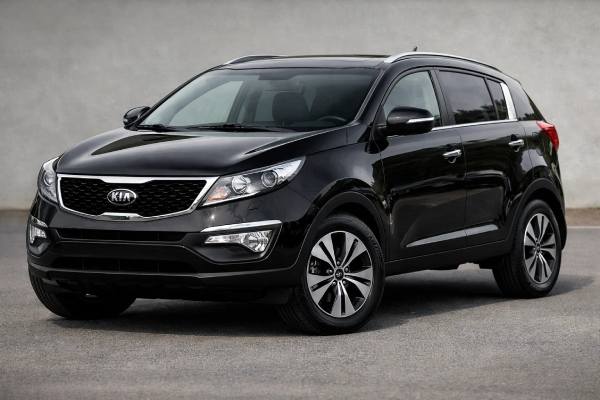
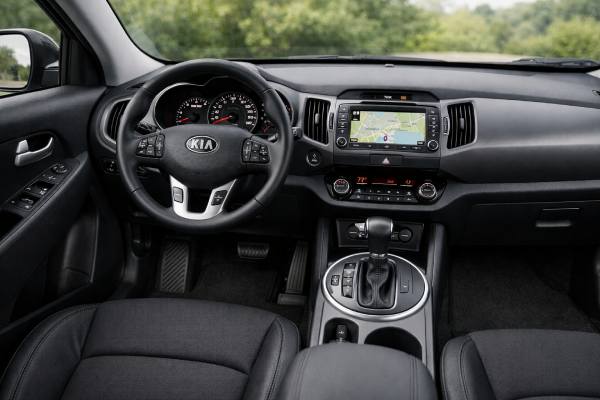
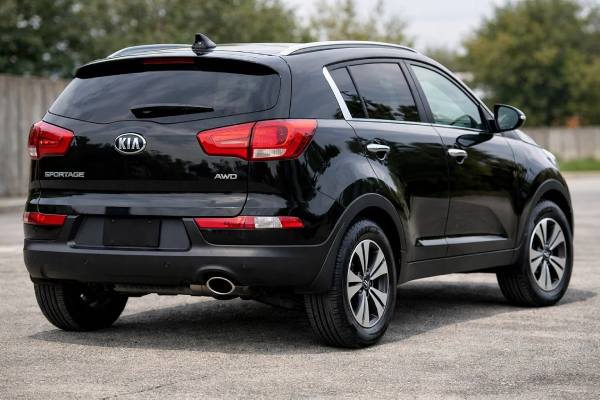
The facelifted 2014–2016 Kia Sportage AWD with the 2.0-liter 166 hp petrol engine is one of the more balanced versions of the third-generation SL range. It combines the sharper styling and quieter cabin of the mid-cycle update with a naturally aspirated engine, an on-demand all-wheel-drive system, and compact crossover dimensions that still work well today. In market catalogs this engine is often identified as the G4NC 2.0 MPI unit, though some Kia regional service sheets group similar SL 2.0 petrol models under broader Theta 2.0 naming. That is exactly why VIN-level parts checking matters.
For owners, the appeal is clear. You get simpler long-term ownership than the turbo models, better wet-weather traction than a front-drive Sportage, and a cabin that still feels roomy for the class. The caution is just as clear: AWD maintenance, suspension wear, and incomplete recall history can turn a cheap example into an expensive one.
What to Know
- The 2.0 MPI engine is simpler and usually cheaper to own than the turbocharged petrol alternatives.
- On-demand AWD adds real all-weather traction without turning the Sportage into a heavy off-roader.
- The 2014 facelift improved cabin materials, refinement, steering response, and equipment.
- Neglected AWD fluids, mismatched tyres, and poor recall history are the biggest ownership red flags.
- A sensible modern oil-service plan is every 6,000–8,000 miles or 12 months, whichever comes first.
Contents and shortcuts
- Kia Sportage SL AWD profile
- Kia Sportage SL spec tables
- Kia Sportage SL trim map
- Wear points and recall watch
- Maintenance roadmap and buy checks
- Real-world drive and economy
- Rival context and verdict
Kia Sportage SL AWD profile
The facelifted SL Sportage is the version that made the third-generation model feel fully resolved. The basic shape stayed familiar, but Kia used the 2014 update to make the car quieter, more polished, and more competitive in a class that had started moving quickly. Revised exterior details, better interior materials, upgraded equipment, and a broader push toward refinement all helped. More important for ownership, the facelift also improved the way the Sportage feels in daily use. It is calmer on the motorway, more mature over rough surfaces, and less obviously “budget” than the earliest 2011 cars.
This AWD 2.0 MPI version lands in a particularly useful part of the range. It gives you the traction benefit of the on-demand all-wheel-drive system and the more secure feel that comes with it in rain, snow, and poor surfaces, yet it avoids the added thermal stress and higher repair risk of the turbocharged petrol engine. That makes it a sensible long-term ownership choice for drivers who want capability without chasing performance numbers.
The AWD hardware itself is part of the model’s identity. In normal driving, the Sportage runs with a strong front-drive bias for efficiency, but the system can send torque rearward when the front tyres lose grip. On many versions, an AWD lock mode helps hold a stronger front-rear split at low speed on loose or slippery surfaces. It is useful on muddy tracks, steep gravel drives, or snowy climbs, but it is not a low-range off-road system. This remains a compact crossover, not a ladder-frame SUV.
The 2.0-liter petrol also shapes the car’s character. With 166 hp, it is not quick in the way modern turbo crossovers are, and it needs revs for best acceleration. But it responds cleanly, avoids turbo lag, and usually ages more gracefully than more stressed engines when service history is good. That is the main attraction of this specification. It does not try to impress with headline speed. It simply aims to be a reliable, usable everyday powertrain.
Another strength is packaging. The SL Sportage remains easy to place on narrow roads, yet it offers a wide cabin, useful rear-seat space, and a practical luggage area. The facelift also brought a noticeably better dashboard feel and a more upmarket first impression. Put simply, this version makes sense for buyers who want a compact AWD family crossover with honest mechanicals, acceptable running costs, and a design that still looks current enough to avoid feeling dated.
Kia Sportage SL spec tables
Because SL Sportage specifications vary by market, trim, and transmission, the figures below focus on the common 2014–2016 facelift 2.0 MPI AWD version rated at 166 hp. Some regional Kia literature groups the SL 2.0 petrol under Theta naming, while many parts catalogs identify this 166 hp facelift engine as G4NC. That is why the smart rule is to use these figures as a guide and confirm the exact VIN before ordering parts.
Powertrain and efficiency
| Item | Typical figure for Sportage SL facelift 2.0 AWD |
|---|---|
| Code | Commonly catalogued as G4NC 2.0 MPI; verify by VIN |
| Engine layout and cylinders | Front transverse inline-4, 4 cylinders |
| Valvetrain | DOHC, 4 valves per cylinder, dual CVVT |
| Bore × stroke | Commonly catalogued around 81.0 × 97.0 mm (3.19 × 3.82 in); verify by VIN |
| Displacement | 2.0 L (1,998–1,999 cc depending on catalog method) |
| Induction | Naturally aspirated |
| Fuel system | Multi-point injection |
| Compression ratio | Commonly around 10.3:1; verify by VIN |
| Max power | 166 hp (122 kW) @ 6,200 rpm |
| Max torque | 198 Nm (146 lb-ft) @ 4,600 rpm |
| Timing drive | Chain |
| Rated efficiency | Roughly 8.8–9.5 L/100 km (26.7–24.8 mpg US / 32.1–29.7 mpg UK), market and transmission dependent |
| Real-world highway @ 120 km/h | Roughly 8.5–9.5 L/100 km |
Transmission and driveline
| Item | Typical figure |
|---|---|
| Transmission | 6-speed automatic most common on AWD petrol; 6-speed manual in some markets |
| Drive type | Full-time on-demand AWD with electronic coupling, often branded with Dynamax logic |
| Differential | Open front and rear with electronic control through the AWD coupling and ESC |
Chassis and dimensions
| Item | Typical figure |
|---|---|
| Front suspension | MacPherson strut with coil springs |
| Rear suspension | Independent multi-link |
| Steering | Motor-driven power steering; facelift rack is quicker, about 2.7 turns lock-to-lock |
| Brakes | Front vented discs / rear solid discs, commonly around 300 mm (11.8 in) / 284 mm (11.2 in) |
| Most popular tyre size | 225/60 R17 |
| Ground clearance | 172 mm (6.8 in) |
| Length / width / height | 4,440 / 1,855 / 1,645 mm (174.8 / 73.0 / 64.8 in) |
| Wheelbase | 2,640 mm (103.9 in) |
| Turning circle | About 10.6 m (34.8 ft) |
| Kerb weight | About 1,479 kg (3,261 lb) |
| GVWR | About 2,030 kg (4,475 lb) |
| Fuel tank | 55 L (14.5 US gal / 12.1 UK gal) |
| Cargo volume | Typically about 564 L seats up / 1,353 L seats down by VDA-style figures, depending on market |
Performance and capability
| Item | Typical figure |
|---|---|
| 0–100 km/h (0–62 mph) | About 10.8 s |
| Top speed | About 182 km/h (113 mph) |
| Braking distance | Open official figures are inconsistent for this exact AWD 2.0 trim |
| Towing capacity | Up to about 2,000 kg (4,409 lb) braked in some European specifications; market dependent |
| Payload | Roughly 500–550 kg depending on equipment |
Fluids and service capacities
| Item | Typical figure |
|---|---|
| Engine oil | ACEA A3 / A5 5W-30 or 5W-40; 5.8 L (6.1 US qt) |
| Coolant | Ethylene-glycol based long-life coolant; total capacity varies by market, commonly around 7.0–7.3 L |
| Transmission / ATF | SP-IV type on 6AT; total fill commonly around 7.0–7.5 L, verify by transmission code |
| Differential / transfer case | AWD oils vary by housing version; verify exact capacities by VIN and service manual before filling |
| A/C refrigerant | R-134a; charge varies by market and HVAC version |
| A/C compressor oil | PAG type; verify exact charge by refrigerant label |
| Key torque specs | Wheel nuts 88–108 Nm (65–80 lb-ft); engine-oil drain plug typically about 35–45 Nm |
Safety and driver assistance
| Item | Typical figure |
|---|---|
| Euro NCAP context | Same-generation Sportage originally earned 5 stars |
| IIHS crash pattern | Good for moderate overlap, side, roof strength, and head restraints; Poor for driver-side small overlap on 2011–2016 models |
| Headlight rating | Not a core published highlight for this generation in the same way as later IIHS testing |
| ADAS suite | No AEB, ACC, lane-keep assist, blind-spot monitoring, or traffic-sign recognition on this generation |
The big takeaway is that this Sportage does not sell itself on one dramatic number. Its appeal comes from the balance of moderate weight, compact dimensions, real AWD, and straightforward petrol power.
Kia Sportage SL trim map
Trim structure on the facelifted SL Sportage changed from one country to another, so it is more useful to think in equipment layers than in one universal trim ladder. Most 166 hp AWD petrol cars sat in the middle or upper-middle of the range. That usually meant alloy wheels, automatic transmission in many markets, upgraded trim materials, automatic climate control on better versions, rear parking sensors or camera, and the more complete safety package.
The 2014 facelift itself matters because it changed more than the bumpers. Kia revised the front grille, rear lamps, wheel designs, and interior materials, while also introducing equipment upgrades such as a new supervision cluster, FlexSteer on many versions, improved sound insulation, and more polished infotainment. The under-the-skin changes are equally important. The facelift cars gained a quicker steering rack, refinement improvements through revised mounting points, and suspension changes meant to improve both ride and towing stability. Those details do not transform the Sportage, but they do make the later SL feel more finished than the earliest cars.
As you move up the trim ladder, the visual clues are useful:
- 16-inch wheels usually indicate lower-spec cars.
- 17-inch wheels are common on mainstream AWD petrol trims.
- 18-inch wheels, panoramic roof, leather, and premium audio usually point to upper-spec versions.
- Facelift cars often show revised rear lamps, updated wheel patterns, and richer cabin trim.
- Later examples in some markets added TPMS and extra convenience equipment.
The safety picture is decent for the era, though market-dependent. Dual front airbags were standard. Better-equipped AWD trims often added side and curtain airbags, ABS, electronic stability control, hill-start assist, downhill brake control, child anchors, rear parking sensors, and immobilizer systems. Some market brochures listed these extra airbags and stability functions as part of the AWD trim step, which is why buyers should confirm by equipment rather than by badge alone.
Crash-test context needs two separate lenses. In the same-generation Euro NCAP result, the Sportage family earned a five-star rating, with strong adult and child-occupant scores for the period. In IIHS testing, the 2011–2016 Sportage pattern is more mixed: Good in moderate overlap, side impact, roof strength, and head restraints, but Poor in driver-side small overlap. That means the Sportage was competitive when new, but not class-leading by later standards.
This is also an almost pre-ADAS crossover. It has stability control and the typical active-safety aids of the time, but it does not have modern camera- and radar-based driver assistance. No automatic emergency braking, adaptive cruise control, lane-centering, or blind-spot warning means lower repair complexity, but it also means the driver remains fully responsible for hazard management. For many used-car buyers, that trade still makes sense.
Wear points and recall watch
The facelifted AWD 2.0 Sportage is usually more dependable than the 2.4 GDI North American cars that shaped so much online discussion around the SL generation. But that does not make it trouble-free. Its common issues are more ordinary and easier to predict, which is good news for buyers who inspect carefully.
Common and usually low to medium cost
Suspension wear is the first pattern to expect. Front anti-roll-bar links, lower-arm bushes, top mounts, and tired dampers show up as clunks, loose front-end feel, and uneven tyre wear. None of this is unusual for a compact AWD crossover of this age. The same goes for brake hardware. Rear calipers can become sticky, slide pins dry out, and handbrake effectiveness fades when the car has lived in wet or salty conditions.
The petrol engine itself is generally simpler than Kia’s direct-injection and turbo variants. It avoids the intake carbon issue that plagues many DI-only engines, and it does not carry turbocharger heat stress. Typical aging faults are more ordinary: coil-pack misfires, spark-plug wear, occasional cam or crank sensor issues, thermostat fatigue, and oil seepage from the rocker-cover area or front seals. At higher mileage, some engines develop light oil use if service intervals were stretched too far.
Occasional but more expensive
AWD neglect is the bigger ownership trap. Symptoms include tyre scrub, driveline vibration, rumbling under load, warning lights, or poor traction distribution on slippery surfaces. The root causes are often not dramatic at first. Mismatched tyre diameters, missed AWD fluid services, rear differential seal leaks, or wear in the coupling system can gradually stress the drivetrain. The cure begins with matching tyres on all four corners, correct fluid service, and careful diagnosis before replacing major parts.
Transmission behavior is usually fine when maintained, but older six-speed automatics can feel lazy or flare slightly if fluid service has been ignored. Manual cars are less common in this exact AWD petrol format, but clutch wear and release-bearing noise still deserve attention where fitted.
Recall and service-action priorities
The most important official watch item is the HECU fire-risk recall affecting 2014–2016 Sportage vehicles in some markets, including the U.S. The fault involved possible internal short-circuiting in the hydraulic electronic control unit, with the risk of an engine-bay fire even while parked. Completion of the fuse remedy and associated recall work should be verified before purchase.
Accessory tow-hitch wiring fire risk matters too, but only on cars fitted with the relevant accessory harness. It is not as universal as the HECU concern, yet it still matters on used examples that tow or were dealer-equipped with a hitch package.
The practical reliability summary is simple. This Sportage is not a “never goes wrong” crossover. But when maintained correctly, it is mostly vulnerable to understandable wear items, AWD neglect, and known recall housekeeping rather than one unavoidable design flaw. That makes it a condition-first buy rather than a model to fear automatically.
Maintenance roadmap and buy checks
A practical maintenance plan is the difference between a dependable Sportage AWD and a crossover that slowly becomes noisy, thirsty, and expensive. Open Kia legacy sheets list long intervals for SL petrol models, but on a vehicle now this old, conservative servicing is the better strategy. The goal is simple: keep the naturally aspirated engine clean inside, keep the AWD system healthy, and catch suspension or brake wear before it spreads into tyres and wheel bearings.
| Item | Practical interval | Why it matters |
|---|---|---|
| Engine oil and filter | 6,000–8,000 miles or 12 months | Protects timing chain, CVVT hardware, and ring health |
| Engine air filter | Inspect every service, replace 15,000–20,000 miles | Sooner in dust |
| Cabin air filter | 12 months | Helps HVAC performance |
| Spark plugs | 45,000–60,000 miles depending on plug type | Prevents misfire and coil stress |
| Coolant | About every 5 years, then every 2–3 years | Protects water pump and heater core |
| Automatic transmission fluid | 40,000–60,000 miles | Improves shift quality and long-term durability |
| Manual transmission oil | 40,000–60,000 miles | Relevant where manual AWD is fitted |
| AWD coupling, differential, and transfer oils | 40,000–50,000 miles as preventive service | Often ignored, expensive when ignored too long |
| Brake fluid | Every 2 years | Important for ABS and pedal feel |
| Brake pads and rotors inspection | Every service | Rear hardware ages before it fully wears |
| Tyre rotation and alignment | 6,000–8,000 miles | Critical on AWD to keep rolling diameters close |
| Serpentine belt and hoses | Inspect every service | Replace at first cracking or noise |
| 12 V battery test | Annually after year 4 | Prevents false electrical complaints |
| Timing components | Chain-driven, not belt-driven | Listen for rattle and check timing-correlation faults if present |
The most important fluid detail owners should remember is that the engine takes about 5.8 liters of 5W-30 or 5W-40 meeting the relevant ACEA petrol standard. Wheel nuts tighten to roughly 88–108 Nm. Beyond that, the main caution is AWD fluid service: capacities vary by housing and market specification, so the smartest approach is to use the VIN and official service information instead of guessing from internet lists.
If you are buying one, inspect in this order:
- Full recall and campaign completion, especially HECU-related work.
- Four matching tyres with even wear and correct size.
- Cold start, idle smoothness, and any timing-chain or CVVT noise.
- Rear differential area for leaks, seepage, or fresh cleaning.
- Automatic shift quality and smooth take-up under light throttle.
- Front suspension play, brake binding, and wheel-bearing noise.
- Panoramic roof, camera, parking sensors, climate control, and infotainment.
- Rust around brake lines, rear subframe points, and underbody seams.
The best buy is usually an upper-mid trim AWD automatic with 17-inch wheels, full records, and no mixed tyre brands. The version to avoid is the cheap facelift car with fresh polish, unknown recall status, and one new tyre paired with three worn ones. Long-term durability is decent when maintenance is preventive. It is poor when owners treat the AWD system as sealed for life.
Real-world drive and economy
The facelifted 2.0 AWD Sportage is pleasant in a very deliberate way. It does not feel fast or especially sporty, but it usually feels more composed than expected. Around town, the compact footprint, upright seating, and light steering make it easy to place. The facelift improvements help here. The steering feels cleaner than on the earliest SL cars, and the cabin is quieter over ordinary urban speeds.
Ride quality is one of the model’s better traits. On 17-inch wheels, the Sportage tends to absorb sharp edges better than many rivals that chased a harder, more aggressive feel. The suspension is not soft, but it is usually well judged for mixed road use. The 18-inch wheel packages look better, yet the smaller wheel and tyre setup often suits the car’s personality more honestly.
The 2.0 MPI engine is straightforward. Throttle response is clean, and there is none of the delay or lumpiness that can make some small turbo crossovers feel inconsistent in traffic. The downside is that this engine needs revs. It does not deliver strong low-end torque, so brisk overtakes require more throttle and often a downshift from the six-speed automatic. That is the trade-off for simplicity.
On the open road, the AWD system adds quiet reassurance rather than drama. In normal dry conditions, the car feels front-biased and stable. In rain or on cold surfaces, the rear axle engagement helps the Sportage put down power more neatly than a comparable front-drive crossover. On loose gravel or snow, lock mode is useful at low speed, but it is not intended for prolonged high-speed use or serious off-road work. Think of it as an all-weather aid, not a true four-wheel-drive transfer case.
Real-world fuel use is average for a naturally aspirated AWD petrol crossover of this size:
- City: about 10.5–12.0 L/100 km, or 22.4–19.6 mpg US and 26.9–23.5 mpg UK.
- Highway: about 7.8–9.0 L/100 km, or 30.2–26.1 mpg US and 36.2–31.4 mpg UK.
- Mixed: about 9.0–10.5 L/100 km, or 26.1–22.4 mpg US and 31.4–26.9 mpg UK.
- Highway at 120 km/h: usually 8.5–9.5 L/100 km in healthy condition.
- Cold weather or full load: expect roughly 0.5–1.0 L/100 km worse.
- Moderate towing: often adds 20–30 percent to fuel consumption.
In simple terms, the Sportage AWD 2.0 drives like a sensible crossover should. It is secure, easy to manage, and refined enough after the facelift to stay pleasant on longer trips. It just does not hide the fact that 166 hp and a naturally aspirated engine still need some patience.
Rival context and verdict
The facelifted AWD 2.0 Sportage makes the most sense when compared with compact AWD crossovers from the same period, especially the Hyundai Tucson, Honda CR-V, Toyota RAV4, Nissan X-Trail, and Ford Kuga. It does not outclass all of them. What it does offer is a well-balanced used-car argument: good design, useful AWD, respectable space, and lower used-market entry prices than the strongest badge leaders.
| Rival | Rival’s main advantage | Sportage’s reply |
|---|---|---|
| Hyundai Tucson | Nearly identical platform with familiar mechanical logic | Often priced slightly lower with similar hardware |
| Honda CR-V AWD | Stronger long-term ownership reputation | Sharper styling and usually better value per dollar or euro |
| Toyota RAV4 AWD | Better trust and resale strength | Comparable utility with a lower initial buy-in |
| Nissan X-Trail | Boxier practicality and stronger rough-road image | More stylish cabin and easier urban footprint |
| Ford Kuga AWD | More eager steering feel | Usually lower complexity and easier parts-sharing logic in Kia-Hyundai networks |
Its closest real rival is the Hyundai Tucson because the two share so much under the skin. That is actually a strength for the Sportage. It means there is nothing exotic about the Kia. The core engineering is well understood, parts supply is broad, and many technicians already know the platform family.
Against the CR-V and RAV4, the Sportage loses on brand confidence more than on practicality. Both Japanese rivals generally feel like safer blind buys. The Kia answers with stronger styling, often richer equipment for the money, and lower asking prices on the used market. That makes it attractive to buyers who are willing to inspect carefully instead of shopping on reputation alone.
The AWD 2.0 facelift also avoids one of the biggest traps in the wider SL range: it is not the higher-risk turbo petrol, and it is not the North American 2.4 GDI version that dominates many online reliability discussions. That matters. In the real world, this naturally aspirated AWD specification can be the better long-term choice even if it is not the quickest or most exciting on paper.
The final verdict is straightforward. The 2014–2016 Sportage AWD 2.0 is a smart used crossover when it is bought on condition, matching tyres, and recall completion rather than on price alone. It offers good everyday packaging, reassuring traction, and simpler long-term ownership than the more aggressive SL variants. That is enough to make it appealing. Just remember that with this model, paperwork and maintenance discipline are part of the specification.
References
- DESIGNED TO TAKE YOU PLACES 2013 (Brochure)
- Engine Oil Grades and Capacities – Kia 2023 (Service data)
- 2015 Kia Sportage 2015 (Safety Rating)
- KIA Sportage 2010 (Safety Rating)
- Part 573 Safety Recall Report 22V-051 2022 (Recall Database)
Disclaimer
This article is for informational purposes only and is not a substitute for professional diagnosis or repair. Specifications, torque values, service intervals, procedures, and fitted equipment vary by VIN, market, trim, transmission, and production date, so always verify critical details against official service documentation for the exact vehicle.
If this guide helped you, please consider sharing it on Facebook, X, or other social platforms to support our work.